Design Advice

Cloud Capping

A white ceiling, yes - but not just any white. Cloud capping swaps the stark trade white for a soft white related to the wall colour, one that accompanies the colour instead of contradicting it. Here is how to choose your cloud, with six complete pairings to get you started.

Discover the pairings

Start here

What is cloud capping?

Cloud capping means choosing for the ceiling a white that belongs to the wall colour: a soft white, warm or cool according to the shade, drawn from the same family of pigments - not the stark white applied by default. The ceiling stays pale, the room stays bright - but the hard boundary between the walls and the sky of the room dissolves, like a cloud taking on the colour of evening.

It is the simplest gesture of all the colour trends, and probably the best value: one tin, one afternoon, and the whole room changes key. Trade white - cold, bluish, without nuance - greys any colour set beneath it; a related white warms it and carries it on. Each of our colours has its designated whites, composed in London since 1884 to live with it: that is where you look for your cloud.


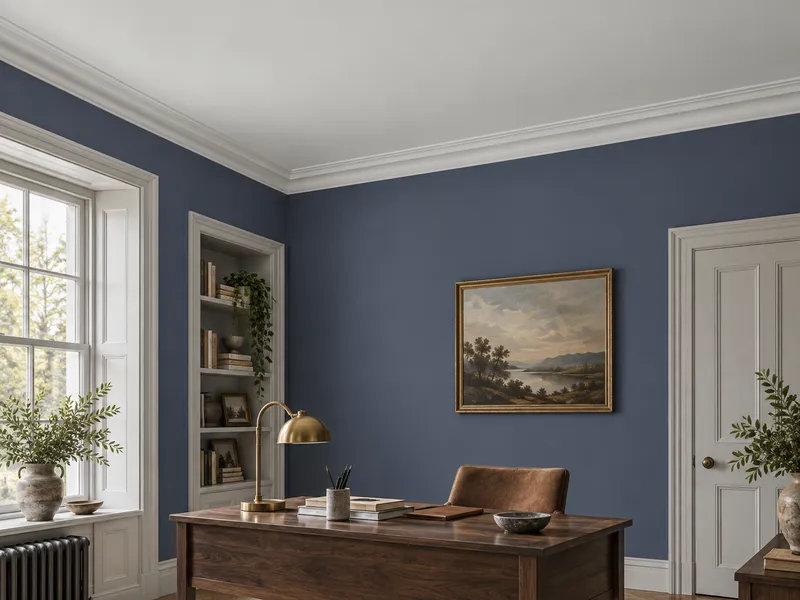
A deep blue on the walls, its related white on the ceiling: the colour climbs without colliding

Why it works

Three effects of a well-chosen white

A ceiling is never neutral: it is the largest unbroken surface in the room, and light crosses it before it reaches the walls. Three mechanisms explain what a related white changes.

01

The wall colour reads truer

A stark white, bluish and cold, throws onto the walls a light that greys them: green turns grey-green, pink turns beige. A related white returns a light of the same family - the wall shade reads as it does on the colour card, and often richer.

02

The ceiling line dissolves

The eye registers every frank break as a limit of the volume. A stark white over a deep colour draws a hard line that caps the room; a white neighbouring it in value softens that line, and the ceiling seems to float rather than close.

03

The room keeps all its light

This is the advantage over the painted ceiling or the full drench: a related white reflects almost as much light as a stark one. North-facing rooms, low-ceilinged bedrooms and corridors gain the envelope of a colour without paying for it in gloom.

Your turn

Compose your cloud ceiling

Pick a wall shade, then compare the ceilings: the stark trade white, the related cloud white, then the floating cloud - cornice and woodwork in the wall colour. Watch what the same colour becomes under each.

The wall shade

The ceiling

Observatory · No.34
The shade's designated white on the ceiling, cornice and woodwork: the wall colour warms, the ceiling line softens, the room stays bright. This is cloud capping in the true sense.

In real life the cloud is chosen for its material too - matt on the ceiling, always. See the matter of the cloud

Our pairings

Six cloud ceilings, signed Mylands

Each palette gathers a wall shade and its official cloud white, then their companions: a white for the woodwork, a tonal sibling for the next room or an alcove, an accent for the one chosen contrast. Every swatch links to its colour, ready to sample.

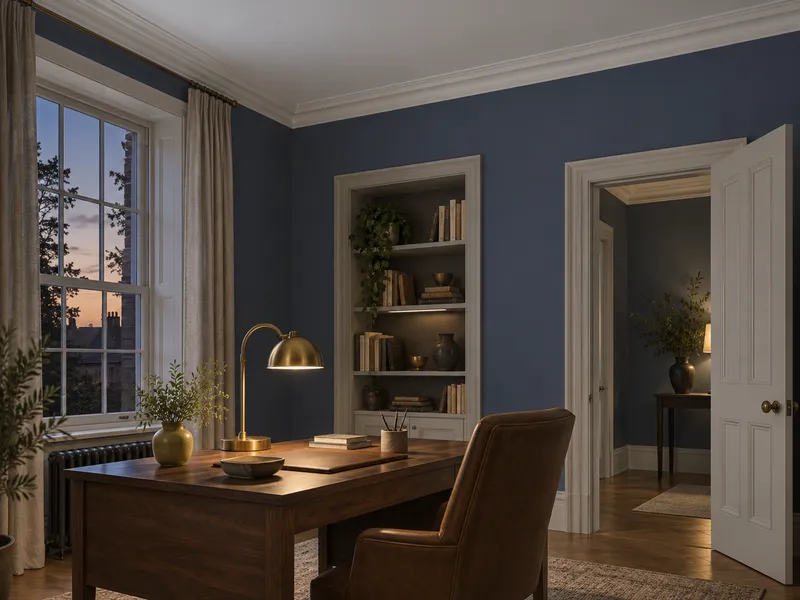
Study with ink-blue walls and a porcelain-white ceiling

01 · Studies, bedrooms & evening sitting rooms

The Ink

An ink blue softened with grey, capped by a porcelain white barely tinged with blue: the cloud of evening rooms, keeping by day what the blue drinks.

Finishes Observatory walls in Marble Matt Emulsion, Greenwich Time ceiling in Marble Matt Emulsion, Saint Johns woodwork in Eggshell. Mayfair Dark for an alcove; New Lime on a lampshade.

Palette saved →
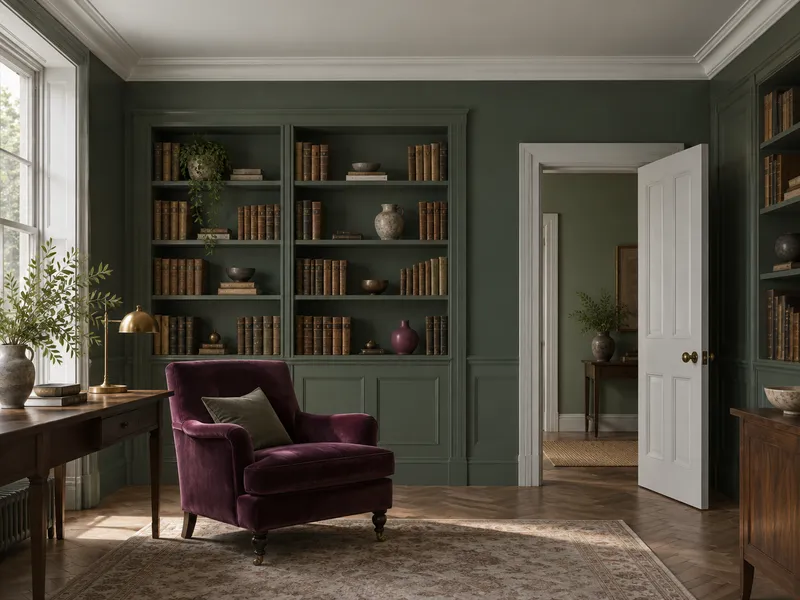
Library with deep green walls and a lichen-white ceiling

02 · Libraries, studies & dining rooms

The Forest

A near-black archive green under a lichen white: the library classic, lightened by a ceiling that gives the light back.

Finishes Pleasure Gardens Green walls in Marble Matt Emulsion or Dead Matt, St Clement ceiling in Marble Matt Emulsion, Saint Johns woodwork in Eggshell. Damp Leaf for the shelving; Magenta on one armchair only.

Palette saved →
Kitchen with terracotta walls and a plaster-white ceiling

03 · Kitchens, hallways & dining rooms

The Terracotta

A warm brick under a pink-plaster white: the cloud of kitchens and hallways, Mediterranean at noon, coppery by evening.

Finishes Crayfish Party walls in Marble Matt Emulsion, The Boltons ceiling in Marble Matt Emulsion, Limestone cabinet fronts and woodwork in Eggshell. Henna deepens a niche; Wedgwood cools it in counterpoint.

Palette saved →
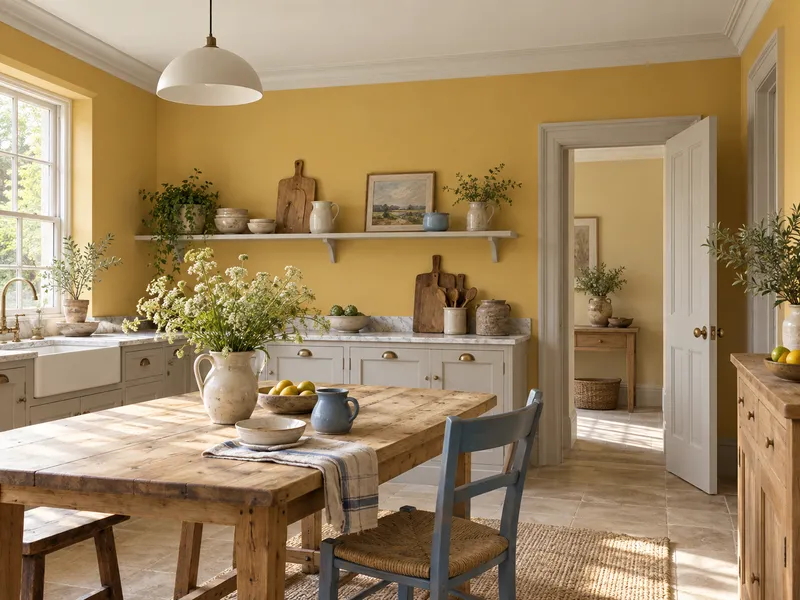
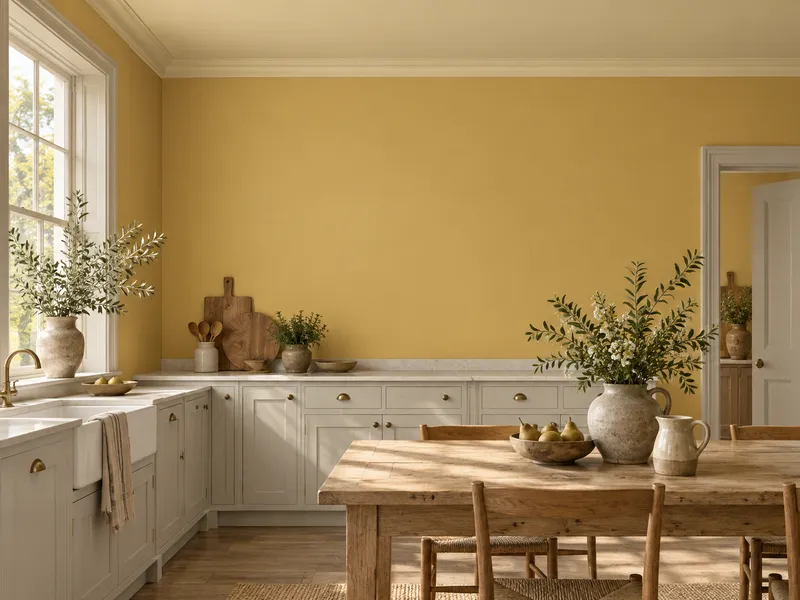
Kitchen with honey-ochre walls and a milk-white ceiling

04 · Kitchens & darker rooms

The Honey

A ripe ochre under a milk white: the shade that manufactures sunshine, and the cloud that stops it turning canteen-yellow.

Finishes Haymarket walls in Marble Matt Emulsion, Sleet ceiling in Marble Matt Emulsion, Frieze woodwork in Eggshell. Cornhill for the adjoining pantry; Boathouse on a chair, a cupboard door.

Palette saved →
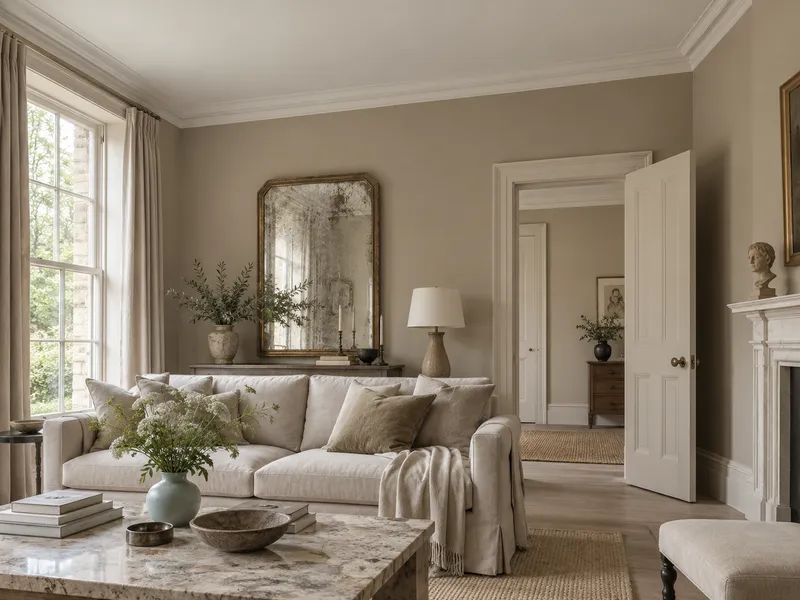
Living room with greige walls and a chalk-white ceiling

05 · Living rooms & corridors

The Stone

A stone greige under a chalk white: the most discreet of clouds, for living rooms that want the softness of an old house without a colour anyone notices.

Finishes Egyptian Grey walls in Marble Matt Emulsion, Frieze ceiling in Marble Matt Emulsion, Limestone woodwork in Eggshell. Alderman for the corridor; Bedford Square as a breath of air on a chair.

Palette saved →
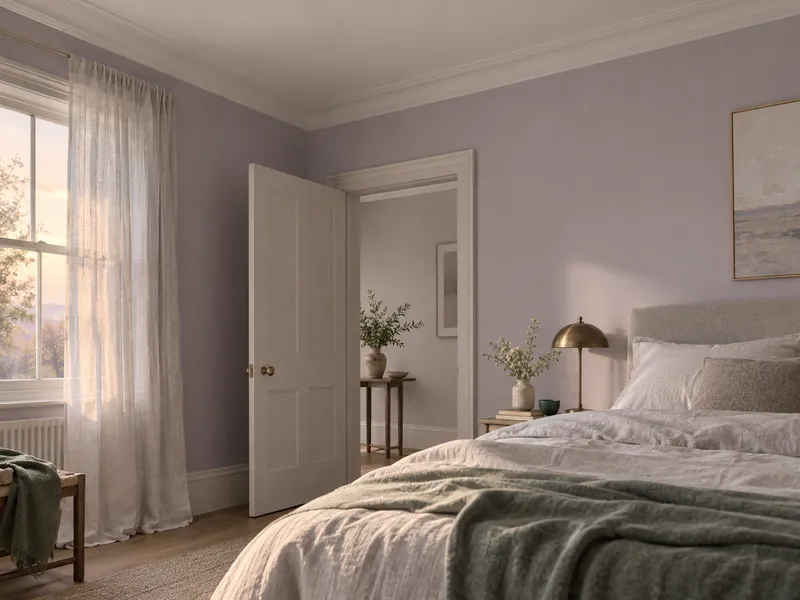
Bedroom with greyed-lilac walls and a pearl-white ceiling

06 · Bedrooms & dressing rooms

The Lilac

A greyed lilac, almost a grey, under a pearl white: the cloud of bedrooms, blushing at dawn and settling by evening.

Finishes Lavender Garden walls in Marble Matt Emulsion, The Boltons ceiling in Marble Matt Emulsion, Limestone woodwork in Eggshell. Smithfield for the dressing room; Deep Green on one object only.

Palette saved →

Going further

The tinted cloud

The connoisseur's variation: replace the white with the palest value of the family. Instead of a related white, the ceiling takes the wall shade's tonal sibling - a pale ochre over a honey ochre, a chalk beige over a stone greige. From a distance the ceiling still reads pale; up close, it is already colour. It is the doorway to colour capping and to the full drench.

The golden rule: stay very pale. The tinted cloud must reflect light almost like a white, or it becomes a painted ceiling - which is another gesture altogether. Our official pairings name each shade's tonal siblings; take the palest.

Haymarket · No.47 on the walls, Cornhill · No.128 on the ceiling: the honey keeps a wheat-coloured sky, and the room seems bathed in sun to its very corners.

Egyptian Grey · No.154 on the walls, Alderman · No.60 on the ceiling: the stone climbs one tone towards chalk, and the ceiling stops being a separate surface at all.

Not a white, the palest value of the family: the cloud takes on the colour
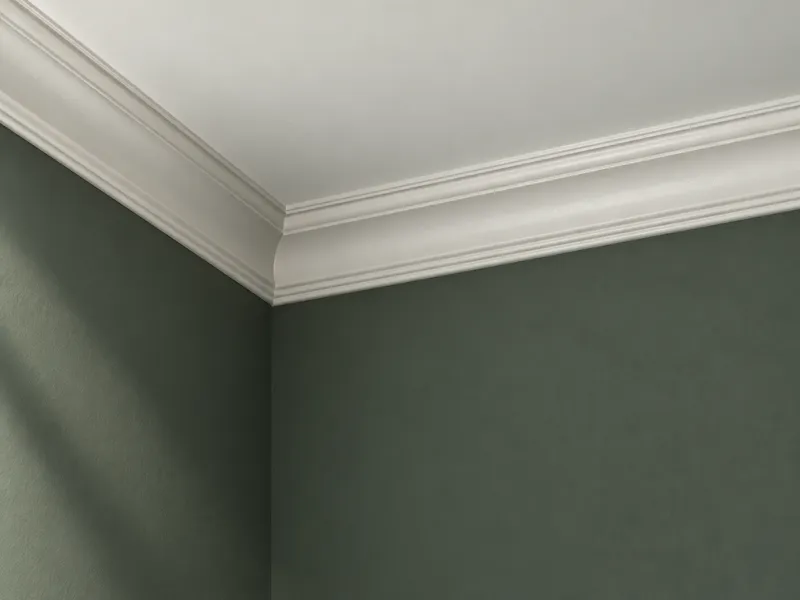
Detail of a soft, matt white ceiling above a deep green wall
The right white, in the right material: matt on the ceiling, a notch of sheen on the cornice

The matter

One white, matt, on the ceiling

Cloud capping rests on two things: the right white, and the right material. On the ceiling, matt, always - the raking light of a window or a pendant reveals every patch and bump on a satin finish, and a faintly glossy white turns cold again. On the cornice and woodwork the same white takes a notch of sheen, to shrug off knocks and draw a discreet play of reflections.

Woodwork & doors
Eggshell or Satin
Radiators & metal
Multi-Surface Eggshell

This is what makes the cloud simple at Mylands: each of our whites exists in every one of our finishes, and our related whites are composed from the same pigments as the colour they accompany - a cloud white is never a tinted trade white, but the same family, carried to its palest value.

Find your finish

The rules of the art

Getting your cloud right

Look for the white in the family

Every Mylands colour has its designated related whites - the first thing to look at on its page. A white taken from elsewhere, however "warm", can pull yellow under a blue or pink under a green. The cloud is a white of the same family, not any old off-white.

Test the white against the colour

A white on its own on a white wall says nothing. Paint your wall shade over 50 × 50 cm and the candidate white just above it, straddling the ceiling angle: it is there, in the relationship between the two, that a cloud is judged - morning, noon and night.

Take the woodwork with you

A cloud ceiling over stark-white woodwork rebuilds the grid you had just erased. The same white on the cornice, doors and skirting - or, one notch further, the wall shade itself - and the room reads as one piece.

The cloud is not a half-measure

It is not drenching for the timid: it is the gesture for rooms that need light. North-facing bedrooms, corridors, attic studies: wherever a painted ceiling would cost brightness, the cloud gives the envelope and keeps the day.

Your cloud capping questions

What is the difference between a cloud white and an off-white?

The family. An off-white is a white with a touch of yellow or grey added, unrelated to the wall colour; a cloud white is composed from the same pigments as that colour, carried to their palest value. The first can clash under a particular shade, the second always accompanies it - which is why every Mylands colour has its designated related whites.

Does cloud capping make the room darker?

Hardly: a related white reflects almost as much light as a stark one - a few points less, invisible to the eye, against a complete change of atmosphere. It is in fact the trend to choose when a room lacks light and a painted ceiling or a full drench would cost brightness.

Should the cornice go in the cloud white or in the wall colour?

Both are done. In the cloud white, the cornice continues the ceiling and underlines the architecture with a pale line. In the wall shade, it disappears and the ceiling seems to float - the "floating cloud" of our composer, a notch more enveloping. On a fine moulding, the white; on a plain or absent cornice, the colour.

Which finishes should I choose?

Marble Matt Emulsion on the ceiling, always matt: raking light underlines every flaw on a satin. Marble Matt Emulsion on the walls, Eggshell or Satin on the cornice, woodwork and doors, Multi-Surface Eggshell on radiators. The same white exists in every one of our finishes.

How do I test before committing?

Order the 100 ml sample pots of your wall shade and of two related whites, paint the shade on a wall and the two whites just above it, straddling the ceiling angle, and live with them for a few days - a cloud is judged in the relationship between the two, under your light. Our online visualiser also lets you try the shade on a photograph of your own room.

White is not the absence of colour. Well chosen, it is the colour, carried into the light.
Sign up to our newsletter

Sign up to our newsletter

Thanks for signing up to our newsletter!