Design Advice

Colour Blocking

Crisp, considered blocks that never argue: colour blocking composes the room like a painting, in two or three matched colours and sometimes two materials. Here is the art and the craft - with six complete palettes to get you started.

Discover the palettes

Start here

What is colour blocking?

Colour blocking sets crisp, sharp-cornered geometric blocks on the walls, in two or three colours that agree: a large rectangle behind a sofa, a high band running towards a door, a square above a console. It is neither an accent wall nor a pattern: it is planes of colour, set out with a tape measure and masking tape, that divide the room into zones and give every piece of furniture its place.

The gesture comes from painting - Mondrian, Rothko, Matisse's cut-outs - and from the architects' studios of the 1920s, where walls were coloured in planes to read the space. It returns today as the step after drenching: once you have understood that one colour can envelop, you learn to make two converse. It asks for colours composed to live together, and finishes that answer each other - precisely what our official pairings and our ranges of finishes allow.


Two planes, a quiet field: the blocks divide the space and give the armchair its place

Why it works

Three effects of well-placed planes

Colour blocking is not a style exercise: it plays on how the eye organises a room. Three mechanisms explain its power.

01

The room organises itself into zones

A block behind the sofa names the sitting area; a band behind the table names the dining area; a square above the desk names the corner for work. Without a partition or an extra piece of furniture, colour zones the space - the dream gesture for open-plan living rooms and studios.

02

The furniture finds its place

A block is a plinth: the piece set in front of it looks intended, anchored, designed for the spot. A sofa floating in the middle of a great pale wall becomes, on a plane of colour, the centrepiece of the room. The block frames - it does for the furniture what a frame does for a painting.

03

The architecture is corrected

A horizontal block widens a narrow room; a vertical block lifts a low ceiling; an off-centre block rebalances a badly placed window. Where the accent wall submits to the architecture, the block draws it as it pleases - and it takes only a roll of masking tape to draw it again.

Your turn

Compose your blocks

Pick a palette, then set the blocks one by one: the large plane behind the armchair, the high band towards the door, the square above the radiator. At every step, watch how the room reorganises itself.

The palette

The blocks

Boathouse · Cornhill · Bedford Square
A third, smaller plane, higher in value or in contrast: it balances the composition, like the last touch on a painting. Beyond three it is no longer colour blocking - it is a pattern.

In real life a block can also set itself apart by its material - the same colour matt on the field and satin on the block. See the matter of the blocks

Our palettes

Six compositions, signed Mylands

Each palette gathers a quiet field, three blocks that agree - the large one, the band, the square - and the white of the ceiling, all drawn from the official Mylands pairings. Every swatch links to its colour, ready to sample.

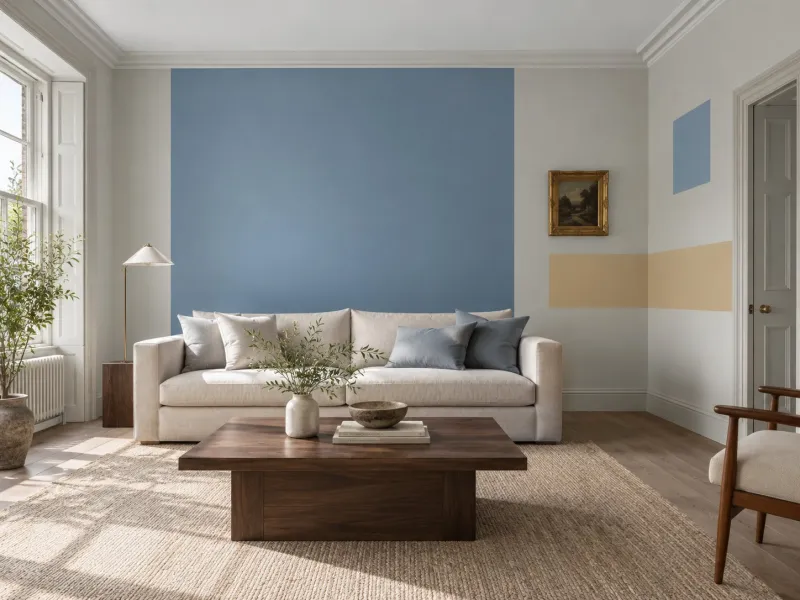
Sitting room with sea-blue and golden-sand blocks on a pebble-grey field

01 · Sitting rooms & living rooms

The Shore

A sea blue, a golden sand, a mist blue on a pebble grey: the easiest composition to live with, for bright sitting rooms that face the light.

Finishes Saint Johns field and woodwork - walls in Marble Matt Emulsion, woodwork in Eggshell - the three blocks in Marble Matt Emulsion, Greenwich Time ceiling. Boathouse in Eggshell if you want the large block in relief.

Palette saved →
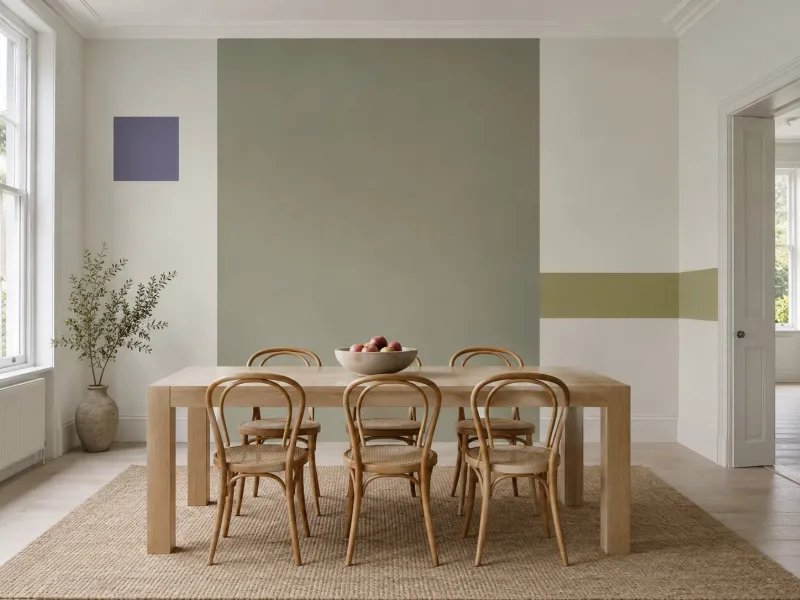
Dining room with sage and olive blocks, a violet square, on a chalk-white field

02 · Kitchens & dining rooms

The Orchard

A sage, an olive green, a touch of violet on a chalk white: the colours of an orchard in April, composed for a dining room or a kitchen.

Finishes Elgin field in Marble Matt Emulsion, blocks in Marble Matt Emulsion, Cotton Street ceiling. Ultra Violet is kept for the square - never the large block.

Palette saved →
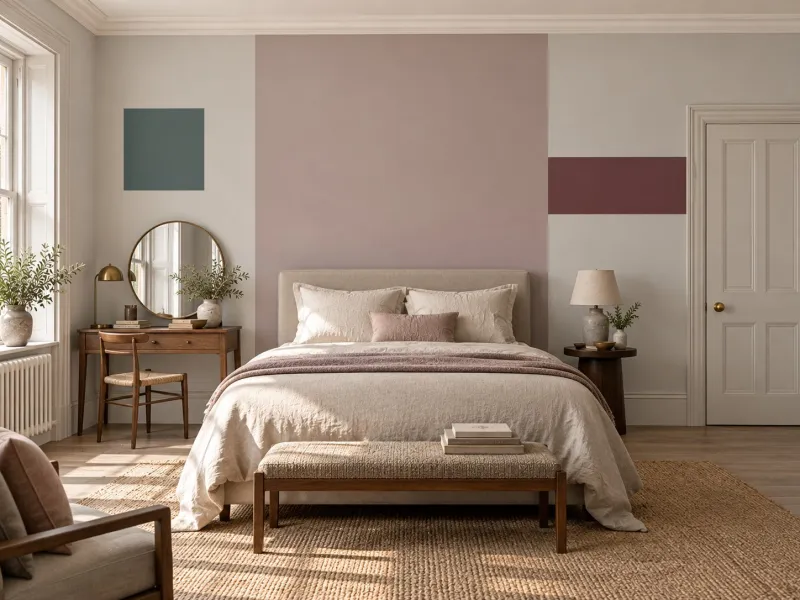
Bedroom with powder-pink and plum blocks, a slate-green square, on a pinkish-white field

03 · Bedrooms & dressing rooms

The Powder

A powder pink, a deep plum, a slate green on a pinkish white: the bedroom composition, soft in the morning, theatrical by evening.

Finishes The Boltons field in Marble Matt Emulsion, blocks in Marble Matt Emulsion - Rothschild Street in Dead Matt for the band - Marble Arch ceiling. Dark Green on the square, behind the dressing table.

Palette saved →
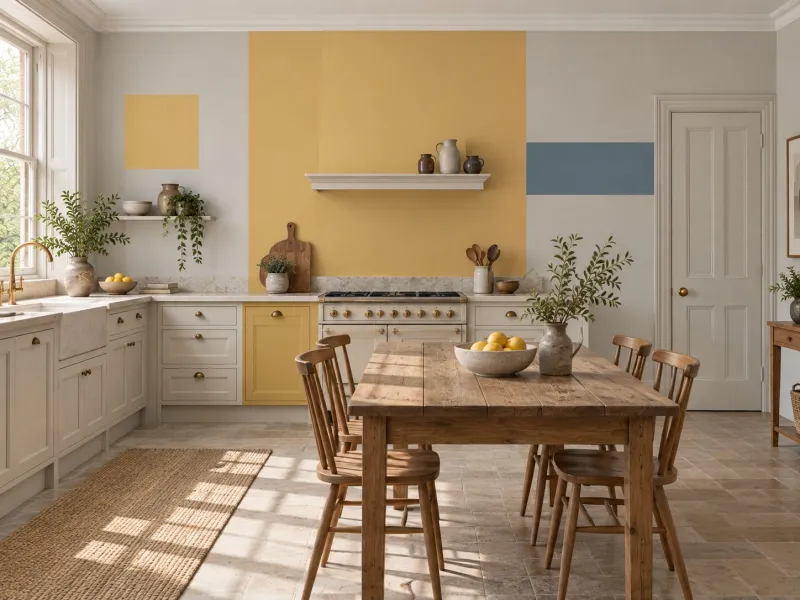
Kitchen with gold and delft-blue blocks, a pale yellow square, on a stone-white field

04 · Kitchens, hallways & darker rooms

The Sun

A frank gold, a delft blue, a pale yellow on a stone white: the composition that manufactures sunshine in a north-facing kitchen or hallway.

Finishes Frieze field in Marble Matt Emulsion, blocks in Marble Matt Emulsion, Limestone ceiling. Golden Square in Eggshell on a cupboard door carries the large block on.

Palette saved →
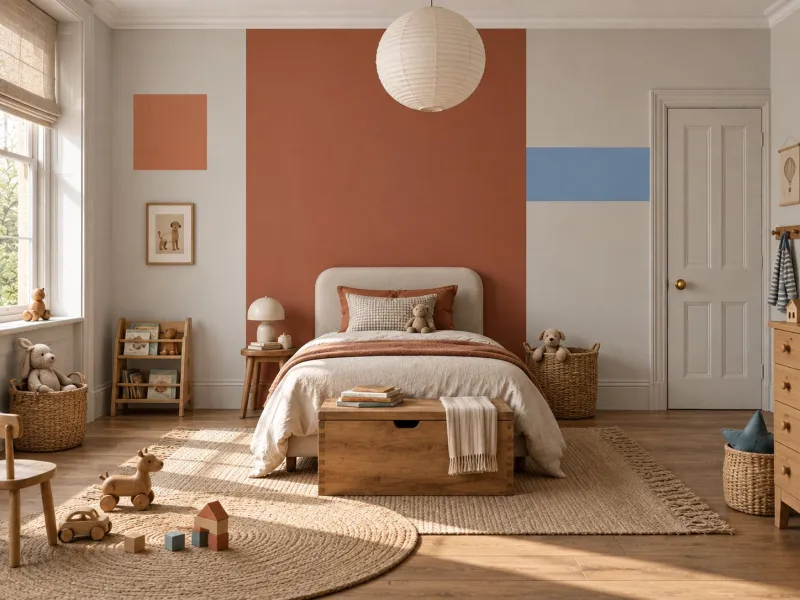
Sitting room with terracotta and Wedgwood-blue blocks, a coral square, on a chalk-white field

05 · Sitting rooms, hallways & children's rooms

The Clay

A terracotta, a Wedgwood blue, a coral on a chalk white: the most Mediterranean composition - warm, frank, made for southern light.

Finishes Limestone field in Marble Matt Emulsion, blocks in Marble Matt Emulsion, The Boltons ceiling. Coral Orange on the square only - it is the touch, not the plane.

Palette saved →
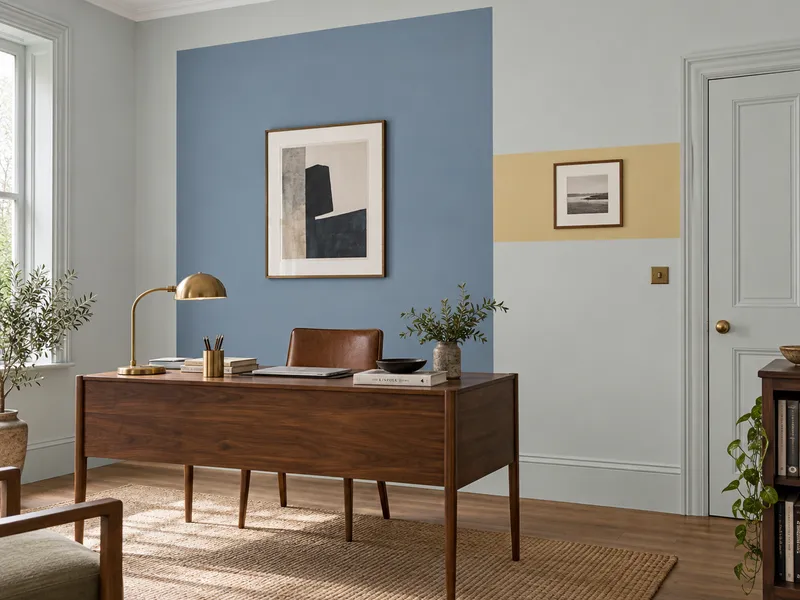
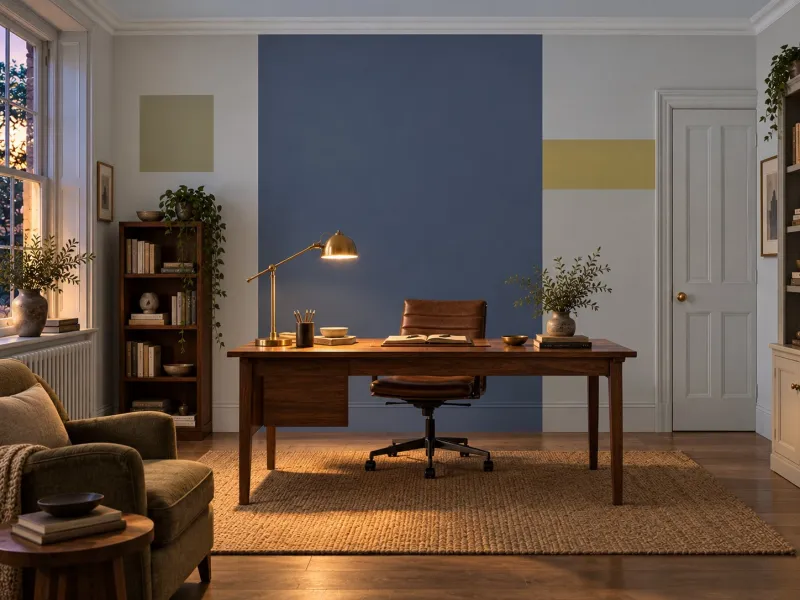
Study with ink-blue and lime-green blocks, a verdigris square, on a porcelain-white field

06 · Studies & evening sitting rooms

The Night

An ink blue, a lime green, a verdigris on a porcelain white: the composition of studies and evening rooms, graphic by day, velvety by night.

Finishes Greenwich Time field in Marble Matt Emulsion, Observatory large block in Dead Matt, New Lime band and Chester Square square in Marble Matt Emulsion, Walpole ceiling.

Palette saved →

Going further

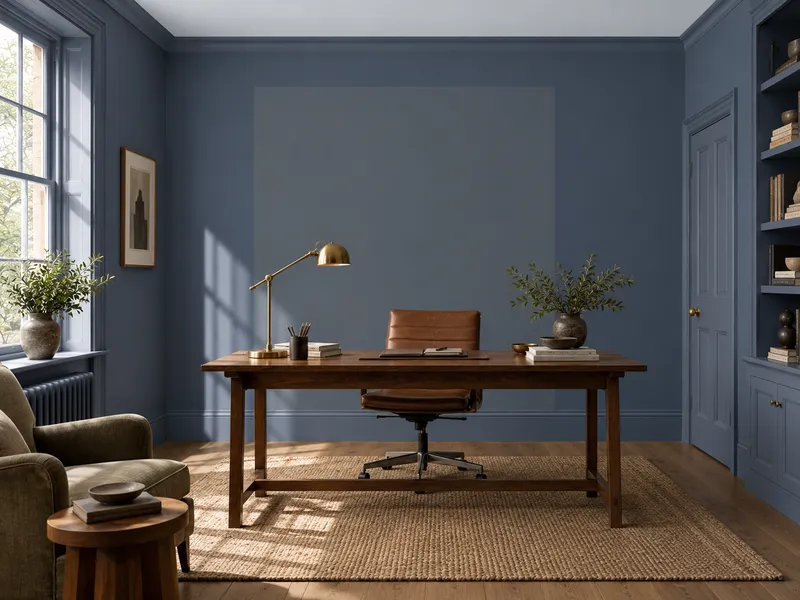
Tone-on-tone blocks

The connoisseur's variation: blocks that differ by only half a tone - or by their material. Two neighbours of the same family, one on the field, the other on the block, and the composition reads up close as a relief rather than a contrast. Subtler still: the same colour, matt on the field and satin on the block. Head-on, one plane; from an angle, under the light, the block appears.

The golden rule: neighbouring values. Too frank a step would rebuild the classic block - not a fault, but another gesture. Our official pairings name each colour's family neighbours; that is where tone-on-tone blocks are composed.

Observatory · No.34 on the field, Mayfair Dark · No.218 on the block: two blues of the same family, and the study draws itself without ever breaking the envelope.

Serpentine · No.192 on the field, Greenstone · No.190 on the block: a sage and its paler neighbour, a relief that only appears in raking light.

Half a tone apart, or the same colour in two materials: the block appears under the light
Detail of the crisp edge of a satin block of colour on a matt wall of the same shade
An edge cut with tape, two materials: the block reads in colour and in light

The matter

Crisp planes, materials that answer each other

Colour blocking rests on two things: a crisp edge and a chosen material. The field in matt, where it drinks the light and forgives imperfections; the block in matt too, or a notch more sheen to bring it forward - a plane in Eggshell on a matt field stands out by its texture as much as by its colour. The woodwork follows the field, with a notch of sheen to shrug off knocks.

A block in relief
Eggshell
Woodwork & doors
Eggshell or Satin

This is what makes blocking simple at Mylands: every one of our colours exists in every one of our finishes, and two planes of the same shade in two materials come from the same pigment - the relief is guaranteed, the colour does not shift.

Find your finish

The rules of the art

Getting your blocks right

Compose with the furniture, not the wall

A block is set out from what it carries: 20 to 30 cm wider than the sofa on each side, floor to cornice or to the height of the door. Draw it in pencil with the furniture in place - never on an empty wall, there is nothing to justify it.

Three colours, no more

A field and two blocks are enough; a third, smaller block closes the composition. Beyond that the eye no longer reads planes but a pattern. And all three are taken from the official pairings of one shade - coordinating colours and accent - so they never have to argue.

The crisp edge is everything

A block with a blurred edge is a stain. Good-quality masking tape, laid on a field dry for 48 hours; a first thin pass in the field colour to seal the edge; then the block, and the tape pulled away at 45° while the paint is still fresh.

Start with a rectangle

A large rectangle behind a sofa or a bedhead is the safest block - and the most spectacular for one tin. Bands, offset squares and blocks that turn the corner come afterwards, once the first has taught you what the room will accept.

Your colour blocking questions

What is the difference between a colour block and an accent wall?

Scale and geometry. The accent wall paints a whole wall, corner to corner, as the architecture gives it; the block draws a plane you decide - smaller than the wall, wider than the furniture, at the height you choose - and can set two or three of them talking. The accent wall submits to the room, the block composes it.

How many colours, and which?

A field and two or three blocks, taken from the official pairings of one shade: its coordinating colours for the large planes, its contrasting accent for the small one. Two blocks close in value and a third franker one make the most balanced composition. Our six palettes above are composed exactly so.

How do I get a perfectly crisp edge?

The field must be dry for 48 hours. Mark out with a level and pencil, lay good-quality masking tape and press the edge down with a finger, then paint a thin pass in the field colour along the tape: it seals the micro-leaks. Then apply the block colour, and pull the tape away at 45° while the last coat is still fresh.

Which finishes should I choose?

Marble Matt Emulsion on the field and the blocks - Dead Matt for a dark block - and Eggshell on a block you want in relief: the same colour in two materials stands out under the light. Eggshell or Satin on the woodwork, Marble Matt Emulsion on the ceiling. Every colour exists in every one of our finishes.

How do I test before committing?

Order the 100 ml sample pots of the field and the blocks, and paint them side by side, in their real places on the wall - the field over 50 × 50 cm, each block against it, edge to edge. A pairing is judged at the join, not on separate cards. Our online visualiser also lets you try the colours on a photograph of your own room.

Two colours that agree say more than one colour alone - provided you know where one stops and the other begins.
Sign up to our newsletter

Sign up to our newsletter

Thanks for signing up to our newsletter!