Design Advice

Freeform & Furniture Framing

An arch behind a bed, a cloud of colour spilling out from behind a painting, a rectangle framing a chest of drawers: colour leaves the corners of the room to draw. Here is the art and the craft of freeform shapes and furniture framing - with six complete palettes to get you started.

Discover the palettes

Start here

What is a freeform shape?

Freeform painting sets on the wall a figure that does not obey the architecture: an arch, a half-circle, a soft-edged cloud, a wave that turns a corner. Its cousin, furniture framing, sets behind a piece of furniture a block of colour that frames it: a rectangle behind the chest of drawers, a square around the mirror, an arch over the bed. In both cases colour no longer dresses the room: it draws in it.

The gesture owes something to the fresco and the poster; it comes from artists' studios and children's rooms, and it returns today because it is the freest, cheapest and most reversible of all: one tin, a pencil, an afternoon, and an ordinary wall becomes a composition. It asks for a colour sure enough to stand alone on a pale field - which is precisely what our pigments, weighed in London since 1884, know how to do.

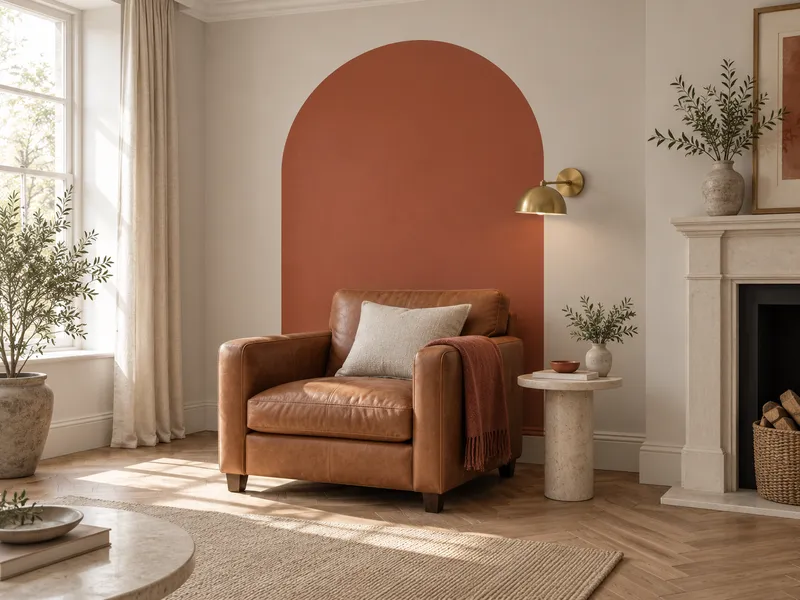
An arch drawn with a compass, and the armchair has found its place

Why it works

Three effects of a well-placed shape

A painted shape is not a decoration: it is a sign, which the eye reads before the walls. Three mechanisms explain its power.

01

The furniture becomes a stage

A bed against a white wall is a bed; under a painted arch, it is an alcove. A chest of drawers before a rectangle of colour, a mirror inside a square: the painted frame does for the furniture what a frame does for a painting - it designates, it isolates, it gives value. It is the gesture of bedrooms and hallways, where a single piece has to hold the wall.

02

The architecture reinvents itself

A painted arch gives a square bedroom the opening it never had; a shape that turns the corner erases the corner; a half-circle beneath a window invents it a balcony. Where colour blocking redraws the room in planes, the freeform shape lends it curves the builder never built.

03

It is the most reversible gesture

A shape is drawn in pencil, painted in an hour, and painted over in another. It is the trend of tenants, of children's rooms that grow up, and of anyone who wants a strong colour without committing four walls - a 1-litre tin is often enough, and the trial costs no more than a sample.

Your turn

Compose your shape

Pick a palette, then compare the three gestures: the arch behind the armchair, the loose shape spilling out from behind the painting, the painted frame around the chest of drawers. Watch what each figure does to the piece it carries.

The palette

The gesture

The arch : Crayfish Party · BH.19
The queen of shapes: a rectangle topped with a half-circle, 20 to 30 cm wider than the piece on each side, floor to door height. It makes an alcove of a flat wall, and a stage of an armchair.

In real life the shape can also set itself apart by its material - a satin frame on a matt field, for instance. See the matter of shapes

Our palettes

Six shapes, signed Mylands

Each palette gathers a quiet field, the colour of the shape, that of the frame, the white of the ceiling and woodwork, and an accent - all drawn from the official Mylands pairings. Every swatch links to its colour, ready to sample.

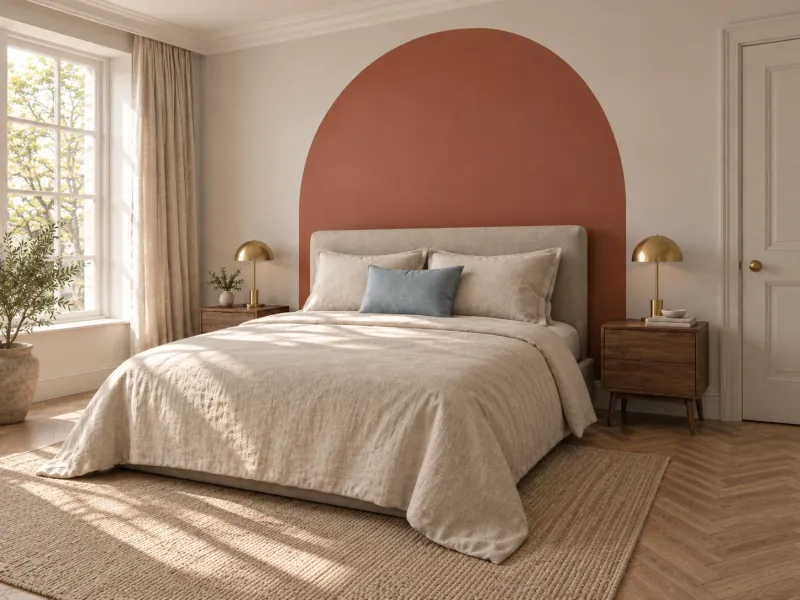
Bedroom with a plaster-white wall carrying a terracotta arch behind the bed

01 · Bedrooms, hallways & sitting rooms

The Arch

A terracotta arch on a plaster white, a coral for the frame: the sunniest of shapes, for bedrooms and hallways that face south.

Finishes The Boltons field in Marble Matt Emulsion, Crayfish Party arch in Marble Matt Emulsion, Coral Orange frame in Eggshell, Limestone ceiling and woodwork. Wedgwood on one object only.

Palette saved →
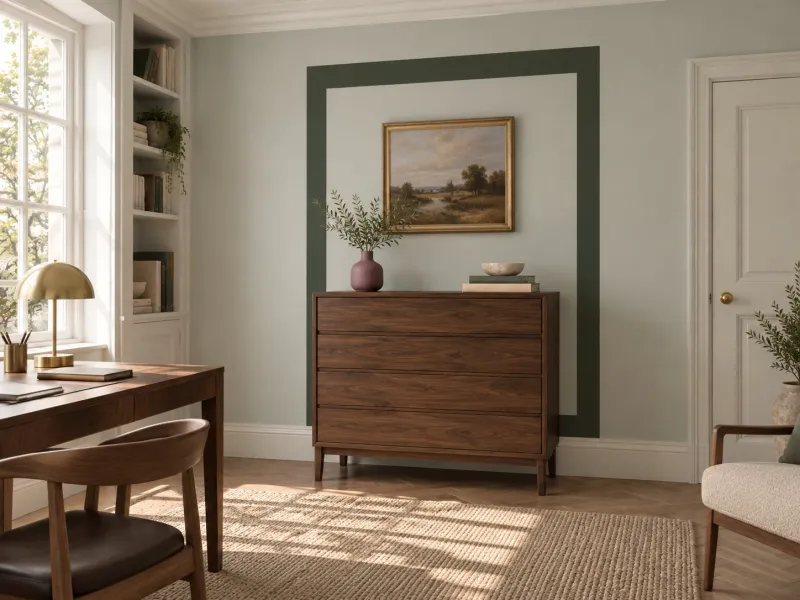
Sitting room with a lichen-grey wall carrying a deep green frame painted around a chest of drawers

02 · Studies, sitting rooms & libraries

The Green Frame

A leaf green as a loose shape, an archive green as a frame, on a lichen grey: the composition of studies and sitting rooms that love books and plants.

Finishes Saint Johns field in Marble Matt Emulsion, Damp Leaf shape in Marble Matt Emulsion, Pleasure Gardens Green frame in Eggshell, Syon Park ceiling and woodwork. Magenta on one armchair only.

Palette saved →
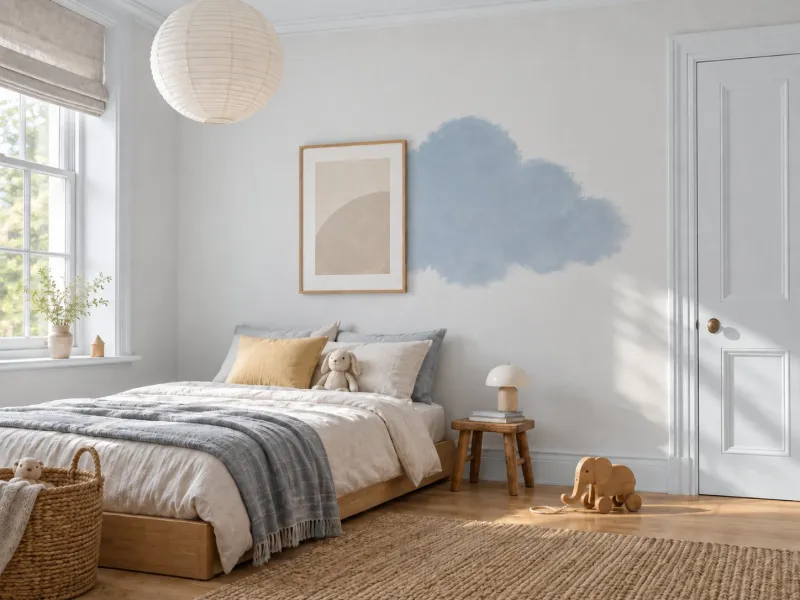
Child's bedroom with a white wall carrying a large blue cloud painted behind the bed

03 · Children's rooms, bathrooms & studies

The Cloud

A sea blue as a cloud, a mist blue as a frame, on a porcelain white: the shape of children's rooms and bathrooms - a sky painted in an hour.

Finishes Greenwich Time field in Marble Matt Emulsion, Boathouse shape in Marble Matt Emulsion, Bedford Square frame in Eggshell, Walpole ceiling and woodwork. Cornhill on a cushion, a lamp.

Palette saved →
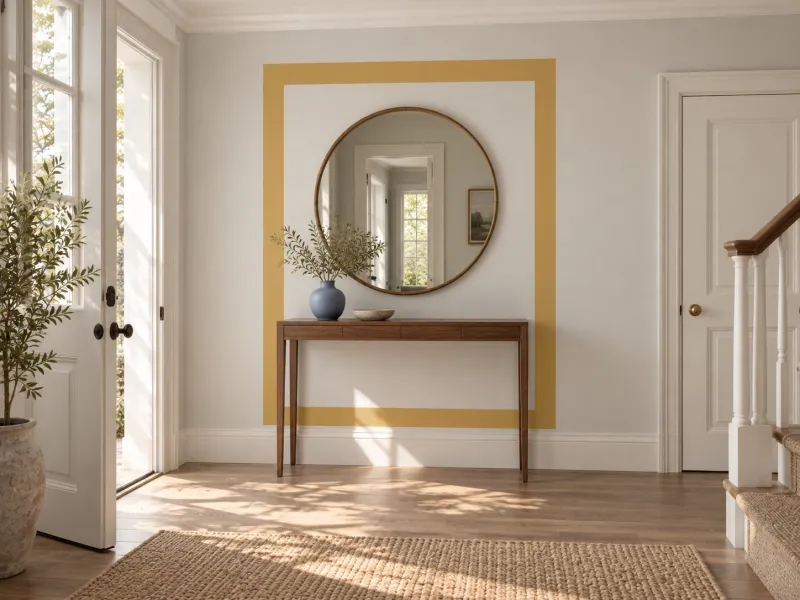
Hallway with a white wall carrying a golden frame painted around a console and its mirror

04 · Hallways, kitchens & darker rooms

The Gold Frame

A wheat gold as a shape, a honey as a frame, on a snow white: the composition that manufactures sunshine in a north-facing hallway or kitchen.

Finishes Sleet field in Marble Matt Emulsion, Cornhill shape in Marble Matt Emulsion, Haymarket frame in Eggshell, Maugham White ceiling and woodwork. Wedgwood on one object only.

Palette saved →
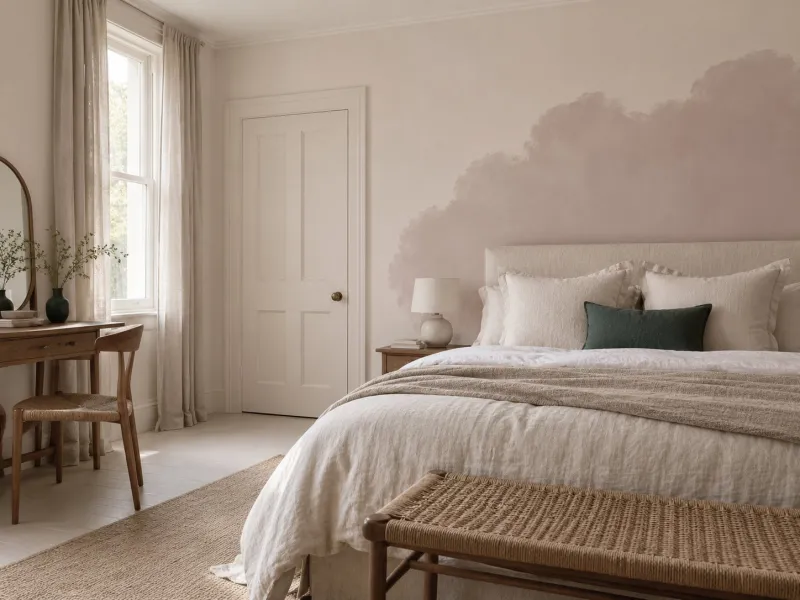
Bedroom with a pinkish-white wall carrying a greyed-pink loose shape behind the bedhead

05 · Bedrooms & dressing rooms

The Pebble

A greyed pink as a loose shape, a tannic plum as a frame, on a pinkish white: the composition of bedrooms and dressing rooms, soft by day, deep by evening.

Finishes Marble Arch field in Marble Matt Emulsion, Soho Pink shape in Marble Matt Emulsion, Rothschild Street frame in Eggshell, Fitzrovia ceiling and woodwork. Dark Green on one object only.

Palette saved →
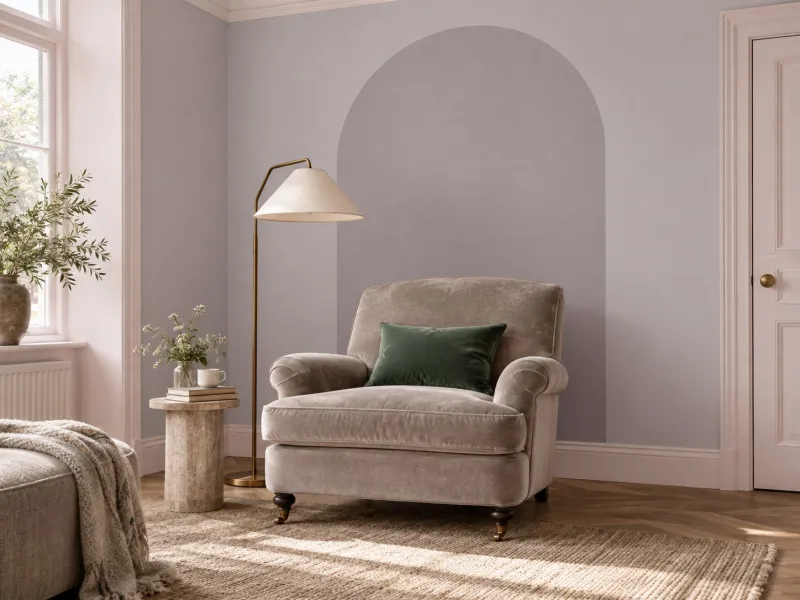
Reading corner with a pale lilac wall carrying a greyed-lilac arch behind an armchair

06 · Bedrooms & reading corners

The Lavender

A greyed lilac as an arch, a heather grey as a frame, on a pearl lilac: the most hushed of shapes, for a bedroom or a reading corner.

Finishes Early Lavender field in Marble Matt Emulsion, Lavender Garden shape in Marble Matt Emulsion, Haar frame in Eggshell, Floris ceiling and woodwork. Deep Green on one object only.

Palette saved →

Going further

The painted bedhead

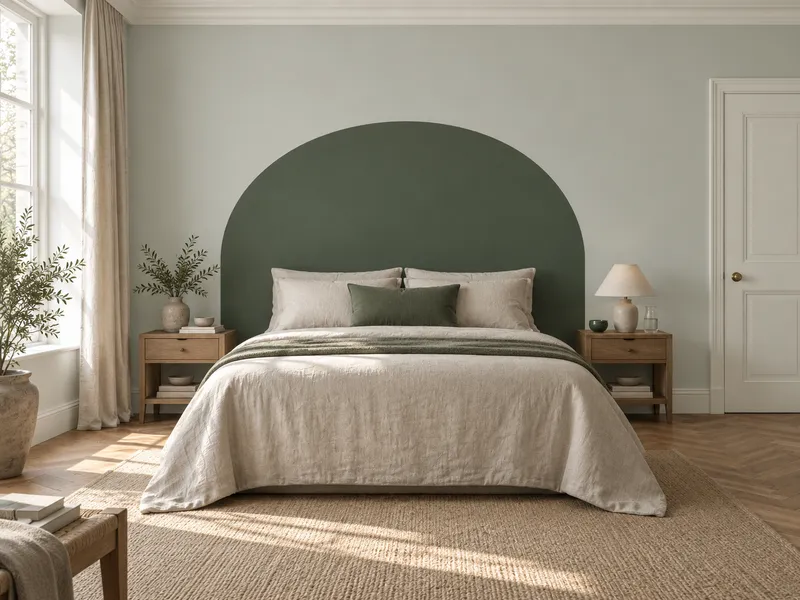
The most useful shape of all: the one that replaces a piece of furniture. An arch or a rectangle painted behind the bed, to seated shoulder height, stands in for a bedhead - 20 to 30 cm wider than the mattress on each side, in a colour deep enough to carry the pillows. Two bedside tables under the two edges, and the bedroom is composed.

The golden rule: a pale, related field. The shape only holds if the wall around it leaves it room - a white or a neutral taken from the colour's designated whites, never a stark white that would make it shout. Our official pairings give each shade its whites; that is where the field is chosen.

Pleasure Gardens Green · No.214 as an arch behind the bed, Saint Johns · No.64 on the wall: the archive green carries the pillows, and the lichen grey leaves it all the room it needs.

Haymarket · No.47 as a rectangle behind the bed, Sleet · No.91 on the wall: the honey warms a north-facing bedroom, and the snow white keeps the day.

An arch in place of a bedhead: two bedside tables under the edges, and the bedroom is made
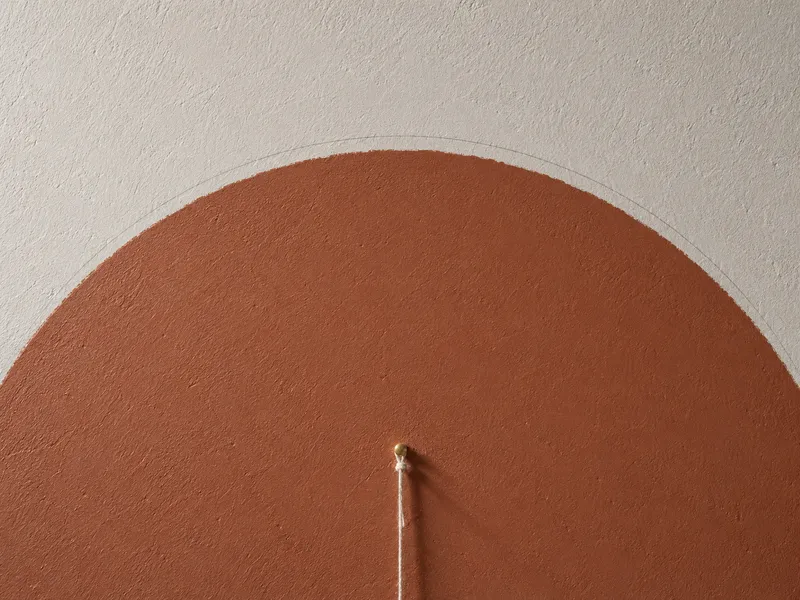
Detail of the edge of a painted arch: the crisp half-circle on a matt wall
A string compass, a roll of tape, a round brush: the line makes the shape

The matter

A crisp edge, or a soft one

Shapes rest on the line. The arch and the frame ask for a crisp edge: masking tape for the straights, a cardboard template or a string compass for the half-circle, and a material at least as matt as the field - or a notch more sheen to bring the frame forward. The loose shape asks for the opposite: a soft edge, drawn freehand with a round brush, in a matt finish that forgives the touch-up.

The arch or loose shape
Marble Matt Emulsion
Woodwork & doors
Eggshell or Satin

This is what makes the shape simple at Mylands: every one of our colours exists in every one of our finishes, and a 100 ml sample pot already covers 1.5 m² - enough to draw a whole arch behind an armchair before buying the litre.

Find your finish

The rules of the art

Getting your shape right

Draw with the furniture in place

A shape is drawn from what it carries: 20 to 30 cm more than the bed, the armchair or the chest on each side, and a height that stops at a landmark - the top of the door, the bottom of the cornice. On an empty wall there is nothing to justify it.

The string compass

For a perfect half-circle: a drawing pin at the centre, a string the length of the radius, a pencil at the end. For an arch, draw the two straights with a level, then the half-circle that joins them. Tape follows the straights; the angled brush follows the curve.

One shape per wall

An arch, a cloud, a frame: each holds a wall on its own. Two shapes on the same wall argue, three make a wallpaper. If the room asks for more, change wall - or move on to colour blocking, which knows how to compose three.

The field before the shape

Paint the whole wall in the field first - a white or a neutral related to the shape's colour - let it dry for 48 hours, then draw and paint the shape on top. A shape set on an old stark white will never find its place, whatever its colour.

Your freeform questions

What is the difference between a freeform shape and a colour block?

Geometry and number. Colour blocking composes the room in two or three matched rectangular planes; the freeform shape sets a single figure - arch, circle, cloud - often curved, and often tied to a piece of furniture it frames. The block organises the space, the shape draws a sign. The two lend each other their palettes.

How do I draw a perfect arch or circle?

With a string compass: a drawing pin at the centre of the circle, a string the length of the radius, a pencil held taut at the end. For an arch, first draw the two uprights with a level, mark their midpoint at the top, and draw the half-circle from that centre. Masking tape on the straights, an angled brush on the curve - in two thin passes.

How big should a painted frame behind a piece of furniture be?

Wider than the piece by 20 to 30 cm on each side, and tall enough to hold what it carries - the painting above the chest, the pillows on the bed - with a margin of the same order. Too tight, the frame looks like a mistake; too big, it becomes a colour block again. Draw it in pencil with the furniture in place, and step back.

Which finishes should I choose?

Marble Matt Emulsion on the field and on the shape - matt forgives the touch-ups of a curve drawn with a brush - and Eggshell on a frame you want to bring forward: the same colour in satin stands off the matt field under the light. Marble Matt Emulsion on the ceiling, Eggshell or Satin on the woodwork. Every colour exists in every one of our finishes.

How do I test before committing?

It is the easiest trend to test: a 100 ml sample pot covers 1.5 m², enough to paint a reduced arch or a quarter of the shape in its real place, on the intended field. Live with it for two days, morning and evening. If it holds, the litre is enough to finish it; if not, a coat of the field erases it. Our online visualiser also lets you try the colour on a photograph of your own room.

A wall does not need to be painted from edge to edge to change a room. A drawing, well placed, in the right colour, is enough.
Sign up to our newsletter

Sign up to our newsletter

Thanks for signing up to our newsletter!