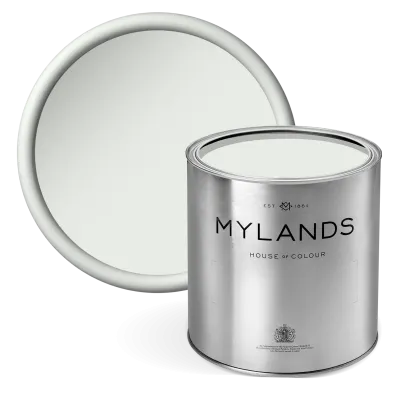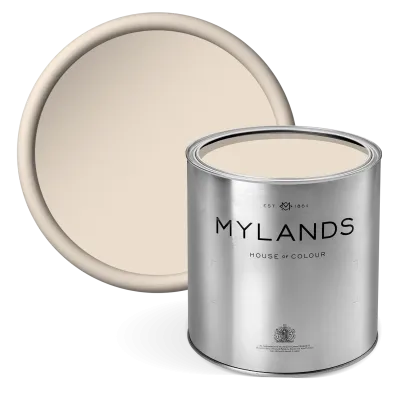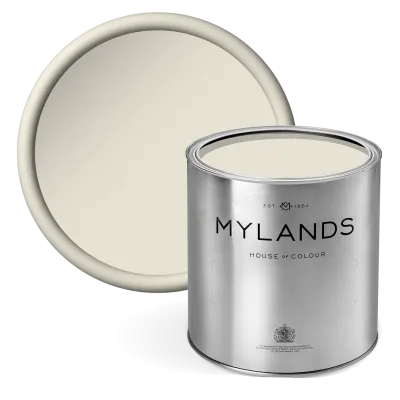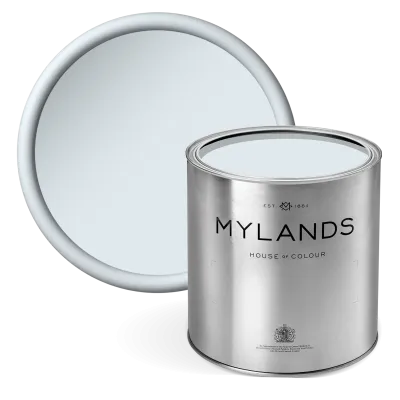
Georgian paint colours

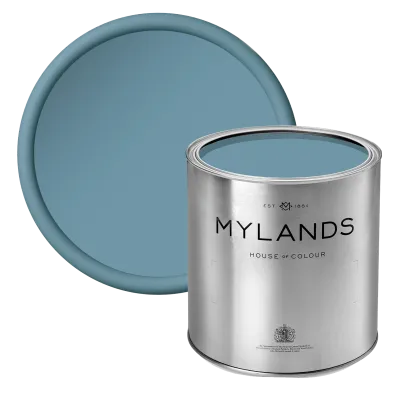
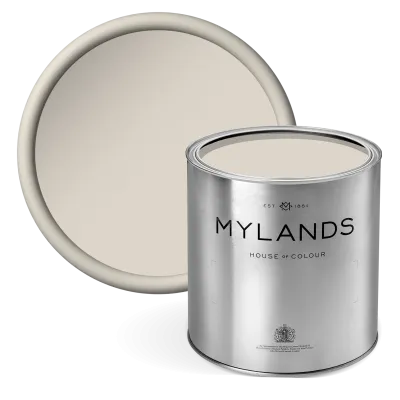
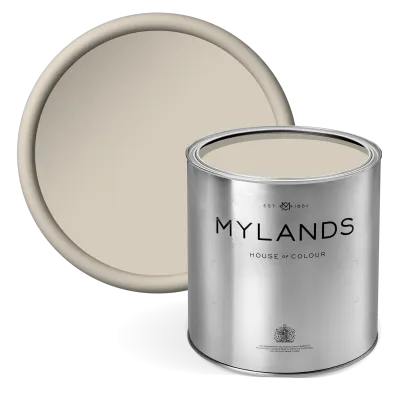
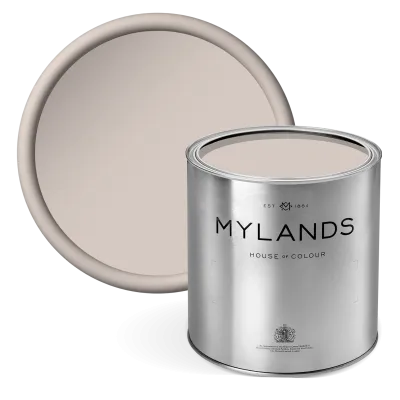
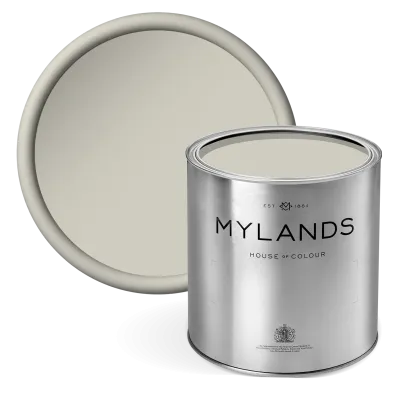
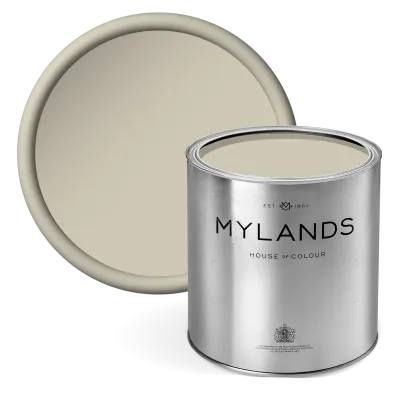
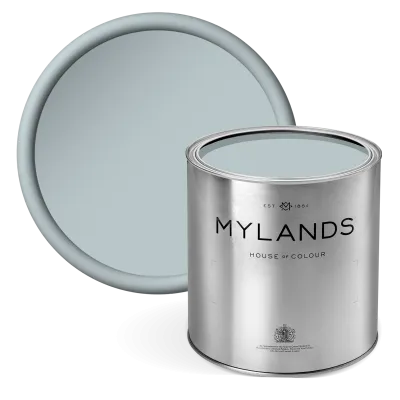
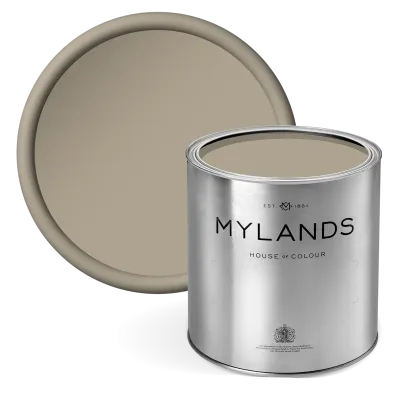
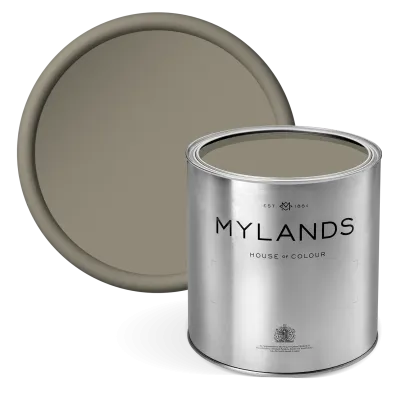
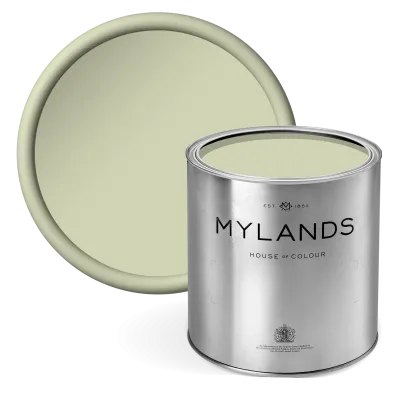
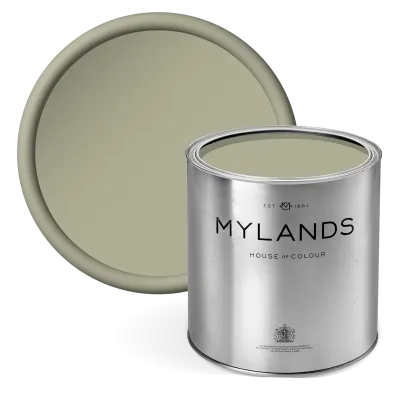
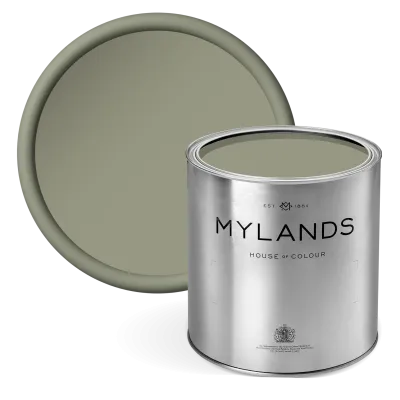
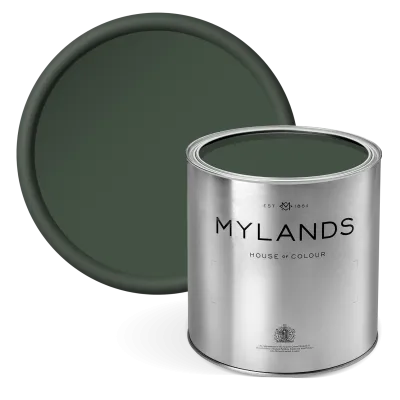
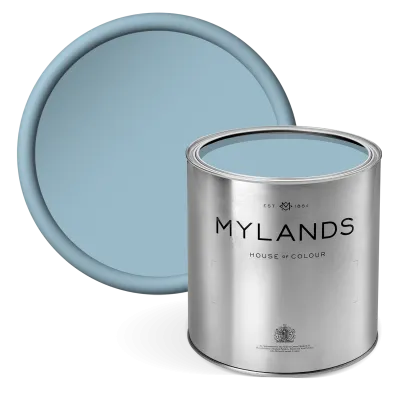
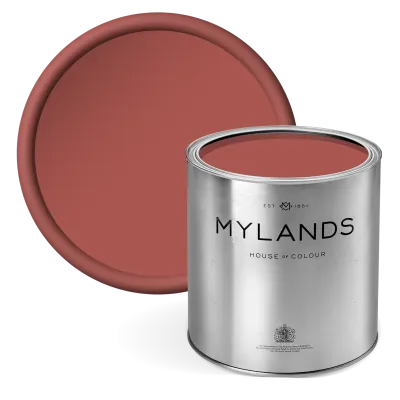
From George I's accession in 1714 until the Regency, the Georgian interior was ruled by proportion: panelling to dado height, sash windows with folding shutters, classical cornices. The palette followed the price of pigment. Stone colours and 'drabs' for everyday rooms, soft greens such as Hurlingham, blue-greys inspired by Wedgwood's pottery (Mid Wedgwood), and, for the grandest reception rooms, costlier shades such as Indian Lake, a red first made in London in the 18th century.

To recapture the look, paint walls and panelling in one colour, or a deeper tone below the dado rail, and keep our Marble Matt Emulsion for the walls: its deeply flat finish echoes the original distempers. On doors, shutters and skirtings, our Multi-Surface Eggshell Paint gives the soft sheen of old oil paint.

A little history · 1714 – 1811

The Georgian era

A century of proportion and restraint: the brick townhouse, the sash window, painted panelling and a palette set as much by the price of pigment as by taste.

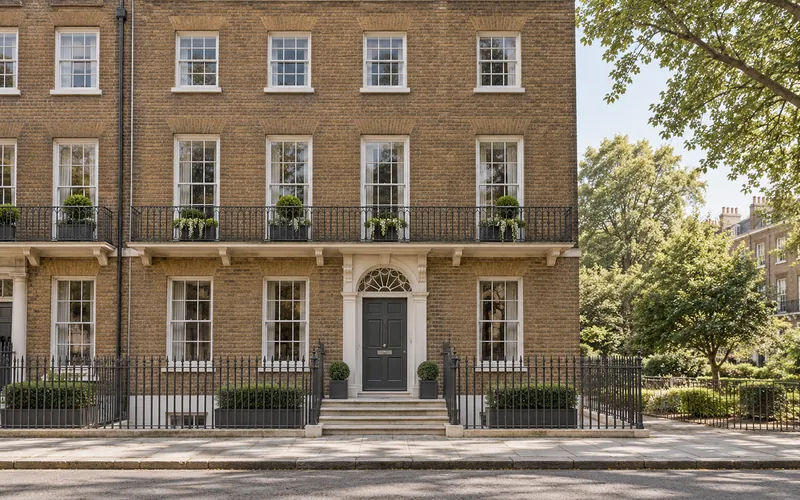
Georgian brick façade with sash windows and a fanlight
Brick, sashes and a fanlight: the grammar of the Georgian street.

The society

Elegance ruled by reason

Under the four Georges, from 1714 to 1830, Britain grew rich on trade, agriculture and, before long, industry. A new merchant middle class joined the aristocracy in the spa towns and residential squares: Bath, Bloomsbury, Bedford Square. The Grand Tour of Italy schooled a whole generation's taste in antiquity and the villas of Palladio.

Good taste became a civic virtue. Architectural treatises and the pattern books of Chippendale and the Adam brothers reached even the craftsmen, and the Georgian house, from country seat to terraced townhouse, followed the same rules of symmetry and proportion.
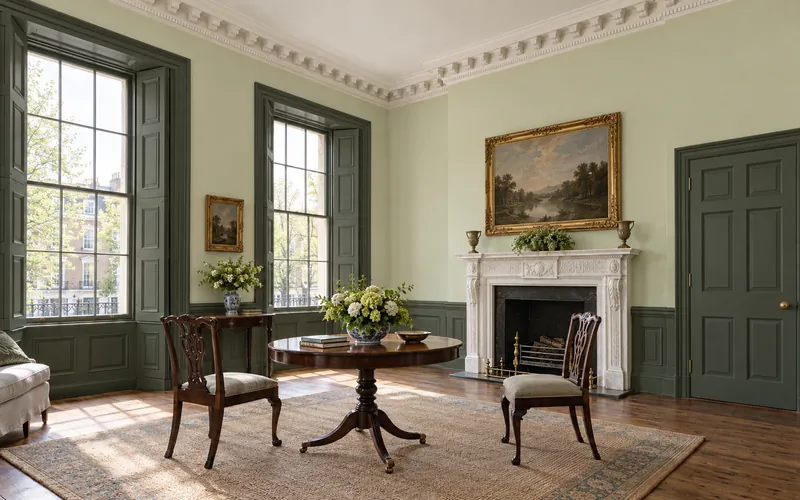
Panelled Georgian drawing room with soft green walls and deep green woodwork
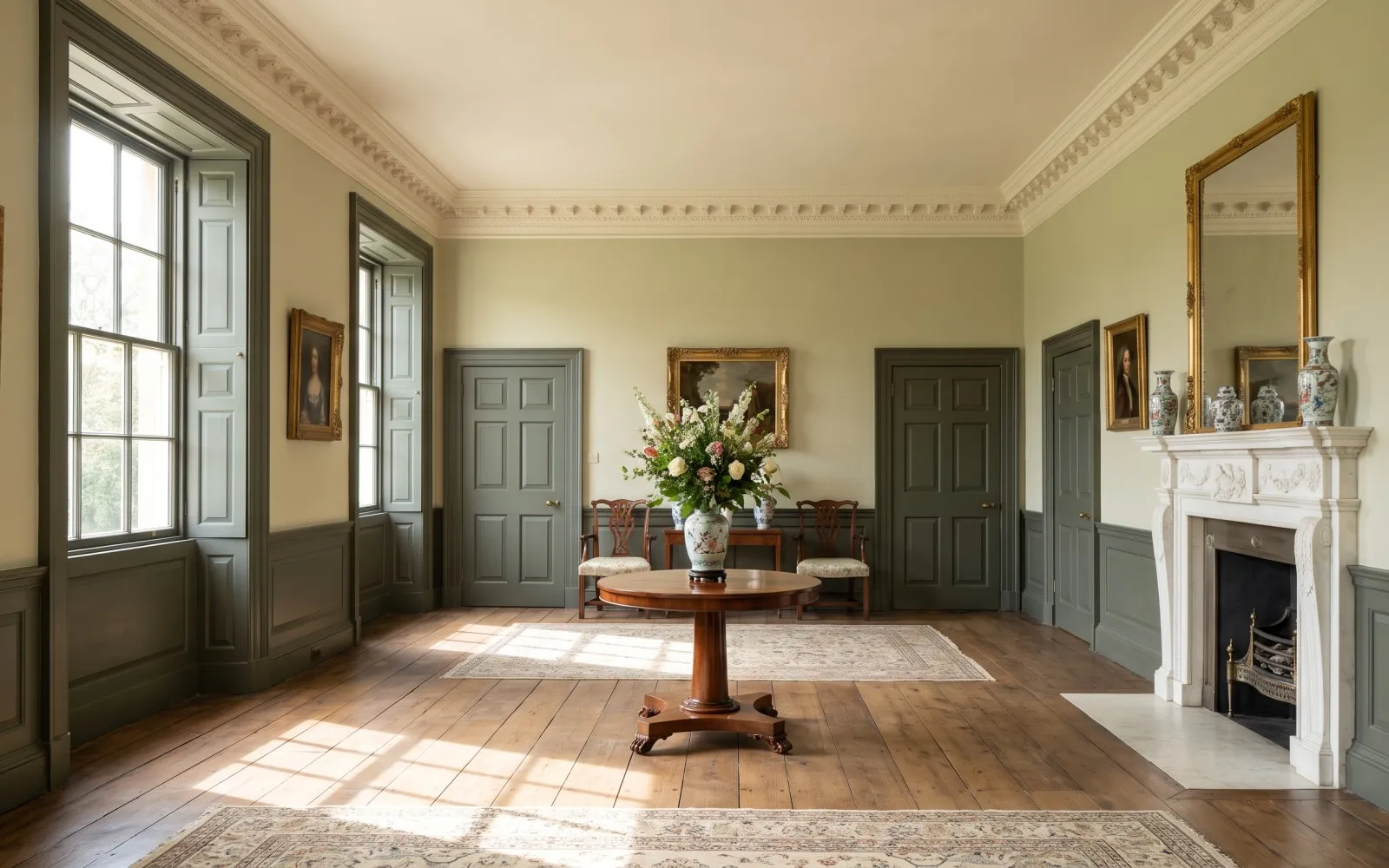
A reception room: Hurlingham above the dado, Pleasure Gardens Green on the woodwork.

The interior

Panelling, sashes and cornices

In the early decades walls were panelled from floor to ceiling; later the panelling stopped at dado height, with plastered wall, frieze and classical cornice above. Sash windows closed with folding internal shutters, doors had six panels, and the marble chimneypiece was the heart of the room.

The reception rooms on the first floor were tall and light; bedrooms and service rooms plainer. Around 1770 Robert Adam lightened everything with delicate plasterwork, medallions and softer colours, while mahogany replaced walnut in the cabinetmakers' workshops.

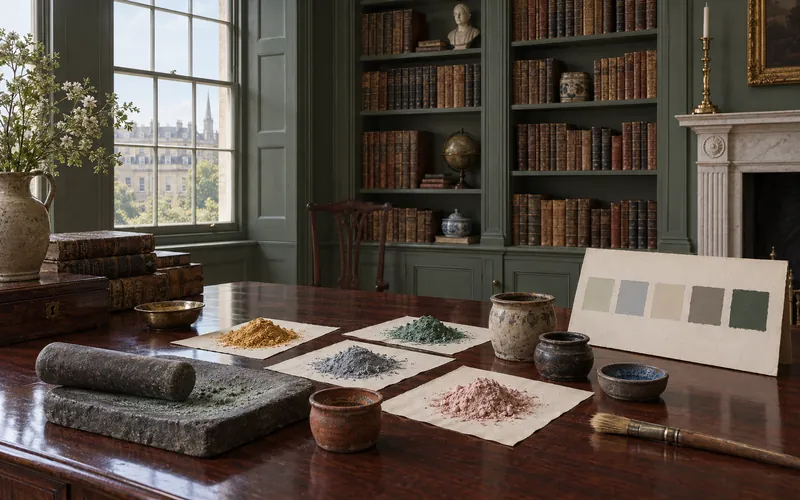
Still life of Georgian pigments and paint pots in a library
Earths, lead and verdigris: a house painter's palette around 1760.

The colours

From 'common colours' to costly ones

Painters of the day separated the 'common colours', ground from cheap earth pigments (stone, lead grey, cream, 'drab'), from the far dearer fine colours: verdigris, Prussian blue invented around 1704, pea green, straw, pink. A colour's price could be read on the wall: the finest were kept for the rooms where one entertained.

Plastered walls took a flat distemper; woodwork took linseed-oil paint, often in a deeper tone. Our Hurlingham, Mid Wedgwood, Temple Bar and Portcullis come straight down from those stones, soft greens and blue-greys.

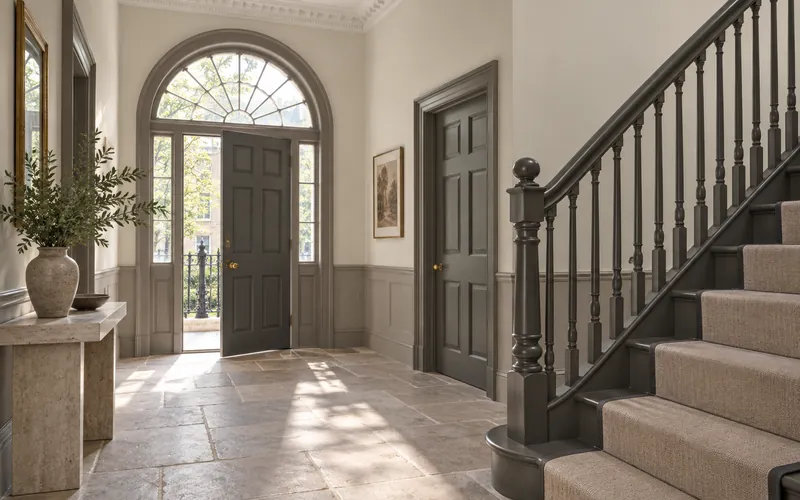
A Georgian hallway today, stone walls and a staircase painted deep grey
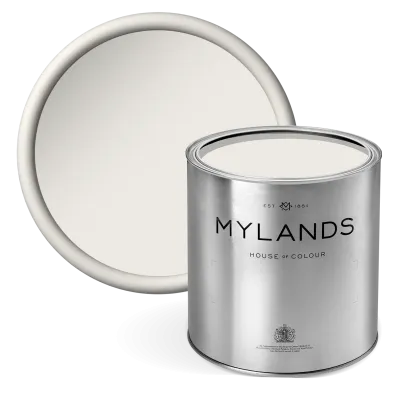
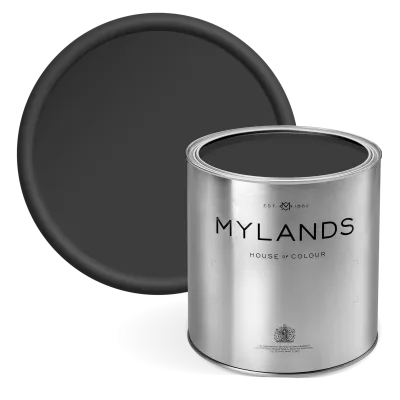
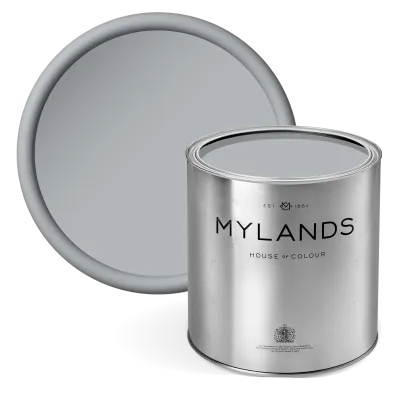
Three values of one family: Cadogan Stone, Egyptian Grey, Downing Street.

The legacy

And today?

Around 1811 the Regency of the future George IV made the palette lighter and bolder; yet two centuries on, the Georgian house remains the ideal of proportion we keep returning to. Its colours, never loud, are also the easiest to live with.

To capture the spirit, play wall, dado and woodwork in three values of one family: Cadogan Stone, Egyptian Grey and Downing Street, or Syon Park, Hurlingham and Pleasure Gardens Green, with Marble Matt Emulsion on the walls and Eggshell on the wood.

22 colours found

Showing 1 to 22 of 22 results

Show
per page
Sign up to our newsletter

Sign up to our newsletter

Thanks for signing up to our newsletter!