Design Advice

The Sixth Wall

After the ceiling, the floor: colour comes right down to your feet - solid, checkerboard or a painted zone - and the room changes its footing. Here is the art and the craft of the sixth wall, with six complete palettes to get you started.

Discover the palettes

Start here

What is the sixth wall?

The sixth wall carries colour onto the floor: a floor painted in one solid plane, a checkerboard of two shades, or a zone of colour that draws a rug under the table, marks out a corridor or announces an entrance. After the ceiling - the fifth wall that drenching rehabilitated - the floor is the last surface no one dared paint, and the largest of all after it.

The gesture is an old one: the painted floorboards of Scandinavian houses and English cottages, the marble checkerboards of Haussmann entrance halls, the stencilled floors of colonial homes. It returns today because it solves what open-plan rooms cannot: zoning without partitioning. It asks for a paint made to be walked on - which is precisely what our Decorative Floor Satin is, available in every one of our colours.


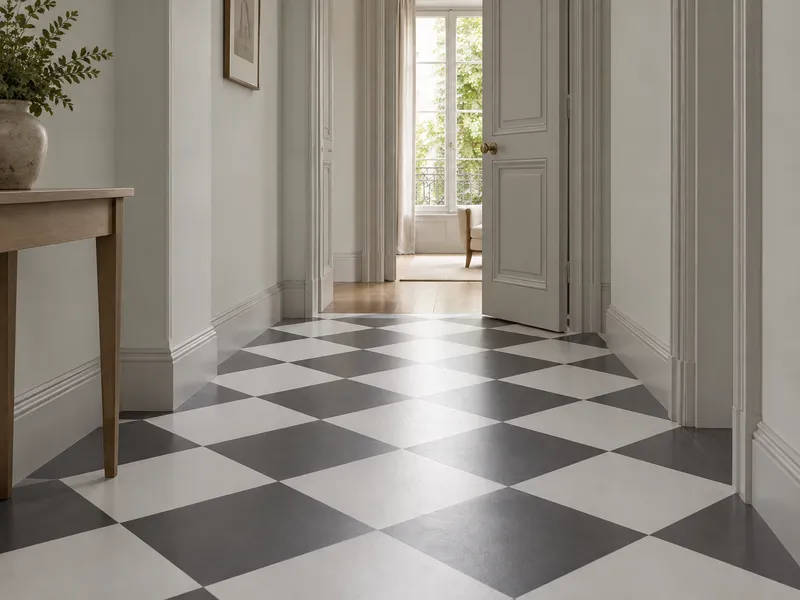
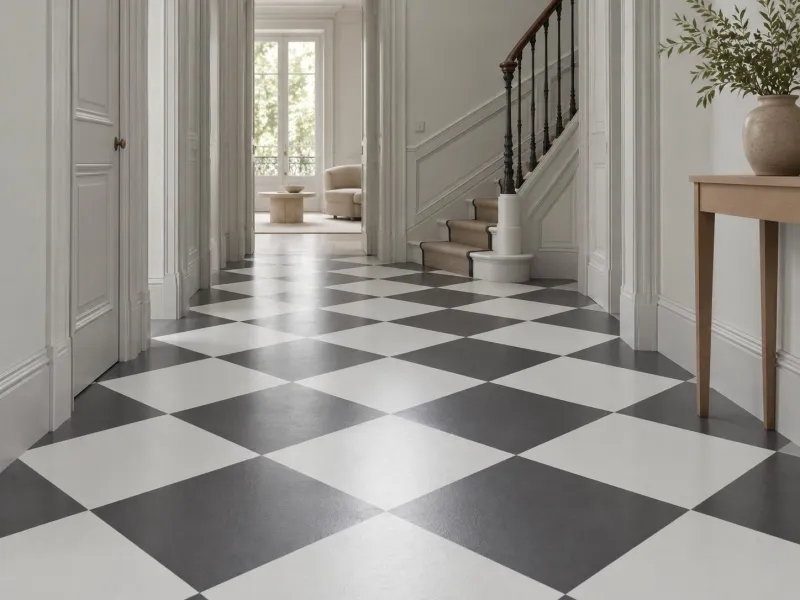
A checkerboard of two shades, and the corridor becomes an entrance hall

Why it works

Three effects of a floor in colour

The floor carries everything: the eye lands on it as you enter, before the walls. Three mechanisms explain what colour changes there.

01

The room zones itself without a partition

A plane under the table names the dining area; a pale zone in a dark room names the passage; a checkerboard in the hall says where you are before you have looked up. Without a wall or a piece of furniture, the painted floor organises an open room - and a painted rug never slips, never wears, never needs washing.

02

The room finds its footing

A deep floor anchors the furniture and the walls, like a base beneath a sculpture: tall rooms gain weight, bright rooms gain gravity. A pale floor does the opposite - it opens, it enlarges, it throws the light back up the walls, precious in a corridor or a north-facing room.

03

A tired floor is born again

Mismatched boards, visible repairs, parquet too yellow or too dark, dated tiles, the concrete of a conservatory: painted, the floor stops being a problem and becomes the decision of the room. It is the cheapest second life a floor can be given - and the most spectacular.

Your turn

Compose your sixth wall

Pick a palette, then compare the three floors: the solid plane, the checkerboard, the painted zone on the parquet. Walls, woodwork and ceiling follow the palette - watch what the room becomes each time.

The palette

The floor

Blackout · No.41 + Greenwich Time
The classic of entrance halls and kitchens: the colour and its related white, in squares set out with a chalk line. It enlarges by rhythm, forgives an uneven floor everything, and says "hall" before the walls do.

In real life a floor is painted in a finish made to be walked on. See the matter of the floor

Our palettes

Six floors, signed Mylands

Each palette starts from a floor colour and gives it its official companions: the checkerboard white, the wall shade, the woodwork, an accent for the one chosen contrast. Every swatch links to its colour, ready to sample.

Entrance hall with a soft black and white checkerboard floor, pale grey walls

01 · Entrance halls, corridors & kitchens

The Checkerboard

A soft black and a porcelain white, in squares: the hall floor of three centuries, on pale grey walls that leave it the floor.

Finishes Blackout and Greenwich Time floor in Decorative Floor Satin, Saint Johns walls in Marble Matt Emulsion, Grail skirting in Eggshell. London Brick on a console, a bench.

Palette saved →
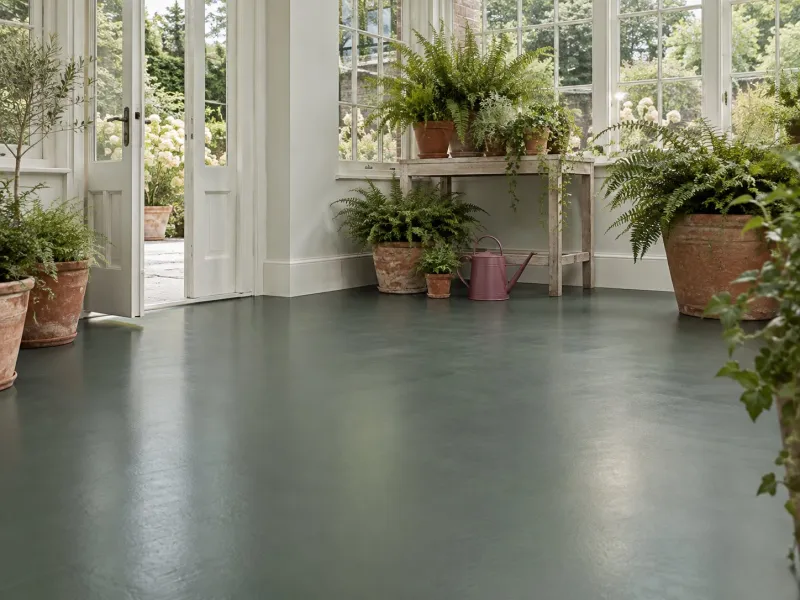
Conservatory with a floor painted deep green, lichen-white walls, plants

02 · Conservatories, kitchens & dining rooms

The Glasshouse

A near-black archive green underfoot, beneath lichen-white walls: the floor of an old glasshouse, showing off everything that grows on it.

Finishes Pleasure Gardens Green floor in Decorative Floor Satin, Saint Johns checkerboard, St Clement walls in Marble Matt Emulsion, Syon Park woodwork in Eggshell. Magenta on one armchair only.

Palette saved →
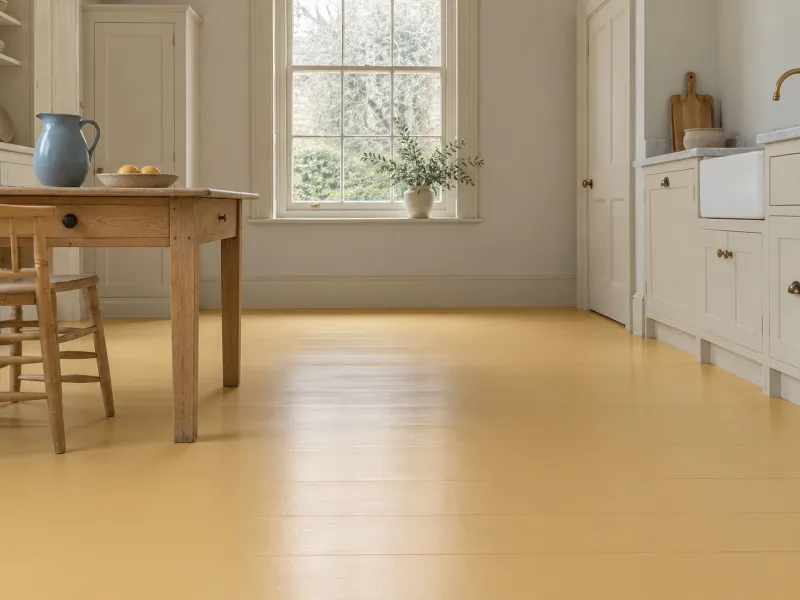
Kitchen with a floor painted golden yellow, chalk-white walls

03 · Kitchens, bedrooms & darker rooms

The Straw

A wheat gold underfoot, beneath chalk walls: the floor that manufactures sunshine in a north-facing kitchen, and dries the bare feet of a summer bedroom.

Finishes Golden Square floor in Decorative Floor Satin, Frieze checkerboard, Limestone walls in Marble Matt Emulsion, Cadogan Stone woodwork in Eggshell. Stockholm on the chairs, the door.

Palette saved →
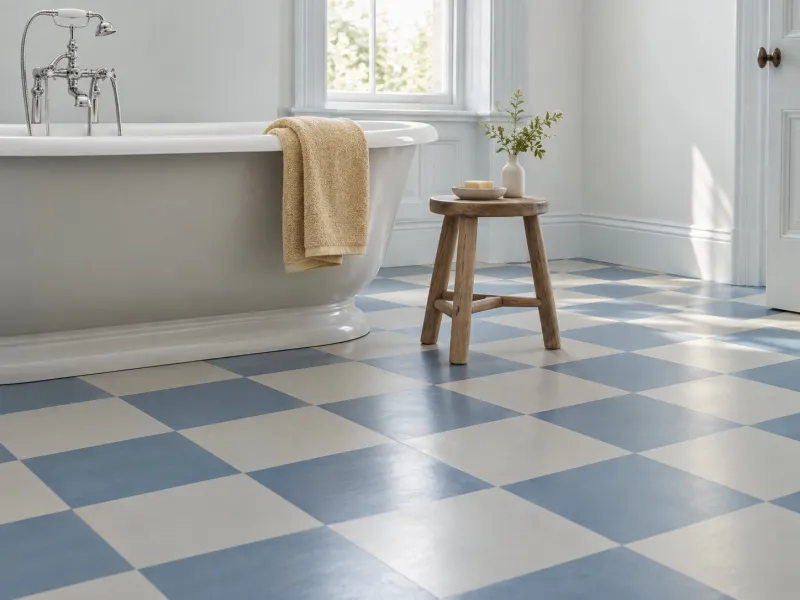
Bathroom with a floor painted sea blue, porcelain-white walls

04 · Bathrooms, children's rooms & utility rooms

The Tide

A sea blue underfoot, beneath porcelain-white walls: the floor of bathrooms and children's rooms, where you walk on water.

Finishes Boathouse floor in Decorative Floor Satin, Saint Johns checkerboard, Greenwich Time walls in Marble Matt Emulsion, Walpole woodwork in Eggshell. Cornhill on a towel, a stool.

Palette saved →
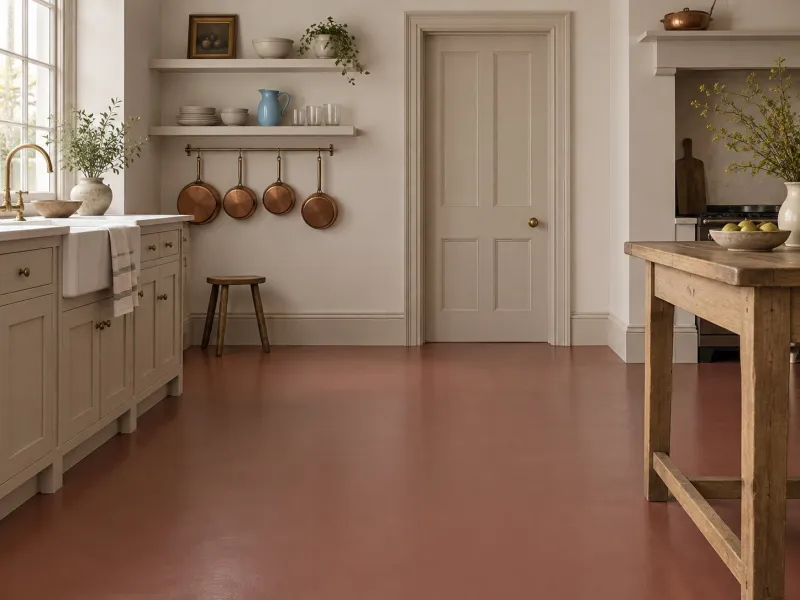
Kitchen with a floor painted earth red, plaster-white walls

05 · Kitchens, hallways & workshops

The Tomette

An earth red underfoot, beneath plaster-white walls: the Provençal tomette without the tile, for a kitchen, a hallway, a workshop.

Finishes Henna floor in Decorative Floor Satin, Limestone checkerboard, The Boltons walls in Marble Matt Emulsion, Grouse skirting in Eggshell. Bedford Square on a bench, a door.

Palette saved →
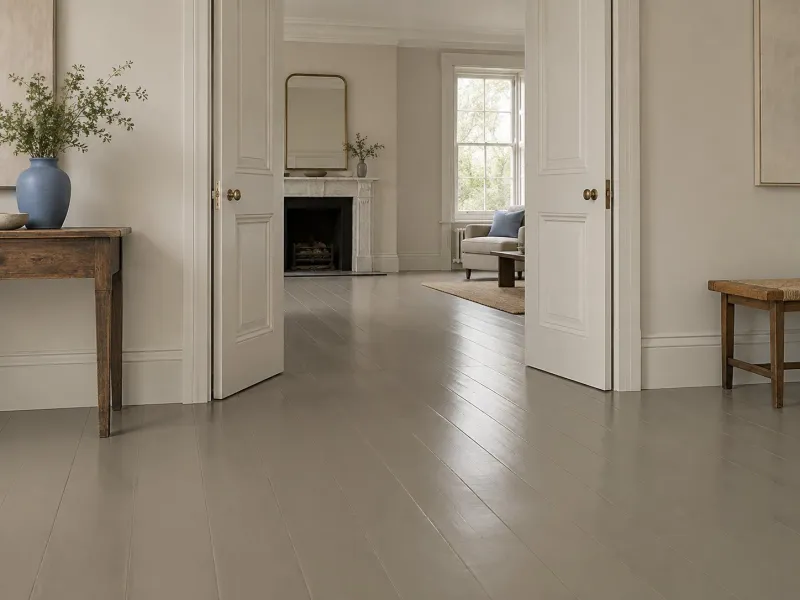
Run of rooms with a floor painted stone grey, sand walls

06 · Living rooms, corridors & staircases

The Sandstone

A warm stone grey underfoot, beneath sand walls: the most discreet of floors, unifying a run of rooms without ever drawing attention to itself.

Finishes Amber Grey floor in Decorative Floor Satin, Frieze checkerboard, Cadogan Stone walls in Marble Matt Emulsion, Limestone skirting in Eggshell. Wedgwood on one object only.

Palette saved →

Going further

The floor that climbs

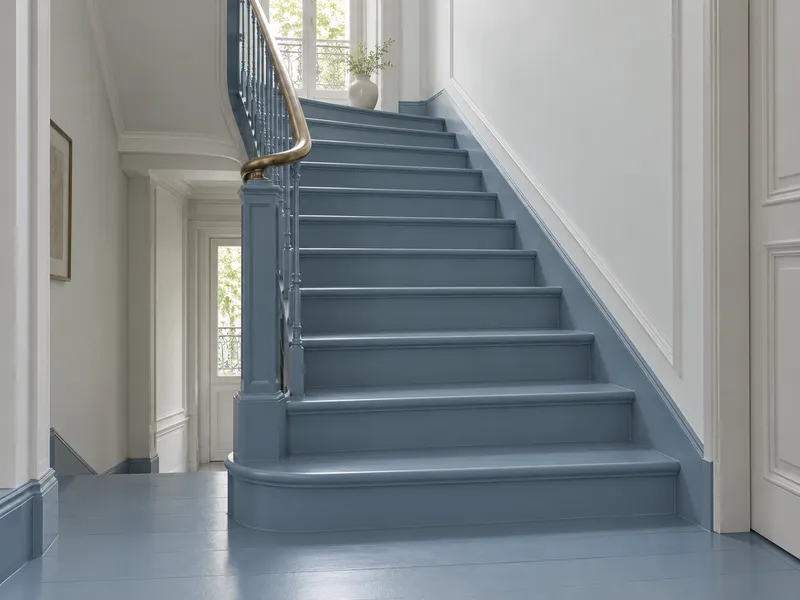
The connoisseur's variation: send the floor colour up the skirting, then up the stairs. Floor and skirting in the same shade, and the room loses its baseline - the floor reads larger, the walls taller. On a staircase, the same colour on treads, risers and string turns the stairwell into one volume flowing from floor to floor.

The golden rule: walls in a white related to the floor. A stark white over a deep floor redraws the baseline you had just erased; the colour's designated white lets it climb. Our official pairings give each shade its whites - that is where the wall that goes with the floor is chosen.

Boathouse · No.33 on the floor, skirting and stairs, Greenwich Time · No.8 on the walls: the sea blue climbs from one floor to the next, and the stairwell becomes a single room.

Amber Grey · No.156 on the floor and skirting, Cadogan Stone · No.59 on the walls: the stone erases the baseline, and the run of rooms reads twice as long.

Floor, skirting, treads: the colour climbs, and the baseline disappears
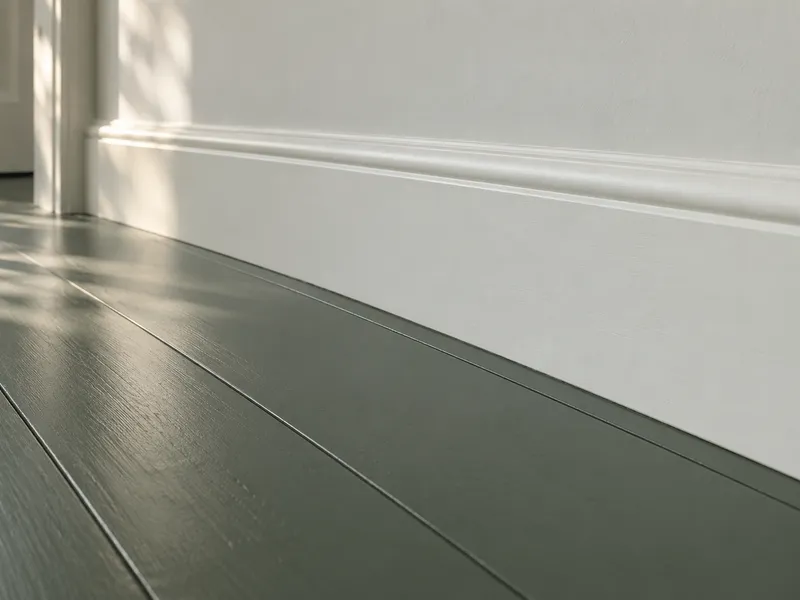
Detail of a floorboard painted in satin, the skirting and wall above it
The satin of the floor, the matt of the walls: the same colour, in the material each surface asks for

The matter

A colour made to be walked on

The sixth wall is first of all a matter of material: a floor is painted in a finish designed for footfall, chairs pulled out and mops. Our Decorative Floor Satin exists in every one of our colours - the same pigment as the walls, in a paint that stands up to wear. The walls stay matt, the skirting takes a notch of sheen, and the room reads as one piece, floor included.

Skirting & woodwork
Eggshell or Satin

The secret of a floor that lasts is in the preparation: wood sanded and dusted, tiles degreased and primed, concrete sound and dry. Two thin coats beat one thick one, and the floor is left to harden for a week before the first piece of furniture - two to four for a full cure.

Find your finish

The rules of the art

Getting your sixth wall right

Preparation is everything

On floorboards, sand back to bare wood, dust twice, prime; on tiles, degrease, sand to take the shine off, prime with a suitable adhesion primer. A badly prepared floor flakes in six months; a well-prepared one lasts ten years.

Set the checkerboard out with a chalk line

Start from the centre of the room, never from a wall - walls are not straight. Squares of 30 to 45 cm for a hall, larger for a living room, laid on the diagonal to widen. The pale colour first, over the whole floor; then the tape, then the dark.

Two thin coats, a week of patience

One thick coat marks and dries badly; two thin coats harden right through. Let the floor breathe between the two, then a week before the furniture goes back - with felt pads under every leg. A full cure takes two to four weeks.

Start with a zone

Before painting a whole floor, paint a rug: a rectangle under the table, in front of the fireplace, at the end of the corridor. It teaches you what the colour does at your feet and how it ages, and it is often enough on its own. The whole floor will follow - or not.

Your sixth wall questions

Can you really paint parquet or tiles?

Yes, provided you prepare and choose the right paint. Parquet is sanded back to bare wood, dusted and primed; tiles are degreased, keyed with abrasive paper and given an adhesion primer. Then two thin coats of Decorative Floor Satin, designed for footfall and washing. Our Decorative Floor Satin exists in every one of our colours.
Does a painted floor last?

Well prepared and left to harden, a painted floor lasts for years in a bedroom or a living room, and is refreshed with one coat in a busy hallway. A full cure takes two to four weeks: a week before the furniture goes back, with felt pads, and no wet mopping for the first month.

Which colour for a floor: pale or deep?

Deep, it anchors the room and hides dust less well than people think; pale, it enlarges and throws the light back, but shows marks more. The checkerboard holds both at once - which is why it has crossed three centuries. In a dark room a pale floor changes everything; in a tall white room a deep floor finally gives it weight.

How do I paint a zone, a \"rug\", on parquet?

Mark the rectangle in pencil with the furniture in place - 20 to 30 cm beyond the table on each side - sand the zone lightly to open the varnish, dust, prime, then lay good-quality masking tape and two thin coats of Decorative Floor Satin. Pull the tape away at 45° while the paint is still fresh. The parquet around it stays as it is.

How do I test before committing?

Order the 100 ml sample pots of the floor colour and its white, and paint them on the floor - directly on the boards, in a corner a piece of furniture will cover, or on a board laid where it will go. Walk on them, look at them at floor level morning and evening: a floor colour is never judged standing in front of a wall. Our online visualiser also lets you try the wall shade on a photograph of your own room.

A room has six walls. The last is the one you walk on - and it is time to paint it.
Sign up to our newsletter

Sign up to our newsletter

Thanks for signing up to our newsletter!