Method
How to test a paint colour at home: the 7-step method
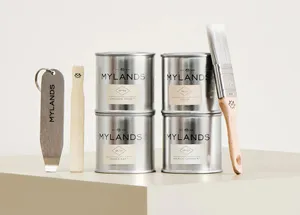
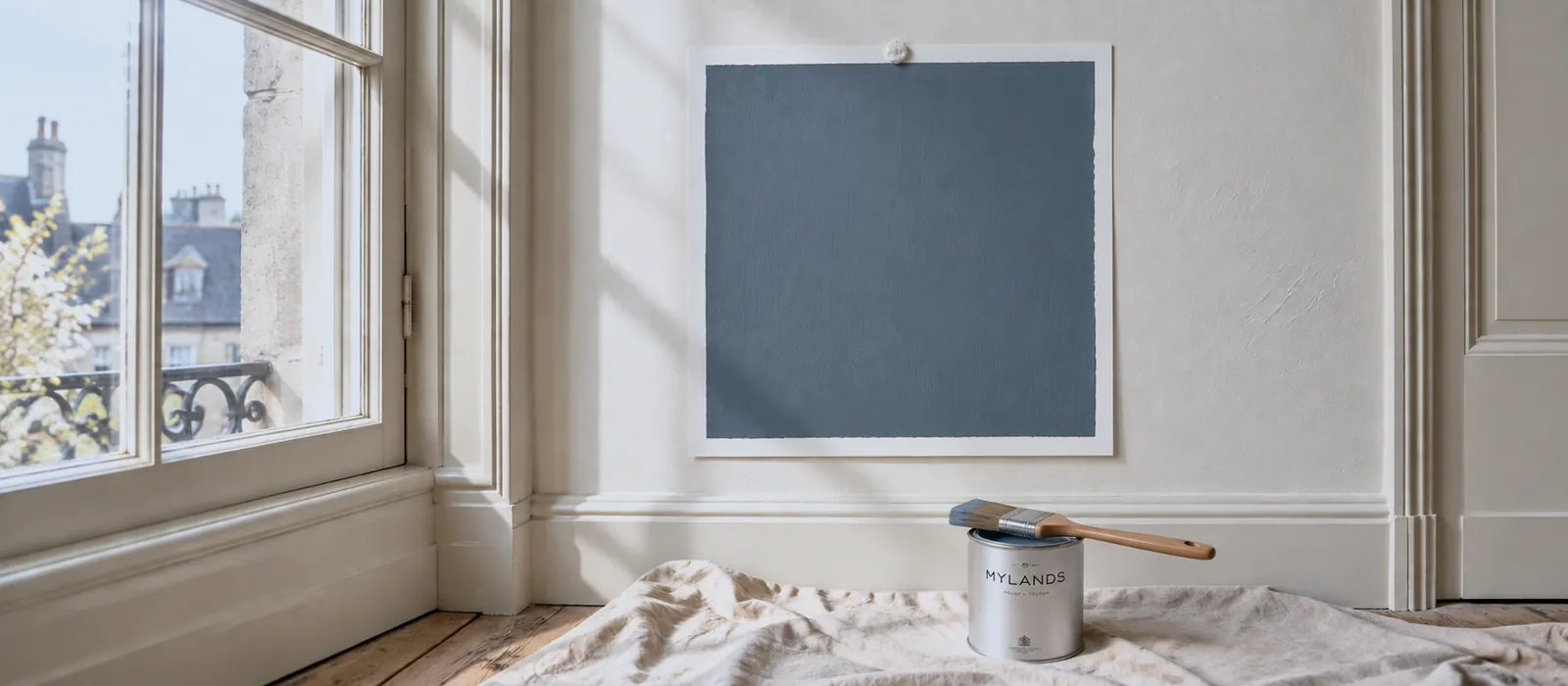
Paint your sample pot in two coats on thick card rather than on the wall, let it dry, then move the boards around the room: by the window, in the darkest corner, next to the floor and the woodwork. Look at them in the morning, the afternoon and the evening under your own lamps, over two days. A 100 ml pot covers about 1.5 m², or three 50 × 50 cm patches in two coats. Test the finish at the same time as the colour: a matt and a satin do not render the same shade.
Page updated September 2026 · by the Mylands France colourists
Understand
Why a colour card is not enough
A colour card tells the truth about the colour, not about your room. Three things change between a 3 cm chip and a 12 m² wall: the light (a north window cools every shade, a south window warms it), the scale (four walls reflect into each other and intensify the colour) and the neighbours (an oak floor throws back yellow, grey tiles throw back grey).
A screen adds a fourth variable: no screen is calibrated like a tin of paint. So the colour card shortlists; the sample pot decides. Our page How light affects colour covers the first point, our article on the undertones of white the third.
The method
The 7 steps
-
01
Shortlist three shades, not ten
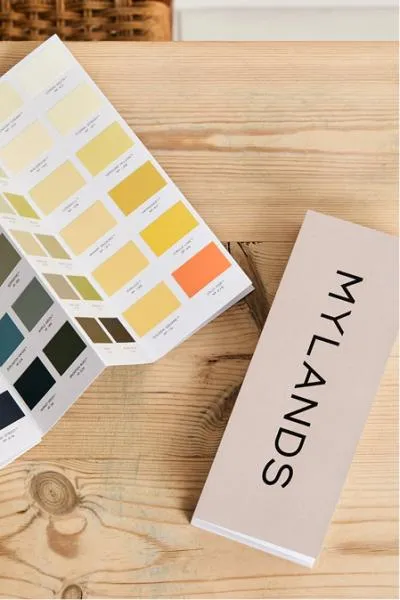
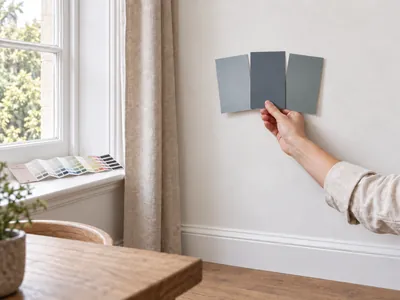
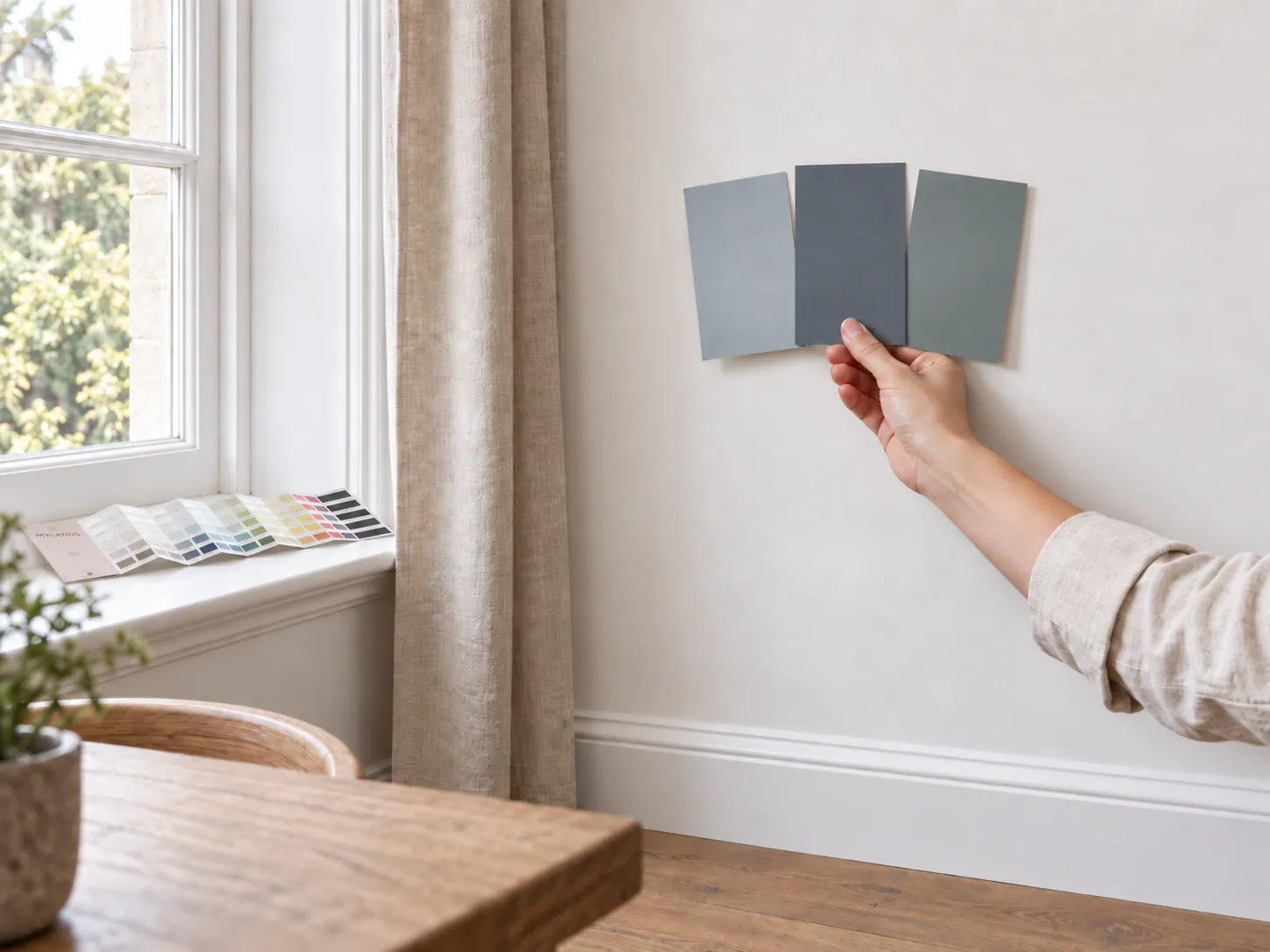
Order the free colour card and make a first cut in the light of the room in question. The visualiser, working from a photo of your room, helps rule out false leads. Beyond three candidates per surface you are no longer comparing, you are dithering.
-
02
Order sample pots in the right finish
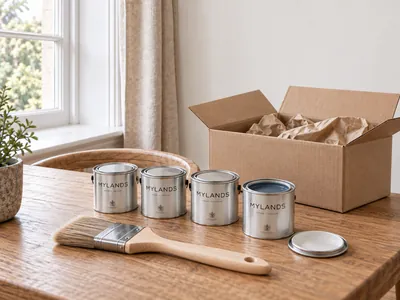
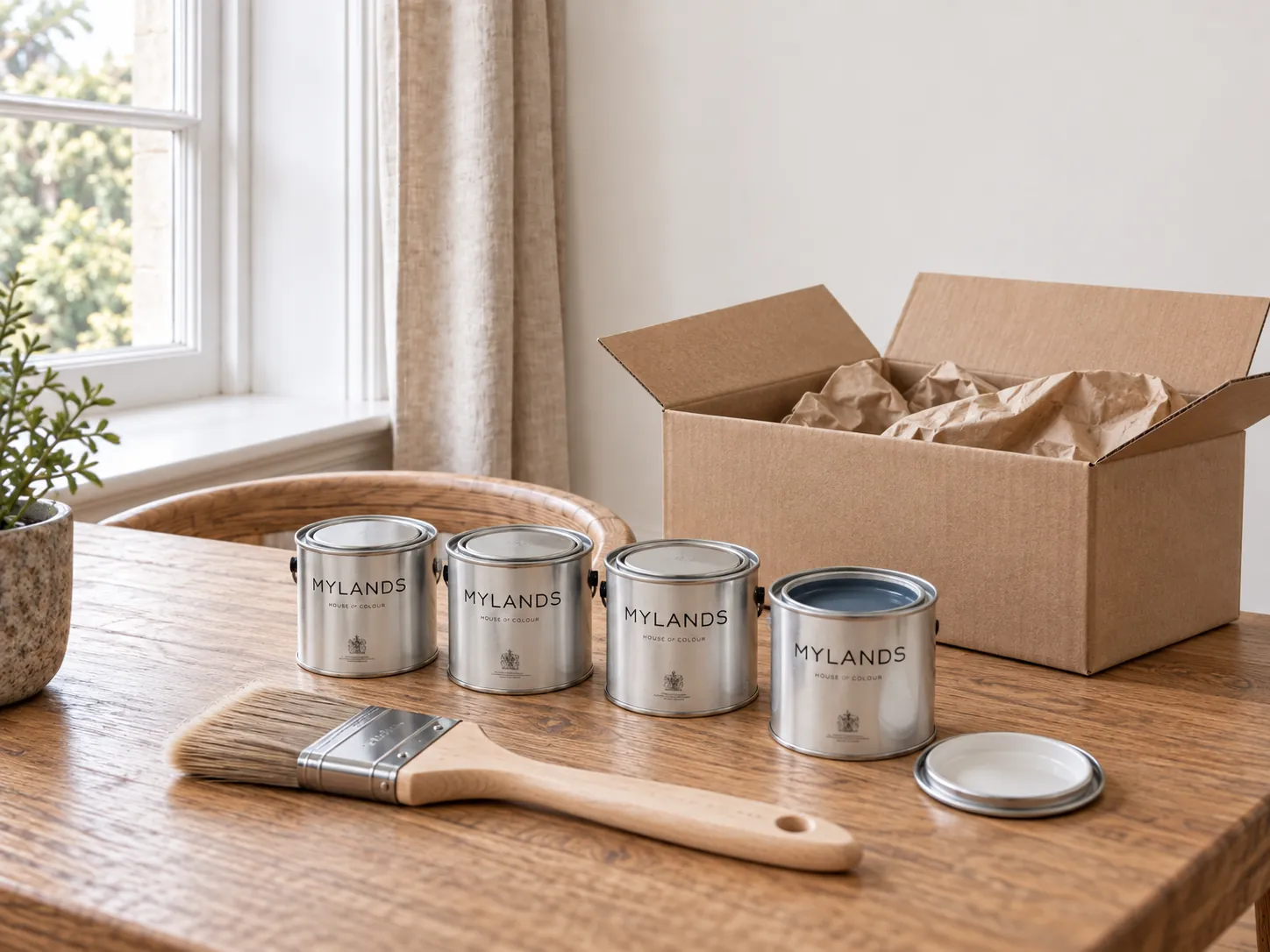
100 ml pots come in Marble Matt Emulsion, the wall finish; some Multi-Surface finishes are offered in 250 ml for woodwork and furniture. Each colour page shows what is available for the shade you are looking at. Buy two pots and get two more free, delivery included: take the shade you think you want, one lighter, one warmer or cooler, and the white for the woodwork.
-
03
Paint boards, not the wall
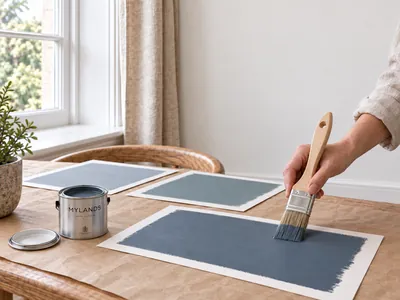
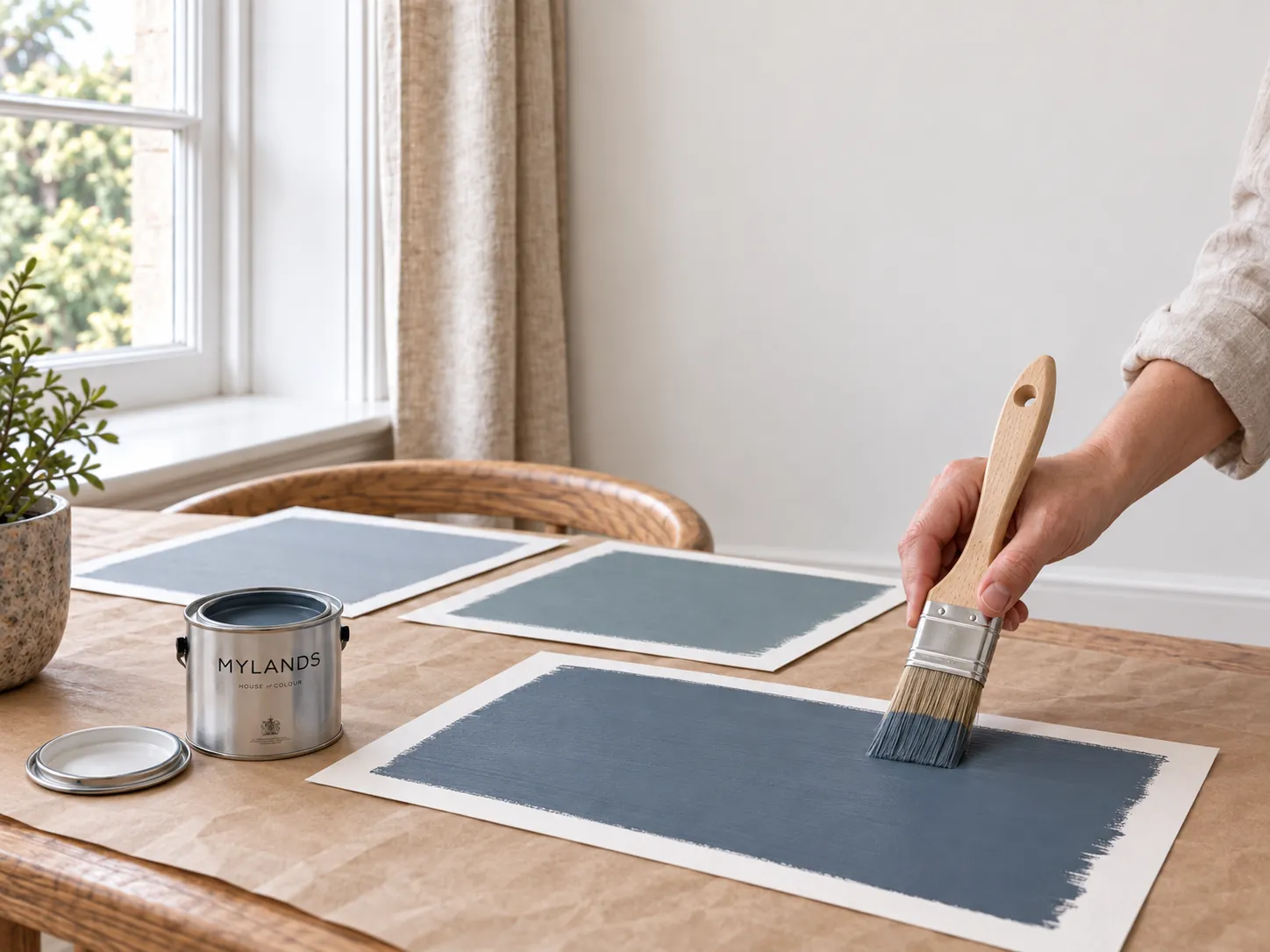
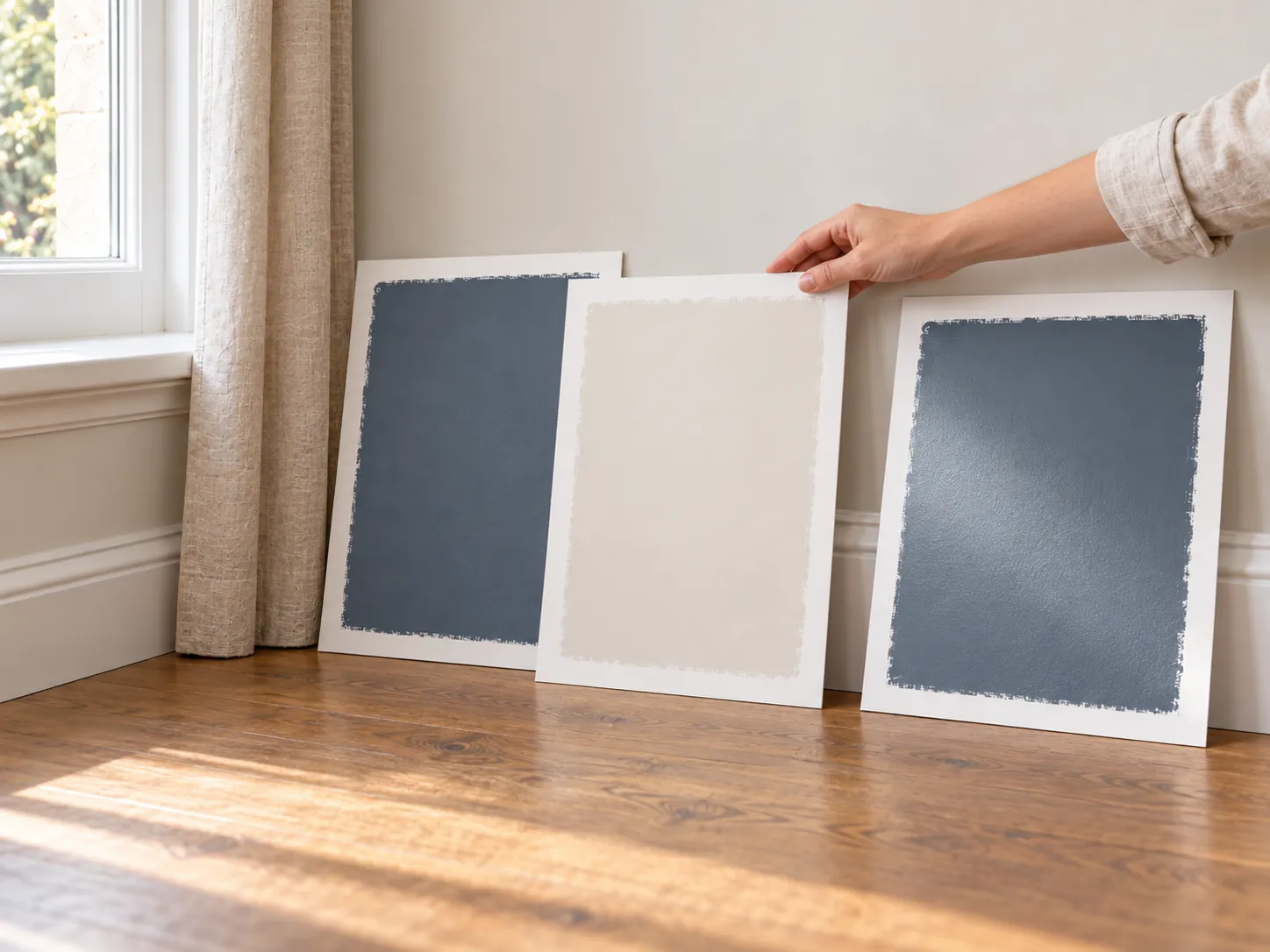
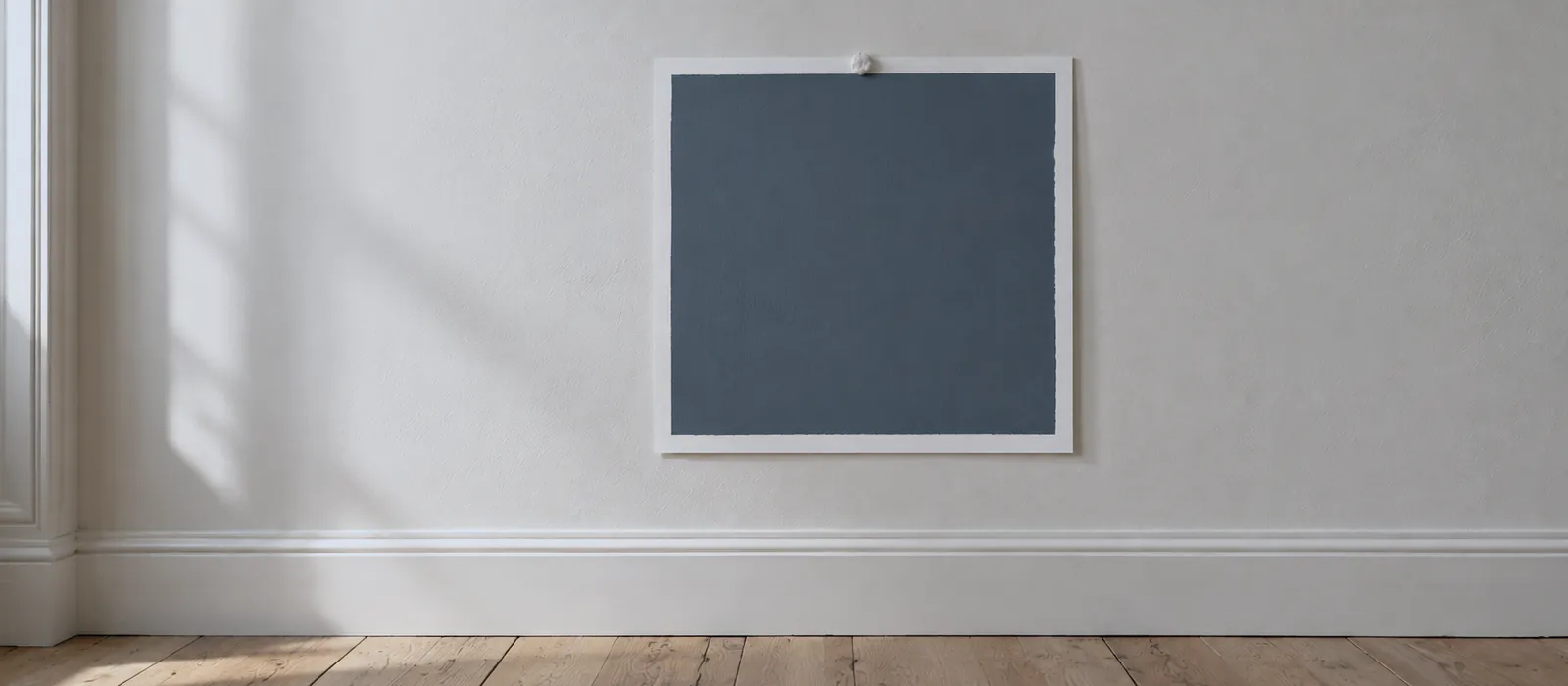
A thick A3 card, or a sheet of lining paper, takes two generous brush coats, the second after 3 to 4 hours' drying. Leave a 2 cm white margin all round: it isolates the shade from the wall's current colour, which would mislead your eye. One coat shows the ground through and lies about depth; it is the most common mistake. Write the name and number on the back.
-
04
Put them where the colour will live
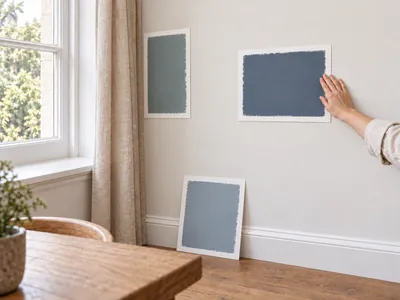
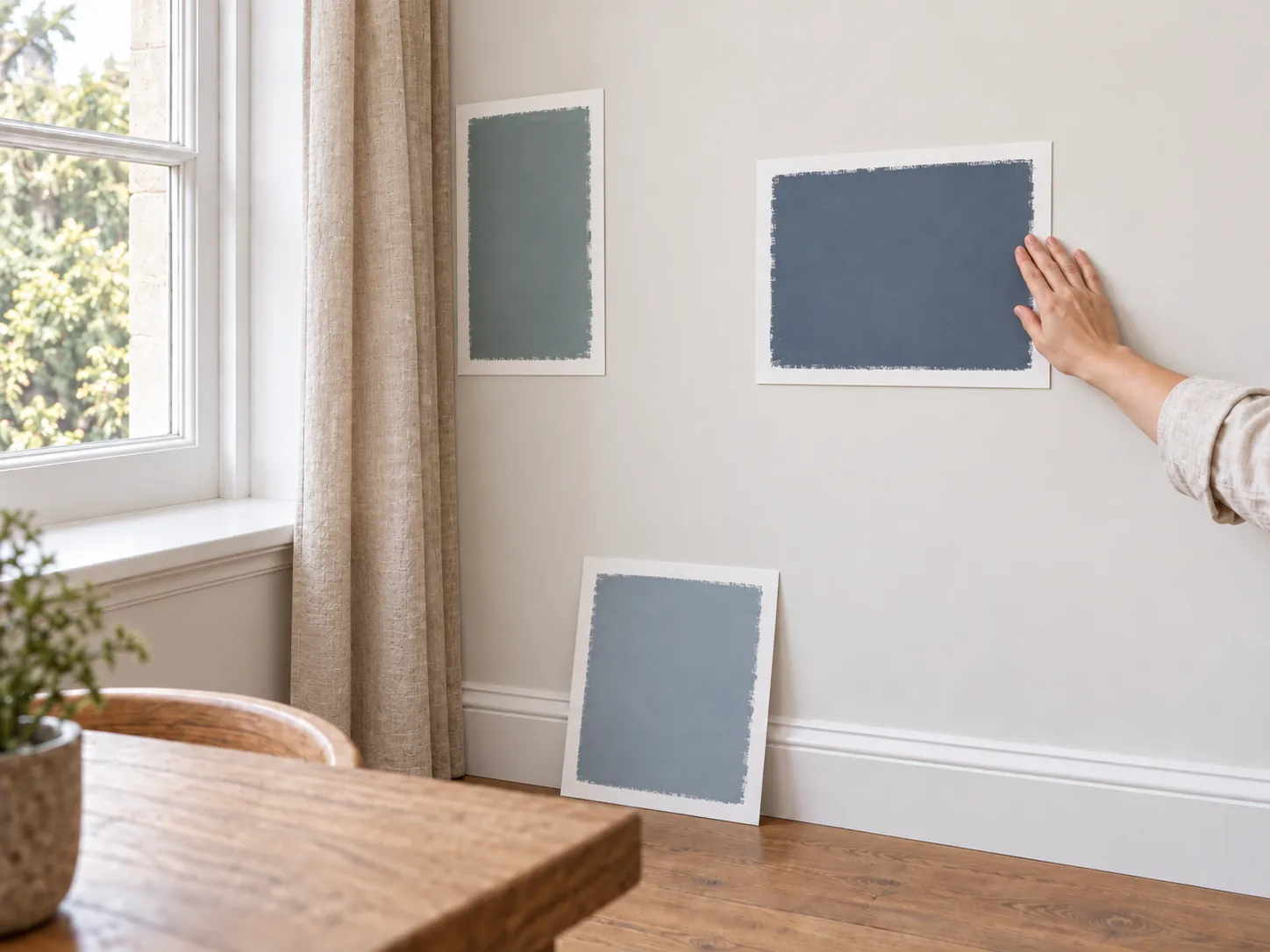
Fix each board with adhesive putty, in turn on the wall facing the window, on the wall at right angles to it, in the darkest corner. Stand one on the floor against the skirting, another beside the curtain, another near the door you intend to paint white. A colour is always judged with what surrounds it.
-
05
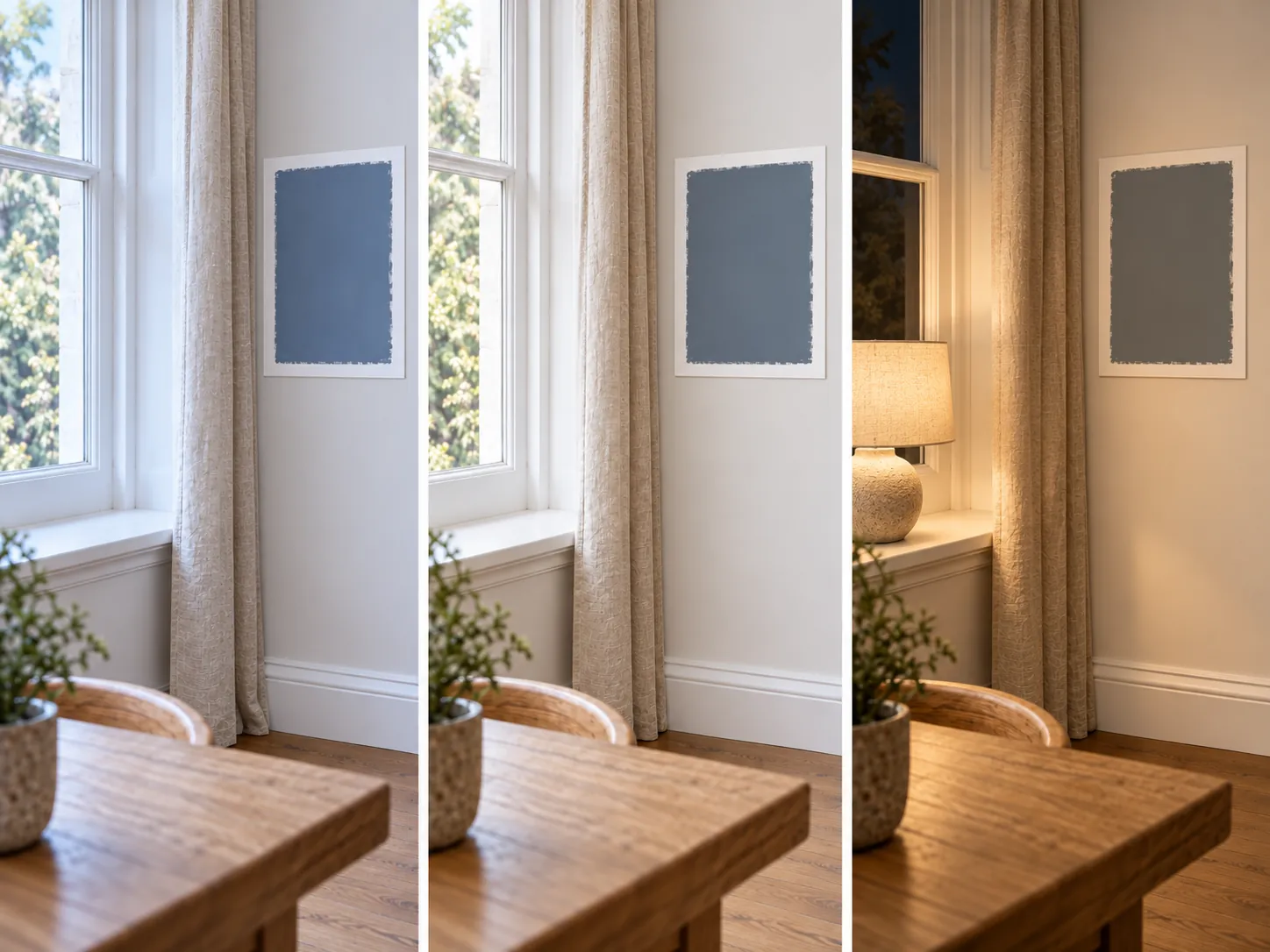
Look at three times of day, over two days
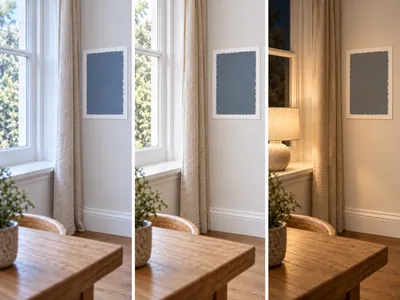
In the morning the light is cool and bluish; at midday it is neutral; in the evening your lamps, often 2700 K, warm and yellow it. A shade you like at all three times is the right one. A shade you like at only one time is a shade for a room you only use at that hour.
-
06
Test the finish and the white at the same time
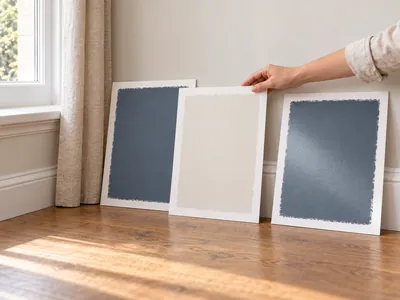
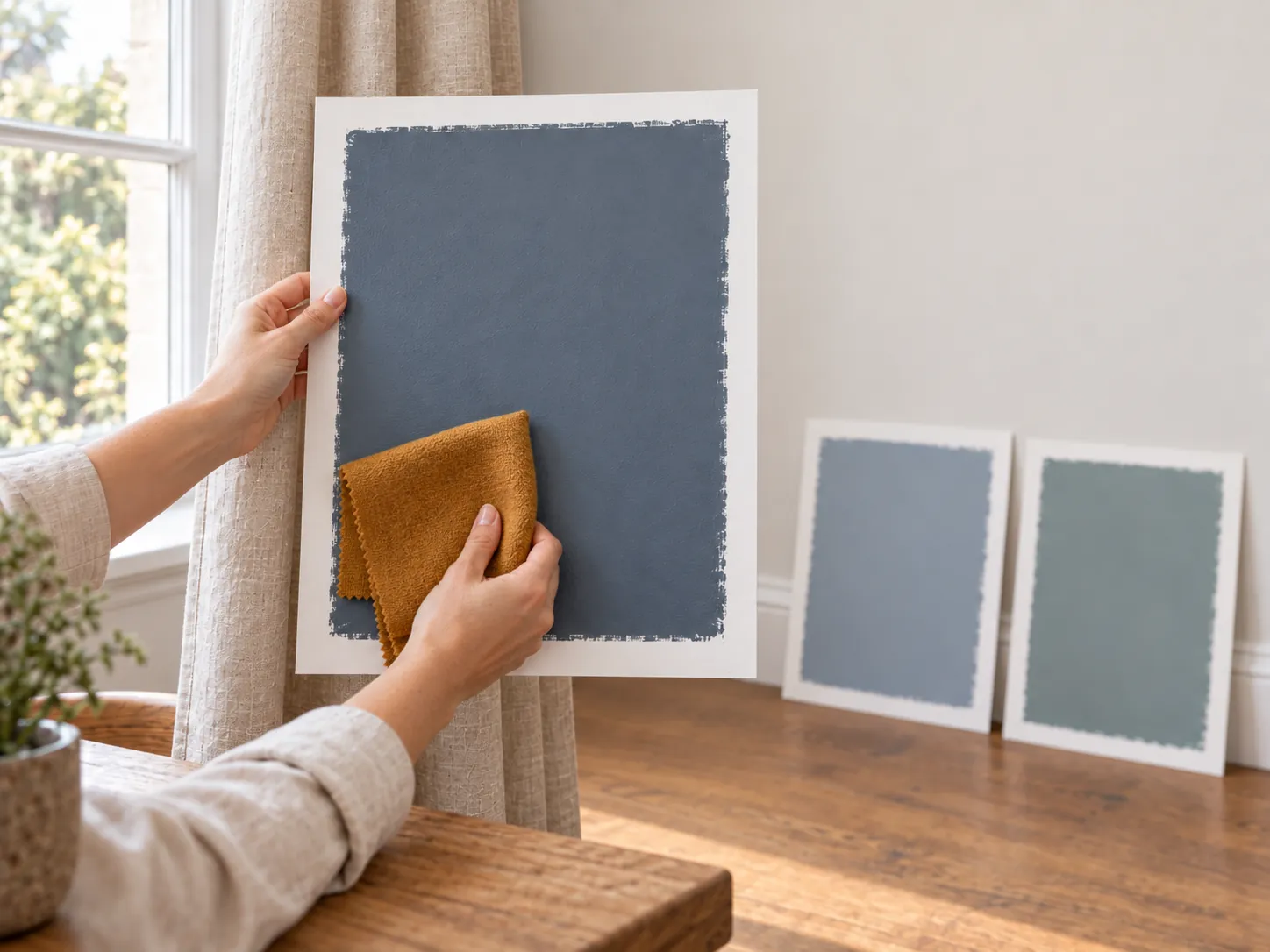
The same colour looks deeper and softer in Marble Matt Emulsion, lighter and livelier in Eggshell or Satin, because sheen throws light back — see Find your finish. If the woodwork is changing white, paint that white on a board and stand it against the colour: that pair is what you will live with, not the colour alone. For the ceiling, which white for a ceiling.
-
07
Decide with one simple rule
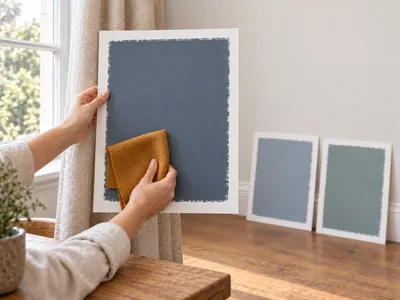
On four walls a colour gains intensity compared with the board, because each wall lights the others with its own hue. Between two close candidates, take the softer for a whole room and the bolder for a single wall, a door or a piece of furniture. Then keep the winning board: you will need it for curtains, fabrics and touch-ups. For how much to order next, our calculator.
Reference
How many pots for how many tests
| Size | Coverage | What it allows |
|---|---|---|
| 100 ml sample pot (Marble Matt Emulsion) | ≈ 1.5 m² | 3 A3 boards in two coats, or 3 patches of 50 × 50 cm |
| 250 ml sample pot (selected Multi-Surface finishes) | ≈ 3.75 m² | A whole door in two coats, or 6 A3 boards |
| Colour card | — | Every collection, chips painted in real paint, free |
| Colour box | — | Large A5 swatches to hold against the wall, when you want the size without the brush |
Indicative coverage, in two coats over a pale ground. The sizes actually available for a shade are listed on its page.
Avoid
The five mistakes that pick the wrong colour
- Judging a single coat: the ground shows through and the shade looks lighter and duller than it will be.
- Painting the test square in the middle of an already-coloured wall, which distorts the shade by contrast.
- Only looking in the evening, under warm bulbs that yellow everything.
- Testing a single shade with nothing to compare it to.
- Trusting a photo of someone else's house: their light is not yours.
FAQ
Sample pots, boards and timings
Can I test directly on the wall?
Yes, if the wall is white or very pale and you are about to repaint it. On an already-coloured wall, a board with its white margin gives a truer reading, and it moves.
How long before I can judge?
The paint is touch-dry in 1 to 2 hours and reaches its final shade once the second coat is dry, the next day. Allow two days of looking to see the colour in every light.
Do sample pots come in every finish?
No: 100 ml in Marble Matt Emulsion, and a selection of Multi-Surface finishes in 250 ml. Each colour page lists the sizes available.
Is a sample pot enough to paint a small piece of furniture?
A 250 ml pot covers about 3.75 m² in two coats: a door, a bedside table or the inside of an alcove. The 100 ml remains a testing tool.
Is the colour card accurate?
Yes, the chips are painted in real paint. But 3 cm of colour does not behave like 12 m²: the card shortlists, the sample pot decides. Other questions about samples are answered in our Paint advice FAQ.
"Choose the colour with your heart, check it with a sample pot."