Design Advice

Colour Drenching

One shade, floor to ceiling: colour drenching dissolves the room's boundaries and wraps it in atmosphere. Here is the art and the craft - with six complete palettes to get you started.

Discover the palettes

Start here

What is colour drenching?

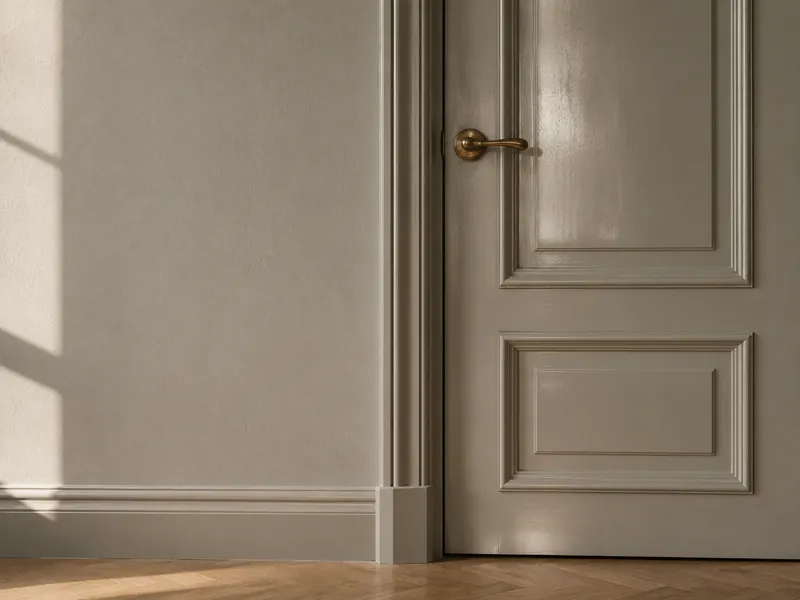
Colour drenching means painting every surface of a room in one single shade: the walls and the ceiling, but also the doors, skirting boards, mouldings, window frames - right down to the radiators. No more regulation-white ceiling, no more woodwork in default off-white: colour dresses everything, and the room becomes one continuous, enveloping volume.

The technique fills today's magazines, yet it extends a much older gesture: the painted cabinets of the eighteenth century, Victorian libraries and smoking rooms all wore a single colour with conviction. It simply asks for paint that can carry it - a deep shade built from carefully weighed pigments, available in a finish for every surface. Which is precisely how our colours have been made in London since 1884.


Walls, woodwork, radiator: one single shade, and the room becomes a jewel case

Why it works

Three effects of a single shade

Colour drenching is not merely an aesthetic stance: it plays on the way the eye reads a volume. Three mechanisms explain its power.

01

The room feels larger

Every break in colour - a white skirting board, a pale ceiling - is a boundary the eye registers, and boundaries shrink a volume. Remove them and the corners soften, the ceiling stops pressing down, the gaze travels without obstacle. Counter-intuitive but true, even - especially - with deep shades.

02

Your things take centre stage

Against a continuous backdrop, everything left unpainted gains new presence: a gilded frame, a foxed mirror, the brass of a wall light, the wood of a chest of drawers. Drenching turns walls into a jewel case - which is why galleries and cabinets of curiosities have always practised it.

03

Flaws simply vanish

An ungainly radiator, a visible pipe, an awkwardly placed door, a low ceiling, an odd corner: painted in the wall colour, they disappear from the reading of the room. Drenching is the ally of small, complicated spaces - hallways, entrances, attic studies.

Your turn

Compose your own drench

Pick a shade, then raise the immersion level by level: walls only, woodwork included, ceiling included, furniture included. At every step, watch what the room gains.

The shade

The level of immersion

Pleasure Gardens Green · No.214
The fifth wall joins in: corners blur, height fades from attention, atmosphere takes over. This is colour drenching in the true sense.

In real life the material changes from surface to surface - matt walls, eggshell woodwork. See the matter of drenching

Our palettes

Six drenches, signed Mylands

Each palette gathers the drenching shade and its official companions: a tonal sibling if you would rather soften the ceiling, a breathing white for reveals and cupboard interiors, an accent for the one chosen contrast. Every swatch links to its colour, ready to sample.

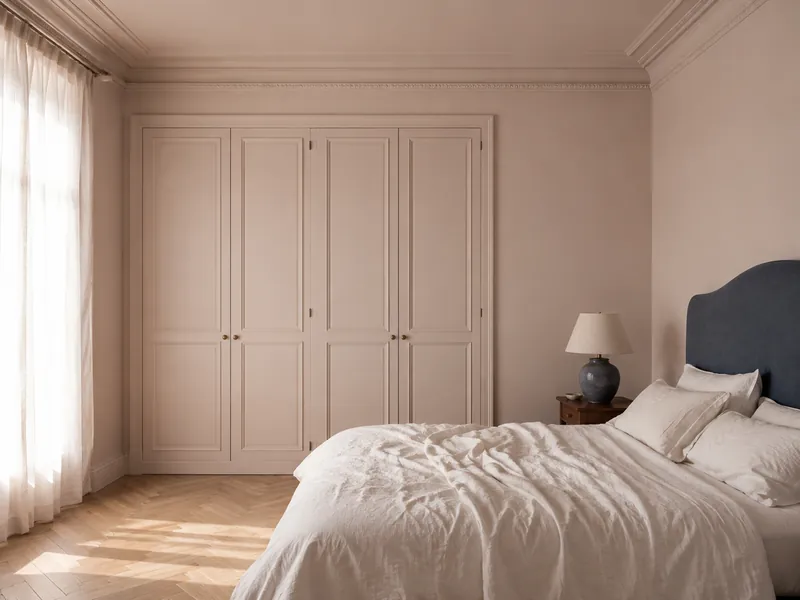
Bedroom drenched in a soft plaster pink, woodwork and ceiling included

01 · Bedrooms & light-filled sitting rooms

The Gentle One

A pink whitened like old plaster: the softest of drenches, warming a room without ever turning it sugary.

Drenching shade · walls, woodwork & ceiling Threadneedle · No.262 #DED0C7

Finishes Walls & ceiling in Marble Matt Emulsion, woodwork in Eggshell. Keep the Observatory accent for a bedhead, a door, an armchair.

Palette saved →
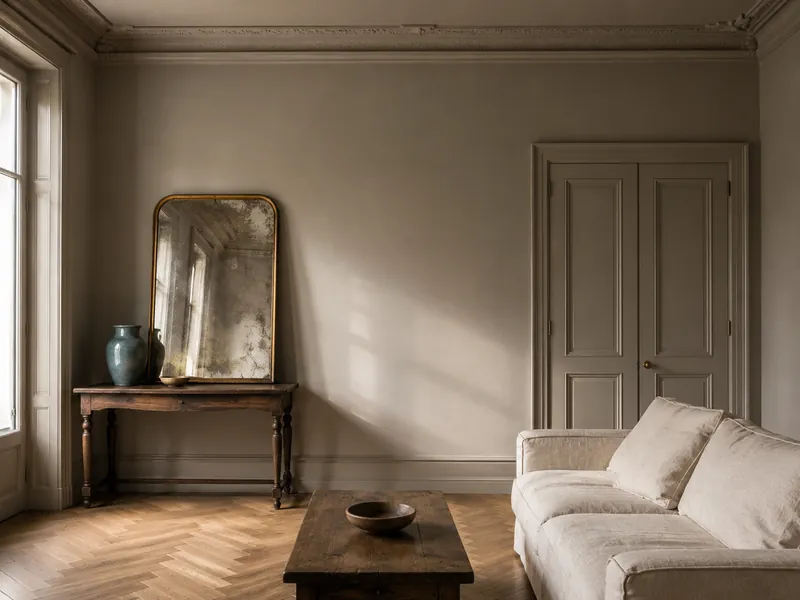
Living room drenched in a mineral greige, walls, mouldings and ceiling in the same shade

02 · Living rooms & hallways

The Mineral One

A stone-like greige, warm and composed, lending living rooms the quiet gravity of an old house.

Drenching shade · walls, woodwork & ceiling Egyptian Grey · No.154 #AEA391

Finishes Walls & ceiling in Marble Matt Emulsion, woodwork in Eggshell. Amber Grey deepens an alcove or bookcase; Stockholm wakes the scheme in small touches.

Palette saved →
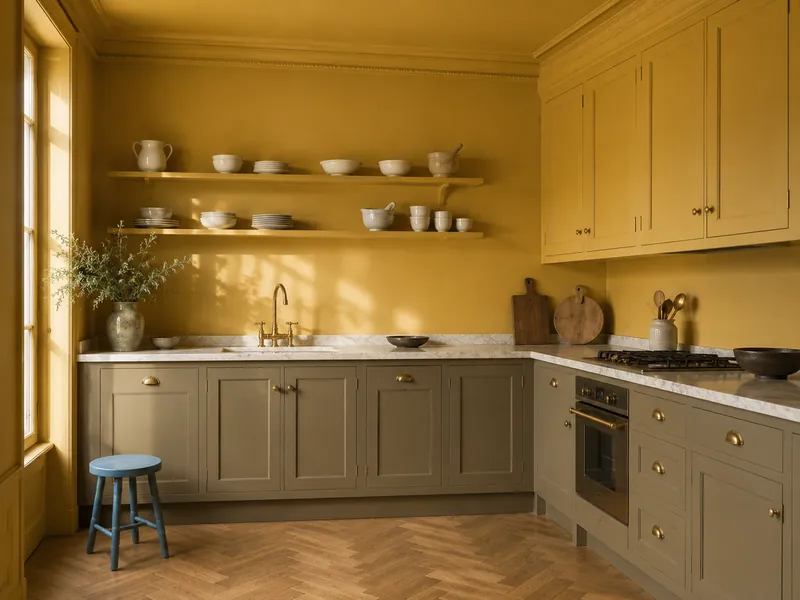
Kitchen drenched in a warm ochre yellow, walls, cupboards and ceiling included

03 · Kitchens & darker rooms

The Solar One

An ochre ripened like honey: the shade that manufactures sunshine in rooms that lack it.

Drenching shade · walls, woodwork & ceiling Haymarket · No.47 #DBB55D

Finishes Walls & ceiling in Marble Matt Emulsion, cabinet fronts and woodwork in Eggshell or Satin. Portcullis grounds lower cupboards and skirting; Boathouse cools it in counterpoint.

Palette saved →
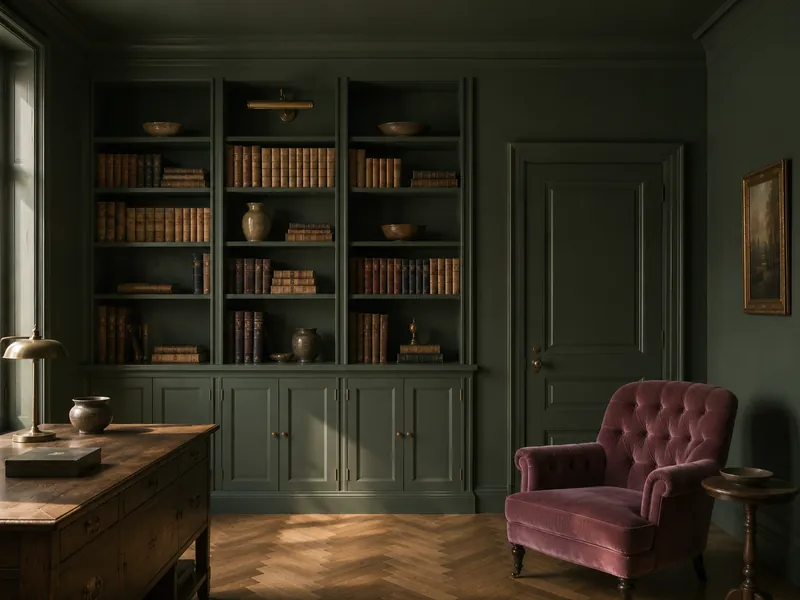
Library drenched in a deep green, shelving and ceiling in the same shade

04 · Studies, libraries & dining rooms

The Botanical One

An archive green, near-black in shadow, botanical in full light: the absolute classic of colour drenching.

Drenching shade · walls, woodwork & ceiling Pleasure Gardens Green · No.214 #455145

Finishes Walls, ceiling & bookcases in the same shade - woodwork in Eggshell for a gentle play of light. One Magenta armchair is enough to electrify the whole.

Palette saved →
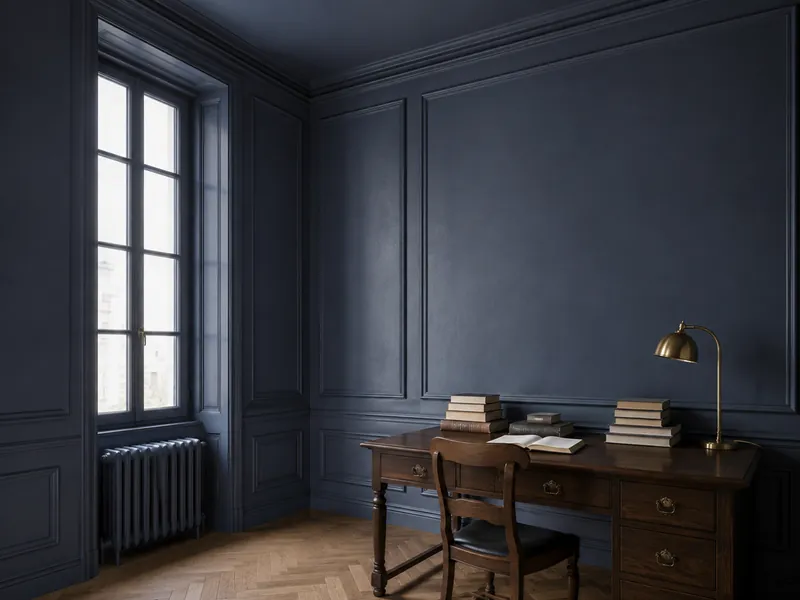
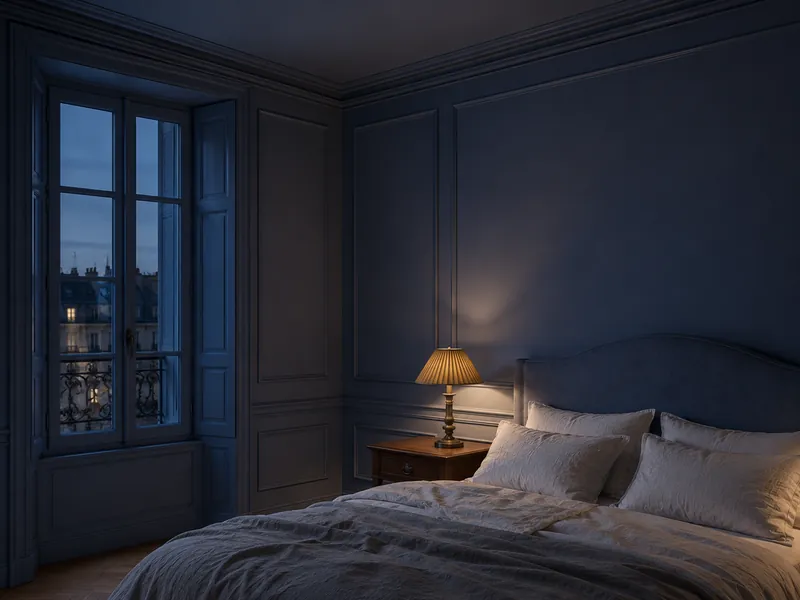
Bedroom drenched in a slate night blue, walls, woodwork and ceiling included

05 · Bedrooms & evening studies

The Nocturnal One

An ink blue softened with grey, cut for evening rooms: it drinks the light by day and makes it precious by night.

Drenching shade · walls, woodwork & ceiling Observatory · No.34 #4E5E7D

Finishes Walls & woodwork in Dead Matt or Eggshell, ceiling in Marble Matt Emulsion - or in Mayfair Dark for the duo drench. New Lime arrives on a lampshade, a throw, a book.

Palette saved →
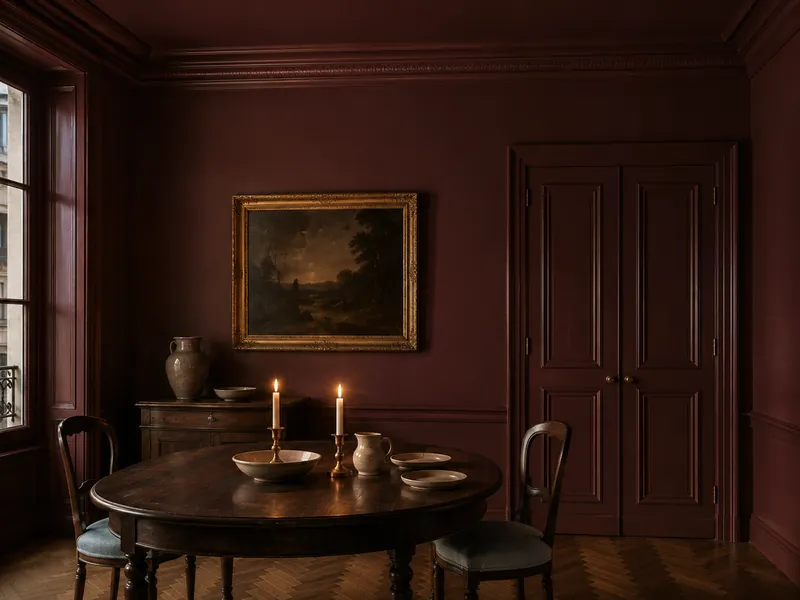
Dining room drenched in a deep claret, woodwork and ceiling included

06 · Dining rooms & evening sitting rooms

The Theatrical One

A tannic claret, sumptuous by candlelight: the drench of dining rooms that entertain and sitting rooms that keep late hours.

Drenching shade · walls, woodwork & ceiling Huguenot · No.49 #703E43

Finishes Walls & ceiling in Marble Matt Emulsion, woodwork in Satin to catch the flame. Plum Tree as a duo ceiling; Bridge Blue as a breath of air on a chair or an adjoining pantry.

Palette saved →

Going further

The duo drench

The connoisseur's variation: keep the envelope, but shade it. Choose a second colour very close to the first - same family, same depth - and reserve it for the ceiling, a door or the skirting. From a distance the room reads as fully drenched; up close, a quiet relief reveals itself, like a garment lined in a subtly different cloth.

The golden rule: neighbouring values. Too frank a step would rebuild the very boundary the drench has just erased. Our official pairings do the work for you - every Mylands colour has its designated companions, composed to live together.

Observatory · No.34 on walls and woodwork, Mayfair Dark · No.218 on the ceiling: two blues of the same family, and the volume draws itself without ever breaking the envelope.

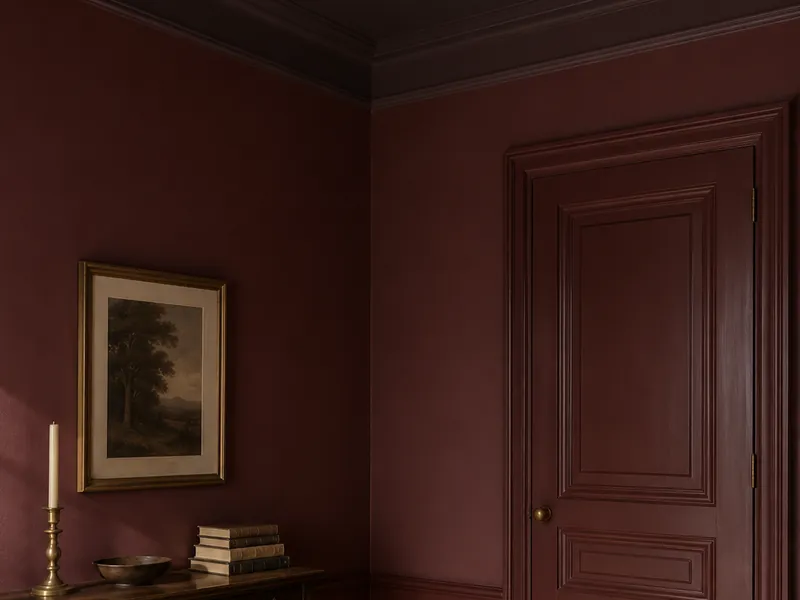
Huguenot · No.49 on walls and woodwork, Plum Tree · No.283 on the ceiling: the claret gains a plum dusk, theatrical by candlelight.

Two neighbouring shades, one atmosphere: the duo shades without breaking
Detail of a matt wall and satin woodwork painted in the same shade
The same shade, two materials: matt on the walls, a soft sheen on the wood

The matter

One shade, several finishes

The secret of a successful drench is not colour alone: it is material. The same shade is worn matt on walls and ceiling, where it drinks the light and forgives imperfections, and softly sheened on the woodwork, where it shrugs off knocks and draws a discreet play of reflections. One room, one colour - several materials in conversation.

Woodwork & doors
Eggshell or Satin
Radiators & metal
Multi-Surface Eggshell
Floors & stairs
Decorative Floor Satin

This is what makes drenching possible at Mylands: every one of our colours exists in every one of our finishes, from the deep matt of the walls to the satin of the floors. One reference, every surface.

Find your finish

The rules of the art

Getting your drench right

Sample on two surfaces

Paint your sample on a wall and on a piece of woodwork, and watch it morning, noon and night: a drenched shade has no white wall left to temper it - light becomes its only interlocutor. Our 100 ml sample pots exist for exactly this.

Leave no one behind

Skirting, reveals, curtain poles, radiators, pipes, the inside of alcoves: whatever stays white becomes a boundary again - and draws the eye precisely where you did not want it. Walk the room, list in hand, before opening the first tin.

Ceiling nerves? Go tonal.

Every palette above offers a tonal sibling: the same family, one value lighter. On the ceiling it preserves the enveloping effect while keeping the light - the transition is invisible, the drench intact.

Start small, think big

Guest cloakroom, corridor, entrance hall, study: small, complicated rooms are drenching's best proving grounds - one weekend, two litres, and nowhere is the effect more spectacular. The next room will only feel more obvious.

Your colour drenching questions

Does colour drenching suit small rooms?

It is where it excels. In a small room, contrasts - white skirting, a pale ceiling - multiply the visual boundaries and shrink the volume. One shade everywhere erases them: the gaze flows, corners dissolve, and the room gains in breadth what it loses in carving-up. Cloakrooms, entrances and corridors are drenching's classic playgrounds.

Do I really have to paint the ceiling?

For a full drench, yes: the ceiling is the fifth wall, and leaving it white caps the room. If the step feels daunting, two routes: the tonal sibling - the same colour family one value lighter, offered in each of our palettes - or a partial drench of walls and woodwork, already deeply enveloping. You can always go one level further at the next repaint.

Which finishes should a drench use?

The simple rule: Marble Matt Emulsion on walls and ceiling, Eggshell or Satin on woodwork, doors and radiators, Decorative Floor Satin on a floor or staircase. The same shade exists in every one of our finishes - which is what lets you dress each surface in the material it deserves without ever changing colour.

Won't a dark colour make the room feel smaller?

This is drenching's paradox: it is breaks that shrink a room, not depth. A dark wall edged in white becomes a box; the same dark carried up to the ceiling becomes an atmosphere, and the room's limits dissolve. Deep shades also grow richer under artificial light - which is why bedrooms, studies and dining rooms wear them so well.

How do I test before committing?

Order the 100 ml sample pots of your shade and its tonal sibling, paint at least 50 × 50 cm on a wall and on a piece of woodwork, and live with them for a few days - morning, evening, lights on. Our online visualiser also lets you try the colour on a photograph of your own room before the first brushstroke.

A room does not need many colours. It needs one colour, well chosen, worn with conviction.
Sign up to our newsletter

Sign up to our newsletter

Thanks for signing up to our newsletter!