Design Advice

How Light Affects Colour

No shade exists twice: it changes with the room's aspect, the hour of the day and your lamps. Here is why - and how to choose a colour you will love at every hour.

Watch light at work

Start here

Colour does not exist without light

A paint does not « own » its colour: it receives it. Pigment absorbs part of the light that strikes it and returns the rest - and that rest depends entirely on the light of the moment. Cool and steady from the north, gilded at sunset, amber under a lamp: the same wall is, quite literally, several colours a day.

This is not a flaw - it is the very life of a fine shade. Our colours are composed in London from richly weighed pigments for precisely this reason: the richer and more nuanced the pigment, the more it has to say back to the light - where a flat colour has only one answer, and often the wrong one. You simply need to choose your shade knowing the light that awaits it.


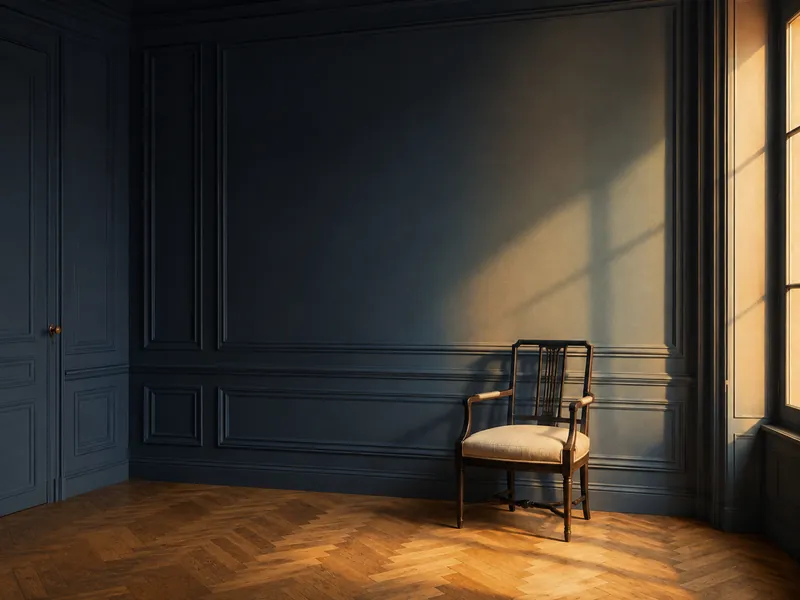
The same coloured wall caught between cool morning light and golden evening light
One wall, two moments: light makes and remakes the colour

Your turn

The same shade, morning to night

Pick a colour, set the room's aspect, turn the hours: walls, woodwork, ceiling and sky recalculate before your eyes. This is exactly what your room will live.

The shade

The room's aspect

The moment

Pleasure Gardens Green · No.214 Warm, abundant light: the shade lifts and warms. Cool colours soften, warm ones glow. The most neutral light of the day - the shade is « itself ».

A simulation of atmosphere, not a screen-accurate rendering: nothing replaces a sample painted at home - the full method is just below.

The decorator's compass

Four aspects, four lights

Before the colour card, the compass: a room's aspect decides the light it will receive all its life. Here is the character of each - and three shades that particularly thrive there.

North

Cool, constant light, no direct sun

North light is the steadiest in the house - painters chose it for their studios - but it is cold: it blues everything it touches and hardens pure whites. Warm it with shades built on warm undertones - plaster, honey, earth - and do not fear depth: better an enveloping room than a grey one.

South

Warm, generous light all day long

The easiest aspect of all: south light flatters nearly everything. It warms so well that cool shades settle - a blue-green reads serene rather than chilly - and already-warm colours can blaze. This is the room for daring the shades you thought « too cold » on the colour card.

East

Gold in the morning, greyer by afternoon

An east room lives in two acts: a gilded, almost pink morning, then a cooler afternoon once the sun has moved on. Choose by the hour you actually live there - an east bedroom is judged at waking. Balanced shades, neither frankly warm nor frankly cool, carry both acts with elegance.

West

Soft in the morning, ablaze at day's end

The mirror of east: a calm, cool morning, then the finest light of the day - the golden hour, setting the walls alight. Deep shades take on a spectacular richness in the evening: an ink blue turns velvet, a claret ignites. The dream aspect for evening sitting rooms and dining rooms.

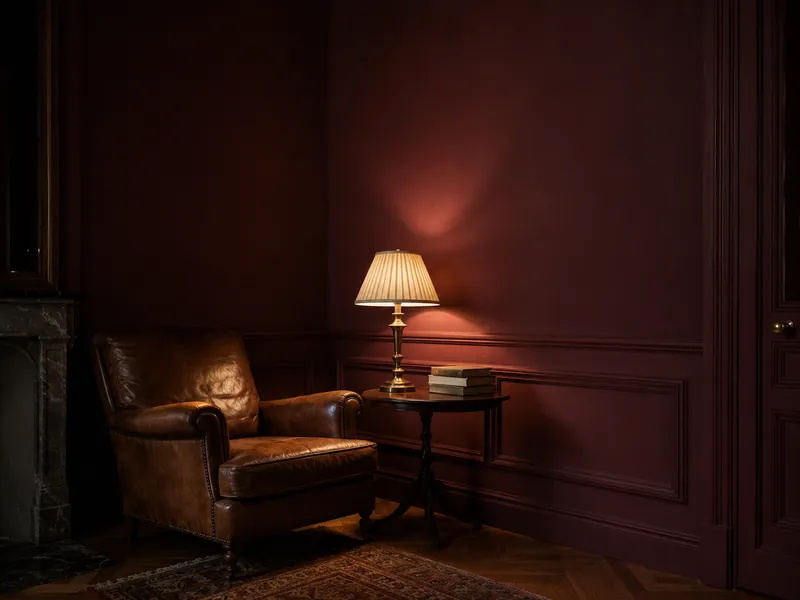
A dark room in the evening, lit by one warm lamp that turns the wall shade to velvet
Under the lamp the colour draws in and warms - deep shades' second life

After sunset

Artificial light, colour's second life

In the evening the light is yours to make - so choose it. A bulb's temperature reads in kelvins: around 2700 K, a warm golden light that turns deep shades to velvet and flatters nearly every colour; beyond 4000 K, a cold office light that pales the walls. For living spaces, stay between 2700 and 3000 K.

Check the CRI too - the colour rendering index, scored 0 to 100: it tells how faithfully a bulb restores pigment. Below 80 your colours are betrayed; aim for 90 or better. And remember the finish plays its part: a matt wall drinks lamplight, a satin-painted door sets it dancing.

Material matters too - find your finish

The method

Test like a decorator

Four gestures, a few days, zero bad surprises: the method professionals follow before committing a whole room.

01

Paint big

A 100 ml sample pot, and a patch of at least 50 × 50 cm - a postage stamp tells you nothing. Two coats, like the real wall, on the wall itself or on heavy repositionable paper.

02

Two walls, not one

The same sample on the wall facing the window AND on the wall against the light: in any room, one shade lives in both of these lights at once. It is the gap between the two that has to please you.

03

Three appointments a day

Look in the morning, at midday, then in the evening with the lamps lit. Take notes - the winning shade is the one you love at the hours you actually live in the room, not at noon in the shop.

04

Let a weekend pass

Two or three days with the sample on the wall - one grey sky and one blue if you can. A colour that still charms on the third morning is a colour you will love for years.

Your light and colour questions

Which colour should I choose for a north-facing room?

A shade with a warm undertone - plaster, honey, earth, soft brown - to offset the coolness of the light, rather than a pure white that will only turn grey there. And do not fear depth: a north room will never sparkle, but it can be wonderfully enveloping. It is often the perfect candidate for a full colour drench.

Why does my colour look different from the colour card?

Because the card was seen in a different light from your wall - often under shop tubes, or on a screen that manufactures its own light. Add the surface effect (a small patch reads lighter than four walls) and the reflections of neighbouring colours. Hence the rule: no decision without a sample painted large, at home, at the hours you live.

Can the same colour work in two rooms with opposite aspects?

Yes - but know it will not perform the same: cooler and more sober in the north room, warmer and lighter in the south one. Some decorators use exactly this to thread one shade through a whole house. If the gap bothers you, stay in the same family and shift one value: the eye reads the continuity, the light does the rest.

Which bulbs respect my colours best?

Two numbers on the box are enough: the temperature, between 2700 and 3000 K for living spaces (warm without turning orange), and the CRI at 90 or above, which guarantees faithfully rendered pigment. Avoid « daylight » bulbs (4000 K and up) in a sitting room: they pale the walls and break the evening's atmosphere.

My shade turns too dark in the evening - what can I do?

Three levers before repainting: warmer, better-placed bulbs (two or three low sources beat one ceiling light), a subtly sheened finish on the woodwork to keep light moving, and if needed a tonal sibling - the same family one value lighter on the ceiling. And if the room mostly lives at night, consider that « darker » may become a virtue: that is the whole spirit of evening shades.

A colour is never alone: it lives with the light you give it. Choose them together.
Sign up to our newsletter

Sign up to our newsletter

Thanks for signing up to our newsletter!