Painting interior doors

A door is touched a hundred times a day: its paint has to be beautiful and hard. Multi-Surface Eggshell (15%) is the safest choice, Satin (40%) stands up even better to hands and wipes clean with a sponge, and Gloss (85%) gives old doors the lacquered look they once had, and Dead Matt (5%) melts the door into the wall. All four go onto previously painted wood, or onto bare wood and flush MDF doors after our Multi-Surface Primer.

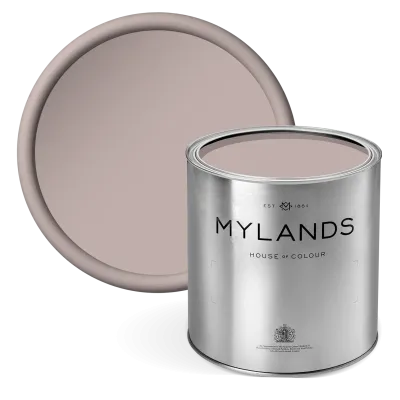
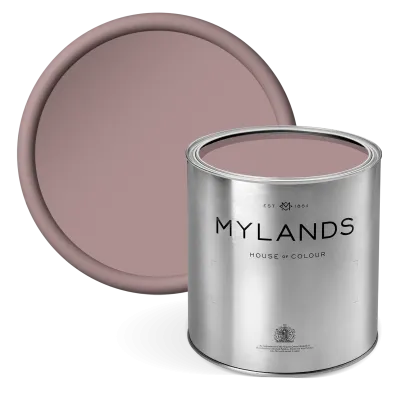
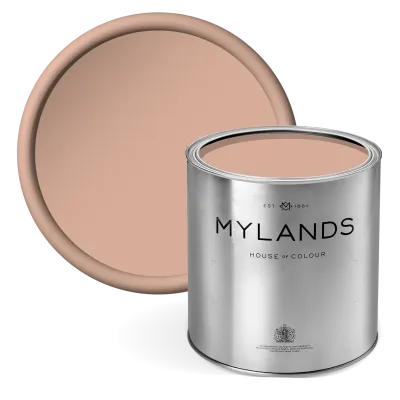
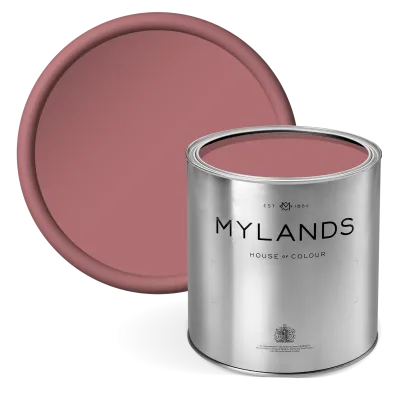
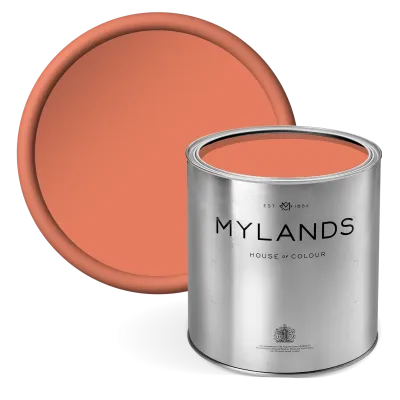
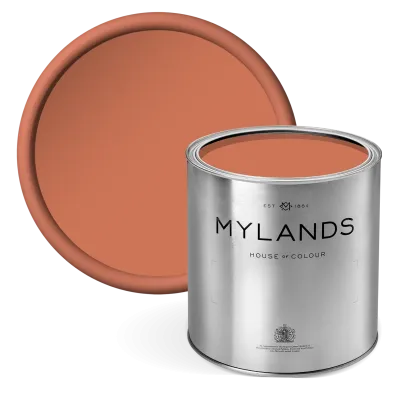
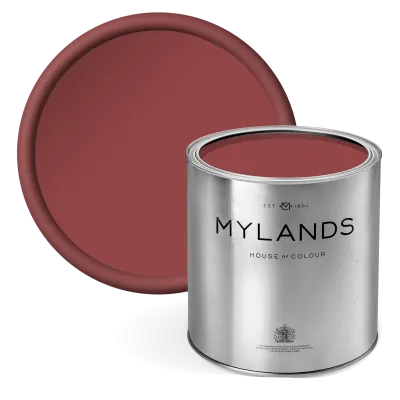
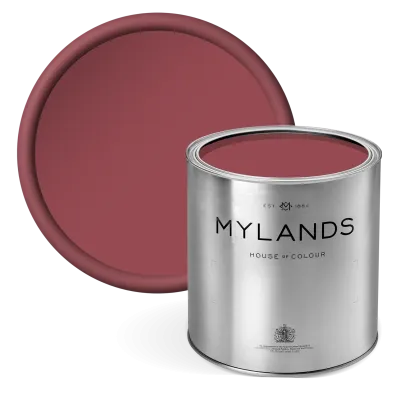
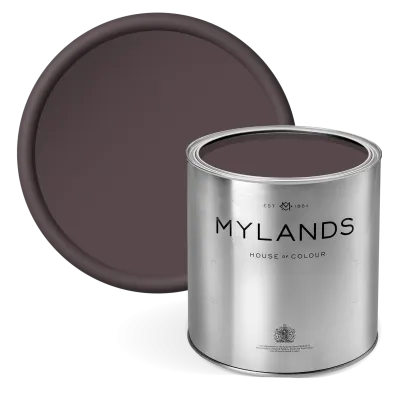
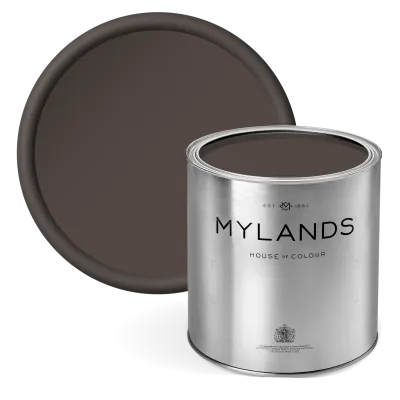
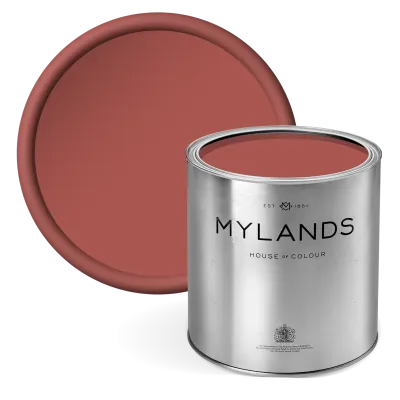
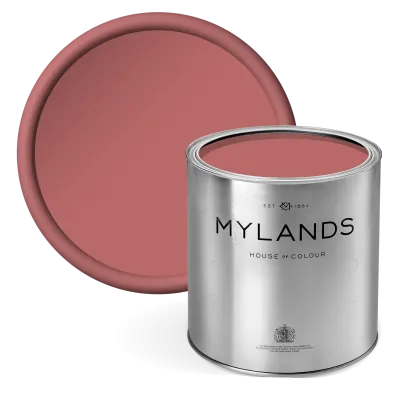
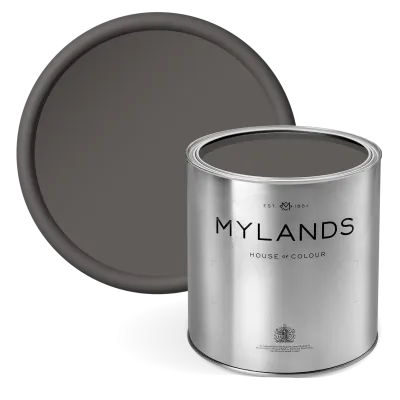
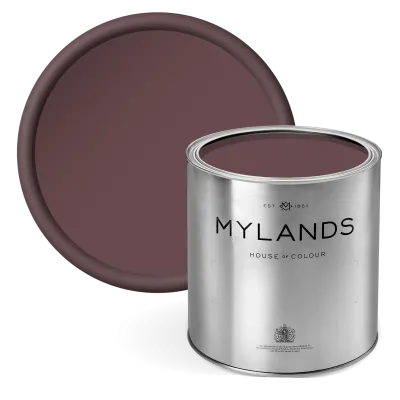
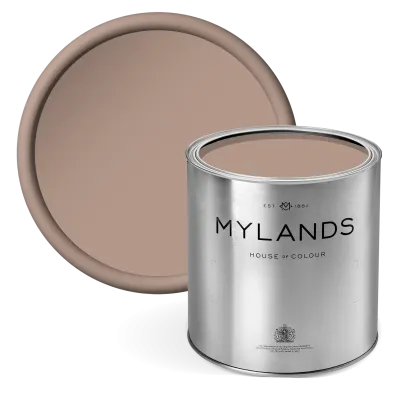
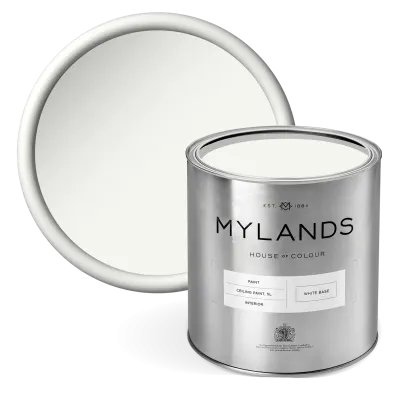
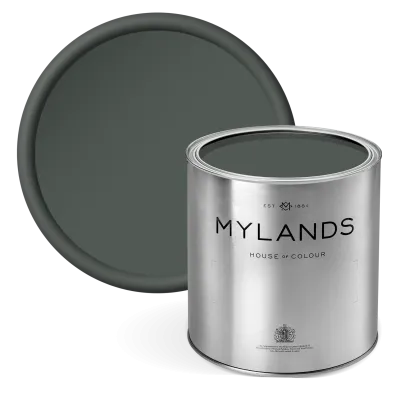
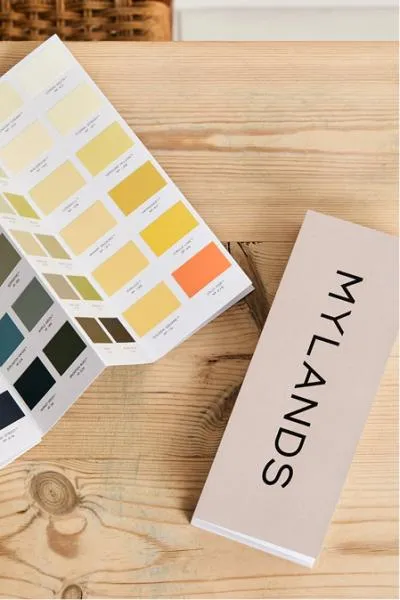
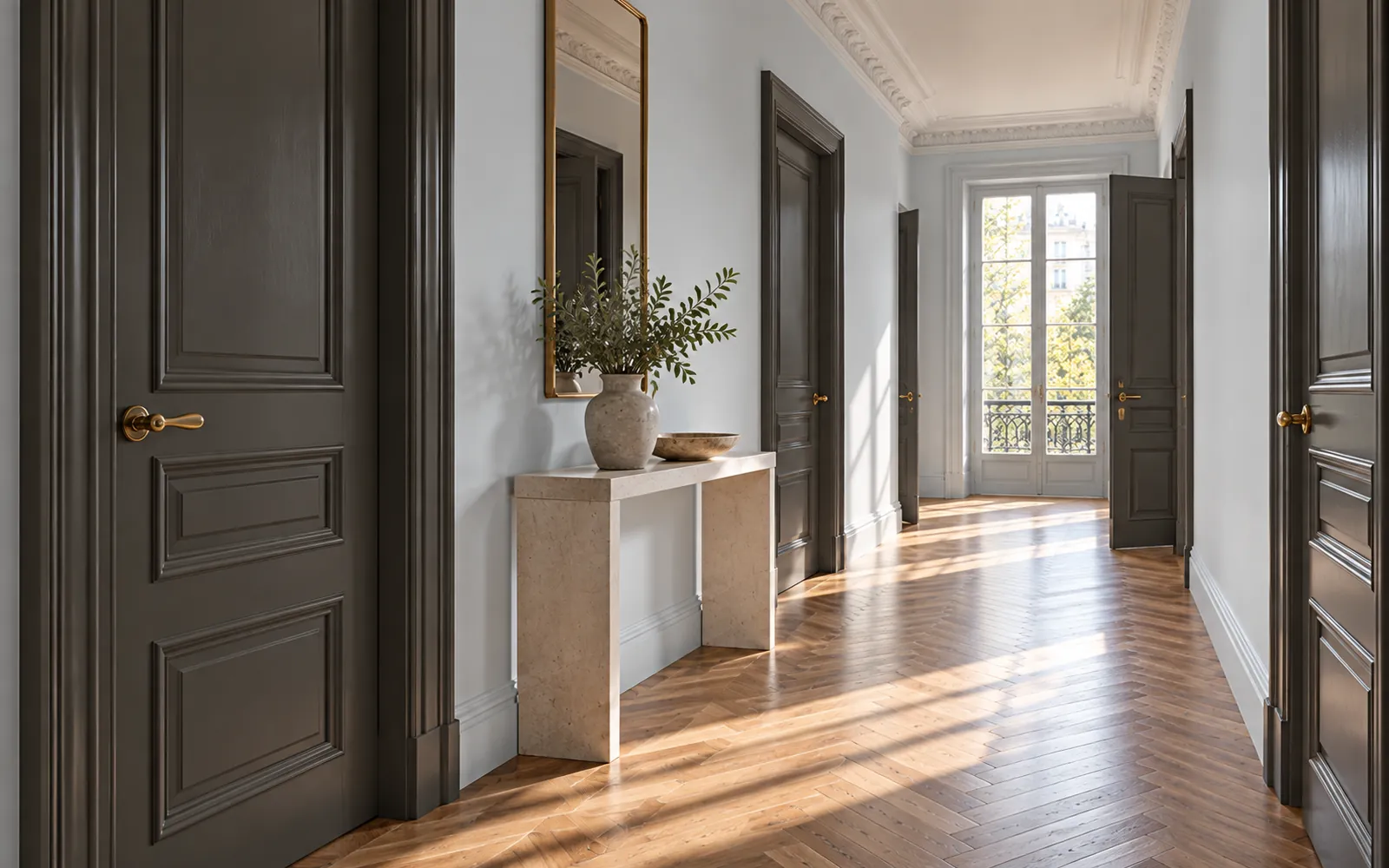
A dark door in a light hallway, Downing Street, Sinner or Bond Street, is the simplest decorating gesture there is; a door in the skirting colour, Cornice or Chambers Gate, disappears and lengthens the corridor. The colours below run from warm whites to deep blacks, by way of the plums and greens that make a door remarkable.

Recommended finishes

Our advice

An interior door, done well

Taken off its hinges, laid flat and painted in the right order, a door can be finished in a morning.

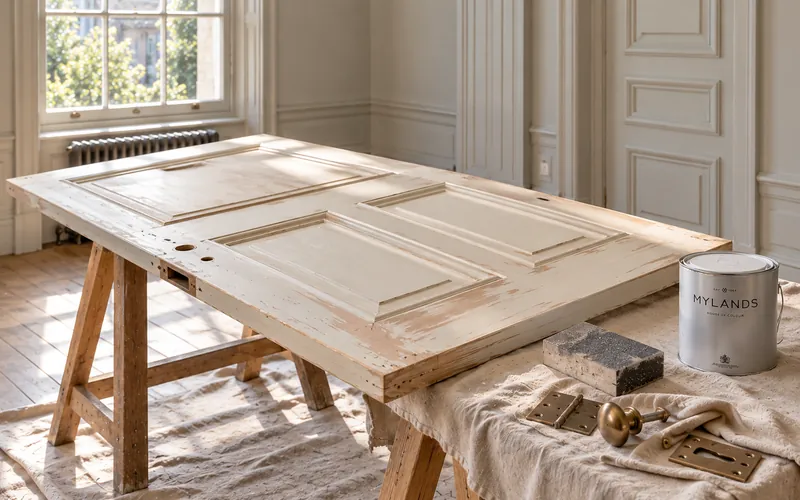
Panelled door off its hinges lying flat on trestles, handle removed, sanding block and undercoat
Flat on trestles: no runs, and you can see everything.

Prepare

Unhang, strip the hardware, sand

Lift the door off its hinges and lay it across two trestles: flat, the paint cannot run and you can see what you are doing. Remove the handle, roses and latch plate rather than masking them. Sand the whole surface with 180 grit to dull the old paint, or 120 on a bare door, then wipe down with a damp cloth.

A bare or MDF door gets our Multi-Surface Primer first, in the tint matched to the final colour; a varnished door must be sanded until every trace of shine has gone. Fill chips with wood filler, sand again, and check the edges: they are what rubs and chips first.
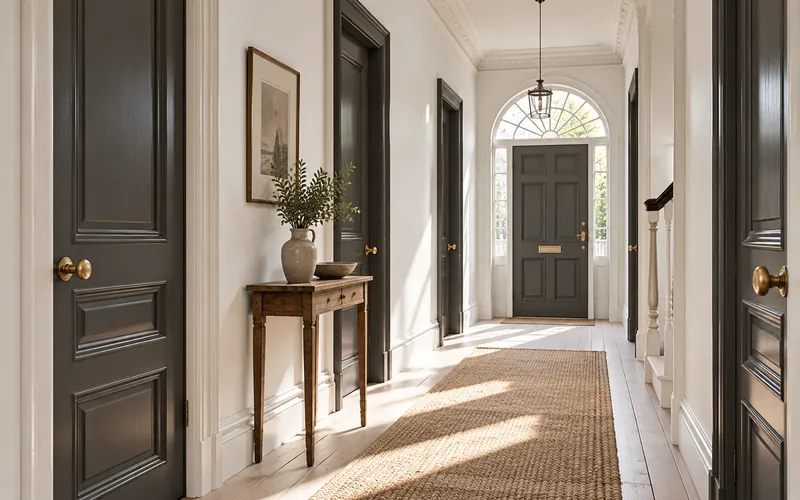
Hallway with white walls and several panelled doors painted deep grey-black, brass handles
Downing Street on the doors, Pure White on the walls, brass for the handles.

Paint

Panels, rails, stiles, edges

On a panelled door, paint the mouldings and panel fields first, then the horizontal rails, then the vertical stiles, and the edges last: that way each stroke wipes out the join from the one before. On a flush door, a 10 cm foam roller followed by a wide brush lay-off gives a lacquered finish.

Two thin coats of Eggshell or Satin, 3–4 hours apart, with a light rub of 320 grit between them. Let the door dry for 24 hours before rehanging, and keep the latch from closing hard for a week. Downing Street or Sinner on every door of a Pure White corridor: the effect is instant.

214 colours found

Showing 193 to 214 of 214 results

Show
per page
Sign up to our newsletter

Sign up to our newsletter

Thanks for signing up to our newsletter!