Help with woodcare Repair and upkeep

Removing old wax or varnish

You cannot strip a finish you have not recognised: wax, shellac and varnish each come off with their own move. Wax lifts with Wax and Polish Remover and 0000 steel wool, until the cloth comes away clean. Shellac dissolves in alcohol. Varnish or lacquer is sanded off, grit by grit, to 180 under an oil; the range has no chemical stripper and sanding is the route. An old floor, once sanded, then takes Shellac Barrier Seal for Floors, which locks the remains of oil or wax away under the Mylac.

Page updated September 2026 · by the Mylands France woodcare specialists

Why remove it

Nothing holds on an old finish

Hard wax oil laid over a trace of wax does not penetrate; a water-based varnish laid over wax pulls back into beads; fresh wax over grimy wax polishes the grime. The rule is simple: a new finish needs bare wood, or a sound, clean, compatible finish. Before any tin is opened you need to know what is on the wood, and take it off if necessary.

It is not always necessary. A sound varnish that is not flaking can be revived with Furniture Cleaner and Reviver and recoated after a de-nib; a waxed piece can be cleaned and re-waxed. The old finish comes off when it is damaged, incompatible with the new one — oil over wax, lacquer over oil — or when you want to change the colour. The preparation guide helps you recognise what is in front of you.

The method

Removing the old finish in six steps

Allow half a day for a piece of furniture, with gloves and a window open. Steps two to four are alternatives: only one applies to your finish.

  1. 01

    Recognise the finish

    On a hidden area: a cloth that comes away with a greasy haze means wax; a cotton pad dampened with alcohol that softens the surface, shellac; a hard surface that nothing marks, varnish or lacquer; a drop of water that beads on matt wood, an oil.

  2. 02

    Wax: Wax and Polish Remover and 0000 steel wool

    Soak the pad, work in small areas along the grain, and wipe at once with a clean cloth before the dissolved wax dries. Repeat until the cloth comes away clean. Wax and Polish Remover does not affect most hard finishes underneath.

  3. 03

    Shellac: alcohol

    Shellac dissolves in methylated spirit. A cloth or 0000 steel wool dampened with it, in small areas, wiped at once; the film softens and comes away in layers. Ventilate, no naked flame.

  4. 04

    Varnish, lacquer, hardened oil: sanding

    The range has no chemical stripper: you sand. 80 grit to break through the film, then 120, 150 and 180, always along the grain, changing the abrasive as soon as it clogs. On a floor, stop at 120–150; under an oil or hard wax oil, never beyond 180.

  5. 05

    Old floor: sand, then Shellac Barrier Seal

    An old waxed or oiled floor keeps residue in its pores. After sanding and dusting off, a coat of quick-drying Shellac Barrier Seal for Floors isolates that contamination under the Mylac and adds depth. See varnishing a wooden floor.

  6. 06

    Dust off, degrease, refinish

    Vacuum then tack cloth; Cellulose Thinners on oily wood or before a stain. The wood is bare: oil, hard wax oil, wax, shellac or varnish, following the guide for that surface.

Four cases

Four pieces, four ways of stripping

01

1. The grimy waxed pine dresser

An antique pine dresser whose wax has turned a greasy brown. Wax and Polish Remover and 0000 steel wool, area by area, until the cloth comes away clean. The pine comes back pale and matt; all that remains is to re-wax it with Wax Stripped Pine, the standard wax on pine.
02

2. The bloomed French-polished mahogany table

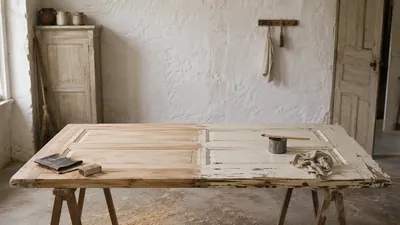
A dining table whose shellac has gone white and crazed. Methylated spirit dissolves it: a dampened cloth, in areas, wiped at once, in a ventilated workshop. The bare wood, sanded to 180, then takes a new French polish, 2000 Pale Shellac Sealer as a base, then French Polish.

03

3. The varnished oak table top, to be oiled

An oak top under a yellowed varnish, wanted matt and oiled. No stripper: sand with 80 to break through the film, then 120, 150, 180 along the grain, and dust off. Then two thin coats of Hard Wax Oil Natural 24 hours apart.

The table

Which finish, how to tell, how to remove it

Old finishHow to tellHow to remove it
Wax Greasy haze on a cloth, a fingernail leaves a trace, smell of wax Wax and Polish Remover and 0000 steel wool, until the cloth comes away clean
Shellac (French polish) Softens under a cotton pad dampened with alcohol; blooms white with water and heat Methylated spirit on a cloth, in areas, wiped at once
Varnish, lacquer Hard, smooth film, unmoved by alcohol; flakes in patches when tired Sanding 80-120-150-180 along the grain; no chemical stripper in the range
Oil, hard wax oil Matt surface, water beads; you can feel the wood If changing finish: sanding to 180; otherwise, a clean and a refresh coat
Old floor, any finish Residue in the pores after sanding, patches that stay greasy Sanding to 120–150, then Shellac Barrier Seal for Floors under the Mylac

Painted wood follows another route, described in the preparation guide.

To avoid

What spoils a stripping job

  • Steel wool under a water-based finish. Iron particles stay in the pores, and Mylac or Quick Dry Varnish rusts them: black specks, especially on oak. After steel wool, vacuum and tack cloth, or use a synthetic abrasive pad.
  • Fresh oil over old wax. It does not penetrate and stays tacky: Wax and Polish Remover first, until the cloth comes away clean.
  • Sanding too fine. Beyond 180 the wood is burnished and no longer absorbs an oil or a hard wax oil.
  • Mylac straight onto an old sanded floor. The remains of wax or oil in the pores lift the film: Shellac Barrier Seal for Floors in between.
  • Stripping what does not need it. A sound varnish is revived and recoated; only what is damaged or incompatible goes back to bare wood.

Frequently asked

Your questions, our answers

Is there a chemical stripper in the Mylands range?

No. Wax and Polish Remover lifts wax, dirt and grime, and alcohol dissolves shellac; a varnish, a lacquer or a hardened oil come off by sanding, grit by grit, from 80 to 180. It takes longer, but the wood comes out clean, dry and ready for any finish.

Does Wax and Polish Remover damage the varnish underneath?

It does not affect most original hard finishes: it removes the wax and grime built up on top, and also lifts bloom marks from a waxed surface. Test on a hidden area, as always.

Do I need Shellac Barrier Seal on a new floor?

It is made for all wooden floors, new and old, under a water-based lacquer: on a new floor it adds depth; on an old re-sanded floor it is essential, to block the remains of oil or wax that would lift the Mylac. It can also be used on its own, as a sealer coat under wax on a low-traffic floor.

Can I wax over a varnish without removing it?

Yes, if the varnish is sound and clean: Mylands waxes go onto finished timber as well as bare wood. But the reverse is not true — nothing holds on wax — and wax is not recommended on a floor. See How to wax wooden furniture.

“Before choosing what goes on, know what is there: stripping begins with a cloth and a drop of alcohol.”
Sign up to our newsletter

Sign up to our newsletter

Thanks for signing up to our newsletter!