01
1. Wax Clear on new oak
A freshly sanded oak bedside table, waxed with the clear wax: the wood keeps exactly its honey tone and gains a soft lustre that follows the grain. The choice when you like the wood as it is.
Menu
How To
Design Advice
Customer Service
My account
Help with woodcare How-to guides
Furniture is waxed in three moves: clean off the old wax with Wax and Polish Remover, apply a Mylands wax sparingly in small circles, let it haze and buff along the grain. Mylands waxes are pure beeswax and carnauba, toluene-free, in 400 g tins. Wax Clear leaves the wood as it is; Antique Brown, Stripped Pine, Dark Oak or Black give it a patina. A second coat goes on after 10 minutes, and the piece is re-waxed once or twice a year. Never on a floor.
Page updated September 2026 · by the Mylands France woodcare specialists
Why wax
Wax does not form a hard film like a varnish; it lays on the wood a thin skin of beeswax and carnauba that repels dust, feeds the surface and gives the silky patina you recognise on old furniture. It goes straight onto clean, bare wood, onto wood already finished, over a pale shellac such as 2000 Pale Shellac Sealer Basecoat, or over a stain: Earth Stain, Light Fast Stain, Nitrostain or water stain.
It has its limits, and they are worth knowing before the tin is opened. Wax stays sensitive to water: a spill must be wiped up at once, or the moisture gets through the barrier. And Mylands does not recommend it on floors: a floor is sanded and lacquered with Mylac. For furniture, it is the simplest and most repairable finish there is.
The method
On a piece that has been waxed before, new wax does not take on the old grey layer. Work Wax and Polish Remover in with 0000 steel wool along the grain, wipe off with a clean cloth, and repeat until the cloth stays clean.
Wax goes onto clean, dust-free bare wood, onto a sound existing finish, onto a shellac or onto a stain that is fully dry. The full preparation: Wood finishes preparation.
Pick up a little wax on a soft cloth or 0000 steel wool. Work in small circular motions without loading the surface: a thin coat evens up and buffs, a thick one stays greasy and marks. Then even up so no thick patch is left.
After a few minutes the surface clouds to an even matt: the wax has released its solvent and is waiting to be buffed. Do not touch it before then.
With a clean cotton cloth or a horsehair furniture brush, rub along the grain until you reach the sheen you want.
After 10 minutes, further coats can be applied for more depth, always thin, always buffed. After that, re-waxing once or twice a year keeps the wood nourished.
Which wax
The colour of a wax does not stain the wood in depth; it shades it: it warms, darkens or whitens the pores. Always test under the top or on the back of a drawer.
01
A freshly sanded oak bedside table, waxed with the clear wax: the wood keeps exactly its honey tone and gains a soft lustre that follows the grain. The choice when you like the wood as it is.
02
A warm, golden orange-brown tone that deepens walnut and evens up a chest whose drawers have aged differently. After buffing, the patina is that of a piece cared for over fifty years, without any film. The wax for antique furniture above all.
03
Stripped Pine M7 is the original colour and the industry standard on stripped pine: it gives dry yellow pine back an old honey tone without the orange. Two thin coats buffed with the brush make the piece.
04
A cold brown, made for antique oak or for a piece that is too light and needs calming. On a panelled coffer, the dark wax settles in the pores and mouldings, and the relief comes forward.
05
A very dark black wax, on antique furniture or on new timber you want to age: it blackens the pores and the corners, buffs away on the flats, and gives that look of a piece worn and protected at once.
06
The liming wax: white in the open pores of oak or ash, wiped off the flats, then protected with a coat of Wax Clear. A limed oak sideboard lightens by several tones without losing its drawing. The full method is in How to lime oak.
The choice
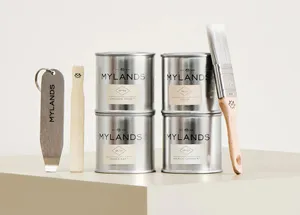
All come in 400 g tins, pure beeswax and carnauba, toluene-free, and go on the same way. The difference is the colour.
| Wax | Colour | For | The look |
|---|---|---|---|
| Wax Clear | Colourless | Any new or pale wood, painted furniture | The wood as it is, buffed |
| Wax Light Brown | Light orange-brown, almost clear | Traditional restoration, mid-toned woods | Barely warms; the wax of the furniture colleges |
| Wax Antique Brown | Warm golden orange-brown | Walnut, mid oak, antique furniture | The patina of a well-kept piece |
| Wax Stripped Pine | Old honey (Stripped Pine M7) | Stripped pine, dressers, country furniture | The standard on pine |
| Wax Dark Oak | Cold brown | Antique oak, a piece too light in colour | Darkens, picks out the pores |
| Wax Antique Mahogany | Warm, very light in the tin | Mahogany and warm-toned woods | The restorers' wax; keep away from pale fabrics |
| Wax Black | Deep black | Antique furniture, new timber to be aged | Worn and protected |
To lower the sheen of a piece that is too glossy, Wax Cutting contains pumice and dulls it down. The whole family: Mylands waxes.
To avoid
Frequently asked
Yes: Mylands waxes go onto finished wood as they do onto bare wood, and onto painted surfaces. Clean first with Wax and Polish Remover if the piece has been waxed before, dust off, then apply sparingly. On paint, Wax Clear does not change the colour; a tinted wax gives it a patina.
Bare wood must be clean, dry, finely sanded and dust-free; wax picks out every sanding scratch. The detailed preparation is in Wood finishes preparation.
Once or twice a year is enough to keep the wood nourished. In between, dry dusting only.
Wax and Polish Remover takes off wax, dirt and the whitish bloom from waxed surfaces, worked in with 0000 steel wool along the grain and wiped off with a clean cloth. The detail, and the case of varnishes, in Removing old wax and varnish.
Yes; it is the simplest way to seal a stain on furniture: Earth Stain, Light Fast Stain, Nitrostain or water stain, fully dry, then Wax Clear or a tinted wax. The stain gives the colour, the wax the protection and the lustre. See How to stain wooden furniture.
See also
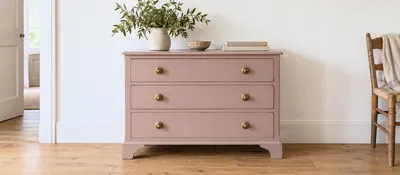 Paint, wax, oil or stain? The method for giving a chest of drawers, a sideboard or a chair a second life.
“Wax does not cover the wood: it lets it breathe under the hand.”
Thanks for signing up to our newsletter!
Sign in to save items to your wishlist. Sign in to save your basket, so you can continue shopping later.
Don't have an account? Create one
Share this link and friends can buy items from your list. Anything bought disappears from it automatically. Anyone with this link can see your selection.
Moving in, redecorating, or dropping hints? A free account turns this selection into a gift list — add or remove colours whenever you like, and we'll email you when someone buys something from your shared list.
Free · Delivered to your door
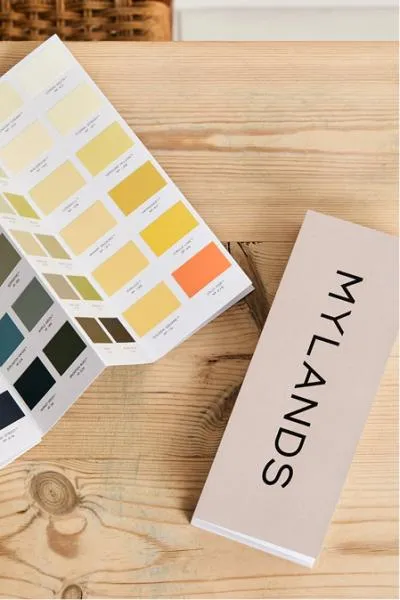
Get a free colour card posted to you, showing our complete Colours of London range, with swatches made from the real paint for a true representation of our award-winning colours.