Help with paint Planning your project

Why a Mylands colour cannot be copied

A colour match mixed in a shop reproduces one measured point, under one light, with other pigments in another binder: it is not the same colour, it is a colour that resembles it at midday. The depth of a Mylands shade comes from richly dosed natural pigments, crushed Carrara marble and a 3 % matt — three things a scanner does not read. Morning, evening, under a lamp, the copy and the original drift apart. And it is the wall, not the colour card, that will show you.

Page updated September 2026 · by the Mylands France colour team

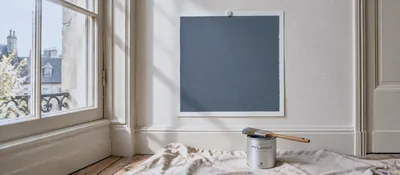
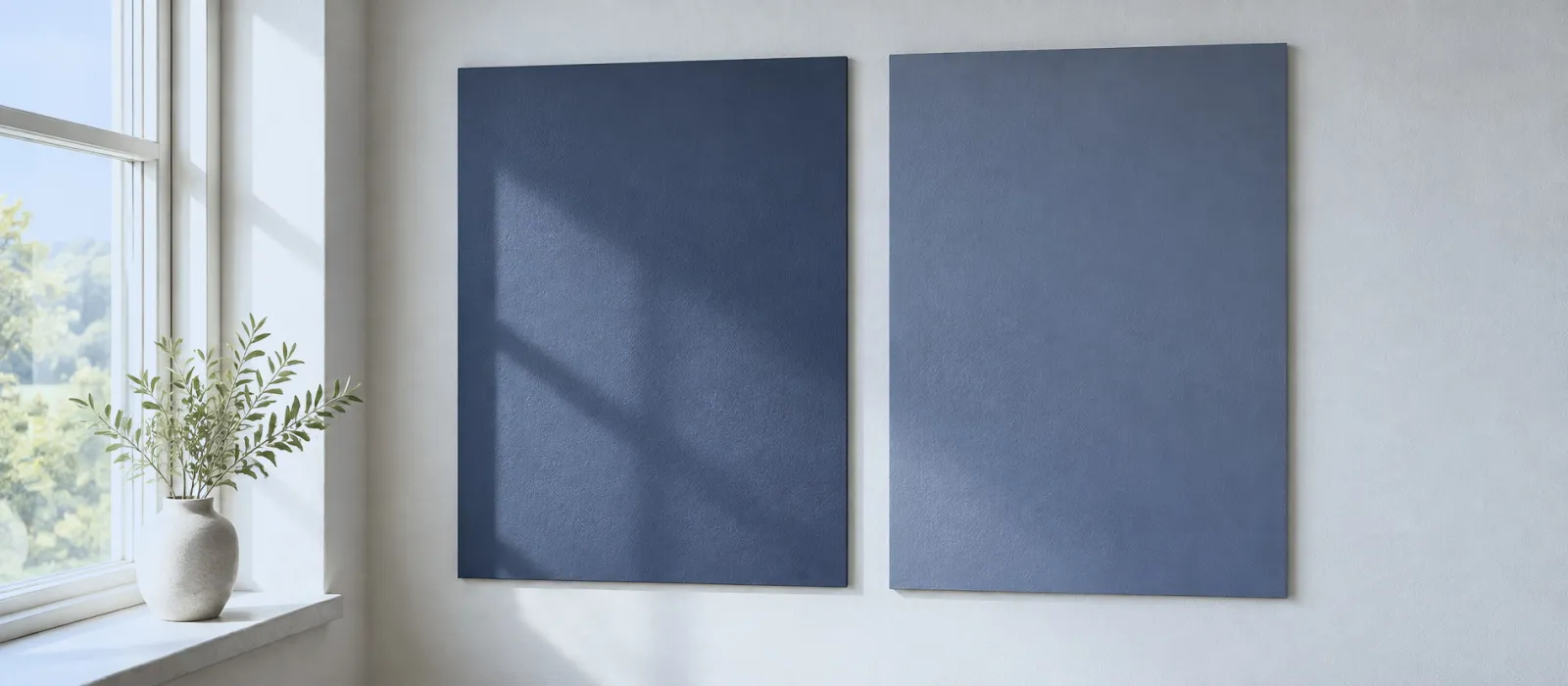
Two panels painted in an almost identical midnight blue side by side, against the light of a window: one stays deep and mineral, the other turns a flat grey
The same reading on the spectrophotometer, not the same colour once the light turns

The question

“Can you make me the same one for less?”

We are asked often, and fairly: paint is the cheapest item in a renovation, but a manufactory tin costs more than a supermarket one. The answer fits in one sentence: a colour that resembles it can be made; the same colour cannot. And on four walls, the resemblance lasts only as long as one light.

This is not a matter of secrets or patents. It is that the colour of a paint is not a number: it is the result of what colours it (the pigments), what carries them (the binder and the fillers) and how the surface returns light (the finish). A tinting machine reproduces only the first, approximately, with its own colorants.

What cannot be measured

Three reasons, and a fourth

01

1. The spectrophotometer reads one point, under one light

The device at the paint counter measures a sample's reflectance under a standard illuminant and searches its database for the nearest colorant recipe. It gets a match under that light. Two surfaces can return the same point under a lamp and diverge in morning sun: that is metamerism, and it is the rule as soon as the pigments differ.
02

2. The pigments are not the same

Mylands grinds its colours from natural earths and minerals, richly dosed — it is that dosing that gives the shades their depth and the film its hiding power. A tinting machine has a dozen universal colorants. It imitates an earth red-brown with red and black: the colour is close; its reaction to light is not.

03

3. The binder, the fillers and the finish make the colour

The same shade in an ordinary base and in Marble Matt Emulsion — loaded with crushed Carrara marble, 3 % matt, breathable — does not read the same: the deep matt absorbs light and lets the pigment speak; a shinier base returns reflections that wash it out. A supermarket "matt" is often 5, 8 or 10 %: the copied colour looks lighter and flatter.

04

4. The copy does not match itself later

Every Mylands tin is tinted in London to the colour's archived recipe, then checked against its standard: the tin ordered in three years will match today's. A colour match is a single reading, made that day, on that scanner. Next year's touch-up will be another match.

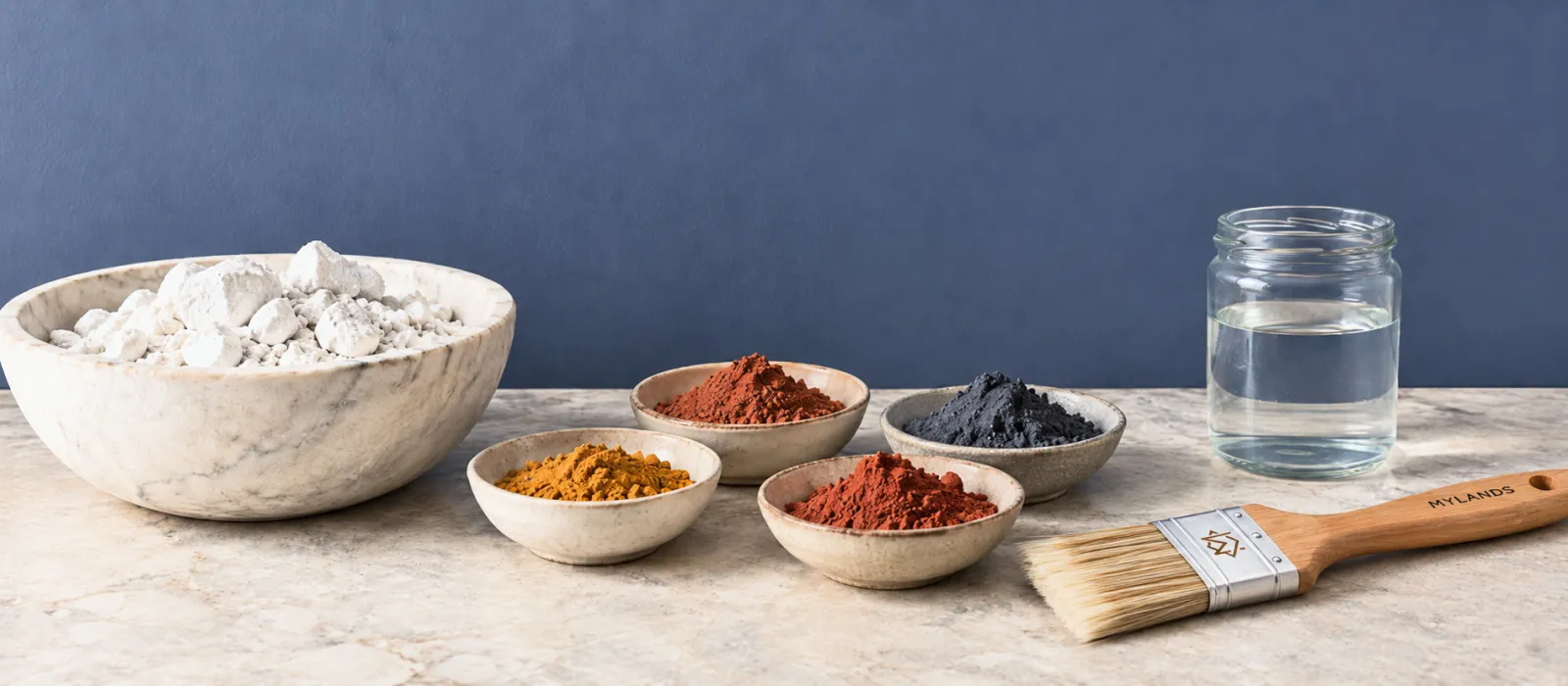
Still life: a bowl of crushed Carrara marble, four dishes of earth pigments, a jar of water and a flat brush on pale stone
Earths, minerals, crushed marble, water: what the scanner does not see

Comparing

The Mylands colour and its “equivalent”, point by point

CriterionMylands shadeMachine colour match
Where the colour comes from Archived recipe, natural pigments dosed by the manufactory A reading of a sample, a recipe computed in universal colorants
Under one light The colour A very close colour
Morning, evening, lamp Warms and cools as the colour team intended Diverges (metamerism): greyer, pinker or greener depending on the hour
Sheen of the matt 3 % (Marble Matt Emulsion), chalky, absorbs light Often 5 to 10 %: lighter, flatter
Matching over time The next tin is checked against the standard A new reading, a new approximation
What you pay for The pigment, the marble, the making in London The universal colorant and the machine time

Sheen figures are those of our product sheets; other brands' vary and are given as a guide. See also Our paint for how it is made.

In practice

What we suggest when the budget is tight

Put the manufactory where the colour shows, and the saving where it does not. A white ceiling, the inside of a cupboard, a cellar do not need earth pigments. The sitting-room walls, the front door, the kitchen cabinets do. Coverage counts too: Marble Matt Emulsion covers up to 15 m² per litre in one coat, which brings the price per square metre closer than people think — the detail is on Mylands paint prices, read live from the catalogue.

And test before you buy, with us as with anyone: the colour card is free, the sample pot costs the price of a coffee. A colour match can only be tested once the tin is paid for.

Finally

Where the price difference goes

Into the tin: generously dosed natural pigments, crushed Carrara marble, a water-based formula low in VOCs and compliant with the EN 71-3 toy standard, a class 1 washable matt. Into the making: a London manufactory founded in 1884, supplier to the British Royal Household and to film studios, where every tin is tinted to order and checked. Into the service: the free colour card, same-day dispatch from our French warehouse, a colour team that answers. None of that is in the scanner.

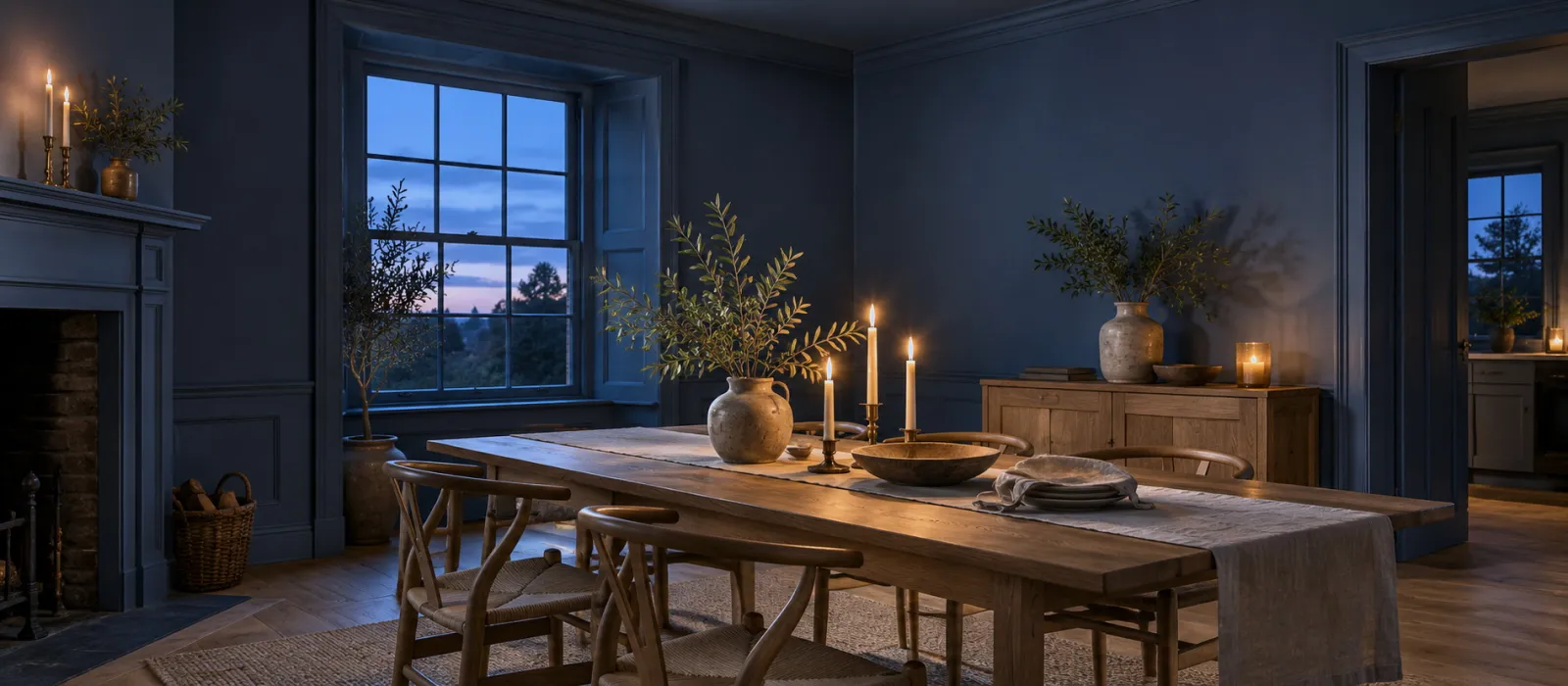
Dining room with deep matt midnight-blue walls, woodwork in the same blue, an oak table, lit candles, the last daylight in the window
Observatory No.34 at the blue hour: brown-black in shadow, deep blue by candlelight — what no colour match follows

Frequently asked questions

Your questions, our answers

The shop offered to scan my Mylands colour card. What happens?

You will get a close colour under the shop's lamp, mixed with the machine's universal colorants, in a base of a different sheen. It will diverge from the original with the hour, and more still on four walls, where the reflections add up. If you have already painted a room in Mylands, a touch-up in the match will show.

Is there a RAL or NCS code for Mylands colours?

No. A Mylands colour is a recipe of pigments, not a point in a reference system. The hex codes on the site are for screens, never for making paint.

Why does a shade look different from the colour card once it is on the wall?

Because four walls reflect each other and intensify the colour, and because your room's light is not the colour card's. That is not a defect of the shade, it is scale: hence the sample pot on boards, looked at for two days.

Can I have a bespoke colour made?

The palette has more than two hundred shades and their variations; our colour team almost always finds the pairing you are after. For a particular project — a set, a restoration — write to us with a physical sample: the manufactory considers requests for bespoke colour.

“A copied colour is right at noon and wrong for the rest of the day.”
Sign up to our newsletter

Sign up to our newsletter

Thanks for signing up to our newsletter!