01
The whites and their undertones
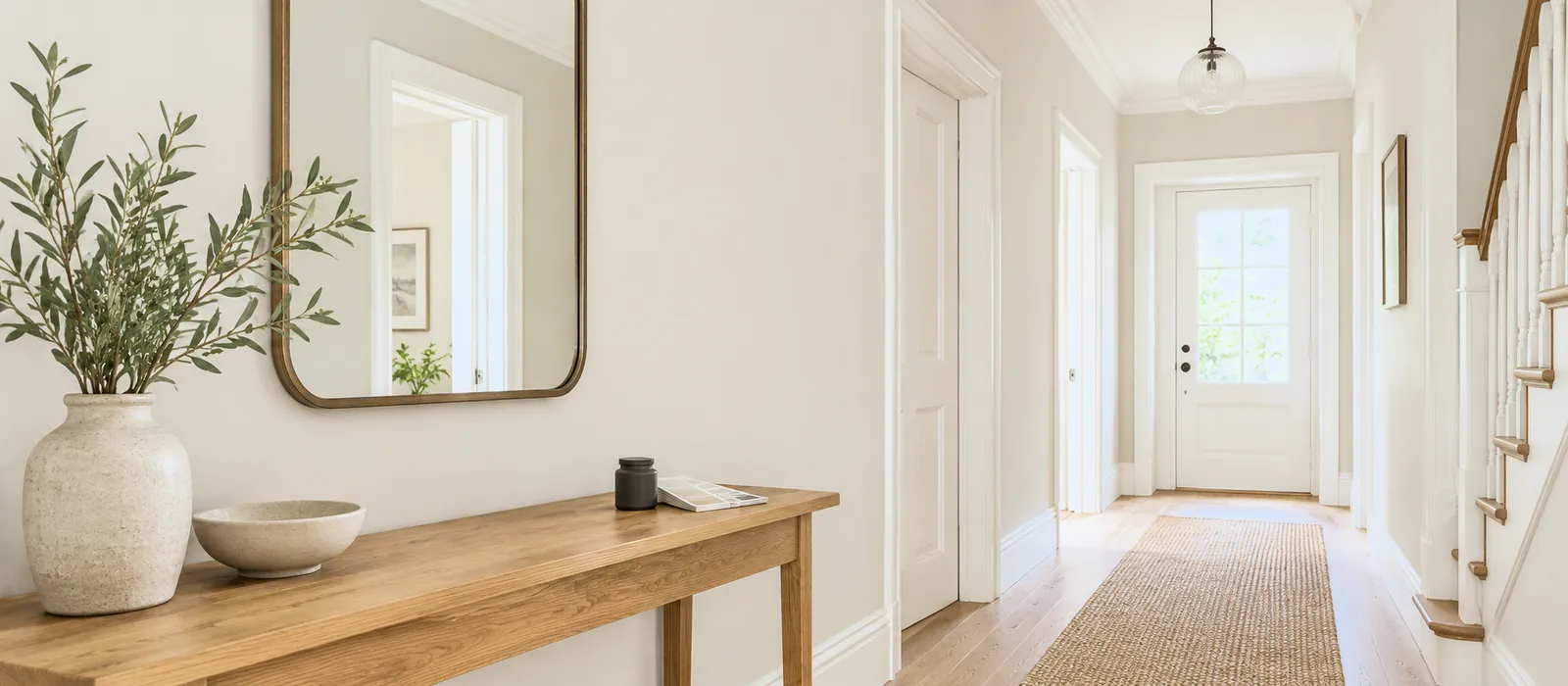
More than twenty whites, none of them neutral: each leans warm, cool, green or pink. Hold them side by side against a white wall and the undertone appears. A white is chosen for the colour it accompanies.
Menu
How To
Design Advice
Customer Service
My account
Help with paint Planning your project
The Mylands colour card is painted with the paint itself, in Marble Matt Emulsion: a chip behaves like a wall, not like a print. Use it in the room concerned, chip folded to isolate the shade, against the floor, the woodwork and the sofa fabric, at two times of day. Its job is to take you from 200 colours to three; the sample pot does the rest. It is free, and the digital colour card completes it on screen.
Page updated September 2026 · by the Mylands France colour team
What you are holding
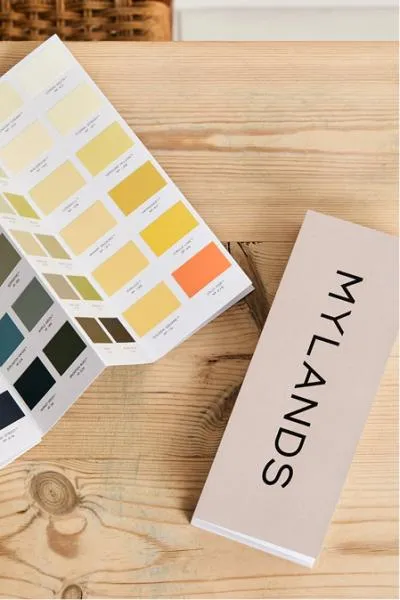
Most colour cards are printed: ink imitating paint, with the sheen of paper and the limits of the press. The Mylands colour card is painted with the paint itself, in Marble Matt Emulsion, the house's wall finish. Each chip therefore has the texture of a wall — that chalky matt that absorbs light — and reacts to lighting exactly as the wall will. What you see holding the chip by a window is what the room will give, scale aside.
It presents the house's collections: the Colours of London, the main palette, each shade named after a London place and numbered; the Archive, historic colours; the designer collections, Beata Heuman (BH) and Jinny Blom (JB); and the FTT range, the vivid studio shades. The colour card is free, sent on its own or with your sample pots; the digital colour card also shows every shade in situ, with photographs of interiors.
The method
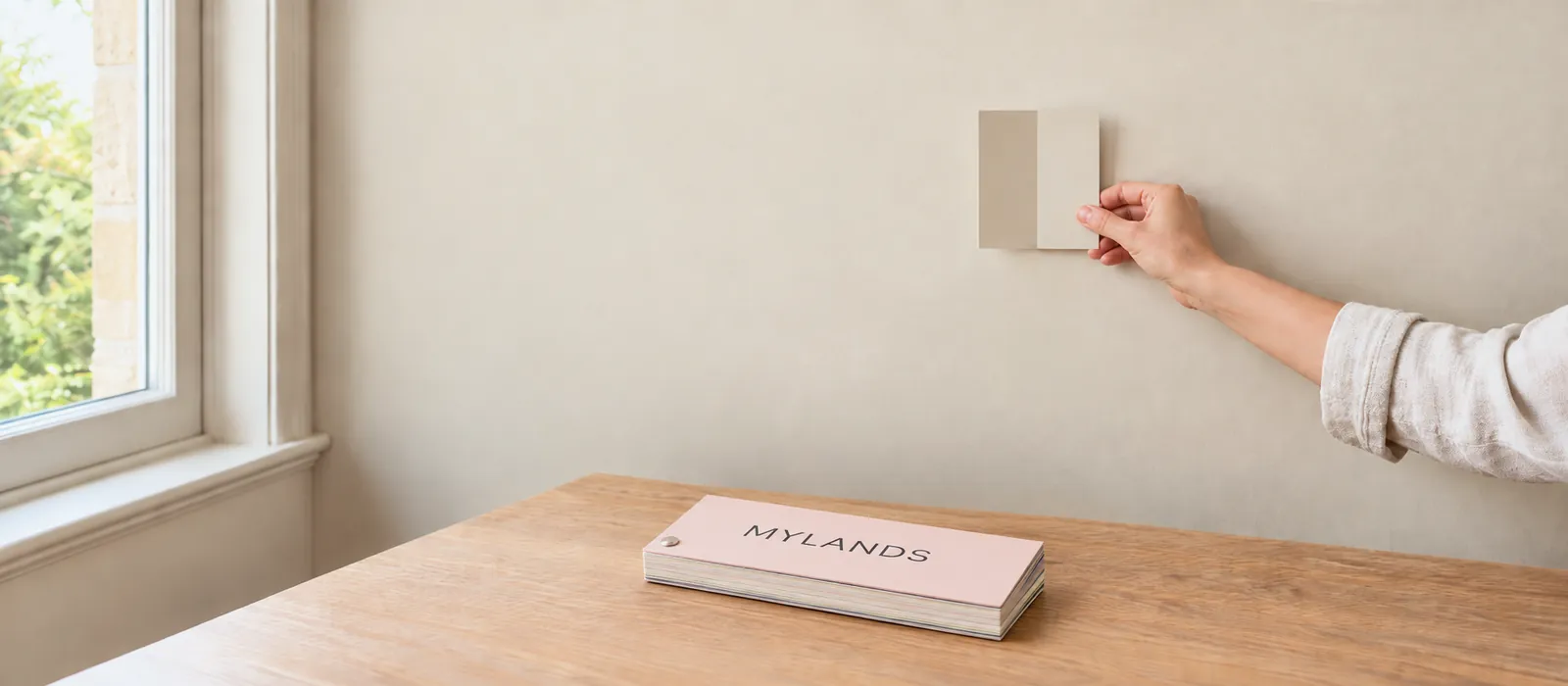
A colour is not chosen where the post gets sorted. Take the card into the room to be painted, to the spot where you spend the most time, and look at it first from a distance, open, without searching: the families that draw you appear before the shades do.
A chip surrounded by its neighbours lies: a pink looks pinker beside a green, a grey cooler beside a beige. Fold the card so only one colour shows, surrounded by white, and hold it at arm's length against the wall. It is the only way to see the shade for what it is.
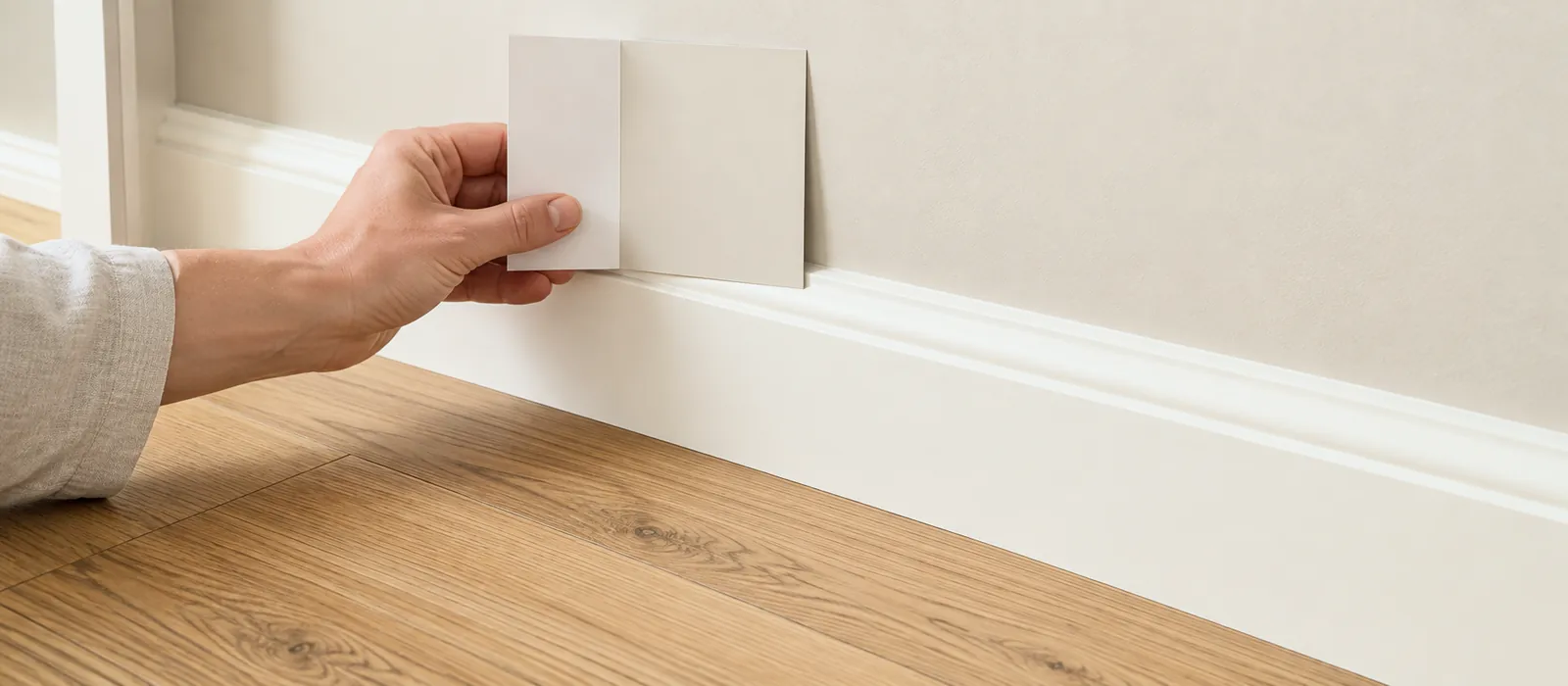
The floor, the woodwork, the fireplace, the sofa: the new colour will live with them. Lay the folded chip on the parquet, against the tiles, on the armrest. An oak floor throws back yellow, a grey tile throws back grey — the card held this way shows you at once. Our colour team has that case covered too: see colours with an oak floor.
In the morning the light is cool; in the evening, under your lamps, it is warm. A chip that pleases at both times is a candidate; a chip that pleases at only one is a colour for a room you only use at that hour. Why it changes so much: How light affects colour.
Every Mylands shade has its companion whites, neutrals and accents, listed on its page online. On the card, look for the whites that sit near your shade in the same undertone family: a warm white for a warm colour, a grey white for a cool one. The guide Whites for woodwork and skirting does that work for the most common cases.
Beyond three shades per surface you stop comparing and start dithering. Write down the three names, order the sample pots — 100 ml, buy two and get two free — and move on to the real step: testing the colour at home, on boards, in the room's own light.
Reading the families
The chips are arranged by families, from the whites to the deepest shades. Three useful readings, with examples from the Colours of London.
01
More than twenty whites, none of them neutral: each leans warm, cool, green or pink. Hold them side by side against a white wall and the undertone appears. A white is chosen for the colour it accompanies.
02
Many shades exist in a light, a mid and a deep version, related by pigment. That is the key to monochrome schemes and gradations: walls in the mid, ceiling in the light, door in the deep.
03
Between white and colour, a wide band of stones, greiges and grey-greens that do almost all the work of an interior. Their undertone shows against a pure white: it decides the pairing with the floor and the fabrics.
Reference
| Tool | What it shows | When to use it |
|---|---|---|
| Paper colour card | Every collection, painted with real paint, in matt | The first cut, in the room, against floor and woodwork |
| Digital colour card | Every shade on screen, with room photographs and its pairings | Searching by family or by room, discovering combinations |
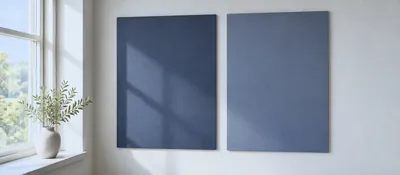
| Box of colour | Large painted A5 panels to stand against the wall | When you want the size of a sample without the brush |
| 100 ml sample pot | The shade at scale, in the finish, on boards you can move | Deciding: two coats, three times of day, two days |
| Visualiser | Your own room photographs recoloured | Ruling out false leads before ordering the pots |
The colour card and the digital colour card are free. A screen, even calibrated, never replaces a painted chip: it shortlists.
To avoid
Frequently asked questions
Yes, delivery included in mainland France. Order it on its own or add it to an order of sample pots; it leaves the same day before 2.30 pm.
The chips are painted with the real paint, in the Marble Matt Emulsion finish. The same shade will look a little lighter and livelier in a satin or gloss finish, because sheen throws light back: test the finish along with the colour.
Because a 12 m² wall reflects the other walls, the floor and the window, and intensifies the shade. The card tells you which colour; the sample pot tells you what it becomes at scale. Both are needed, in that order.
Note the light in the photograph first of all: the same shade photographed at sunset and facing north does not look the same. Then find the family on the card, hold three candidates in your own light, and let the sample pot decide. Our colour team gladly answers a photograph sent through the contact form.
Every colour on the card exists in every finish, wall and multi-surface. The wood products — oils, waxes, stains — have their own pages and samples.
See also
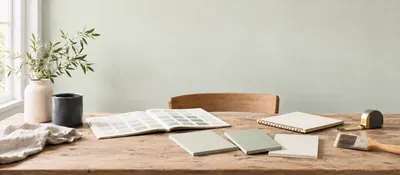 From the first idea to the last stroke of the roller: the six steps that make a painting project go well.
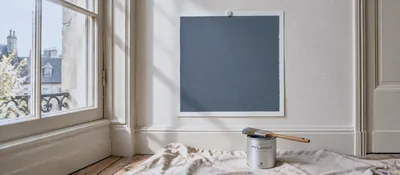 Sample pot, boards, two coats, three times of day: the Mylands 7-step method for testing a paint colour at hom...
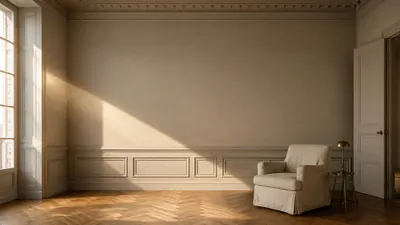 Understand how aspect and light change the way colours are perceived.
 A spectrophotometer reads a point; a colour lives in all the light of a room. What a colour match cannot repro...
“The colour card opens the choice; the folded chip, held against the wall, closes it.”
Thanks for signing up to our newsletter!
Sign in to save items to your wishlist. Sign in to save your basket, so you can continue shopping later.
Don't have an account? Create one
Share this link and friends can buy items from your list. Anything bought disappears from it automatically. Anyone with this link can see your selection.
Moving in, redecorating, or dropping hints? A free account turns this selection into a gift list — add or remove colours whenever you like, and we'll email you when someone buys something from your shared list.