


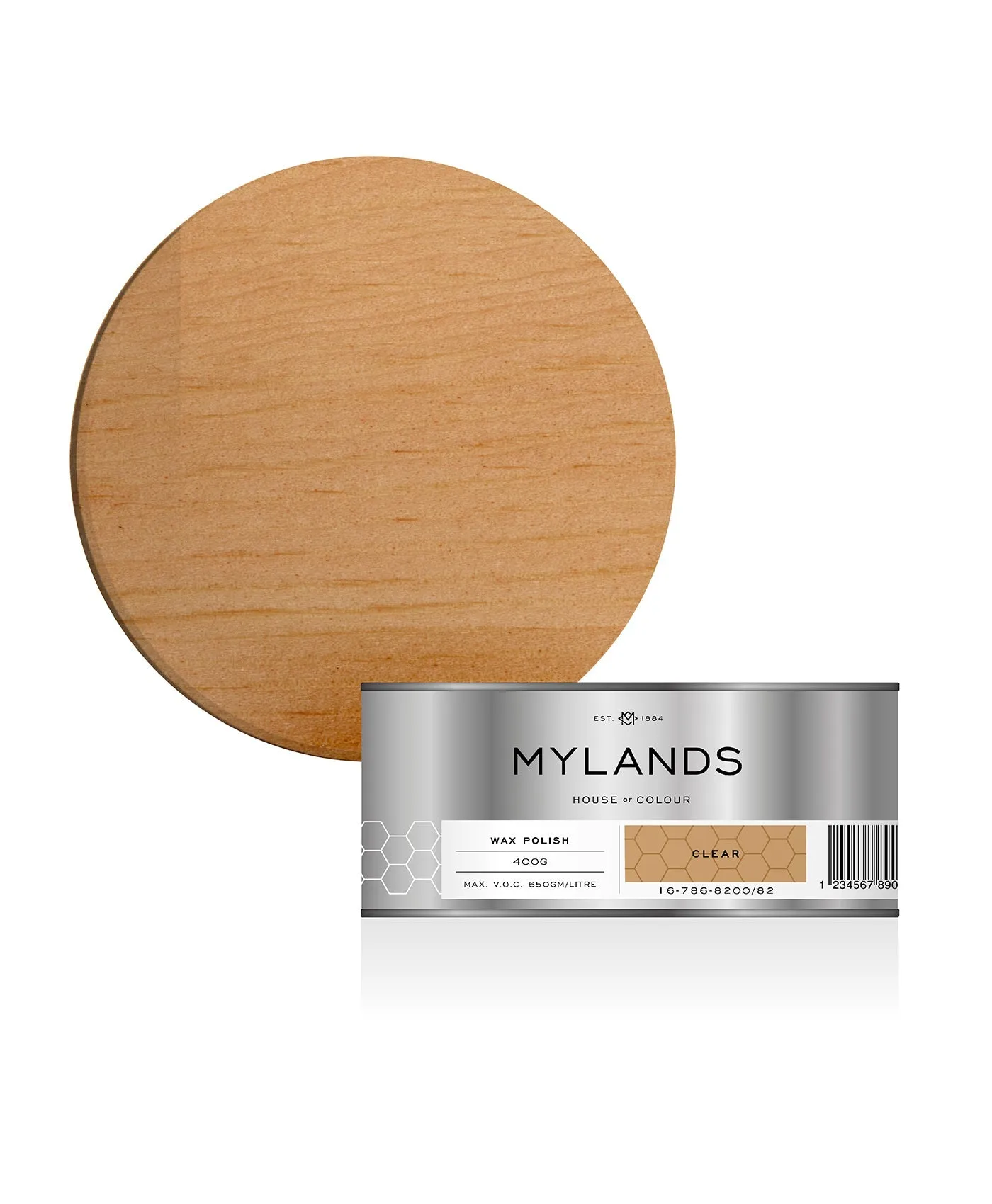
Wax Clear
400g
Sold out for now. No restock date is confirmed.
5 Litre
Sold out for now. No restock date is confirmed.
Re-waxing once or twice a year keeps the wood nourished.
Buff along the grain to the sheen you want; after 10 minutes, further coats can be applied.
These waxes give excellent build and shine on wooden, painted and metal surfaces. They may be applied to bare timber, over a shellac sealer or used over a base stain like Earth Stains, Light Fast Stains, Nitrostains and Waterbased Stains.
Suitable for
Directly on furniture, finished timber, decorative carvings, beams, period doors and antique pine — or over a pale shellac sealer and traditional French polish.
Application and coverage
- Available sizes
- 400g · 5 Litre
Preparation
Wax should be applied over a sealed surface, or onto clean, bare wood. If there is an existing muddy build-up, use Mylands Wax & Polish Remover first. This ensures a clear, crisp lustre.
Application
Apply sparingly using a soft cloth or 0000 grade steel wool. Work in small circular motions, even up, then buff until a matt "haze" appears.
Use a clean cloth or a horsehair furniture brush to buff along the grain, until the desired sheen is achieved. After 10 minutes, multiple coats can be applied.
Aftercare & maintenance
Re-waxing once or twice a year will keep the wood nourished. Avoid liquid furniture sprays and wet cloths. If a spill occurs, wipe it up immediately, to prevent moisture from penetrating the wax barrier.
Please note: for floors we do not recommend wax. Sand instead, and see Mylands Mylac and Mylac Extra.
You may also need White rags.
General guidance. Always check the product label and test on an offcut or an inconspicuous area first - colour and absorption vary with the species, age and preparation of the timber.
Product data & safety sheets
Frequently asked questions
What is the difference between wax, polish, oil and varnish?
Oil penetrates deep into the timber: it nourishes and protects from within, brings out the grain, and can be repaired locally without stripping.
Wax protects at the surface and gives richness, depth and a soft lustre - light protection, to be renewed regularly.
Polishes restore an existing finish, from everyday furniture products through to traditional French polish.
Varnish forms a protective film on the surface with excellent resistance to moisture, stains and everyday wear: the choice for hard-working surfaces.
What is the difference between varnish and lacquer?
Both form a protective film, but they behave differently. Varnish builds a thicker, tougher coating that resists moisture and knocks: doors, worktops, heavily used furniture.
Lacquer lays down a thinner, fast-drying film that builds through successive coats into a smooth, refined finish. It excels on wooden floors, but suits doors, furniture and joinery too.
What finish should I use on my floor?
It depends on the look you want and the maintenance you will accept:
- Hard wax oil - penetrates the timber, durable protection, natural low-sheen look, local repairs possible.
- Floor lacquer - a clear water-based film for residential floors; the reinforced version suits commercial settings.
- Traditional wax polish - the finest patina, but regular upkeep and limited water resistance.
What finish should I use on my kitchen worktop?
Hard wax oil is our first choice: it penetrates the timber and protects against water, stains and daily use while keeping the grain alive. Allow three to four thin coats, after staining if you are staining.
If you prefer a more closed, tougher film, a quick-dry kitchen and bathroom varnish does the job very well. Either way, treat the edges and the underside of the worktop to stop moisture creeping in.
Are your wood finishes suitable for professional work?
Yes - that is where they come from. Our oils, lacquers and varnishes are formulated for floors, joinery and fitted furniture, including commercial environments in the reinforced versions. Technical sheets are on the Product advice sheets page, and the trade area gives access to trade pricing.
How do I look after an oiled floor?
Vacuum or sweep regularly, and mop with a well-wrung cloth and a neutral product - never an aggressive detergent or a steam cleaner, both of which strip the film. A maintenance coat over the traffic areas, roughly once a year, keeps the protection up without going back to bare timber.
How do I revive a dull waxed piece of furniture?
Dust it, then work a maintenance polish or wax in with a soft cloth, in small amounts, following the grain. Leave it a few minutes, then buff. If the wax is dirty rather than dull, a light de-waxing before re-waxing will give far more back.
How often should the finish be renewed?
Entirely down to use. An oiled worktop wants attention every six to twelve months; an oiled floor, an annual maintenance coat over the traffic areas; a waxed piece of furniture, buffing two or three times a year. Varnished and lacquered surfaces last for years, then are redone in full when the time comes.
How should I store my wood care products?
Close them tightly, away from frost, heat and direct sun. Take care with oil-soaked rags: as they dry they can heat up spontaneously and catch fire. Spread them out flat to dry completely in the open air, or soak them in water before disposing of them.
140 years of craft in every pot of Mylands
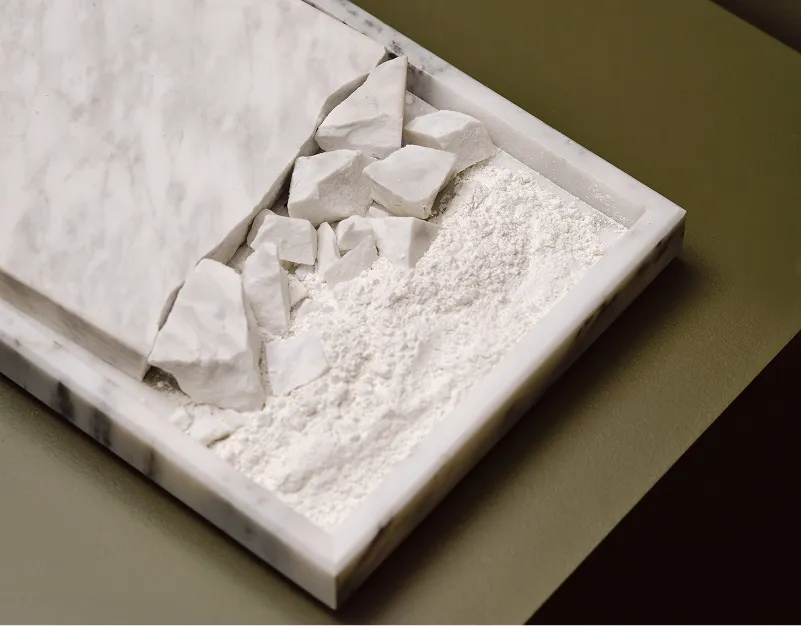
The Finest Ingredients
Formulated with the highest pigment concentration on the market and the finest natural ingredients. Discover an impeccable finish and exceptional durability.
Deeper Colours
Our signature colours are packed with rich pigment for ever more captivating shades. Watch your space transform from a bright, airy feel by day to a warm, intimate atmosphere by night.
Responsible Sourcing
We work exclusively with ethical suppliers. Every ingredient and pigment in our paint comes from responsible sources, free from exploitation.
Proudly Made in London
Our colours have been hand-made in England since 1884. Over 140 years of expertise go into every pot, offering a level of heritage and care that's truly unmatched.


