The journal
What Is the Best Paint for Lime Plaster Walls?
If you live in a period property built before 1920, its walls have most likely been plastered with lime, a traditional material dating back many thousands of years. Don't rule it out on younger properties either, as it's still used today, and is an increasingly attractive option for anyone wanting more natural, environmentally friendly materials. Here we'll explain what lime plaster is and how best to paint over it.
What is lime plaster?
Lime plaster is made of three simple ingredients, water, sand and lime (usually from chalk or limestone), and you may find fibres like animal hair added for extra strength. Thanks to these natural components it's more eco-friendly than modern gypsum plasters. As a traditional material it's usually found on heritage buildings, but with our growing appetite for eco-friendly products it's appearing on more new builds and contemporary properties too.
It's generally off-white, whereas modern gypsum plasters tend to be pink. There are two main types of lime: non-hydraulic lime, from pure limestone, which comes as lime putty and offers brilliant flexibility and breathability; and hydraulic lime, from limestone with natural impurities, which contains some setting agents and, available as a powder, starts setting as soon as it meets water.
What are the benefits of lime plaster?
Eco-friendly, thanks to lower-energy manufacturing and because it absorbs carbon dioxide. Prevents damp, because it's breathable, letting air pass through and moisture escape. Improves air quality, acting like a natural dehumidifier, releasing moisture back into dry air or removing it when needed. Long-lasting, since lime plaster actually gets stronger over time as it crystallises, its tiny particles filling every minuscule gap to form a strong bond. Flexible, as it isn't brittle like cement, so it adjusts and won't crack the way gypsum plaster can.
What paint should I use on lime plaster?
The key is choosing a breathable paint (like Mylands). Lime plaster is permeable, so it lets your walls breathe and won't trap moisture (which can cause damp); to keep that permeability, the walls need to breathe, and if moisture builds up with nowhere to go, the paint will bubble and crack.
So the paint over lime plaster must be breathable and vapour-permeable, whether a natural mineral (silicate) paint or a breathable lime paint. Limewash is a conventional finish that adds a layer of protection and some colour, but it needs regular maintenance.
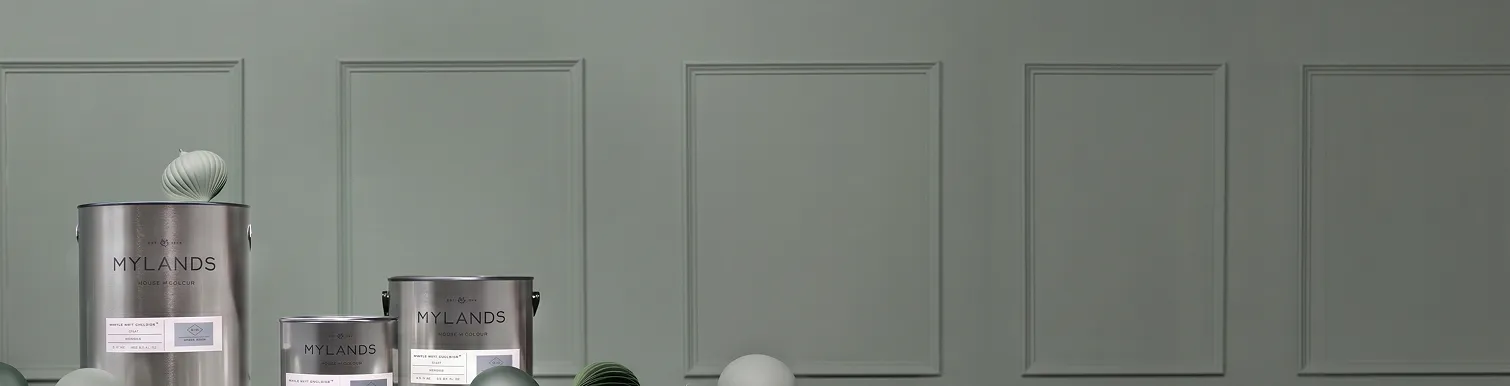
Conventional vinyl acrylic emulsions seal lime walls and keep the moisture in, which can lead to structural damage and peeling paint; lime walls are highly absorbent, so moisture needs to escape rather than be locked into the wall's substrate. To gauge how breathable a paint is, look for the steam-diffusion (SD) value; properly breathable paint has an SD value of 0.01–0.05. Mylands' signature Marble Matt Emulsion is a breathable paint, its natural, mineral formula containing Carrara marble and natural earth pigments to deliver wonderful texture, depth of colour and an exceptional matt finish.
What's the best way to paint over lime plaster?
Showing off exposed lime plaster as the final finish has been quite a trend, but it isn't for everyone and leaves the wall without an extra layer of protection. The first thing to remember is to ensure the plaster is fully set before painting; it has to dry and also cure, which takes time, around four weeks for non-hydraulic lime, so be patient, as it makes all the difference to the finish, and the same applies to any lime putty used for repairs.
Check for lumps and bumps and remove them with fine sandpaper, since a well-prepared surface is fundamental to a sleek finish. As noted, choose a breathable, vapour-permeable paint, and check for natural ingredients, since chalk and clay paints are more likely to be breathable. For exterior walls, you'll most likely be dealing with lime render, which has similar properties, so again choose a porous or breathable masonry paint.
Working with lime plaster takes time, both to ensure it's fully set and because it needs multiple coats. The general rule is a three-coat approach, applying thin layers and letting each dry completely before the next. The mist coat comes first, thinned with around 20% water to aid absorption and adhesion; leave it to dry for up to four hours. The next two coats can be full strength, allowing drying time between layers for the best finish.
The main consideration when painting over lime plaster is to use a breathable paint, and to take your time, since the best results require breathing (and drying) time. Mylands recommends its Marble Matt Emulsion for outstanding results on lime plaster walls.
Outstanding qualities of Mylands Marble Matt paint: low VOC, breathable, natural ingredients, mineral rather than chemical additives and fillers, durable (avoiding frequent repainting), plant-based, water-based, excellent coverage, and scrubbable and wipeable.