
01
Dark and intense: the small study
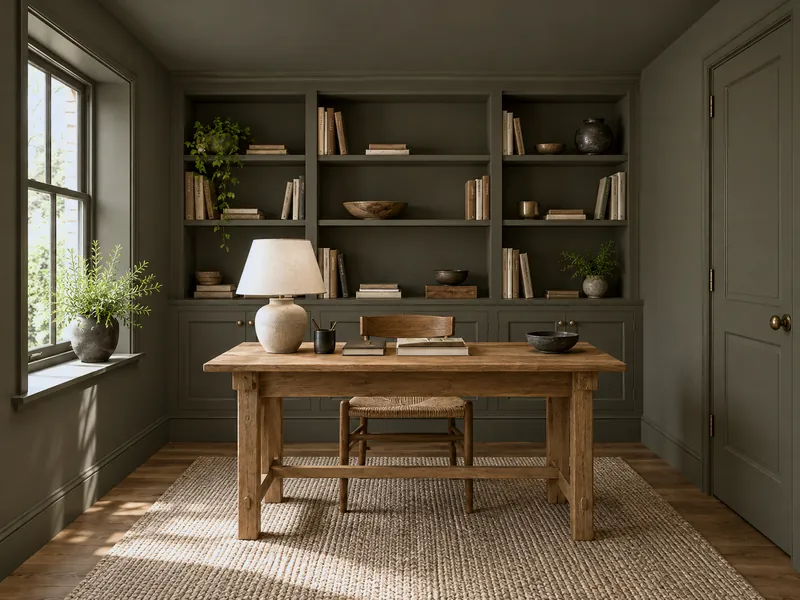
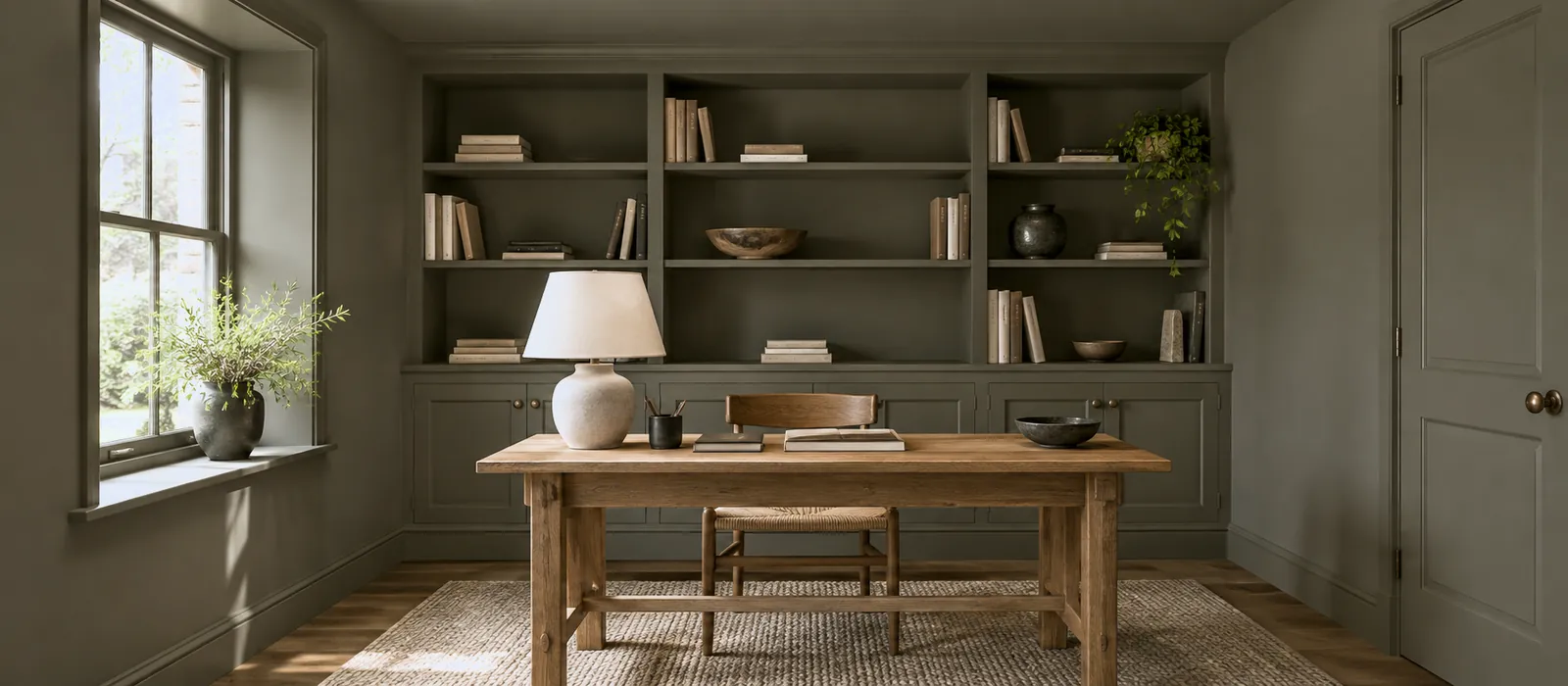
A deep brown-green on the walls, the ceiling and the shelves: the concentration of a study. One light object, the lamp. The 6 m² study becomes the favourite place in the house.
Menu
How To
Design Advice
Customer Service
My account
Help with paint Choosing colour
A small room is treated in one of two opposite ways, and both work: open it up with light, warm tones that throw the light back, or own it with a deep colour that erases the corners and makes it a cocoon. What does not work is pure white by default, which shows every limit. The choice depends on the use: light and soft neutrals for a kitchen or bathroom used by day, depth and intensity for a study, a bedroom, a cloakroom.
Page updated September 2026 · by the Mylands France colour team
Understanding
The reflex with a small room is to paint it white to "make it bigger". Pure white does the opposite: it lights every corner and every shadow, and the room shows exactly its size, only colder. Two strategies work. The first opens: light but tinted tones — warm off-whites, pale grey-greens, pastels — that throw the light back without underlining the limits, and a tonal family on walls, ceiling and woodwork to erase the borders. That is the route for rooms lived in by day. The second owns it: a deep, warm colour on everything, ceiling included, which dissolves the corners into shadow; the room stops having a size and becomes a place. That is the route for rooms you spend little time in or want to retreat to.
The guide Make a room look larger with paint covers the techniques; this one chooses the colours. And for the shades themselves, one by one: Colours to enlarge a small room.
Four directions
01
A deep brown-green on the walls, the ceiling and the shelves: the concentration of a study. One light object, the lamp. The 6 m² study becomes the favourite place in the house.
02
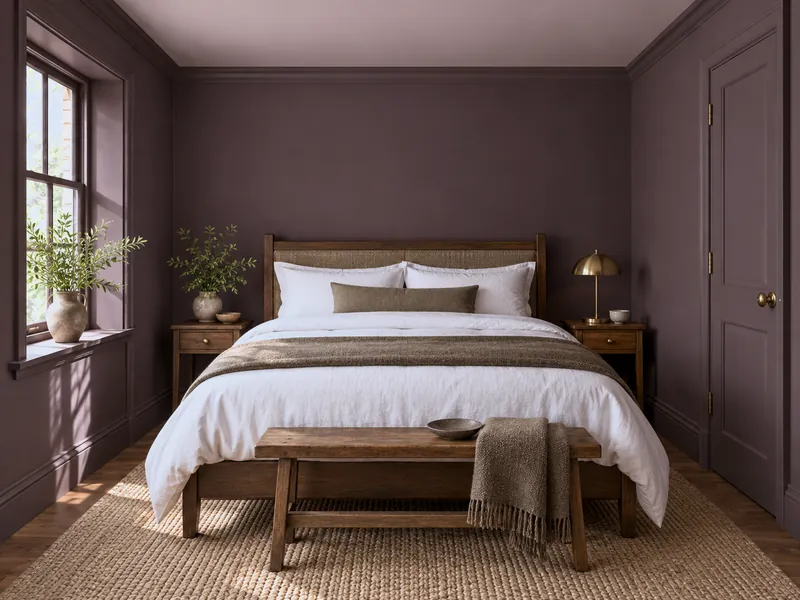
A plum or a burgundy on all four walls, woodwork in the same tone, ceiling in a greyed pink: the opulence of a small hotel bedroom. White linen for the light.
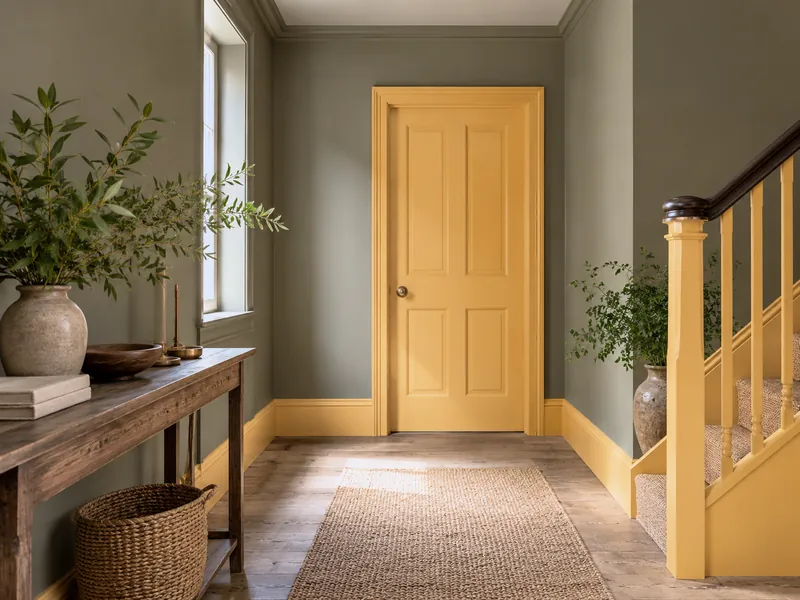
03
A deep grey-green on the walls, and an ochre or orange accent on the skirting, the picture rail or a door: the dark hall comes alive without getting lighter.
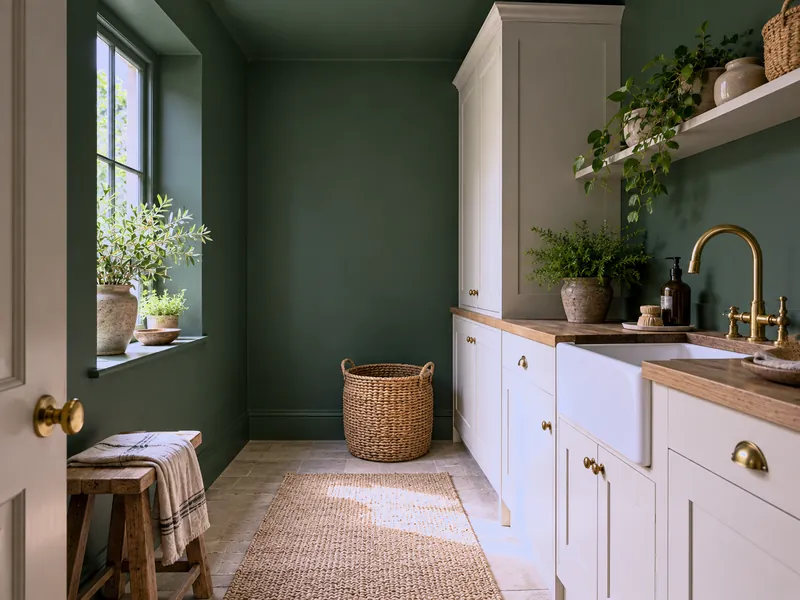
04
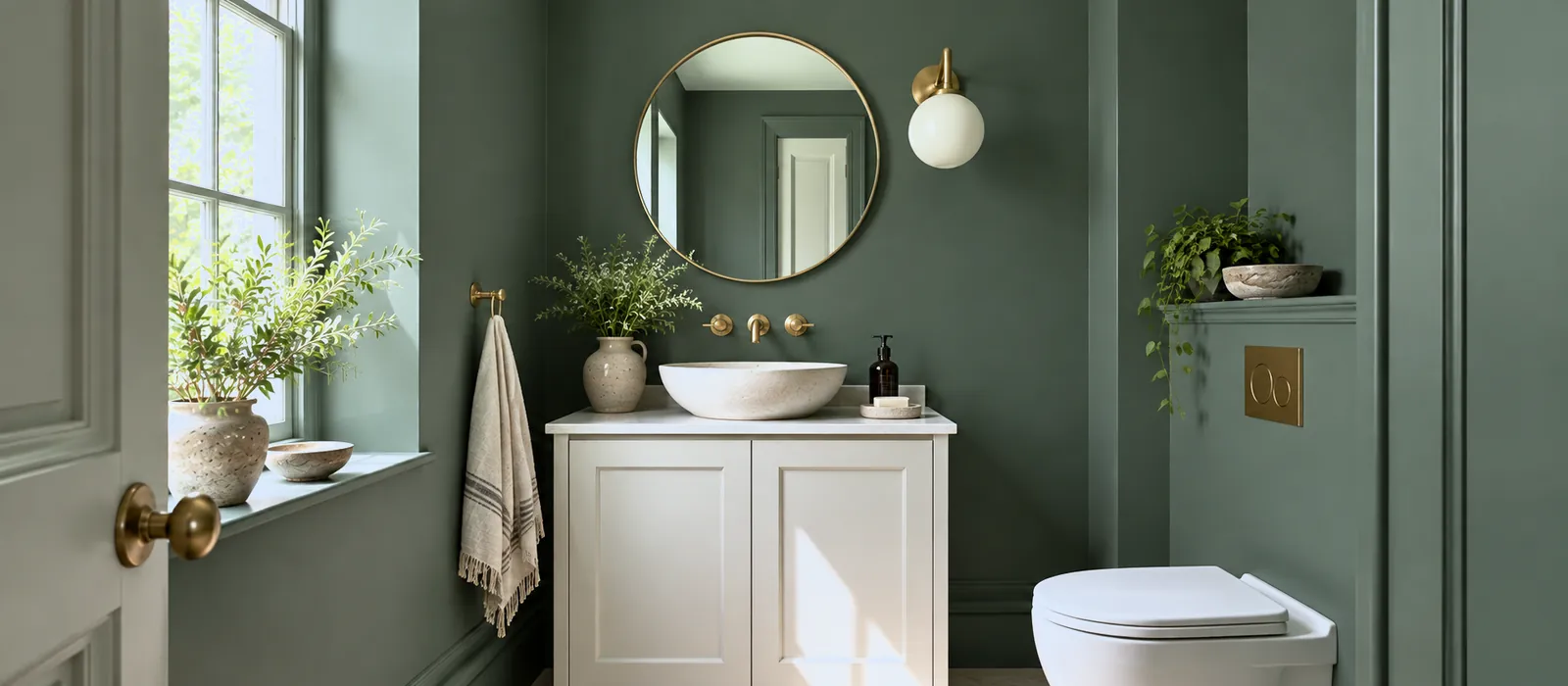
A single bottle green, walls and ceiling, with cupboards in a pale stone: nature in three square metres. Greens combine easily because they share an undertone.
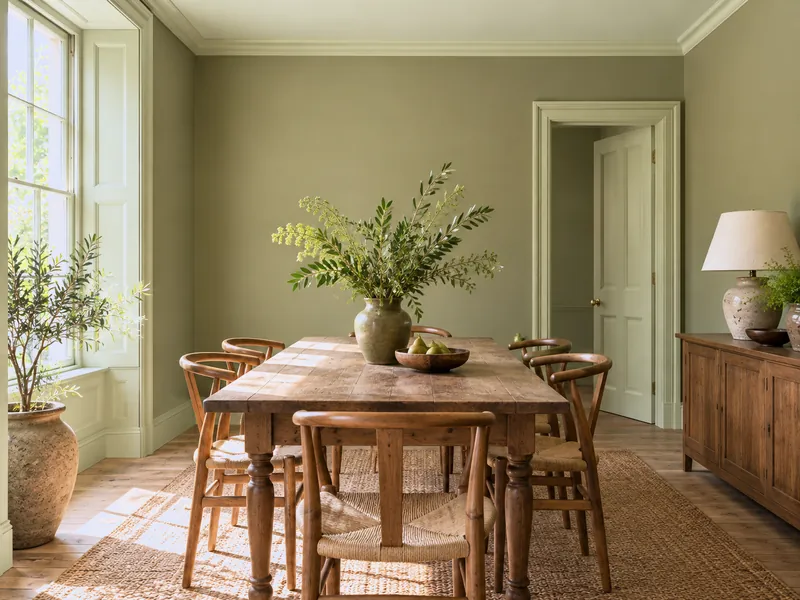
05
A khaki green on the walls, a lighter green on the ceiling and woodwork: double drenching gives depth to an enclosed room. A yellow-based green copes with low light.
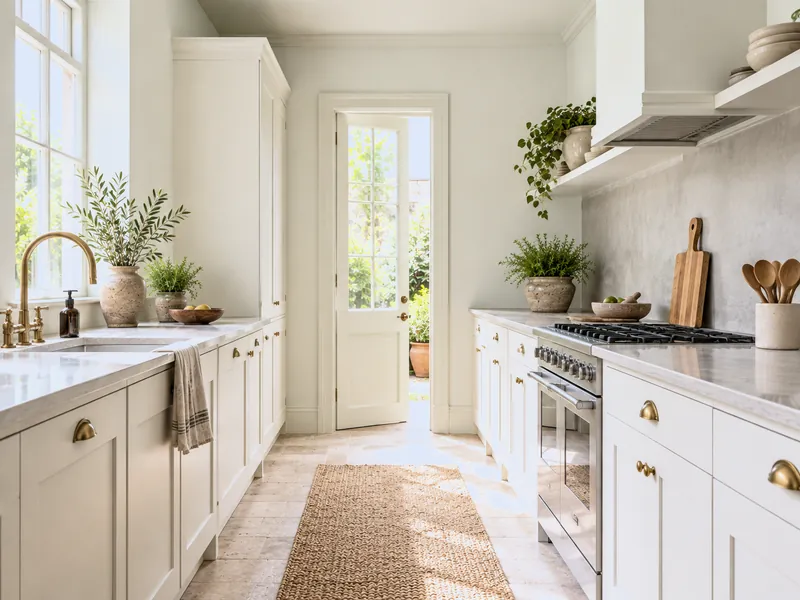
06
Walls in a green-white, units in a warm white, a splashback in a mid grey: the galley kitchen stays calm and bright, without the pure white that would make it clinical.
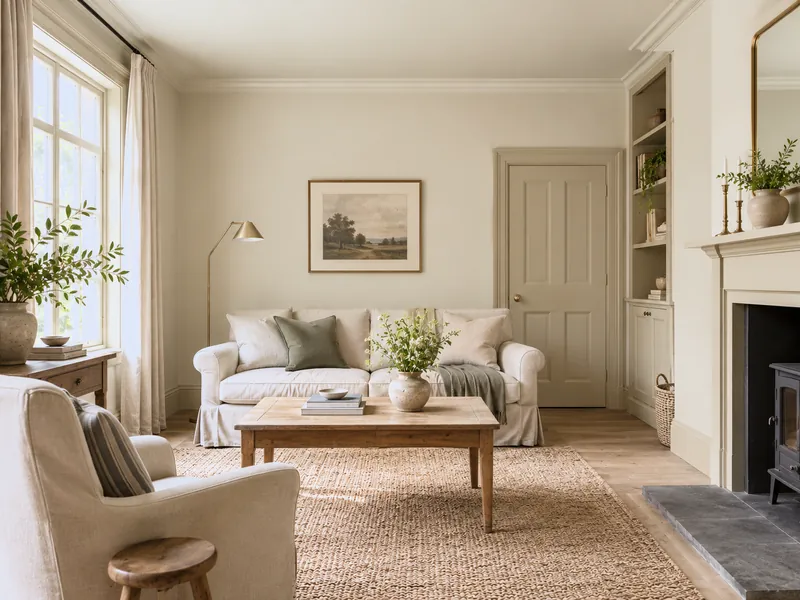
07
Three depths of one stone: the lightest on the ceiling, the mid on the walls, the deepest on the woodwork. The light circulates, the borders fade.
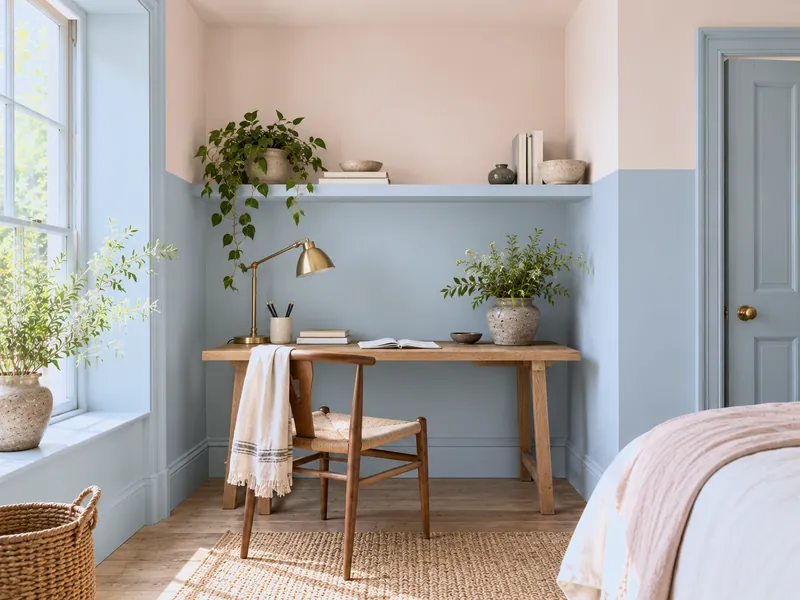
08
Two pastels in colour blocks — a pale blue below, a pale pink above, the line at shelf height — pull the eye upward and give a work corner in a bedroom some spirit. See Colour blocking.
Choosing
| The small room | Strategy | Why | Finish |
|---|---|---|---|
| Narrow kitchen | Open: soft neutrals, tonal family | Lived in by day, you want to see | Marble Matt / Satin on the units |
| Bathroom | Open, or a single deep green | Morning light; green stands up to damp in Satin | Marble Matt / Satin |
| Small bedroom | Own it: deep and warm | You sleep there; a cocoon beats an illusion | Marble Matt / Eggshell |
| Small study | Own it: dark and focused | The eye rests on the work, not the walls | Marble Matt / Eggshell |
| Hall, corridor | Own it with an accent, or a light drench | You pass through; colour gives it an identity | Dead Matt throughout |
| Cloakroom | Own it: anything goes | Five minutes a visit; the boldest colour in the house | Dead Matt throughout |
| Studio flat | Open: light family + one block for the sleeping corner | Everything in one room; the block divides without a wall | Marble Matt |
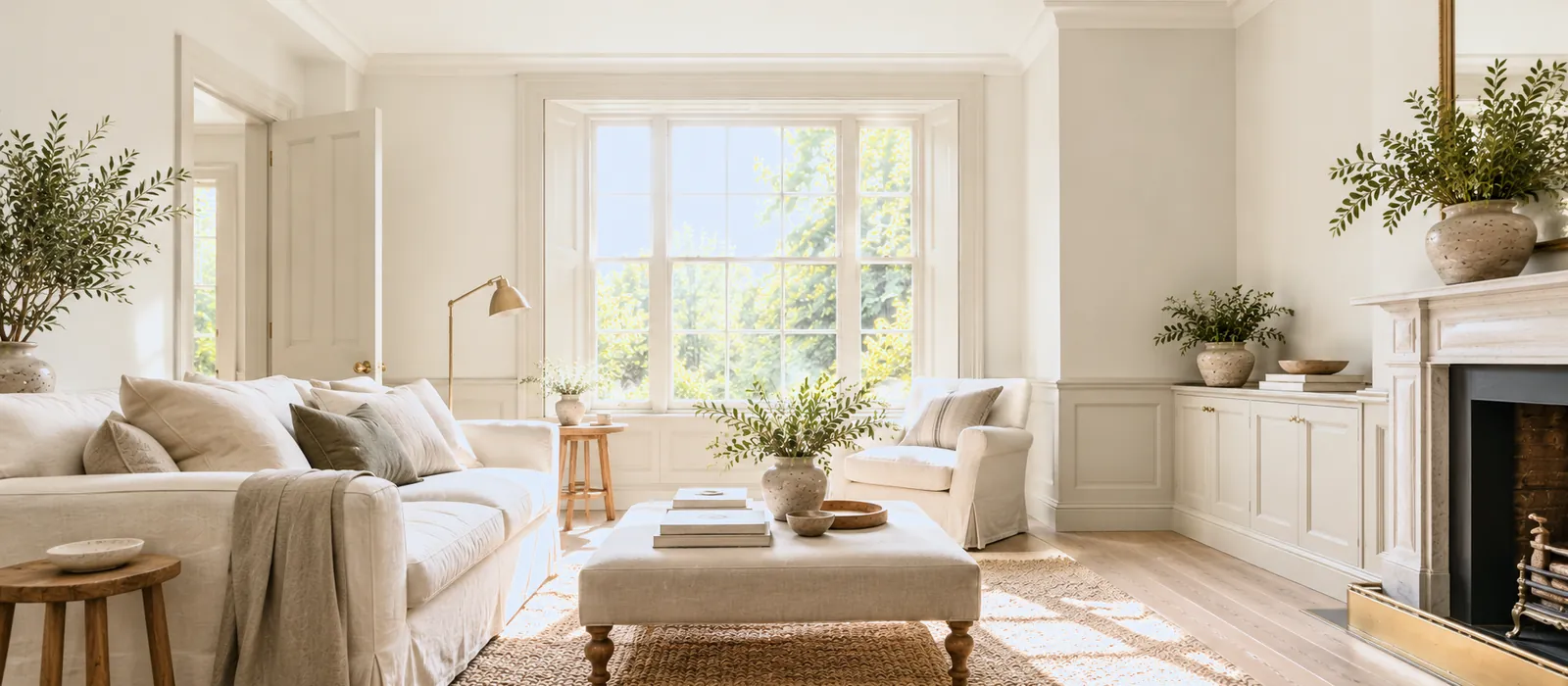
In both strategies, no white skirting and no pure white ceiling: the line is what shrinks.
To avoid
Frequently asked questions
If it is warm and matt, no: the corners vanish and the room loses its limits. What oppresses is a cold, shiny dark, or dark on three walls with a white fourth. All or nothing, ceiling included, and light linen.
Two answers: a warm off-white everywhere, with careful lighting, to add no shadow; or the reverse, a warm deep everywhere that owns the absence of daylight — cloakroom, dressing room, wine cellar. Never a cold mid-tone, which goes grey.
In a small room, yes, or in the lightest shade of the same family. A pure white ceiling is one more border.
Take a warm shade within the chosen strategy: a yellow or rosy off-white to open, a brown-green or a plum to own it. Cold added to north makes a sad room. See How light affects colour.
See also
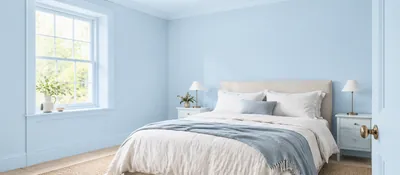 Six painting techniques that push the walls back — without knocking down a single one.
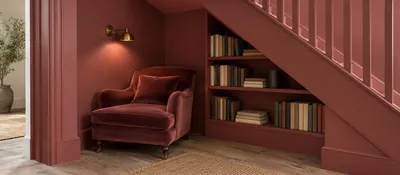 The nook under the stairs, the landing, the end of the corridor: seven ways to make it the place you want to b...
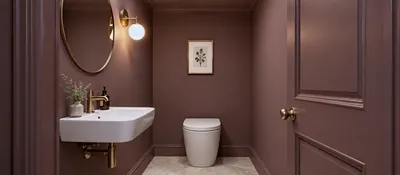 Two square metres, three minutes: the room where you dare a deep colour, drenched. Six ideas, from burgundy to...
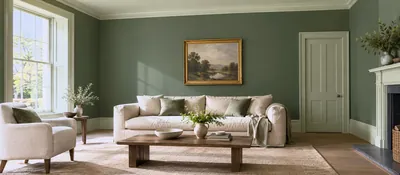 The same technique, eight rooms: the pair that suits a bedroom is not the one for a kitchen.
“A small room does not want to look big; it wants to look intended.”
Thanks for signing up to our newsletter!
Sign in to save items to your wishlist. Sign in to save your basket, so you can continue shopping later.
Don't have an account? Create one
Share this link and friends can buy items from your list. Anything bought disappears from it automatically. Anyone with this link can see your selection.
Moving in, redecorating, or dropping hints? A free account turns this selection into a gift list — add or remove colours whenever you like, and we'll email you when someone buys something from your shared list.
Free · Delivered to your door
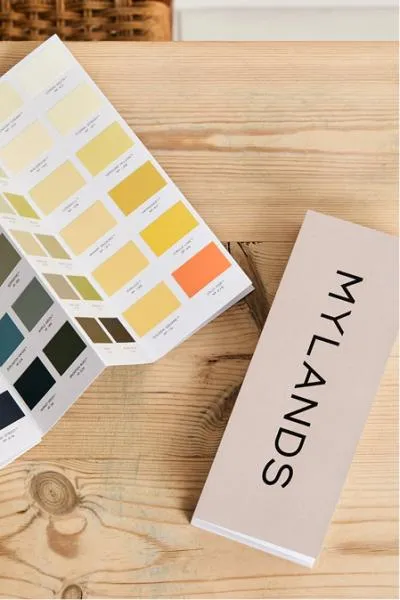
Get a free colour card posted to you, showing our complete Colours of London range, with swatches made from the real paint for a true representation of our award-winning colours.