
Help with paint Planning your project

How to make a room look larger with paint

A room looks bigger when the eye can no longer find its limits: erase the breaks between walls, ceiling and woodwork, choose shades that throw light back or, the other way round, one deep shade everywhere that dissolves the corners. Six techniques work, often two at once: tonal gradation, light colour, drenching, an enveloping dark colour, the vertical stripe and the pale floor. Pure white is not one of them.

Page updated September 2026 · by the Mylands France colour team

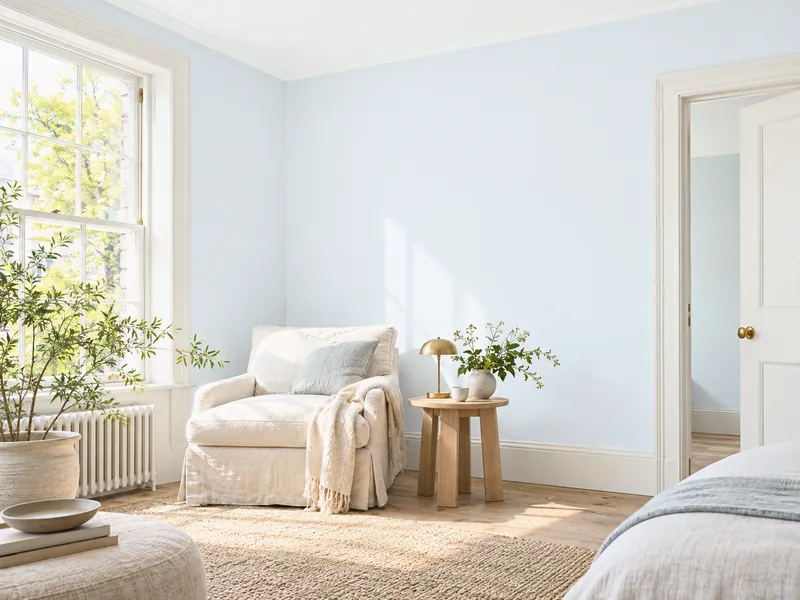
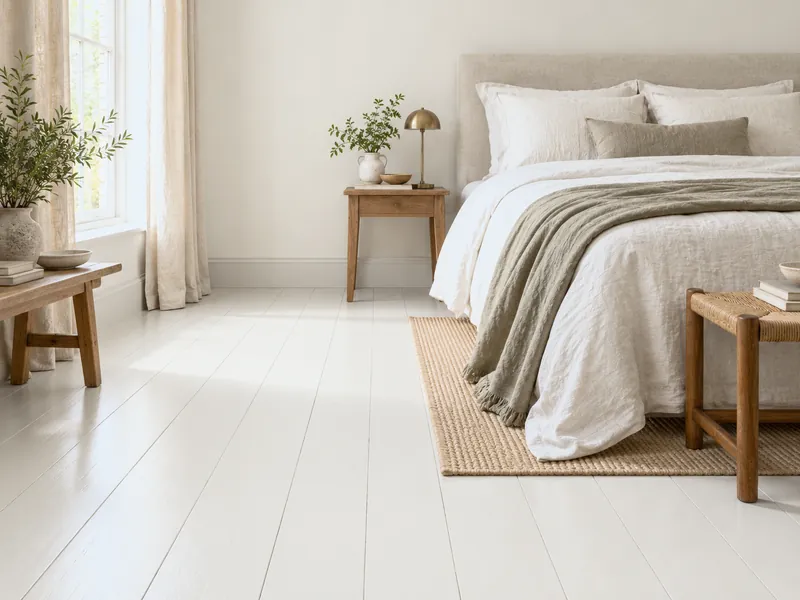
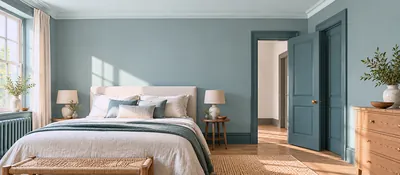
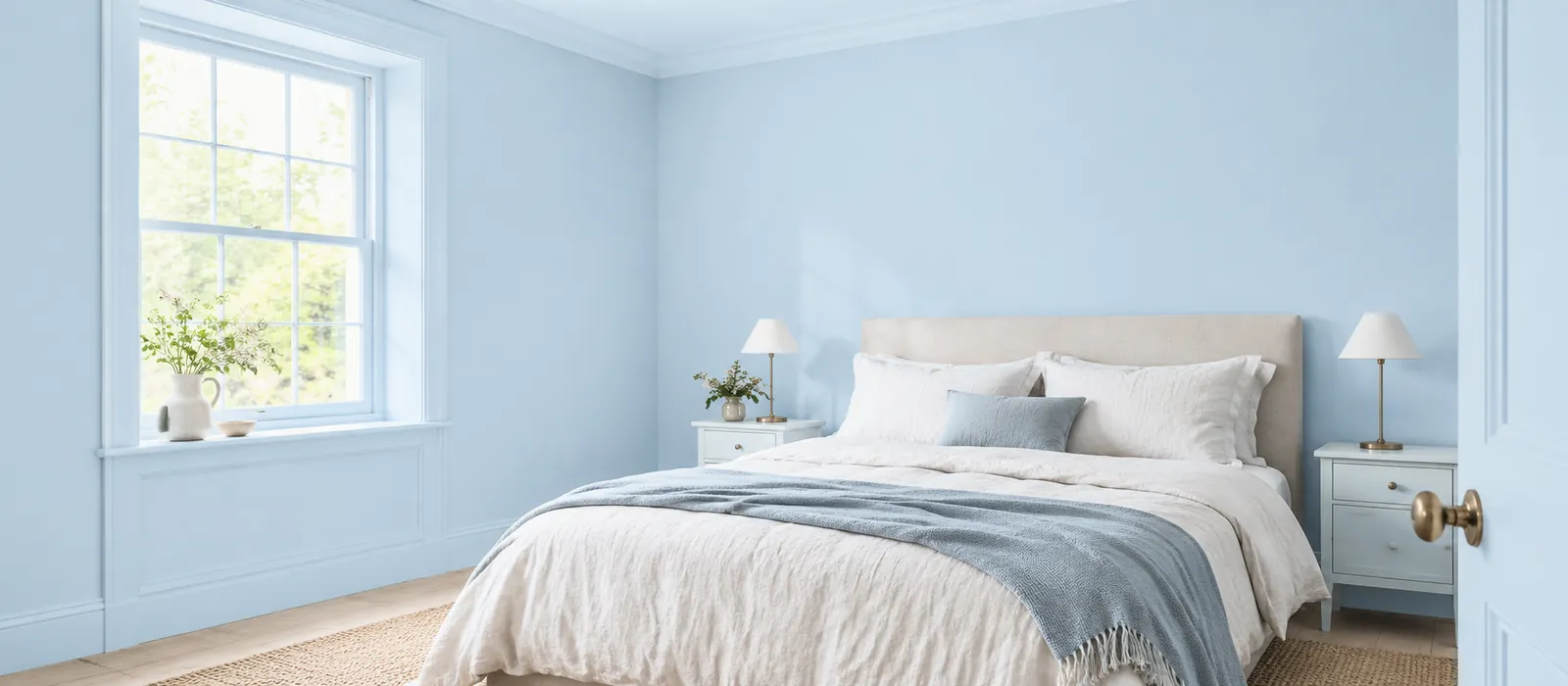
Small bedroom with pale blue matt walls, a ceiling in a paler blue still, blue-white woodwork, a linen bed, window light
Three blues of one family and no visible limit left: the room breathes

Understanding

What makes a room look small

It is not the floor area: it is the number of lines the eye has to read. A white ceiling over coloured walls draws a hard border at 2.5 m; white skirting draws another at the floor; every door and every architrave adds four more. The eye measures the room by counting those stops. Remove them and the room has no readable size — it looks bigger without a wall having moved.

The second thing is light. A light shade sends the window's light to the back of the room; a dark shade absorbs it and erases the corners in shadow. Both enlarge, by opposite routes: the first opens, the second dissolves. What enlarges nothing is brilliant white on every wall: it shows every corner and every shadow, and the room looks exactly what it is, only colder.

The techniques

Six ways to push the walls back

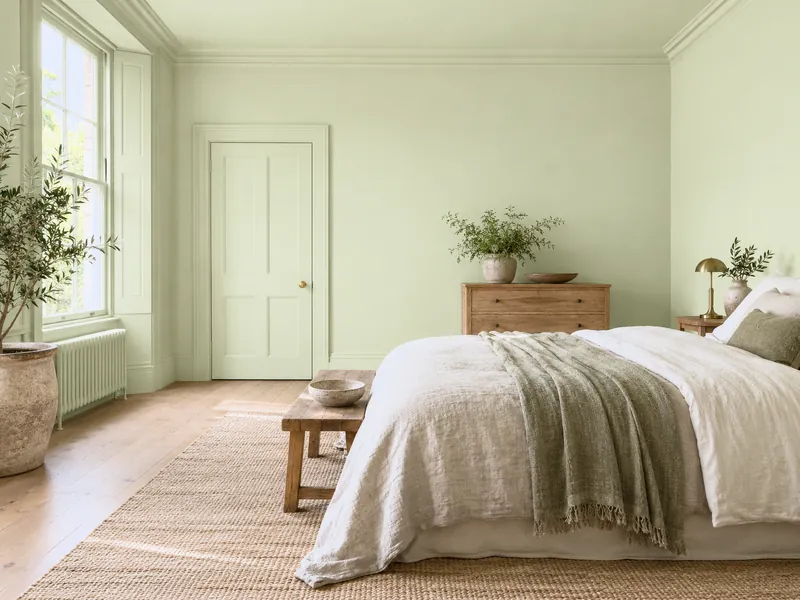
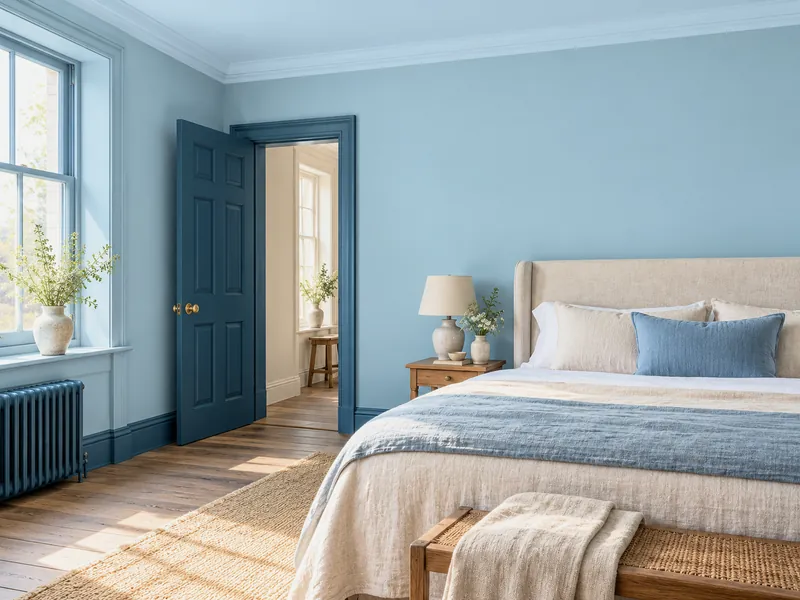
2. Light colour that reflects — Walls: Walpole No.42, Ceiling: Greenwich Time No.8, Woodwork: St Clement No.11

02

2. Light colour that reflects

The lightest shades throw back the most light — but a tinted off-white throws back as much as a pure white without its hardness. Work out where the light comes from and put the lightest shade on the wall facing the window. An Eggshell finish on the woodwork adds soft reflections that carry the light further.

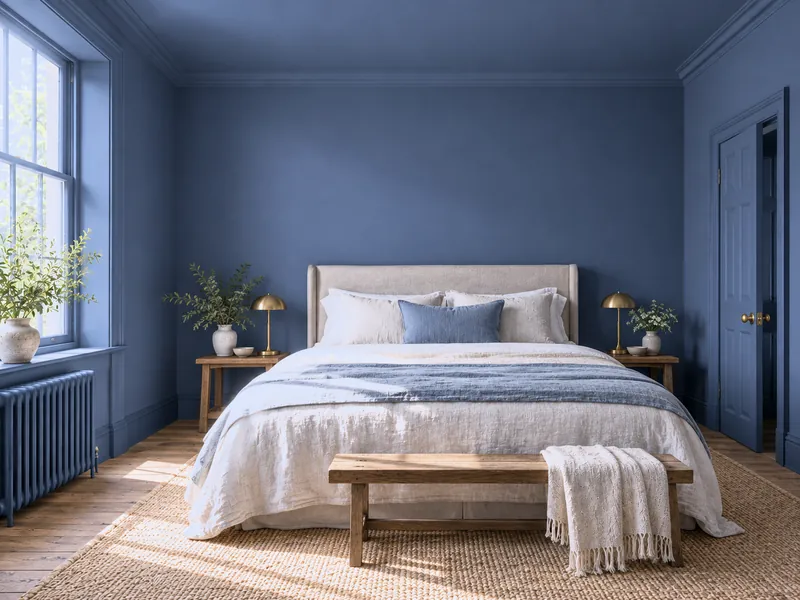
4. Dark colour that dissolves — Everywhere: Observatory No.34, Or: Pleasure Gardens Green No.214

04

4. Dark colour that dissolves

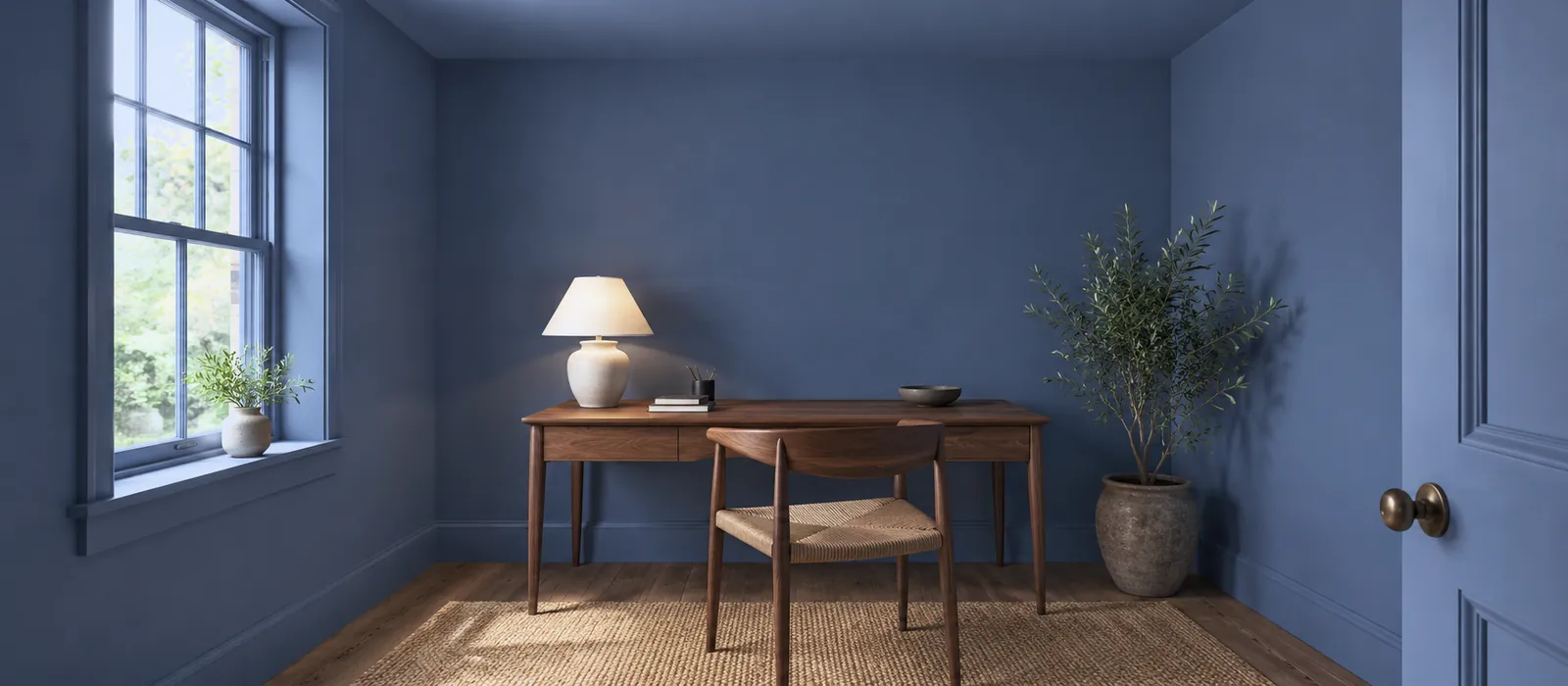
A midnight blue or a forest green on all four walls and the ceiling: the corners vanish into shadow and the room has no edge left. A bedroom or a study that felt narrow becomes deep. Keep one light object — the linen, a lampshade — so the light has somewhere to land.

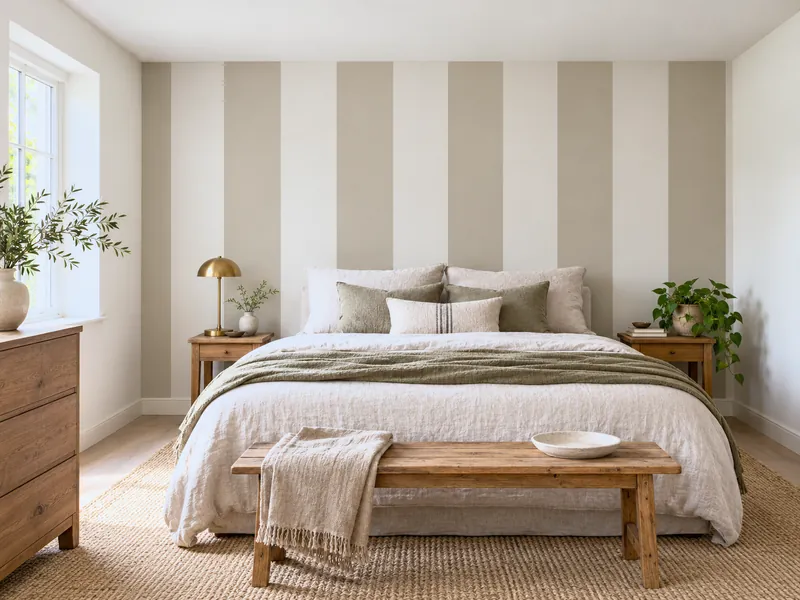
5. The vertical stripe — Band: Limestone No.55, Band: Egyptian Grey No.154

05

5. The vertical stripe

Two close tones in wide vertical bands, with masking tape, pull the eye upward. Effective under roof slopes and in a low corridor; keep it to one wall, not four. Tongue-and-groove panelling painted in a single shade does the same job with its grooves.

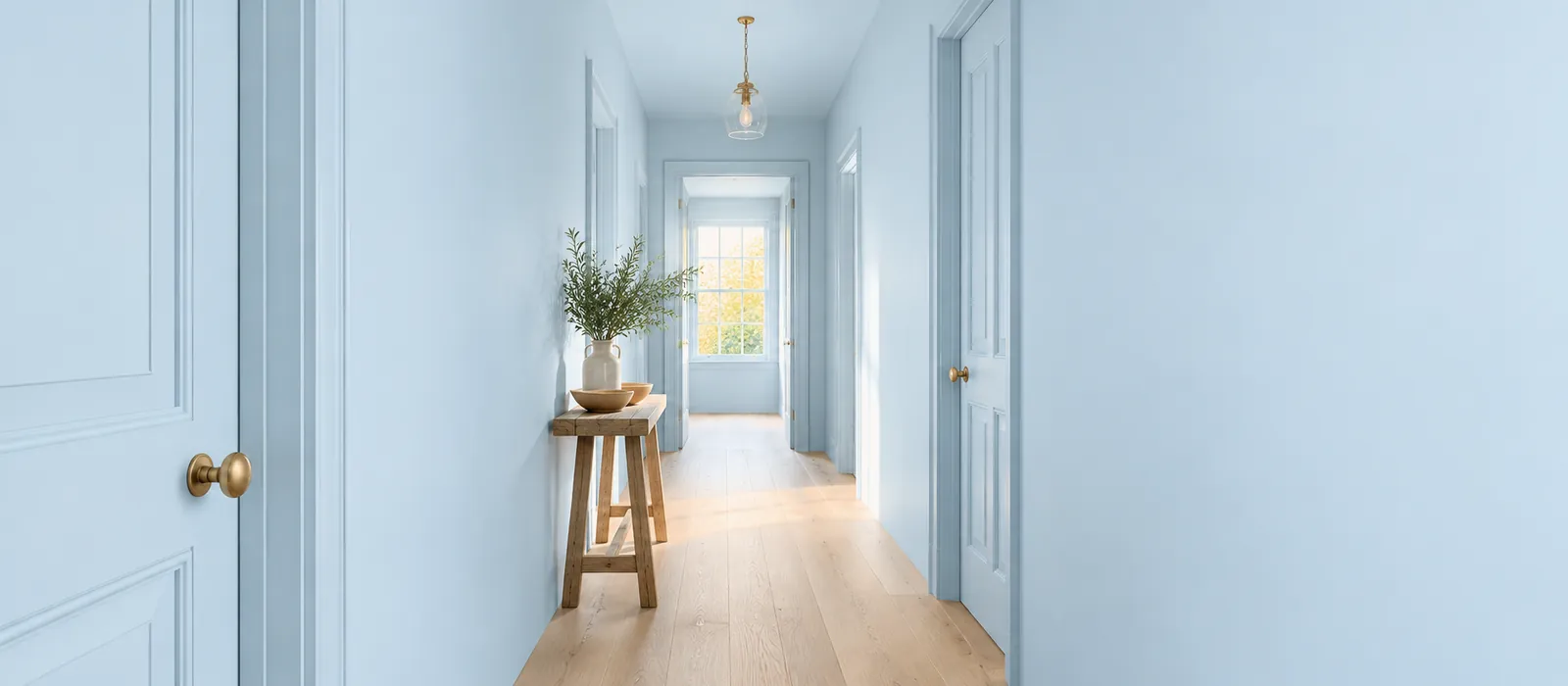
Narrow corridor painted in a single pale blue on walls, doors and ceiling, no white skirting, pale oak floor
Drenching in a light shade: with no white skirting or white ceiling, the corridor loses its edges

Choosing

Which technique for which room

The roomThe problemThe techniqueThe finish
Low-ceilinged bedroom The white ceiling presses down Tonal gradation, ceiling in the lightest shade of the family Marble Matt Emulsion throughout
Narrow corridor The doors chop up the walls Drenching: walls, doors and skirting in one light shade Multi-Surface Dead Matt
North-facing sitting room Cool light, grey corners Warm light shade facing the window, woodwork one tone lighter Marble Matt Emulsion, Eggshell on wood
Small study or guest room Narrow, charmless Enveloping dark colour, one light object Marble Matt Emulsion
Attic, roof slopes The slopes show One shade on slopes and walls, or vertical stripes on one wall Marble Matt Emulsion
Studio flat Everything in one room Pale floor + light drenching, one colour block for the sleeping corner Floor Satin + Dead Matt

Aspect counts as much as floor area: see How light affects colour and, for the shades themselves, Colours to enlarge a small room.

To avoid

What shrinks a room

  • Brilliant white everywhere. It underlines every corner and every flaw; the room looks like a box.
  • White skirting on coloured walls. One more line at the floor, at eye level when you are sitting.
  • An accent wall at the end of a narrow room. It brings the end closer. On a side wall, it widens.
  • A pure white ceiling over deep walls. It comes down a metre. A tinted white in the walls' family, or the wall shade itself, lifts it back.
  • Multiplying colours. Every change of shade is a border. Three surfaces, one family.
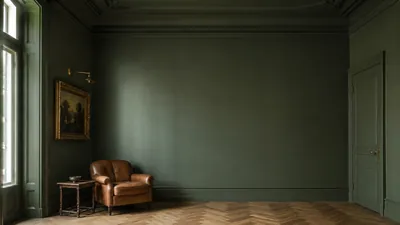
Small study painted entirely in a matt midnight blue, walls and ceiling, with a pale-shaded lamp and a walnut desk
The opposite technique: Observatory No.34 everywhere, and the study has no edge left

Frequently asked questions

Your questions, our answers

Does white make a room bigger?

An off-white tinted in the family of the woodwork and floor, yes: it throws light back without underlining the corners. A brilliant pure white, no: it shows everything and cools. See ten off-whites compared.

Should the ceiling be painted the same colour as the walls?

In a low room, yes, or in the lightest shade of the same family: the border disappears and the ceiling rises. In a tall room, a ceiling slightly darker than the walls makes it more intimate without shrinking it.

Won't a dark colour make a small room gloomy?

It darkens it and that is the point: the corners vanish and the room loses its limits. That suits a bedroom, a study, a cloakroom, an evening dining room; not a kitchen or a room you work in by day.

Which finish reflects the most light?

The higher the sheen, the more the surface reflects: Gloss more than Satin, Satin more than Eggshell. On the walls, stay matt — a satin over 12 m² reveals every flaw; put the sheen on the woodwork, doors and furniture, where its reflections carry the light.

What about horizontal stripes?

They widen a narrow room, on one wall, at the price of a ceiling that looks lower. In a long, tall corridor that is the right choice; in a low bedroom, go vertical.

“A room looks large the day the eye stops counting its walls.”
Sign up to our newsletter

Sign up to our newsletter

Thanks for signing up to our newsletter!