


01
Two depths, one family
The safest: the same colour in light and deep. Walls in the deep, ceiling and woodwork in the light (the room rises), or the reverse (the room draws in, a cocoon).
Menu
How To
Design Advice
Customer Service
My account
Help with paint Choosing colour
Double drenching takes colour drenching one step further: instead of a single shade everywhere, two confident shades share the room, the walls in one, the ceiling, woodwork or furniture in the other, with no white to separate them. The pair is chosen in one of three ways: two depths of one family, two neighbours on the colour wheel, or a shade and its muted complementary. Always a dominant and a supporting role, never half and half.
Page updated September 2026 · by the Mylands France colour team
Understanding
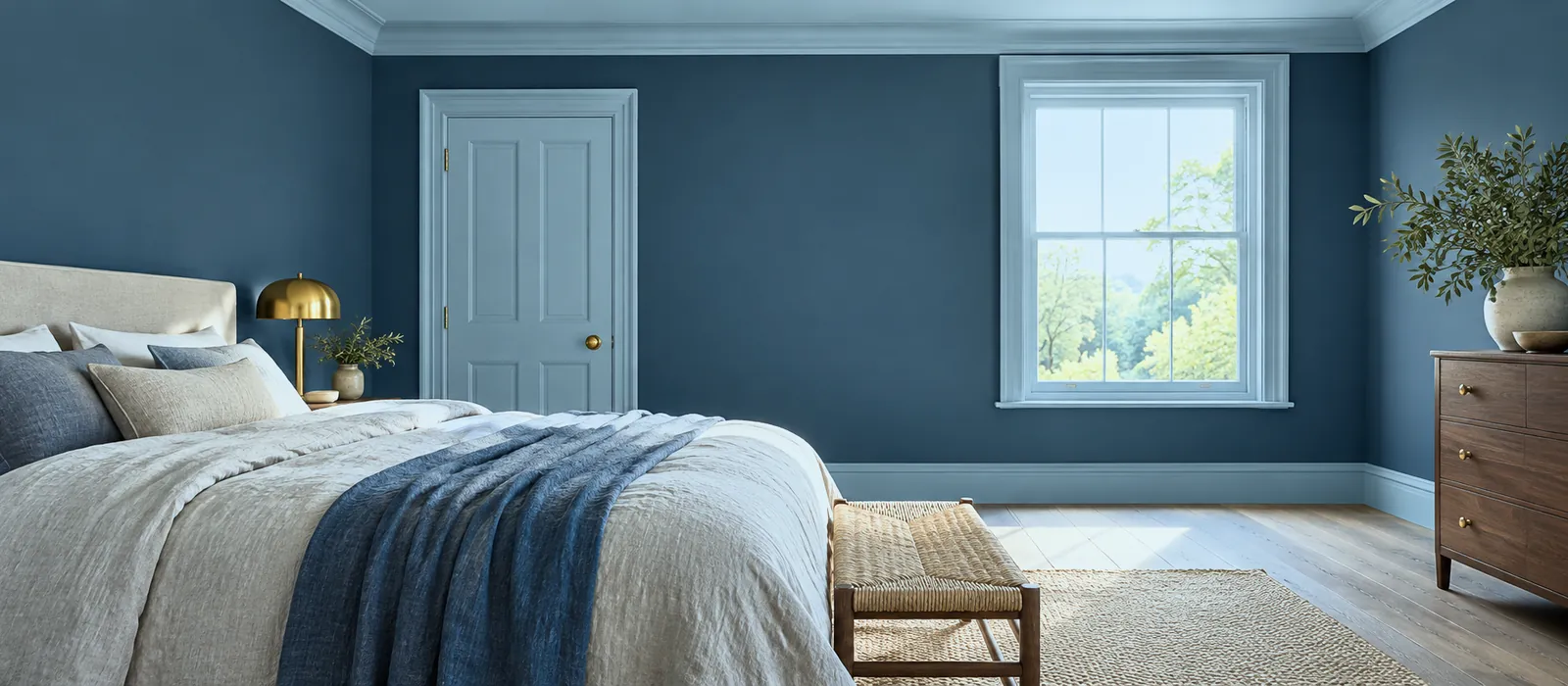
Colour drenching paints everything — walls, ceiling, woodwork, radiators — in one shade: the room becomes a calm volume, with no line to read. Double drenching keeps the principle and adds a second colour, as confident as the first: walls in a deep blue, ceiling and woodwork in a light blue; or walls in a green, doors and ceiling in an ochre. White leaves the room entirely, and with it the border the eye counts.
The effect is twofold: the depth of an enveloped room, and the life of a contrast. It is a technique for enclosed rooms — bedroom, dining room, study, cloakroom, stairwell — where you accept that colour is the subject. Multi-Surface Dead Matt lets you go from wall to door without changing texture; Marble Matt Emulsion on the walls and Eggshell on the woodwork give the more classic version, with a slight change of sheen.
Choosing the pair
01
The safest: the same colour in light and deep. Walls in the deep, ceiling and woodwork in the light (the room rises), or the reverse (the room draws in, a cocoon).
02
A green and a blue-green, a brown-red and a pink, a yellow and a soft green: they share a pigment and carry each other on. The room looks composed without anyone knowing why.
03
The liveliest: a deep green and a powder pink, a midnight blue and an ochre. One of the two is always greyer; that is what makes it liveable.
Six combinations
For each: the dominant (walls), the supporting role (ceiling, woodwork, furniture) and, sometimes, an accent. All composed in the Colours of London.
01
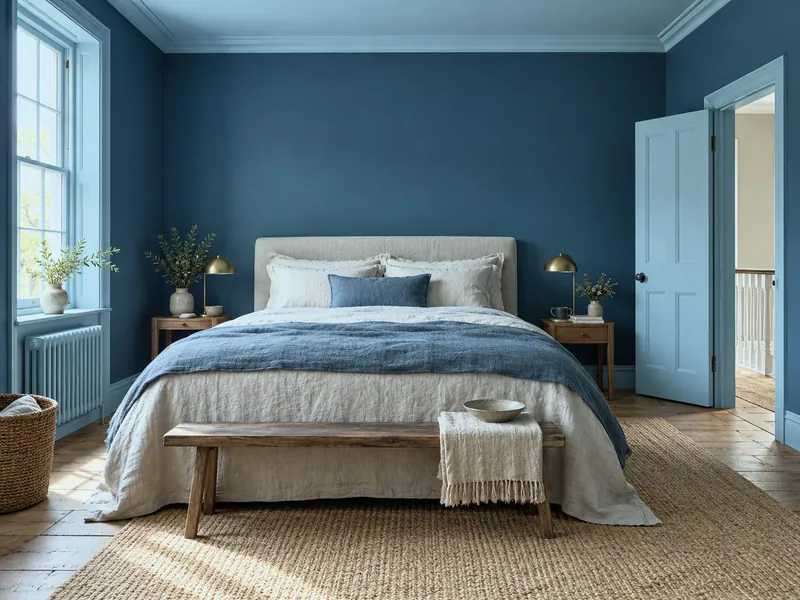
The family: walls in a midnight blue, ceiling and woodwork in a greyed sky blue. The bedroom rises and settles; in the morning the light ceiling throws light onto the dark walls.
02
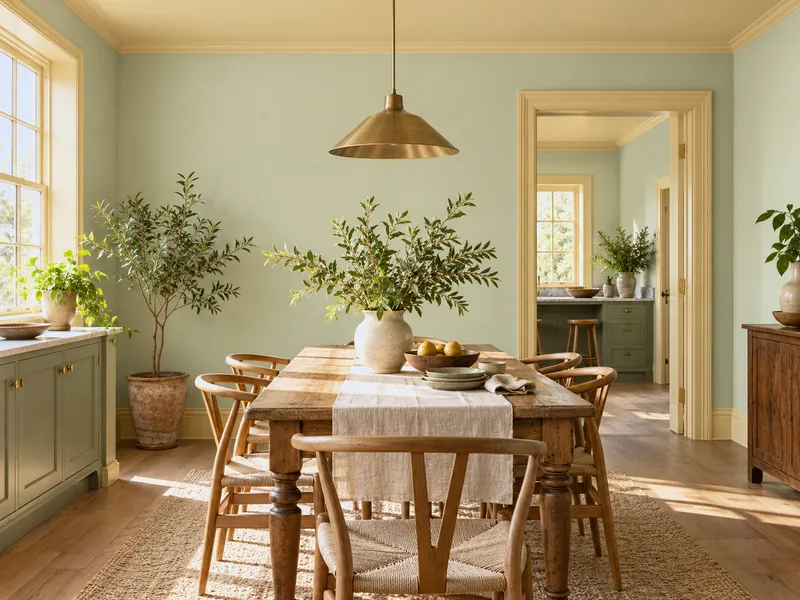
The neighbours: walls in a soft grey-green, doors, skirting and ceiling in a honey ochre. The kitchen or dining room takes on a permanent afternoon light.
03
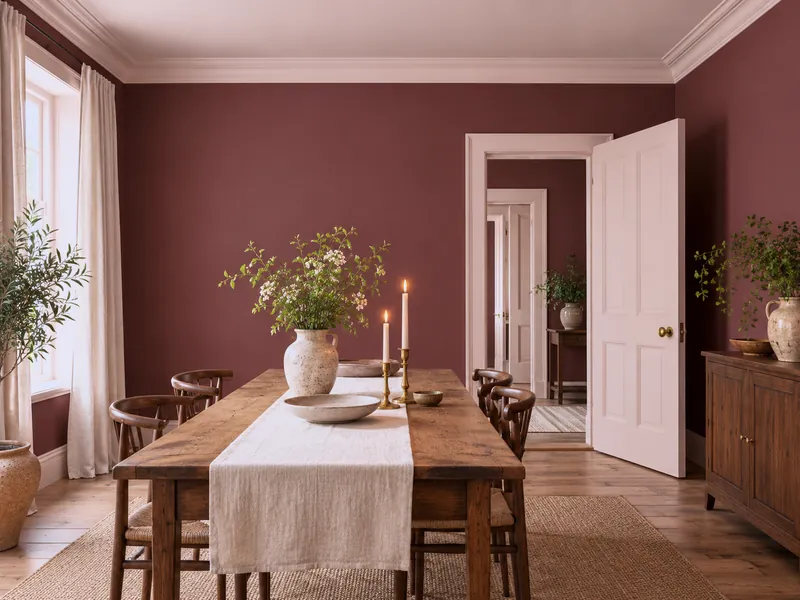
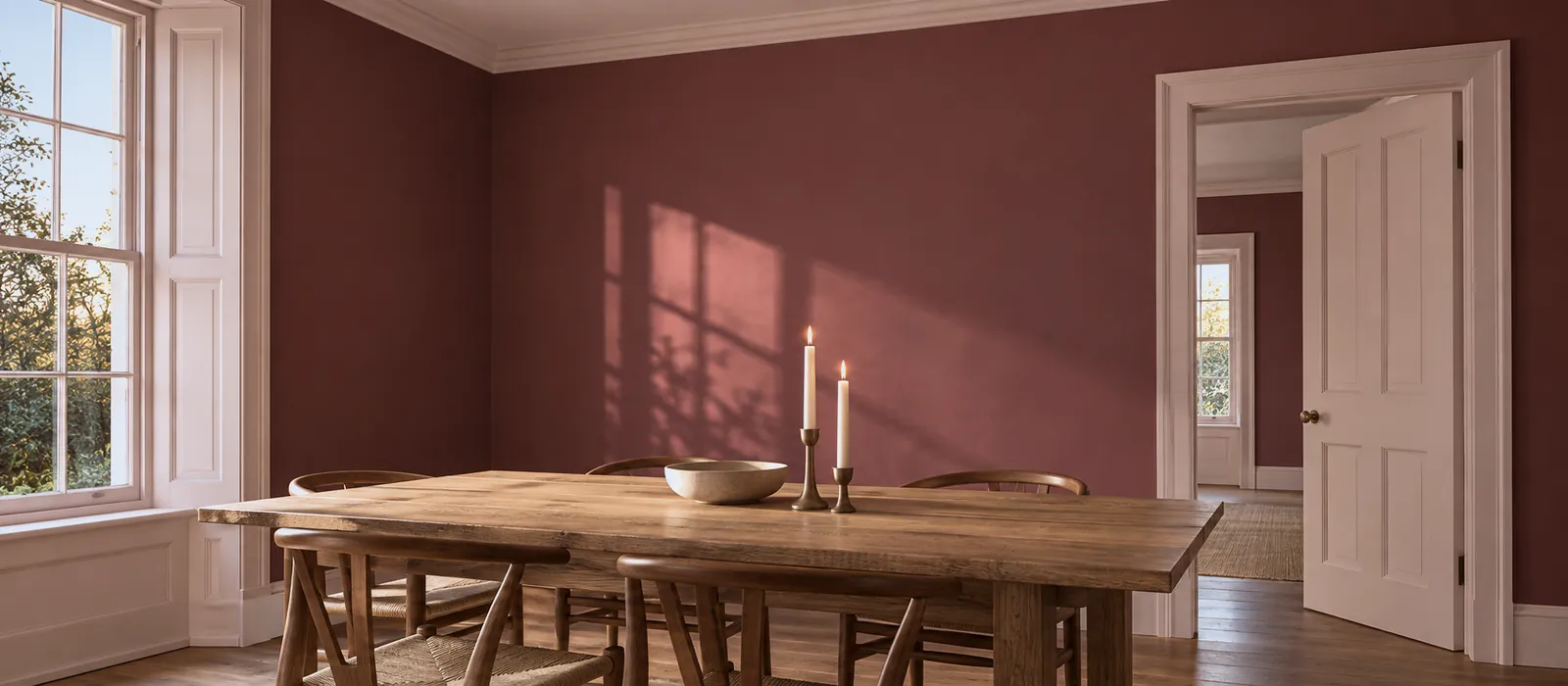
The family again: walls in a deep brown-red, ceiling and woodwork in a powder pink. An evening dining room, a library, a memorable guest cloakroom.
04
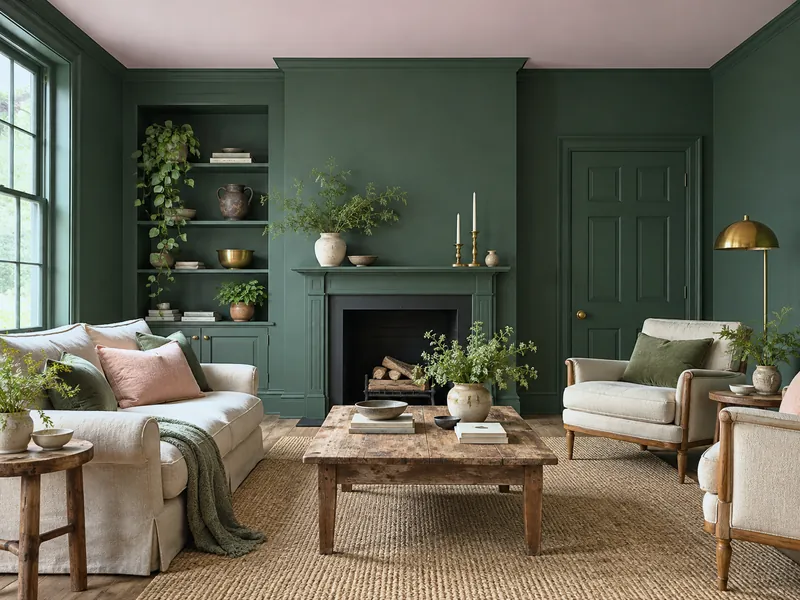
The opposites: walls and woodwork in a very deep green, ceiling in a greyed pink. The surprise comes from above; the green stays calm, the pink stays soft.
05
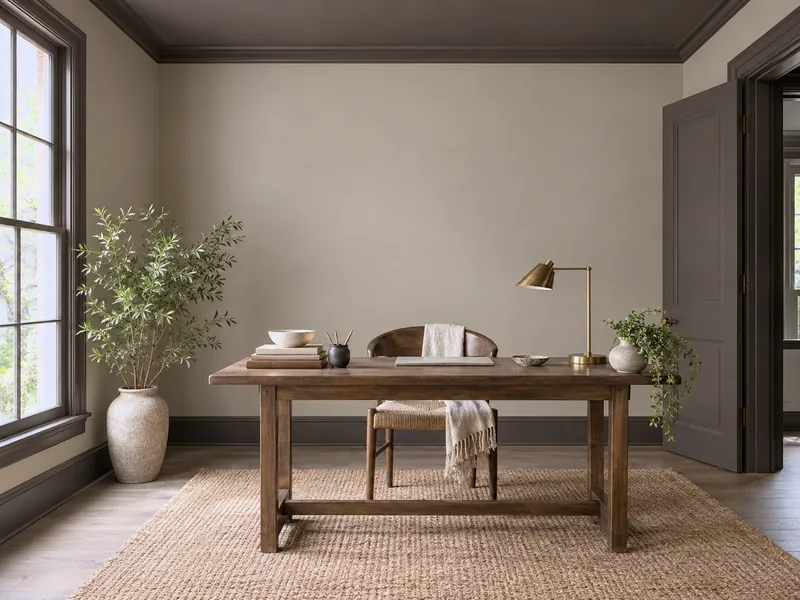
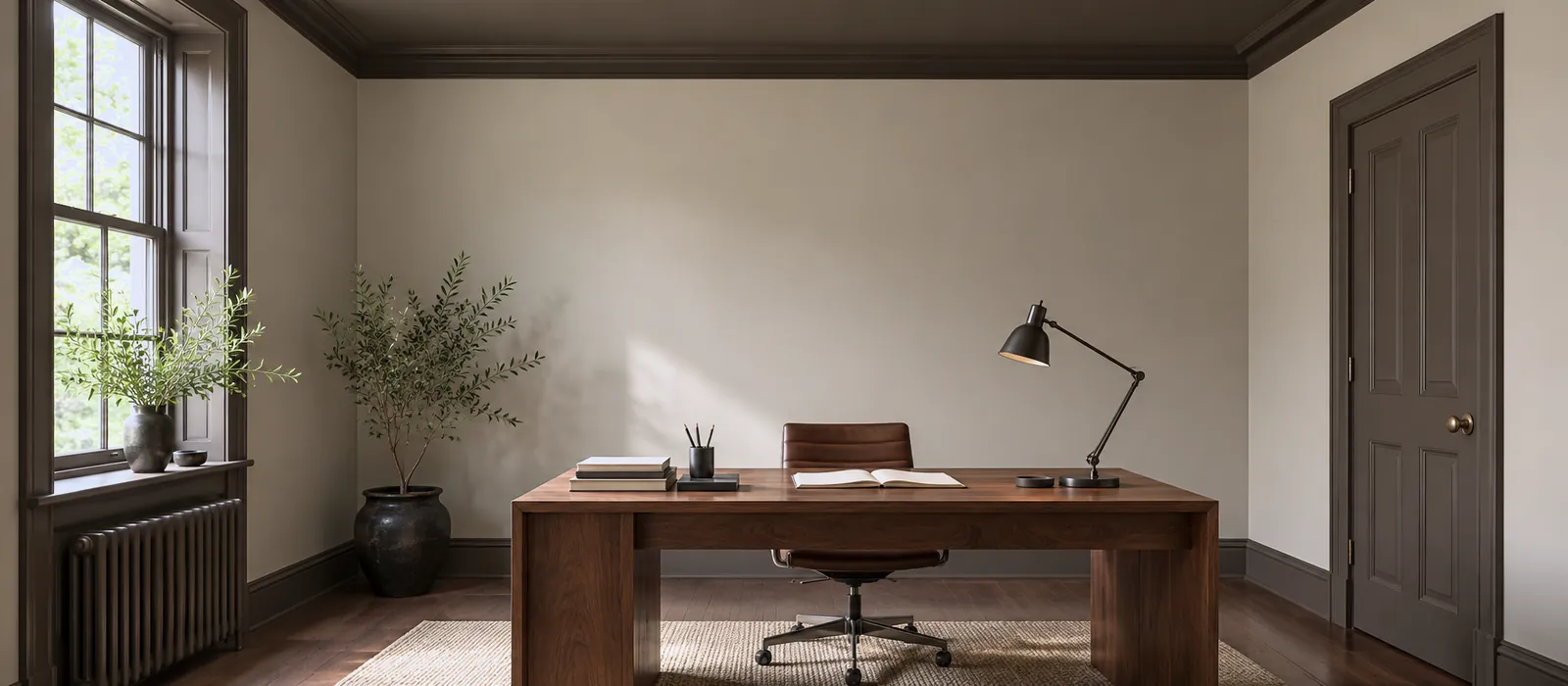
The neutral family: walls in a greige, ceiling, doors and skirting in an almost-black brown. The study or the vestibule takes on a studio's bearing.
06
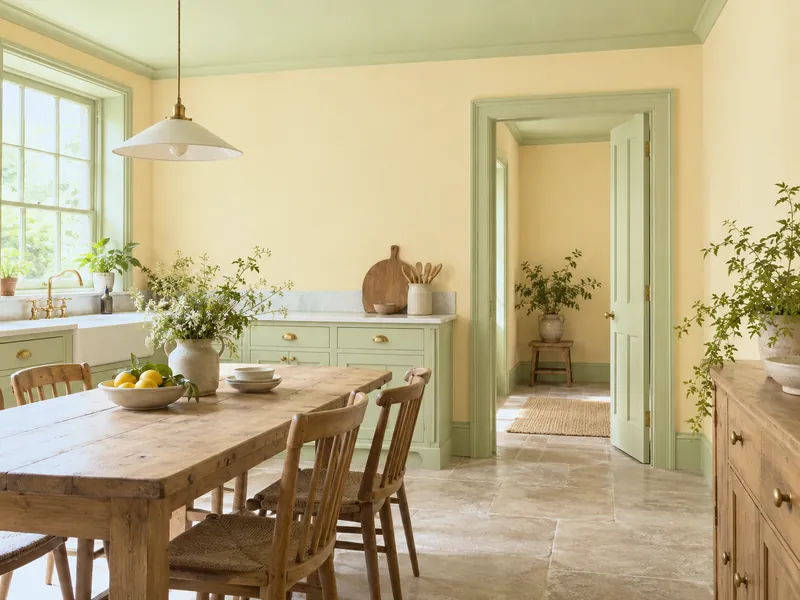
The light neighbours: walls in a pale yellow, ceiling and woodwork in an almond green. A north-facing kitchen, a child's room, a dark corridor: spring light all year.
Distributing
The split between the two shades decides the effect. Four distributions, from the most classic to the boldest.
| Distribution | Dominant | Supporting role | Effect |
|---|---|---|---|
| Classic | Walls | Ceiling + woodwork | The room looks taller if the supporting shade is lighter, more intimate if it is darker |
| Dado | Walls (upper part) | Lower walls + skirting + doors | A line at dado height; anchors the room, very good in a corridor |
| Ceiling only | Walls + woodwork | Ceiling | The surprise comes from above; the room stays calm at eye level |
| Furniture | Walls + ceiling + woodwork | Painted furniture, cupboard interiors | Total drenching, with the furniture as supporting role: the most enveloping version |
In every case, one finish on adjoining surfaces of the same shade, so the colour does not change texture mid-wall. Room by room in detail: Double drenching for different rooms.
To avoid
Frequently asked questions
Drenching paints every surface in one shade; double drenching uses two, confident, shared between walls and ceiling, woodwork or furniture, with no white. The second is livelier and a little more demanding to compose.
Marble Matt Emulsion on walls and ceiling, Multi-Surface Eggshell on the woodwork, or Multi-Surface Dead Matt throughout for a single texture. See Find your finish.
That is where it works best: cloakroom, hall, small study, stairwell. A small enclosed room accepts the colour you would not dare on 40 m².
Lighter to raise a low room; darker to make a tall room more intimate, or for a cocoon bedroom. Within a family either works; in a pair of opposites, put the opposite on the ceiling so the surprise stays out of the line of sight.
It can carry the second shade instead of the woodwork — a wardrobe, a bookcase, the inside of the cupboards — in a multi-surface finish. See Refreshing wooden furniture.
See also
 The same technique, eight rooms: the pair that suits a bedroom is not the one for a kitchen.
 The art of wrapping a whole room in a single colour — walls, woodwork and ceiling.
 Pink and green, blue and yellow, red and green: why these pairings work, and six Mylands palettes ready to pai...
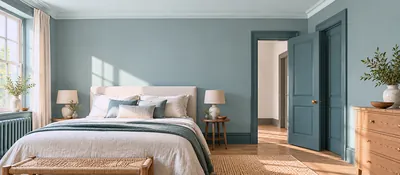 One colour, three depths: harmony guaranteed because the pigment is the same. Six Mylands families.
“One colour envelops; two colours inhabit.”

Thanks for signing up to our newsletter!
Sign in to save items to your wishlist. Sign in to save your basket, so you can continue shopping later.
Don't have an account? Create one
Share this link and friends can buy items from your list. Anything bought disappears from it automatically. Anyone with this link can see your selection.
Moving in, redecorating, or dropping hints? A free account turns this selection into a gift list — add or remove colours whenever you like, and we'll email you when someone buys something from your shared list.
Free · Delivered to your door
Get a free colour card posted to you, showing our complete Colours of London range, with swatches made from the real paint for a true representation of our award-winning colours.

