
01
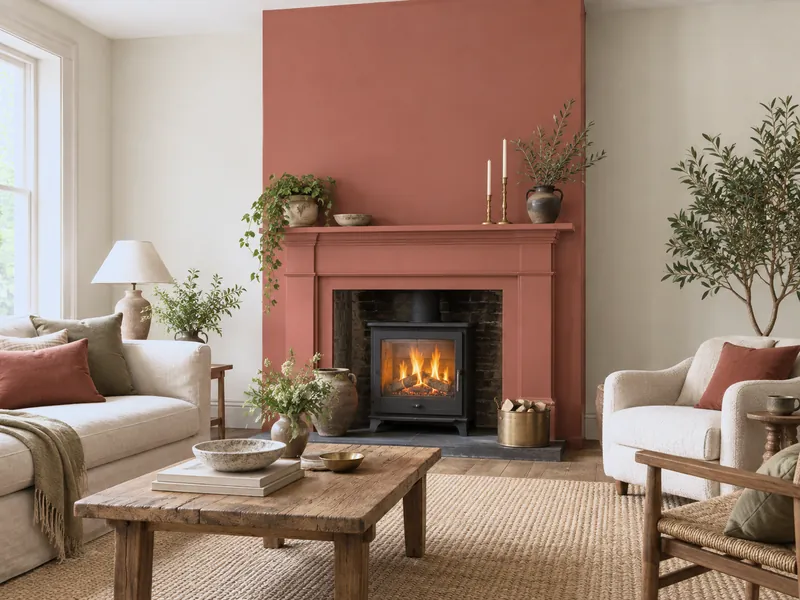
1. The fireplace
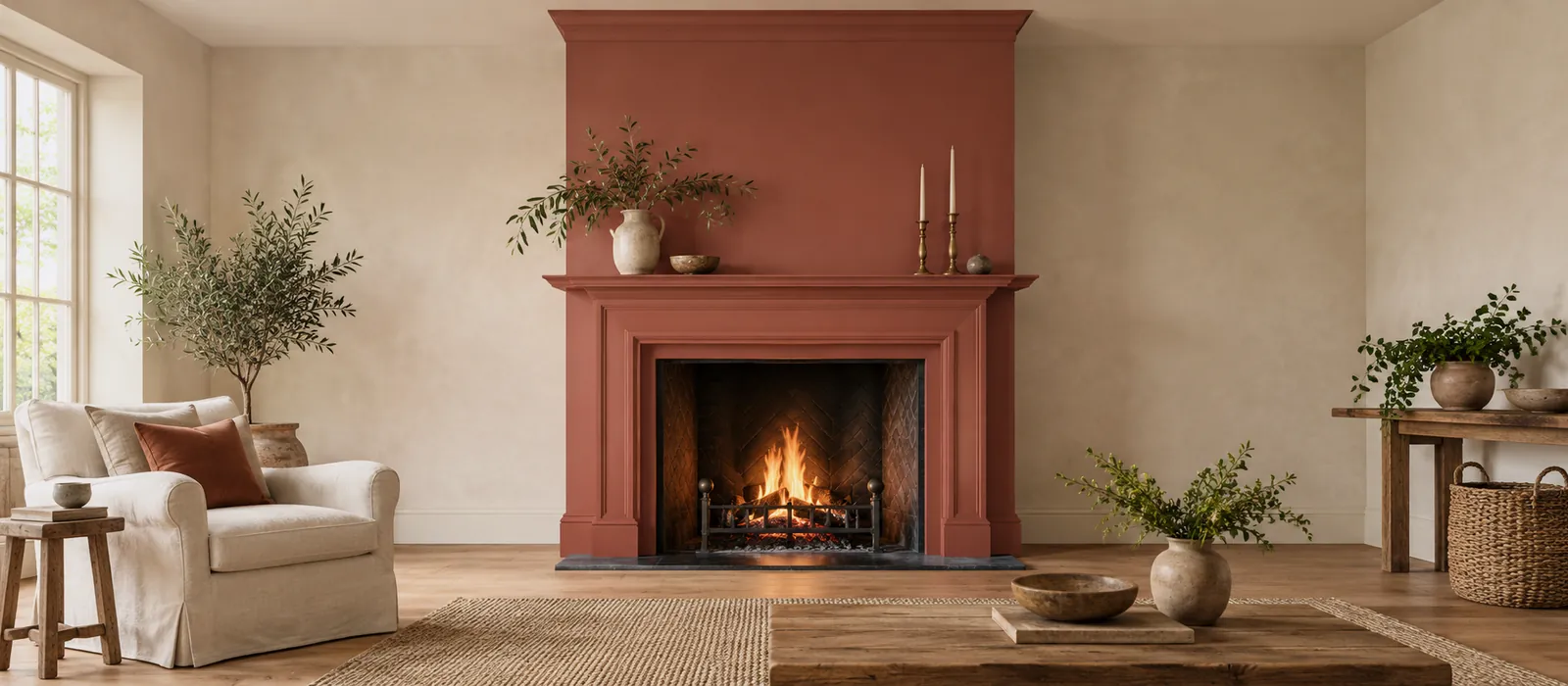
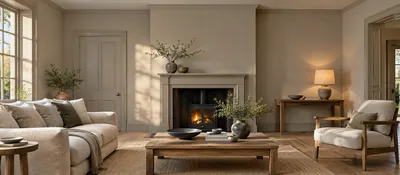
A sitting room's natural focal point: the mantel, the overmantel or the chimney breast in a deep shade, the other walls in a light neutral. The fire, lit or not, becomes the centre.
Menu
How To
Design Advice
Customer Service
My account
Help with paint Choosing colour
A focal point is where the eye lands on entering a room; paint creates one by giving a single surface — a fireplace, an alcove, the wall behind the bed, a door, the ceiling, a piece of furniture, a shape — a colour deeper or livelier than the rest. One rule: one focal point per room, on the surface you look at naturally, not the one that happens to be free. And a feature wall picked at random is not one.
Page updated September 2026 · by the Mylands France colour team
Understanding
A room without a focal point reads like a page without a title: the eye wanders, the room looks smaller and less finished than it is. A focal point organises the gaze: it says where to sit, where to look, and the rest of the room can then stay calm. Architecture often provides one — a fireplace, a window, an alcove — and paint underlines it; when it does not, paint creates one.
The "feature wall" of the 2000s was its poor version: a wall chosen at random, often the biggest, in a colour chosen because it was bright. A successful focal point is more precise: a smaller surface, chosen because you already look at it, in a colour that answers the rest of the room. The wall behind the sofa is not a focal point (you have your back to it); the wall opposite is.
Seven ways
01
A sitting room's natural focal point: the mantel, the overmantel or the chimney breast in a deep shade, the other walls in a light neutral. The fire, lit or not, becomes the centre.
02
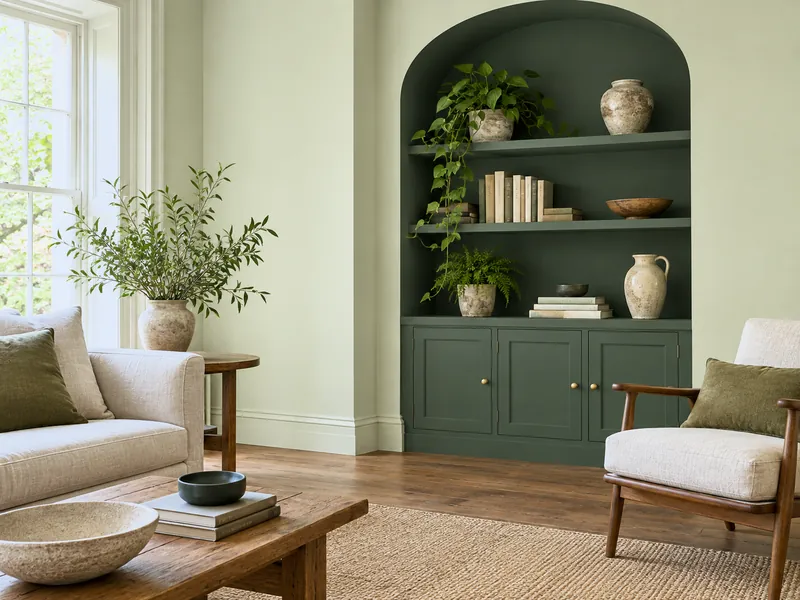
The back of an alcove, a bookcase or a niche in a colour deeper than the walls: the depth deepens and whatever sits there — books, objects — stands out.
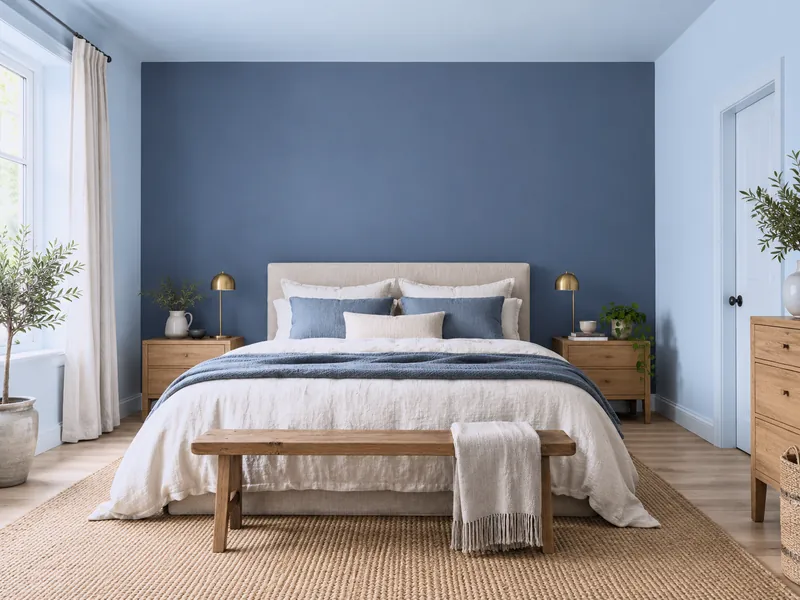
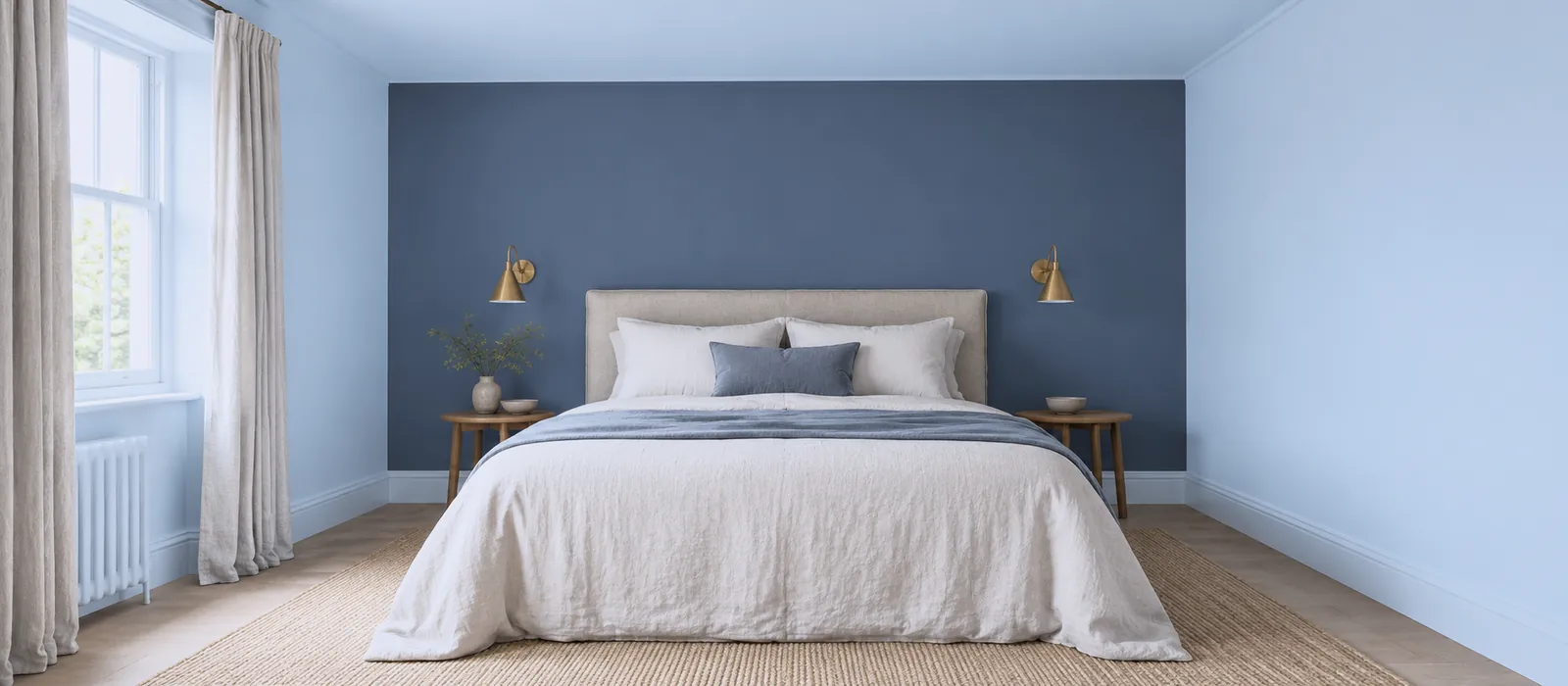
03
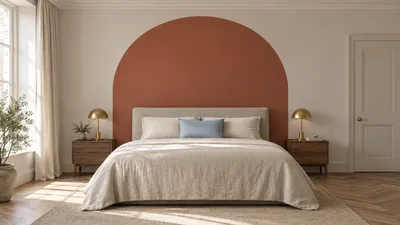
The one feature wall that makes sense: the one you see on entering a bedroom, and not while asleep. A deep shade behind the bed, the other three walls and the ceiling in a light of the same family.
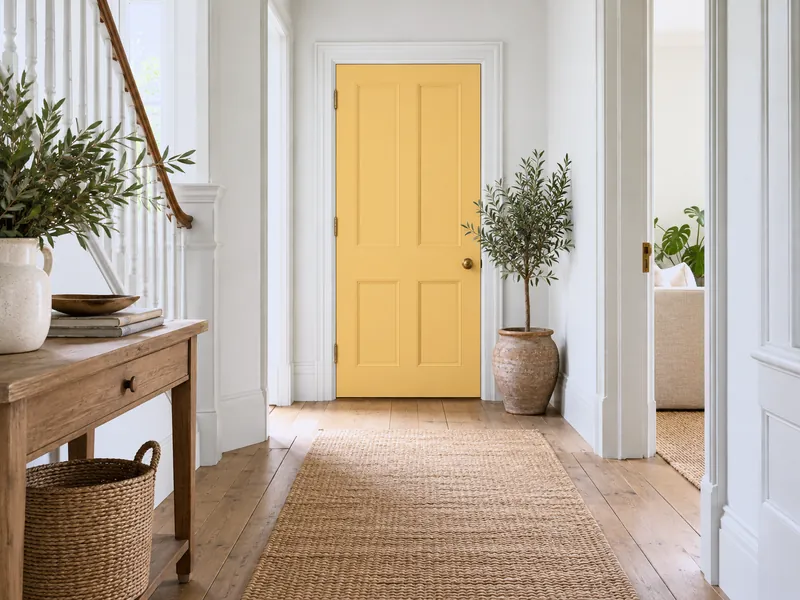
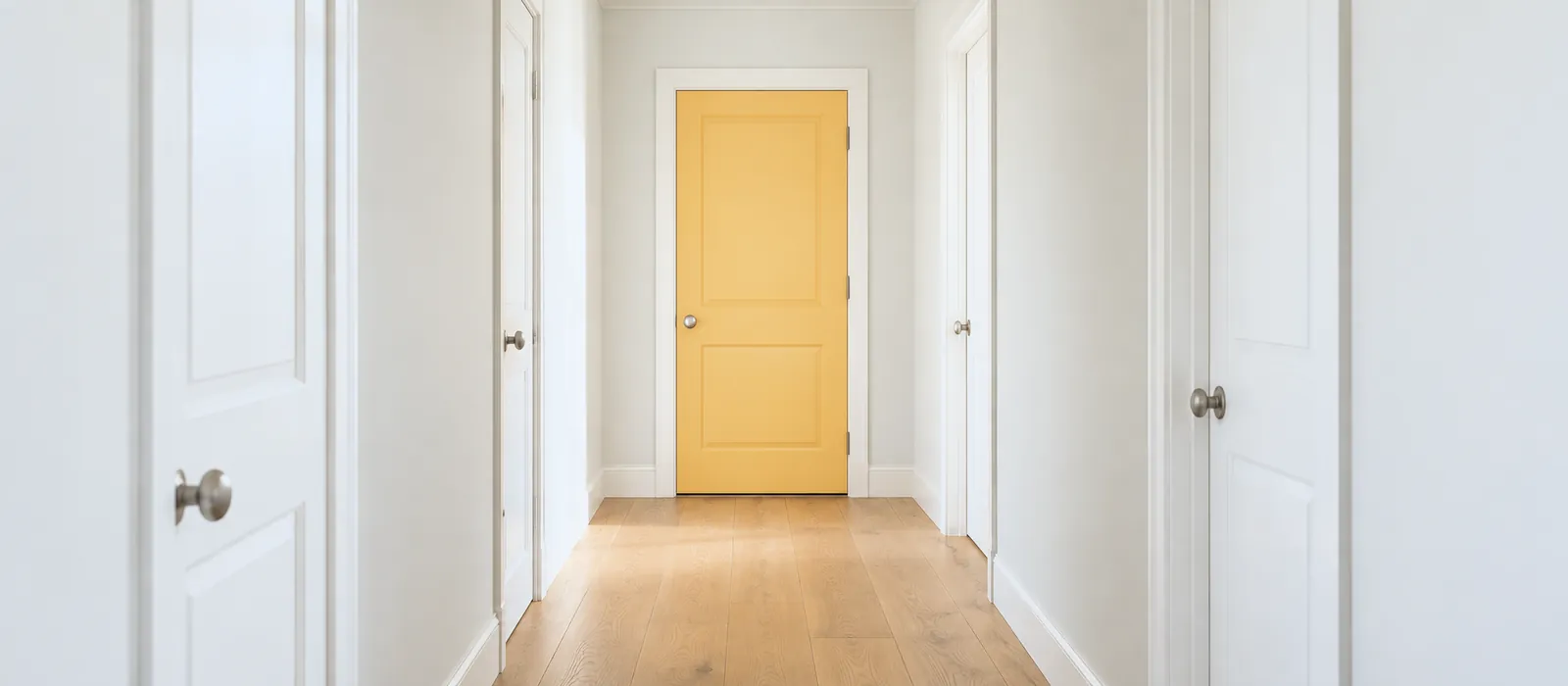
04
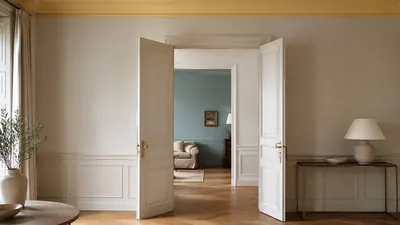
A single door — the one at the end of the corridor, the sitting-room door — in a confident colour in Eggshell, all the other woodwork white: the corridor has a destination.
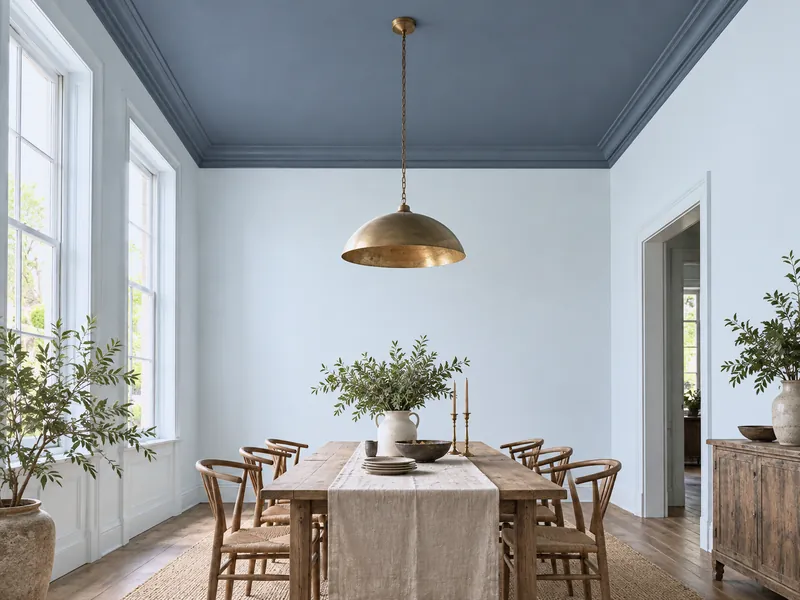
05
In a tall room or a dining room, the ceiling in a deep or vivid shade, light walls: the focal point is above the table, where you look up by candlelight.
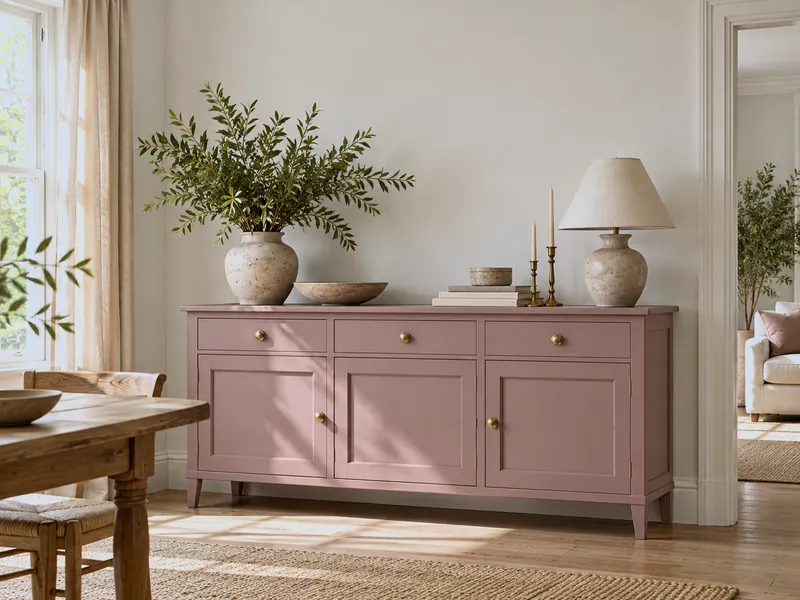
06
A sideboard, a wardrobe, a bookcase painted in a confident colour, in an otherwise neutral room: the focal point moves with the piece. See Refreshing wooden furniture.
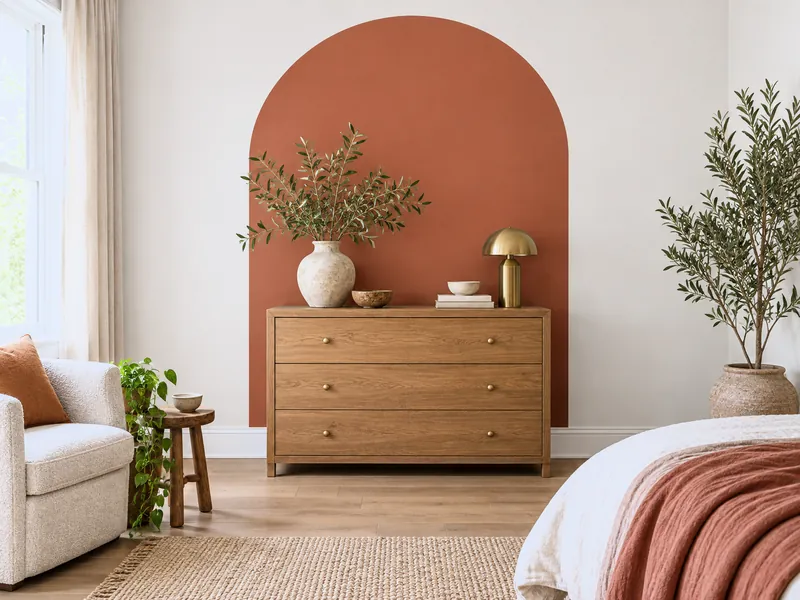
07
When the architecture gives nothing: an arch, a half-circle, a rectangle painted behind a piece of furniture or a bed, creating the alcove the room does not have. See Freeform and furniture framing.
Choosing
| Room | The natural focal point | If the room has none |
|---|---|---|
| Sitting room | The fireplace, or the wall facing the sofa | A painted bookcase, an arch behind the sofa |
| Bedroom | The headboard wall | A half-circle painted behind the bed, a coloured wardrobe |
| Dining room | The ceiling above the table, or the sideboard | A painted alcove for the sideboard |
| Kitchen | The island or the base units | A section of wall in colour behind the open shelving |
| Hall, corridor | The door at the end | A dado, a single coloured door |
| Study | The wall behind the desk (seen from the door) | A painted rectangle that frames the desk |
The focal point is what you see from the door, not what you see sitting down. Walk into the room and note where your eye goes: that is the place.
The colour
Three routes. Deeper in the same family as the walls: the safest, the eye goes to the dark without feeling a break — a midnight blue on pale blue walls. The muted opposite: a brown-red on grey-green walls, an ochre on blue walls; the surface vibrates and the rest of the room stays calm. The vivid shade, on a small surface only — a door, a stool — in a neutral room. Every Mylands colour page lists the shade's related darks and accents: exactly what is wanted here. See also Choosing complementary colours.
To avoid
Frequently asked questions
A feature wall is a surface (a whole wall, chosen at random); a focal point is an intention (the place the eye lands, chosen because you already look at it). A well-placed feature wall — the headboard, the wall facing the sofa — is a focal point; the others are not.
The same as the surface that carries it: Marble Matt Emulsion on a wall or ceiling, Multi-Surface Eggshell on a door, a piece of furniture or a wooden fireplace. A slight step up in sheen (Satin on a door) sharpens the focal point.
A nail, a string and a pencil for the circle; a spirit level and masking tape for the straight sides. The wall colour first, everywhere; then tape on the straight edges, and the curved edge with a cutting-in brush, freehand, in two coats. The detail in Freeform shapes.
Then the focal point is deeper in the same family, or a white: in a grey-green bedroom, a forest-green alcove or a warm white headboard wall. The contrast of value is enough; no need for one more colour.
See also
 Pink and green, blue and yellow, red and green: why these pairings work, and six Mylands palettes ready to pai...
 Freeform painting and furniture framing: an arch, a loose shape painted straight onto the wall, or a block of...
 Ideas and techniques for decorating your interior with colour.
 Aspect, the hour you live in it, what is already there: the method for choosing a living room colour, and six...
“A room needs one place where the eye can rest; the rest can keep quiet.”
Thanks for signing up to our newsletter!
Sign in to save items to your wishlist. Sign in to save your basket, so you can continue shopping later.
Don't have an account? Create one
Share this link and friends can buy items from your list. Anything bought disappears from it automatically. Anyone with this link can see your selection.
Moving in, redecorating, or dropping hints? A free account turns this selection into a gift list — add or remove colours whenever you like, and we'll email you when someone buys something from your shared list.
Free · Delivered to your door
Get a free colour card posted to you, showing our complete Colours of London range, with swatches made from the real paint for a true representation of our award-winning colours.