01
Blended: the wall's shade
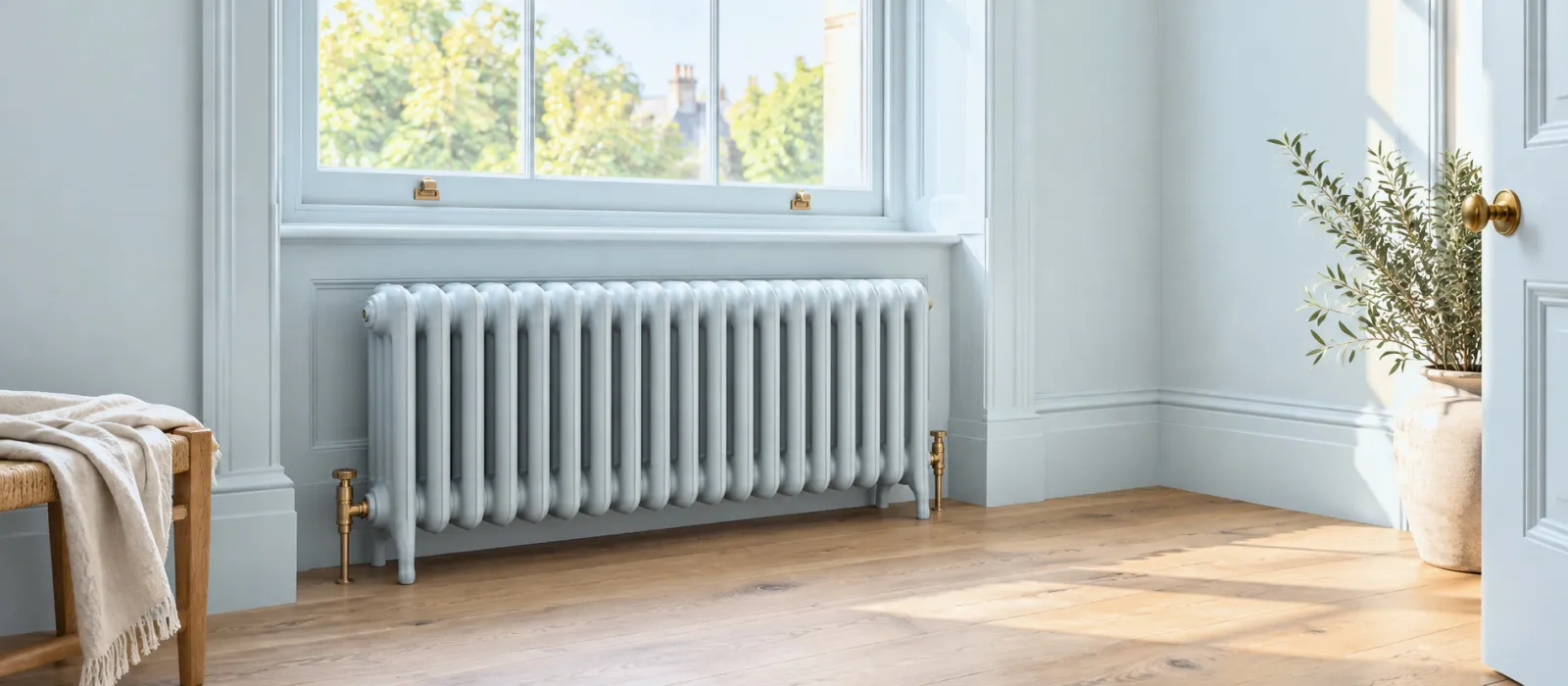
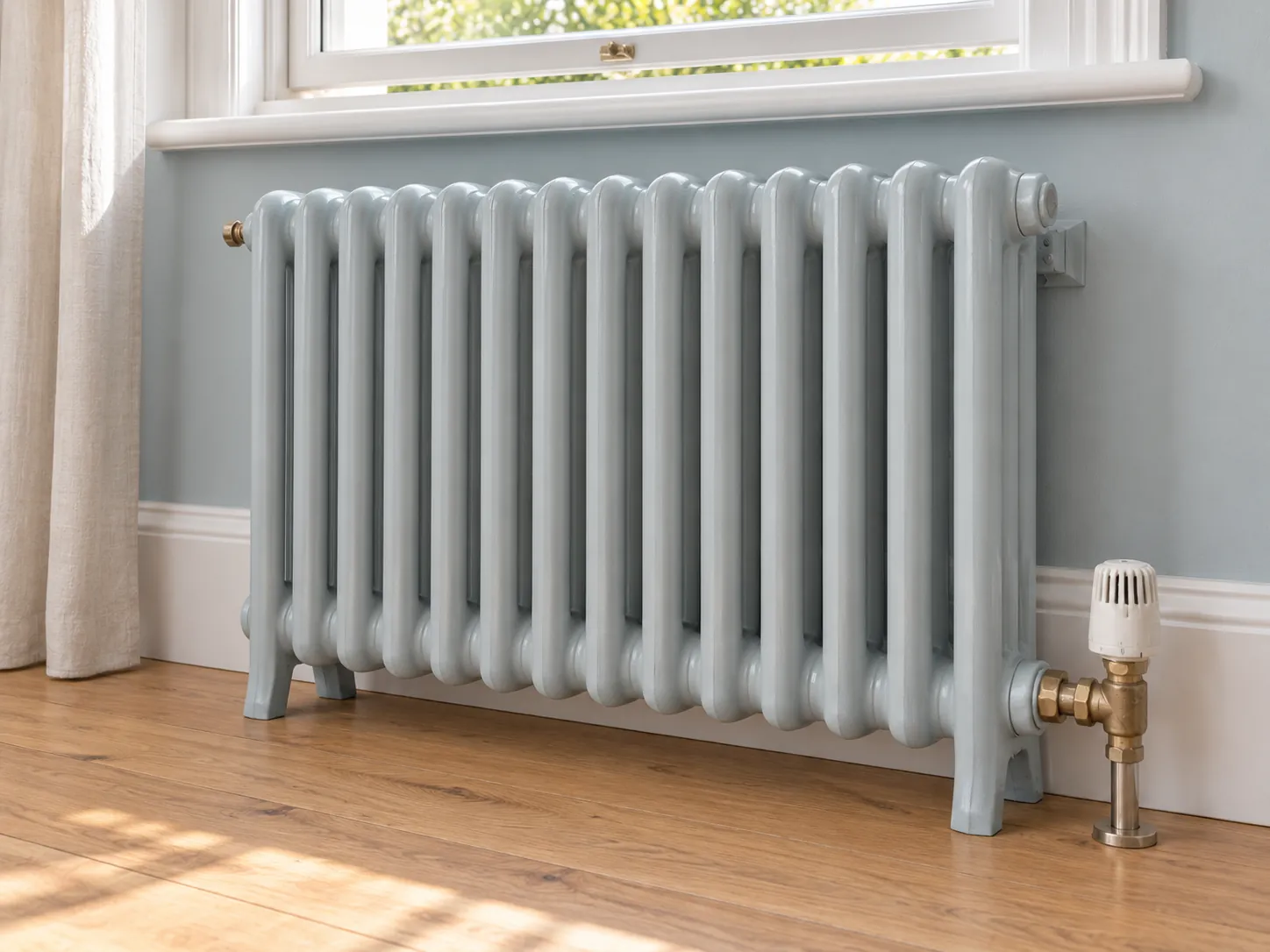
The wall in Marble Matt Emulsion, the radiator in the same shade in Eggshell: the sheen barely changes, the object fades away. That is the rule of colour drenching.
Menu
How To
Design Advice
Customer Service
My account
Help with paint How-to guides
A radiator is painted cold, clean and sanded, with a primer on bare metal, then two coats of a multi-surface finish — Eggshell, Satin or Gloss — with a cutting-in brush; wait 48 hours before the heating goes back on, and two to four weeks before running it hard. Never wall emulsion: it is made for neither metal nor heat. The colour? The wall's, so the radiator disappears, or a confident shade, so it counts.
Page updated September 2026 · by the Mylands France colour team
Before you start
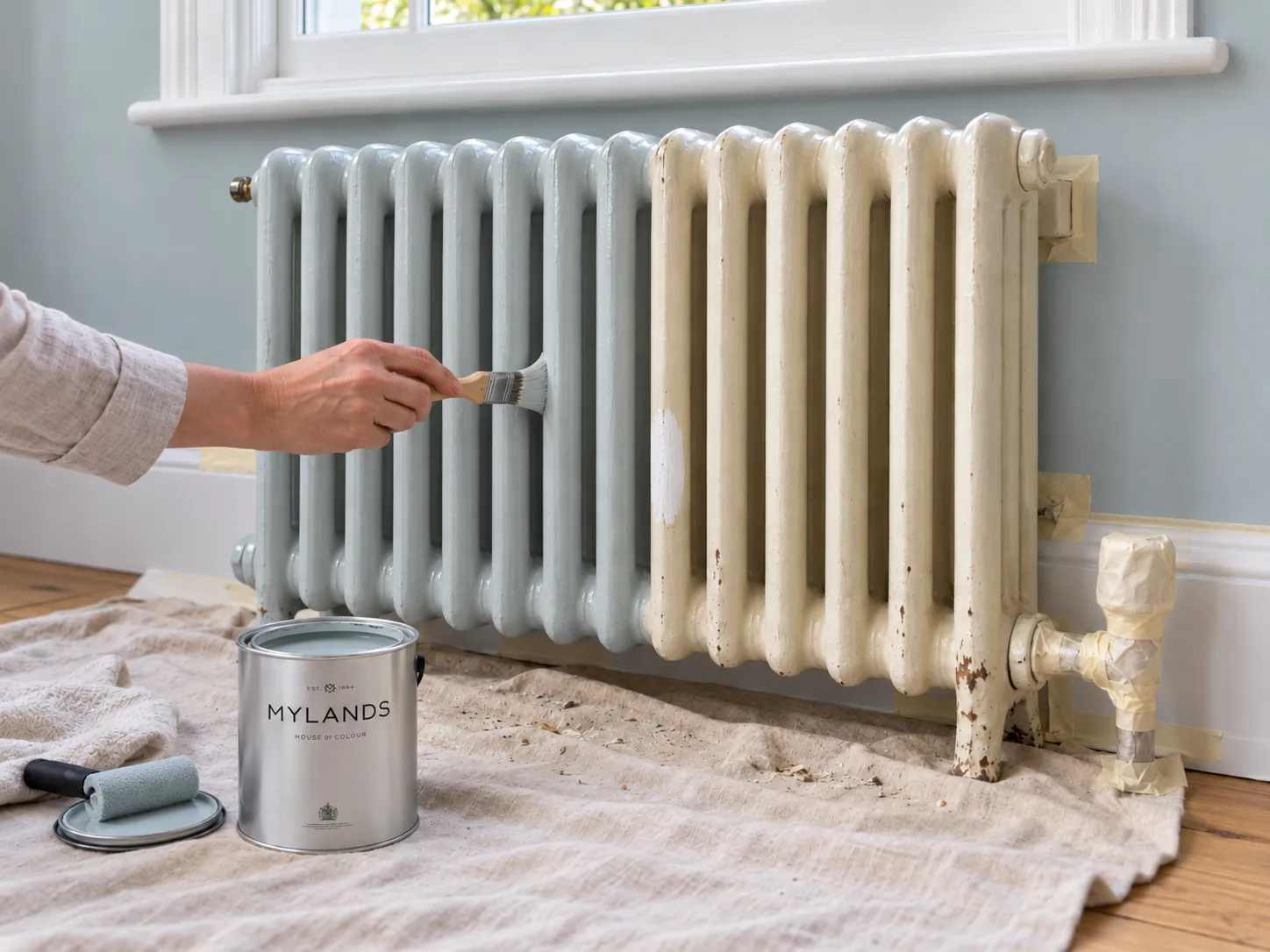
The best moment to paint a radiator is when it is off — before a new one goes on, or when a plumber lifts it to paint the wall behind. Flat on trestles, everything is reachable and you can see what you are doing. In place is possible too, on three conditions: heating off since the day before (you do not paint warm metal; the paint dries before it is laid off), floor and wall protected, and an angled brush to get between the columns.
Check the surface. A sound, already-painted radiator needs only a wash, a light sand and two coats of finish. A flaking or rusting one needs the metal bared in places, the rust treated and those areas primed. A new radiator, bare or only factory-primed, needs a full coat of primer.
The method
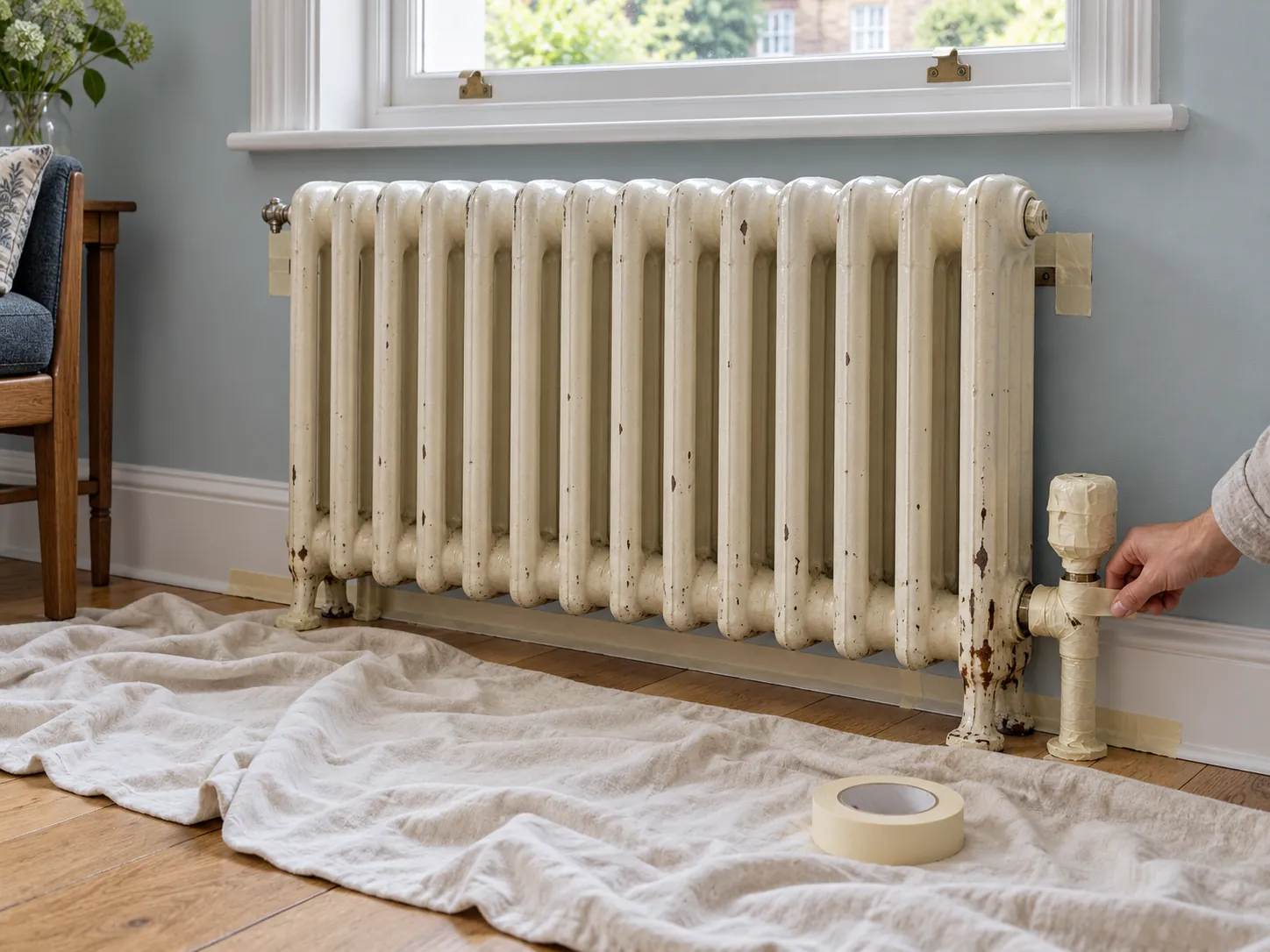
Heating off the day before, valve and thermostatic head masked with tape (or removed, if you know how to refit them). Sheet on the floor, tape on the wall around the brackets — or better, if the wall is to be repainted too, paint the wall first and the radiator after. Ventilate: Mylands finishes are water-based and low in VOCs, but a radiator is painted at close range.
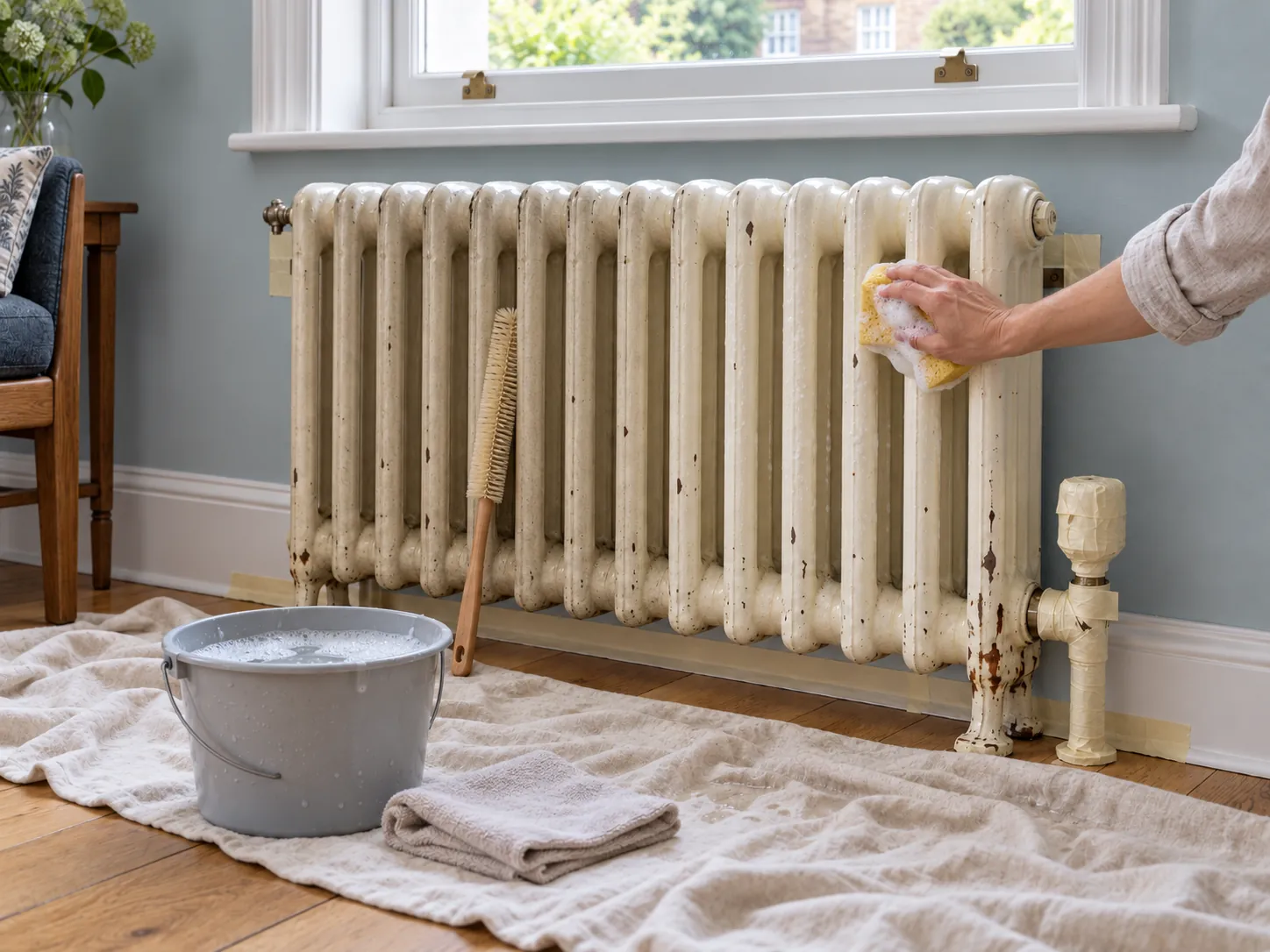
A radiator collects a fine film of grease you cannot see and that makes any water-based paint bead. Sugar soap or mild detergent, sponge, rinse with clean water, dry completely. Get between the columns with a soft brush or a cloth over a ruler.
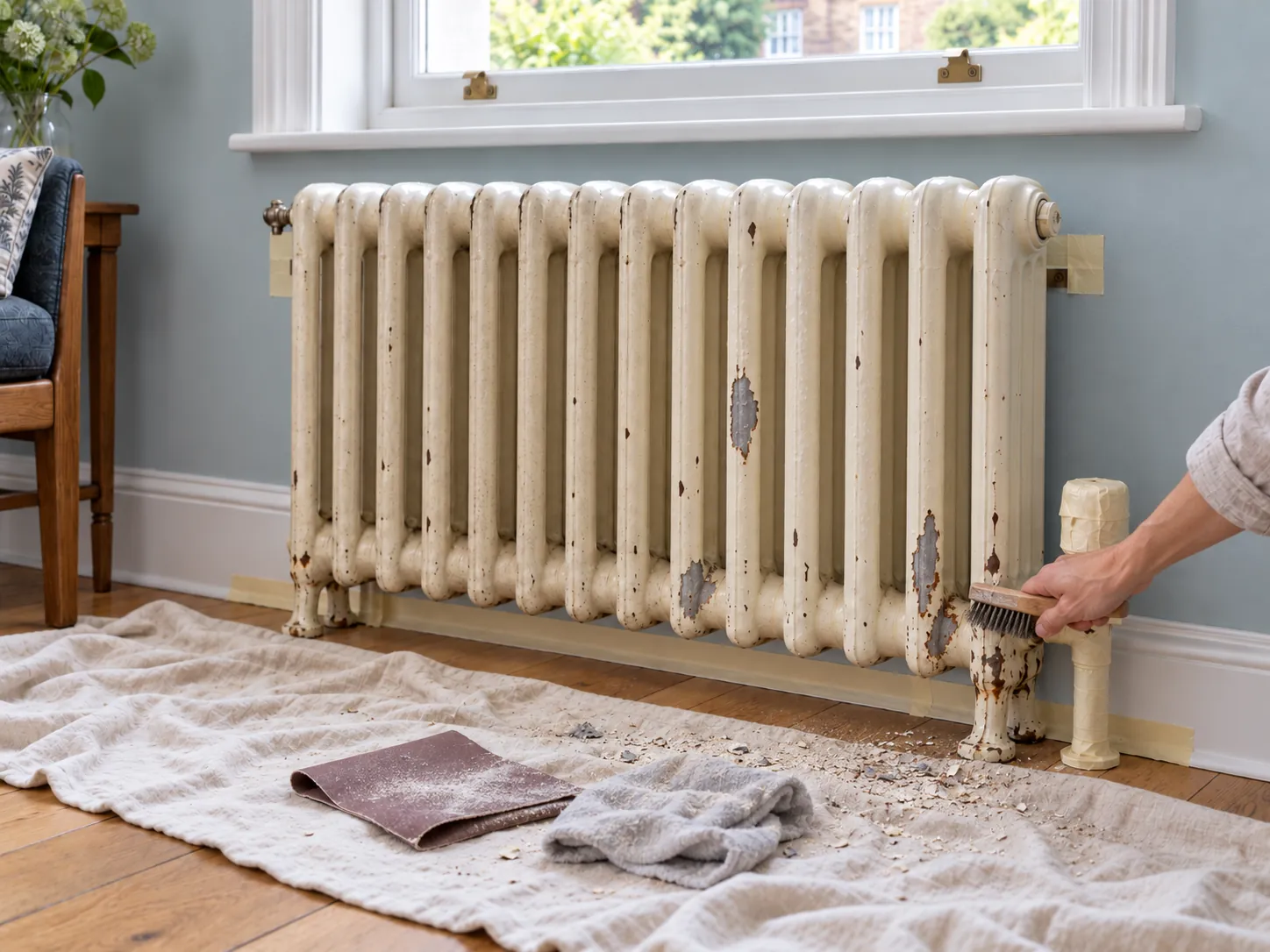
Light sanding with 180 grit over the whole surface to break the sheen and give a key; scrape and sand flaking areas with 120, down to sound metal. Rust spots are wire-brushed then sanded; if extensive, a rust converter before priming. Dust off with a damp cloth.
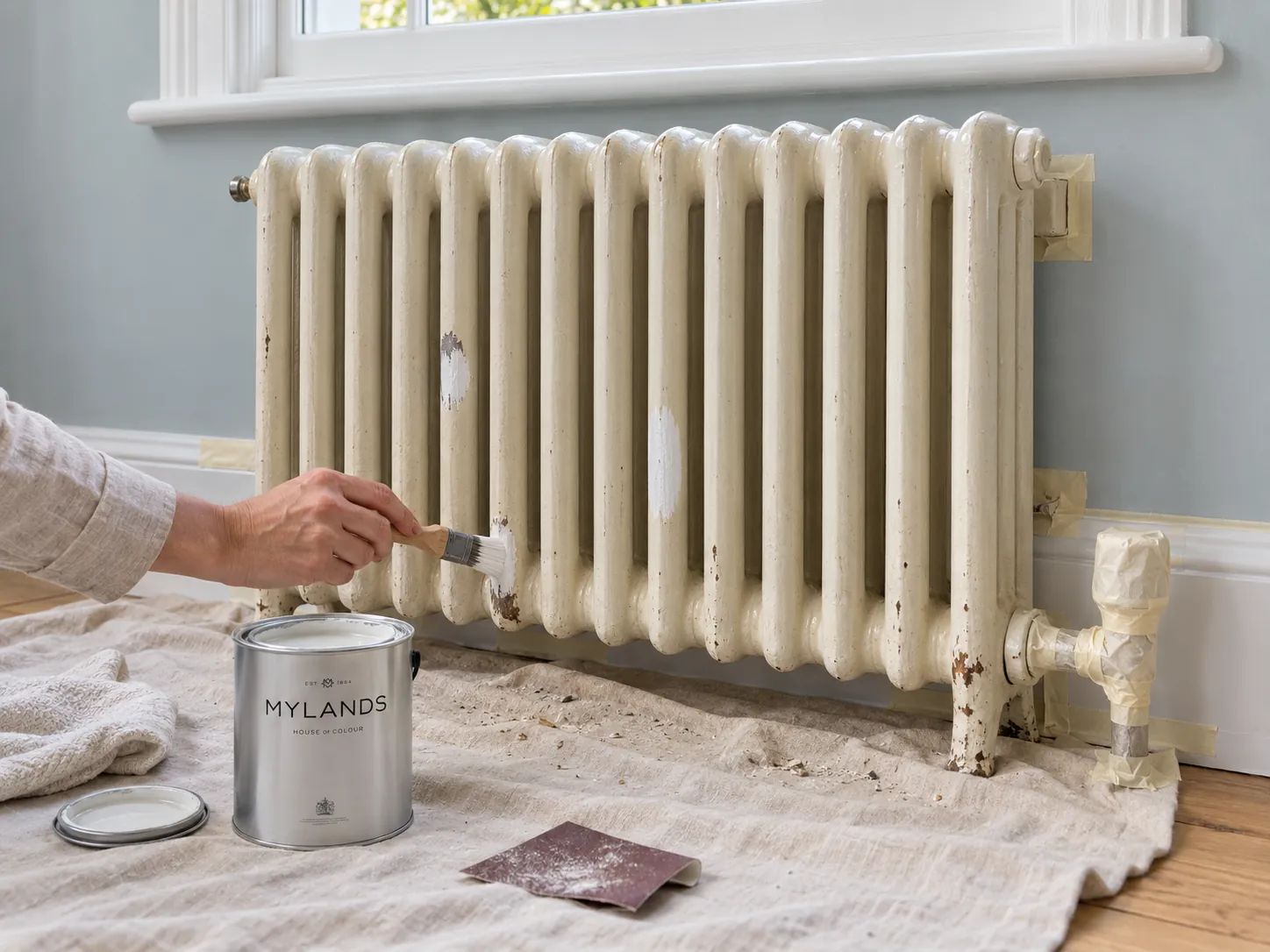
Wherever metal shows — and on a new radiator, everywhere — one coat of Multi-Surface Primer, brushed out well. That is what holds the finish on steel or cast iron. On a sound, already-painted radiator it is unnecessary. Recoatable after 3 to 4 hours.
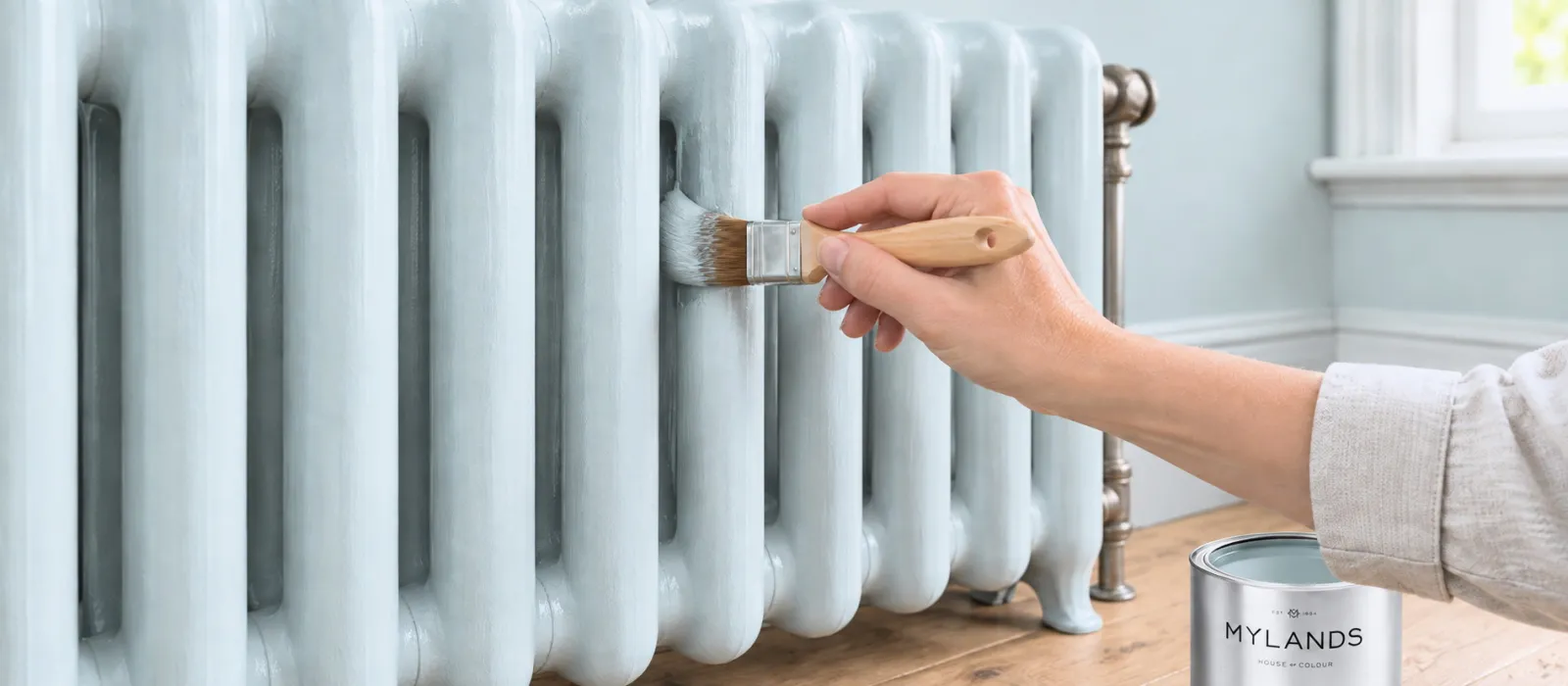
Cutting-in brush for the columns, flat brush or small foam roller for panels, always in thin coats: a thick coat runs into the grooves and takes days to harden. Start with the back and sides, finish with the face. Touch-dry in 2 to 3 hours, second coat after 3 to 4. Do not paint the unions, the bleed valve or the threads.
48 hours of drying before the heating goes back on, gently, then two to four weeks of curing before running it hard or hanging a towel on it: that is the time the film needs to reach its hardness, and what avoids the smell of the first heating and the marks. A radiator painted in October is ready for winter.
Choosing
The three suitable multi-surface finishes are formulated for metal, indoors and out, and take the temperature of a domestic radiator once cured. The difference is in the sheen and the upkeep.
| Finish | Sheen | When to choose it | What to know |
|---|---|---|---|
| Multi-Surface Eggshell | ≈ 15 % | Blending the radiator into a matt wall: its slight sheen is the closest to Marble Matt Emulsion | Our default. Washable, moisture-resistant, ≈ 12 m²/L |
| Multi-Surface Satin | Mid | Bathroom, kitchen, hallway: where you clean often | A little more reflection; shows the cast iron's flaws more |
| Multi-Surface Gloss | High | The radiator as a statement, in a confident colour, like a lacquered object | The toughest; demands flawless preparation |
| Multi-Surface Dead Matt | ≈ 5 % | Total colour drenching, walls and radiator in the same matt | Marks faster on contact; keep for quiet rooms |
| Marble Matt Emulsion | — | Never on a radiator | A wall paint: neither for metal nor for heat |
Coverage is indicative, on a primed surface. Mylands primers and finishes are water-based; the whites do not yellow with heat as oil-based paints did.
The colour
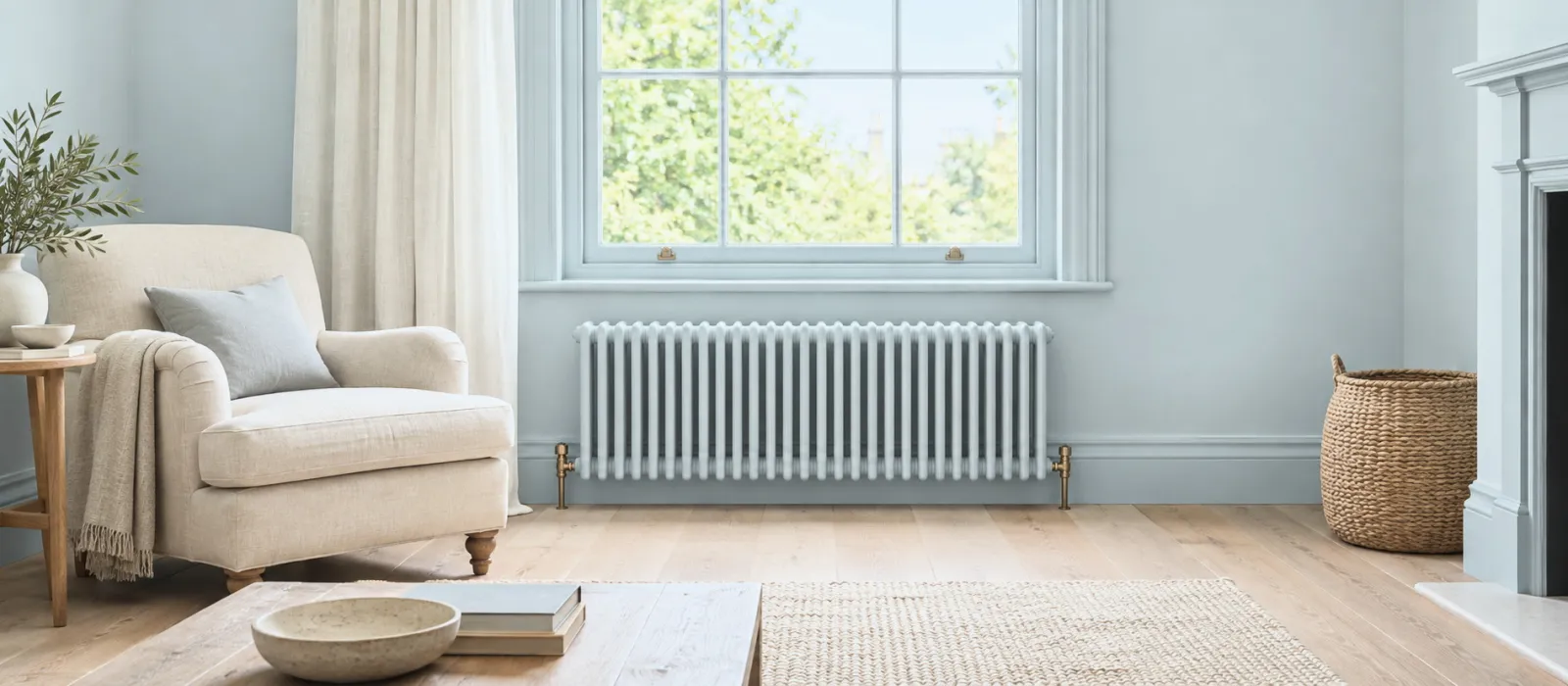
Two schools, both right. The first paints the radiator in the wall's shade: it ceases to exist. The second makes it an object, in a colour that answers the rest of the room. Three examples of each.
01
The wall in Marble Matt Emulsion, the radiator in the same shade in Eggshell: the sheen barely changes, the object fades away. That is the rule of colour drenching.
02
On an off-white wall, take the same white as the woodwork, not a pure white: the radiator becomes one more piece of woodwork. Pure white, by contrast, shows from a hundred metres.
03
Doors, skirting and radiator in a shade deeper than the wall, in Eggshell: the radiator joins the woodwork family and gives the room structure.
04
A cast-iron column radiator sometimes deserves a colour of its own, in Gloss: a deep green on a stone wall, a red on a warm white. One radiator per room in that case.
05
A confident yellow or blue on the radiator, in a light room: the plainest object becomes the happiest. Every Mylands paint complies with the EN 71-3 toy standard.
06
Wall and towel rail in a mid blue-green, the wall in Marble Matt Emulsion, the radiator in Satin: damp and towels leave nothing behind.
To avoid
Frequently asked questions
Best is to have a plumber lift it off — half an hour — and paint wall and radiator separately. Otherwise a long-handled radiator roller reaches behind; the paint will not be perfect, but it will be invisible.
Yes, with a primer suited to those metals (a primer for non-ferrous metals), then the multi-surface finish. Multi-Surface Primer suits steel and cast iron; check the technical sheet for aluminium.
A little, for a few hours, if the film is not cured: hence the 48-hour wait and a gradual first heating. With Mylands' water-based finishes the smell is faint; with an oil-based paint it lasted days.
Surface rust, yes: wire brush, sand down to sound metal, converter if needed, primer, finish. Rust that has gone through, or a leak, no: that is a radiator to replace.
After, once the wall is dry, so the wall needs no protecting; or the same day if the radiator is off. In the general order of a room: ceiling, walls, woodwork, radiator.
See also
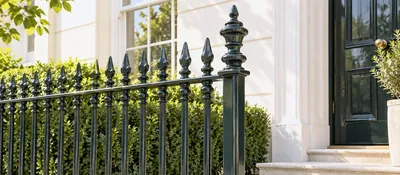 From the radiator to the gate: the finish that holds on steel and cast iron, the preparation, and the colours.
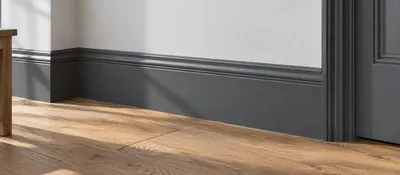 The smallest surface in the room, and the one that finishes it: the colour, the finish, the movement.
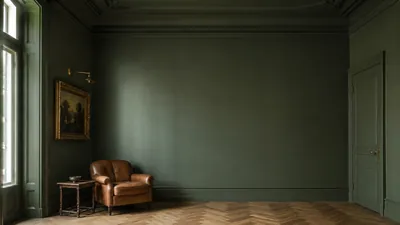 The art of wrapping a whole room in a single colour — walls, woodwork and ceiling.
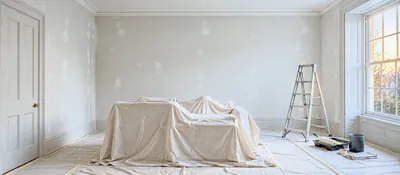 The day that decides the result: eight steps, the day before, so that tomorrow's two coats fit into one day.
“A well-painted radiator is the one you no longer notice — or the one you notice on purpose.”
Thanks for signing up to our newsletter!
Sign in to save items to your wishlist. Sign in to save your basket, so you can continue shopping later.
Don't have an account? Create one
Share this link and friends can buy items from your list. Anything bought disappears from it automatically. Anyone with this link can see your selection.
Moving in, redecorating, or dropping hints? A free account turns this selection into a gift list — add or remove colours whenever you like, and we'll email you when someone buys something from your shared list.
Free · Delivered to your door
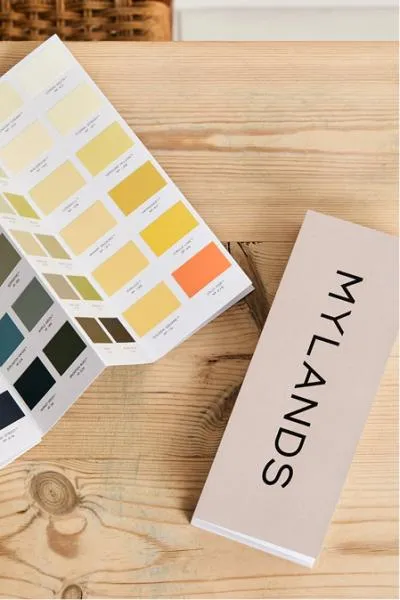
Get a free colour card posted to you, showing our complete Colours of London range, with swatches made from the real paint for a true representation of our award-winning colours.