
01
White, but the right one
An off-white matched to the wall — warm under a warm shade, grey under a cool one — rather than a pure white that cuts. The guide Whites for woodwork and skirting makes the pairings.
Menu
How To
Design Advice
Customer Service
My account
Help with paint How-to guides
Decide the colour first — the woodwork white, the wall's shade, or a contrast — then the finish: Multi-Surface Eggshell for a soft sheen, Satin for a hallway or kitchen, Gloss for a lacquered effect. Wash, sand, mask the floor, one coat of primer on bare wood, then two thin coats with a brush, laid off along the length. A room takes half a day, skirting included — after the walls, never before.
Page updated September 2026 · by the Mylands France colour team
Why they matter
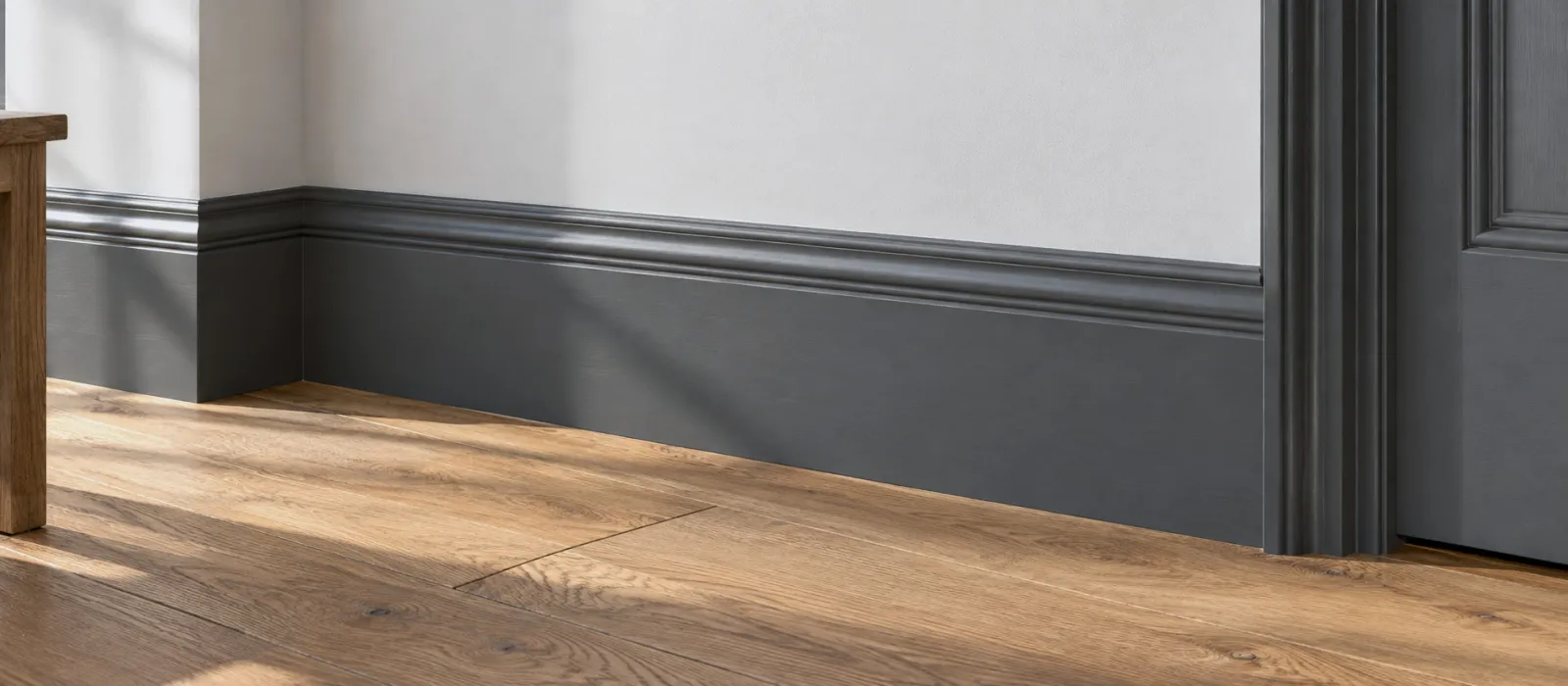
Skirting is the smallest painted surface in a room and the one people look at least; yet it draws the line where wall meets floor, at eye level when you are sitting. White on a coloured wall, it draws a frame; in the wall's shade, it erases it; in a deep colour, it anchors the room. It is also the least risky place to try a colour: a few linear metres, a 250 ml tin, half a day.
It is painted last, after the ceiling, the walls and the doors, so the top line is drawn against a dry wall. And in a multi-surface finish, never in the wall emulsion: skirting takes the vacuum cleaner, shoes and the mop.
Step 1 · The colour
01
An off-white matched to the wall — warm under a warm shade, grey under a cool one — rather than a pure white that cuts. The guide Whites for woodwork and skirting makes the pairings.
02
Skirting in the exact wall colour, in Eggshell: the line disappears, the wall runs down to the floor, the room looks taller. The first move of colour drenching.
03
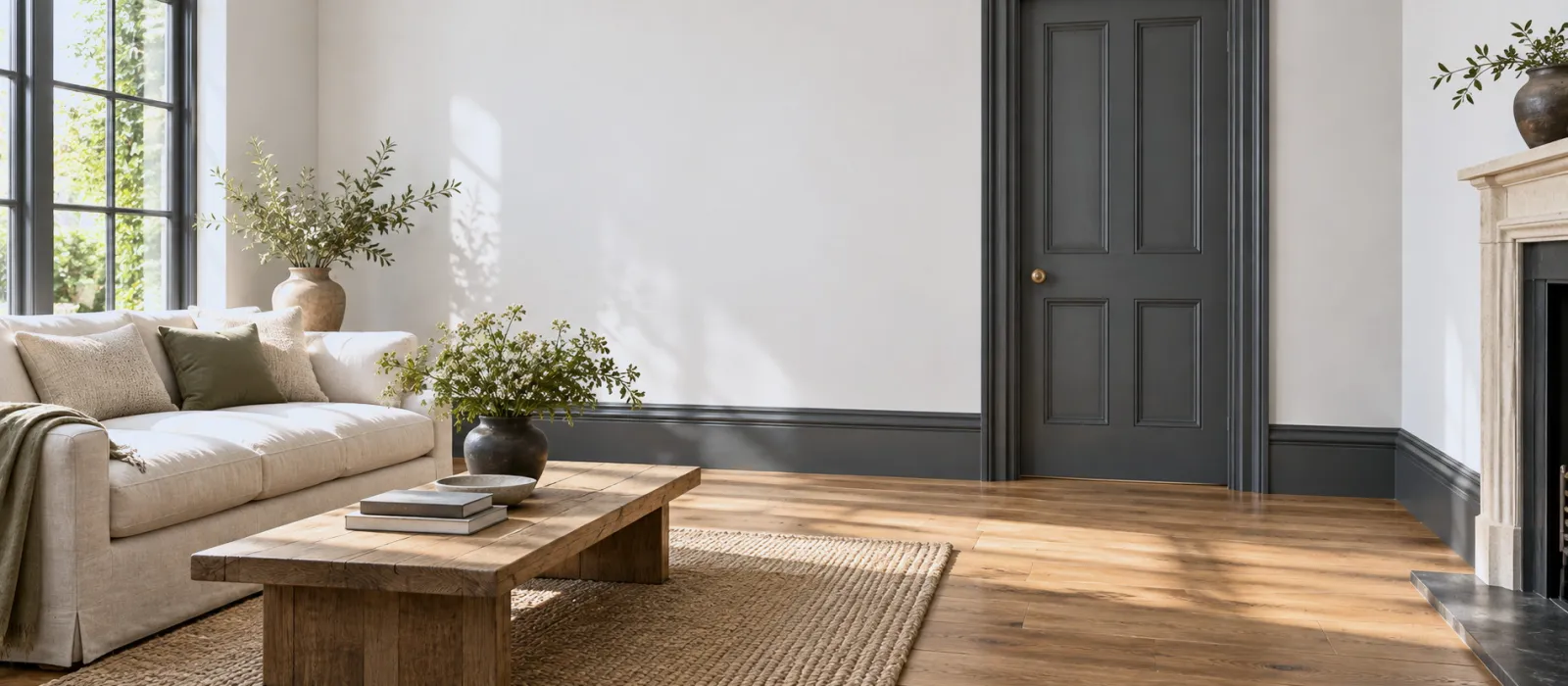
A dark skirting — slate grey, brown, deep green — under a light wall: it draws the floor, hides the knocks and gives a simple room some gravity.
Eight complete pairings, with the door colour, in 8 wall and skirting board colour combinations.
Step 2 · The finish
| Finish | Sheen | Where | Why |
|---|---|---|---|
| Multi-Surface Eggshell | ≈ 15 % | Sitting room, bedroom, study | The softest sheen; a discreet contrast with a matt wall; washable |
| Multi-Surface Satin | Mid | Hallway, entrance, kitchen, stairs | Resists knocks, shoes, the mop |
| Multi-Surface Gloss | High | Tall moulded skirting, reception rooms | The lacquered look; demands perfect preparation |
| Multi-Surface Dead Matt | ≈ 5 % | Total drenching, quiet bedrooms | The same matt as the walls; washes, but marks sooner |
All exist in every colour, water-based, recoatable after 3 to 4 hours. Allow 250 ml for about 12 m of 10 cm skirting in two coats.
Step 3 · The method
Mild detergent, sponge, rinse: skirting collects dust and shoe marks. Then a sand with 180 along the whole length — compulsory on an old gloss finish, whose sheen it breaks — and a damp cloth. Scrape what flakes, fill chips and joints with wood filler, sand the repairs.
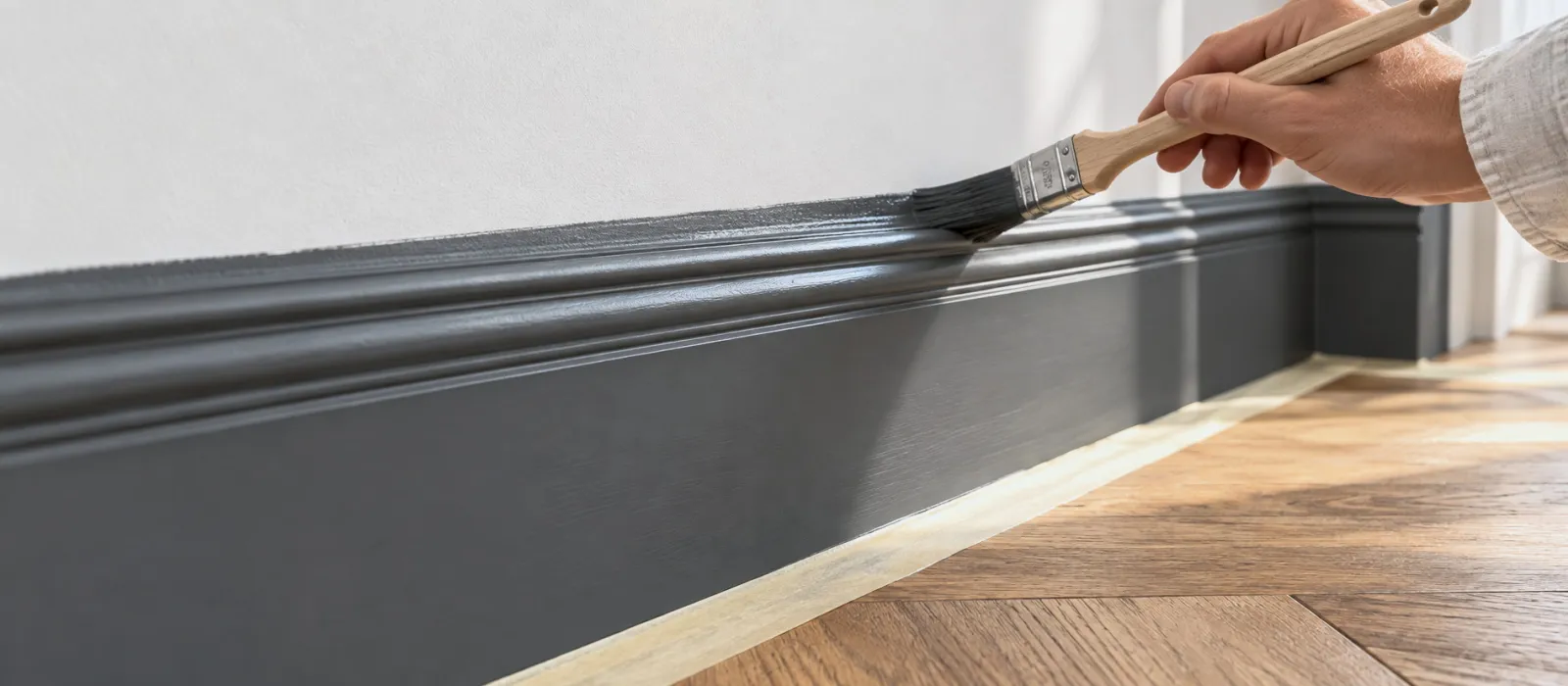
On parquet or tiles: masking tape tight against the skirting, pressed down with a finger, and paper or sheeting over it. On carpet: tuck the tape between skirting and pile with the filling knife, pushing it down; the paint will not get past. On the wall above, no tape if the wall is dry and your hand is steady: a cutting-in brush draws a cleaner line than tape.
On every scraped or filled area, and on new skirting: one coat of Multi-Surface Primer, recoatable after 3 to 4 hours. On already-painted skirting, sound and sanded, it is not needed, except for a big change of colour.
Load the brush a third of the way, set it 5 mm from the edge, then move up to it as you draw: the line between skirting and wall is made with the tips of the bristles, in one continuous stroke, a metre at a time. The top edge of the skirting and the quadrant, if there is one, at the same time.
On flat skirting, a small foam roller is fast; follow it with a dry pass of the flat brush along the length to erase the texture. On moulded skirting, the brush alone, along the mouldings. Thin coat: a thick one runs on the bottom edge and takes days to harden.
After 3 to 4 hours, the same movement. Remove the floor tape while the second coat is still slightly damp, pulling at an angle: dry, the paint would bridge and tear. Let it harden overnight before putting furniture back against the wall, two to four weeks before the first hard mopping.
To avoid
Frequently asked questions
No, if the old paint is sound and sanded. Yes on bare wood, on repairs, and when going from a dark colour to a white, where the primer saves a third coat.
Masking tape tucked under the skirting with a filling knife, pushing the pile down; a strip of thin card laid on top while you paint; and a modest load on the brush. Remove the tape while the paint is still slightly damp.
That is the safest rule: skirting, doors, architraves and windows in one shade and one finish, forming the "woodwork family". You can depart from it — a coloured door, white skirting — but on purpose.
MDF, yes: edges grain-filled, Multi-Surface Primer, two coats. PVC needs a special plastics primer; the result depends on it. Tiled skirting is not painted.
Total length × height: 40 m of 12 cm skirting is 4.8 m², so about 0.5 L for two coats. A 250 ml tin covers a bedroom; a litre, a flat.
See also
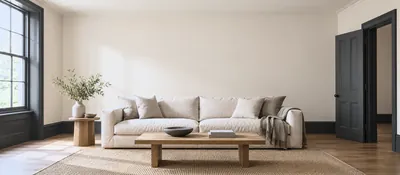 Eight wall-and-skirting pairings, from white-beige to blue-yellow: the bottom line that finishes the room.
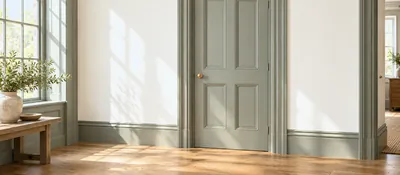 The quickest project that changes a room the most: six colour ideas for doors, skirting and windows.
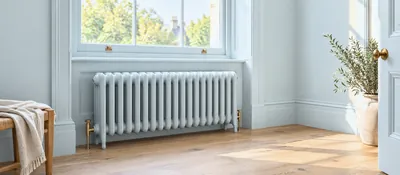 Blend it into the wall or make it an object: the method, the finish that takes the heat, and the colours.
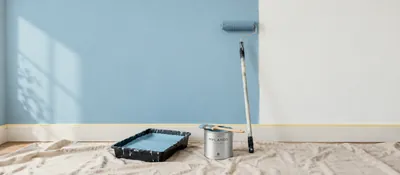 Preparation, primer, cutting in, vertical bands, wet edge, laying off in one direction: the Mylands method for...
“Skirting is the signature at the bottom of the page.”
Thanks for signing up to our newsletter!
Sign in to save items to your wishlist. Sign in to save your basket, so you can continue shopping later.
Don't have an account? Create one
Share this link and friends can buy items from your list. Anything bought disappears from it automatically. Anyone with this link can see your selection.
Moving in, redecorating, or dropping hints? A free account turns this selection into a gift list — add or remove colours whenever you like, and we'll email you when someone buys something from your shared list.
Free · Delivered to your door
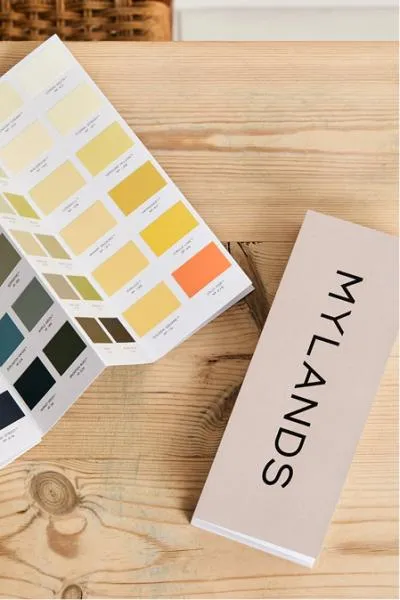
Get a free colour card posted to you, showing our complete Colours of London range, with swatches made from the real paint for a true representation of our award-winning colours.