01
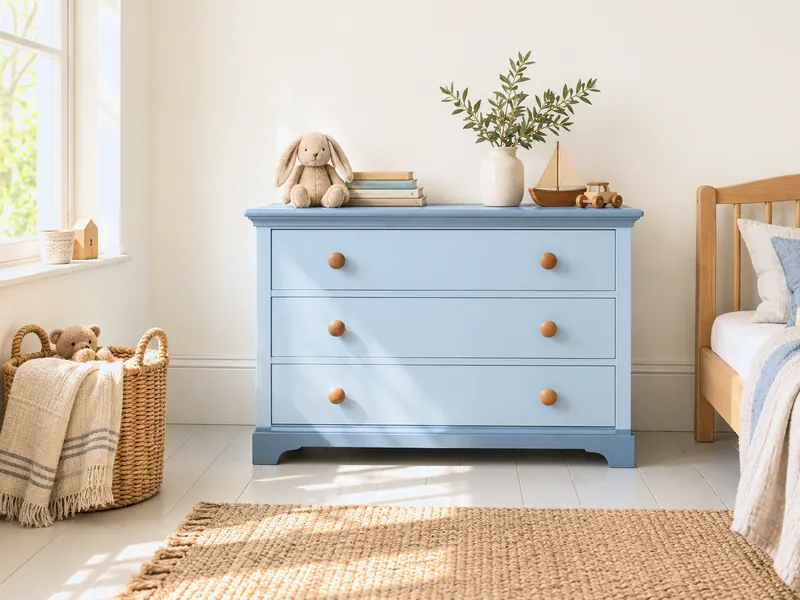
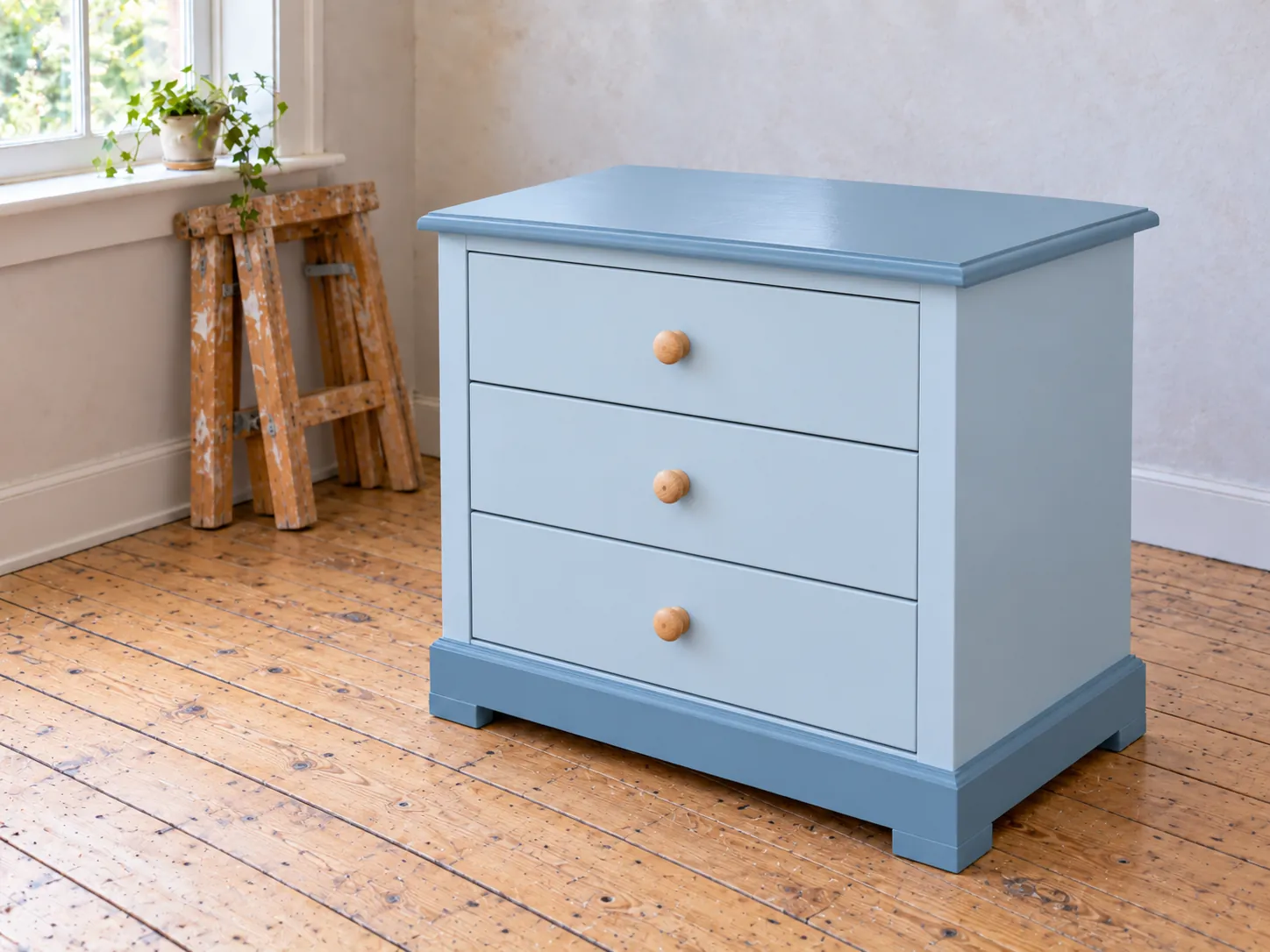
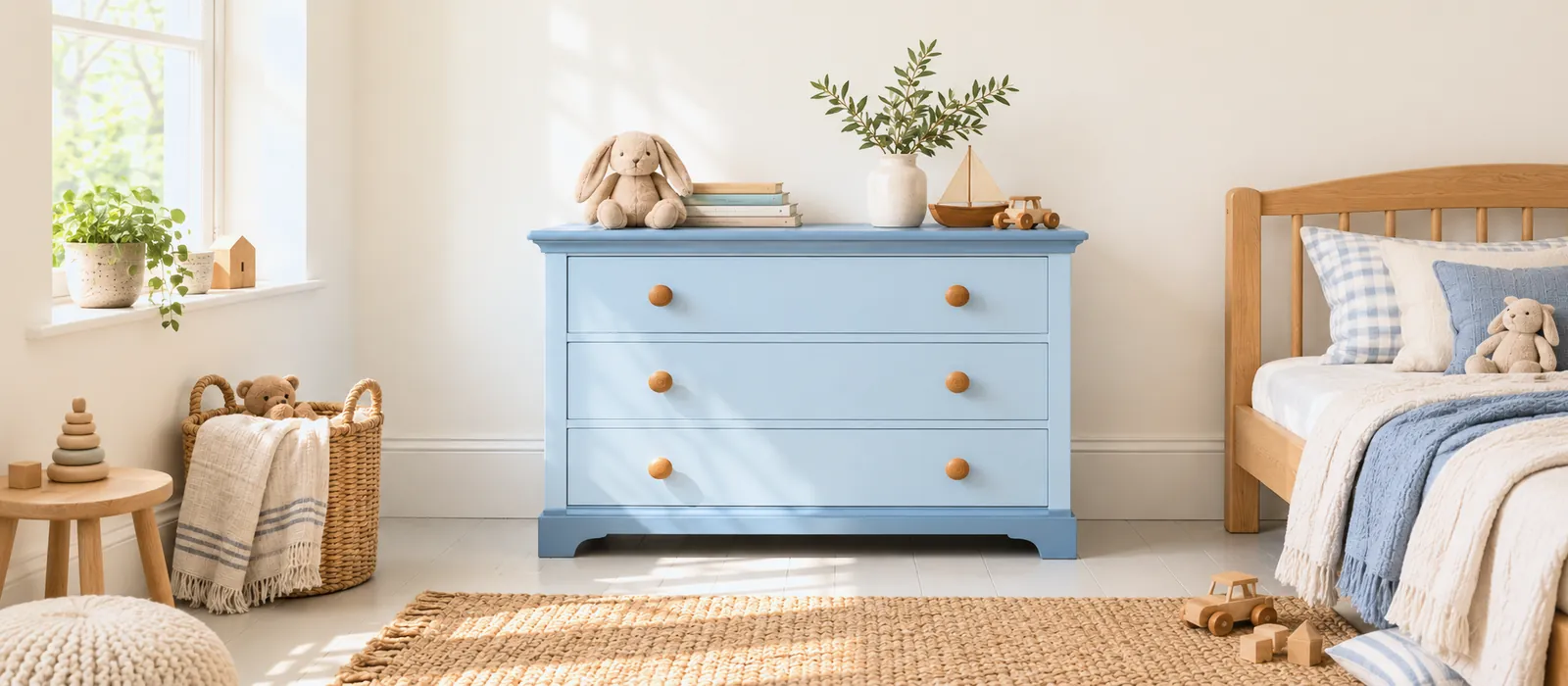
Two-tone, top and bottom
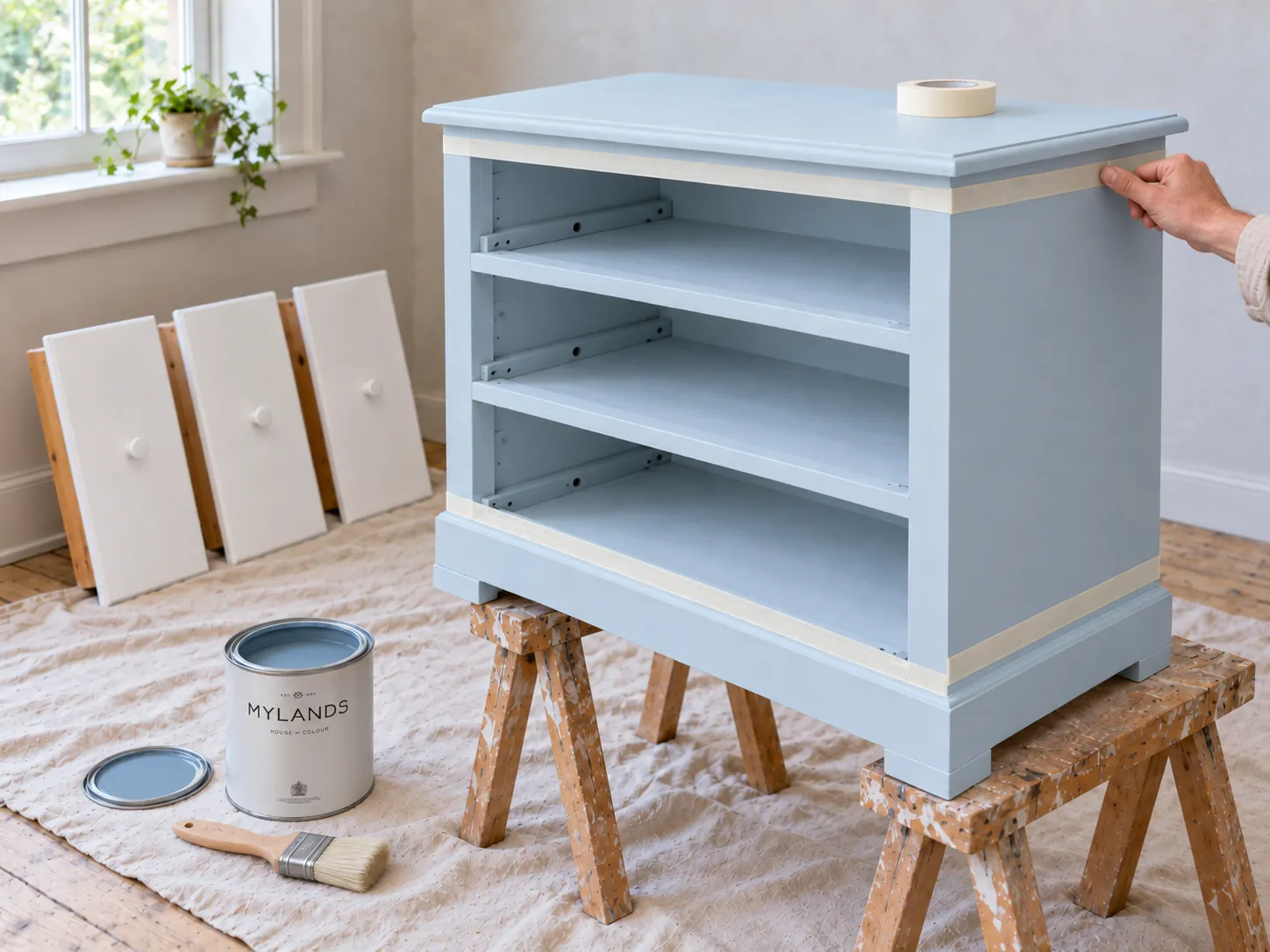
The body of the piece in a soft shade, the top and plinth in a deeper shade of the same family: simple, grown-up, and the top hides marks better.
Menu
How To
Design Advice
Customer Service
My account
Help with paint How-to guides
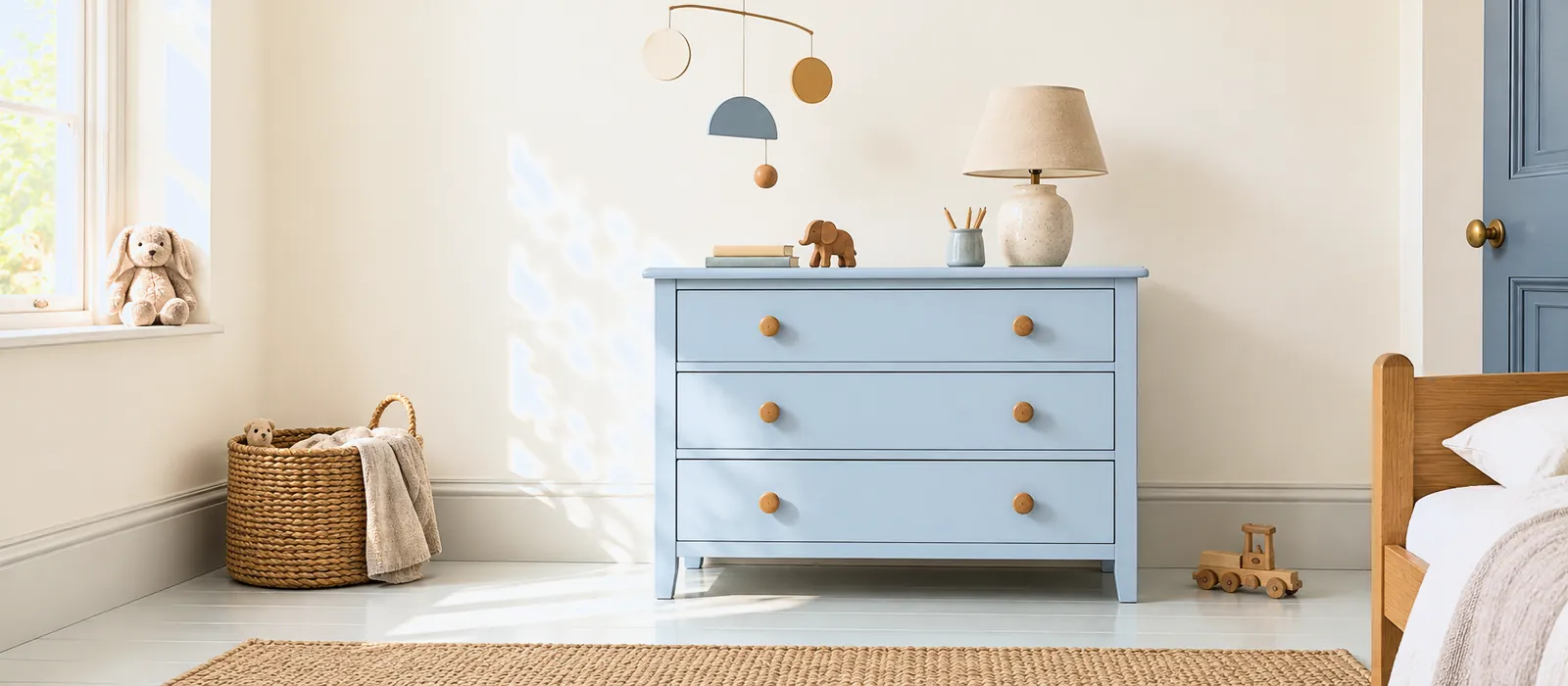
A child's piece of furniture is upcycled like any wooden furniture — clean, sand, prime, two thin coats of Multi-Surface Eggshell — with two precautions: a water-based paint compliant with the EN 71-3 toy standard, which every Mylands paint is, and a week of curing before the piece goes back to its owner. After that anything goes: two-tone, blocks, stripes, a drawer of each colour. A piece of furniture is far easier to repaint than a wall when the child grows up.
Page updated September 2026 · by the Mylands France colour team
Safety first
A child touches, licks and chews whatever you give them. The paint on a child's furniture must therefore be water-based, low in VOCs and compliant with the EN 71-3 toy standard, which limits the migration of heavy metals — every Mylands paint is, wall and multi-surface alike. It must also be cured: a film that is dry in three hours takes two to four weeks to reach its hardness, and a piece handed back too soon keeps the marks of teeth and toys. Allow a week at least, more if you can.
What the standard does not say, the finish does: Multi-Surface Eggshell washes with a damp flannel, resists washable felt-tips and hands, and stays soft under a bedroom's light. Satin resists still more for a desk top or a small chair; Dead Matt, chalkier, suits a wardrobe that is rarely touched. For the walls, Marble Matt Emulsion, class 1 washable, and our page Child-safe paint for nurseries and playrooms.
The method
Knobs, handles, doors, drawers. Use the moment to tighten what wobbles, re-glue what is coming loose, sand a sharp edge: an upcycled child's piece must come out sturdier than it went in. An old piece painted before 1990 may carry lead paint: do not dry-sand; dampen, wear a mask, and if doubt persists, strip it chemically or choose another piece.
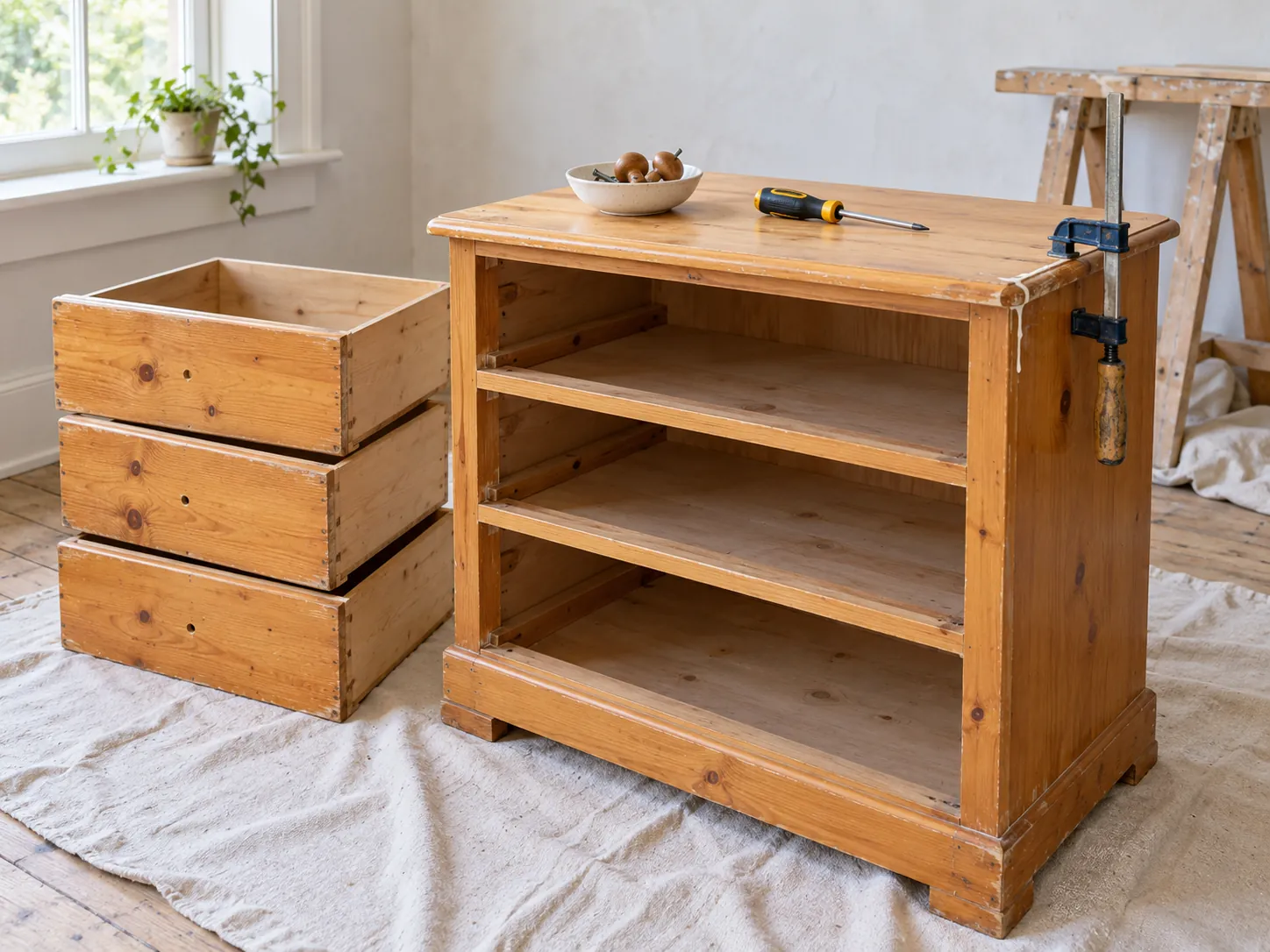
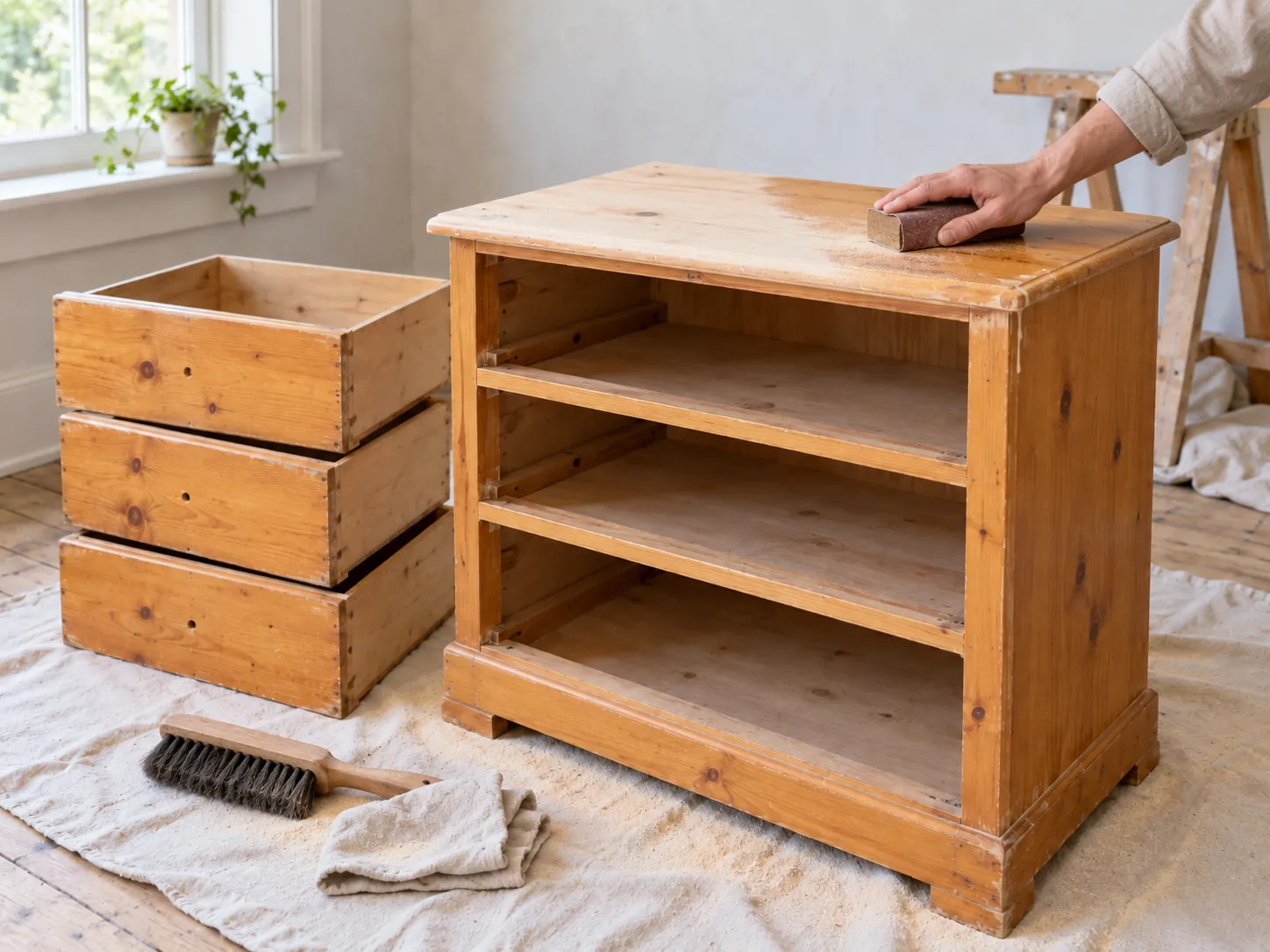
Wash with mild detergent; wax remover if the piece is waxed. Sand with 120 to dull a varnish or an old paint, with 180 on bare wood, along the grain; round the corners. Knots sealed with knotting solution on pine. Dust off carefully.
One coat of Multi-Surface Primer on bare wood, melamine and any marked change of colour; rub down with 240 after 3 to 4 hours. It is what keeps the colour on under the toys.
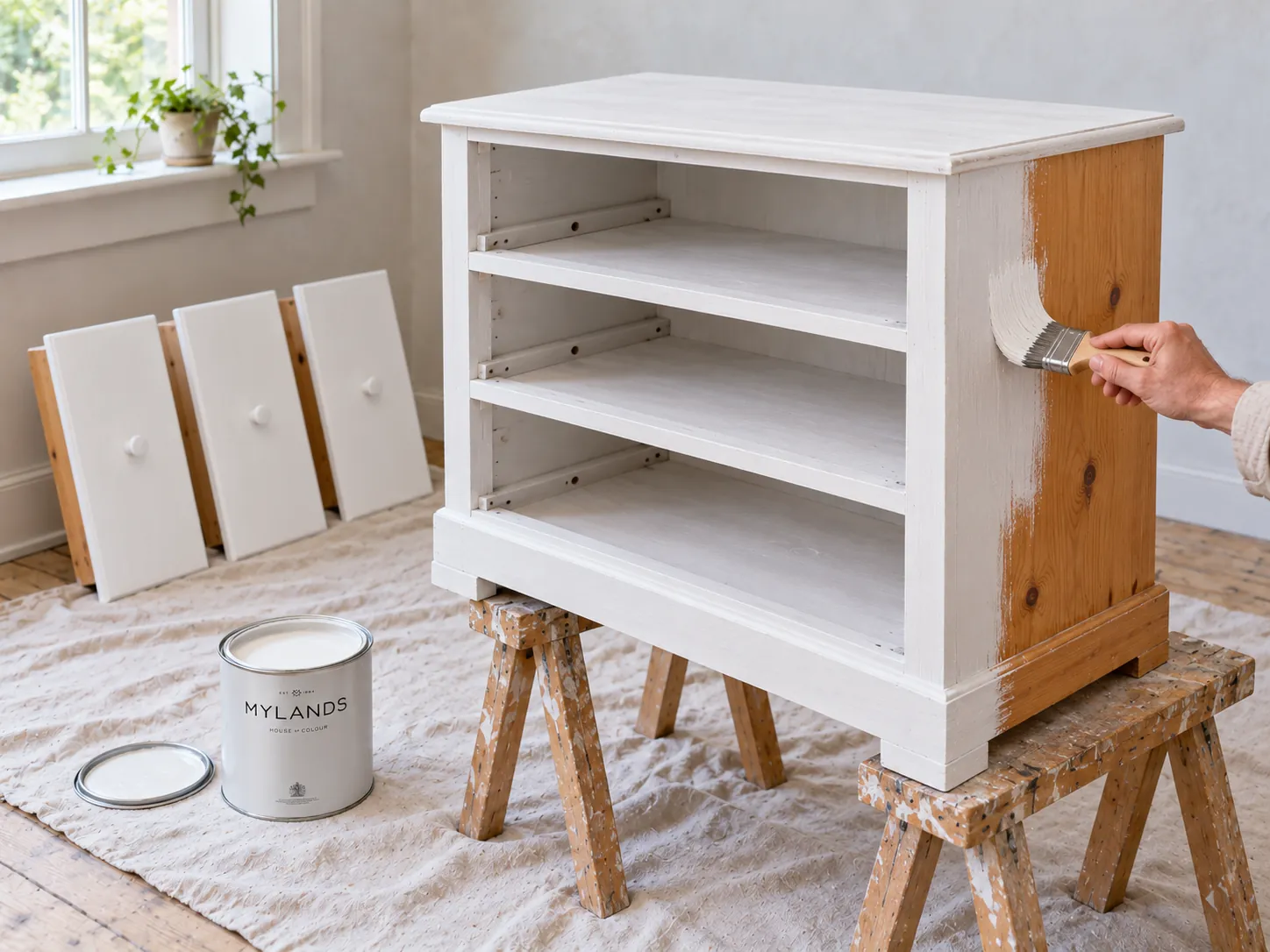
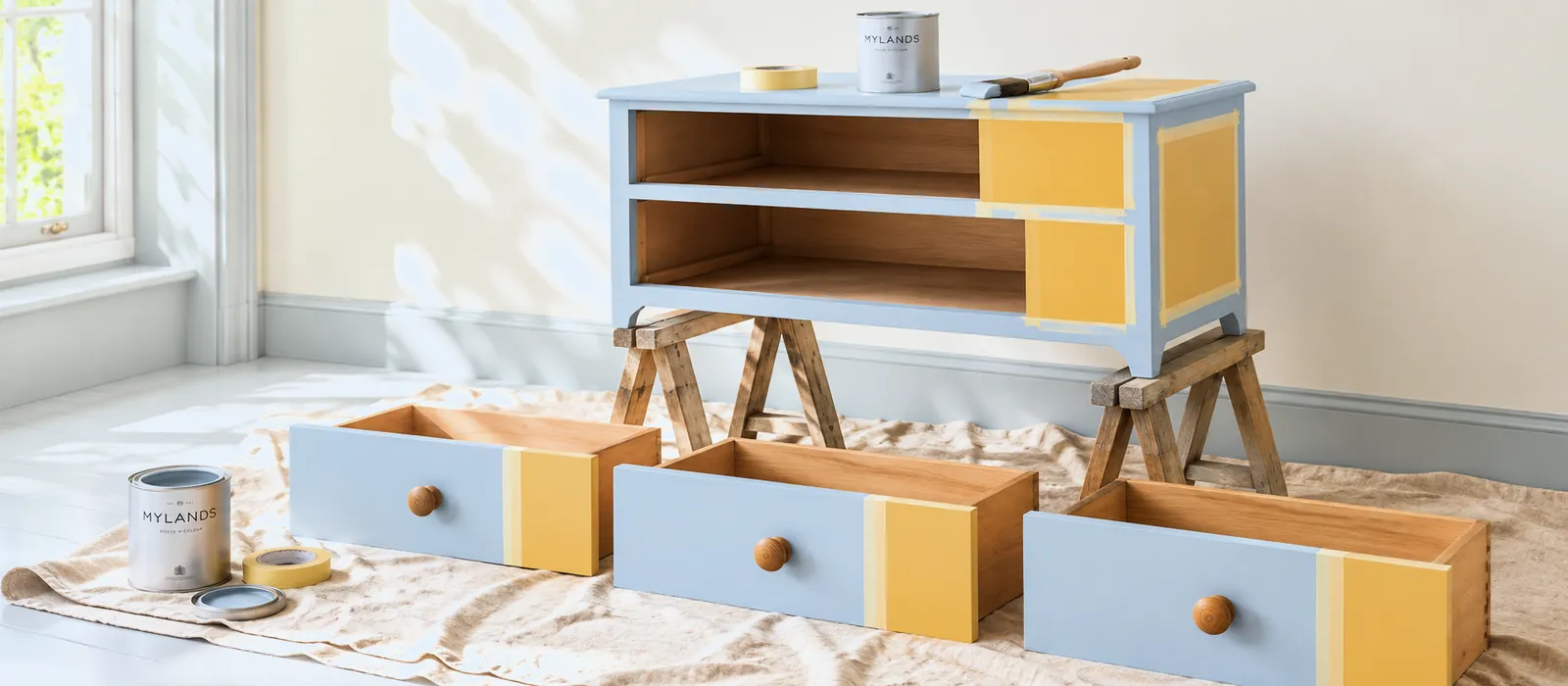
For a two-tone or blocks, paint the lighter shade everywhere first, let it dry, then mask with tape and paint the darker. For a perfect line, brush a thin coat of the light shade along the tape's edge before the dark one: it seals the tape and the dark cannot creep under.
Brush along the grain, small foam roller on flat panels followed by a lay-off with the brush. Thin coats, second coat after 3 to 4 hours, tape removed while the second coat is still slightly damp. A night of drying flat before refitting.
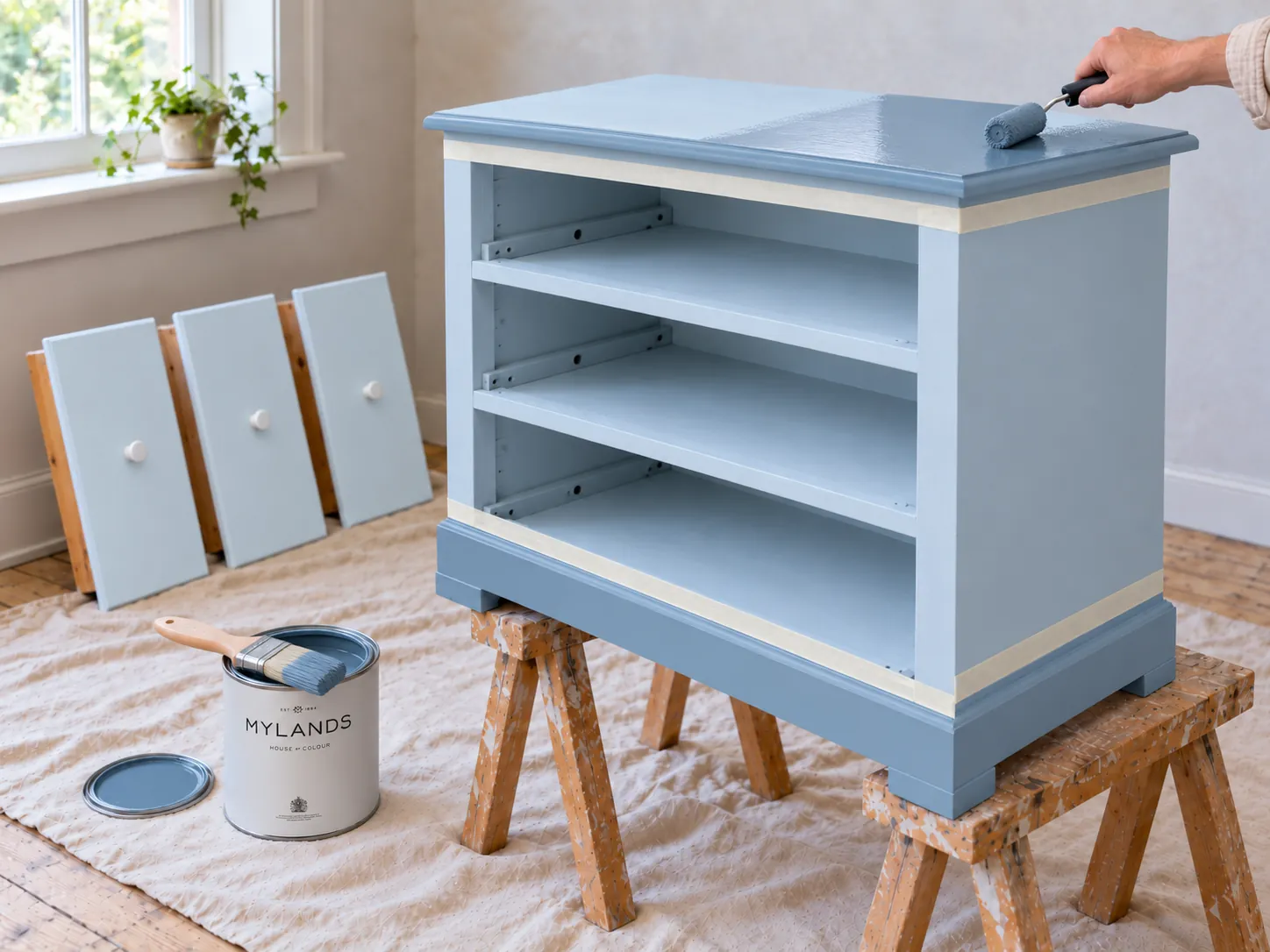
Refit the drawers and knobs the next day, but keep the piece out of reach for a week, two if you can: the film hardens, the already faint smell goes, and the first toy-car wheels leave nothing.
The ideas
A child's room is the one place in the house where you can play with colour without risk: the piece is repainted when the child grows. Six ideas, each with the wall that goes with it — and, for the walls themselves, our soft colours for a child's room.
01
The body of the piece in a soft shade, the top and plinth in a deeper shade of the same family: simple, grown-up, and the top hides marks better.
02
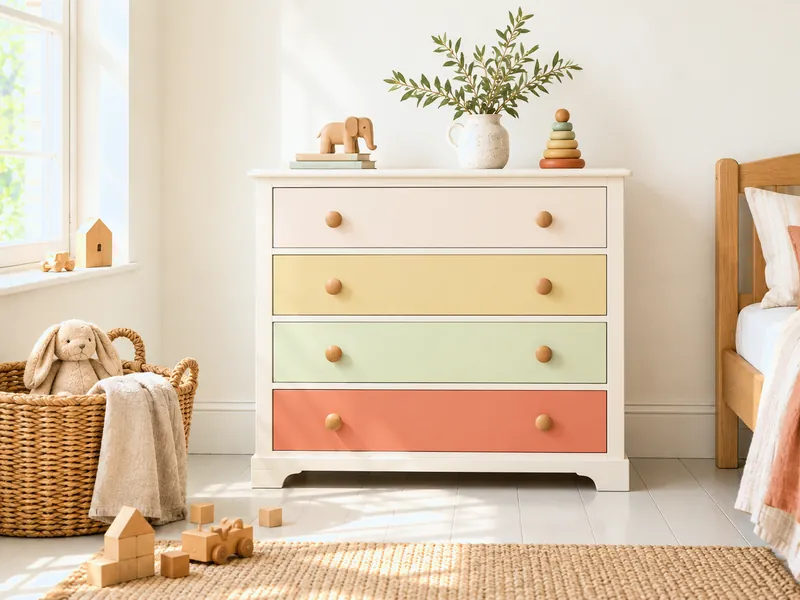
The body off-white, each drawer a different colour, from the lightest at the top to the brightest at the bottom: the child learns to tidy by colour.
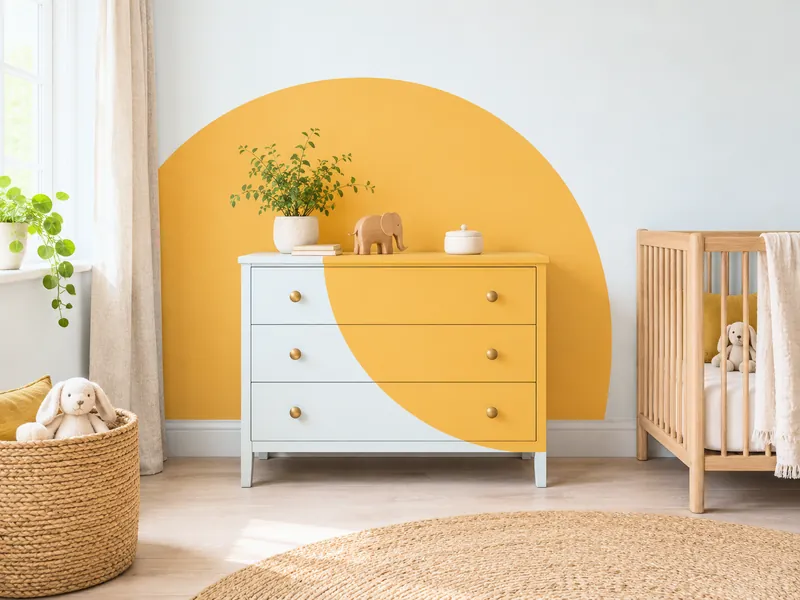
03
A rectangle or a half-circle of confident colour painted across the piece, running onto the wall behind: piece and wall become one. See Freeform shapes.
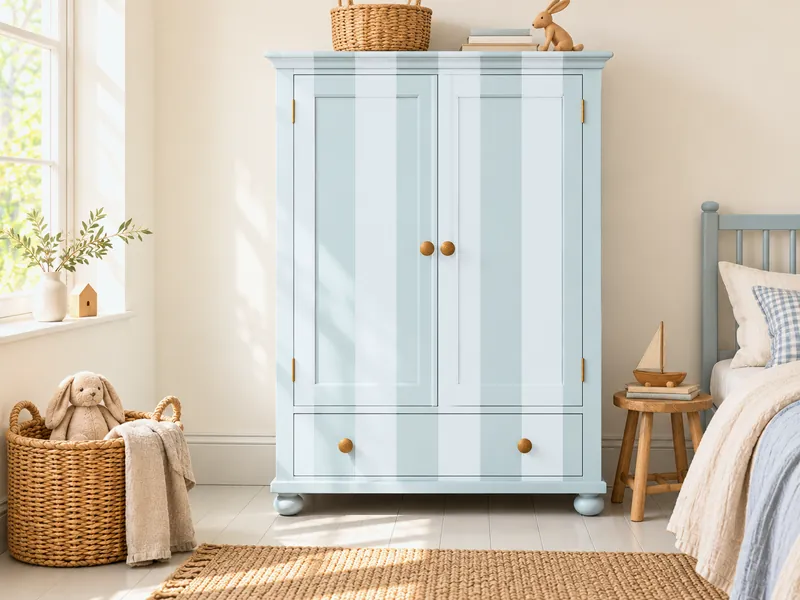
04
Two close tones in wide vertical stripes on a wardrobe or a headboard, with tape: the pattern you do not regret at ten.
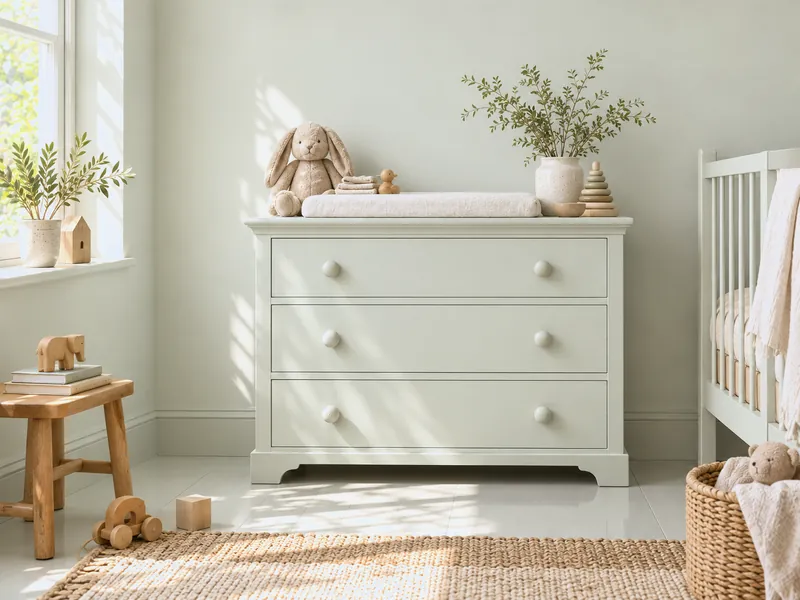
05
The piece in the exact shade of the wall, in Eggshell: for a baby's or toddler's room, a calm space where nothing jumps out.
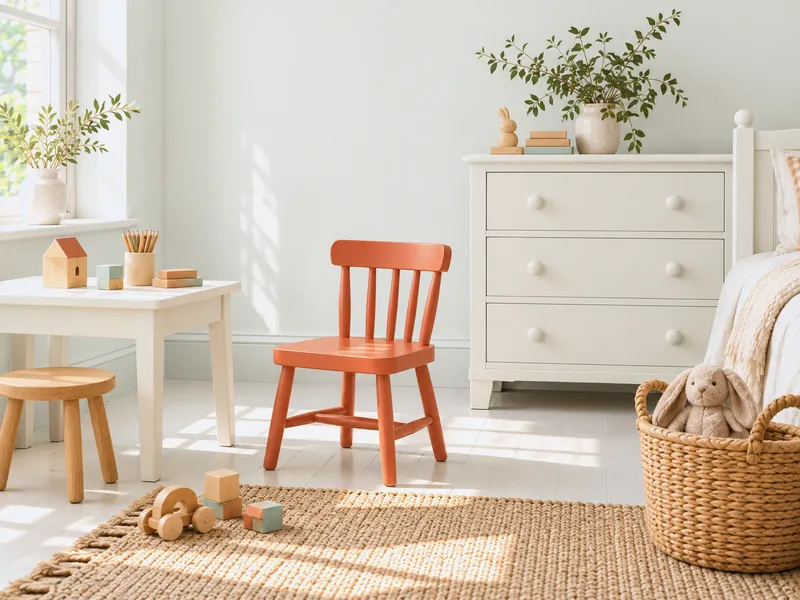
06
Light room, white furniture — and one small chair, one stool in a vivid colour. The accent that is enough, and changes in an hour.
To avoid
Frequently asked questions
Yes: water-based, low in VOCs, compliant with the EN 71-3 toy standard (migration of certain elements). That applies to Marble Matt Emulsion and to the multi-surface finishes. Let it cure for two weeks if the object will go in a mouth.
Yes, with the same method and attention to the bars, which the child chews: Eggshell, thin coats by brush, two weeks of curing. An old cot may carry lead paint; in doubt, strip chemically or replace.
Damp flannel and mild soap, after curing. Washable felt-tips come off with water; a permanent marker needs a light sand and a touch-up — keep the sample pot for that.
A small chest or a desk is 1.5 to 2 m² of visible surface: one 250 ml tin of finish is enough for two coats, and a 250 ml tin of each shade for a two-tone.
Negotiate a drawer. The FTT range, our vivid studio shades — a pink, a vermilion, a bold yellow — exists in multi-surface and makes a terrific accent on a single element, in an otherwise calm room.
See also
 Paint, wax, oil or stain? The method for giving a chest of drawers, a sideboard or a chair a second life.
 Water-based, low VOC, toy standard, washable: what a paint must be for a child's room, and the finish for each...
 A month before the arrival, water-based, low VOC, toy standard, a week's airing. The soft colours, the ceiling...
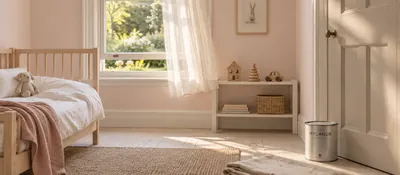 Does an "odourless" paint exist? What VOCs are, what the regulations require (30 g/L for a matt wall paint), w...
“A child's room is the only place where repainting a piece every three years is good news.”
Thanks for signing up to our newsletter!
Sign in to save items to your wishlist. Sign in to save your basket, so you can continue shopping later.
Don't have an account? Create one
Share this link and friends can buy items from your list. Anything bought disappears from it automatically. Anyone with this link can see your selection.
Moving in, redecorating, or dropping hints? A free account turns this selection into a gift list — add or remove colours whenever you like, and we'll email you when someone buys something from your shared list.
Free · Delivered to your door
Get a free colour card posted to you, showing our complete Colours of London range, with swatches made from the real paint for a true representation of our award-winning colours.