
The journal
Bedroom paint colours: which shades help you sleep
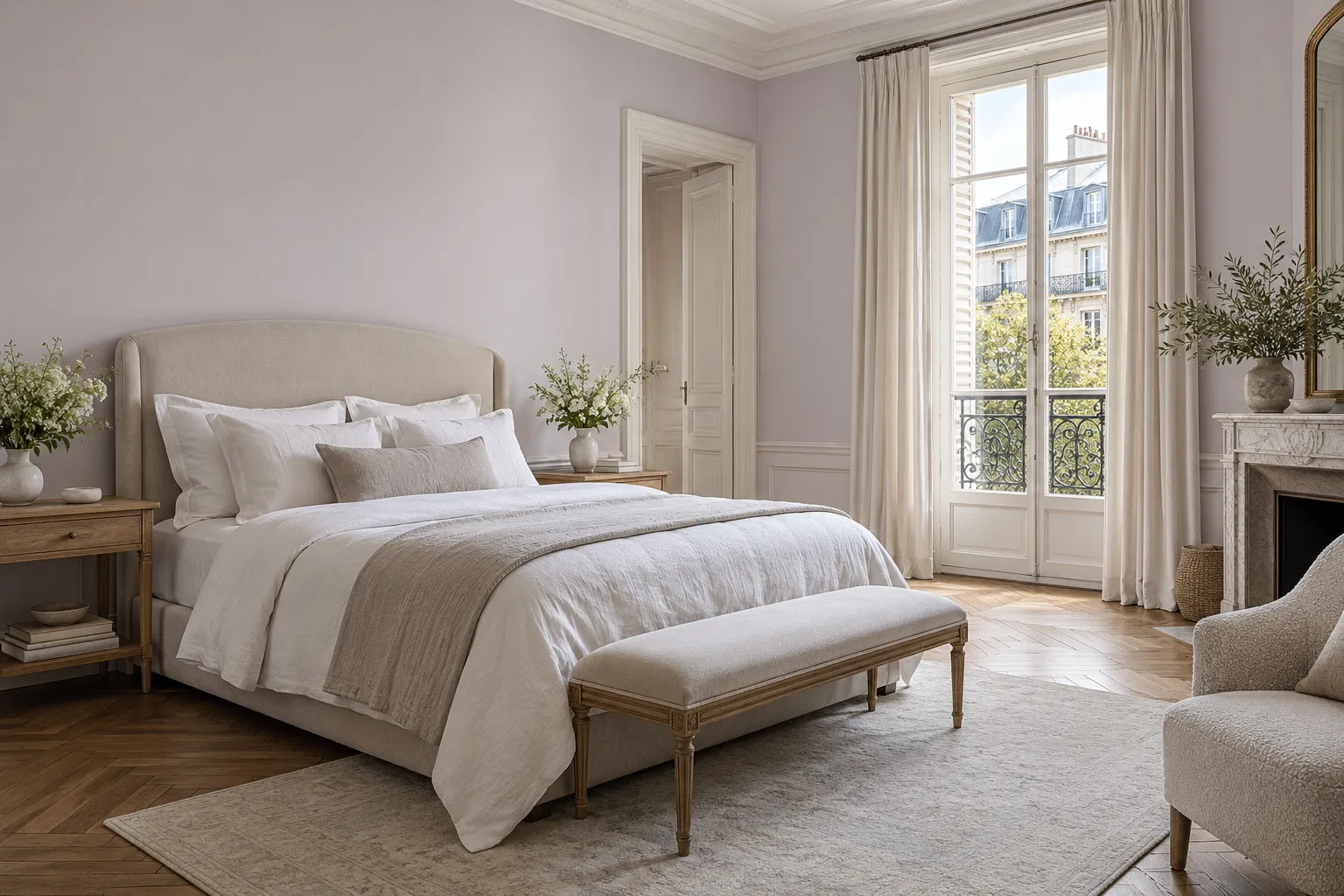
The best bedroom paint colours are soft, greyed shades, lavender, grey-blue or smoky green, or at the other extreme a deep indigo or plum that wraps around you, applied in a washable, low-VOC matt. Early Lavender No.260, Uncle Maths BH.05 and Observatory No.34 are our three starting points.
You choose a bedroom colour in broad daylight and you live with it at night, on waking, in the half-light of a Sunday morning. That is the whole paradox of bedroom paint colours: they have to please on the colour card at noon and soothe at eleven at night, when all that is left is a bedside lamp and the wish to sleep. A bedroom is not a reception room; it has nobody to impress, and that is what makes the choice so free, and so often missed, through too much caution or too much daring.
Bedroom paint colours: rest before style
What makes a colour restful is not its paleness but its softness: a muted, greyed pigment that does not vibrate. A pure, highly reflective white is as wakeful as a bright red in an east-facing bedroom; a powdery lilac or a grey-blue, on the other hand, absorbs the excess light and slows the morning down. The shades we recommend for a bedroom all share that quality: they contain grey, earth or shadow, and they shift with the daylight without ever shouting.
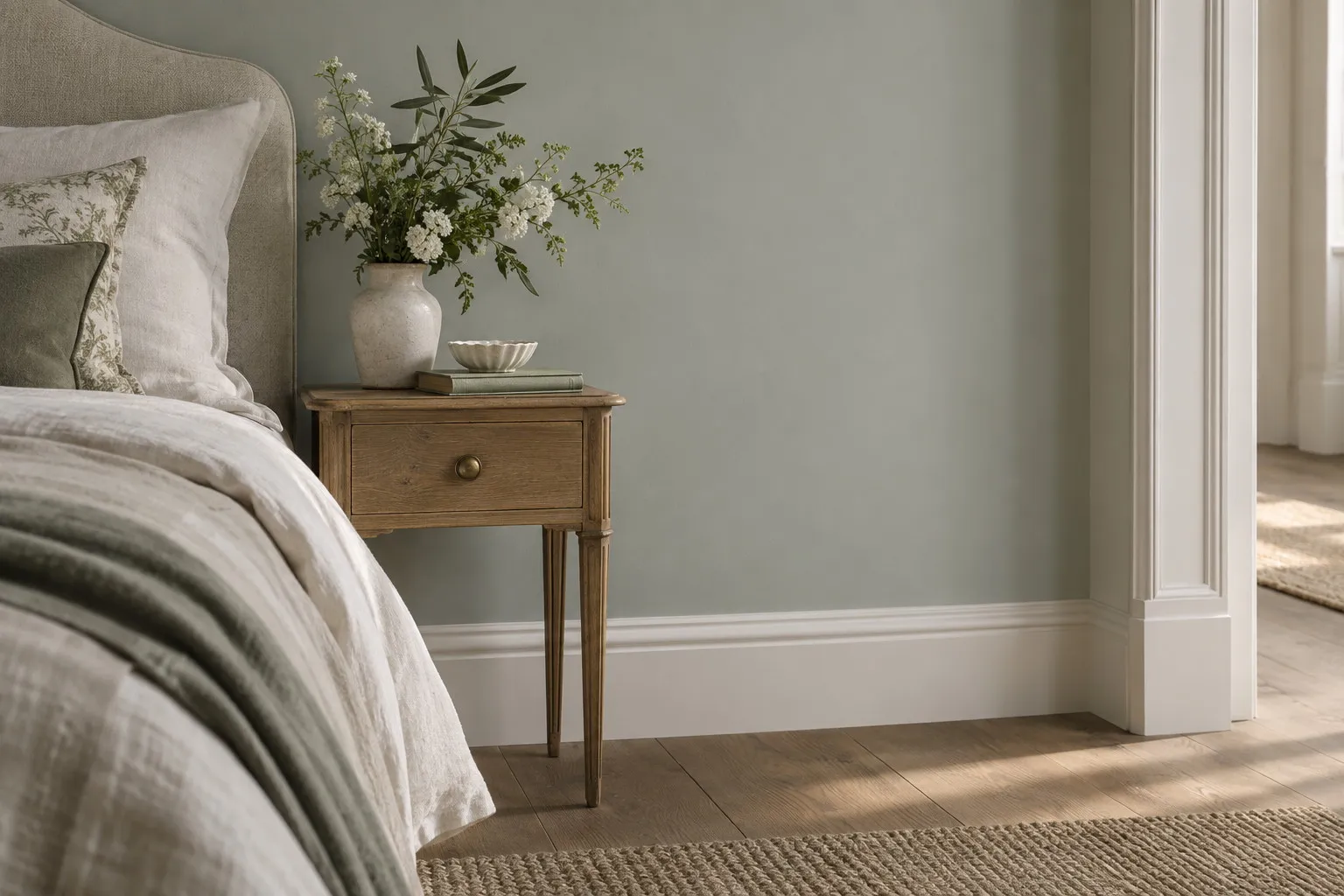
The second rule is to think about what surrounds the bed. Linen sheets, the wood of a bedside table, carpet or parquet, curtains: a bedroom is made of materials more than of furniture, and the wall colour has to serve them. Powdery tones flatter white linen and oak; dark ones show off brass, heavy fabrics and dark woods. Choosing bedroom paint colours means first deciding on the atmosphere you want to find when you open the door: a light room that recedes, or a cocoon that envelops you.
The palettes that calm
Early Lavender No.260 is the colour we would start with. This traditional lavender, heavily greyed, almost a grey in morning light, turns mauve at dusk; it is soft without being sweet, and sits as happily with an iron bedstead as with an upholstered headboard. Designers have always loved it for exactly that reason: it does not look like any colour in particular, which is precisely what a bedroom asks for.
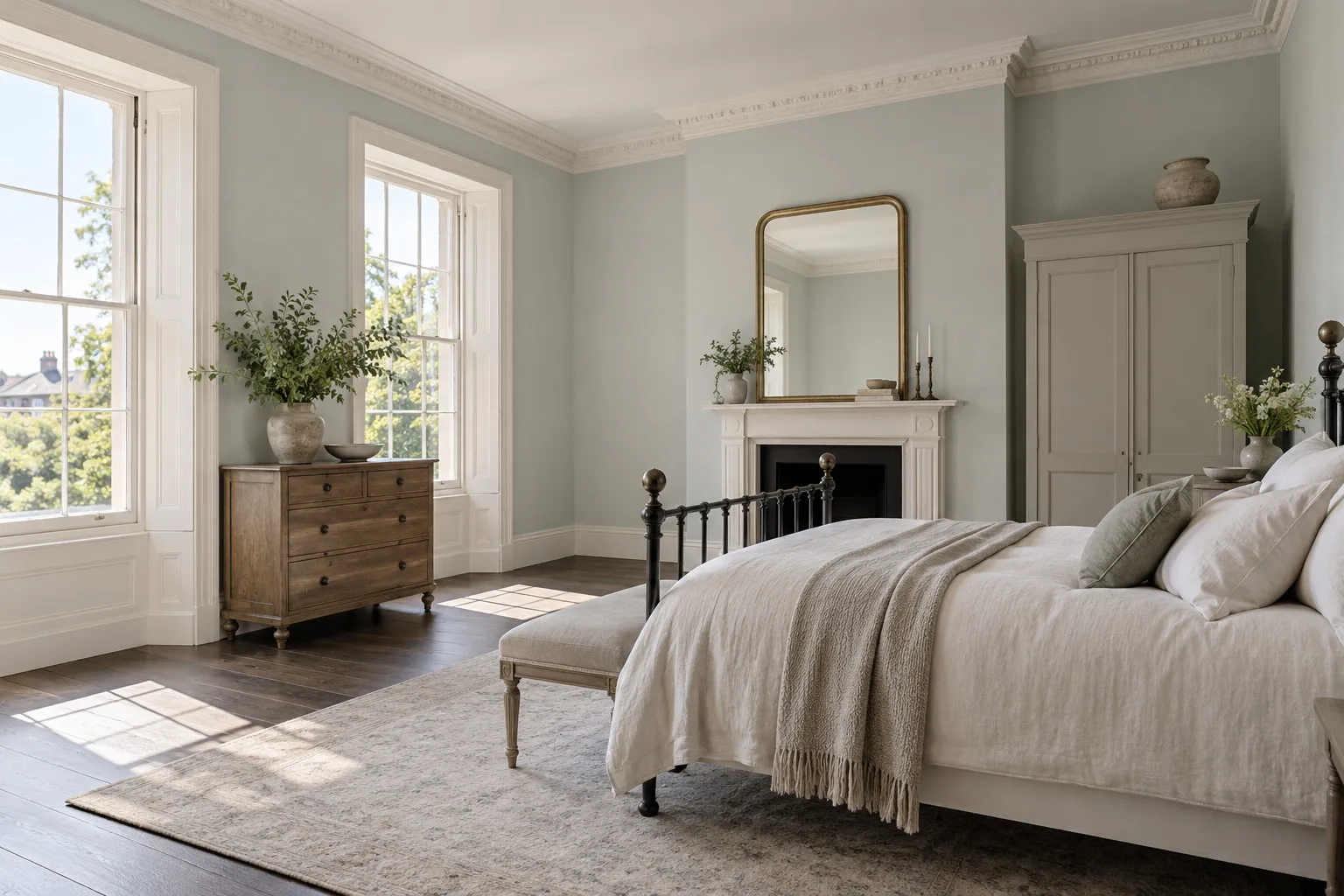
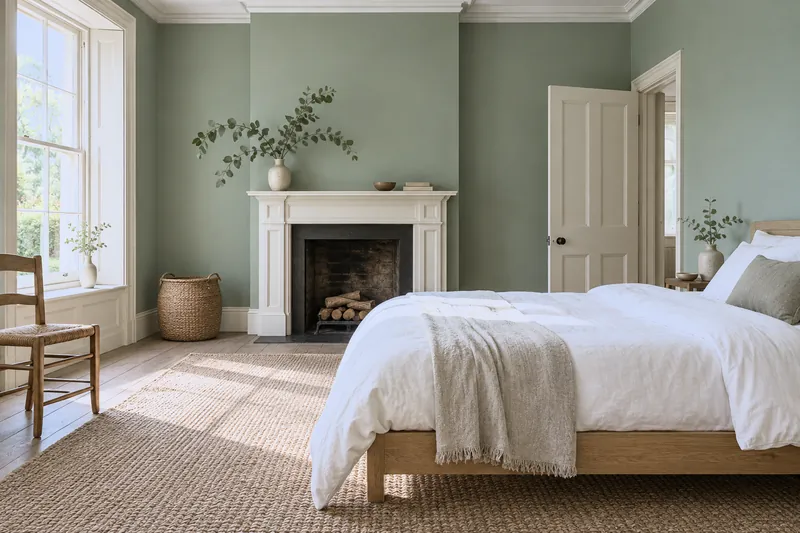
Pale grey-blues are the other great bedroom family. Uncle Maths BH.05, from the Beata Heuman collection, is a composed, airy light grey-blue that holds its place without ever demanding attention; Mews Blue No.98, recreated by one of our most experienced colourmen, is softer still, a misty blue-grey that suits very sunny bedrooms in need of tempering. For a warmer room, Rose Theatre No.249 is a warm, greyed neutral with the faintest blush, which warms a north-facing room without tipping into pink. And if you want green, Museum No.151, the smoky green inspired by London's Victorian museums, is probably the most restful colour on our card: neither cool nor warm, it settles in and you stop thinking about it.
The darks that envelop
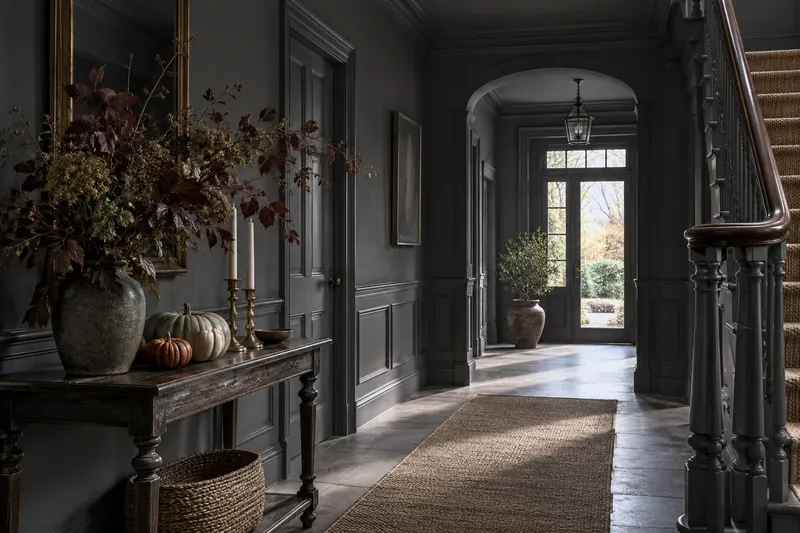
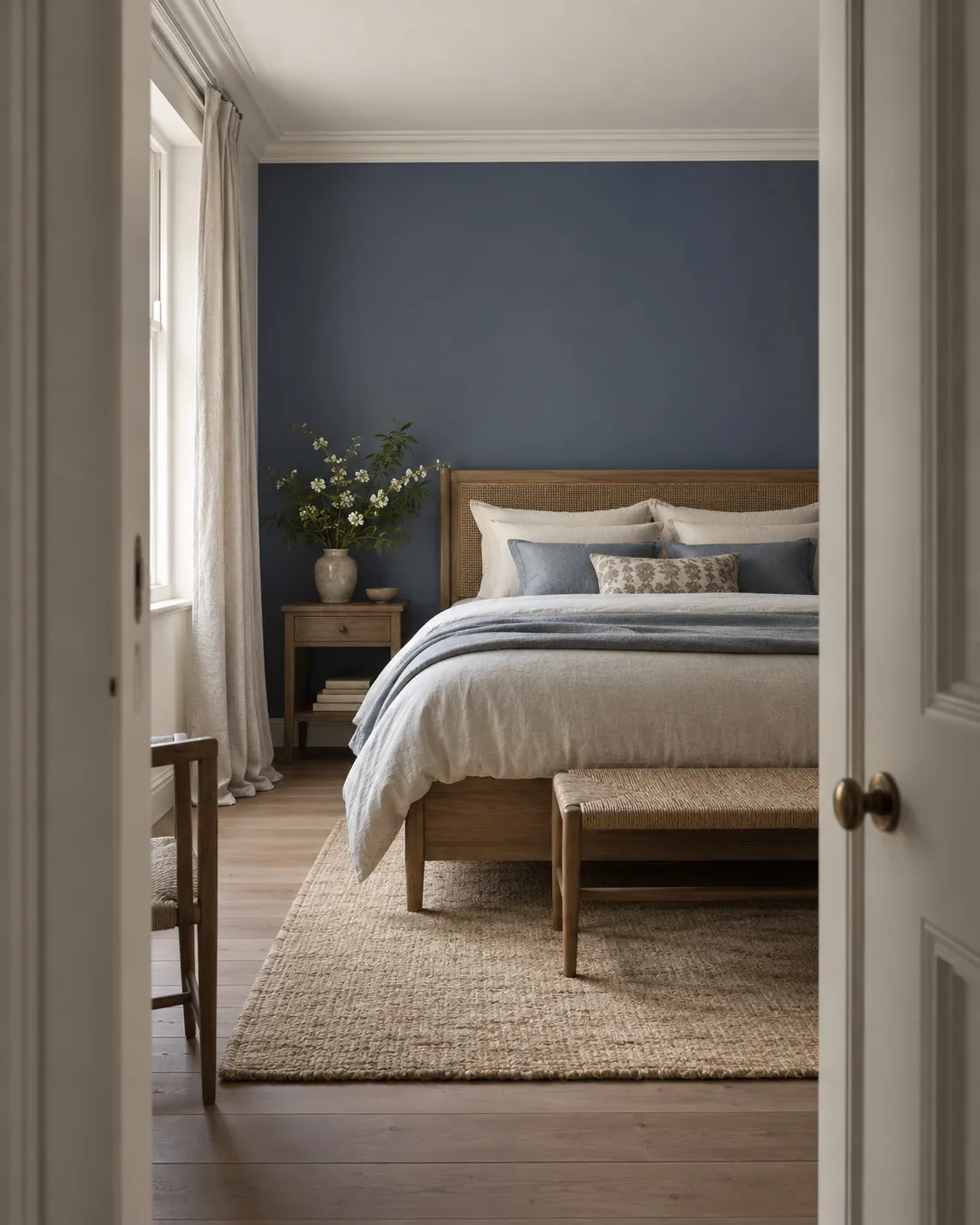
A bedroom is the room where a deep colour makes the most sense, because it is the only one where darkness is a virtue. Observatory No.34, an intense indigo inspired by the night sky, turns a bedroom into exactly that, an observatory: the walls fall away, and the bedside light settles on the bed and nothing else. Plum Tree No.283, a dark, velvety plum, is warmer and more enveloping, and beautiful with natural linen and brown wood. These colours are lived in the evening; in the morning they let the window do all the work, and they weigh on the room far less than people fear, provided the woodwork and ceiling follow suit.
A dark bedroom does not shrink; it recedes, and that is all we ask of it.
Headboard wall or full colour drenching
There are two opposing ways to place a deep colour in a bedroom, and neither is wrong. The first is to paint only the wall behind the bed, keeping the other three in a warm white. It is the more cautious solution: the colour frames the bed, gives the room depth when seen from the door, and can be changed in half a day if you tire of it. It suits small or poorly lit bedrooms, and anyone still torn between two shades.
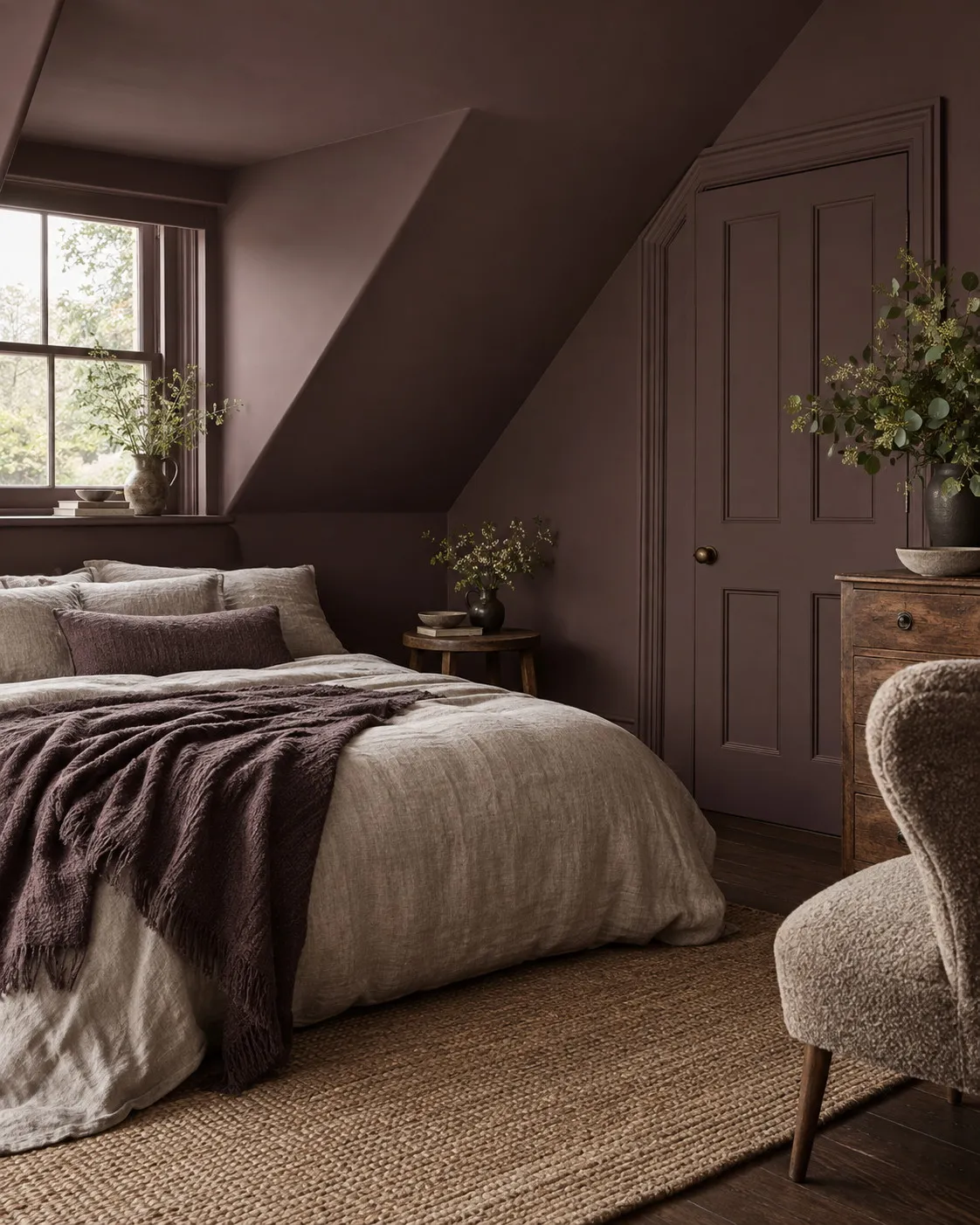
The second is colour drenching: walls, ceiling, doors, skirting and windows in the same shade. It is the most coherent method for a cocoon, because it erases the corners, door frames and breaks that chop a bedroom into pieces; the room becomes a single envelope with the bed at its centre. It simply asks for a little confidence, and two finishes: our matt on walls and ceiling, and a multi-surface finish on the woodwork, in the same colour number. In an attic bedroom, where walls and slopes run into one another, it is almost always the right answer.
A warm white for the rest
Whichever route you take, you need a white for the ceiling, the woodwork or the other three walls, and that white should not be pure. Holbein Chamber No.7, an off-white with a hint of pink, is the natural companion to lavenders, greyed pinks and plums; it softens the transition between the coloured wall and the ceiling and avoids the hard contrast that wakes you up. With grey-blues and greens, a faintly yellowed white will do the same job. Our full selection of bedroom colours shows them side by side, from palest to deepest.
A finish for a room you sleep in
A bedroom sees neither steam nor splashes, but it has demands of its own: a wall you brush past every night on the way to bed, a headboard that rubs, a raking morning light that picks out every flaw in the plaster. Marble Matt Emulsion answers all three. Its film, loaded with crushed Carrara marble, is very matt, which hides the unevenness of old plaster and removes the glare of the bedside lamp; it carries class 1 wet-scrub resistance under EN 13300, so it wipes clean with a sponge; and it breathes, which matters in a room shut up all night.
That leaves the question everyone asks before repainting the room they sleep in: when can we move back in? Our decorative paints are all water-based, low in VOCs and low in odour, and the matt is touch-dry in one to two hours; a bedroom painted in the morning and aired in the afternoon can generally be used again the same evening. We have set out exactly what "low VOC" covers on our page about low-VOC paint, with the regulatory thresholds and the French indoor-air emissions label. Allow around 15 m² per litre per coat, two coats, and a primer if you are going from white to indigo.
Where to start
Order the colour card, it is free, and hold it against the wall behind the bed rather than laying it on the table. Then choose two shades, one pale and one deep, and paint them as squares using 100 ml sample pots, each covers around 1.5 m², on two different walls; look at them on waking, then by the bedside lamp, because those are the two hours a bedroom is lived in. Finally, the price per square metre page will tell you what a bedroom in two coats represents, ceiling and woodwork included.
Frequently asked questions
Which colour makes an adult bedroom restful?
A soft, greyed shade that does not vibrate: a lavender such as Early Lavender No.260, a grey-blue such as Uncle Maths BH.05 or Mews Blue No.98, a smoky green such as Museum No.151. These colours absorb excess light on waking and fade into the background at night. Avoid pure white, more wakeful than people think, and vivid colours.
Can you paint a bedroom in a dark colour?
Yes, and it is the room where it makes the most sense, since darkness there is a virtue. An indigo such as Observatory No.34 or a plum such as Plum Tree No.283 pushes the walls back and concentrates the bedside light on the bed. Paint the woodwork and ceiling in the same shade, or keep them in a warm white, but never in a pure white.
Should I paint one wall or the whole bedroom?
Both have their merits. A single wall behind the headboard frames the bed and is easy to change; it is the right choice for a small bedroom or for anyone who wants to hedge their bets. The whole room, ceiling and woodwork included, creates a more coherent cocoon that erases the corners and visually enlarges the space, especially under sloping attic ceilings.
Can you sleep in a freshly painted bedroom?
With a low-VOC, low-odour water-based paint, yes, generally the same evening. The matt is touch-dry in one to two hours and can be recoated after three to four; a bedroom painted in the morning and aired generously in the afternoon is back in use by nightfall. For a baby, wait one more night and keep the window open a little longer.