The journal
Discover the Mylands Sample Pot Sets
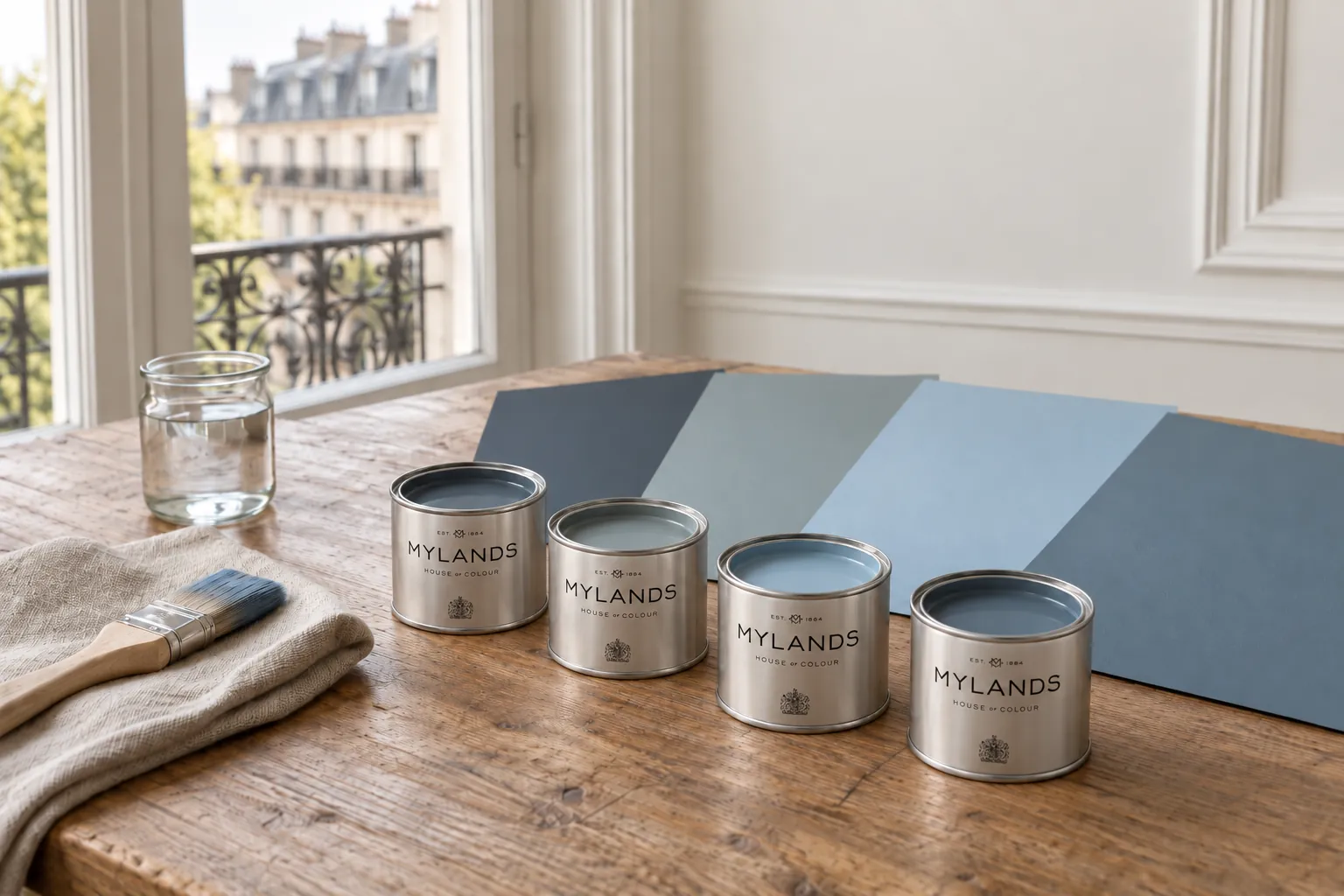
The Mylands sample pot sets bring together four 100 ml pots by colour family or collection, so you can compare neighbouring shades on your own wall before you choose. Here is what each of the seventeen sets contains and the right way to use one.
Choosing a colour on a screen or from a small chip on a colour card is a gamble; seeing it on your own wall, in the light of your own window, is a certainty. That is what a sample pot is for, and it is to get you to the right answer faster that we put together the Mylands sample pot sets: four 100 ml pots, grouped by colour family or by collection, ready to be painted side by side. Here is what they contain, how we composed them and the best way to use one.
What is in a set
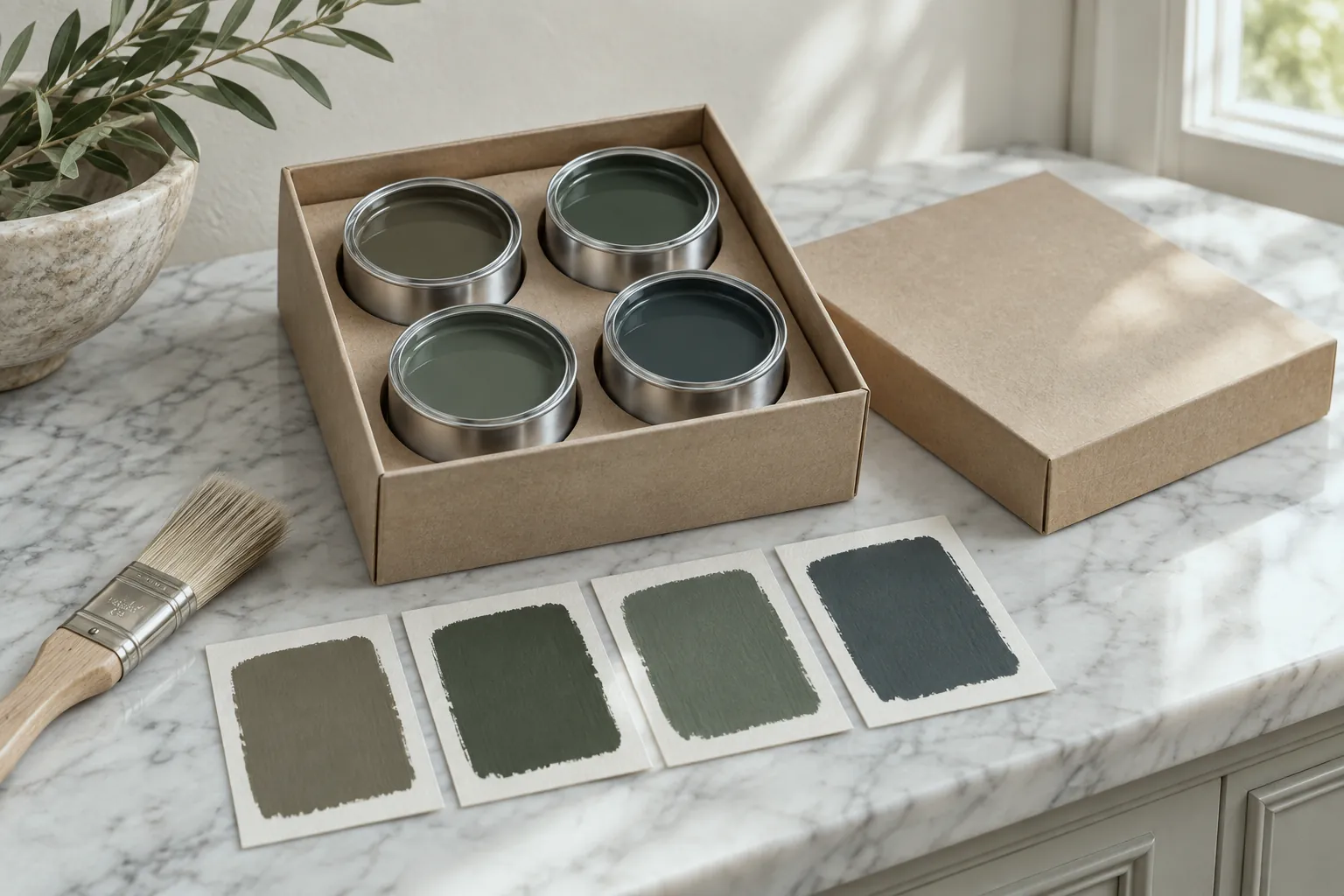
Each set brings together four 100 ml sample pots, each in the colour's real paint, the one you will go on to buy by the tin: Marble Matt Emulsion for the Colours of London and Beata Heuman colours, the plant-based Multi-Surface Dead Matt for the Jinny Blom collection. One pot covers around 1.5 m², enough for two coats on a large A3 card or a generous square on the wall. The pots are made like the rest of our range, in London, with the same finely ground natural-earth pigments, which guarantees that the test square and the finished wall will be exactly the same colour, something that is not a given with every maker. The price of each set is on its page, and every colour of course remains available as a single sample pot.
Nine sets by colour family
The Colours of London sets follow our colour card family by family, so that you compare four neighbouring shades rather than four unrelated colours: it is among neighbours that a colour gets chosen, and it is almost always at that moment that the right one makes itself obvious.
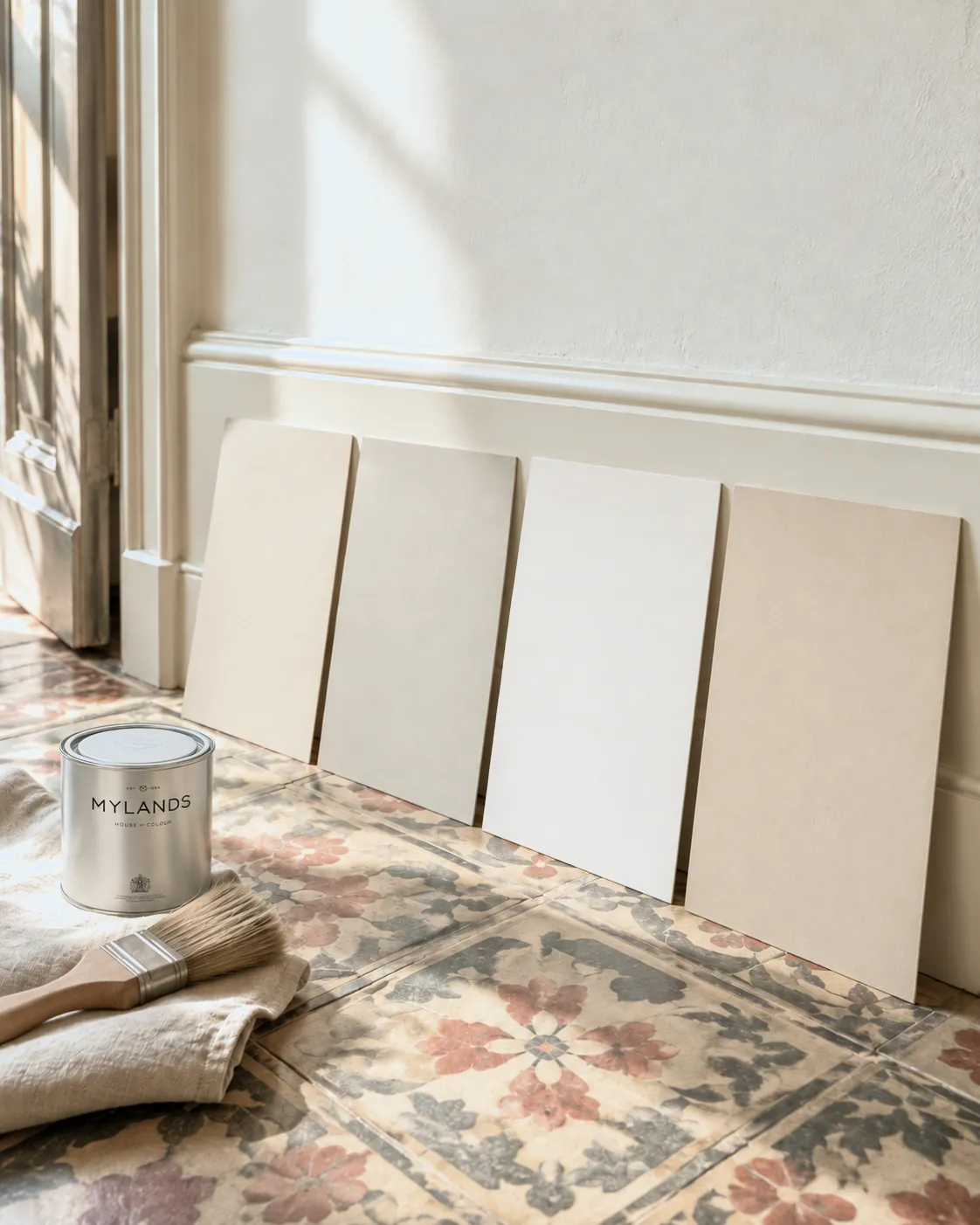
- Whites: Pure White No.1, Holland Park No.5, Acanthus Leaf No.12 and Honest John No.58, from the purest white to a warm off-white, to settle at last the question of a cool white versus a warm one.
- Neutrals: Cadogan Stone No.59, Colosseum No.66, Holbein Chamber No.7 and Temple Bar No.70, four neutrals that go anywhere and only separate in the light.
- Greys: Hoxton Grey No.72, Oratory No.237, Chambers Gate No.85 and Egyptian Grey No.154, from warm grey to blue-grey.
- Pinks: Soho Pink No.266, Threadneedle No.262, Kensington Rose No.22 and Palmerston Pink No.243, powdery pinks that behave almost like neutrals.
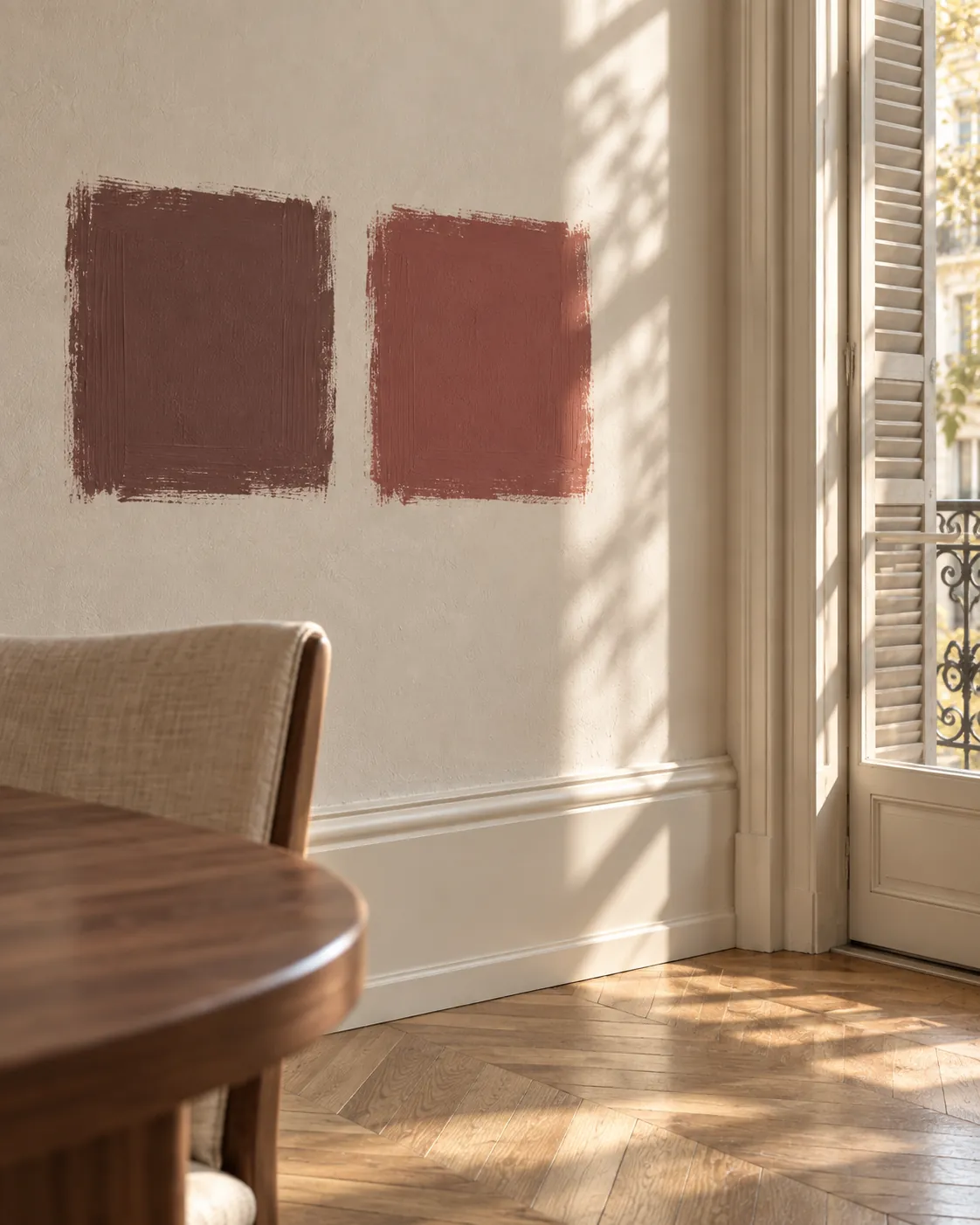
- Reds: Huguenot No.49, Red Post Hill No.68.
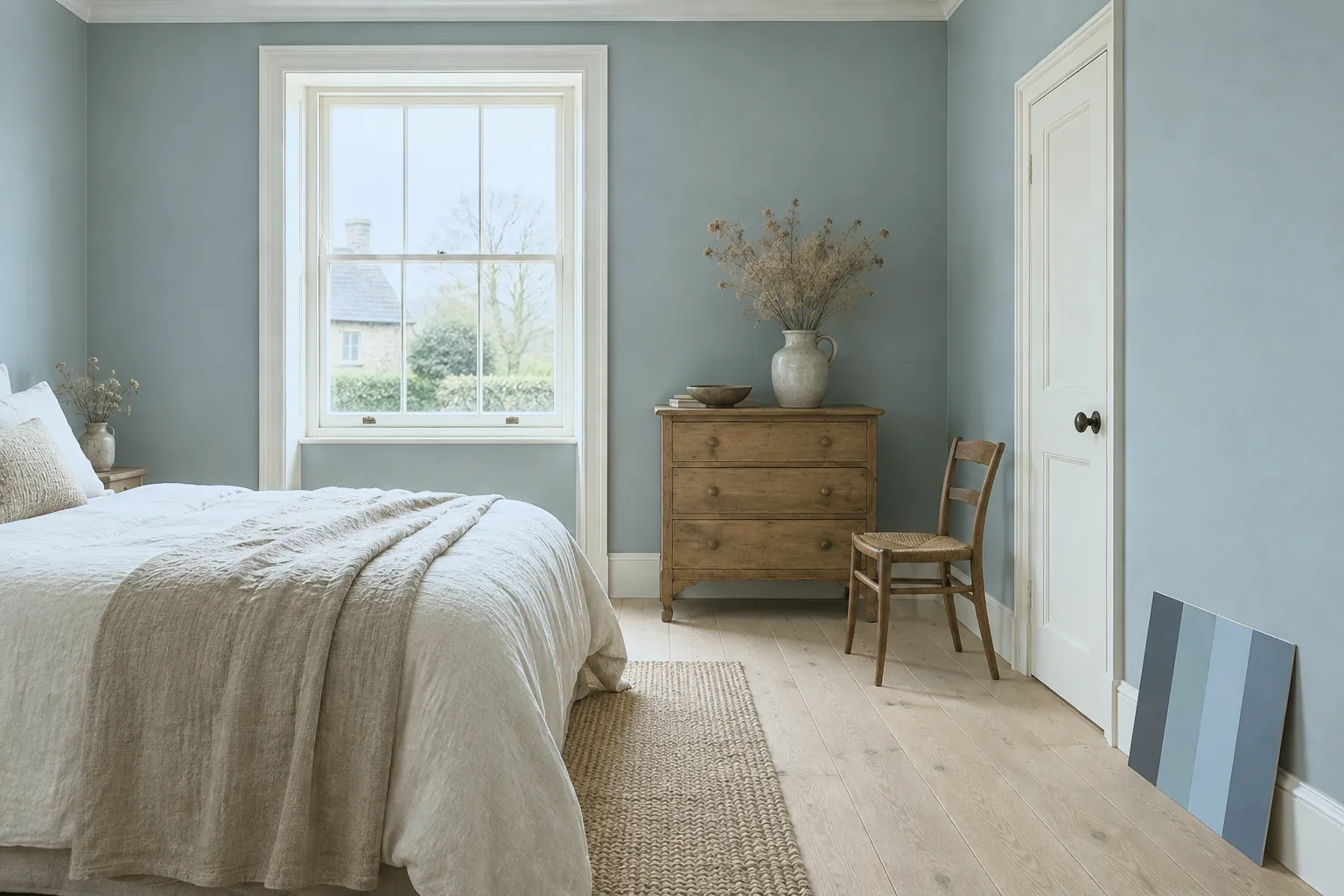
- Blues: Bond Street No.219, Long Acre No.102, Bedford Square No.229 and Maritime No.236, from a calming grey-blue to a deep blue.
- Greens: Messel No.39, Pleasure Gardens Green No.214, Brompton Road No.205 and Market Green No.38, four earthy greens for a kitchen, a library or a study.
- Metallics: FTT-001 Rich Gold, FTT-002 Pale Gold, FTT-003 Pale Bronze and FTT-004 Silver, the four metallics of our Film, Theatre & Television collection.
- Icons: FTT-001 Rich Gold, Bond Street No.219, Holland Park No.5 and Soho Pink No.266, four signature colours to discover the house in a single set.
The designer collection sets
Decorator Beata Heuman's collection The Dependables, twenty-four colours designed to be reliable above all, can be tested in seven sets. The Beata Heuman set gathers her four most requested colours, Caca d'Oie BH.15, Crayfish Party BH.19, Beata White BH.01 and Stockholm BH.11. The other six follow the order of the collection: the light neutrals (Beata White, Chalk, Old Man's Beard, Bone), the mid and dark neutrals (Uncle Maths, Lamb's Ear, London Brick, Pub), the blues (Glass, Overall, Stockholm, Thunder), the greens (Artichoke, Damp Leaf, Caca d'Oie, Forest), the reds and browns (Mormor Zaza, Henna, Crayfish Party, Cigar) and the yellows (Butter, Boiled Dill, Wheatsheaf, John's Pantry).
The Jinny Blom set is of a different nature: four colours by the landscape designer, Blomster JB01, Cooper's Earth JB05, Cragside JB10 and Murmuration JB11, in Multi-Surface Dead Matt, designed for gates, shutters, glasshouses, garden furniture and exterior woodwork as much as for indoors. Test them outside, in daylight, against stone and greenery.
How to get the most from a set
Paint each colour on a large card or board, two coats, rather than straight onto the wall: you can then move the four boards from wall to wall, stand them behind the sofa, in the darkest corner, facing the window, and look at them in the morning, then in the evening. Always set them against the white woodwork you intend to keep, because that relationship, wall against skirting, is what decides everything. Eliminate first, then choose: with four neighbouring shades, two almost always fall away within the first hour, and the decision is made between the remaining two in the evening light. Our guide on how to test a paint colour walks through every step.
What next
Once the colour is settled, its product page lists the available finishes, the recommended undercoat tone and the coverage, and our price per square metre page will tell you what your room comes to in two coats. If you are still hesitating between two families, the physical colour card, sent free of charge, shows the whole collection side by side, and all our sample pots remain available singly to add a fifth shade to a set.
Frequently asked questions
How much does a 100 ml sample pot cover?
Around 1.5 m², which is two coats on an A3 card or on a wall square of roughly 80 cm a side. A set of four pots therefore lets you test four colours in two coats each, which matters: a single coat never shows the true depth of a shade.
Are the sample pots in the same finish as the final paint?
Yes. The Colours of London and Beata Heuman sets are in Marble Matt Emulsion, the wall finish you will go on to buy; the Jinny Blom set is in Multi-Surface Dead Matt. Same formula, same pigments: what you see on the test board is what you will get on the wall.
Can I put together my own set?
The sets are our ready-made selections, but every one of our colours is available as a single 100 ml sample pot. You can therefore start from a set and add a fifth shade, or build your own selection entirely from the sample pots page.
Should I paint the sample directly on the wall?
We recommend a large card or board instead, which you can move around the room and stand against the woodwork. If you do paint the wall, make a square of at least 50 cm on two different walls, two coats, and let it dry before judging; an undercoat in the recommended tone will then cover the tests before the final coat.