
01
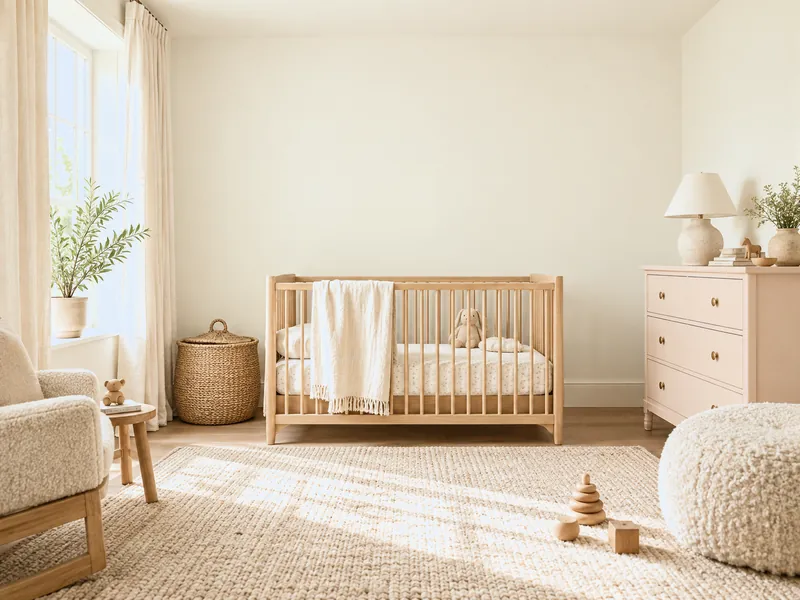
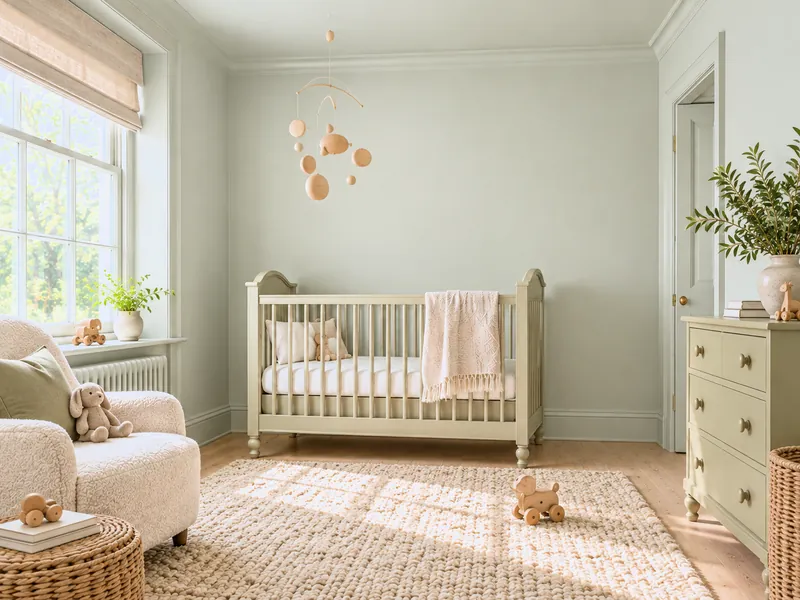
Tender green and warm white
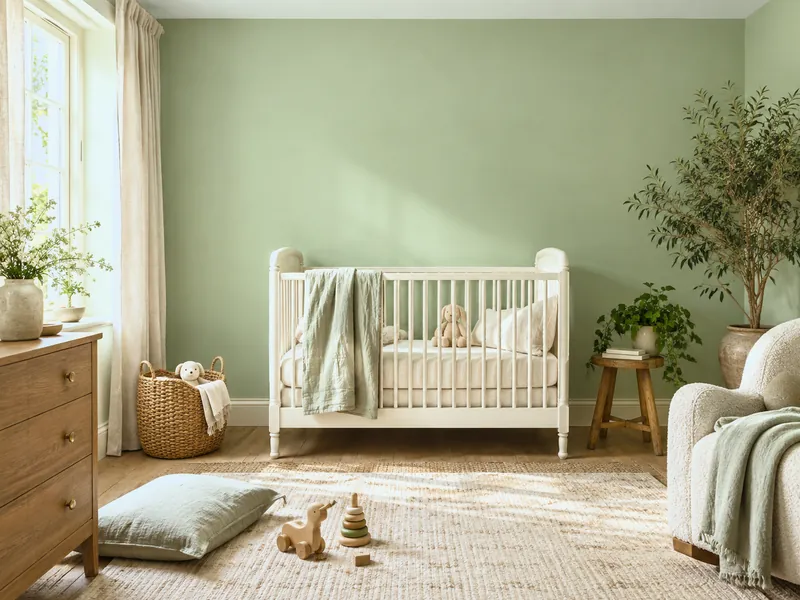
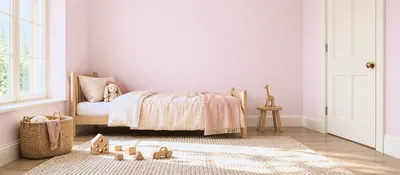
A young-shoot green on the walls, an old cot in warm white: the garden room, calming, unisex.
Menu
How To
Design Advice
Customer Service
My account
Help with paint Advice by room
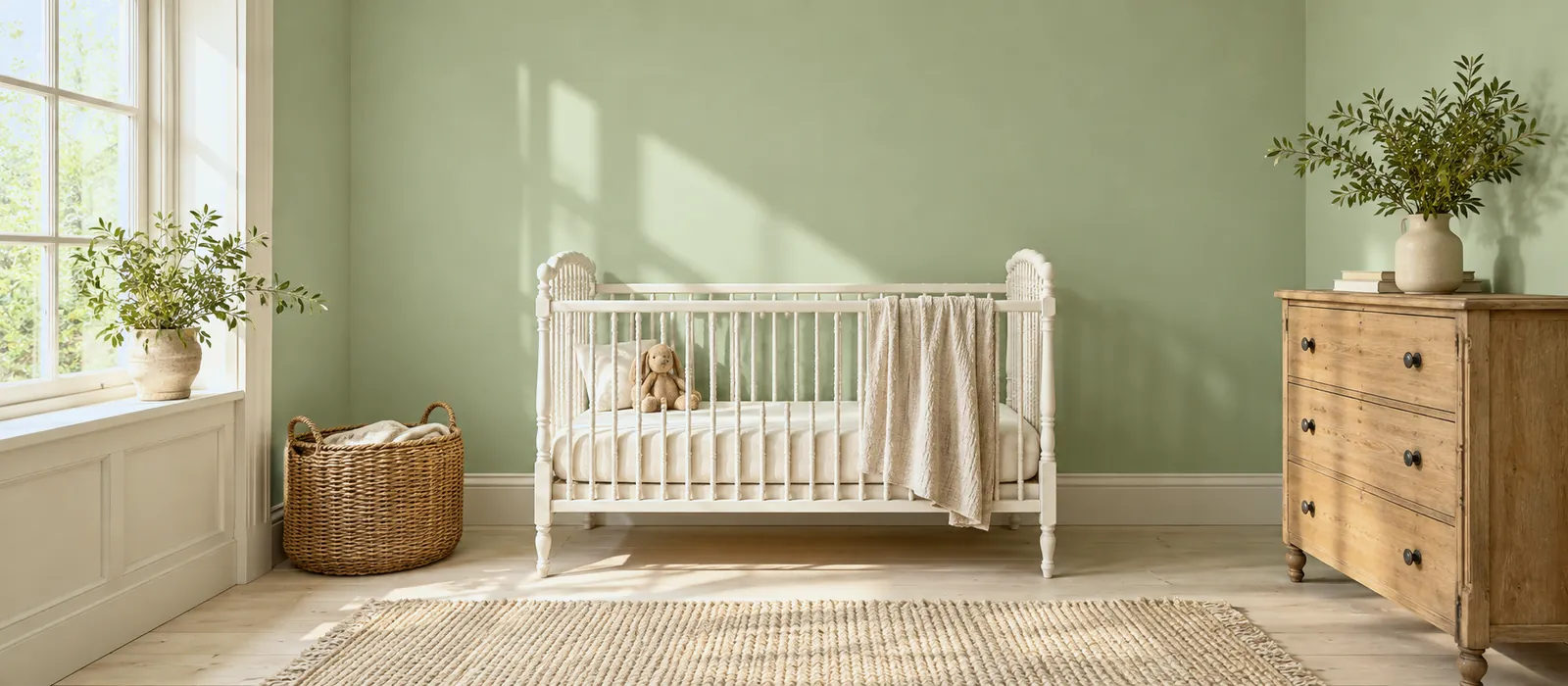
An eco-friendly nursery is first a room where the air is healthy: a low-VOC water-based paint compliant with the toy standard — which every Mylands paint is — solid-wood or second-hand furniture rather than glued board, a mattress and textiles in natural fibres, and time: a month between the paint and the arrival. Then it is a room that will not be redone in three years: soft colours in the tones of nature, the accent on a repainted piece of furniture, and a washable paint you maintain instead of replacing. Six palettes, and the order of priorities.
Page updated September 2026 · by the Mylands France colour team
Understanding
A newborn spends eighteen hours a day in its room and breathes twice as fast as an adult: the first ecological question is indoor air. What harms it most is not today's paint but new particleboard furniture, which gives off formaldehyde for months, synthetic foam mattresses, treated textiles and room fragrances. A low-VOC water-based paint — under 30 g/L for a matt wall paint — has finished emitting within days; a glued-board piece emits for months. Hence the order of priorities: the paint, yes, but above all solid wood or second-hand, a natural-fibre mattress, linen washed before use, and time — a month's airing before the arrival, worth every label put together.
Mylands paint does its part: water-based, low VOC, compliant with the EN 71-3 toy standard for anything that gets chewed, class 1 washable so it lasts ten years instead of three — because the room you don't repaint is the most eco-friendly one. The criteria in detail: Eco-friendly wall paint; the finishes for children: Child-safe paint for nurseries and playrooms.
Deciding
| Element | The healthiest choice | Why | With paint |
|---|---|---|---|
| Wall paint | Water-based, low VOC, washable | Emissions over within days; lasts ten years | Marble Matt Emulsion, two coats, a month ahead |
| Cot | Solid wood, or an old one repainted | No glue, no formaldehyde; repainted, it is good for another twenty years | Eggshell, EN 71-3, two weeks' curing |
| Chest, changing table | Second-hand solid wood, repainted | The most eco-friendly piece is the one that already exists | Multi-Surface Primer, Eggshell; Satin on the top |
| Mattress | Natural fibres (wool, natural latex, coir) | No synthetic foam or chemical flame retardants | — |
| Textiles | Organic cotton or linen, washed before use | Removes the finishing treatments | Ecru, off-white, in the walls' palette |
| Floor | Existing boards, oiled; wool rug | No glued flooring | A painted floor: How to paint a wooden floor, three weeks ahead |
| Toys, mobile | Wood, fabric; painted to the toy standard | What goes in the mouth | Eggshell over Multi-Surface Primer |
| Lighting, air | Warm night-light, window open every day | Daily airing is worth every air purifier | Matt does not throw the night-light back |
What has no place: room fragrances, scented candles, new board furniture unpacked the day before, oil-based paints.
The colours
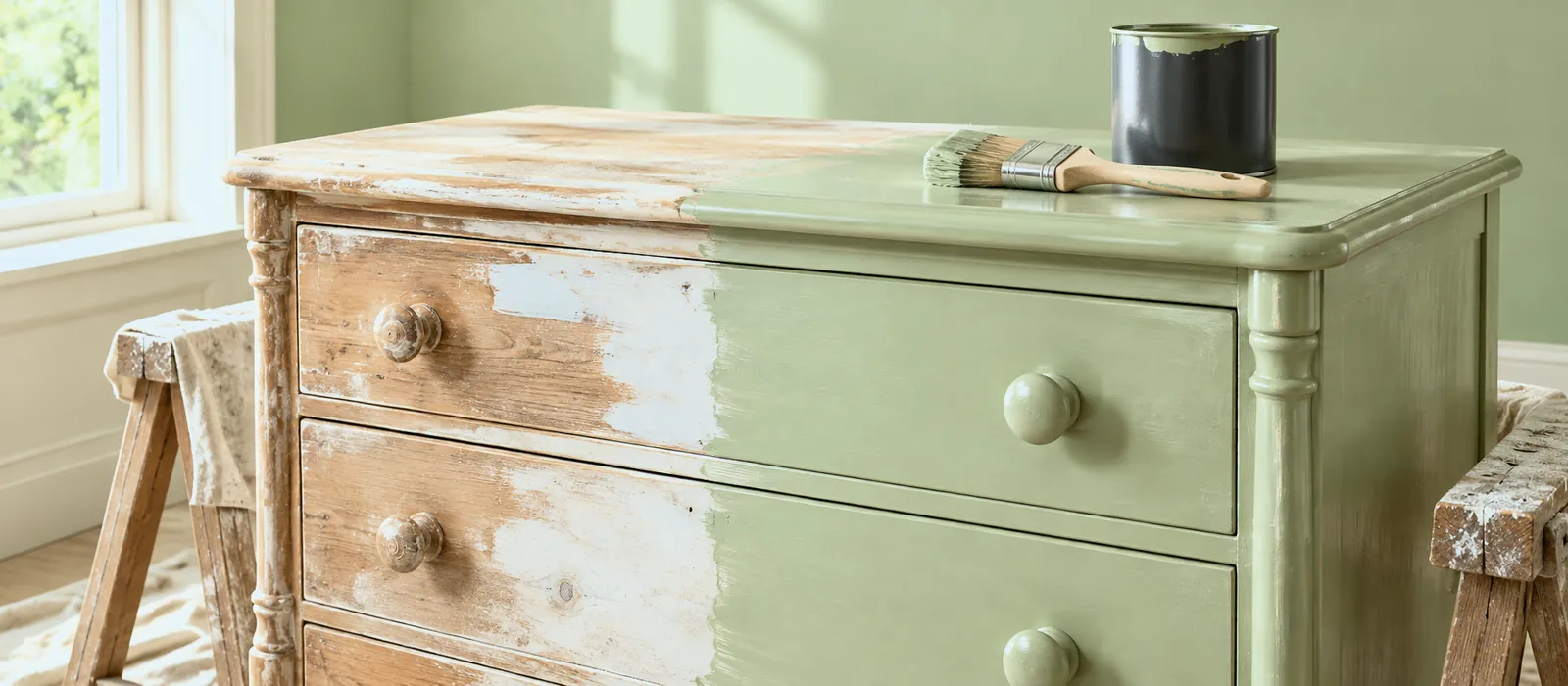
The colours of earth, leaves and stone soothe a baby, age well and go with wood and linen: the room will not need redoing when the child is six. The accent goes on a repainted piece of furniture, never on the walls.
01
A young-shoot green on the walls, an old cot in warm white: the garden room, calming, unisex.
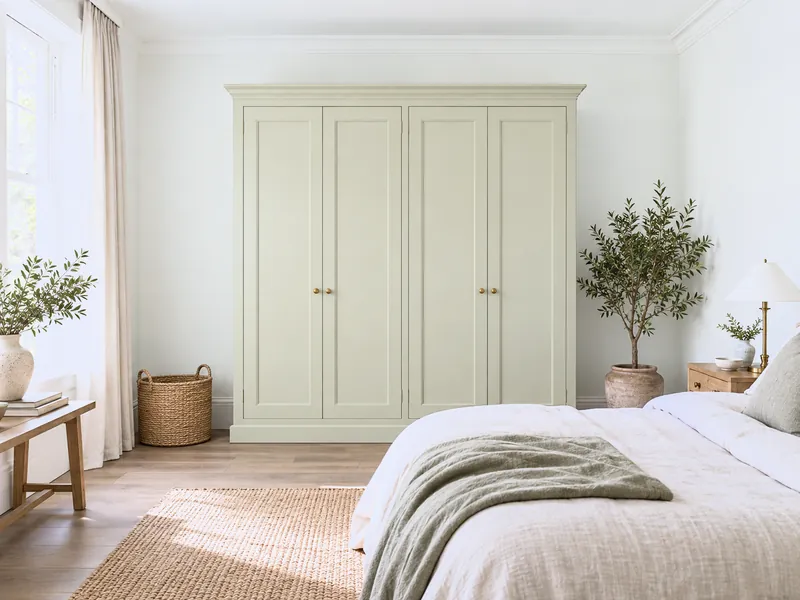
02
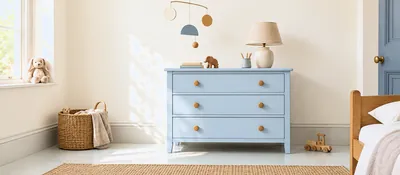
A warm linen on the walls, a chest in a clay pink: raw materials, in paint, with ecru wool.
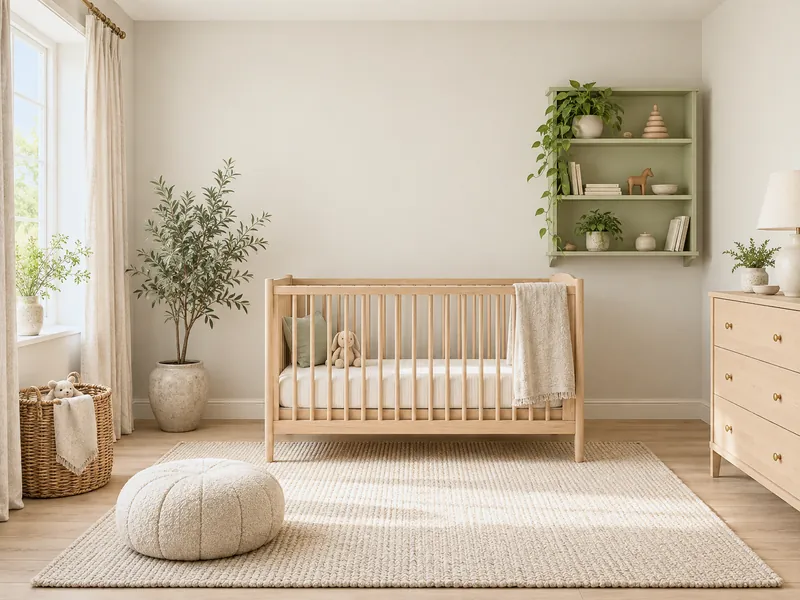
03
A white with a hint of green on walls and ceiling, a sage wardrobe: the bright room that grows up well.
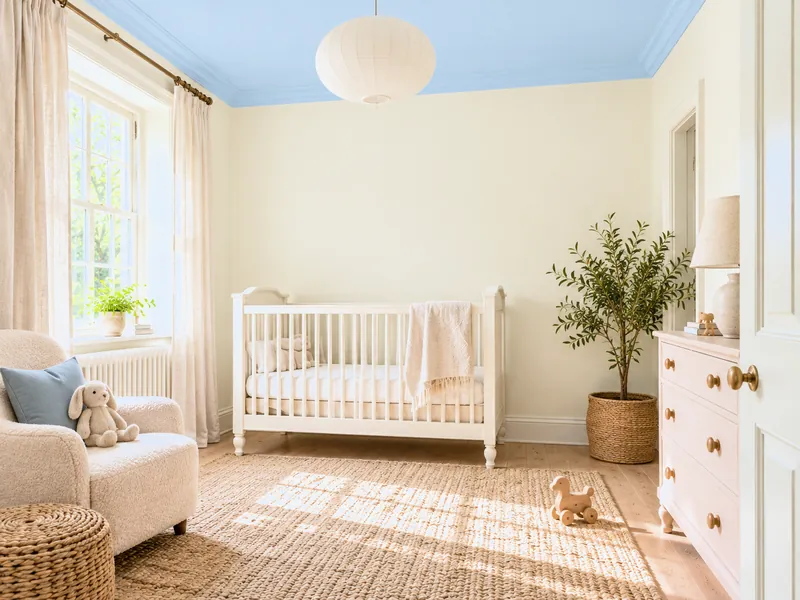
04
A pale stone on the walls, a leaf green on a shelf or an armchair: mineral calm, with pale wood.
05
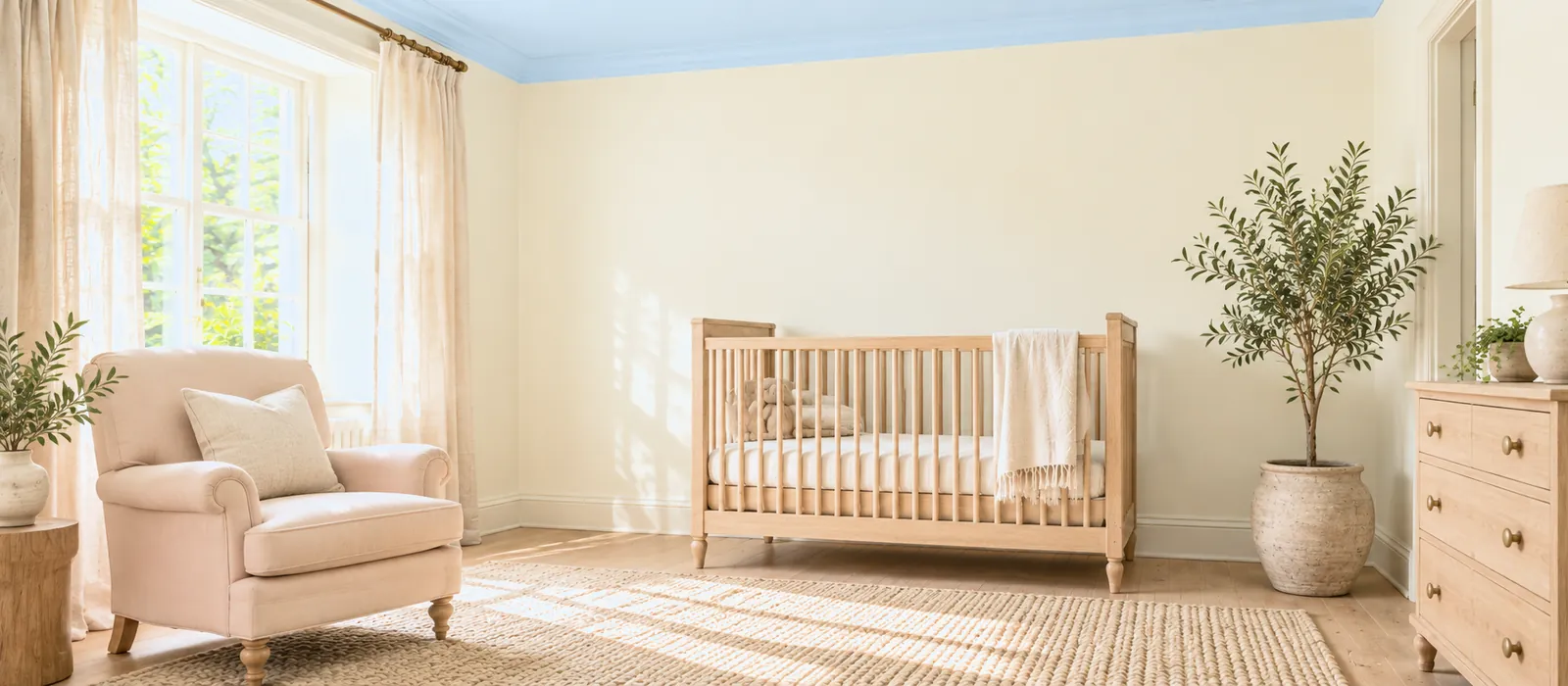
Linen walls, pale blue ceiling: the sky the baby looks at, warmth around it. See The cloud ceiling.
06
Walls, ceiling and woodwork in a lichen grey-green: the cocoon, with a wooden mobile and a wool rug.
The method
Cot, chest, armchair, shelf: solid wood, second-hand, no musty smell. Check the cot complies (bar spacing 4.5 to 6.5 cm, mattress height). An old piece painted before 1990 is stripped with care — possible lead — or covered after priming without dry sanding.
Degrease, fine sanding, Multi-Surface Primer, two thin coats of Eggshell, outdoors or with the window open. Two weeks' curing for anything that gets chewed. See Upcycling children's bedroom furniture.
Ceiling in a soft colour, walls in Marble Matt Emulsion, woodwork in Eggshell, two coats. A night's airing for the smell; a month for the cure. The detail: Painting a nursery.
Natural-fibre mattress unpacked and aired in the room; linen, curtains, rug washed or aired. Everything that smells new needs those three weeks.
Cot reassembled, chest in place, shelves fixed to the wall. No room fragrance, no candle, no plastic unpacked the day before.
Ten minutes with the window open morning and evening, before the arrival and after: it is the ecological move that weighs most, and it costs nothing.
To avoid
Frequently asked questions
Yes: water-based, low VOC (below the 30 g/L threshold for a matt wall paint), compliant with the EN 71-3 toy standard for furniture and the cot, class 1 washable. It is not a lime or clay paint — we would rather say so — but a water-based paint with crushed marble, durable and with no petroleum solvent in its formula.
Yes, and it is the most eco-friendly choice, on two conditions: check it complies (bars 4.5 to 6.5 cm apart, no broken bars, mattress height) and treat the old paint with care if the cot dates from before 1990 — covering after priming rather than dry sanding. Then Eggshell, two weeks' curing.
For the paint, one night is enough for the smell, a week is comfortable. For new furniture and the mattress, three weeks. The month's head start covers everything, provided the window is opened every day.
A soft colour in the tones of nature on the walls — tender green, linen, stone, green-white — and the accent on a piece of furniture you will repaint at six. The walls stay, the furniture changes colour: that is how a room grows up without being redone. See Soft colours for a child's bedroom.
The existing boards, oiled or painted, rather than a glued flooring; a wool rug for the first months. A floor painted in Decorative Floor Satin is done three weeks before the arrival — see How to paint a wooden floor.
See also
 A month before the arrival, water-based, low VOC, toy standard, a week's airing. The soft colours, the ceiling...
 Water-based, low VOC, high-covering, durable, tinted to order: the six criteria of an eco-friendly paint, and...
 Water-based, low VOC, toy standard, washable: what a paint must be for a child's room, and the finish for each...
 A junk-shop piece, a tin of colour, a Sunday: six ideas for a child's room, with paints that meet the toy stan...
“The most eco-friendly nursery is the one you air every day and never redo.”
Thanks for signing up to our newsletter!
Sign in to save items to your wishlist. Sign in to save your basket, so you can continue shopping later.
Don't have an account? Create one
Share this link and friends can buy items from your list. Anything bought disappears from it automatically. Anyone with this link can see your selection.
Moving in, redecorating, or dropping hints? A free account turns this selection into a gift list — add or remove colours whenever you like, and we'll email you when someone buys something from your shared list.
Free · Delivered to your door
Get a free colour card posted to you, showing our complete Colours of London range, with swatches made from the real paint for a true representation of our award-winning colours.