01
Green-white and sage
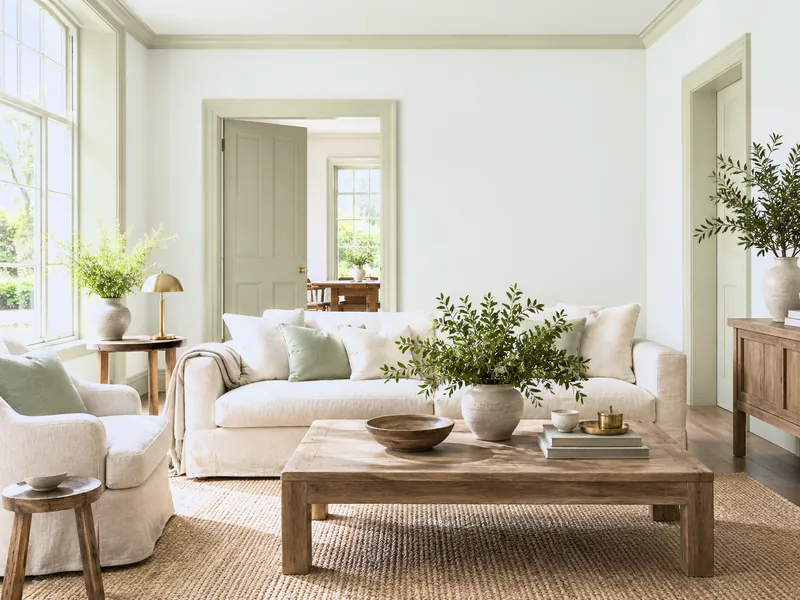
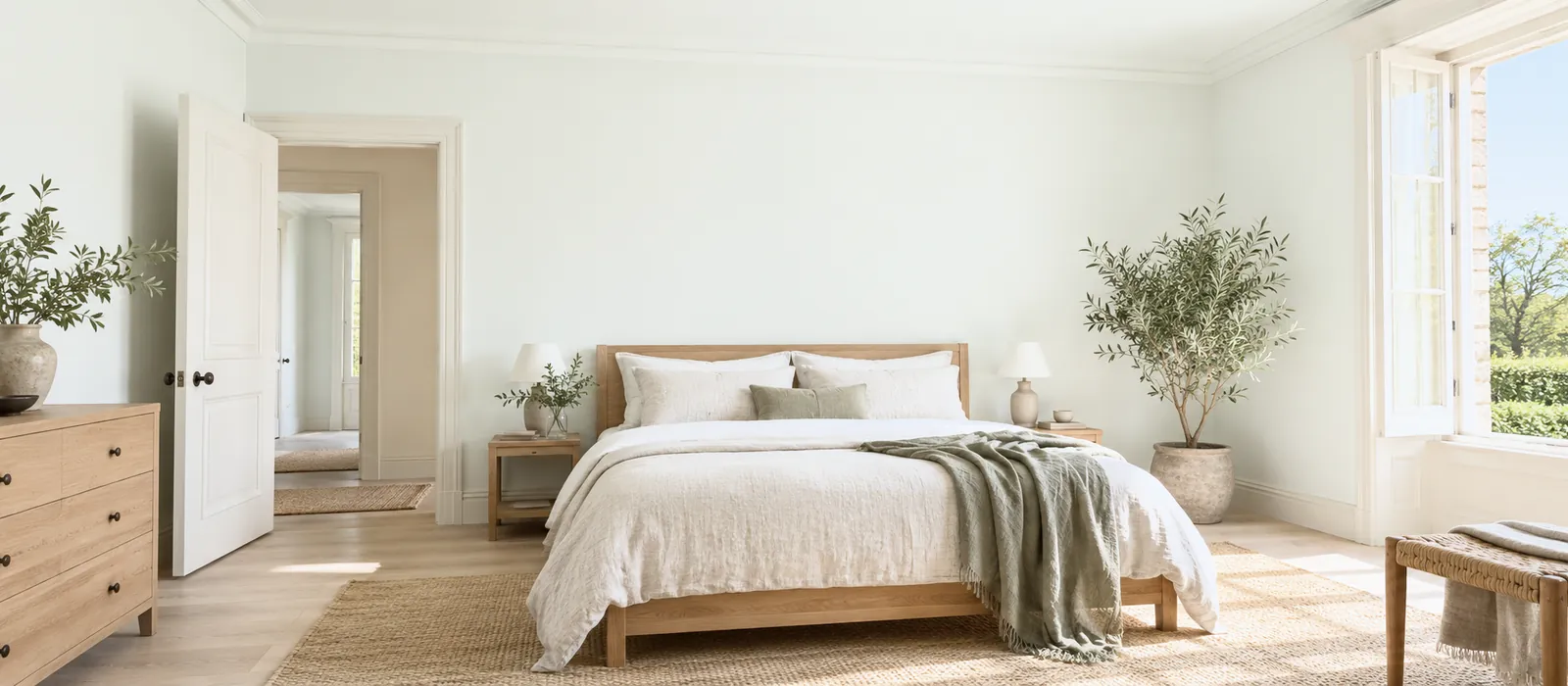
A white with a hint of green on the walls, a sage on the doors: the brightest room in the guide, calming, in north light and south alike.
Menu
How To
Design Advice
Customer Service
My account
Help with paint Our finishes
An eco-friendly wall paint is first a water-based paint, low in VOCs and in indoor-air emissions; then a high-covering, durable paint — fewer litres, fewer coats, and walls you repaint in ten years rather than three; and finally a paint you do not over-buy and do not throw away. Marble Matt Emulsion ticks those boxes: water-based, below the VOC threshold, up to 15 m²/L, class 1 washable, tinted to order in the exact tin size, in a recyclable metal tin. The rest — what you order, test and keep — is down to you, and this guide covers it.
Page updated September 2026 · by the Mylands France colour team
Understanding
The word "eco-friendly" is not regulated for paint; you have to look at what stands behind it. Six criteria count. Water-based: the binder is dispersed in water, not in white spirit; tools wash in water, the smell is faint. Low VOC: regulation caps volatile organic compounds at 30 g/L for a matt wall paint, and a serious paint sits below that — see Low-VOC paint with no strong smell. Low indoor-air emissions: the mandatory French label, from A+ to C, appears on each finish's technical data sheet. High-covering: a paint that covers in two coats at 15 m²/L uses half as much as a paint at 8 m²/L that needs three. Durable: a washable finish that is looked after lasts ten years; a finish that marks gets repainted every three, and that is the real waste. No surplus: tinted to order in the exact size, rather than mass-produced and discounted off.
And the false criteria. "Natural" does not mean low-emission: some so-called natural paints use citrus or turpentine solvents, strong-smelling and irritant. "Zero VOC" often applies to the white base alone, before the colourants go in. Lime and clay paints have real qualities, and real limits: barely washable, fragile, impossible over an existing paint without stripping everything back — which is not eco-friendly either. Mylands paint is a water-based paint with crushed marble, made in London since 1884, not a lime paint; we would rather say so.
Checking
| Criterion | What to look at | Marble Matt Emulsion |
|---|---|---|
| Water-based | Tools clean in water; no white spirit on the label | Yes, like every Mylands finish |
| VOC | Content in g/L on the data sheet, under 30 g/L for a matt wall paint | Below the threshold; see the technical data sheet |
| Emissions | The indoor-air label (A+ to C) | On each finish's technical data sheet |
| Coverage | m² per litre per coat, and number of coats | Up to 15 m²/L, two coats on a prepared surface |
| Durability | Wet-scrub resistance class (EN 13300) | Class 1, the best rating; stays matt after washing |
| Surplus | Tinted to order? Tin sizes? Sample pots? | Tinted in London to order; 100 ml, 1 L, 2.5 L, 5 L; sample pots so you don't get it wrong |
| Packaging | Tin material, recyclability | Recyclable metal tin, recyclable shipping carton |
Every Mylands paint also complies with the EN 71-3 toy standard — the detail for a child's room: Child-safe paint for nurseries and playrooms.
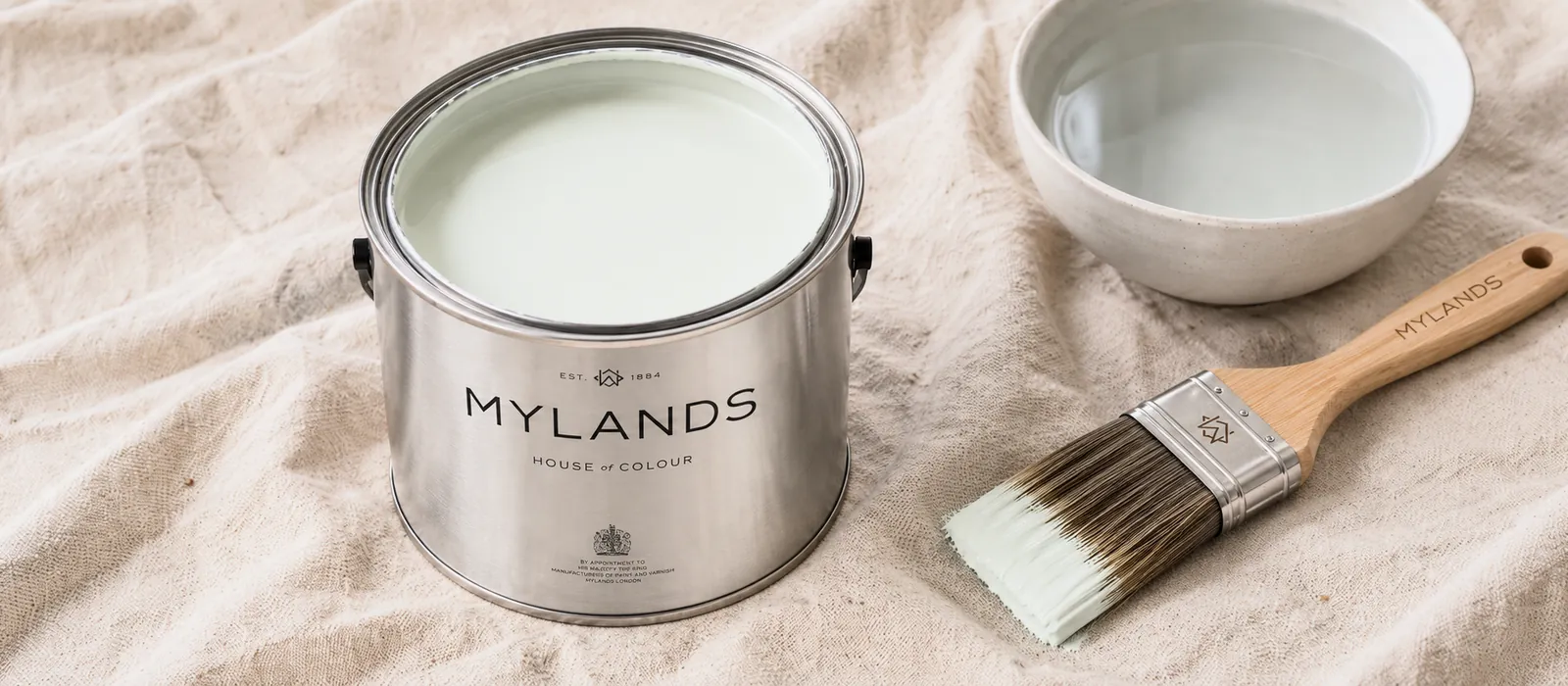
Wasting less
The most eco-friendly paint is the one you don't over-buy and don't apply twice. Six moves that weigh more than the choice of brand.
A 100 ml sample pot covers 1.5 m²: two A4 boards, looked at every hour of the day. It is the move that avoids the extra litre and the room repainted because the colour turned. See How to test a paint colour.
Wall area minus openings, divided by the coverage, times two coats, plus 10%: the calculator does it for you. Choose the size just above, not two above.
A washed, filled and primed surface takes two coats; a dirty or porous one drinks three or four. Wall Primer on new plaster saves a coat of the finish, which costs more. See Preparing a room for painting.
Squeeze the roller and brush out on newspaper, then rinse in a bowl of water, changed once: the rinse water, lightly loaded, goes to the waste water; the dry paper to the bin. Never a tin of paint down the sink.
A well-sealed part tin, marked with the room, the colour and the finish, serves ten years of touch-ups. See Recycling paint for storage and what to do with surplus.
A soft sponge on a mark, a brush touch-up on a knock: a class 1 washable wall lasts ten years. A paint's ecological yield is measured in years between two jobs.
The colours
The colours of earth, stone and leaves show dirt less and date less quickly than vivid tones: you keep them longer, and that is already eco-friendly. Six pairs for walls and woodwork.
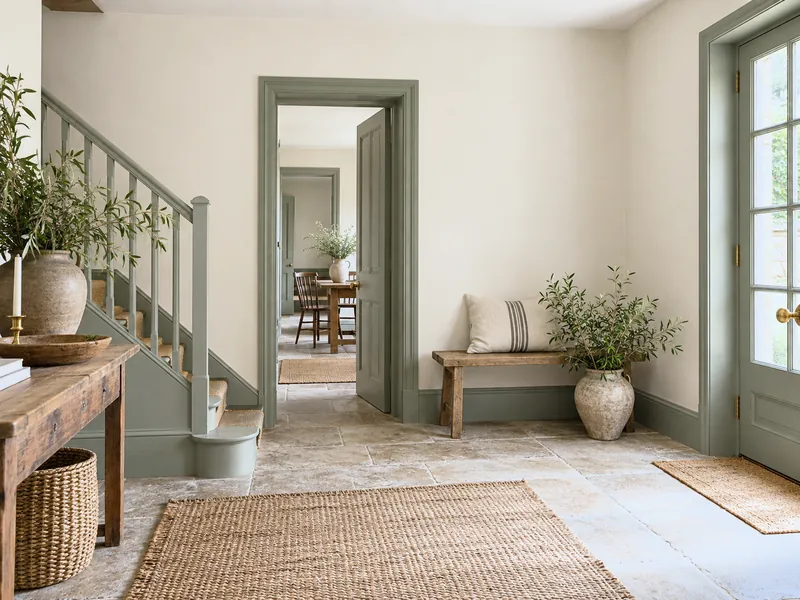
01
A white with a hint of green on the walls, a sage on the doors: the brightest room in the guide, calming, in north light and south alike.
02
A warm stone on the walls, a grey-green on the skirting and window frame: the palette that forgives marks.
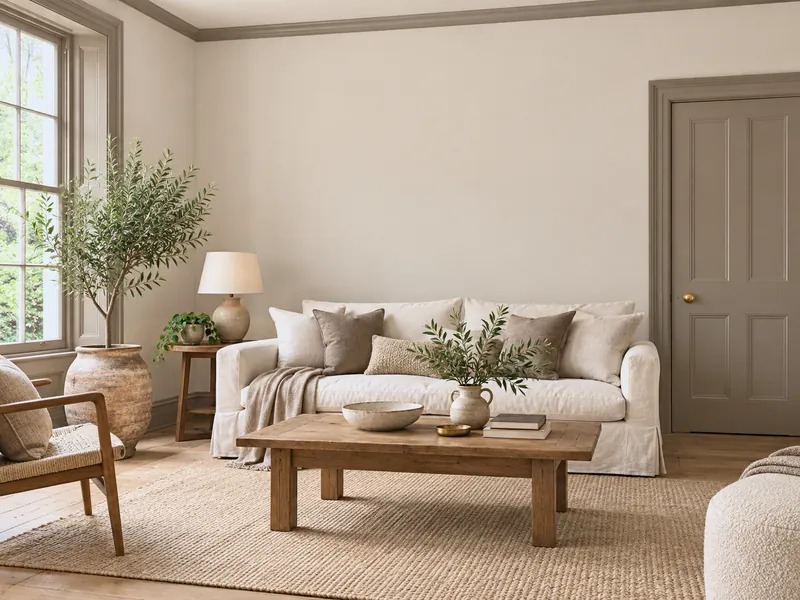
03
A natural linen beige and a brown-taupe on the woodwork: raw materials, in paint.
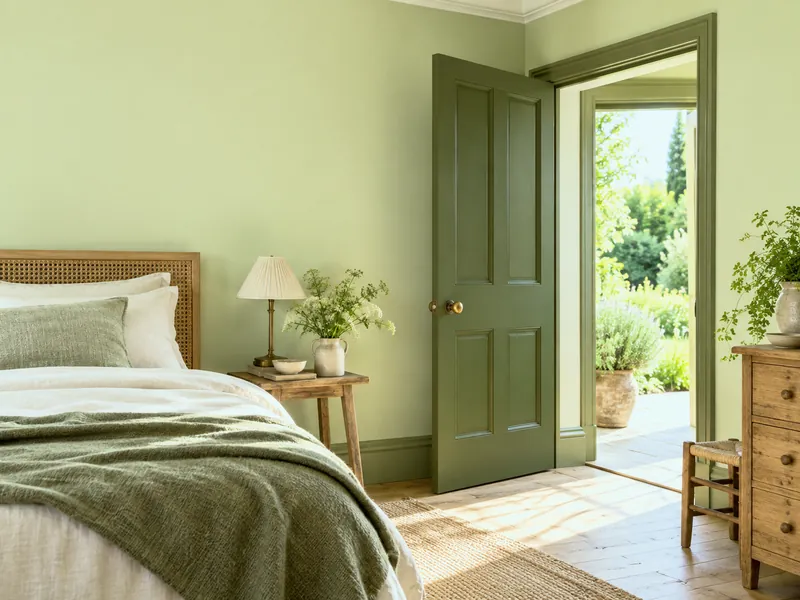
04
A tender leaf green on the walls, a deep moss green on a door: the bedroom or study that looks onto the garden.
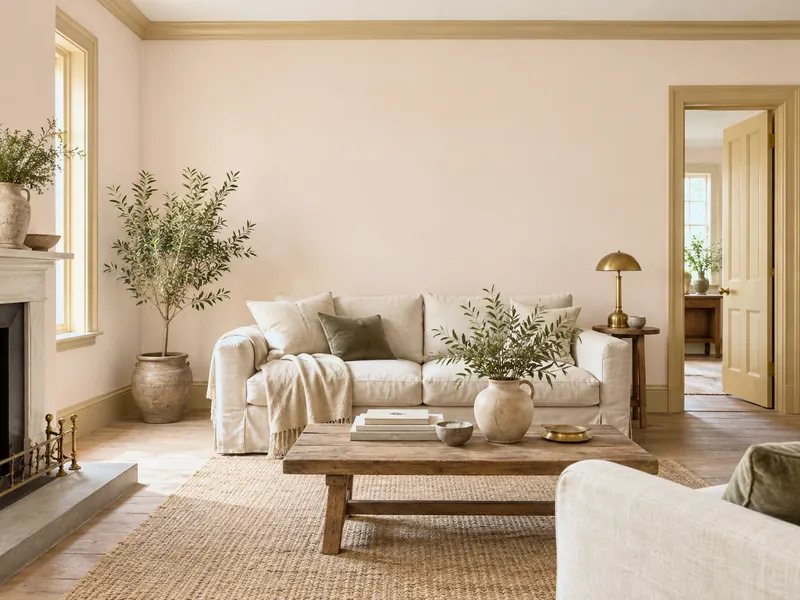
05
A pinkish clay on the walls, a golden ochre on the skirting: the warmth of a render, without its fragility.
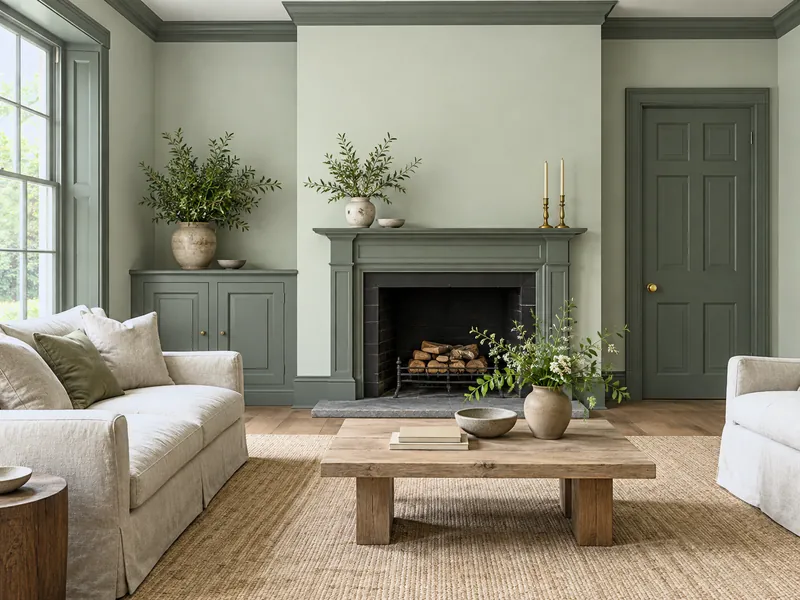
06
A pebble grey-green on the walls, a slate on the joinery: the mineral palette, which ages without showing it.
To avoid
Frequently asked questions
It is a water-based paint built on acrylic resin and crushed marble, low in VOCs, with no petroleum solvent in the formula and made in London — not a lime or clay paint. It is washable and durable where those are fragile; we would rather describe what it is than sell it under a word that is not regulated.
Almost: a water-based paint's smell is faint and gone after a night's airing. No paint is entirely emission-free while it dries. The detail: Low-VOC paint with no strong smell.
Colourants add a little, which is why "zero VOC" claims often cover the base alone. Mylands tints are formulated to stay below the regulatory threshold once tinted; deep colours carry slightly more than whites.
This one does: the crushed marble gives the covering power, up to 15 m²/L in two coats on a primed surface. A paint that covers poorly needs one more coat, and that is a third more material — the opposite of eco-friendly.
A bowl's rinse water, lightly loaded, goes to the waste water; never a part tin. Leftovers are kept for touch-ups, given away, or taken to the recycling centre; the empty, dry tin goes to metal recycling. It is all in Recycling paint.
See also
 Does an "odourless" paint exist? What VOCs are, what the regulations require (30 g/L for a matt wall paint), w...
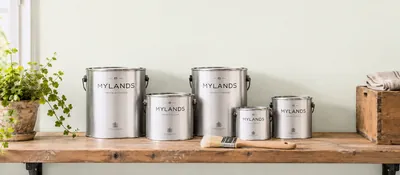 Keep, give, take to the recycling centre — never down the sink. Storage, shelf life, and six ideas for the bot...
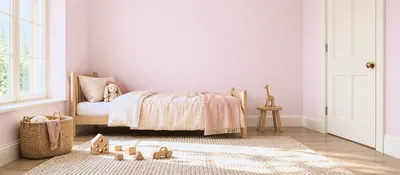 Water-based, low VOC, toy standard, washable: what a paint must be for a child's room, and the finish for each...
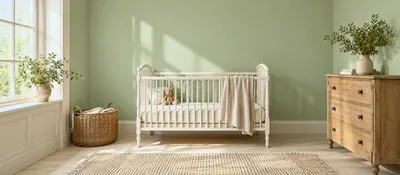 The air first: low-VOC water-based paint, second-hand furniture repainted, natural textiles, a month's airing....
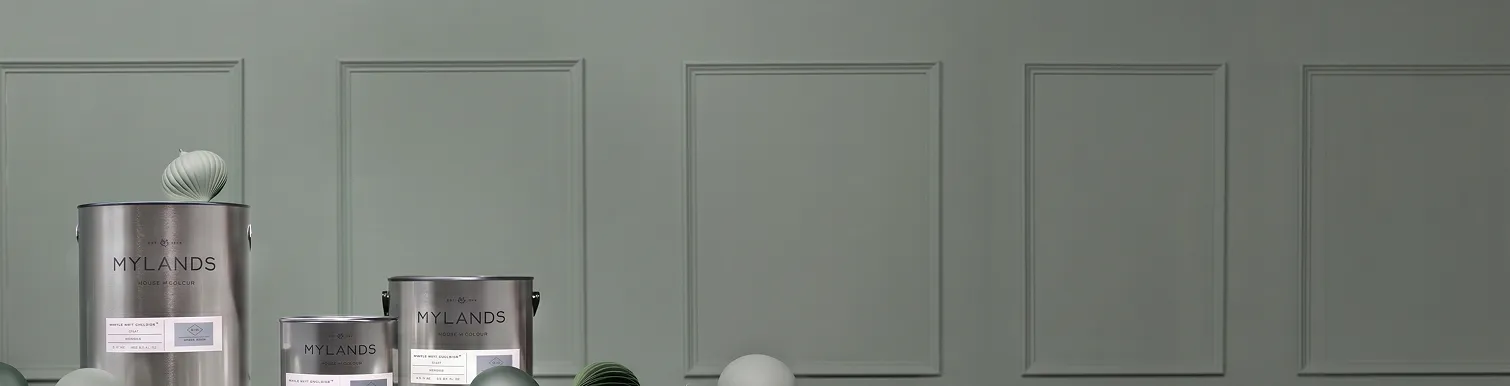
“The most eco-friendly paint is the one you choose once, apply twice and keep for ten years.”
Thanks for signing up to our newsletter!
Sign in to save items to your wishlist. Sign in to save your basket, so you can continue shopping later.
Don't have an account? Create one
Share this link and friends can buy items from your list. Anything bought disappears from it automatically. Anyone with this link can see your selection.
Moving in, redecorating, or dropping hints? A free account turns this selection into a gift list — add or remove colours whenever you like, and we'll email you when someone buys something from your shared list.
Free · Delivered to your door
Get a free colour card posted to you, showing our complete Colours of London range, with swatches made from the real paint for a true representation of our award-winning colours.