



01
The inside of a cupboard
The wall colour, or a bold colour you would not dare outside: opening the door becomes a pleasure. Half a litre does a wardrobe.
Menu
How To
Design Advice
Customer Service
My account
Help with paint Our finishes
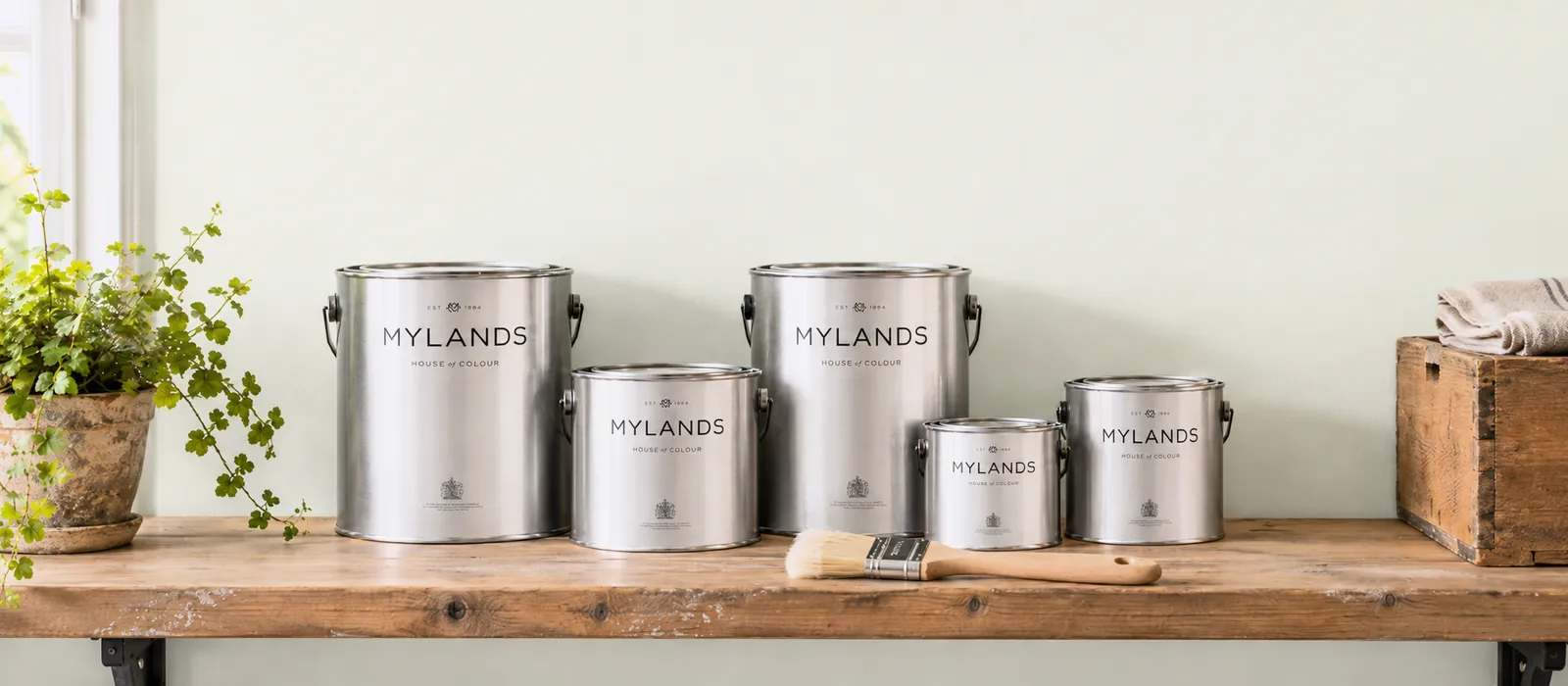
Leftover paint is kept, given away or taken to the recycling centre — never down the sink, never in the household bin. Well sealed and kept from frost, an opened tin of Marble Matt Emulsion lasts two years for touch-ups; still good but no longer wanted, it goes to a charity, a reuse centre or a neighbour; no longer usable, it goes to the recycling centre with DIY waste, free of charge. The empty, dry metal tin goes to metal recycling. And the best recycling is not having any: a sample pot and the calculator before you buy.
Page updated September 2026 · by the Mylands France colour team
Understanding
A water-based paint is not water: it contains a binder, pigments and additives that have no business in a sewage works, and a tin of paint in the household bin ends up in an incinerator or a landfill where it does not belong either. Liquid paint is hazardous household waste: it belongs to a dedicated stream — in France, the EcoDDS scheme funds its collection, and any private individual can drop it at a recycling centre free of charge, and often at the DIY stores that take part.
The good news: a remainder of Mylands paint is rarely waste. Water-based, in a well-sealed metal tin, it keeps for a long time; tinted to order in a colour from the card, it comes back in exactly the same shade in ten years for a touch-up. This guide follows the tin in order: keep it, use it, give it away, and only at the end, recycle it.
The method
Less than two centimetres in the bottom: leave it to dry open, then the empty, dry tin goes to metal recycling. More: it is worth keeping. To weigh without opening, compare with the weight of a new tin — 1 L of Marble Matt Emulsion weighs about 1.4 kg.
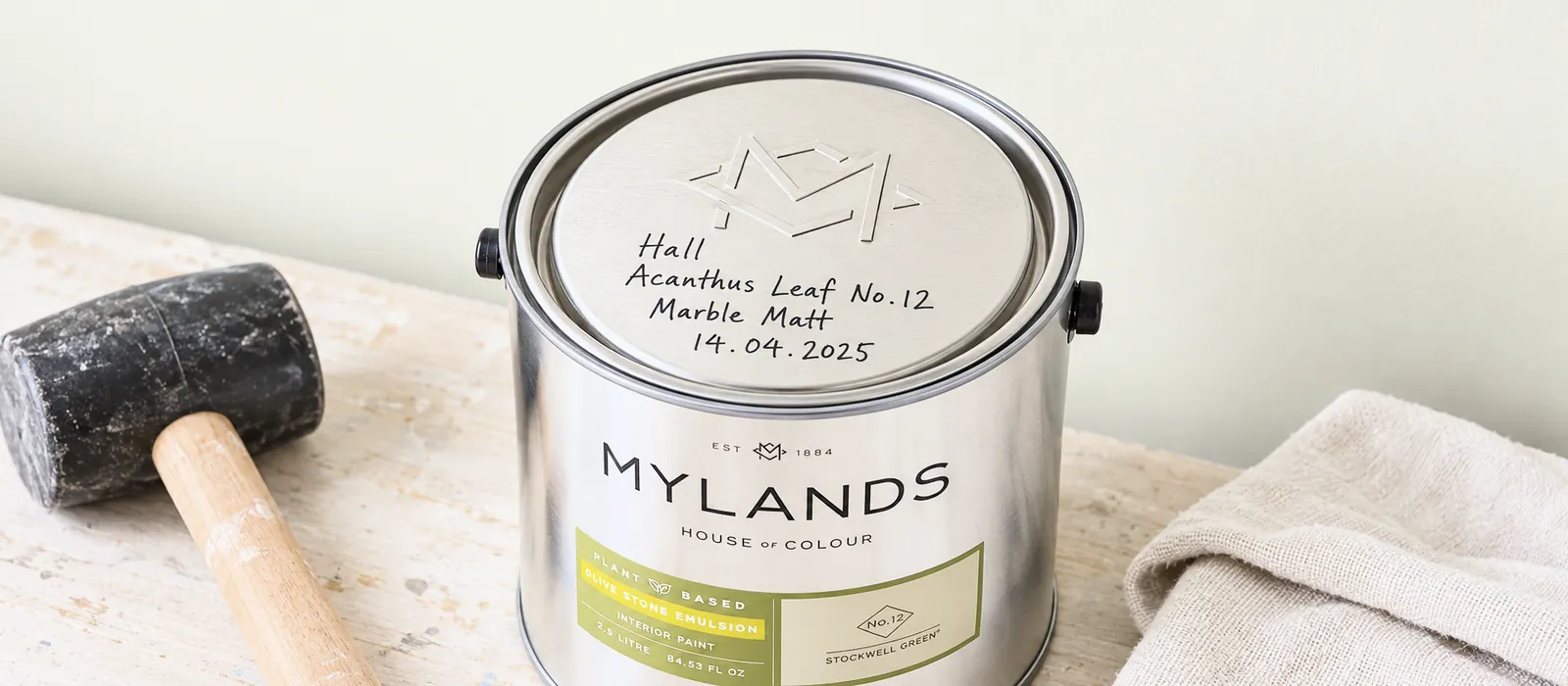
Wipe the lid groove with a damp cloth so it does not stick and the seal is clean, set the lid on, tap it down with a mallet working round. A layer of cling film under the lid helps if the groove is damaged.
On the lid, in marker: the room, the surface (walls, skirting), the colour and its number, the finish, the date. In ten years, that is what makes the invisible touch-up possible — and lets you reorder the same shade.
A cupboard, a dry cellar: between 5 and 25 °C. A water-based paint that freezes is lost; a loft in summer cooks it. Not upside down: an inverted tin glues the groove and leaks.
Will you repaint the room in ten years? Keep a litre for touch-ups. The rest: use it (six ideas below), give it away, or take it to the recycling centre if it is no longer good.
Deciding
| State of the tin | Still good? | Destination |
|---|---|---|
| Sealed, never opened, kept from frost | Yes, several years | Keep it or give it away; stir well before use |
| Opened, well sealed, smooth and even after stirring | Yes, up to two years | Touch-ups, furniture, inside a cupboard, giving away |
| A dry skin on top, liquid underneath | Yes, once the skin is removed and it is strained | Same uses, once strained through a stocking |
| Separated, lumpy even after stirring, sour smell | No | Recycling centre, with DIY waste (hazardous household waste) |
| Has frozen | No | Recycling centre |
| Empty tin, paint dried on the sides | — | Metal recycling, lid separate (check your local rules) |
| 100 ml sample pot | Same as a large tin | Ideal for touch-ups; empty and dry, metal recycling |
A water-based paint that smells sour has turned: bacteria. Do not apply it, the smell would stay in the wall. An open tin left to dry out completely becomes inert solid waste.
Using
A litre is twelve square metres in Eggshell, fifteen in Marble Matt Emulsion: enough to do far more than a touch-up. Six uses, from the most useful to the most cheerful.
01
The wall colour, or a bold colour you would not dare outside: opening the door becomes a pleasure. Half a litre does a wardrobe.

02
Leftover Marble Matt Emulsion won't do, but order the same shade in Eggshell: the radiator disappears. See How to paint a radiator.
03
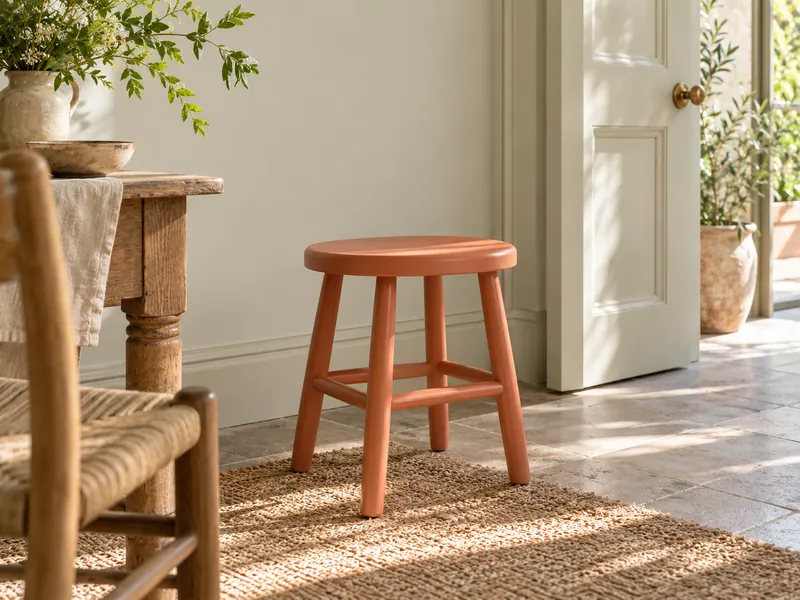
The bottom of a tin of Eggshell or Satin does a whole stool. Multi-Surface Primer on bare wood, two thin coats. See Refreshing wooden furniture.

04
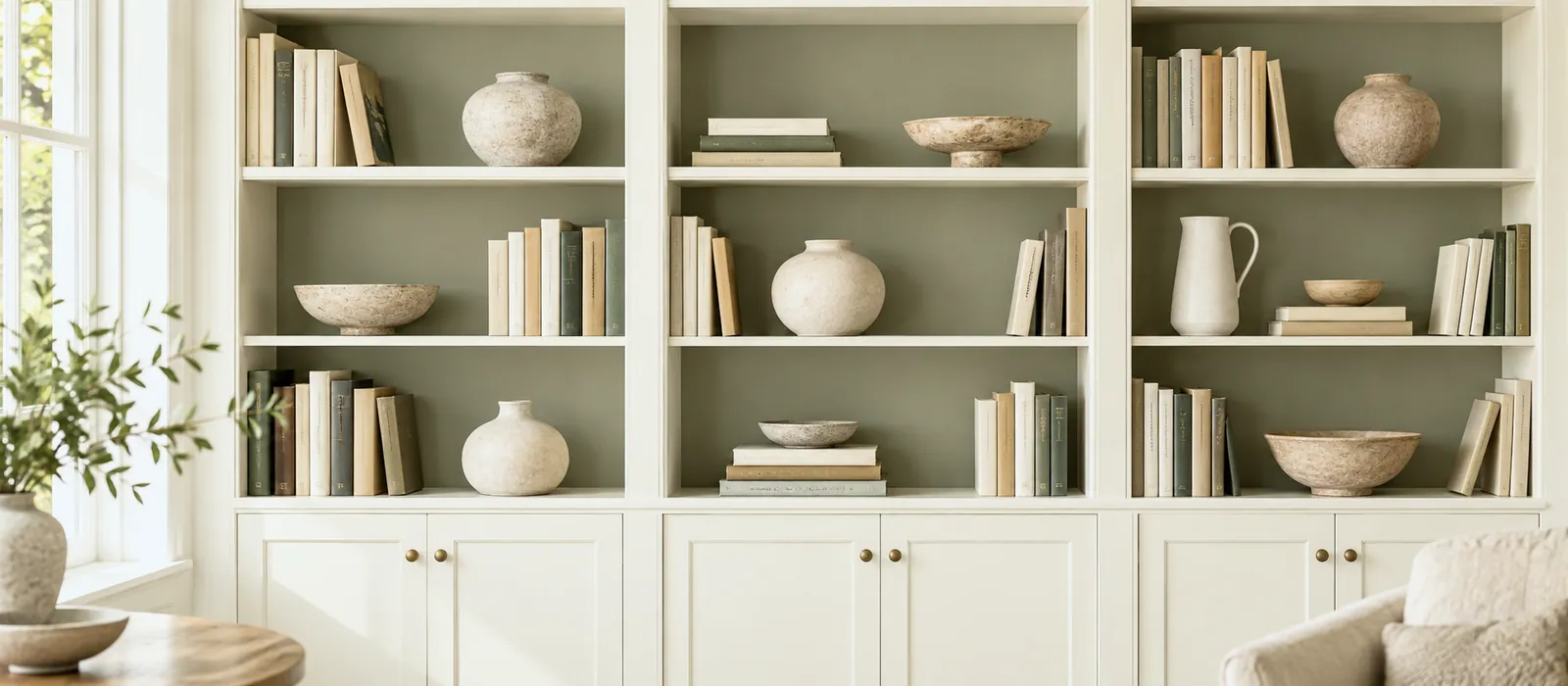
The wall colour one step deeper behind the books: a quarter of a litre, and the bookcase gains depth.
05
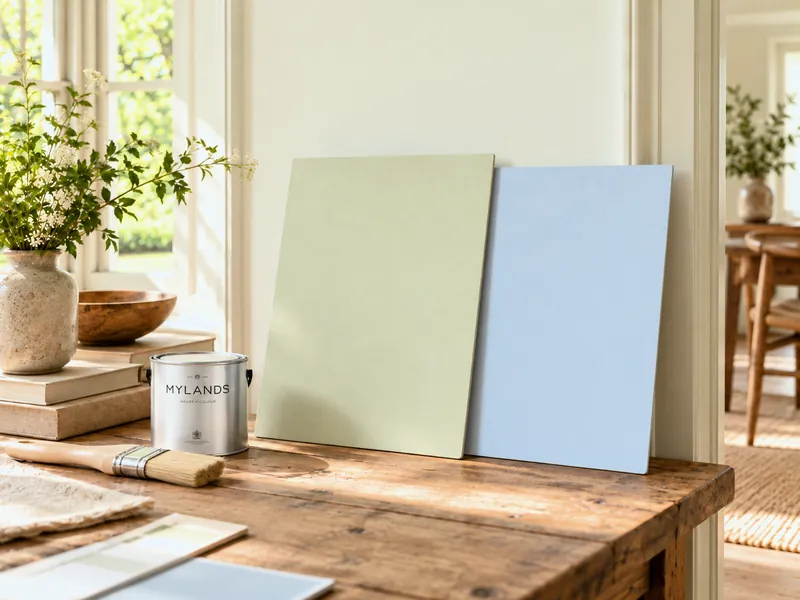
Two A4 boards of each remainder, labelled on the back: your personal colour card, to prop against a wall of the next room. See How to use your colour card.
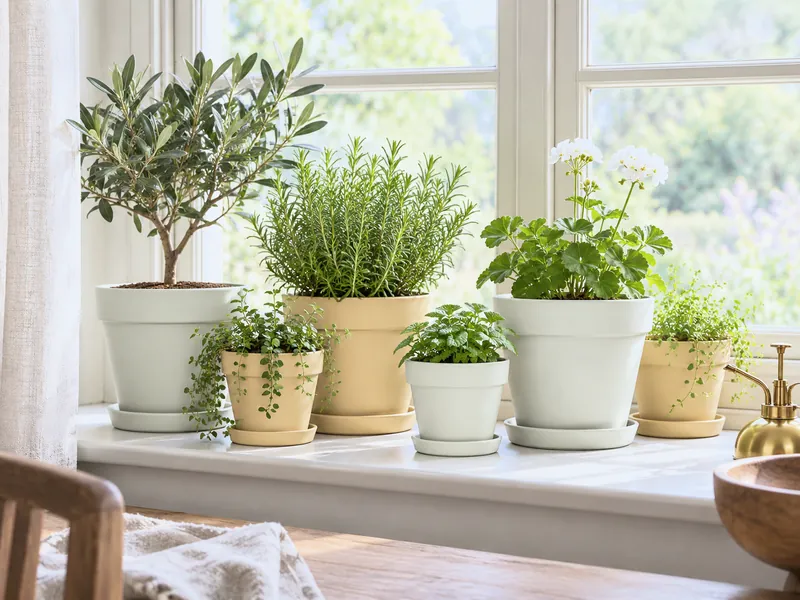
06
Multi-Surface Eggshell holds on terracotta outdoors, under cover. A family of pots in the house's colours, on the windowsill.
Giving
A sealed tin, or an opened but sound one, finds a taker: reuse centres and recycling shops, charities doing community renovation, schools and youth centres for scenery, amateur theatres, neighbours and local giveaway groups. Give it sealed, clean, labelled, with the colour number and the finish — whoever receives it can reorder the rest.
What cannot be given away: a tin that has frozen, smells sour or has gone lumpy. It goes to the recycling centre, in the hazardous household waste skip; access is free for private individuals, on proof of address in most communes. Some DIY stores also take tins back under the EcoDDS scheme. The empty, dry tin, for its part, is simply metal packaging.
And the tools? Brushes and rollers wash in water, squeezed out on newspaper first; the bowl's water goes to the waste water. A roller sleeve at the end of its life, dry, goes in the household bin; handles and grids are kept. Canvas dust sheets last for years; plastic sheeting, once dry, follows your local rules.
To avoid
Frequently asked questions
Unopened, kept from frost and heat: several years — stir thoroughly before use. Opened and well resealed: up to two years. The test: after stirring, it should be smooth, even and smell of fresh paint, not sour.
No. Lift the skin off in one piece, strain the rest through an old stocking or a paint strainer into a clean pot, stir. If it is smooth, it applies normally. A skin forms when the tin was not sealed properly; cling film under the lid prevents it.
At the recycling centre (déchèterie), in the hazardous household waste (DDS) skip, free for private individuals; and at the DIY stores that take part in the EcoDDS collection. The empty, dry tin goes to metal recycling with packaging — check your commune's rules.
For a few centimetres in the bottom, yes: tin open in a ventilated place, or mixed with sawdust or cat litter, until hard. The dry tin then goes to metal recycling. For more than a quarter of a tin, it takes too long and is too much material: recycling centre.
By its name and number: every Mylands shade has a fixed formula and is tinted to order in London, in the same finish. A 100 ml sample pot in the same shade is enough for a touch-up. A touch-up is done by brush, in the direction of the roller, on a clean, dry wall — see Paint problems: causes and solutions.
See also
 Water-based, low VOC, high-covering, durable, tinted to order: the six criteria of an eco-friendly paint, and...
 Does an "odourless" paint exist? What VOCs are, what the regulations require (30 g/L for a matt wall paint), w...
 Surface area, openings, coats, coverage: learn how to work out how much paint you need, then let our calculato...
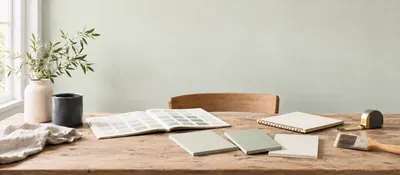 From the first idea to the last stroke of the roller: the six steps that make a painting project go well.
“The best leftover paint is the tin you didn't buy; the second best, the one you labelled properly.”

Thanks for signing up to our newsletter!
Sign in to save items to your wishlist. Sign in to save your basket, so you can continue shopping later.
Don't have an account? Create one
Share this link and friends can buy items from your list. Anything bought disappears from it automatically. Anyone with this link can see your selection.
Moving in, redecorating, or dropping hints? A free account turns this selection into a gift list — add or remove colours whenever you like, and we'll email you when someone buys something from your shared list.
Free · Delivered to your door
Get a free colour card posted to you, showing our complete Colours of London range, with swatches made from the real paint for a true representation of our award-winning colours.

