
01
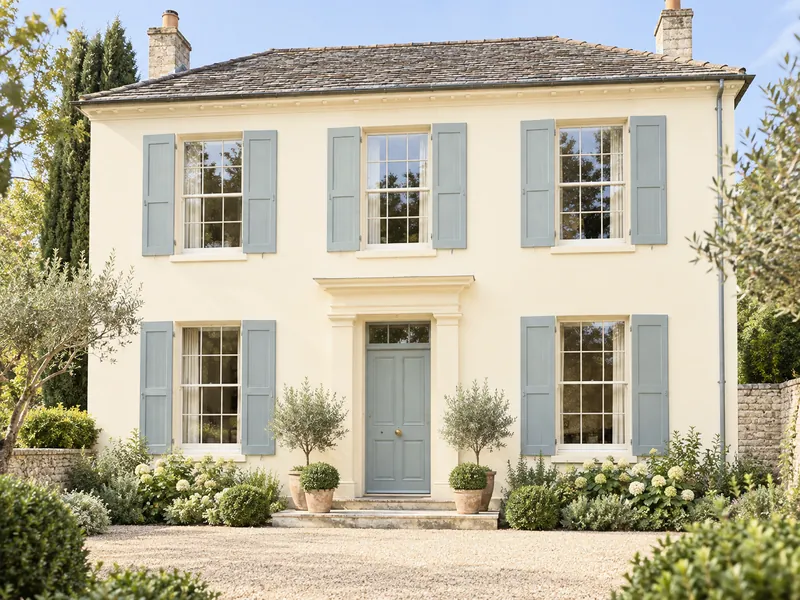
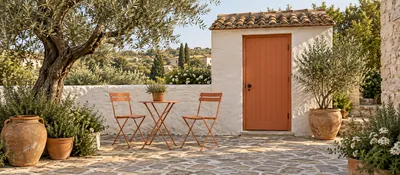
Warm stone-white
The façade white par excellence: warm, calm, it does not turn blue to the north or dazzle to the south.
Menu
How To
Design Advice
Customer Service
My account
Help with paint Painting outdoors
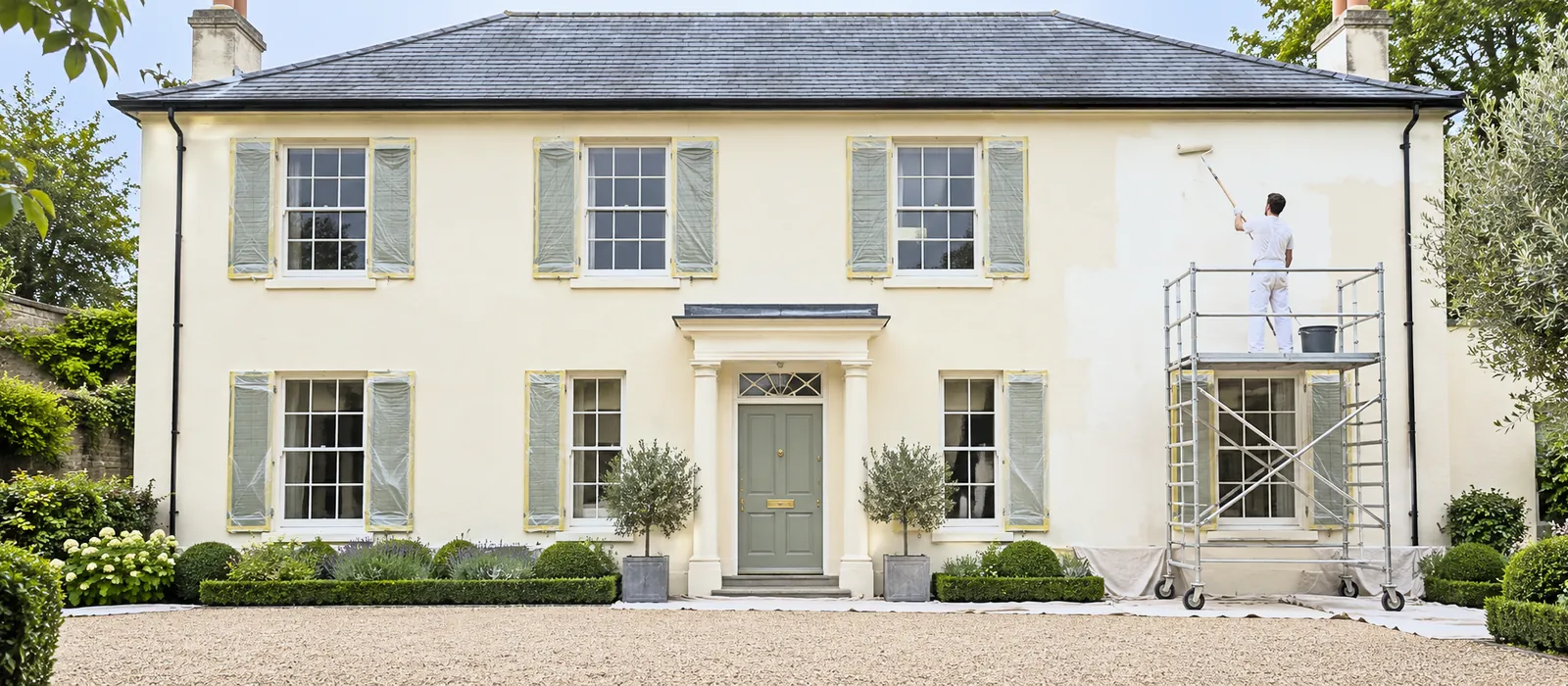
An exterior wall is painted in two coats of Masonry Paint — a matt, breathable, mould-resistant paint made for render, brick and concrete — after an honest diagnosis, a thorough clean, the repair of cracks and, if the surface chalks, a stabilising primer. You need three to five dry days between 10 and 25 °C, in the shade, out of the wind. What it does not do: hold on a lime render, which needs a mineral paint, or cover wood and metal, which have their own finishes. And before the first stroke of the roller, a prior declaration of works at the mairie.
Page updated September 2026 · by the Mylands France colour team
Understanding
A façade takes everything: rain, frost, sun, moss, and the damp that rises from the ground or passes through the wall. A masonry paint therefore has to do two contradictory things: repel the water that comes from outside and let out the vapour that comes from inside — a paint that seals the wall blisters in one winter. Mylands Masonry Paint is a matt, microporous paint, resistant to moss and algae, formulated for cement render, brick, concrete, rendered blockwork and reconstituted stone.
What it does not go on: a lime render or a soft stone, which need a mineral paint (silicate or lime) to breathe; wood and metal, which take the Multi-Surface finishes; a damp wall, whose cause has to be dealt with first. A wall that leaves a white powder on the finger (chalking) still holds, but needs a stabilising primer before the paint; a wall whose render sounds hollow is repaired, not painted.
The mairie first. Repainting a façade, even in the same colour, requires a prior declaration of works (déclaration préalable) in most communes; in a protected area, the Architecte des Bâtiments de France gives an opinion, often against a communal colour chart. Allow a month's processing.
Diagnosis
| The symptom | What it is | The remedy |
|---|---|---|
| White powder on the finger | Chalking: the old paint or the render is breaking down at the surface | Brush, wash, then stabilising primer; paint once dry |
| Fine network of cracks (crazing) | Shrinkage of the render, no movement | Wash; Masonry Paint covers them in two coats |
| Crack over 1 mm, or one that follows a corner | Movement of the structure | Open out, fill with sealant or flexible filler; if it is growing, a builder's opinion before anything |
| Render that sounds hollow | Detached from the substrate | Hack off and re-render; wait a month before painting new render |
| Green or black marks | Moss, algae, mould — north face, under gutters | Fungicidal wash, leave to work, brush, rinse; check the gutter |
| Tide marks, salts, paint blistering at the bottom | Rising or penetrating damp | Deal with the cause (drainage, gutter, render); do not paint until the wall is dry |
| Paint flaking in sheets | Old non-breathable or poorly bonded paint | Scrape off everything that comes away, brush, stabilise, paint |
The tape test: stuck onto the old paint then ripped off in one go, it should take nothing with it. If it lifts paint, the paint gets scraped; if it lifts powder, the surface gets stabilised.
The method
Dust sheets over plants, the ground, window sills; tape on the joinery, gutters, boxes. A stable ladder or a mobile scaffold tower: you do not paint a façade from a stepladder.
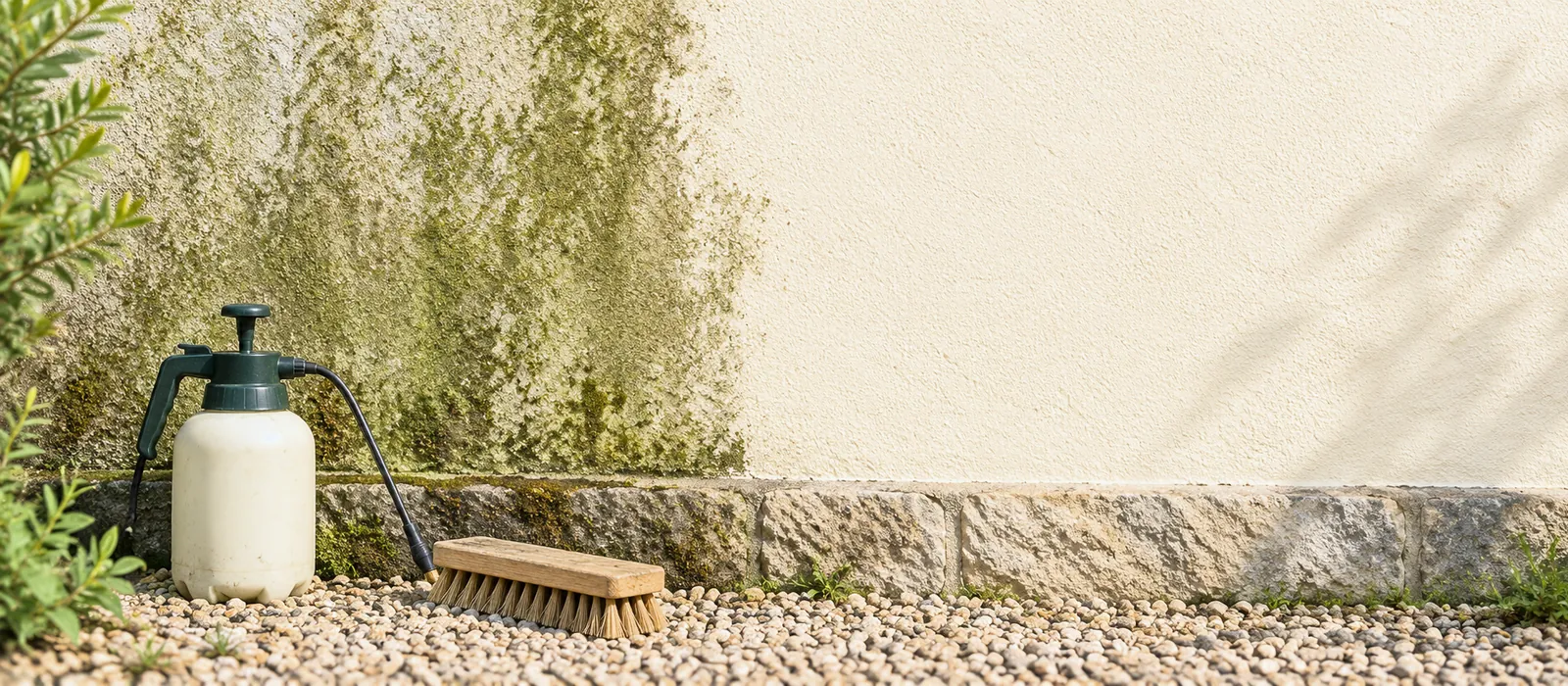
Fungicidal wash sprayed on the green or black areas, left to work as the instructions say (often 24 h), then brushed with a stiff brush and rinsed. On a very dirty wall, a low-pressure washer, never high pressure on an old render.
Sugar soap with a scrubbing brush over the whole surface, rinsed with clean water. Scraper on everything flaking, wire brush on what chalks. Two days' drying in dry weather.
Cracks opened into a V with the scraper, dusted out, filled with sealant for fine ones and exterior filler for wide ones; chips and losses made good with filler. Drying as the product says, a light sanding.
Stabilising primer by roller on the powdery areas — or over the whole façade if it chalks everywhere. It consolidates the surface and evens out absorption; without it, the paint pulls away with the powder. A night's drying.
Masonry Paint well stirred, long-pile roller on the surfaces, brush in the corners, under the sills and along the joinery. No thinning. Work in whole elevations, from one corner to the other, without stopping in the middle of a wall: the join would show.
After the interval on the data sheet — the next day is the safe rule outdoors. Same method, crossed: if the first went on vertically, so does the second, always laying off in the same direction.
Tape removed as soon as the second coat is touch-dry. No rain forecast in the next 24 h. Then, every five to seven years: a wash, and a maintenance coat on the most exposed face.
The weather
The weather does half the work. You need between 10 and 25 °C, air and wall; no rain forecast for 24 h after each coat; no full sun on the wall while you paint — follow the shade round the house: the east face in the morning, the west face in the afternoon; no wind, which dries the paint before it has flowed out and lands dust on it; no mist or dew. May–June and September are the best months; July–August only early in the morning; never in frost.
The quantity: Masonry Paint covers according to the porosity of the surface — take the coverage on the technical data sheet for a smooth render, and a third more for a roughcast or brick. A rough render is painted with a masonry brush rather than a roller, and drinks more.
The colours
A façade looks lighter and cooler than on the card: a pure white dazzles, a pure grey turns blue. Six façade shades chosen for outdoors, each with the shutter colour that suits. The method: Using exterior paint colours.
01
The façade white par excellence: warm, calm, it does not turn blue to the north or dazzle to the south.
02
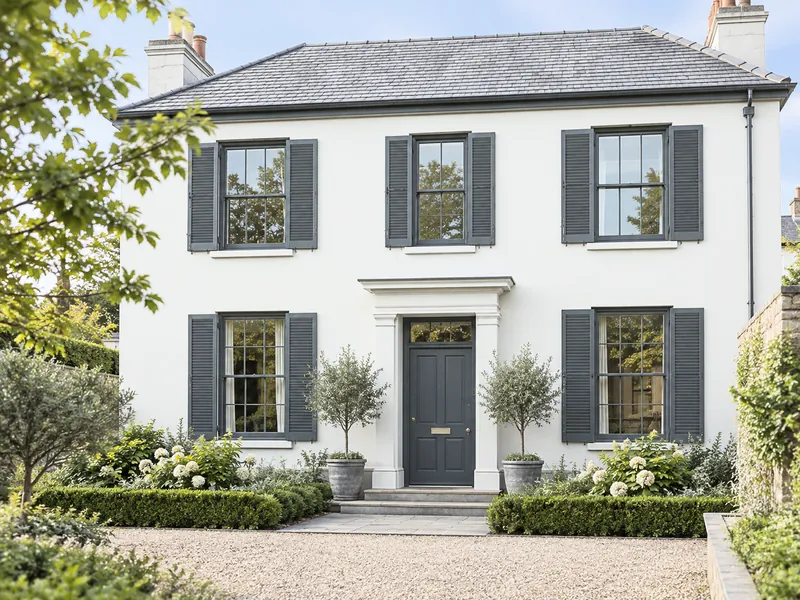
For a townhouse under slate, or a modern house: a white with a hint of grey, with dark joinery.
03
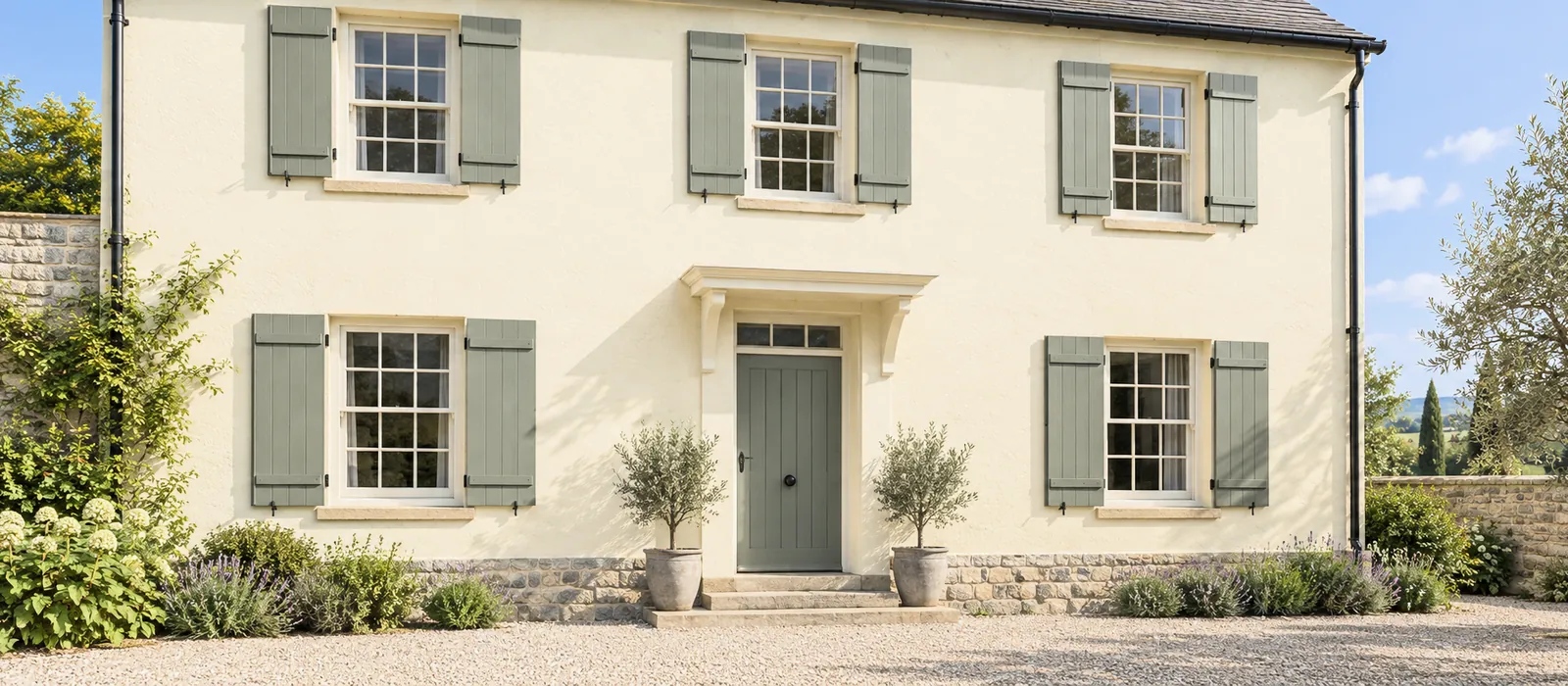
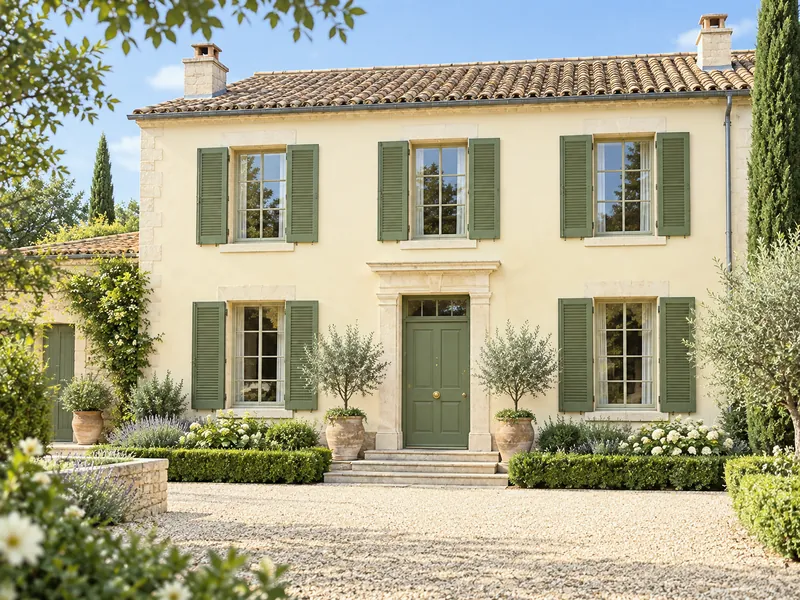
The cream of country houses and mas: warm, it goes with tile and bottle green.
04
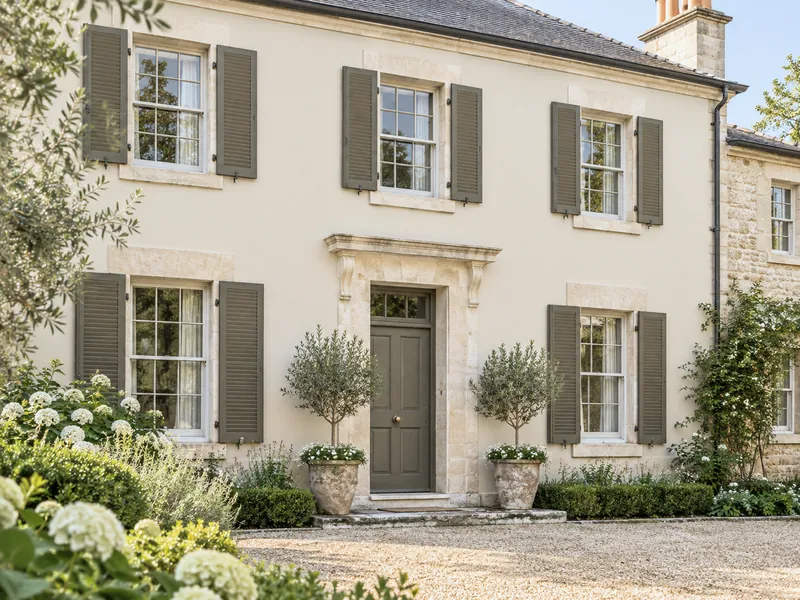
A limestone beige for a façade that has to agree with stone surrounds or the neighbours.
05
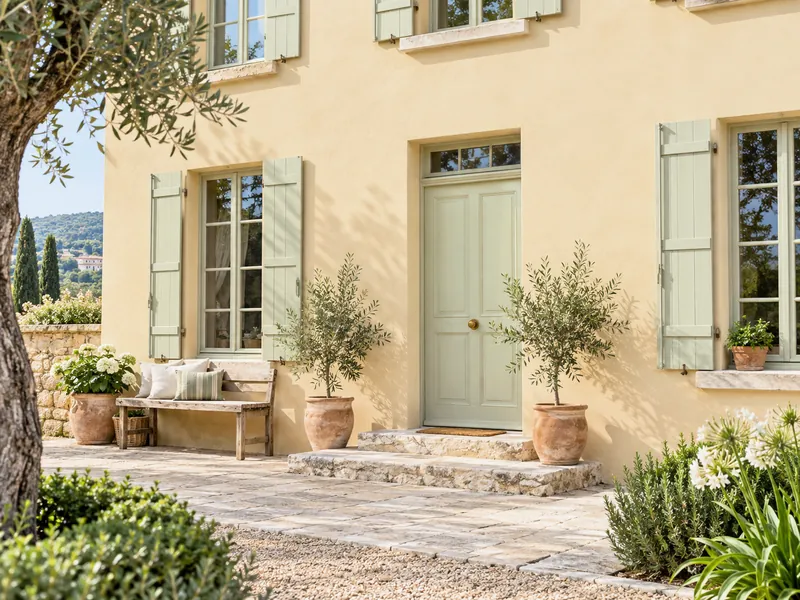
The soft ochre of southern villages: never a yellow, a warm sand that takes the evening sun.
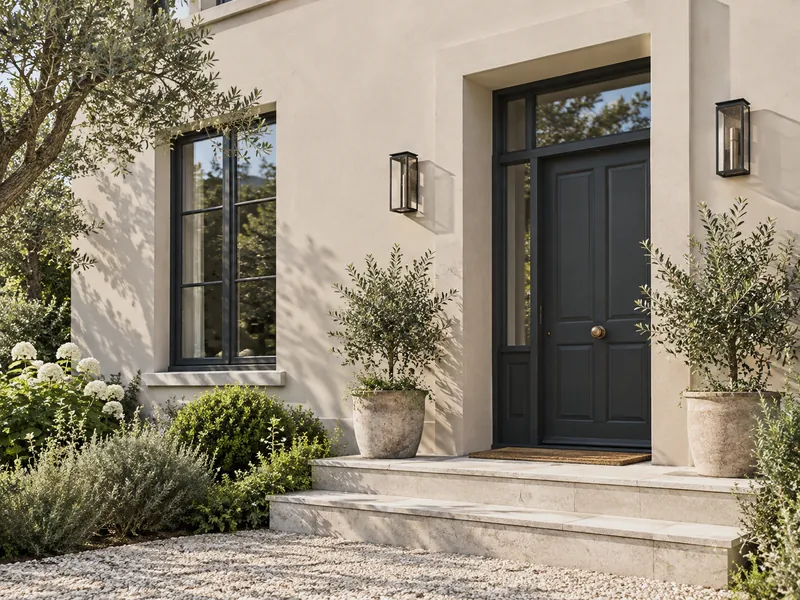
06
For a suburban or contemporary house: a grey-beige that stays warm under a grey sky, with white and black.
To avoid
Frequently asked questions
Yes, with Masonry Paint, on sound, clean, dry brick; the pointing is made good first. Be aware it is irreversible: a painted brick never goes back to bare. Soft or old brick deserves a professional's opinion.
A house from before 1950, a soft render that scratches with a fingernail, a white powder, a surface that absorbs a drop of water in a few seconds: probably lime. A drop of acid (vinegar) that fizzes confirms it. In that case, a mineral paint, not Masonry Paint.
Ten years and more on a sound, well-prepared surface, with a wash every five to seven years and a maintenance coat on the most exposed face. The north face greens before it wears; the south face chalks before it greens.
Only where the surface chalks or is very absorbent (new render, bare concrete). Over sound old paint, washed and dry, Masonry Paint goes on directly in two coats.
Yes, like a façade; the top of a low wall is the weak point, water stands there: a coping (tile, stone, zinc) before the paint, or it flakes from the top down. See How to update outdoor spaces.
See also
 Outdoors, a colour looks twice as light: one shade deeper, composed with the stone and the roof. Six palettes...
 Probe, strip what is coming away, sand, prime, two coats — three facing south. Windows, shutters, gates, eaves...
 What to paint outdoors and what not to, a three-colour palette tied to the house, one accent. Six weekend proj...
 Roller marks on matt paint, patchy sheen, blisters, peeling, a colour that differs from the card, paint that w...
“A façade is painted in three days and prepared over three weeks: the mairie, the weather, the wall.”
Thanks for signing up to our newsletter!
Sign in to save items to your wishlist. Sign in to save your basket, so you can continue shopping later.
Don't have an account? Create one
Share this link and friends can buy items from your list. Anything bought disappears from it automatically. Anyone with this link can see your selection.
Moving in, redecorating, or dropping hints? A free account turns this selection into a gift list — add or remove colours whenever you like, and we'll email you when someone buys something from your shared list.
Free · Delivered to your door
Get a free colour card posted to you, showing our complete Colours of London range, with swatches made from the real paint for a true representation of our award-winning colours.