


01
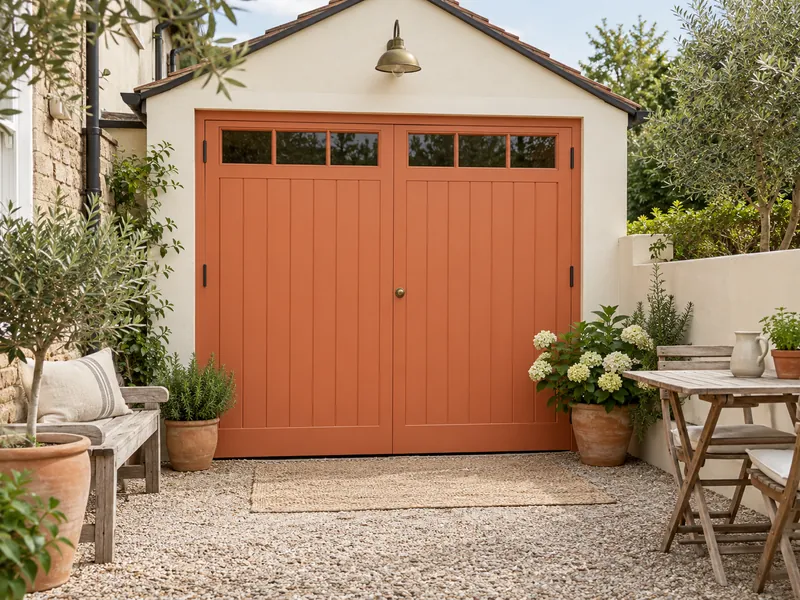
1. The outbuilding or garage door
The largest area of colour in a courtyard, often the saddest. A bold colour — coral, ochre, blue — and the courtyard changes century. One litre, one weekend.
Menu
How To
Design Advice
Customer Service
My account
Help with paint Painting outdoors
An outdoor space is updated with three colours and a few weekends: the colour of the house's joinery repeated on the gate and the furniture, a neutral for the low walls and the pots, and one accent — a door, a chair, a bench — in a colour you would not dare indoors. You paint wood, metal and masonry; you paint neither timber decking nor paving, where water stands. Each element has its own page in this guide; this one gives the overview, the order to go about it, and six projects for a terrace, a balcony, a courtyard or a garden.
Page updated September 2026 · by the Mylands France colour team
Understanding
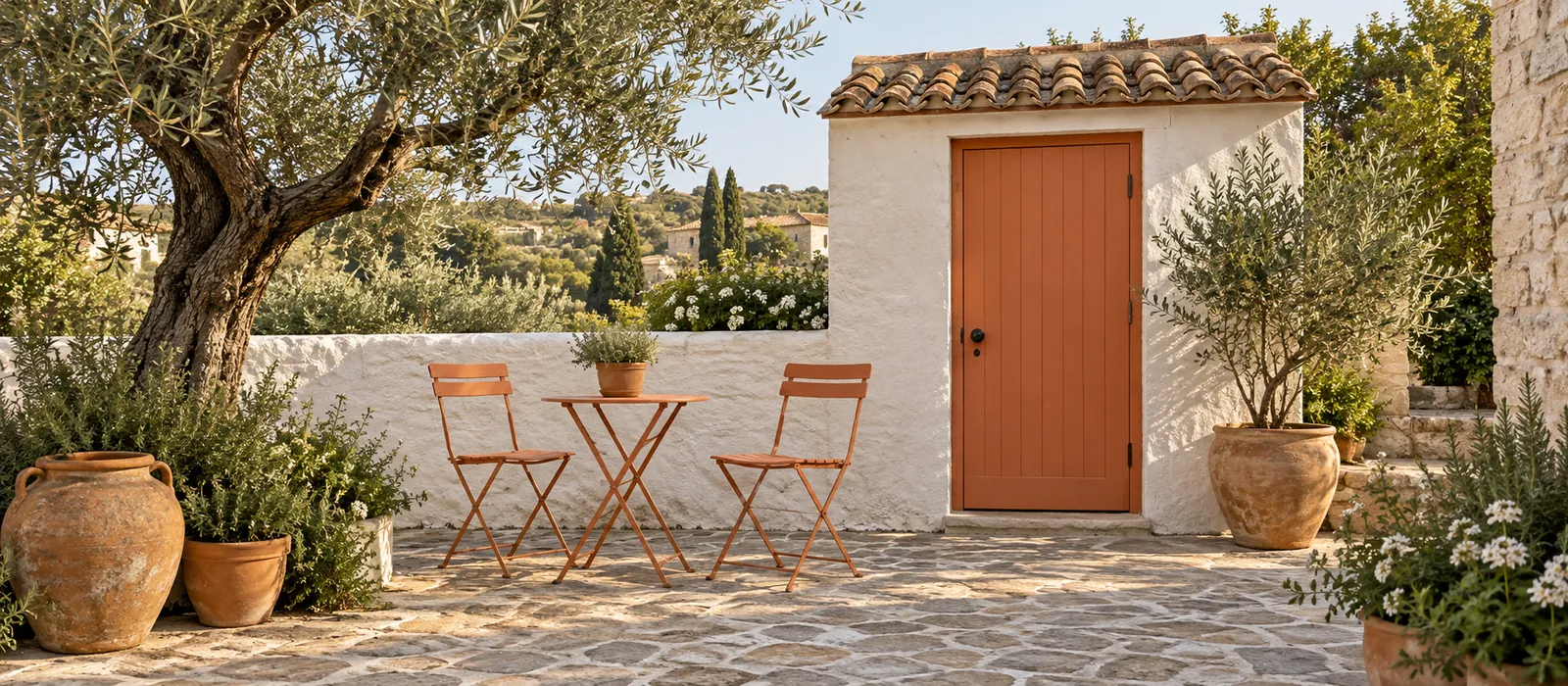
Indoors, you choose a colour per room; outdoors, you choose a palette for everything — because you see it all at once, the façade, the gate, the table, the pots. Three colours are enough, and they already exist: the colour of the house's joinery (shutters, windows) is repeated on the gate, the fence, the bench — that is what makes a garden belong to its house; a neutral — stone white, warm grey, sand — for the low walls, the planters, the shed; and one accent, once only, on the outbuilding door, two chairs or a planter, in a bold colour that the green of the plants makes possible.
Outdoors, a colour looks lighter and brighter than indoors: the method for choosing, one shade deeper and tested against the façade, is in Using exterior paint colours. The finishes are always the same: the Multi-Surface range (Eggshell, Satin, Gloss) over primer for wood and metal, Masonry Paint for render, brick and concrete.
Deciding
| Element | Paint it? | Finish | The guide |
|---|---|---|---|
| Front door, outbuilding door | Yes | Gloss or Satin over primer | Painting a front door |
| Shutters, windows, gate, eaves | Yes | Eggshell, Satin or Gloss | Painting outdoor woodwork |
| Fence, palisade, wicket gate | Yes | Eggshell | How to paint a fence |
| Garden shed, cabin | Yes, except the roof | Eggshell | How to paint a shed |
| Wooden and metal furniture | Yes | Eggshell or Satin | How to paint garden furniture |
| Wall, low wall, masonry planter | Yes, with a coping | Masonry Paint | Painting an exterior wall |
| Terracotta pots, wooden planters | Yes | Eggshell over primer | Two coats; the inside of the pots stays bare |
| Railings, grille, metal pergola | Yes | Satin or Gloss over primer | Best paint for metal surfaces |
| Timber decking, floor, steps | No | Oil or saturator | Water stands; no paint holds there |
| Paving, exterior tiles | No | — | Cleaning and a water repellent; paint wears off in a season |
| Lime render, soft stone | Not with Masonry Paint | Mineral paint | See the façade page |
A wooden pergola, a swing seat, a balustrade: like outdoor woodwork, provided the horizontal surfaces are sloped or protected.
Six projects
In order of effect: what changes the most for the least work. Each project fits in two dry days, between 10 and 25 °C, in the shade.
01
The largest area of colour in a courtyard, often the saddest. A bold colour — coral, ochre, blue — and the courtyard changes century. One litre, one weekend.
02
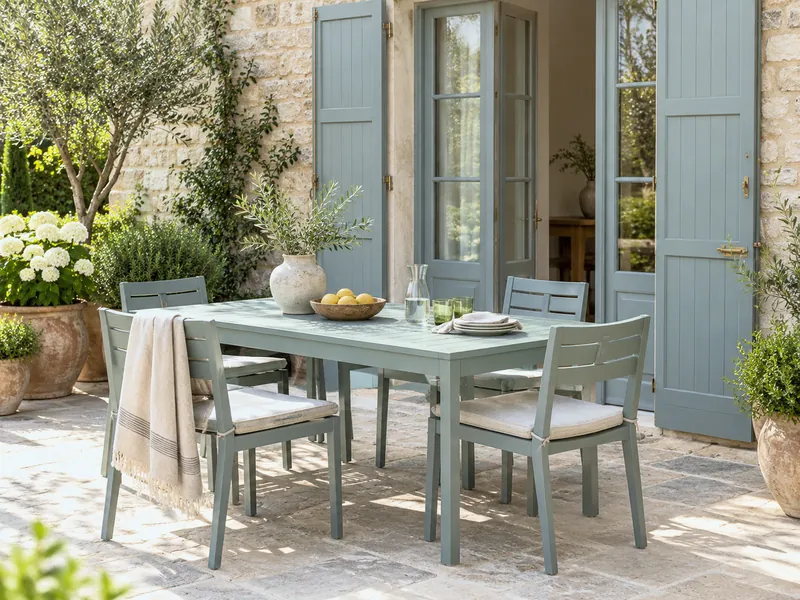
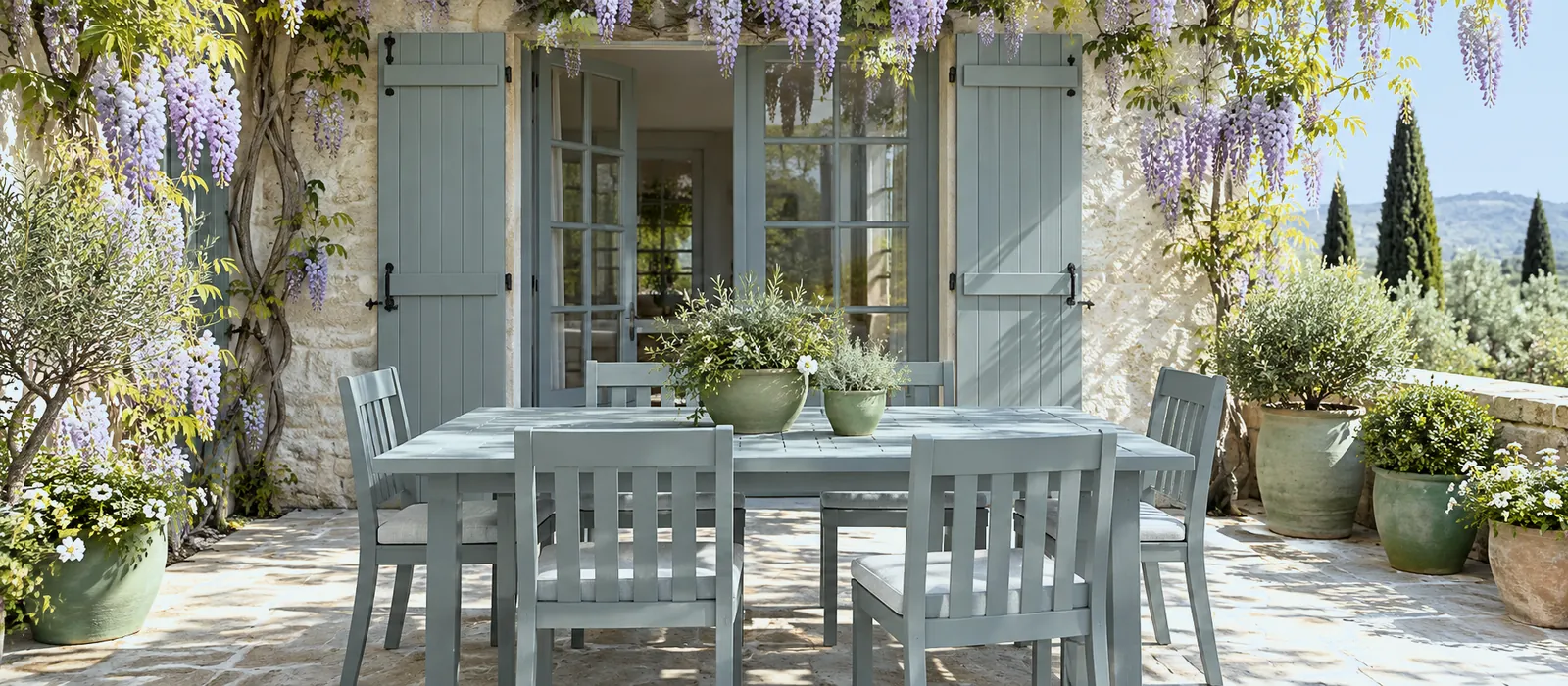
A table and four chairs in the grey-green or the blue of the shutters: the terrace suddenly belongs to the house. One litre of Eggshell.
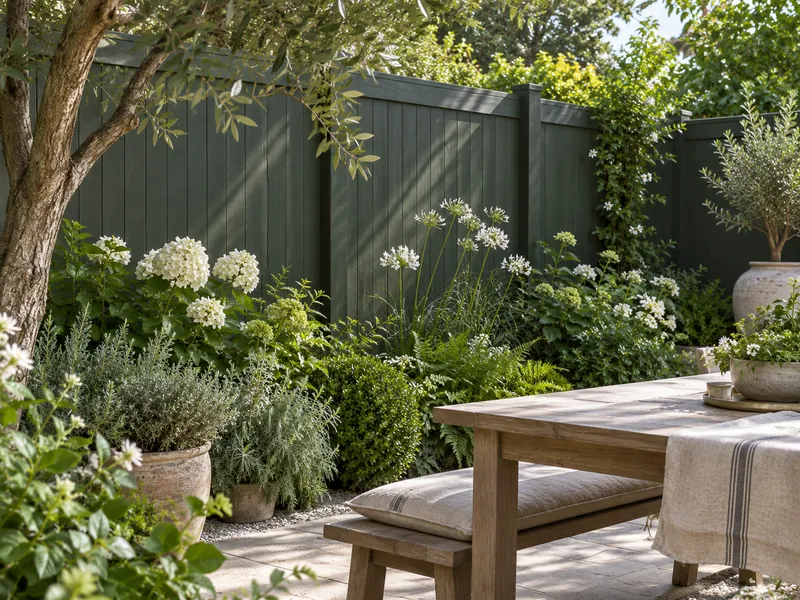
03
The fence painted deep green or grey-black recedes; the plants come forward; the garden looks twice the size. The longest project and the most rewarding.
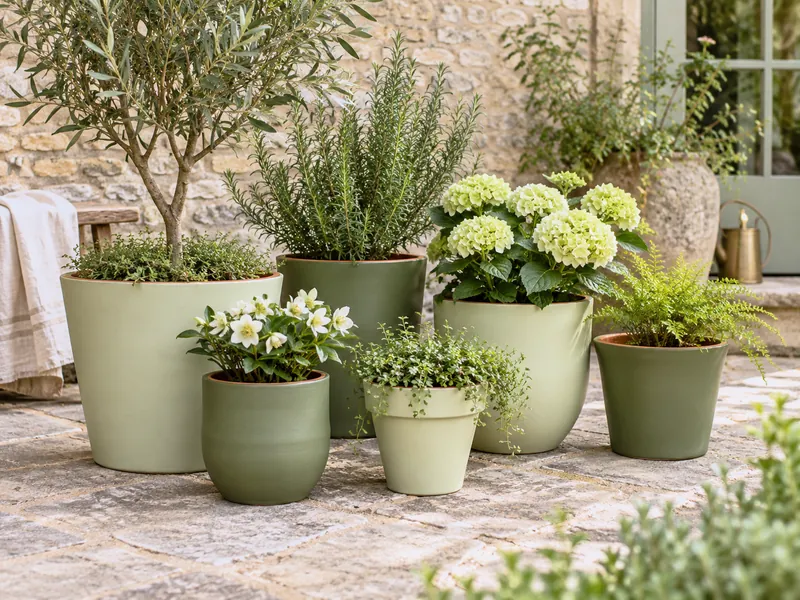
04
Six mismatched terracotta pots, painted in two tones of one colour: a collection. Eggshell over primer, the inside left bare.
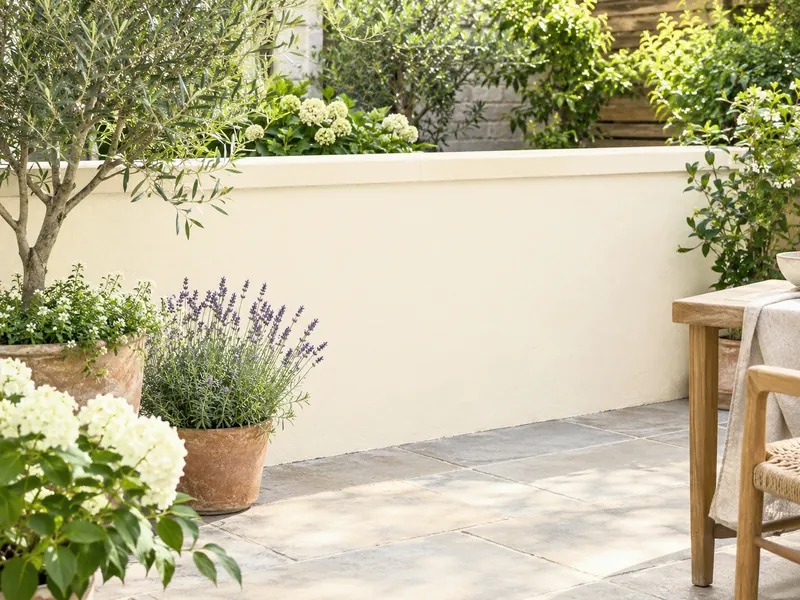
05
A grey concrete or rendered blockwork wall, painted warm stone white with Masonry Paint: the courtyard brightens and the plants stand out. Allow for a coping.
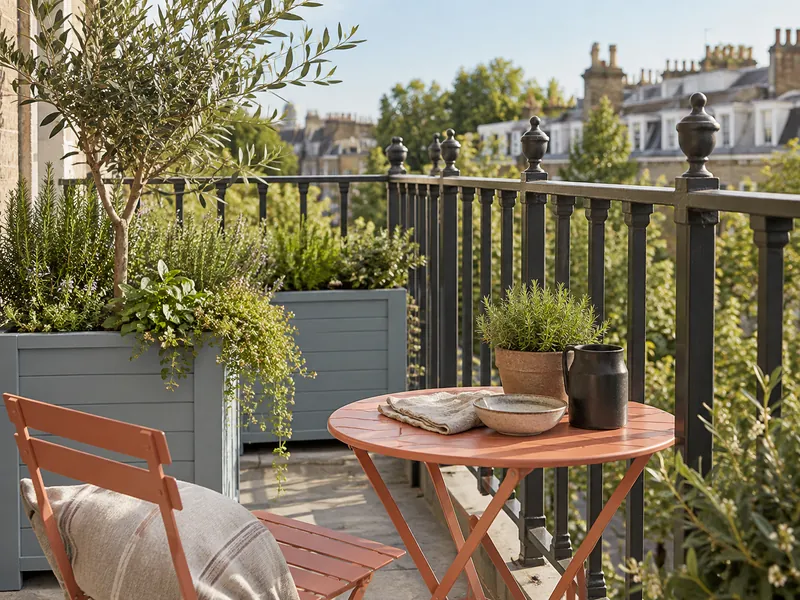
06
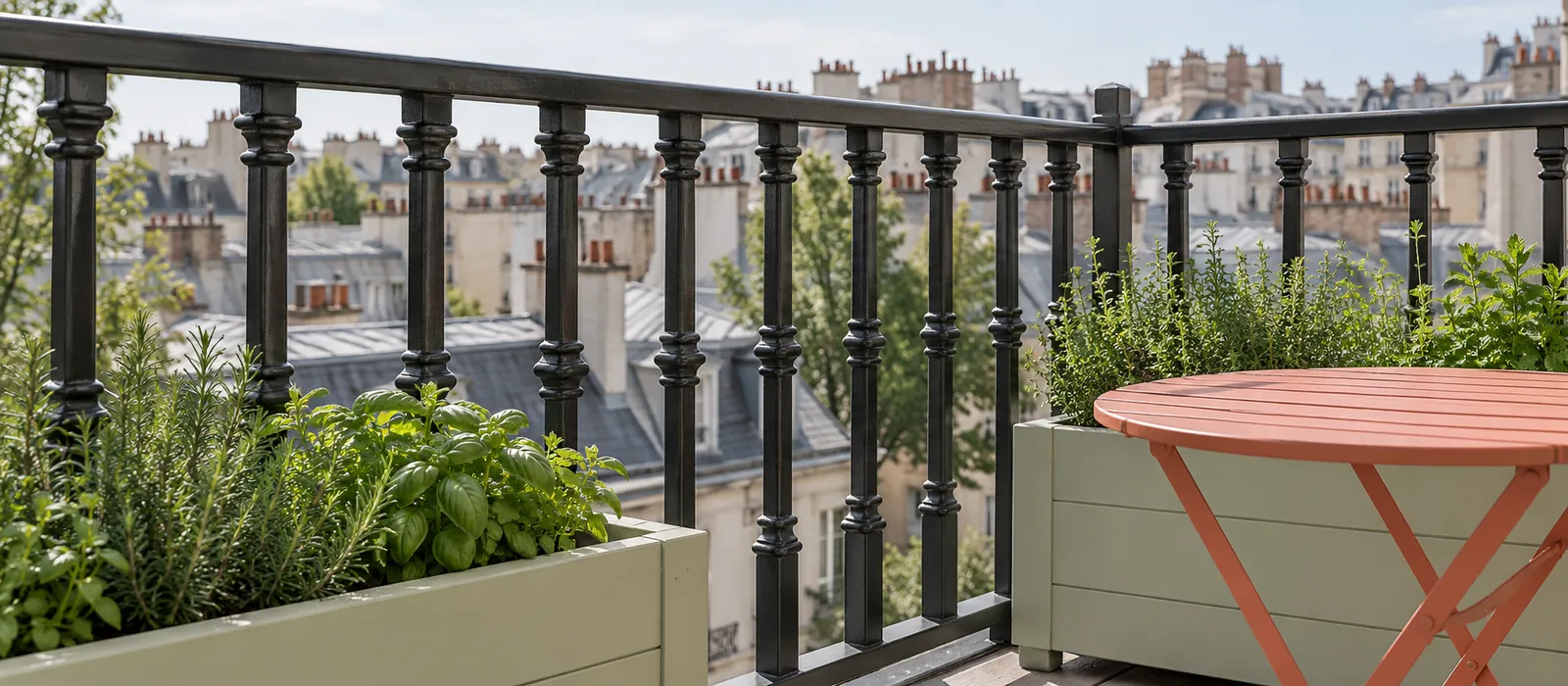
Rusty iron railings, de-rusted, primed and painted satin grey-black: the balcony becomes crisp, and the coloured planters stand out.
The method
First the palette, on paper: the colour of the existing joinery, the neutral of the walls, the accent. Three A3 boards painted with sample pots, left outdoors for a week, looked at morning, noon and evening. Then the big things: the fence, the shed, the low wall — what makes the background, and needs the most dry weather. Then the house's joinery if it needs it, in the same campaign as the gate. Finally the objects: the furniture, the pots, the outbuilding door — the accent last, when the background is there to receive it.
Each step has its weather: between 10 and 25 °C, two days without rain, in the shade — you follow the shade round the house. May–June for the big things, September for the objects. And one rule for everything: dry wood, rust removed, end grain primed twice.
The balcony. Three surfaces — the railings, the planters, a chair — and everything is painted on the balcony itself, on a dust sheet, on a windless day. Wooden planters are painted empty, outside and inside to half height; terracotta pots, outside only.
To avoid
Frequently asked questions
With the palette, then with the largest and saddest element — often the fence or the outbuilding door. One project per dry weekend; the accent last.
In timber, no: water stands and the paint peels; oil or saturator. In concrete or tiles, not with our finishes either. Our Decorative Floor Satin is for interior wooden floors only.
Multi-Surface Eggshell over Multi-Surface Primer, two coats, on the outside only: the inside stays bare so the soil can breathe. Under cover in winter, the paint lasts several seasons.
Like outdoor woodwork: dry wood, primer on the end grain, two coats of Eggshell, three on the exposed faces. The horizontal beams, where water stands, are painted and watched; a zinc cap on the posts.
For the façade, the shutters, the windows and often a fence onto the street, yes: a prior declaration. For furniture, pots, the shed and walls inside the plot, no. In a protected area, ask the mairie before choosing colours.
See also
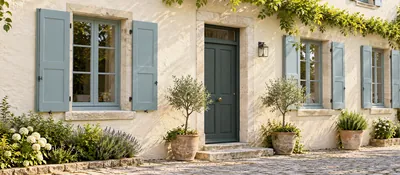 Outdoors, a colour looks twice as light: one shade deeper, composed with the stone and the roof. Six palettes...
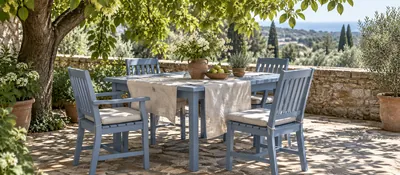 Sand, de-rust, prime, two coats of Eggshell or Satin: wood, iron, aluminium, and the tops where water stands....
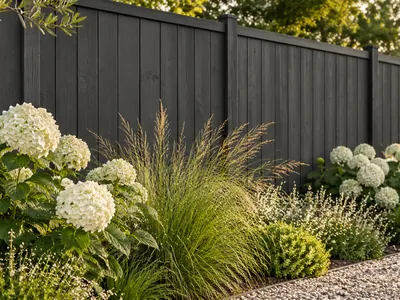 Dry wood, brushing, primer on the end grain, two coats by brush on both sides. Why a dark fence makes the gard...
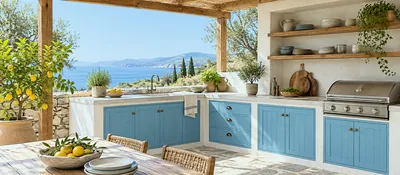 Back wall in Masonry Paint, fronts in Satin, metal in Gloss, worktop unpainted, and the distance from the fire...
“Outdoors, three colours and one accent: the house, the garden and one object that smiles.”

Thanks for signing up to our newsletter!
Sign in to save items to your wishlist. Sign in to save your basket, so you can continue shopping later.
Don't have an account? Create one
Share this link and friends can buy items from your list. Anything bought disappears from it automatically. Anyone with this link can see your selection.
Moving in, redecorating, or dropping hints? A free account turns this selection into a gift list — add or remove colours whenever you like, and we'll email you when someone buys something from your shared list.
Free · Delivered to your door
Get a free colour card posted to you, showing our complete Colours of London range, with swatches made from the real paint for a true representation of our award-winning colours.

