Help with paint How-to guides

Refreshing interior woodwork with colour

Woodwork — doors, skirting, architraves, windows, panelling — is a tenth of a room's surface and half of its character: repainting it changes everything without touching the walls. Six approaches, from the quietest to the boldest: a vivid accent, a match drawn from a fabric or a paper, a dark shade, muted woodwork under a coloured wall, coloured windows, tone on tone. Always in a multi-surface finish: Eggshell, Satin or Gloss.

Page updated September 2026 · by the Mylands France colour team

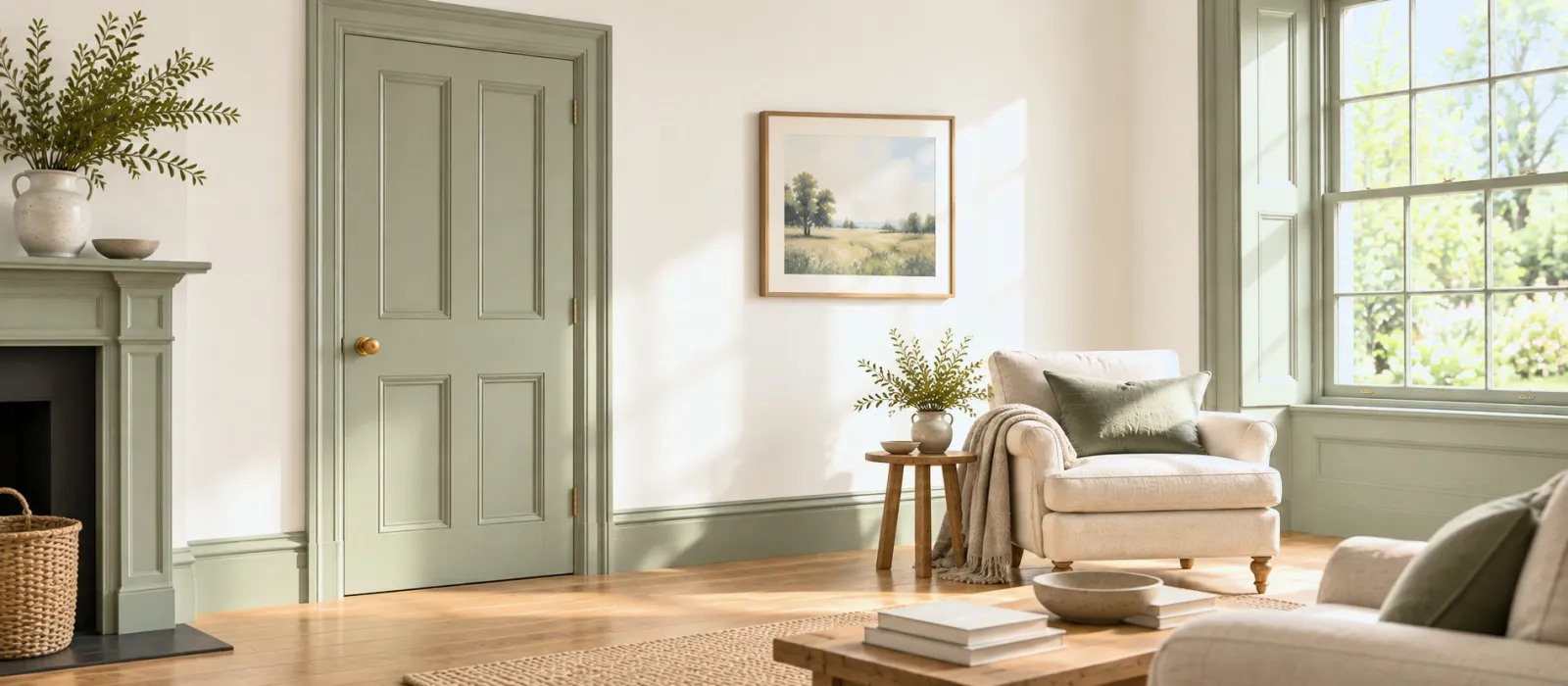
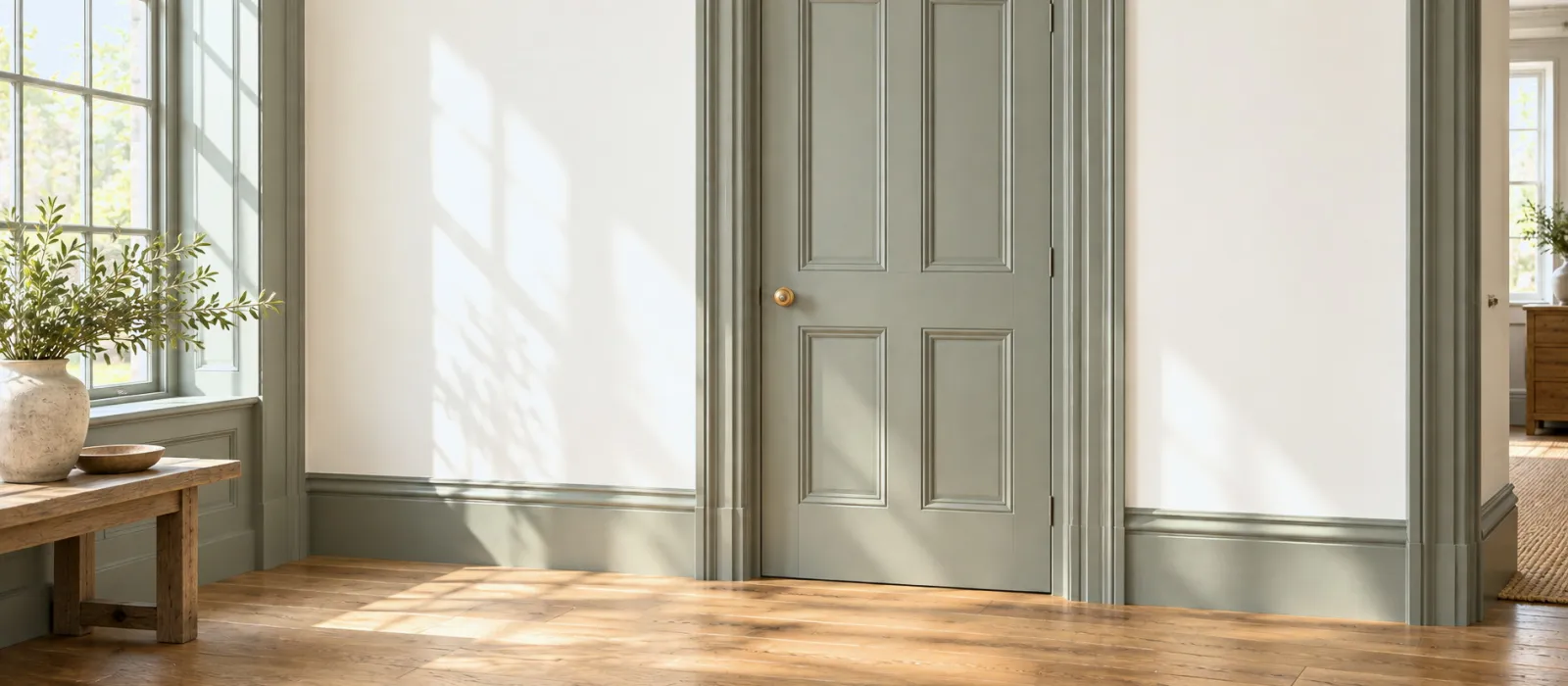
Panelled door and its architrave painted a mid grey-green in eggshell, in a warm white wall, oak floor, window light
Serpentine No.192 on the door and architrave, Whitehall No.9 on the wall: the woodwork becomes the room's drawing

Why start there

The small job that changes a room

Repainting the walls of a sitting room takes a weekend, empties the room and commits a colour to 40 m². Repainting its woodwork takes a day, moves only a sofa, and commits a 250 ml tin — for an effect that is often greater, because woodwork draws the room: it frames the doors and windows, traces the floor, cuts up the walls. Changing its colour is redrawing.

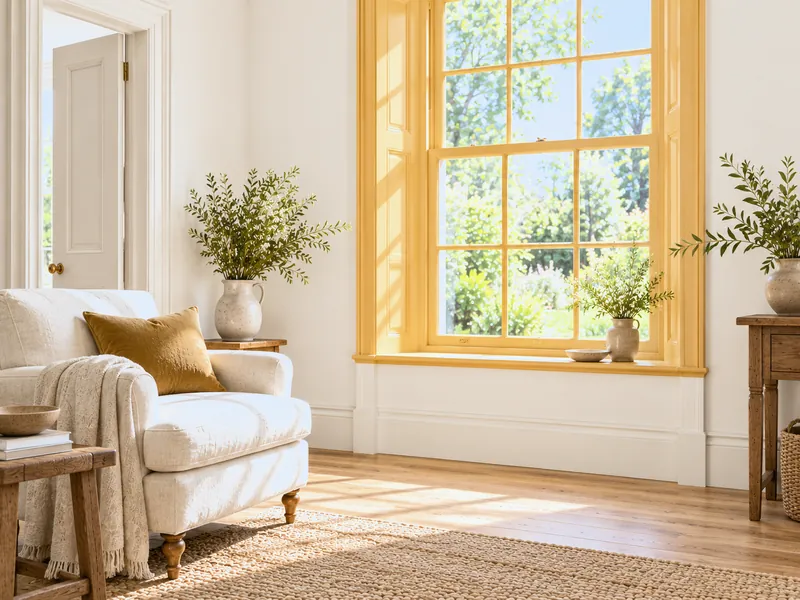
It is also where you dare. A shade you would not risk on four walls — a deep green, a brown-black, a confident yellow — sits very well on a door, because it is surrounded by the wall that calms it. And if you tire of it in five years, a day is enough to change it.

Six ideas

Six ways to treat woodwork

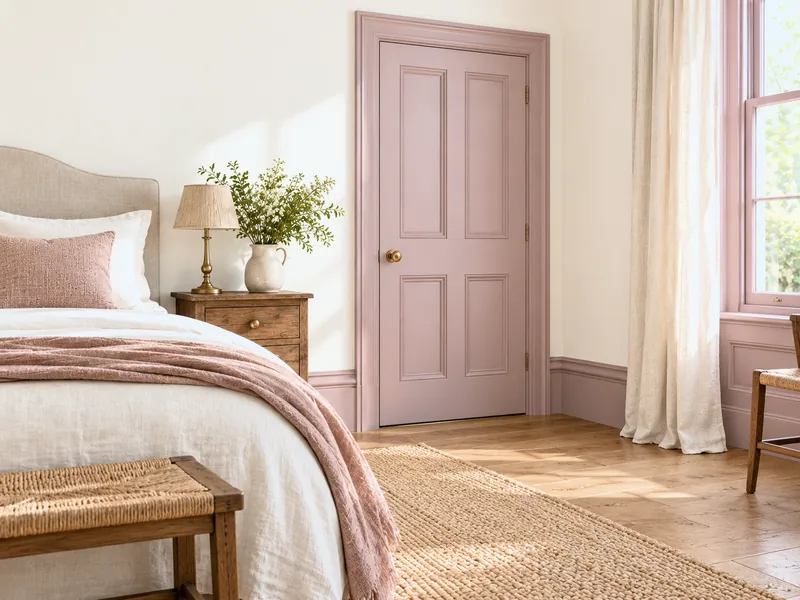
2. A match drawn from a fabric or a paper — Woodwork: Bloomsbury No.267, Walls: Holland Park No.5

02

2. A match drawn from a fabric or a paper

Take a secondary shade — not the dominant one — from the curtain, the wallpaper or the rug and give it to the doors and skirting. Fabric and woodwork answer each other, and the room looks composed. In a guest bedroom you can go further than in your own.

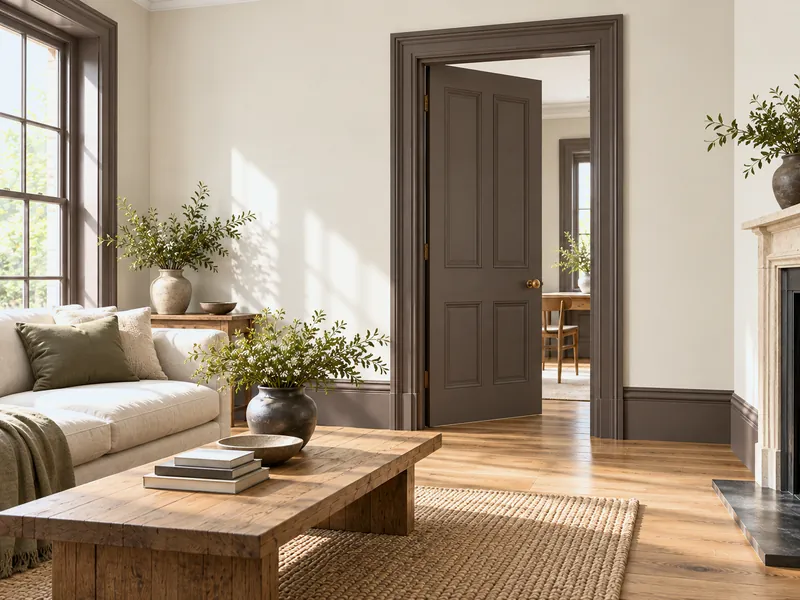
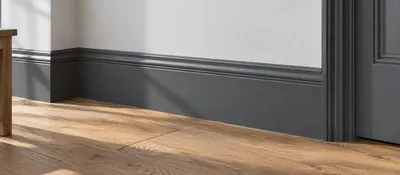
3. The dark shade that draws — Woodwork: London Brown No.287, Walls: Cadogan Stone No.59

03

3. The dark shade that draws

Woodwork is the easiest place for a dark colour: a brown-black, a bottle green or a slate grey on doors, skirting and architraves, under light walls, cuts the room out like an ink drawing. A softened black is better than a pure one.

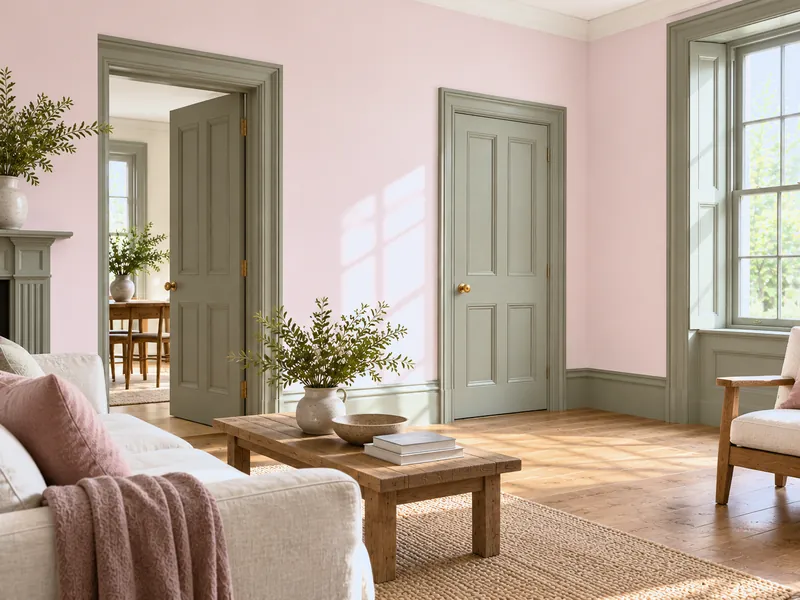
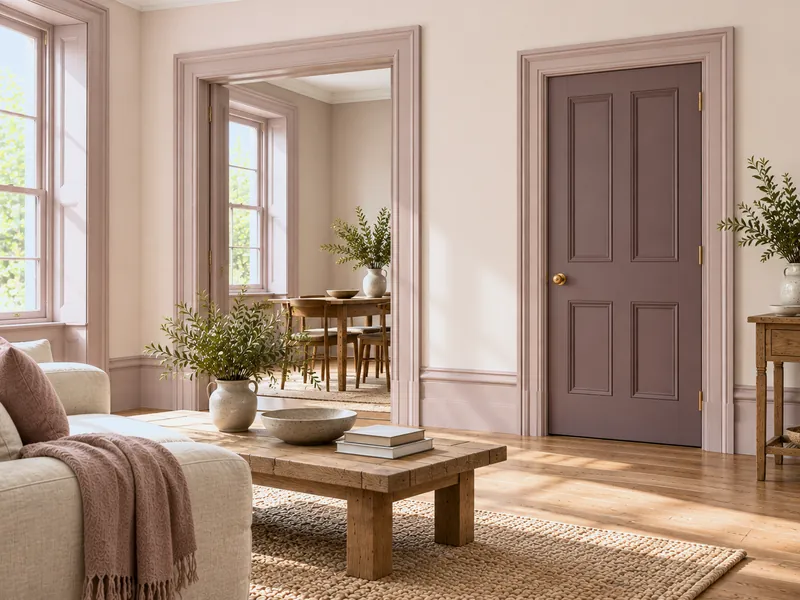
4. Muted woodwork under a coloured wall — Woodwork: Serpentine No.192, Walls: Palmerston Pink No.243

04

4. Muted woodwork under a coloured wall

When the wall carries a soft or sweet colour — a pink, a sky blue — woodwork in a grey-green or a greige holds it to the ground and avoids the sugared-almond effect. The wall stays light; the woodwork gives it weight.

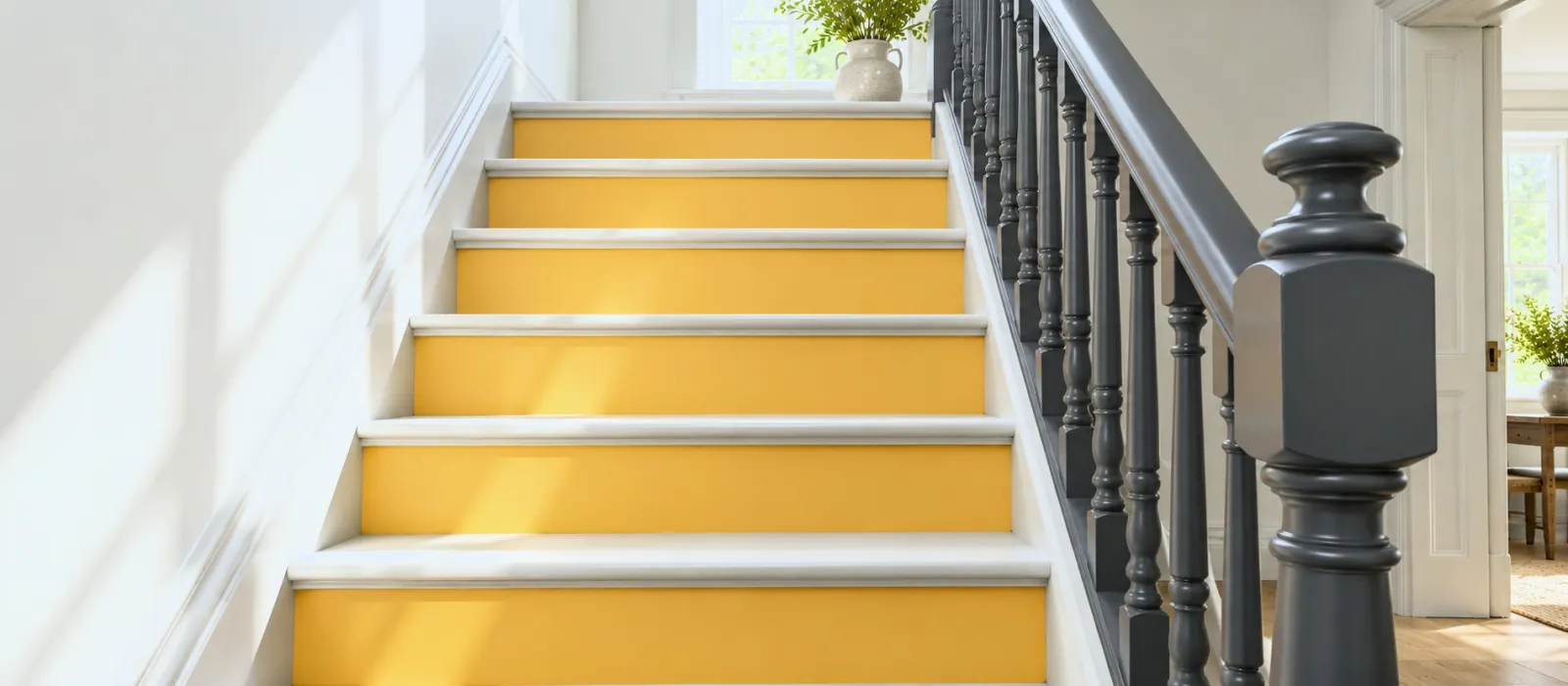
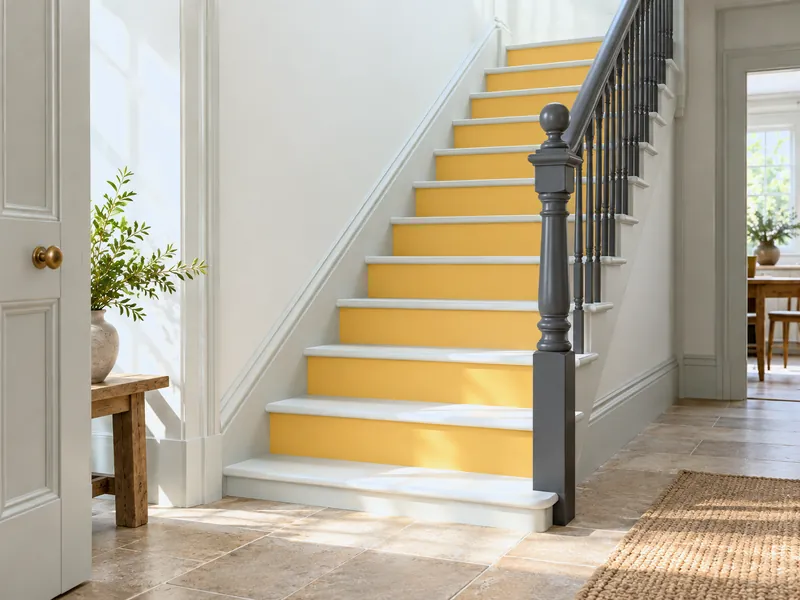
Staircase with risers painted a confident golden yellow, treads and walls grey-white, an almost-black grey banister, seen from below
The vivid accent: Circle Line No.45 on the risers, nothing else changes

The finish

Which finish for which woodwork

Woodwork gets touched, scuffed and washed: always a multi-surface finish, never the wall emulsion. The three finishes below exist in every colour, water-based, recoatable after 3 to 4 hours, over a Multi-Surface Primer wherever the wood is bare.

FinishSheenForThe look
Multi-Surface Eggshell ≈ 15 % Doors, skirting, architraves, panelling in living rooms A soft sheen, close to the matt of the walls; washable
Multi-Surface Satin Mid Banisters, stairs, kitchen and bathroom doors, hallways More resistance to hands and knocks; a little more reflection
Multi-Surface Gloss High An inside front door, reception-room woodwork The lacquered look; demands perfect preparation

The choices in detail, room by room: Which finish for woodwork and doors. Preparation, sanding and priming: Wood finishes preparation.

The method, in brief

Repainting woodwork in five moves

  1. 01

    Wash, sand with 180, dust off

    The sanding is what gives the key on an old satin or gloss finish; without it, the new coat flakes. Fill chips and joints with wood filler.

  2. 02

    Prime the bare wood and the repairs

    Multi-Surface Primer, one coat, rubbed down with 240 once dry. On sound old paint in a close shade, it is not needed.

  3. 03

    Doors: panels, then rails, then stiles

    Smallest to largest, along the grain, in thin coats laid off in one direction. Open the door to paint the edges; leave it ajar until dry.

  4. 04

    Skirting and architraves last

    The line against the wall with a cutting-in brush, the flat with a flat brush or a small roller followed by a lay-off. See How to paint skirting boards.

  5. 05

    Second coat after 3 to 4 hours, then three weeks of care

    The film is dry that evening, hard in two to four weeks: avoid knocks and hard washing until then.

To avoid

What unbalances woodwork

  • Two different whites in one room. Doors in one white, skirting in another: the eye sees the discord without naming it. One woodwork shade per room.
  • Pure white under a warm wall. It looks blue; a matched off-white makes the difference.
  • Wall emulsion on a door. It wears through at the hands in a few months.
  • A vivid colour on all the woodwork of a small room. The frame eats the wall; an accent, a family, or a dark.
  • Forgetting the edges and rebates. An open door shows its edges: paint them in the colour of the more visible side.
Finished sitting room: matt warm white walls, door, architrave and skirting in a mid grey-green eggshell, linen armchair, framed picture
Serpentine No.192 on the whole woodwork family: the room has found its drawing

Frequently asked questions

Your questions, our answers

Should all the woodwork in a room be repainted at once?

Doors, architraves, skirting and windows form a family: yes, in one shade and one finish, unless one element is a deliberate accent. Two slightly different whites in one room is the most common fault.

Can varnished or waxed woodwork be painted?

Varnished: thorough sanding with 120 then 180 to dull it, Multi-Surface Primer, two coats. Waxed: remove the wax with wax remover first of all; nothing holds on it.

Which woodwork colour with white walls?

Anything is possible; it is the simplest case. A grey-green or a greige for softness, a brown-black or a deep green for drawing, a yellow or a blue for cheer. The wall white is chosen to suit: warm under warm woodwork, grey under cool woodwork.

And panelling?

Panelling is treated as woodwork: Eggshell or Satin, in the skirting's shade or the wall's. Painted in the colour of the wall above, it gives texture without cutting up the room; in a deeper shade, it makes a dado that anchors.

How much paint for a room's woodwork?

A two-sided door, its architrave, one window and 15 m of skirting come to about 8 m²: one litre of multi-surface finish for two coats, with a little to spare. A 250 ml tin is enough for an accent.

“The walls are the page; the woodwork is the handwriting.”
Sign up to our newsletter

Sign up to our newsletter

Thanks for signing up to our newsletter!