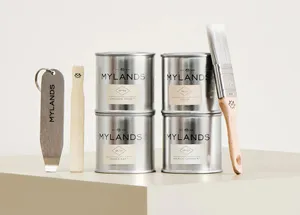
The journal
Bathroom paint: finishes and colours that stand up to steam
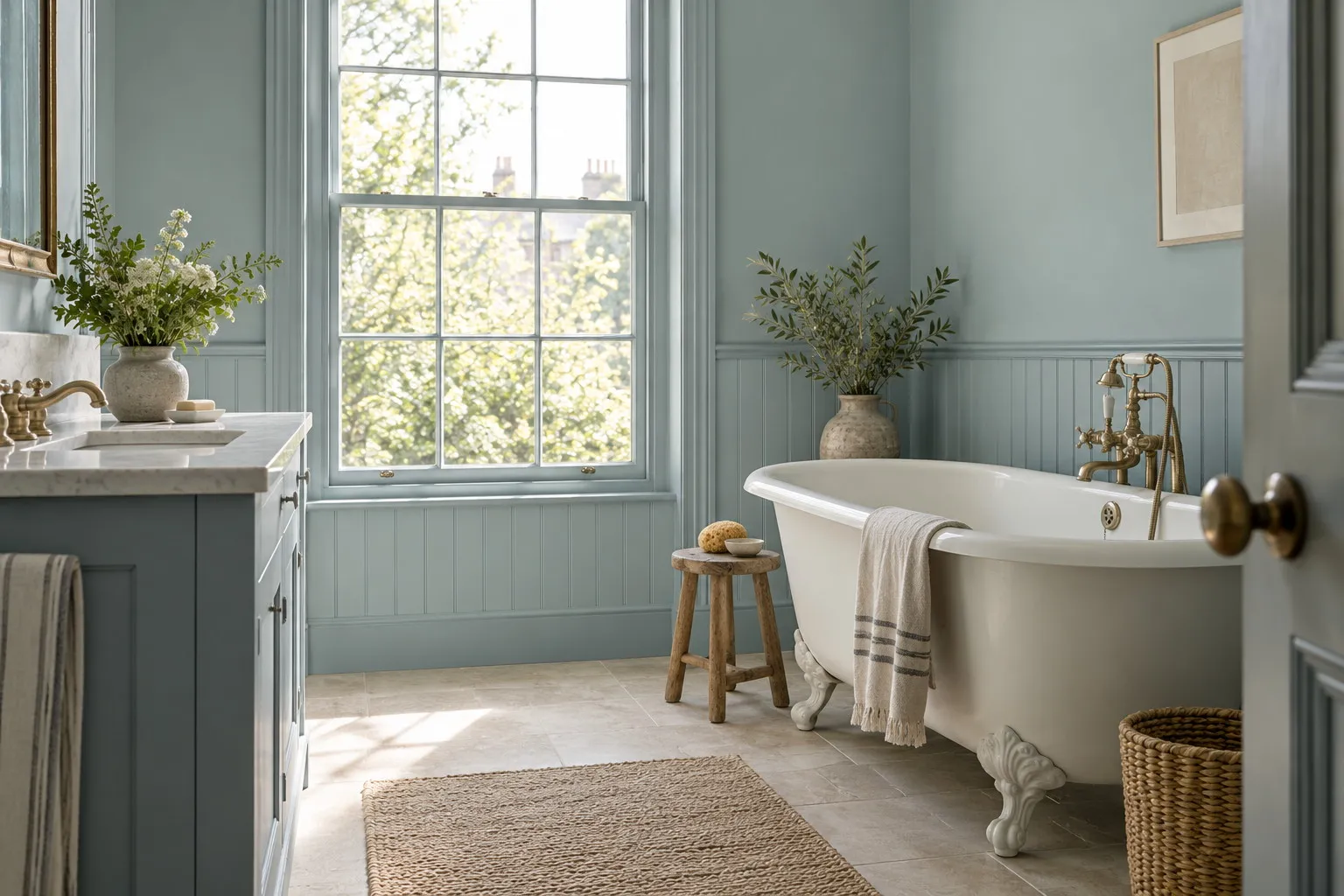
For a bathroom, choose a washable, breathable matt on the walls, an eggshell on panelling and woodwork in the splash zone, a satin on cabinets, and colours that love water: pale blues, soft greens, warm whites, or a deep green in a small cloakroom.
A bathroom is the hardest-working room in the house as far as paint is concerned, which is exactly why it deserves more care than anywhere else. Steam every morning, splashes around the basin, condensation running down the cold wall of the shower, frequent cleaning: bathroom paint has to take all of this without blistering, peeling or staining, while still looking good in a light that is often scarcer than in the rest of the home. The good news is that the choice comes down to two simple questions: which finish for which surface, and which colour for which light.
Moisture first, colour second
Before you think about shade, look at how your bathroom breathes. A room with a window you open after the shower, or an extractor that works properly, dries quickly and forgives a great deal. A windowless room where the mirror stays fogged for half an hour asks more of its bathroom paint, and above all needs its ventilation put right before any decorating begins. No paint, however good, can stand in for fresh air.
Then think in zones. High walls, away from the spray, only ever see steam; the surfaces in direct contact with water, the rim of the bath, the panelling behind the basin, the window reveal, take drops and sponges. The ceiling, meanwhile, collects the warm condensation. Each zone has its ideal finish, and that division is what separates a bathroom that ages well from one that needs redoing after two winters.
Which bathroom paint for the walls
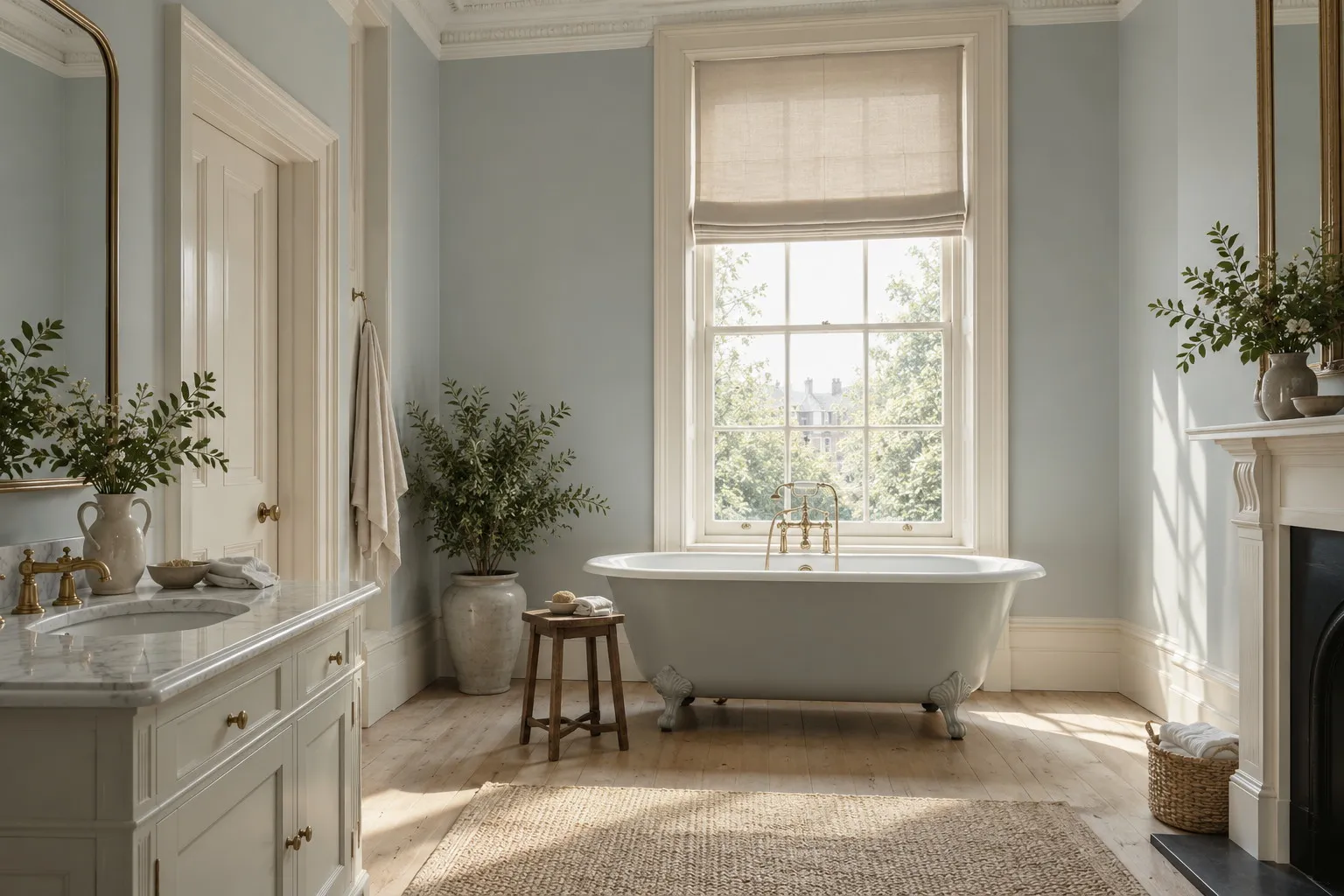
For the main expanses of wall, our choice is Marble Matt Emulsion. People often assume a deep matt belongs in the sitting room, a reflex inherited from the old chalky, fragile matts. Ours is loaded with crushed Carrara marble, which gives a denser, harder film with that mineral touch you can feel under the hand. It carries class 1 wet-scrub resistance under EN 13300, meaning it is washable and even scrubbable, and it is intended for kitchens and bathrooms alike.
It has another asset in a wet room: the film stays breathable. An old wall, a lime plaster or a render that has taken on moisture can keep releasing it without the paint lifting. Reckon on around 15 m² per litre per coat, two coats, touch-dry in 1 to 2 hours and ready to recoat after 3 to 4: an average bathroom is repainted in a day, and the faint smell of a low-VOC water-based paint does not settle into the house.
Panelling, woodwork and the splash zone
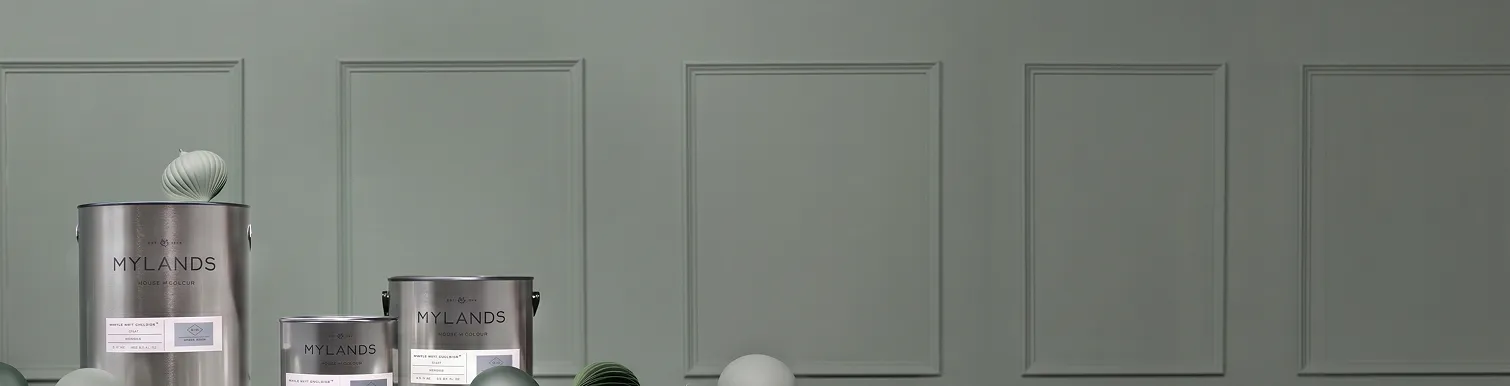
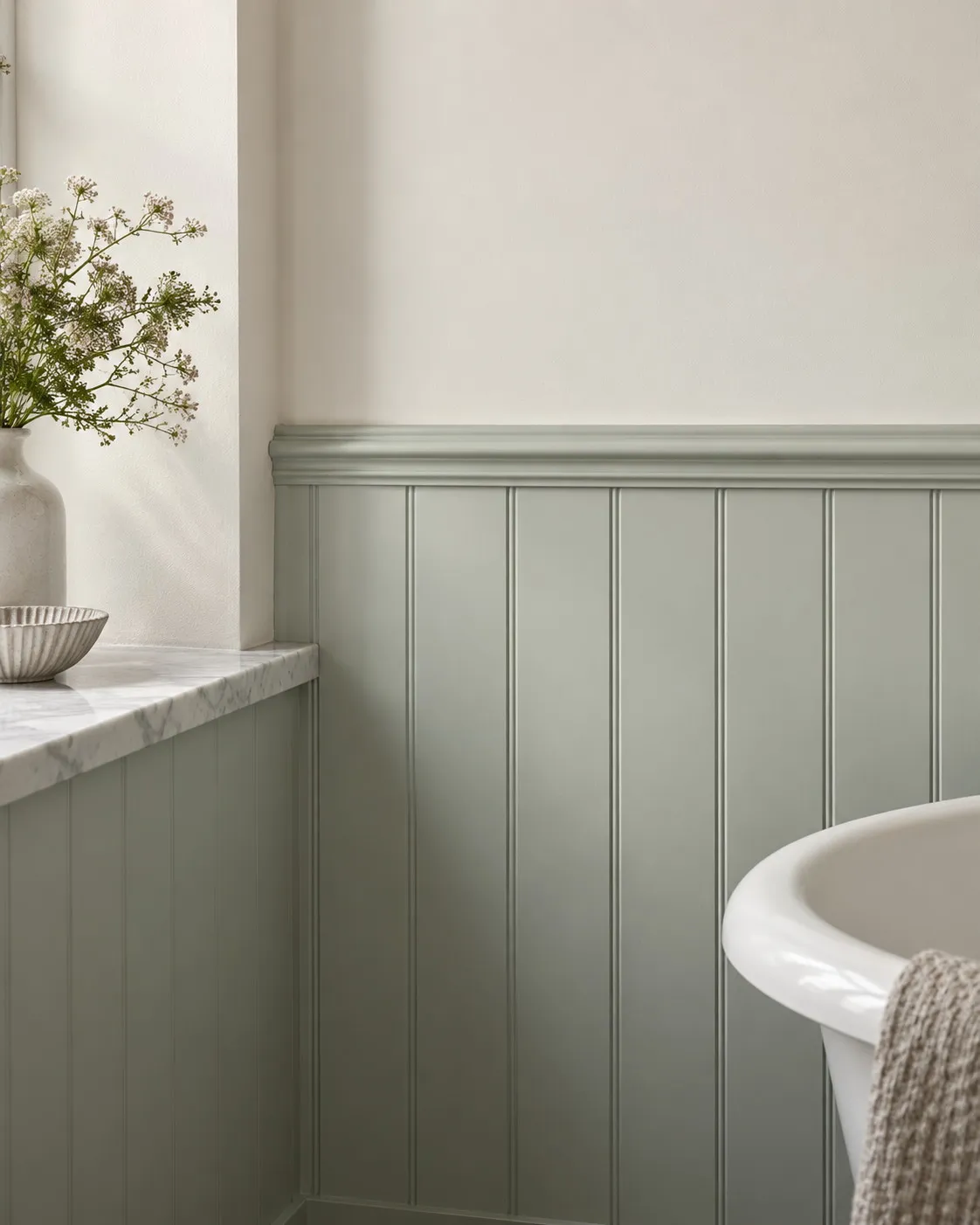
Where water actually reaches the wall, move to a multi-surface finish. Multi-Surface Eggshell is the right answer for half-height panelling, a skirting board, a window frame or a door: around 15 % sheen, a soft glow that catches the light without reflecting the room, and good moisture resistance. It is the quintessential English finish for bathroom woodwork, the one that creates that quiet contrast between a matt wall and a faintly lustrous dado.
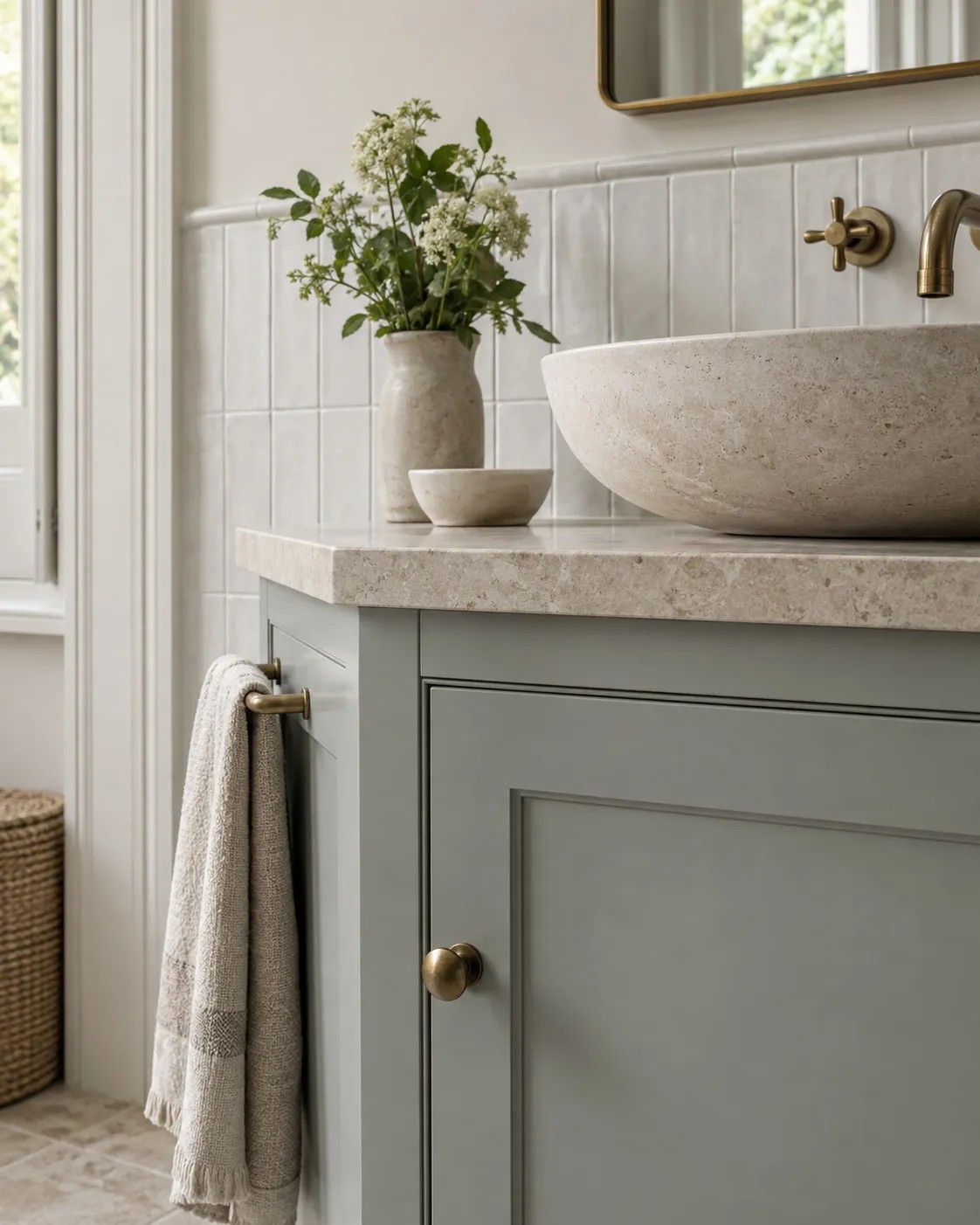
For a vanity unit, a bathroom cabinet, a towel radiator or a door that gets wiped down often, Multi-Surface Satin adds a further step of sheen and hardness. It cleans with a pass of the sponge and suits wood and metal alike. Multi-surface finishes cover around 12 m² per litre per coat; allow two coats, and a suitable primer on new wood, a dark surface or a repaired one.
And the ceiling
It is the surface most exposed to condensation, and often the most neglected. Two options hold up well: the same Marble Matt Emulsion as the walls, in the same colour or in a warm white, or our Ceiling Paint, formulated for a flat, even finish that hides imperfections. In a small bathroom, painting the ceiling in the wall colour dissolves the corners and gives a lovely enveloping feel.
Colours that love water
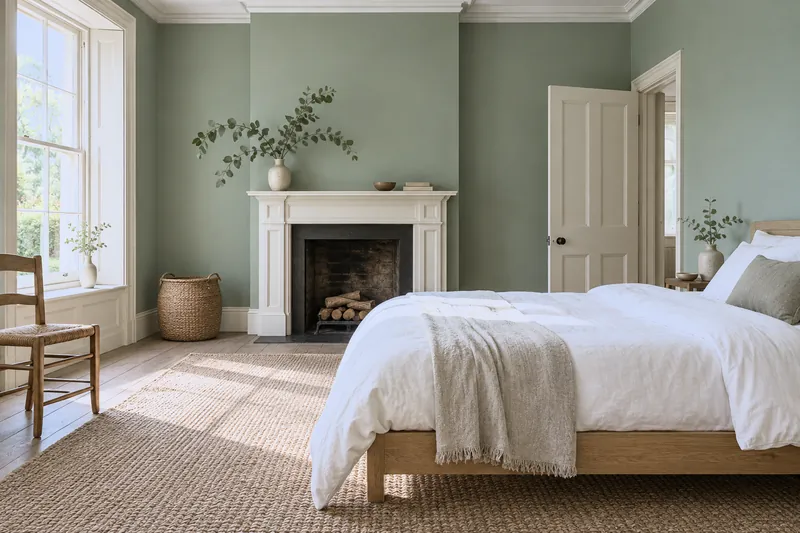
Washed-out blues and greens are the natural colours of a bathroom, and not by accident: they echo water, glass and stone, and they flatter skin in neutral light. Bridge Blue No.222, a pale, slightly powdery blue reminiscent of London's Albert Bridge, is the one we recommend most often: light enough to enlarge the room, present enough not to read as white. Hawksmoor No.112 is greyer and calmer, ideal in north light; Glass BH.09, from the Beata Heuman collection, has that crystalline freshness between blue and green that recalls frosted glass.
Among the greens, Copper Green No.36 leans towards the patina of weathered copper, soft and very luminous, while Museum No.151, a deeper smoky green, warms up a white-tiled room. For a ceiling or a single wall in the same family, a warm white such as Holland Park No.5 avoids the clinical look of pure white and sits happily with all of these shades. Our selection of bathroom colours shows them side by side, from palest to deepest.
A bathroom does not need to be white to look clean; it needs a colour that loves the light it is given.
Small space, bold colour
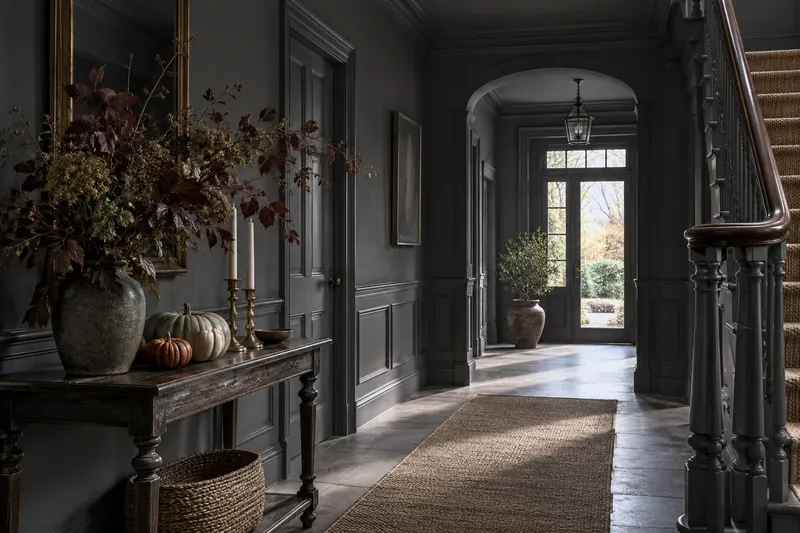
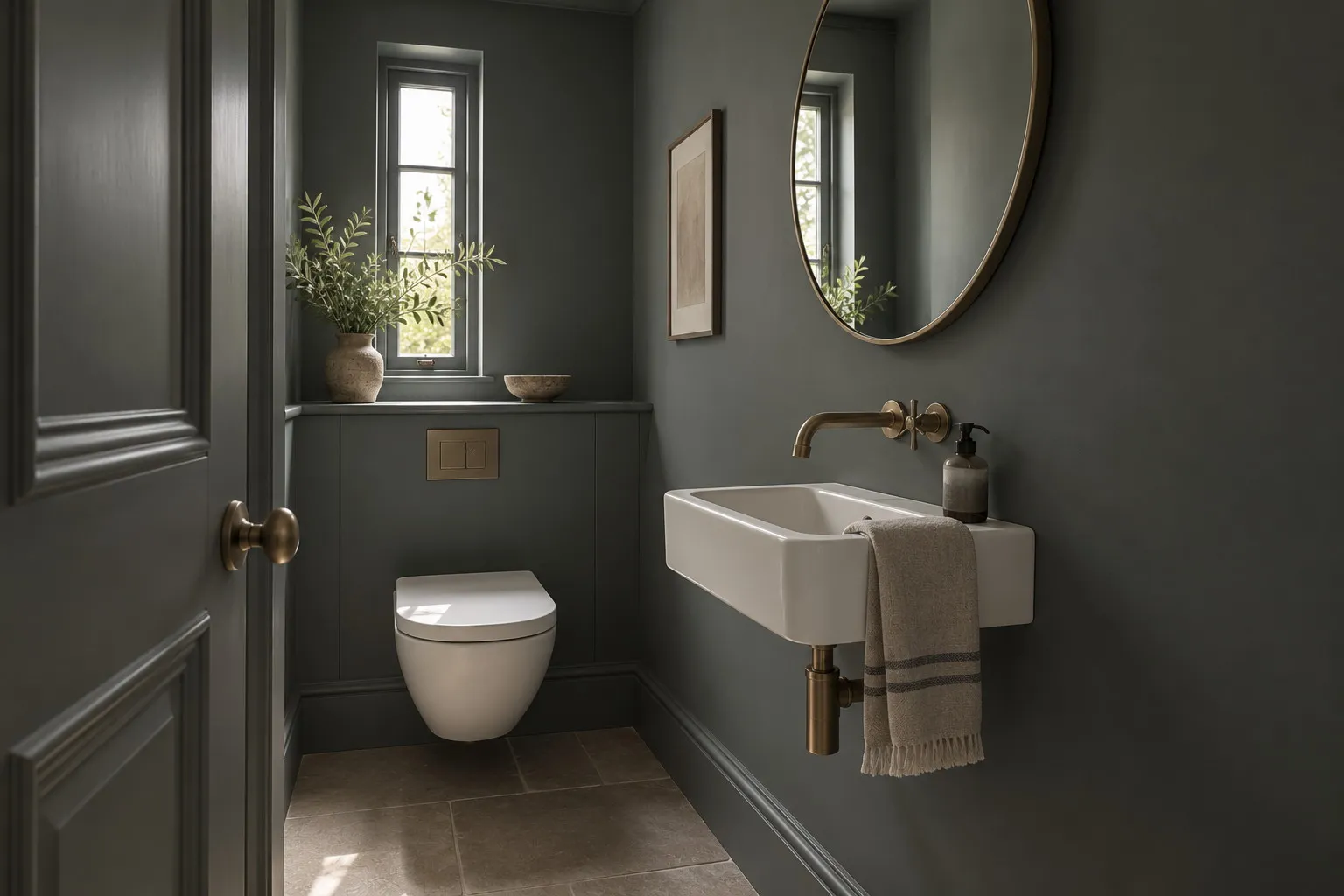
A guest cloakroom or a small windowless shower room is the perfect place for a deep colour. With no daylight to protect, a dark green such as Mad About The Bathroom, created for Kate Watson-Smyth of Mad About The House, or the more dramatic Market Green No.38, turns a box room into a jewel case. Paint walls, ceiling, door and panelling in the same shade, matt on the walls and eggshell on the wood, and let brass and pale stone provide the only contrast.
Prepare, paint, let it dry
A bathroom is prepared like any other room, with a little more rigour. Wash the walls to remove soap film and limescale, let them dry completely, lightly sand old glossy paint to open up the surface, and fill any cracks. On a new, porous or repaired surface, or one darker than the colour to come, a primer tinted to sit under the finish guarantees full opacity in two coats; allow roughly 0.5 L of primer per litre of paint. Each colour's page tells you which primer belongs beneath it.
Respect the drying times between coats, then give the room a few days of generous ventilation before returning to the rhythm of hot showers. Like any water-based paint, the film goes on hardening for several weeks: wait that long before the first vigorous scrub, and make do with a soft sponge in the meantime. The brushes, for their part, simply wash out in water.
Where to start
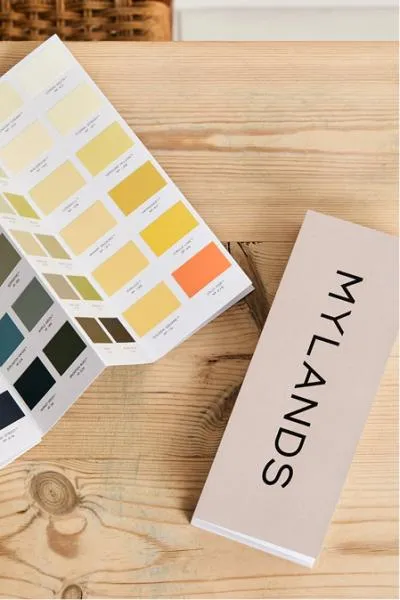
Order two or three 100 ml sample pots, each covers around 1.5 m², and paint proper squares on the shower wall and beside the basin, then look at them morning and evening, steam included. The physical colour card, sent free of charge, lets you compare the blues and greens in the light from your own window. And to cost the project, the price per square metre page will tell you exactly what a bathroom in two coats represents, walls and panelling included.
Frequently asked questions
Can you use a matt paint in a bathroom?
Yes, provided it is a matt that is properly washable. Marble Matt Emulsion carries class 1 wet-scrub resistance under EN 13300 and its film stays breathable, which makes it suitable for bathroom walls. For splash zones and woodwork, choose Multi-Surface Eggshell, which resists direct moisture better.
Which paint for a bathroom without a window?
Start by checking that the mechanical ventilation actually works, because no paint can make up for air that never changes. Then the same logic applies: washable matt on the walls, eggshell or satin on woodwork and cabinets. With no daylight to protect, it is also the moment to try a deep colour across every surface.
Do you need a primer before painting a bathroom?
On a sound, previously painted wall in a similar shade, two coats of finish are usually enough. A primer becomes useful on a new, porous or repaired surface, on one noticeably darker than the chosen colour, and on bare woodwork. Allow around 0.5 L of primer per litre of paint, in the tone shown on each colour's page.
Which colour makes a small bathroom feel bigger?
Very pale blues and greens, such as Bridge Blue No.222 or Copper Green No.36, reflect light while adding depth, and read larger than a pure white that emphasises every corner. Painting the ceiling in the same shade as the walls erases the edges of the room and strengthens that sense of space further.