The journal
Kitchen paint: the right finish for walls, cabinets and woodwork
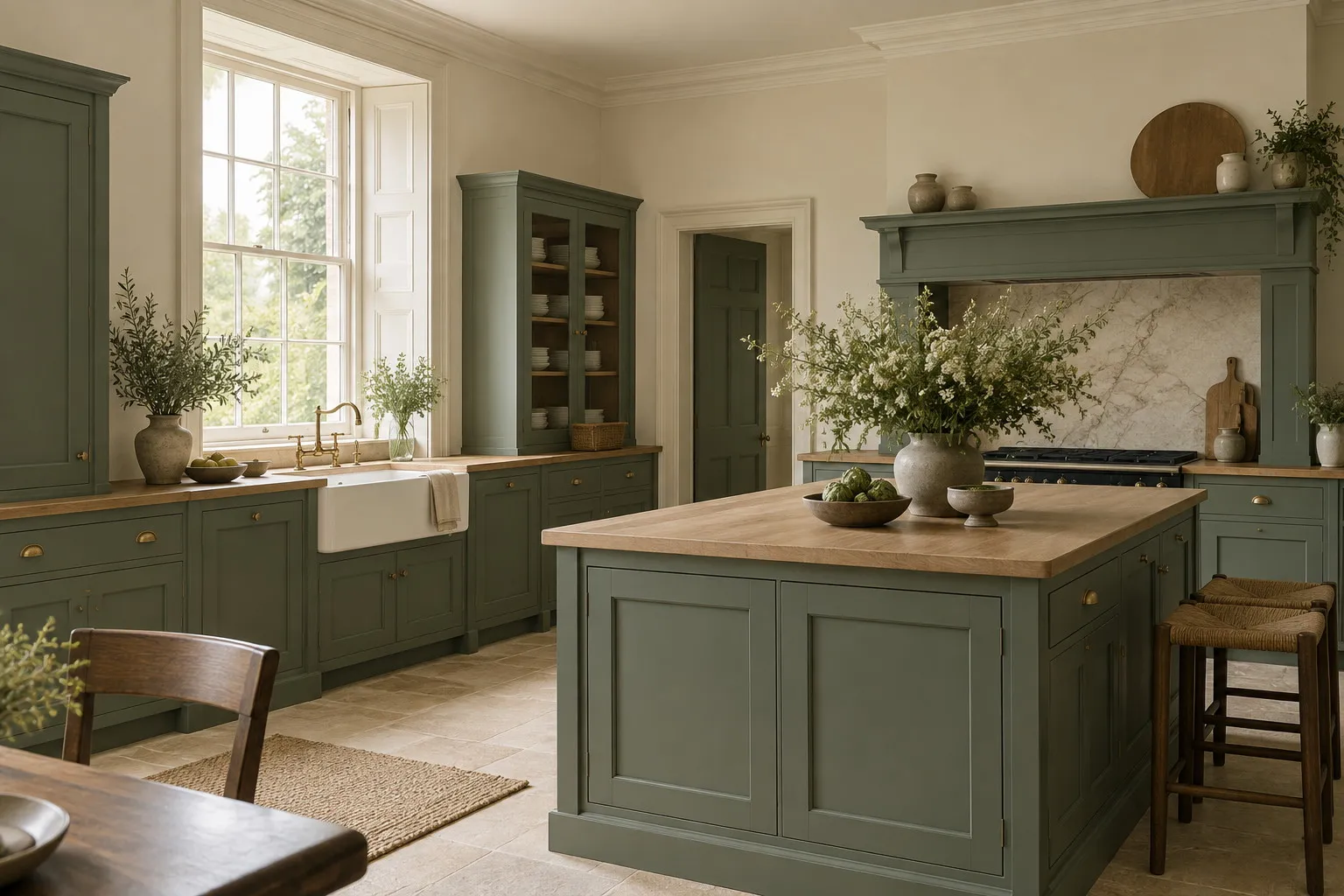
The right kitchen paint is chosen surface by surface: a scrubbable, breathable matt on the walls, an eggshell or a satin on cabinets and doors, a dead matt to wrap the whole room in a single colour, and shades that suit the room, deep greens, warm whites, blues.
A kitchen is the room where paint works hardest, and the one where people hesitate longest. Airborne grease around the hob, steam from the pans, splashes behind the sink, cupboard doors opened a hundred times a day, chairs scraping the wall: kitchen paint has to take all of this and stay good-looking, on surfaces that have nothing in common. A plaster wall, a wooden cabinet door and a skirting board call for neither the same finish nor the same preparation, and it is by treating them separately that you end up with a kitchen that ages well.
One kitchen paint for three different surfaces
Before you choose a colour, take stock of what you are going to paint. First come the walls, which mostly see steam and the odd splash, and which make up the largest area. Then the furniture, doors, drawers, island, dresser, which suffer greasy hands, knocks and repeated cleaning. Finally the woodwork, skirting, doors, window frames, and sometimes a radiator. Each family calls for its own finish, and the most elegant result often comes from their contrast: a very matt wall, cabinets with a soft glow.
A word on upkeep before going further. A water-based paint goes on hardening for several weeks after it is applied; during that time, make do with a soft sponge before returning to the normal rhythm of cleaning. That early patience applies to walls and cabinets alike, and it explains most of the disappointment one hears about paints that "do not last".
The walls: a matt you can scrub
For kitchen walls, our choice is Marble Matt Emulsion, the same one as in the rest of the house. You might think a matt has no place near a hob; that was true of the old chalky matts, and it no longer is. The crushed Carrara marble in its formulation gives a dense, hard film with class 1 wet-scrub resistance under EN 13300, which makes it a properly scrubbable paint. It is intended for kitchens and bathrooms, covers around 15 m² per litre per coat, and its reflection-free surface hides the flaws in old plaster that the raking light off a worktop would otherwise reveal.
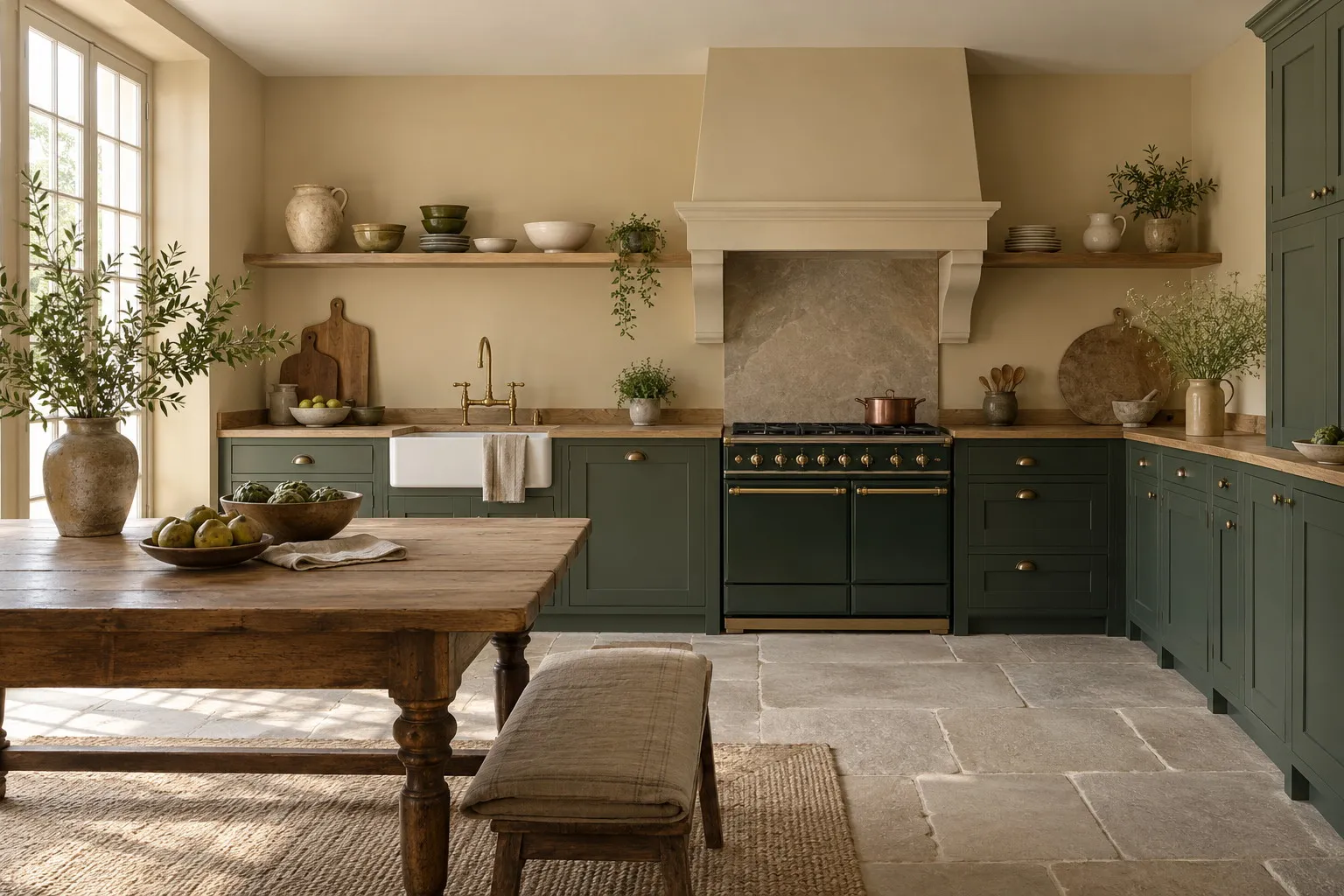
Its film stays breathable, which matters in a room where the air fills with moisture every evening, and more still in an old house with lime-plastered walls. Behind the sink and the hob, a splashback in tile, stone or glass remains the surest protection; paint takes over everywhere else. Our page on kitchen paint gathers the finishes and colours intended for this room.
The cabinets: eggshell or satin
On cabinet doors, the issue is no longer steam but hands. A cupboard door is grabbed dozens of times a day, often with greasy fingers, and wiped straight after. Multi-Surface Eggshell, at around 15 % sheen, is the reference finish for kitchen cabinets: a soft glow that catches the light without reflecting the room, good moisture resistance, and that hand-painted joinery look you find in English kitchens. It wipes clean with a sponge and suits wood and metal alike.
If your kitchen sees heavy use, or if you prefer a crisper look, Multi-Surface Satin adds a further step of sheen and hardness. It is particularly suited to a central island, the bottom drawers and the doors children open at knee height. Both finishes cover around 12 m² per litre per coat, are touch-dry in two to three hours and go on in two coats. Everything you need to know on the subject is gathered on our kitchen cabinet paint page.
Dead matt to wrap the whole room
A third route is winning more and more admirers: Multi-Surface Dead Matt, at around 5 % sheen, which goes equally well on walls, cabinets, woodwork and the radiator. It lets you paint the entire kitchen in a single colour, with no break between plaster and wood, and it stays washable. It is the finish for colour drenching, the one that gives small kitchens that jewel-box quality you see in English country houses.
Preparing kitchen cabinet doors
Preparation accounts for three quarters of the result on a kitchen cabinet, because an invisible film of grease is enough to stop paint from bonding. Take off the doors and handles if you can, and number them. Degrease every door with a suitable cleaner, rinse, let it dry. Lightly sand the whole surface to open up the old finish, especially if it is glossy, then dust off carefully. On bare wood, a dark surface or a repaired one, apply the primer shown on the page of the colour you have chosen, allowing roughly 0.5 L of primer per litre of paint. Our woodwork preparation guide sets out each step.
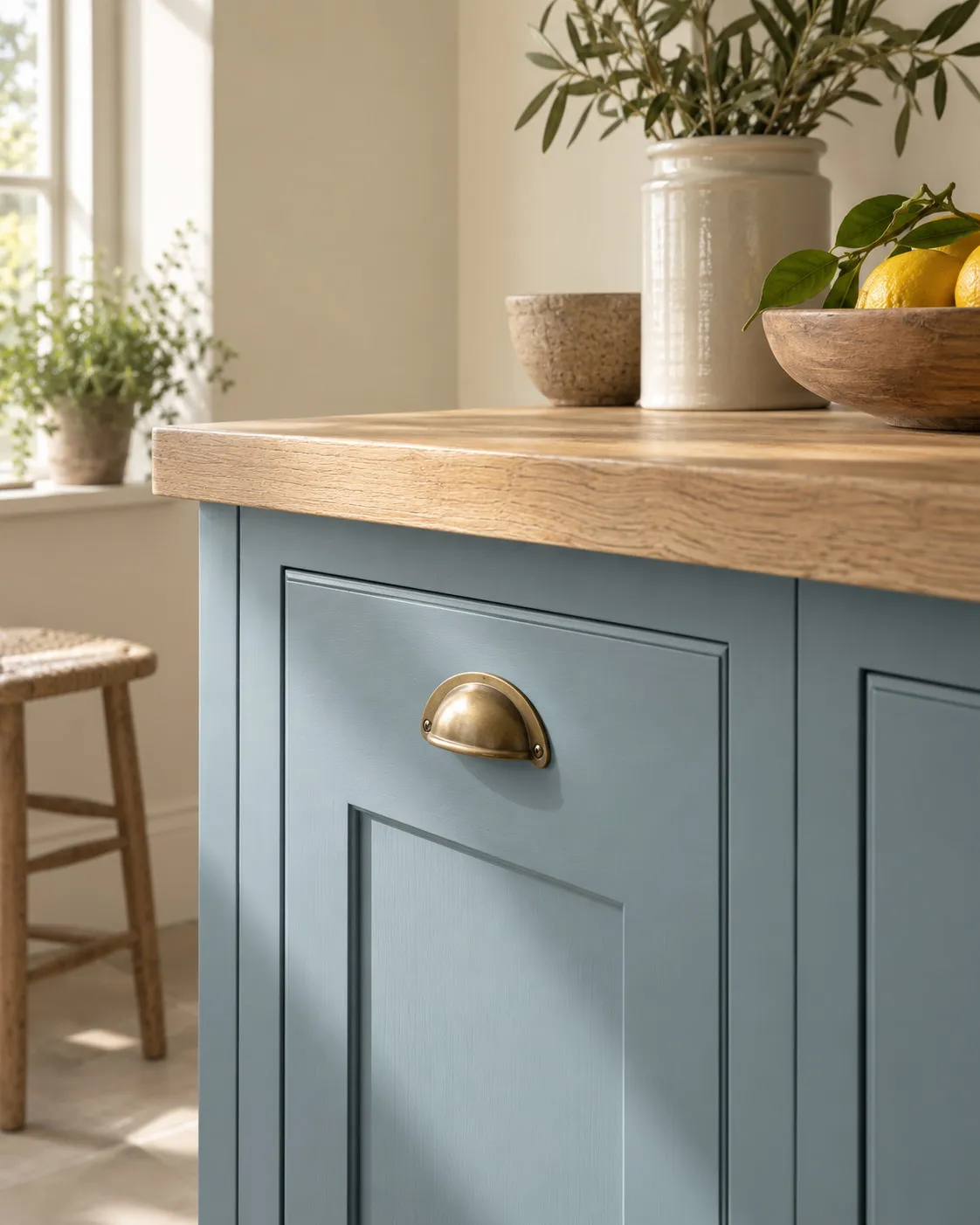
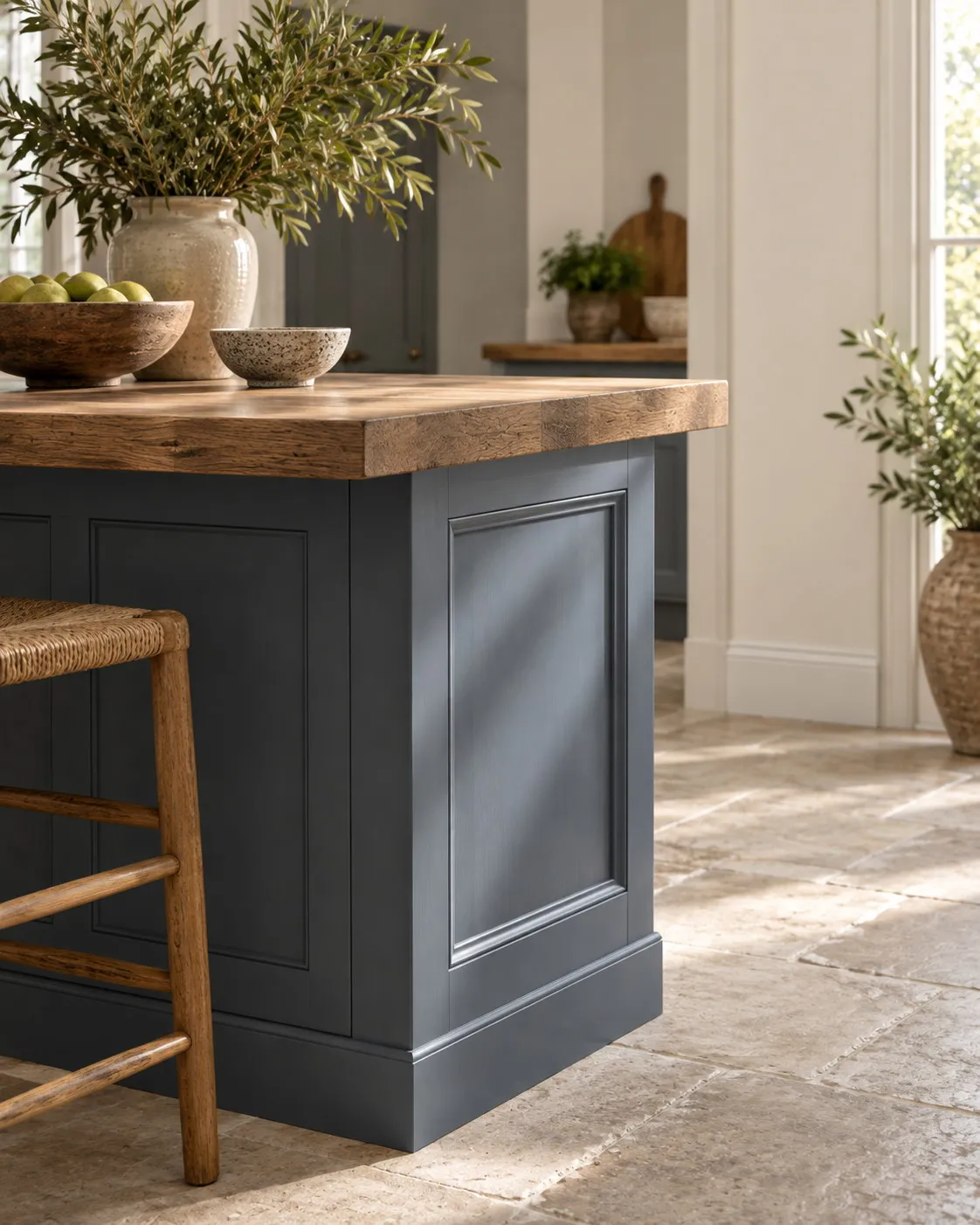
Then paint two thin coats rather than one thick one, respecting the drying times, and leave the doors flat for a few days before rehanging them. A low-VOC, low-odour water-based paint lets you carry out this work in the kitchen itself, window open, without emptying the house or giving up dinner there that evening.
The colours that make a beautiful kitchen
Deep greens have become the natural colour of kitchen cabinets, and for good reason: they flatter wood, brass and stone, and they do not show marks. Damp Leaf BH.14, from the Beata Heuman collection, is soft and enveloping like a misty garden on a summer morning, light enough to stay friendly in full daylight. Forest BH.16, inspired by the fir forests of Sweden, is darker and more dramatic, superb on an island or on base units beneath an oak worktop.
On the walls, a warm white sets these greens off without competing with them. Bone BH.04, a creamy white mixed to evoke the memory of a 1940s kitchen, seems made for the job; Holland Park No.5, a lightly yellowed white created for a period property, is the most versatile of our whites. For a kitchen short of light, Wheatsheaf BH.23, the colour of wheat fields just before harvest, warms walls and cabinets at once.
A hand-painted kitchen ages better than a factory-made one, because you can paint it again.
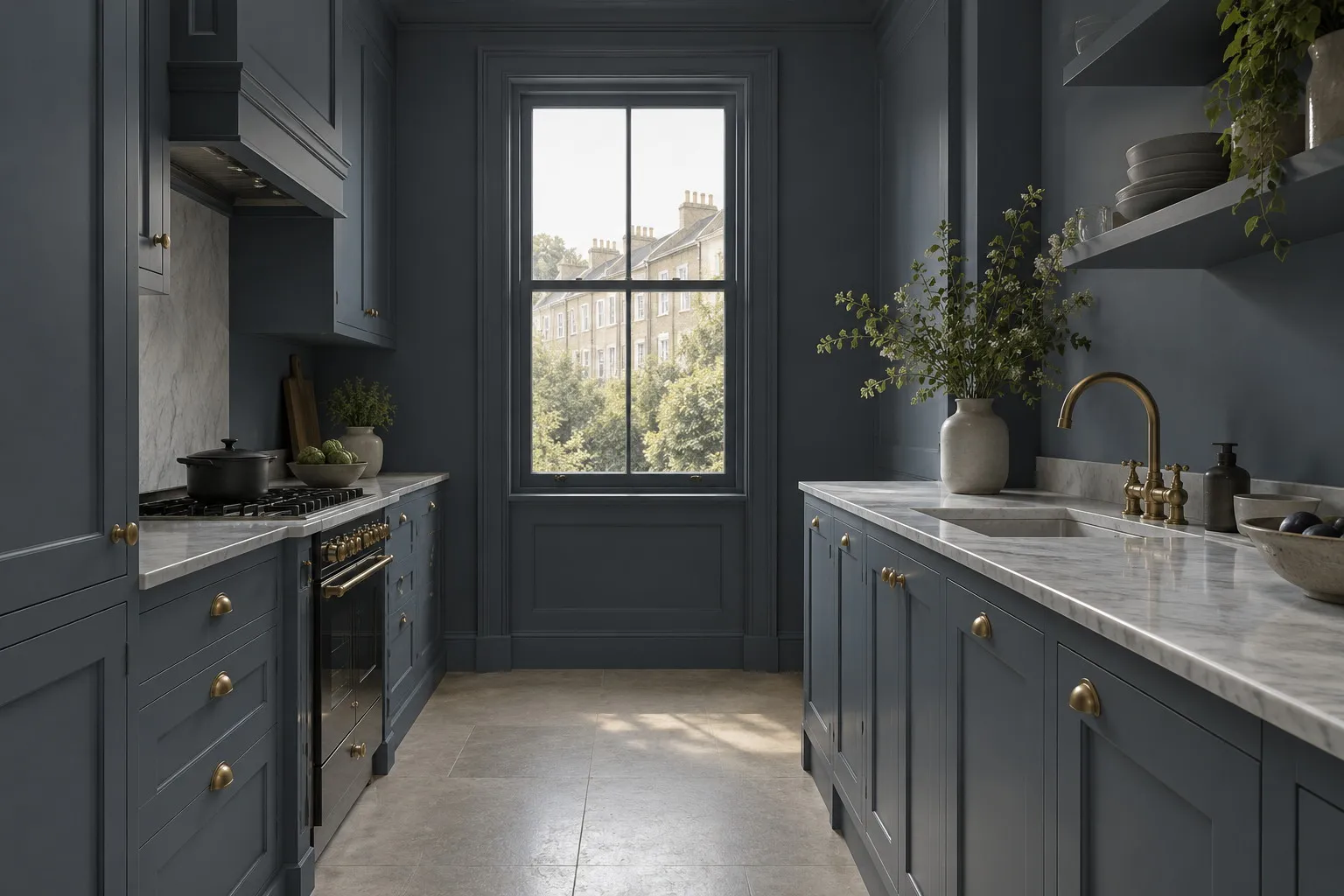
Blues, finally, give a kitchen the air of a Scandinavian pantry. Stockholm BH.11, Beata Heuman's perfect blue, inspired by the ceremonial sash of King Gustav III, is fresh and crisp on framed doors; Mayfair Dark No.218, a deep indigo matched to an original wallpaper fragment, is our candidate for a fully drenched kitchen, walls and cabinets included. Kitchen paint is always chosen in the room, held against the worktop and the floor, never on a screen.
Where to start
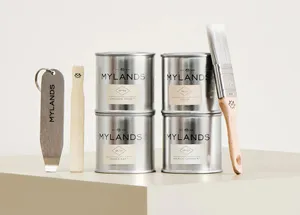
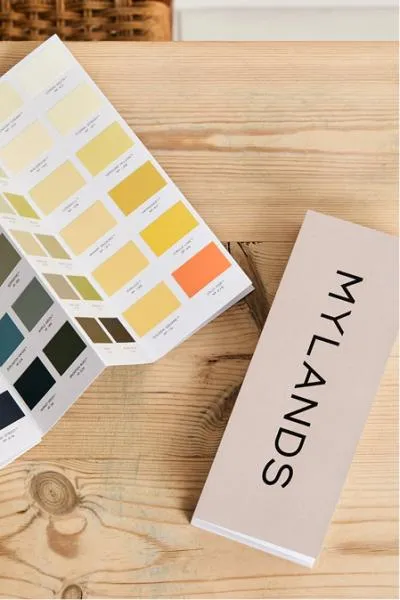
Order two or three 100 ml sample pots, each covers around 1.5 m², and paint them on a cupboard door you have taken off and on the far wall, then look at them at breakfast and at dinner time. The physical colour card, sent free of charge, lets you hold the greens and whites against your splashback. And to cost the project, the price per square metre page brings each finish back to the area it covers in two coats, walls and doors included.
Frequently asked questions
Which paint should I choose for kitchen walls?
A good washable matt. Marble Matt Emulsion carries class 1 wet-scrub resistance under EN 13300, it is intended for kitchens and bathrooms, and its breathable film suits older walls. It covers around 15 m² per litre per coat, in two coats. Allow a few weeks of hardening before the first vigorous scrub.
Can you repaint kitchen cabinets without sanding them?
A light sanding is still advisable, not to strip the wood but to open up the old finish and give the paint something to grip, especially if it is glossy. Degreasing matters even more: an invisible film of grease is enough to make paint peel. On a dark or repaired surface, add the primer shown on the chosen colour's page.
Eggshell or satin for kitchen cabinet doors?
Multi-Surface Eggshell, at around 15 % sheen, is the classic finish for kitchen cabinets: a soft glow, good moisture resistance, and cleaning with a sponge. Multi-Surface Satin, shinier and harder, suits heavily used kitchens, an island or the bottom drawers. Both cover around 12 m² per litre per coat and go on in two coats.
Which colour for a dark kitchen?
Two strategies work. Warm the room with a warm white such as Bone BH.04 or Holland Park No.5 on the walls, or a wheaten tone such as Wheatsheaf BH.23 on walls and cabinets. Or embrace the gloom with a deep colour on every surface, a green such as Forest BH.16 or an indigo such as Mayfair Dark No.218, in dead matt. Test samples at breakfast and at dinner.