The journal
Paint for woodwork: choosing the finish and the colour
The right paint for woodwork is a water-based multi-surface finish: eggshell for most skirtings, doors and panelling, satin or gloss where surfaces get scrubbed, dead matt for an enveloping tone-on-tone scheme. The rest is a matter of preparation and of harmony with the wall colour.
Woodwork is the punctuation of a room. Skirting boards, doors, architraves, windows, panelling: these are the lines that frame the wall colour, and they are the surfaces that take every knock, from the vacuum cleaner, from shoes, from hands pushing a door. Paint for woodwork is therefore not chosen the way you choose a wall paint. It has to form a harder film, wipe clean without marking, move with the timber, and above all give the room that crisp finish which separates an interior that has merely been repainted from one that has been properly decorated.
What counts as woodwork, and why it needs a paint of its own
In the English tradition, woodwork is painted with as much care as the walls, and often in a colour chosen on purpose. The term covers everything in a room that is timber or board: skirtings and dado rails, doors and their architraves, window frames and internal shutters, half-height or full-height panelling, stair balustrades, built-in shelves and cupboards. On the site, these surfaces belong to our multi-surface finishes, formulated for wood and metal alike, inside and out.
What sets these surfaces apart from a wall is wear. A skirting board takes the blows of the broom, a door collects fingerprints, a window sill sits in winter condensation. A wall matt, even a washable one, is not designed for that. Multi-surface finishes dry to a tighter film that sponges clean and lasts for years. They are all water-based, low in VOCs, low in odour, compliant with the EN 71-3 toy-safety standard, and brushes wash out in water: you can repaint the doors of a child's bedroom without emptying the house.
Which paint for woodwork: dead matt, eggshell, satin or gloss
Four sheen levels, four characters. Multi-Surface Eggshell is the reference finish for interior woodwork, the one we recommend when in doubt: around 15 % sheen, a soft silk glow that catches the light without mirroring it, good moisture resistance, and a gentleness to the eye that suits a matt wall as well as a panelled one. It is right for skirtings, doors, windows, furniture and kitchens.
Multi-Surface Dead Matt, at around 5 % sheen, answers the wish for absolute tone-on-tone: walls, ceiling, skirtings and doors in the same colour and the same absence of reflection, what we call colour drenching. It stays washable and goes onto wood, metal and radiators. Multi-Surface Satin moves a step up in sheen and hardness, for hard-worked doors, kitchens, bathrooms and corridors that get scrubbed often. Finally Multi-Surface Gloss, our most durable finish, keeps its shine for front doors, radiators and any woodwork you want to gleam like lacquer.
All of them cover around 12 m² per litre per coat, are touch-dry in 2 to 3 hours, and go on in two coats. The choice is therefore not about performance but about light and use: the more a surface is handled, the more sheen it deserves; the quieter a room, the better matt suits it.
Contrast, tone-on-tone or darker trim
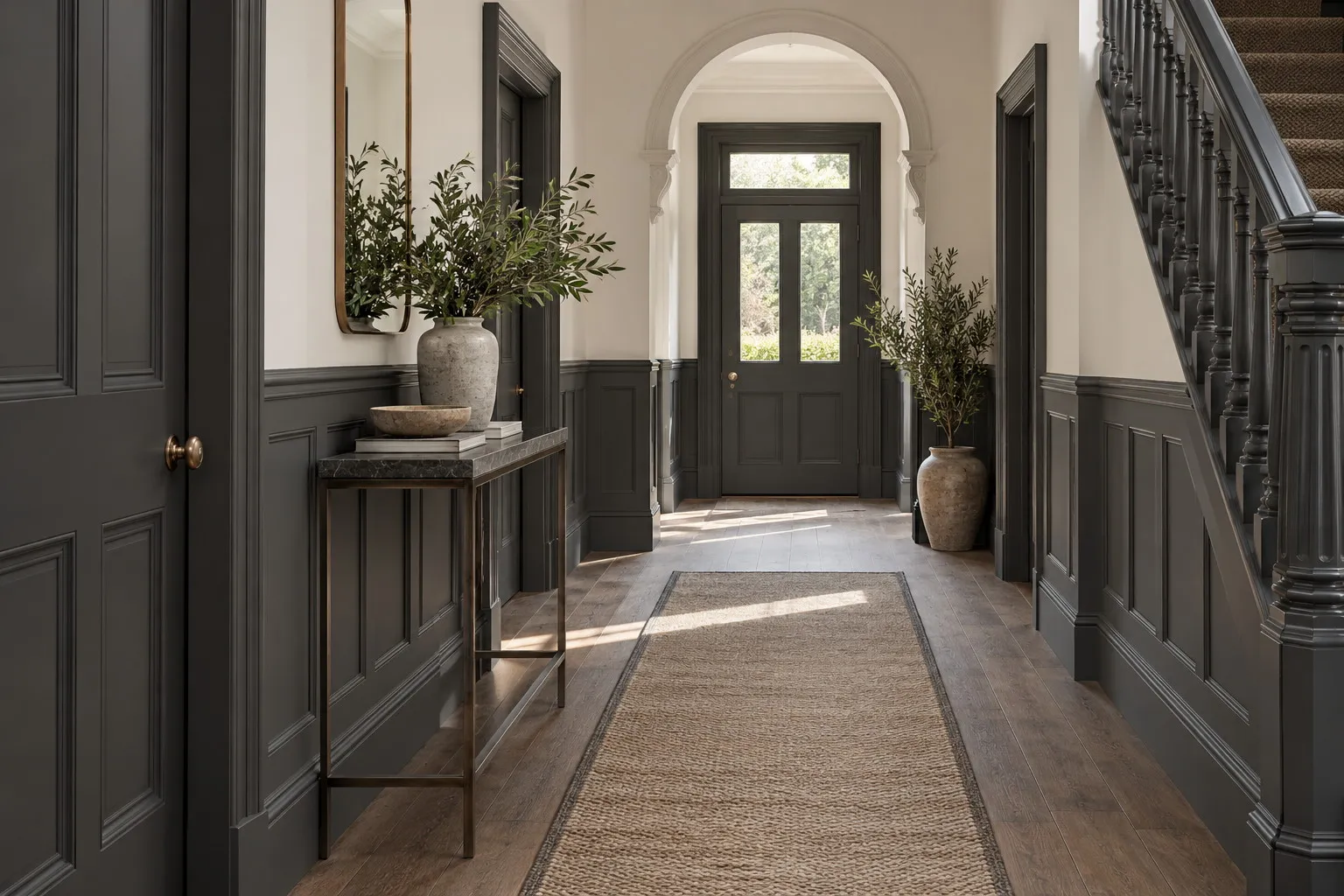
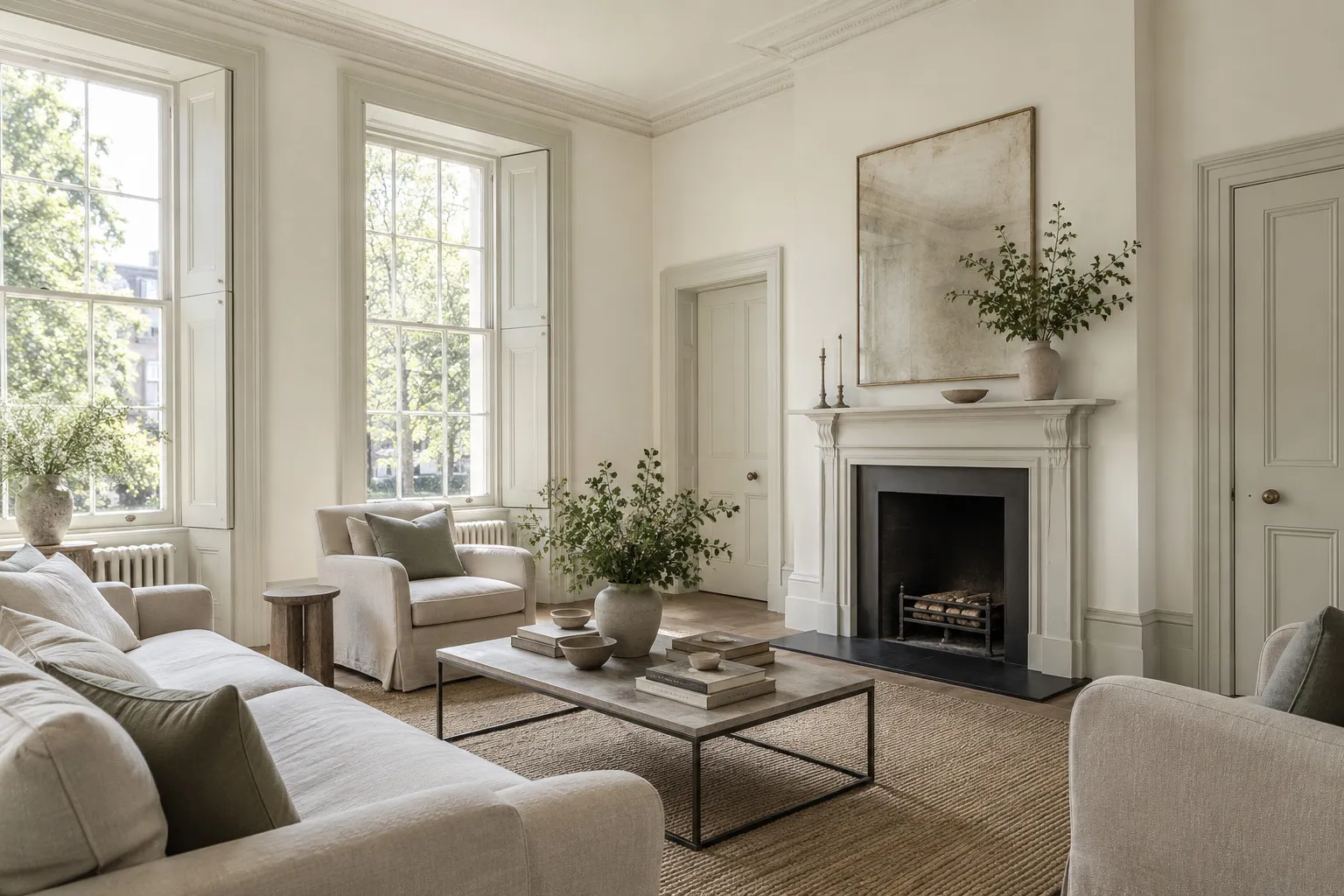
The colour of the woodwork is decided by looking at the walls, and three schools of thought share the interiors we love. The first is frank contrast: pale walls and near-black wood. Holland Park No.5, a warm, faintly yellowed white, turns graphic the moment the skirtings, doors and architraves are painted in Sinner No.238, a barely greyed bone black that draws every opening like a line of ink. It is the pairing of townhouses, one that holds up as well in a hallway as in a sitting room.
The second school is tone-on-tone, softer and more contemporary. Beata Heuman designed Old Man's Beard BH.03 as a slightly deeper version of Beata White BH.01, precisely for joinery: walls in the white, woodwork in its shadowed cousin, and the room gains relief without any colour drawing attention to itself. The same principle works with a wall in Lamb's Ear BH.06, that velvety grey-green, and skirtings in Pub BH.08, the softened black from the same collection.
Woodwork painted in a chosen colour does more for a room than any piece of furniture you could add to it.
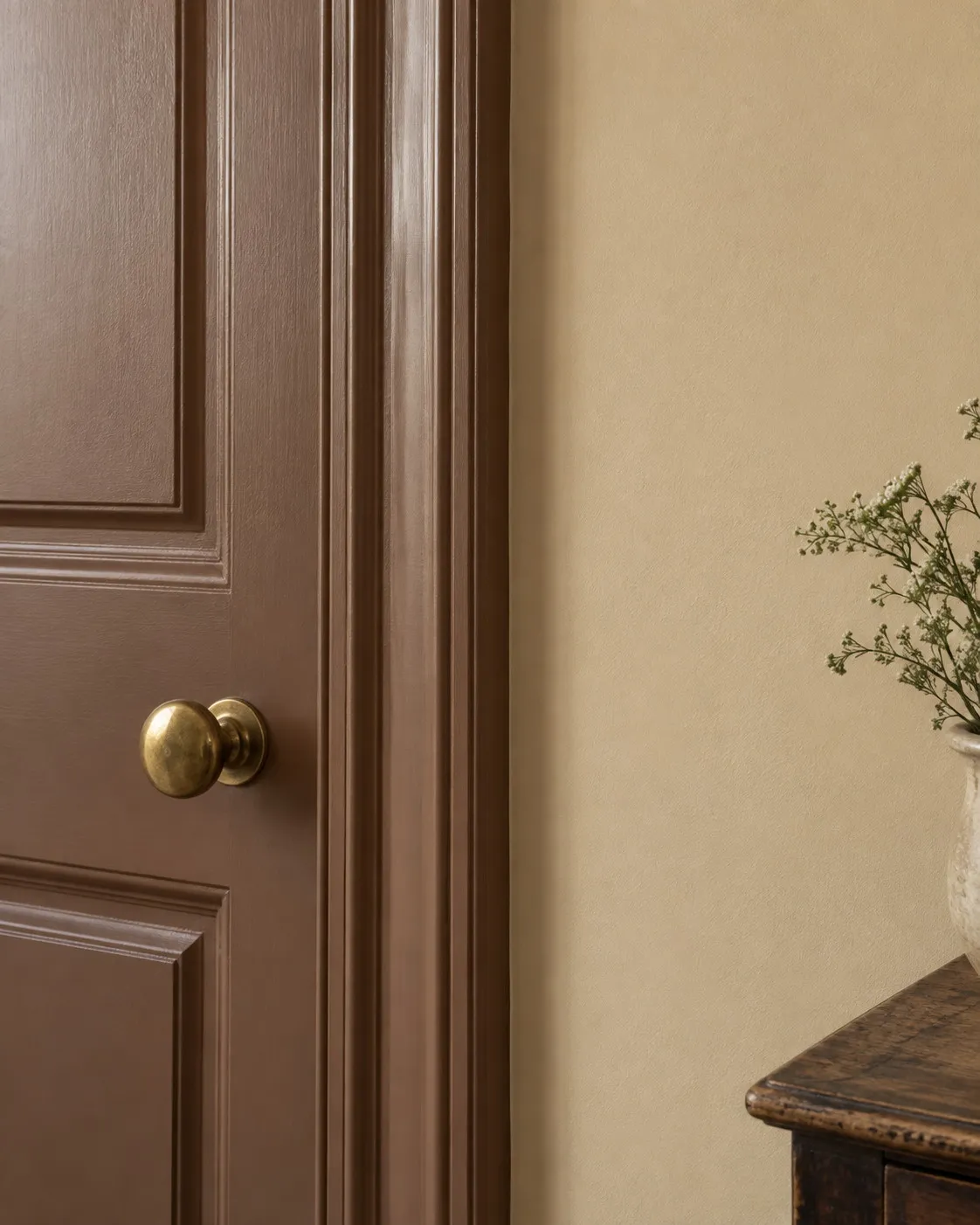
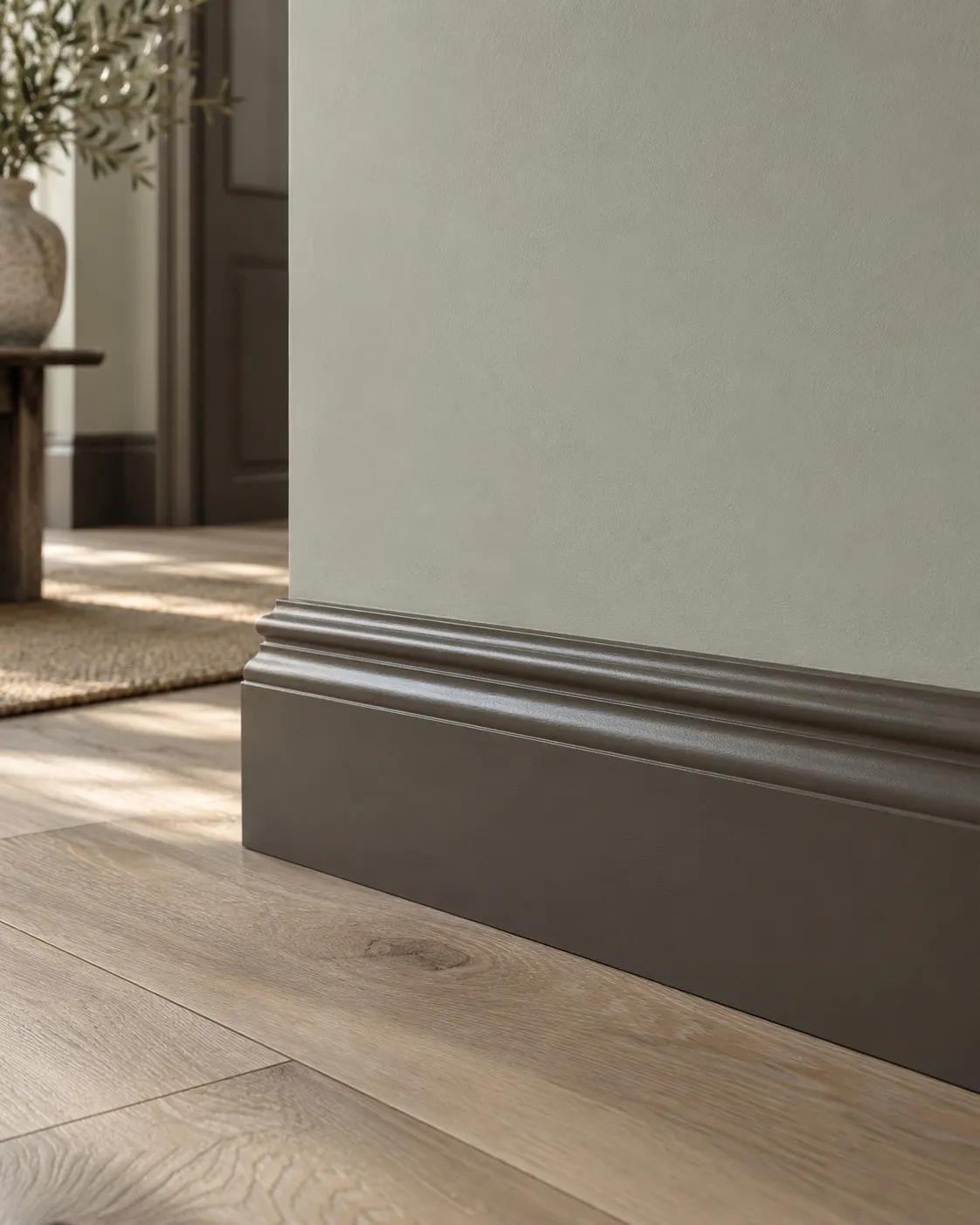
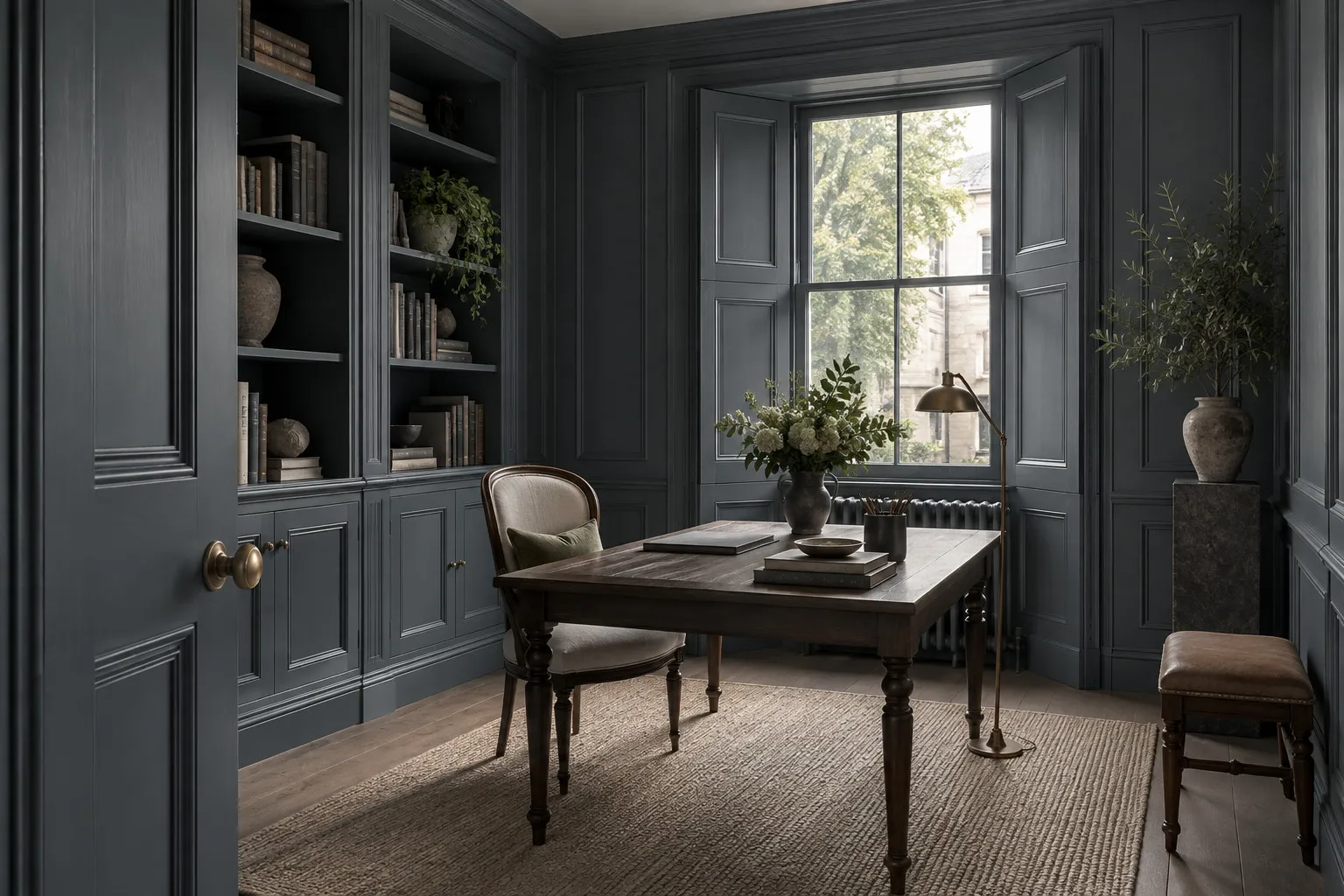
The third school reverses the usual logic: woodwork darker and warmer than the walls, to anchor the room. Cigar BH.20, a retro chocolate brown, was conceived for exactly this, as a graphic alternative to natural wood; against walls in Wheatsheaf BH.23, that ripe-wheat beige, it gives a warm, almost 1930s interior. And for those who want to wrap everything, a deep blue such as Bond Street No.219 on walls, doors, skirtings and shutters, in dead matt throughout, makes a room of a single piece where the light does the rest.
Preparing woodwork before painting
The quality of a woodwork paint shows in the preparation as much as in the product. Sound, previously painted woodwork is washed, degreased, lightly sanded to dull the old finish, then dusted carefully. Holes and cracks are filled and sanded again; old gloss paint in particular needs that keying sand. Our woodwork preparation guide walks through every step, from stripping an old flaking coat to treating new timber.
On bare wood, a porous surface, a repair or a previous colour that is much darker, a primer is essential. Our primers come in white, light grey, dark grey, pink, yellow, orange and green tones, each designed to sit beneath a family of colours; every shade's page tells you which one it needs. Allow roughly 0.5 L of primer for every 1 L of finish paint. The right primer tone is the difference between a black that covers in two coats and one that asks for three.
In what order to work
Paint the walls first, then the woodwork once the final wall coat is properly dry: it is easier to pull a clean brush line along a skirting board than the other way round. On a panelled door, start with the mouldings and panels, then the horizontal rails, finally the vertical stiles, always laying off in the direction of the grain. Let each coat dry, and sand very lightly between the two if the surface has picked up any texture.
Durability and care
A water-based finish goes on hardening for several weeks after application; during that time, avoid scrubbing and close doors gently. After that, care comes down to a damp sponge and mild soap on an eggshell, a simple cloth on a satin or a gloss. Entrance woodwork and radiators, more exposed, justify Gloss or Satin; bedrooms and sitting rooms are perfectly happy with an eggshell, whose quiet lustre ages with grace.
Where to start
Settle the wall colour first, then test two woodwork options beside it: a 100 ml sample pot covers around 1.5 m², enough to paint a door panel and a length of skirting, which you will look at in the morning and at dusk. The physical colour card, sent free of charge, lets you hold the cards against the wall and judge the contrast before you order. To cost the whole job, the price per square metre page will tell you what the skirtings, doors and windows of a room represent in two coats.
Frequently asked questions
Which finish should I choose for skirting boards and doors?
Multi-Surface Eggshell is the default choice for interior woodwork: around 15 % sheen, washable, moisture resistant and gentle to the eye. Move to Satin for a hard-worked door or a kitchen, to Gloss for a front door or a radiator, and to Dead Matt if you want the woodwork in the same reflection-free finish as the walls.
Do I need to sand woodwork before repainting it?
Yes, almost always. A light sanding dulls the old paint and gives the new coat something to grip, especially over a gloss or satin finish. Wash and degrease first, fill any holes, sand, then dust off carefully. An old coat that is flaking should be stripped back to sound timber and given a primer before the two coats of finish.
Do I need a primer on woodwork that is already painted?
Not necessarily. On sound, previously painted woodwork in a similar colour, two coats of finish are enough after sanding. A primer becomes essential on bare wood, on a repaired or porous surface, and over a previous colour that is much darker than the new one. Each colour's page shows which tinted primer belongs beneath it.
Should woodwork be lighter or darker than the walls?
Both work, depending on the effect you want. Woodwork darker than the walls, such as Sinner No.238 against Holland Park No.5, outlines the room and gives it character. Woodwork one tone deeper than the wall, such as Old Man's Beard BH.03 with Beata White BH.01, creates quiet relief. Pure white on the woodwork is rarely the best answer to a coloured wall.