The journal
Children's bedroom paint: safe, washable and made to grow up
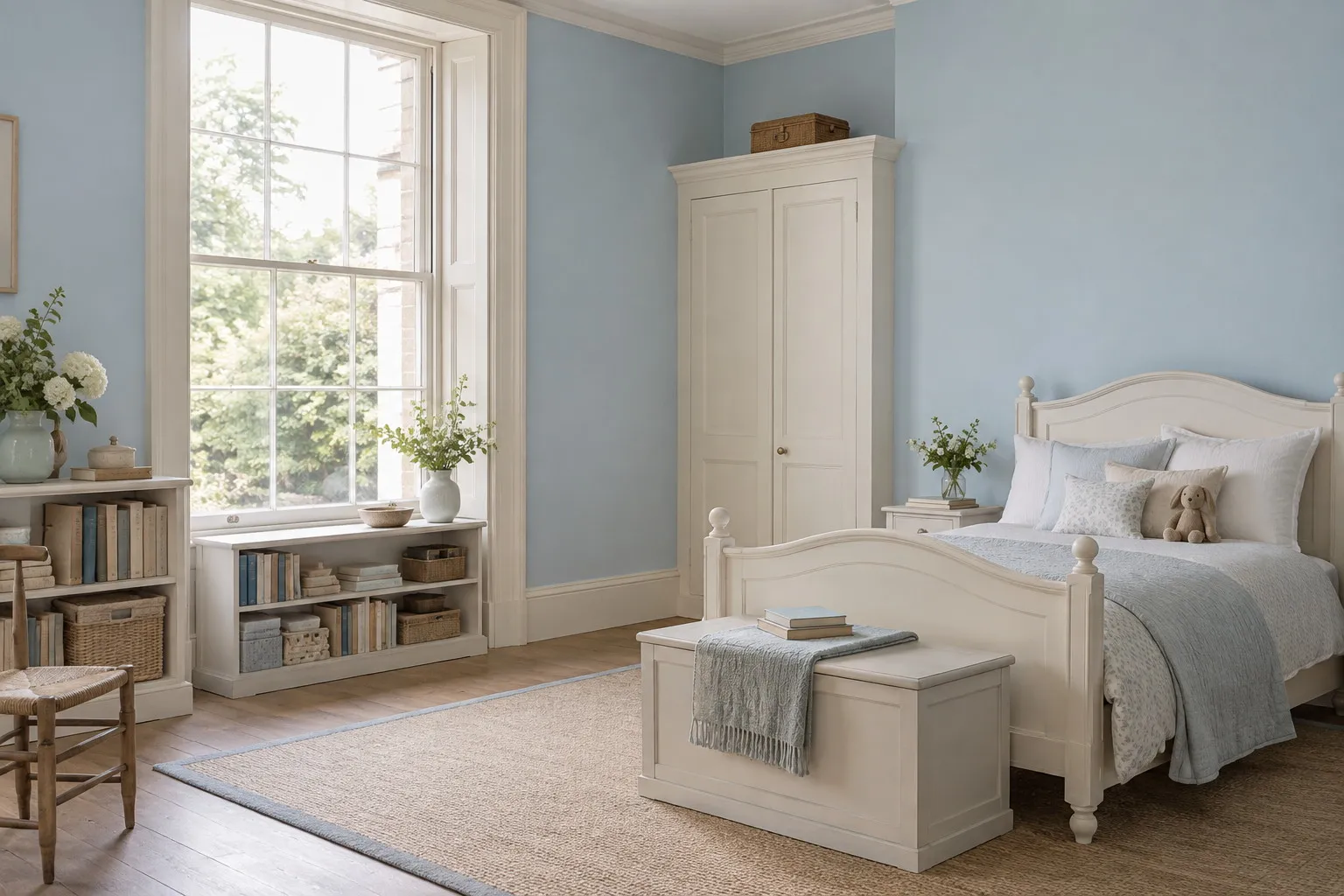
The right children's bedroom paint is water-based, low in VOC, low in odour and compliant with EN 71-3: a washable matt on the walls, an eggshell on the bed and the chest of drawers, and soft colours, pale blue, powdery pink, sage or warm white, that stay with the child for years.
Repainting a child's bedroom is a job unlike any other: the room has to be ready quickly, you have to be able to sleep in it without a second thought, and the walls have to survive years of hands, crayons and beds being moved about. Choosing children's bedroom paint therefore comes down to three questions, in this order: what is in the tin, which finish stands up to daily life, and which colour will see the child from the cot to the teenage years without everything having to be redone at each birthday. The first two have precise answers; the third deserves a little thought.
What children's bedroom paint should contain
Start with the label. A paint intended for a child's bedroom should be water-based, low in VOC and low in odour; those are the three claims that matter, well before the colour. All our decorative paints meet these criteria, and they also comply with the EN 71-3 toy-safety standard, the one that limits the migration of certain elements from painted materials. It is this compliance that allows them to be used not only on walls but on a bed, a chest of drawers or a wooden toy the child will put in their mouth.
Two regulatory reference points will help you compare. European directive 2004/42/EC caps volatile organic compounds at 30 g/L for an interior matt wall paint, and French decree 2011-321 requires an indoor-air emissions label on every tin, from A+ to C, measured after 28 days. Look for both pieces of information on the datasheet of any product you are considering; our page on low-VOC paint explains in detail how to read them.
Paint in the morning, sleep in the room that night
A fast-drying water-based paint changes everything in a room you cannot take out of service for long. Our wall emulsion is touch-dry in one to two hours and can be recoated after three to four: two coats fit into a single day, with the window open. After a good airing, the room is generally back in use the same evening; for a baby, we suggest waiting one more night, out of simple caution, and leaving the window ajar for the following days. Brushes wash out in water, and the faint smell does not drift down the corridor.
Washable walls, hard-wearing furniture
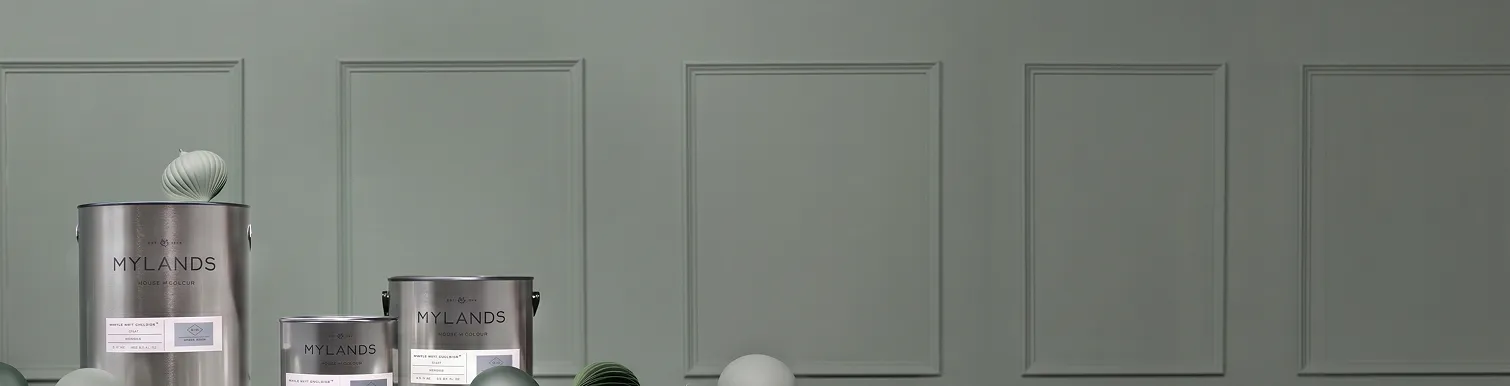
When it comes to children's bedroom paint, the obvious choice for the walls is Marble Matt Emulsion. Its film, loaded with crushed Carrara marble, is denser and harder than an ordinary matt, and it carries class 1 wet-scrub resistance under EN 13300. In practice, a felt-tip mark or a handprint comes off with a soft sponge and mild soap, once the film has hardened, without leaving a shiny patch. It covers around 15 m² per litre per coat, and its matt surface, very gentle in the light, suits a room where calm is the point.
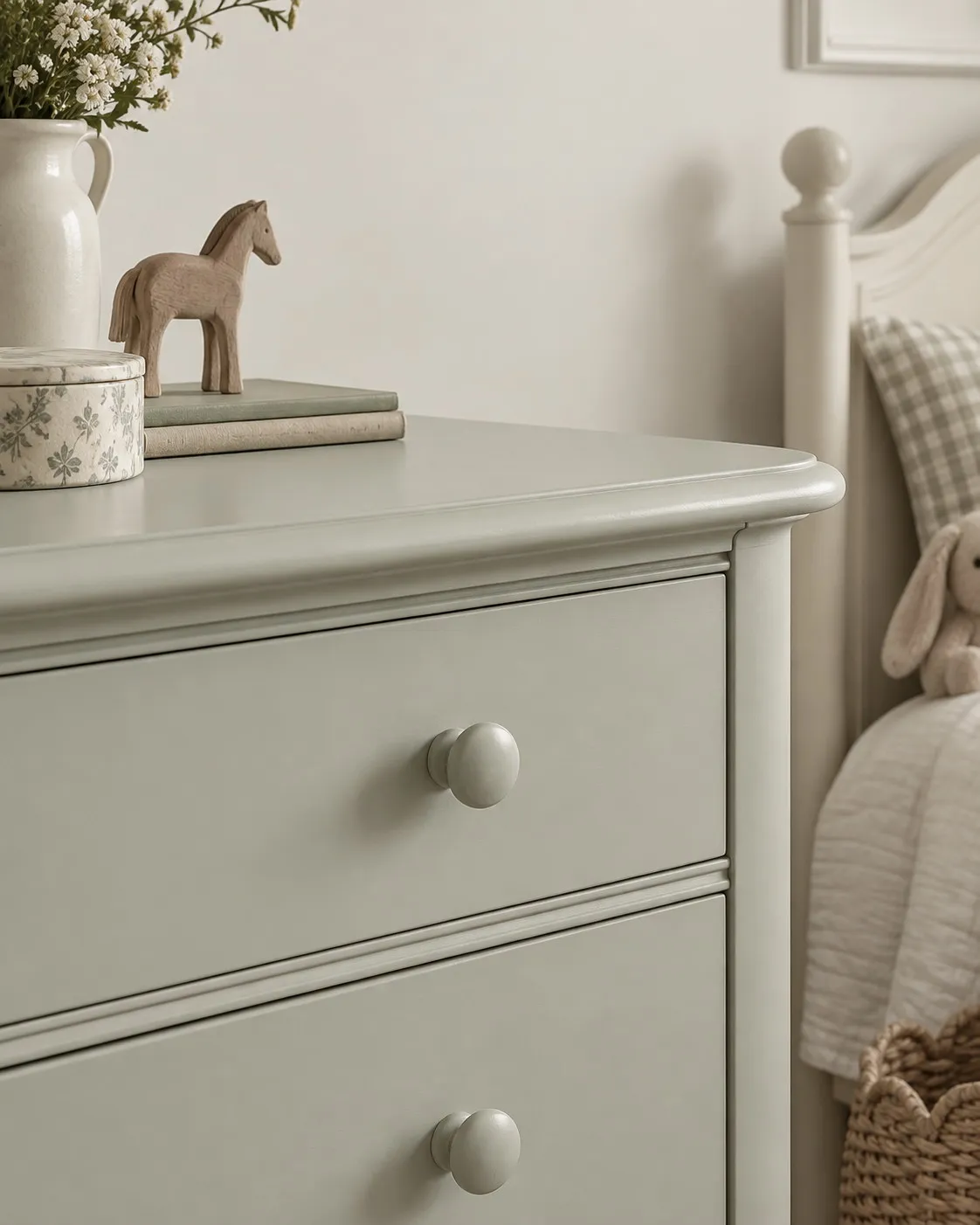
For the bed, the chest of drawers, the shelves or the nursing chair, move to Multi-Surface Eggshell. At around 15 % sheen, it has that soft glow that cleans easily and shrugs off the knocks of everyday life, on wood and metal alike. Two coats, at around 12 m² per litre per coat, are enough on a piece that has been painted before; on new wood or over a very different colour, add the primer shown on the colour's page. Here too, EN 71-3 compliance applies.
Colours that grow with the child
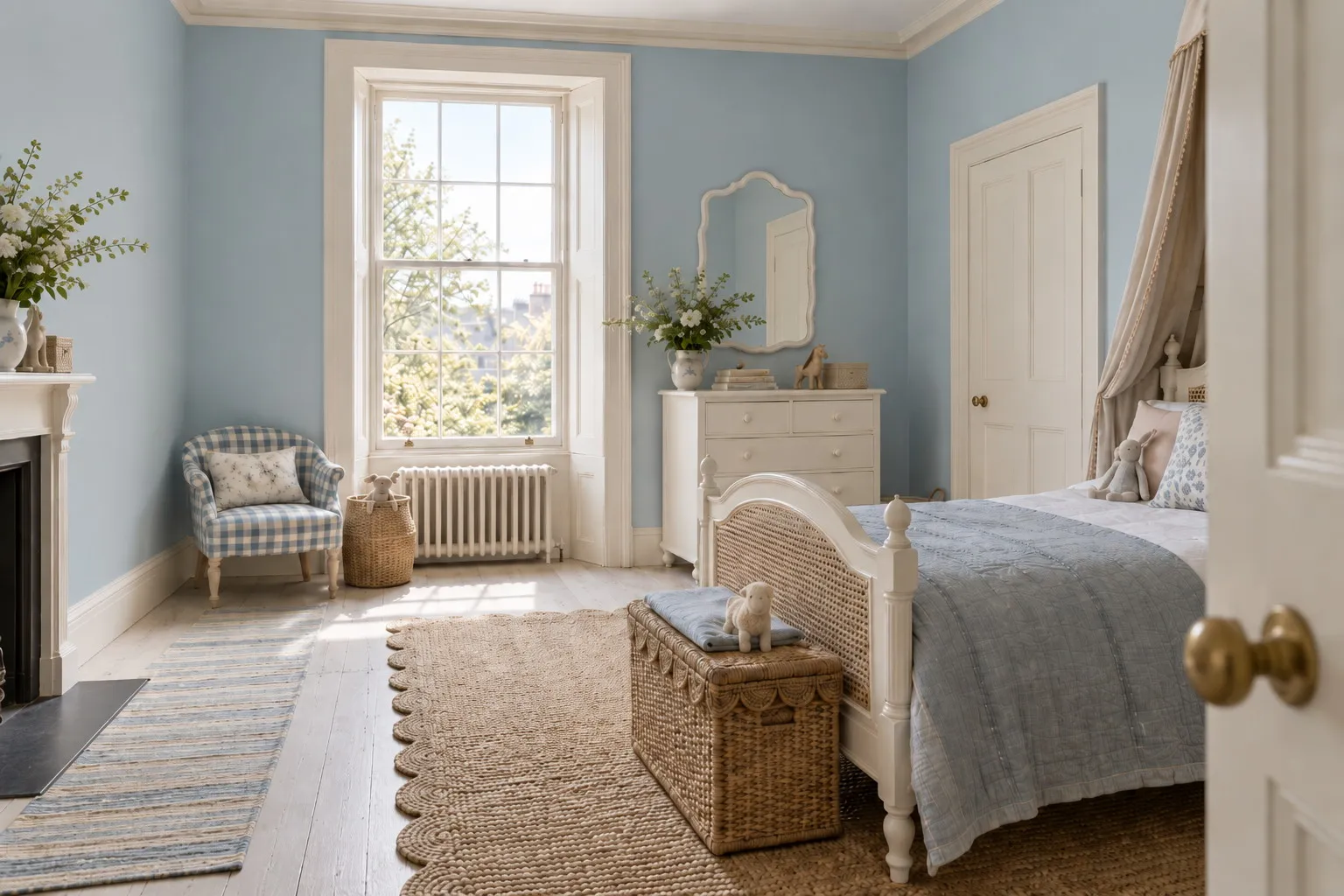
The temptation, when a baby is on the way, is to choose for them; the wiser course is to choose a colour you will still love when they are twelve. Soft blues are the most faithful companions. Morning Blue No.32, a calm light blue from our archive, is at its freshest in morning light and stays quiet in the evening. Lambeth Walk No.210, a slightly vintage pale blue from our original factory, has a 1950s charm that crosses the ages without effort.
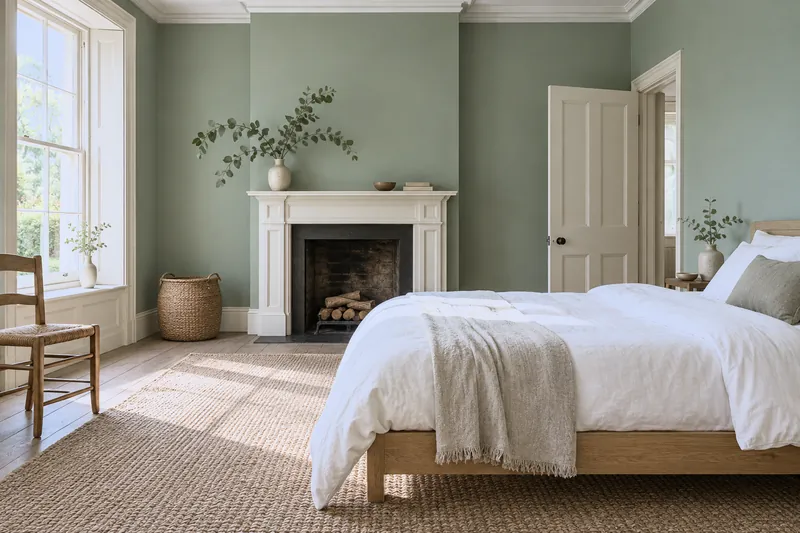
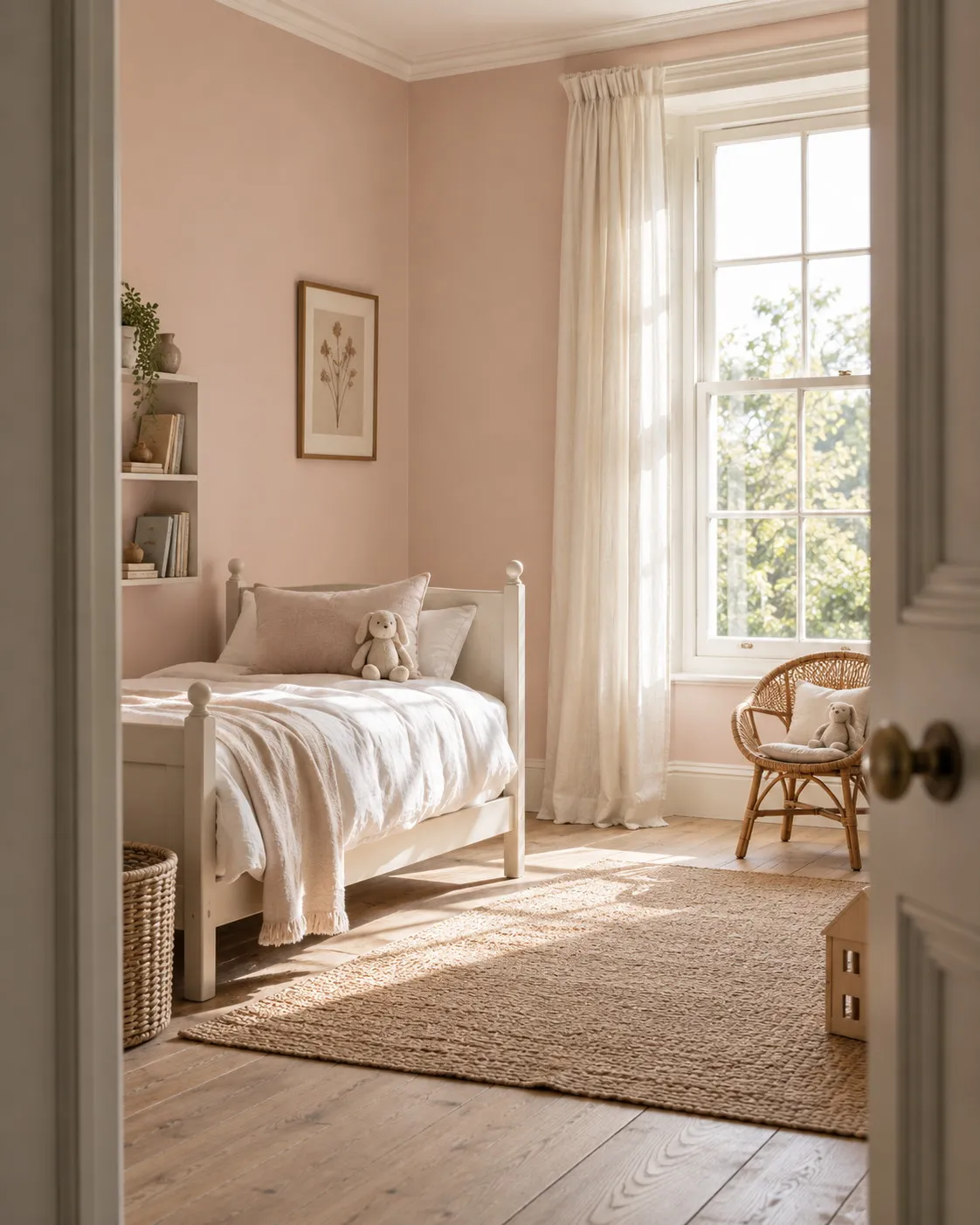
Powdery pinks work the same way, provided they stay well clear of sweet-shop territory. Gentleman's Pink No.221 is a very pale pastel pink, barely warmed by a drop of red and violet, that reads almost as a warm white in some lights. Threadneedle No.262 is subtler still, a white with a hint of orange and umber, ideal for a shared room or a child who is growing up. Among the greens, Lamb's Ear BH.06, as soothing and fresh as the leaf it is named after, and Chiswick No.100, a very soft grey-green, are the sages we recommend most often for a child's room.
A successful child's bedroom is one you do not need to repaint the day the soft toys are put away.
Avoiding primary-colour fatigue
Bright red, lemon yellow, royal blue: primary colours delight on a toy and wear thin on four walls, for the child as much as for the parents. If you want cheerfulness, put it on a piece of furniture or a door, and keep the walls in a quiet shade. A tender yellow such as Floral Street No.147, inspired by the ochre once used by London's colourmen, brings light without shouting. For the woodwork, a warm white such as Holland Park No.5 frames all of these shades without the clinical edge of pure white. Our selection of bedroom colours gathers them together, from palest to deepest.
A ceiling that wraps the room
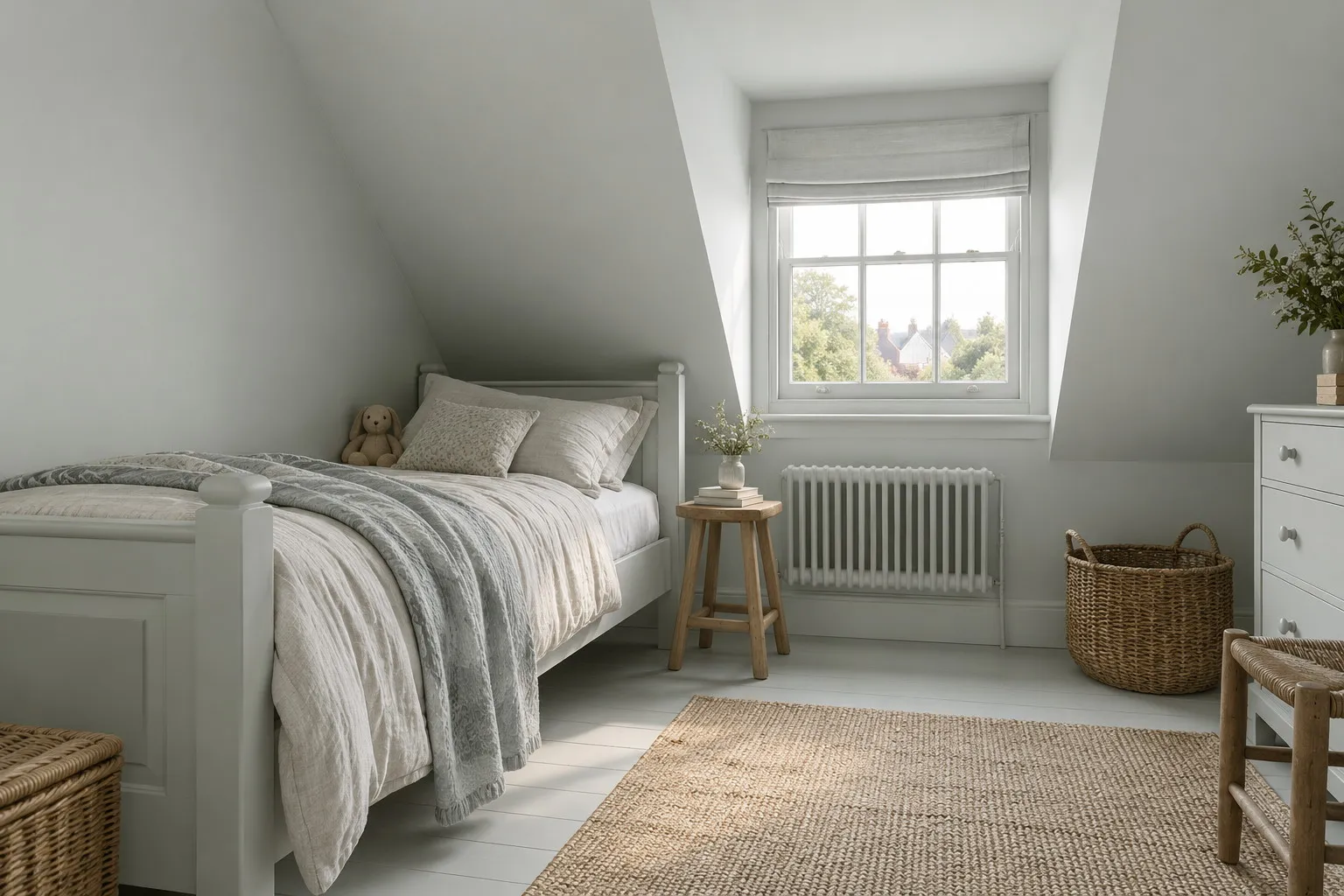
The ceiling is the surface a child looks at most, lying in bed. Rather than an obligatory white, consider painting it in the wall colour, what decorators call colour drenching. In a small bedroom this erases the corners and turns the room into a den; with an airy grey-blue such as Uncle Maths BH.05, composed and light, the effect is enveloping without ever feeling dark. The same Marble Matt Emulsion suits the ceiling, and the colour will read a shade deeper there than on the walls, which is exactly what you want.
Preparing the room without stress
Empty the room as far as you can, protect the floor and wash the walls to remove fingerprints and traces of sticky tape, then let them dry. Fill the holes from old picture hooks, lightly sand the repairs and dust off. On a sound wall already painted in a similar shade, two coats are enough; on a new, repaired or noticeably darker surface, a primer tinted to sit under the finish guarantees full opacity, at roughly 0.5 L of primer per litre of paint. Paint the ceiling first, then the walls, then the woodwork, and let the room breathe between each stage.
One last piece of advice: wait a few weeks before the first vigorous clean. Like any water-based paint, the film goes on hardening after it has dried, and it is that period that gives it its full resistance to crayons and sponges. In the meantime, a mark is dabbed, not scrubbed.
Where to start
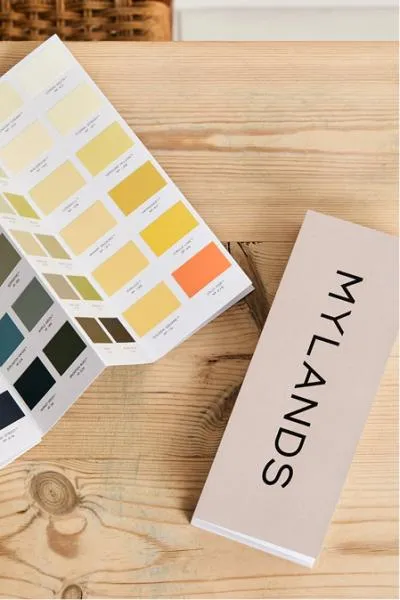
Order two or three 100 ml sample pots, each covers around 1.5 m², and paint proper squares at child height, near the window and on the wall behind the bed, then look at them at nap time and at bedtime. The physical colour card, sent free of charge, lets you set the blues and pinks side by side in the room's real light. And the price per square metre page will tell you what a bedroom in two coats represents, ceiling included.
Frequently asked questions
Which paint should I choose for a baby's room?
A water-based paint that is low in VOC, low in odour and compliant with the EN 71-3 toy-safety standard, which is true of every Mylands decorative paint. On the walls, Marble Matt Emulsion gives a washable matt; on the cot and the chest of drawers, Multi-Surface Eggshell withstands knocks and wipes clean. Check the indoor-air emissions label on the datasheet.
Can you sleep in a freshly painted bedroom?
With a low-VOC, low-odour water-based paint, yes, generally the same evening, provided the room has been aired well during and after the work. For a baby, wait one more night to be safe and leave the window ajar for the following days. Two coats of Marble Matt Emulsion go on in a single day, since it can be recoated after three to four hours.
Which colour for a child's bedroom that will grow with them?
Choose a soft shade you will still love in ten years: a light blue such as Morning Blue No.32 or Lambeth Walk No.210, a powdery pink such as Threadneedle No.262, or a sage such as Lamb's Ear BH.06. Keep bright colours for furniture, doors and textiles, which are easier to change than four walls, and keep the woodwork in a warm white.
Which finish should I use to paint a cot or a chest of drawers?
A multi-surface finish formulated for wood and metal: Multi-Surface Eggshell, at around 15 % sheen, is the right choice for a cot, a chest of drawers or shelving, and Satin for a hard-working top. Two coats, a primer on bare wood, then a few weeks of hardening before the piece is handed over to a child who chews.