The journal
Washable wall paint: which finish for which wall
A washable wall paint is identified by its EN 13300 class, not by the adjective printed on the tin. Here is the difference between wipeable and washable, the right Mylands finish for each wall, how long to wait before the first clean, and the mid-tones that hide everyday marks best.
A washable wall paint is a paint whose film, once dry and fully hardened, will take a damp sponge and a little mild soap without going chalky, without flaking and without leaving a shiny patch where you rubbed. In France the word « lessivable » appears on almost every DIY tin and is almost never defined. It deserves a little precision, because it decides which finish you will choose for a hallway, a stairwell or a child's bedroom, and therefore the result you will be looking at for the next ten years.
Wipeable or washable: what the two words really mean
French paint vocabulary has traditionally drawn a line between two levels. A « lavable » paint tolerates a pass with a damp sponge, no detergent, no scrubbing. A « lessivable » paint accepts a proper wash, with soapy water, repeated over the years, on fingerprints, splashes and shoe marks. The difference between the two comes down to the cohesion of the dry film: the denser it is, the better it resists wet abrasion.
The trouble is that neither term has any regulatory definition. Every manufacturer uses them as it sees fit, and one paint sold as washable can behave very differently from another. To compare seriously you have to look at the standard that measures this resistance, not the adjective printed on the label.
The EN 13300 standard and its classes
The European standard EN 13300 classes interior wall paints by their resistance to wet abrasion, from class 1, the best, down to class 5. The test rubs the cured painted surface for a set number of cycles with a wet abrasive, then measures how much film thickness has been lost. A class 1 paint loses very little material: that is the one you can call washable without stretching the word. A class 3 or 4 will make do with a barely damp cloth and will mark at the first stubborn stain.
At Mylands, Marble Matt Emulsion, our signature wall paint, is class 1 to EN 13300. The result comes from its formulation: natural earth and mineral pigments, richly loaded, and crushed Carrara marble, offcuts from the stone industry, which give the dry film a density and a mineral touch you do not find in an ordinary emulsion. A very deep matt, then, and yet a washable wall paint in the strict sense.
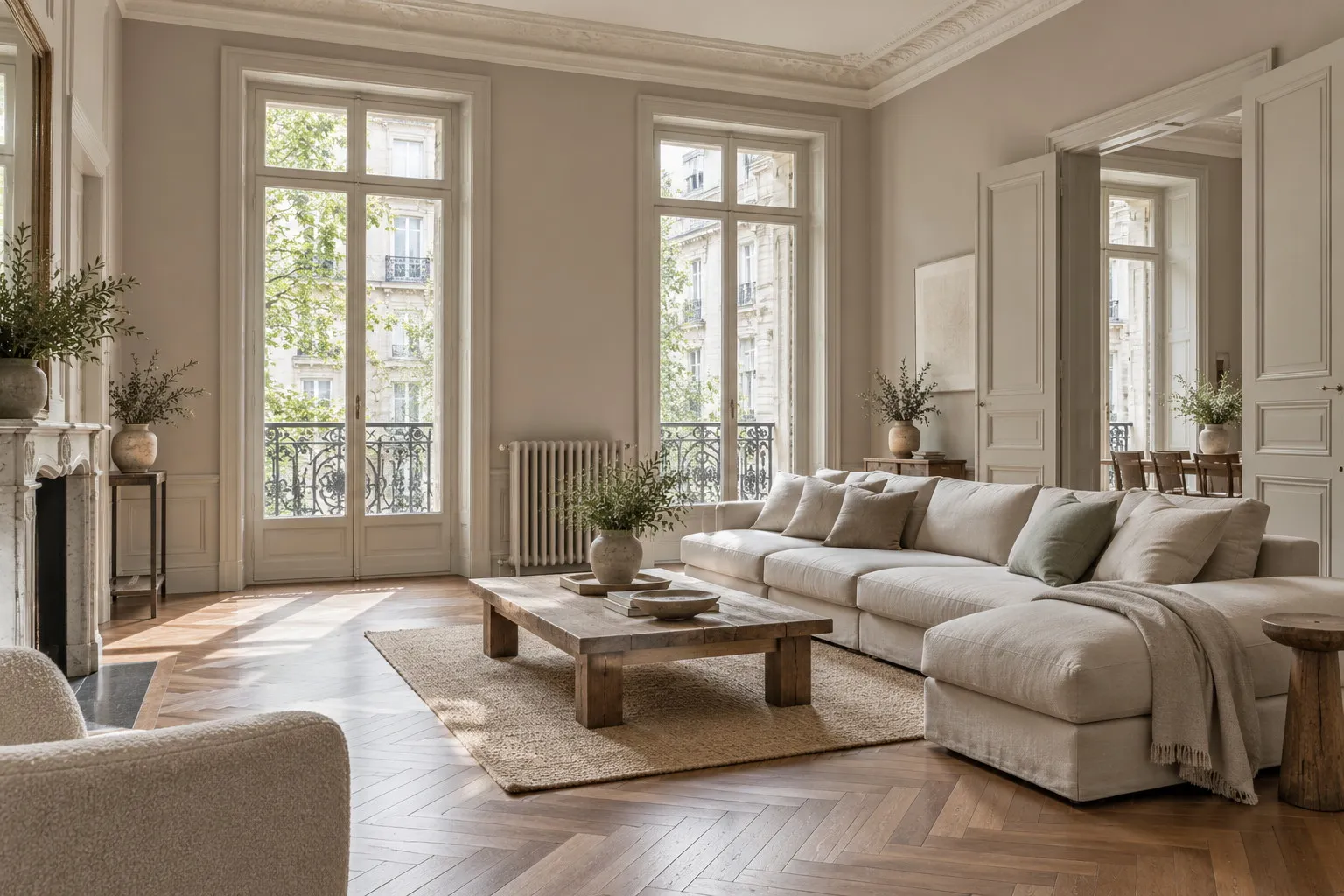
Which finish for which wall
The question is not only whether a paint is washable, but how much cleaning a particular wall needs. A sitting-room wall above a sofa does not live the same life as a stairwell or the corridor of a family house.
For the vast majority of walls and ceilings, bedrooms included, Marble Matt Emulsion is the answer. It covers around 15 m² per litre per coat, is touch-dry in one to two hours, can be recoated after three to four, and its film stays breathable, which matters in an old house with lime plaster. Its matt absorbs light and softens the flaws of a wall that is not quite flat.
For a heavily used corridor, a utility room, an entrance where the bicycles are kept or a shower room, two multi-surface finishes take over. Multi-Surface Dead Matt, at around 5 % sheen, keeps the look of a matt while going equally well on the wall, the woodwork and the radiators: it is the finish for colour drenching, when everything is painted in a single shade. Multi-Surface Eggshell, at around 15 %, adds a soft silk glow and a moisture resistance that suits splash zones. Multi-surface finishes cover around 12 m² per litre per coat; two coats are recommended in every case.
Our page on wall paint sums up these uses room by room. The principle stays simple: marble matt on the walls, dead matt or eggshell wherever the wall is treated like a piece of woodwork.
A wall you can wash without a second thought ages better than a wall you no longer dare to touch.
The mistake that ruins a washable wall paint
It is common and it is costly: cleaning too soon. A water-based paint is touch-dry within hours, but its film goes on consolidating long after that. During this curing period, allow two to four weeks depending on the temperature and ventilation of the room, the film remains tender. A sponge worked vigorously over a fingerprint at that stage leaves a burnished patch or a slight lifting that will never go away. This has nothing to do with the quality of the paint: the best class 1 behaves the same way if it is treated roughly before it has hardened.
After that, method matters as much as paint. Start with a dry dusting, then a soft sponge and lukewarm water with a few drops of neutral soap. Work in broad strokes without pressing, from the bottom upwards to avoid runs that leave marks. Rinse with clean water and let the wall dry without rubbing. Abrasive products, scouring pads and solvent-based cleaners are out, whatever the finish.
The colours that forgive
The washability of a wall paint is not the whole story: the shade counts just as much in how clean a wall looks. A pure white shows the slightest grey mark at hand and schoolbag height. A very dark tone, conversely, reveals pale streaks and dust. Mid-tones, the ones that sit between light and deep, are the most forgiving. They visually absorb the small marks of daily life and keep their composure between two washes.
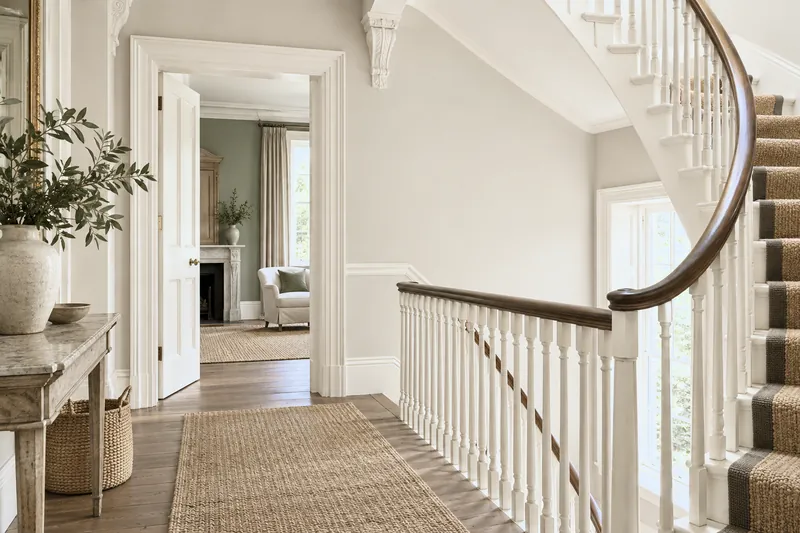
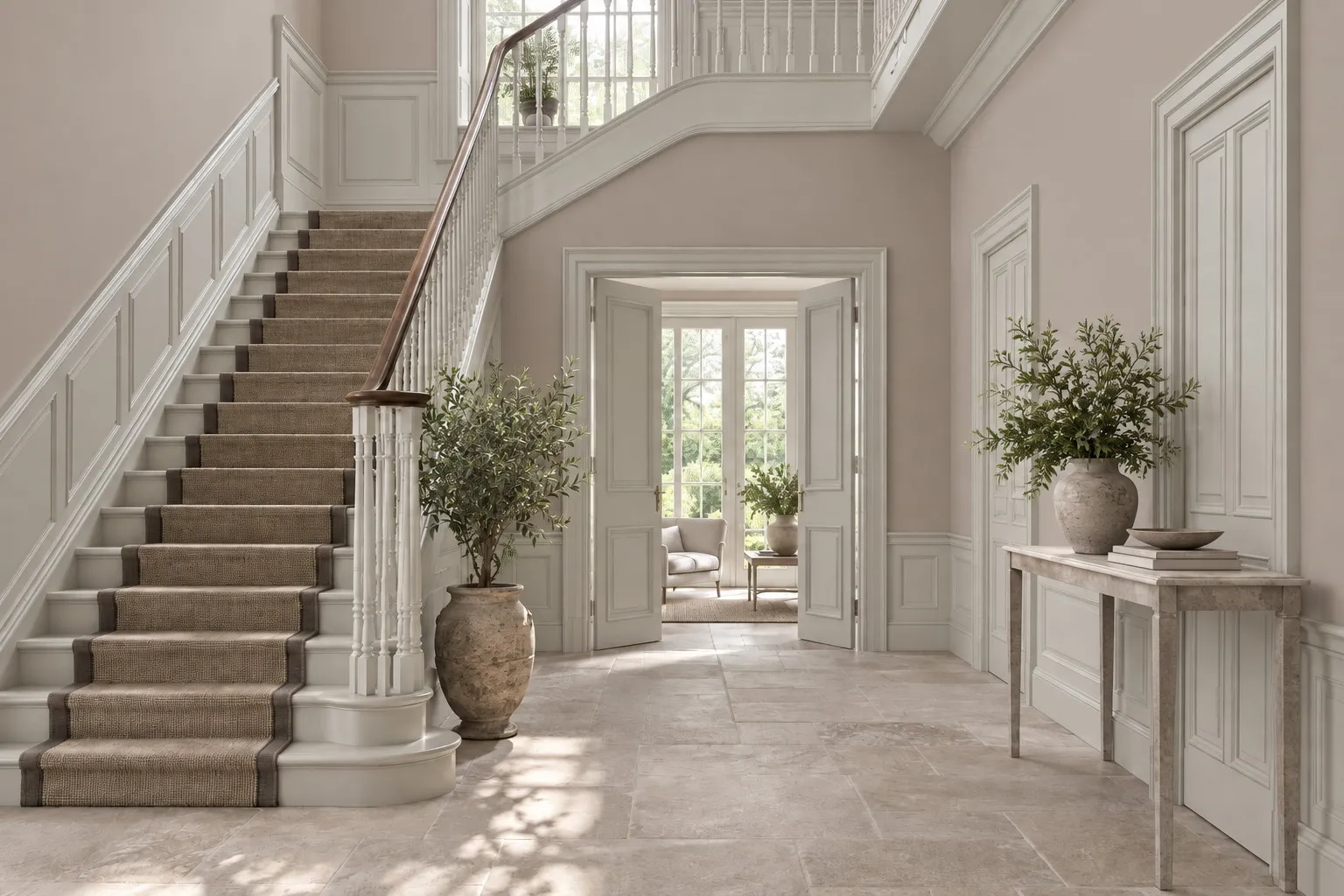
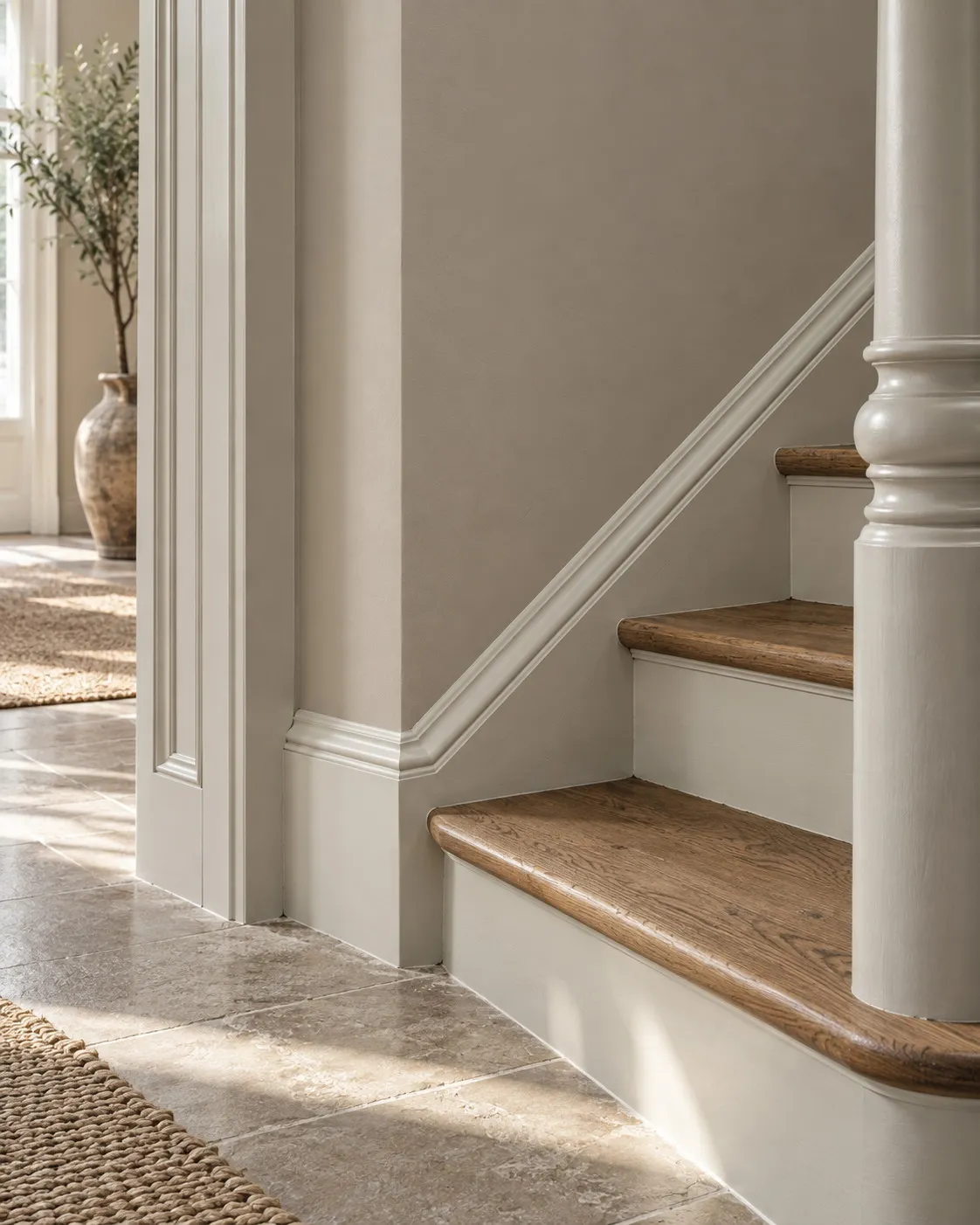
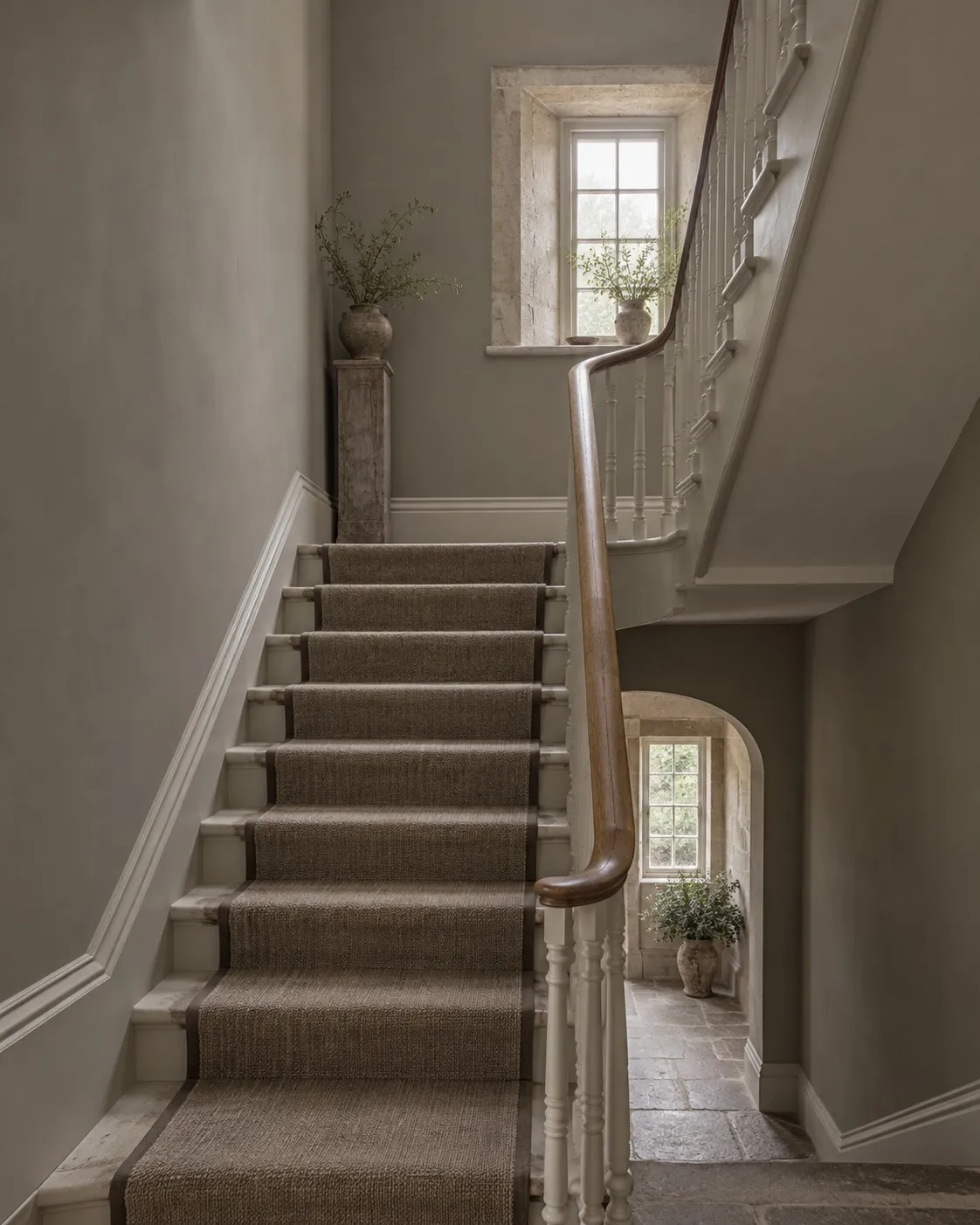
In an entrance or a stairwell, Stone Castle No.71 is a very good starting point: a warm grey with brown undertones, dusty enough to stay light, deep enough not to betray the traffic. Gravel Lane No.169 plays in the same register, a touch softer, with a discreet warmth that does a windowless corridor a great deal of good. For a wall that takes real knocks, a utility room, the staircase of a country house, Ionic No.87, denser and more clay-like, asks for almost no visual upkeep.
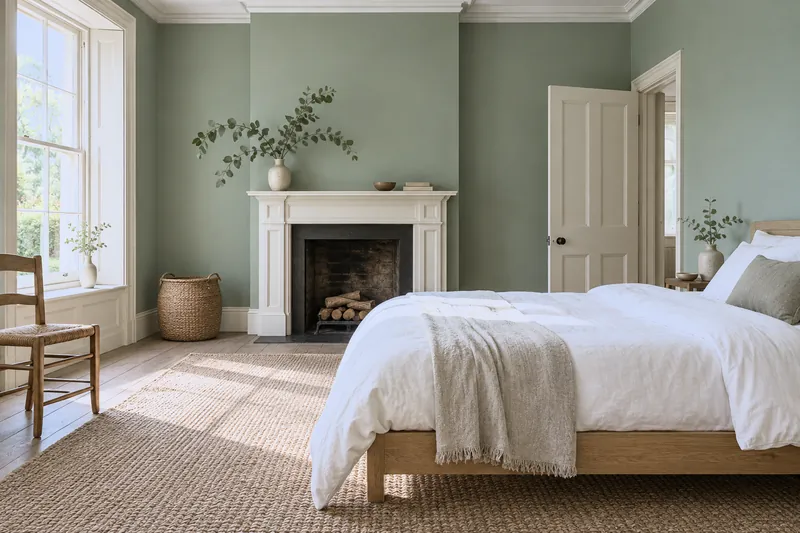
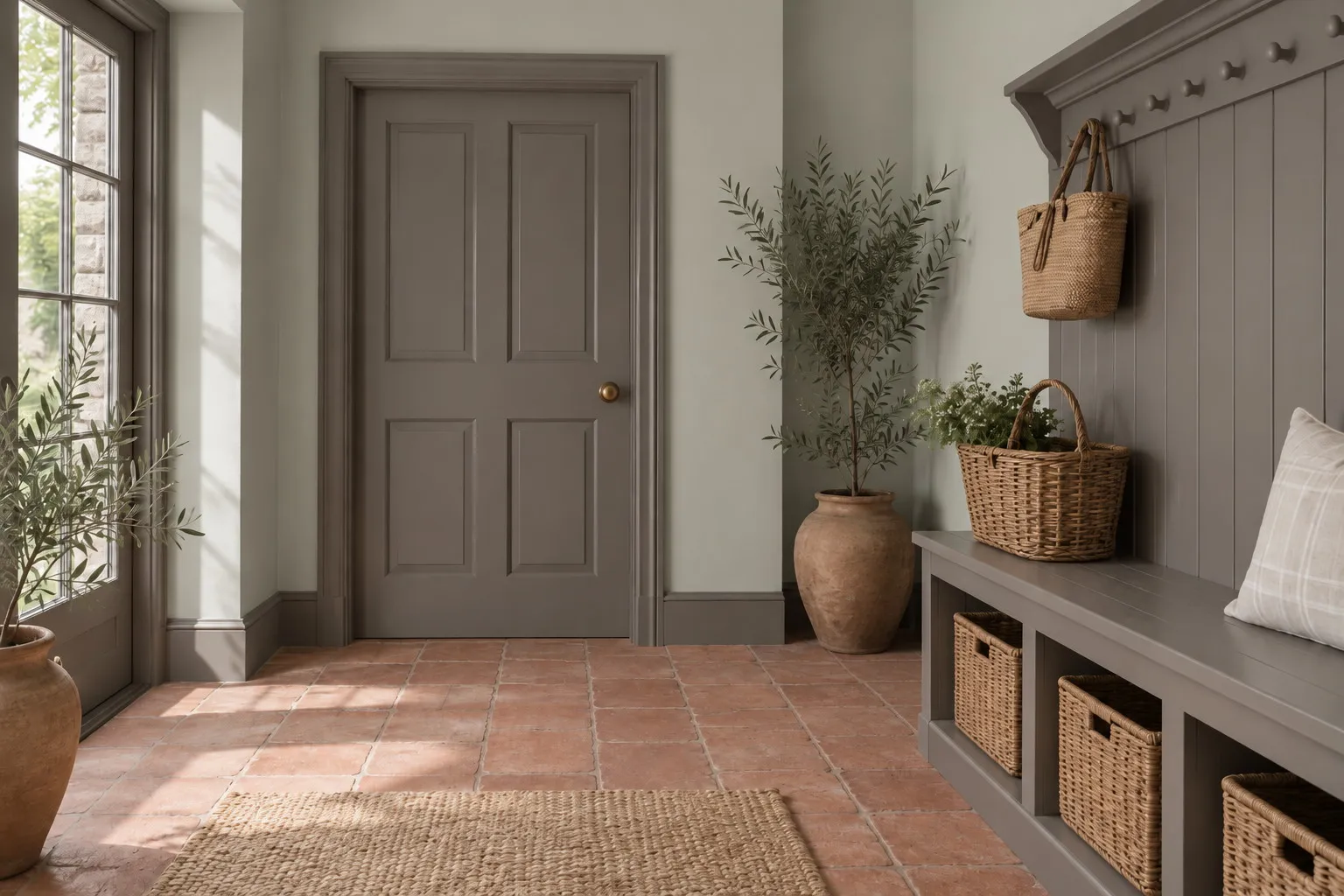
If you would rather have a note of colour, the grey-greens are the most generous family. Egyptian Grey No.154 is a historic grey, pulled towards verdigris, that seems to change mood over the course of the day. Shoreditch No.15, deeper, dresses a stairwell with a great deal of character. And for a child's bedroom or a kitchen, Lamb's Ear BH.06 brings the slightly velvety freshness of the plant it is named after, while hiding small marks remarkably well.
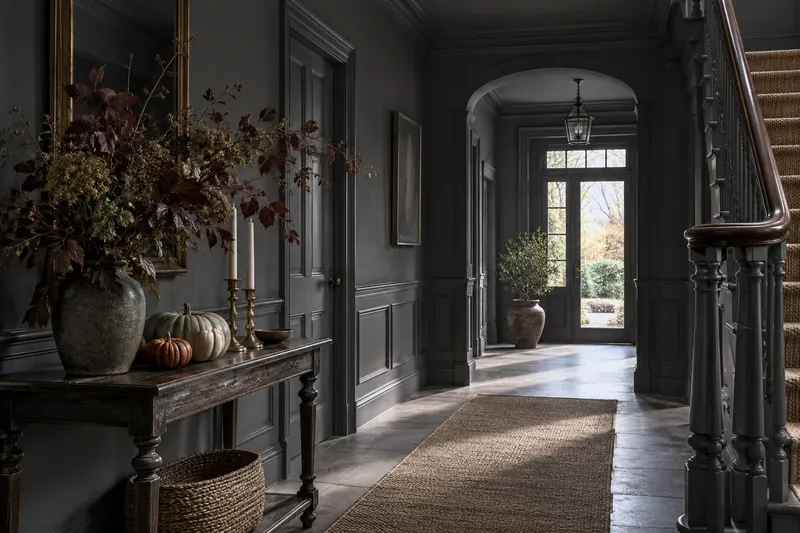
On the skirting and doors of those same rooms, a shade barely lighter or darker than the wall, applied in Eggshell, extends the effect. Old Man's Beard BH.03, a greyed white conceived with woodwork in mind, goes with almost all of these warm greys. And for anyone who wants depth without going all the way to black, Lock Keeper No.18, a rich grey-brown, holds a front door or the lower half of a panelled wall perfectly.
What to remember before you buy
Check the EN 13300 class rather than the adjective on the tin: class 1 is the only one that earns the word washable. Choose the finish according to how the wall is used, marble matt for living rooms and bedrooms, dead matt or eggshell for high-traffic zones and damp rooms. Give the paint time to harden before the first clean, then clean gently. Finally, prefer a mid-tone if the wall is exposed; a washable wall paint in a forgiving shade will serve you well for years.
All our decorative paints are water-based, low VOC and compliant with the EN 71-3 toy-safety standard, which makes them as suitable for children's bedrooms as for corridors. Every tin is made and tinted in our single factory in West Norwood, south London, then shipped to France from our warehouse in Occitanie within two to three working days.
Where to start
Order two or three 100 ml sample pots, each covers around 1.5 m², and paint squares in the hallway itself, at hand height, to watch them morning and evening. The physical colour card is free and lets you lay the shades side by side before deciding. The price per square metre of each finish is set out on our prices page; it takes the real coverage of the paint into account, which is the right way to compare.
Frequently asked questions
What is the difference between a wipeable and a washable paint?
A wipeable paint takes a pass with a damp sponge, without detergent or rubbing. A washable paint accepts a proper wash with soapy water, repeated over the years, without going chalky or wearing through. Since neither word has an official definition, rely on the wet-abrasion class under the EN 13300 standard: class 1 is the best, class 5 the most fragile.
Can a matt paint really be washable?
Yes, provided its film is dense enough. Traditional matts wore through at the first clean, but a richly pigmented emulsion loaded with crushed Carrara marble, such as Mylands Marble Matt Emulsion, reaches class 1 under EN 13300. Once the film has hardened it can be washed with a soft sponge and soapy water while keeping a very matt appearance.
How long should I wait before washing a freshly painted wall?
The paint is touch-dry in one to two hours, but the film goes on hardening for two to four weeks depending on the temperature and ventilation of the room. During that time avoid any wet cleaning: a fingerprint rubbed too early leaves a permanent burnished patch. After that, use a soft sponge, lukewarm water and neutral soap, without pressing.
Which washable paint should I choose for a hallway or stairwell?
For a family hallway, Marble Matt Emulsion at class 1 is more than enough on the walls. If the traffic is heavy, with bicycles, pushchairs or bags brushing past, Multi-Surface Dead Matt or Multi-Surface Eggshell offer extra resistance and carry on over the doors and skirting. Choose a mid-tone such as Stone Castle No.71, which hides marks well.