The journal
Furniture paint: finishes, preparation and colour ideas
The right furniture paint is a water-based multi-surface finish, eggshell by default, satin for a hard-working top, dead matt for a chalky look, applied in two coats over a piece that has been degreased, sanded and primed, then left to harden for a few weeks, with no varnish.
A piece of furniture you no longer love is almost never a piece that is finished; it is a piece waiting for its colour. An inherited chest of drawers, a tired kitchen table, a varnished pine wardrobe from the 1980s or a dresser that is a little too rustic all get a second life from two well-applied coats, provided you choose the right furniture paint and do not skip the preparation. This guide covers the finishes that suit, the method from degreasing to drying, and a few colour ideas for a piece that will look as though it was always painted.
Which furniture paint for which use
Furniture is painted with a multi-surface finish, formulated to bond to wood and metal alike, not with a wall emulsion. In our range, three finishes share that role. Multi-Surface Eggshell, at around 15 % sheen, is the default answer: a quiet glow that catches the light, resists moisture and wipes clean with a sponge. It is the finish for a wardrobe, a chest of drawers, a bookcase or a headboard, the one that gives painted furniture that hand-finished English joinery look.
Multi-Surface Satin goes a step up in sheen and hardness. Keep it for the surfaces that take the most punishment: the top of a kitchen table, the drawers of a sideboard, the top of a chest that doubles as a changing table, chairs. Multi-Surface Dead Matt, at around 5 % sheen, offers the opposite, a chalky, almost powdery look without the fragility of the old chalk paints: it stays washable, and it lets you paint a piece in exactly the wall colour so that it disappears. All three cover around 12 m² per litre per coat, are touch-dry in two to three hours and go on in two coats.
One question comes up again and again: do you need to varnish afterwards. No. These finishes are designed to be the surface coat; the film hardens on its own over the weeks and reaches its full resistance then. A well-chosen furniture paint is enough by itself.
Preparing the piece: clean, sand, prime
The difference between a repainted piece that flakes within a year and one that lasts twenty comes down almost entirely to preparation. It takes an hour or two and boils down to a few steps.
- Take off whatever can be removed, handles, doors, drawers, and number the parts on the back.
- Degrease every surface with a suitable cleaner, then rinse and let it dry completely; on a kitchen piece, this is the most important step.
- Lightly sand the whole piece with a fine grit to open up the old varnish or paint, without trying to take the wood back to bare, then wipe off the dust with a damp cloth.
- Fill holes and chips with wood filler, let it dry and sand again.
- Apply the primer shown on the page of your chosen colour, in one even coat.
The primer deserves a word. Our primers and undercoats come in white, light grey, dark grey, pink, yellow, orange and green, each tinted to sit under a family of colours; each shade's page says which one to use. On bare wood, a dark surface, a repaired piece or an old varnish, it guarantees adhesion and full opacity in two coats of finish. Allow roughly 0.5 L of primer per litre of paint. On a sound, previously painted piece in a similar shade, it becomes optional. Our woodwork preparation guide sets out every step with the tools to have ready.
Paint two coats and let it harden
Work in a temperate, ventilated room, with the piece lying flat where possible, doors and drawers laid out on trestles. Apply a thin first coat along the grain, with a brush for mouldings and a small roller for panels, without going back over what has started to dry. Wait for the recoat time, sand very lightly any dust caught in the film, wipe off and apply the second coat. Two thin coats cover better than one thick one and leave fewer marks.
Then comes patience. A water-based paint is touch-dry in a few hours, but its film goes on hardening for several weeks. Rehang doors and refit handles carefully after a day or two, put heavy objects down after a few days, and wait a few weeks before the first vigorous clean. Since all our decorative paints are water-based, low in VOC and low in odour, the job can be done in the flat, window open, and the brushes wash out under the tap.
Colour ideas for a piece of furniture
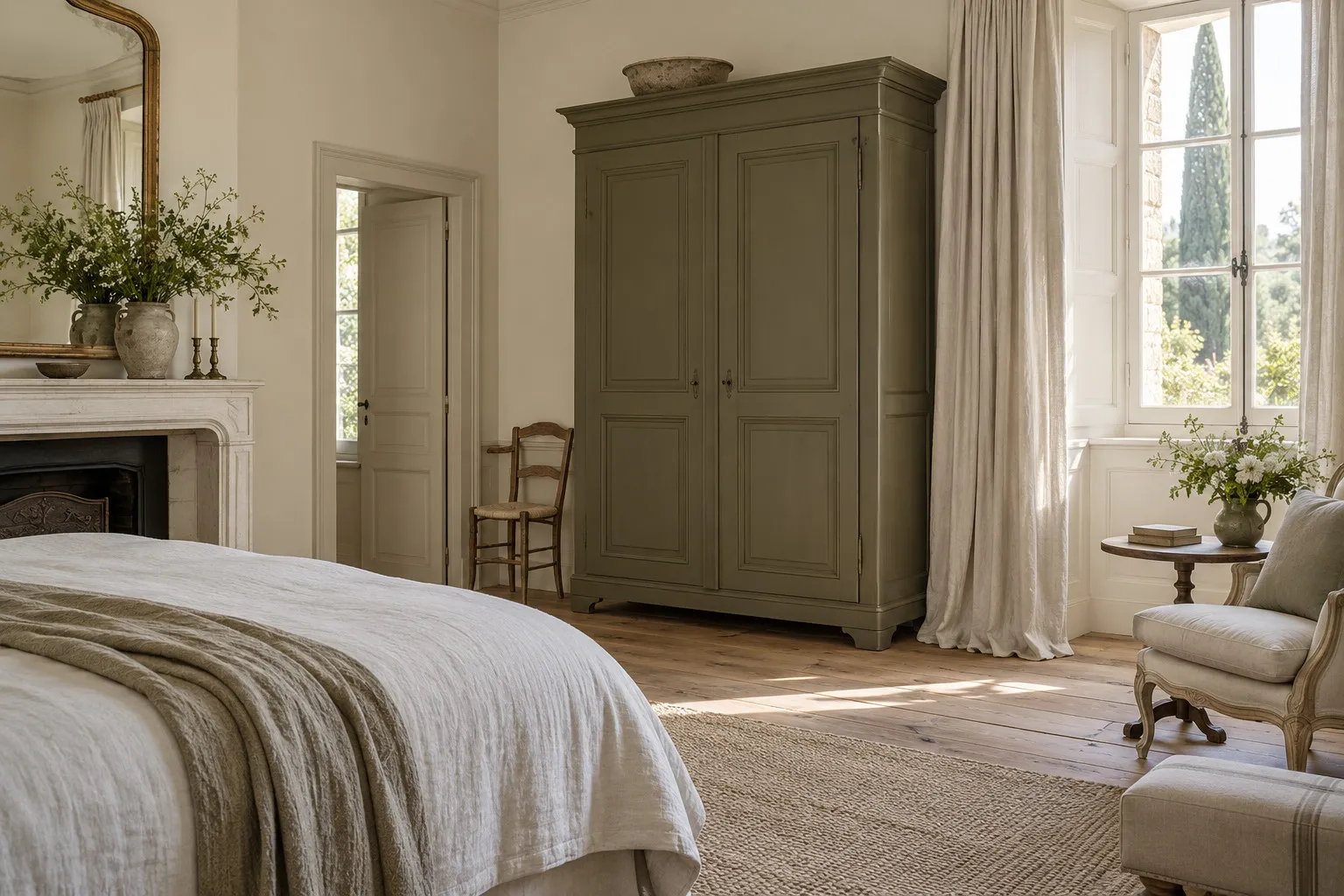
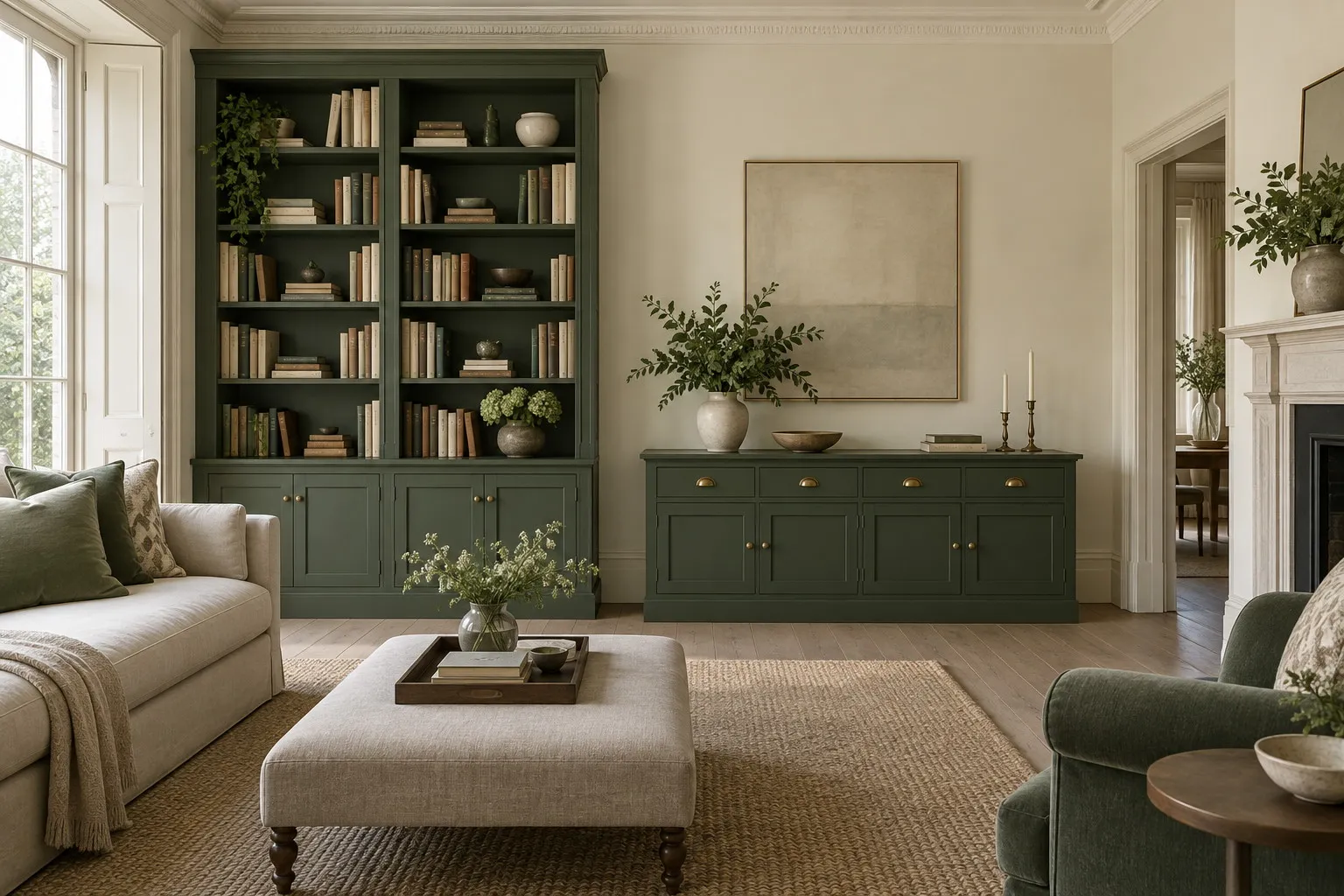
A piece of furniture is the right place for a colour you would not dare put on four walls. The wardrobe in our opening photograph is painted in Caca d'Oie BH.15, the timelessly chic yellow-green that Beata Heuman says is best said in French; on a large expanse of wood, it has the presence of an old piece with a patina. For a sideboard or a bookcase, Forest BH.16, a deep fir green, is the colour that best sets off brass handles and the spines of books.
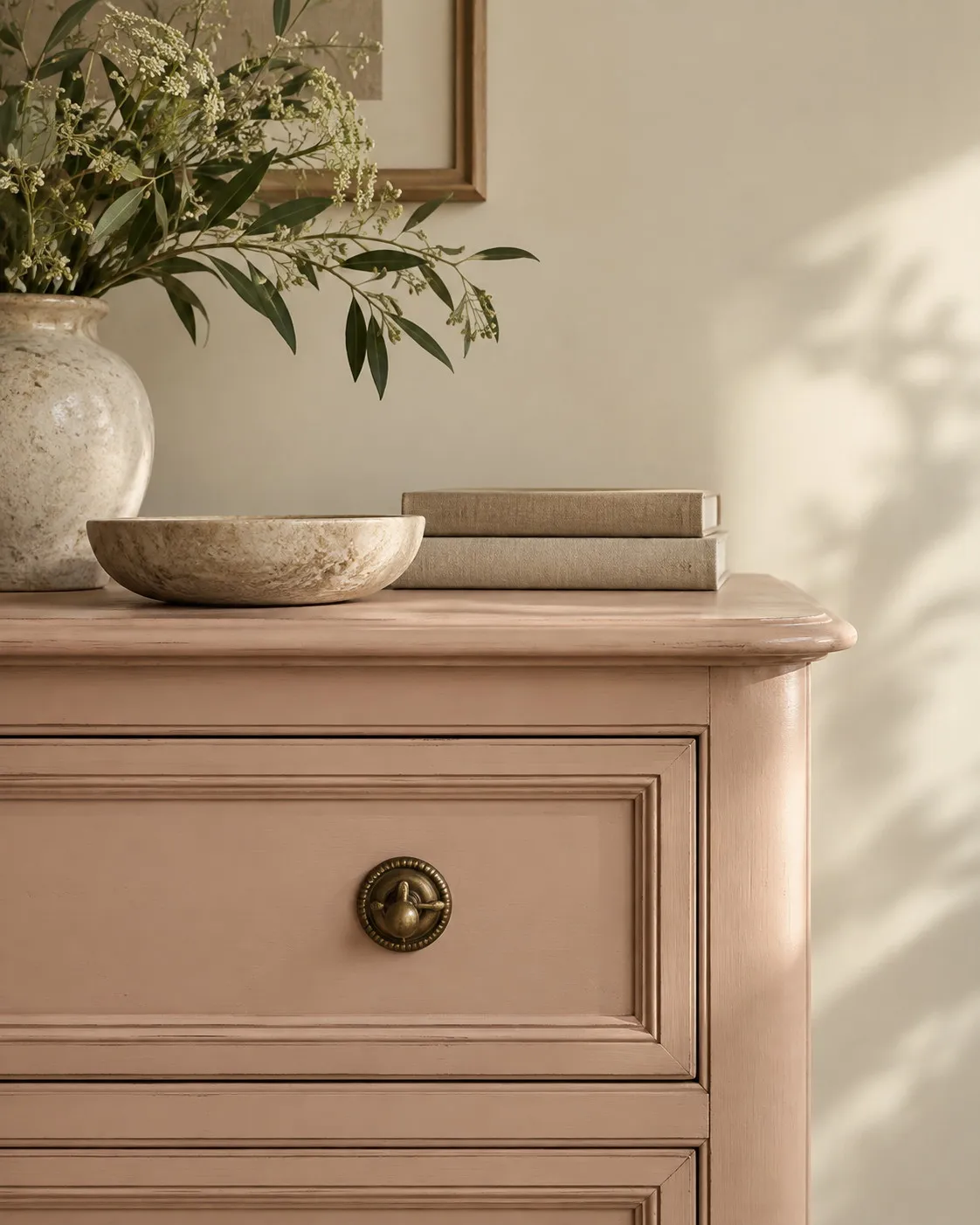
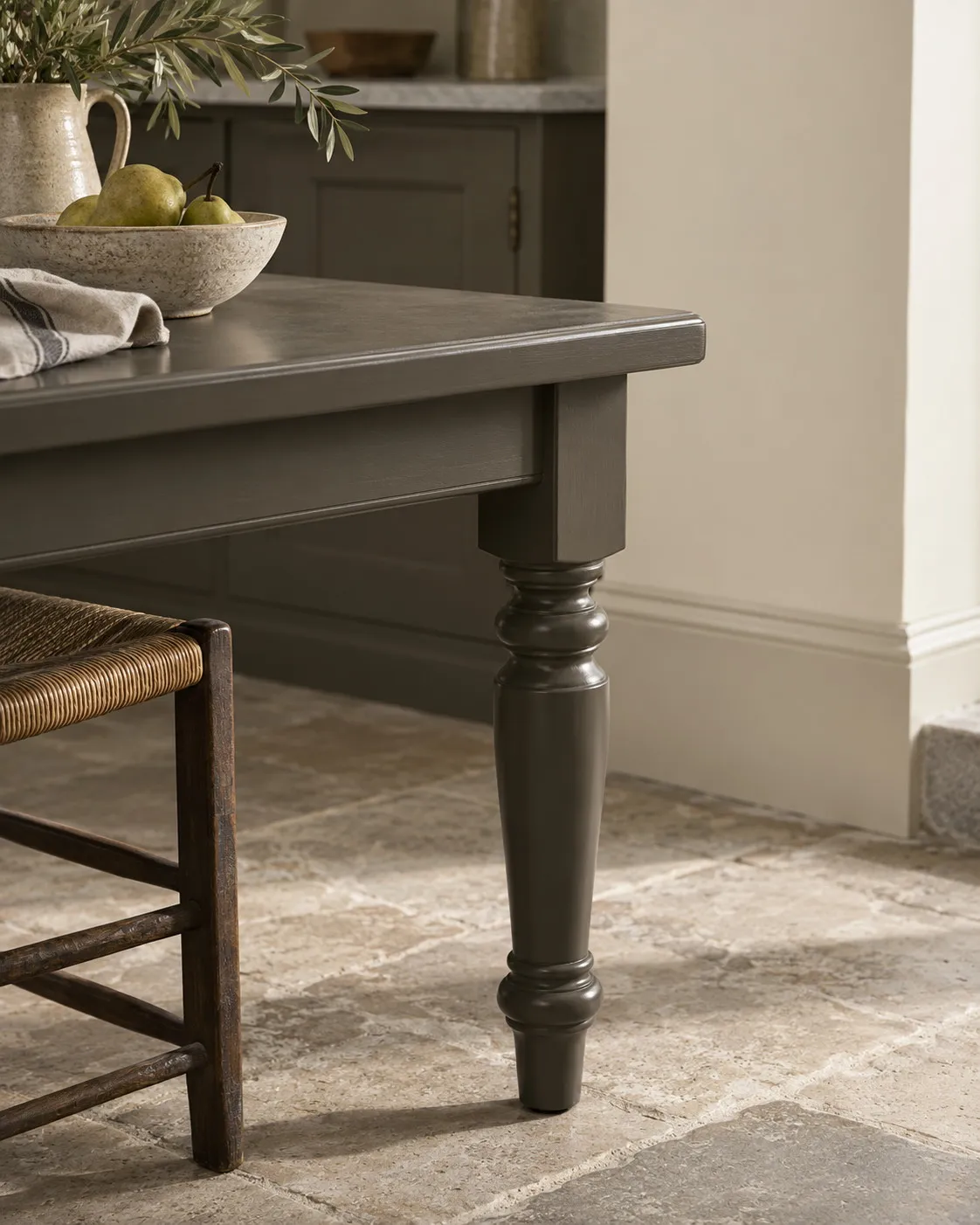
A bedroom chest calls for something more tender. Mormor Zaza BH.17, a tribute to Beata Heuman's grandmother who loved this shade of pink, is a powdery blush with nothing sugary about it, and it warms a room with pale walls. On a table, a softened black works wonders: Pub BH.08, inspired by an old pub in Brighton, hides a multitude of sins in its designer's words, and stays gentler than a true black. Cigar BH.20, a retro toffee brown, is the graphic alternative to natural wood on a chair or an armchair.
The most elegant piece of furniture in a room is often the one that cost the least and was painted with care.
If you would rather make a piece disappear, Old Man's Beard BH.03, a greyed white designed for joinery, melts into a wall painted in Bone BH.04 or any warm white. And for a kitchen dresser, Stockholm BH.11, a blue of Scandinavian crispness, is a colour you never tire of.
Children's furniture and toys
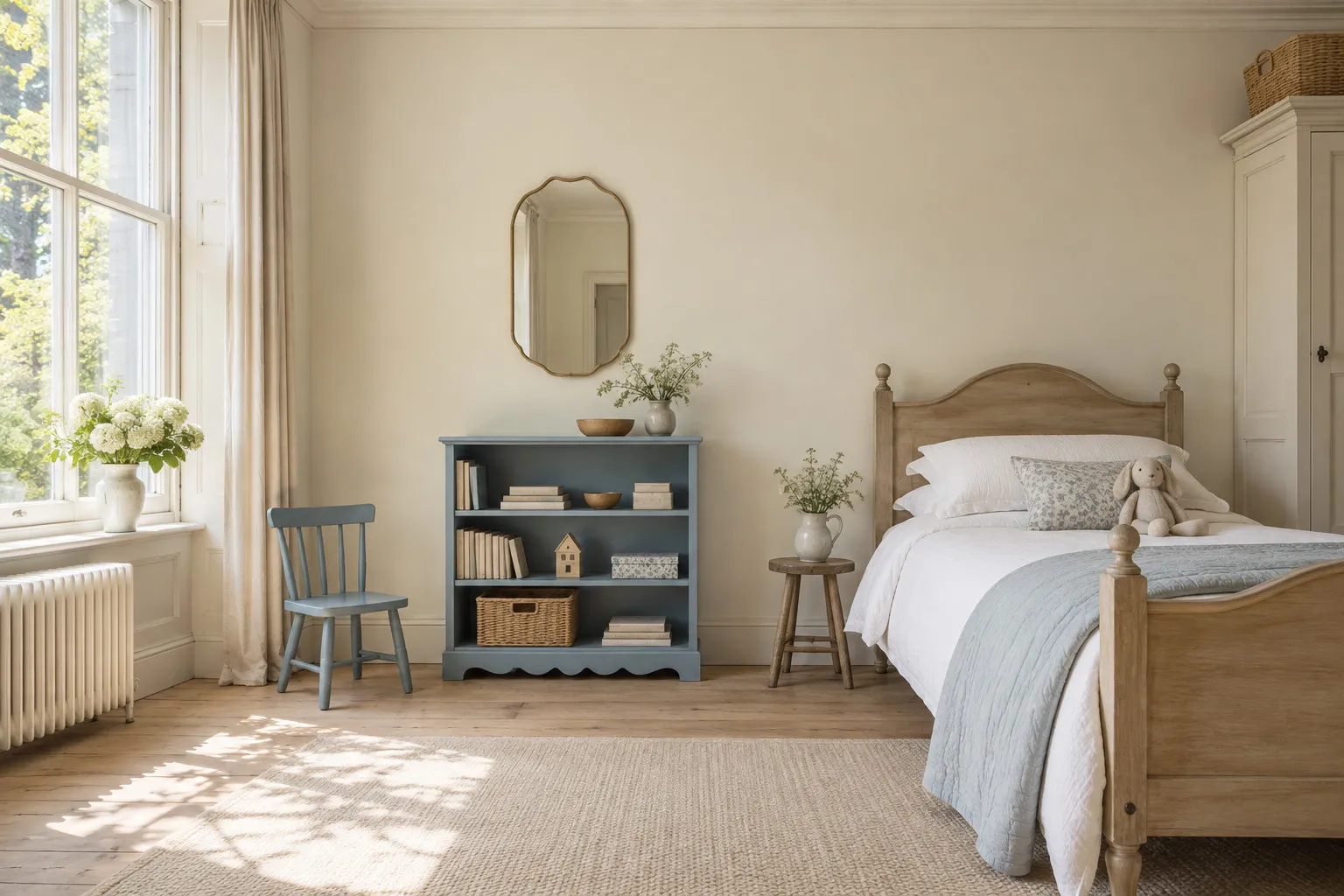
A cot, a small chair, a toy chest or a rocking horse are painted in exactly the same way, with one extra requirement: the paint must comply with the EN 71-3 toy-safety standard, which limits the migration of certain elements from painted materials. That is the case for all our decorative paints. Let the piece harden for a few weeks before handing it to a child who chews.
Where to start
A 100 ml sample pot covers around 1.5 m², enough to paint a whole cupboard door or a drawer you have taken out and judge the colour in place, next to the wall and the floor. The physical colour card, sent free of charge, will help you decide between two greens or two whites in the room's own light. A litre is often enough for a chest of drawers, a large wardrobe needs more; the price per square metre page will tell you what the project represents, primer included.
Frequently asked questions
Which paint should I use to repaint a wooden piece of furniture?
A water-based multi-surface finish formulated for wood and metal: Multi-Surface Eggshell by default, Satin for a table top or hard-working drawers, Dead Matt for a chalky look. Two coats are enough, with a suitable primer on bare, dark or varnished wood. No varnish is needed afterwards, since the film hardens on its own.
Do you have to sand furniture before painting it?
Yes, but lightly. The aim is not to strip the wood, only to open up the old varnish or paint with a fine grit so the new coat can grip. Degrease first, sand next, wipe off the dust with a damp cloth, then apply the primer shown on the colour's page if the surface is bare, dark, varnished or repaired.
How long should I wait before using a repainted piece of furniture?
The paint is touch-dry in two to three hours and can be recoated the same day, but the film goes on hardening for several weeks. Rehang doors and refit handles carefully after a day or two, wait a few days before putting heavy objects on it, and a few weeks before the first vigorous clean or before handing a piece to a young child.
Can I paint a cot or toys with this paint?
Yes. All Mylands decorative paints are water-based, low in VOC, low in odour and compliant with the EN 71-3 toy-safety standard, which allows their use on a cot, a small chair or a wooden toy. Apply two coats of Multi-Surface Eggshell and let the piece harden for a few weeks before it goes into use.