The journal
Radiator paint: the finish, the prep and the colour to choose
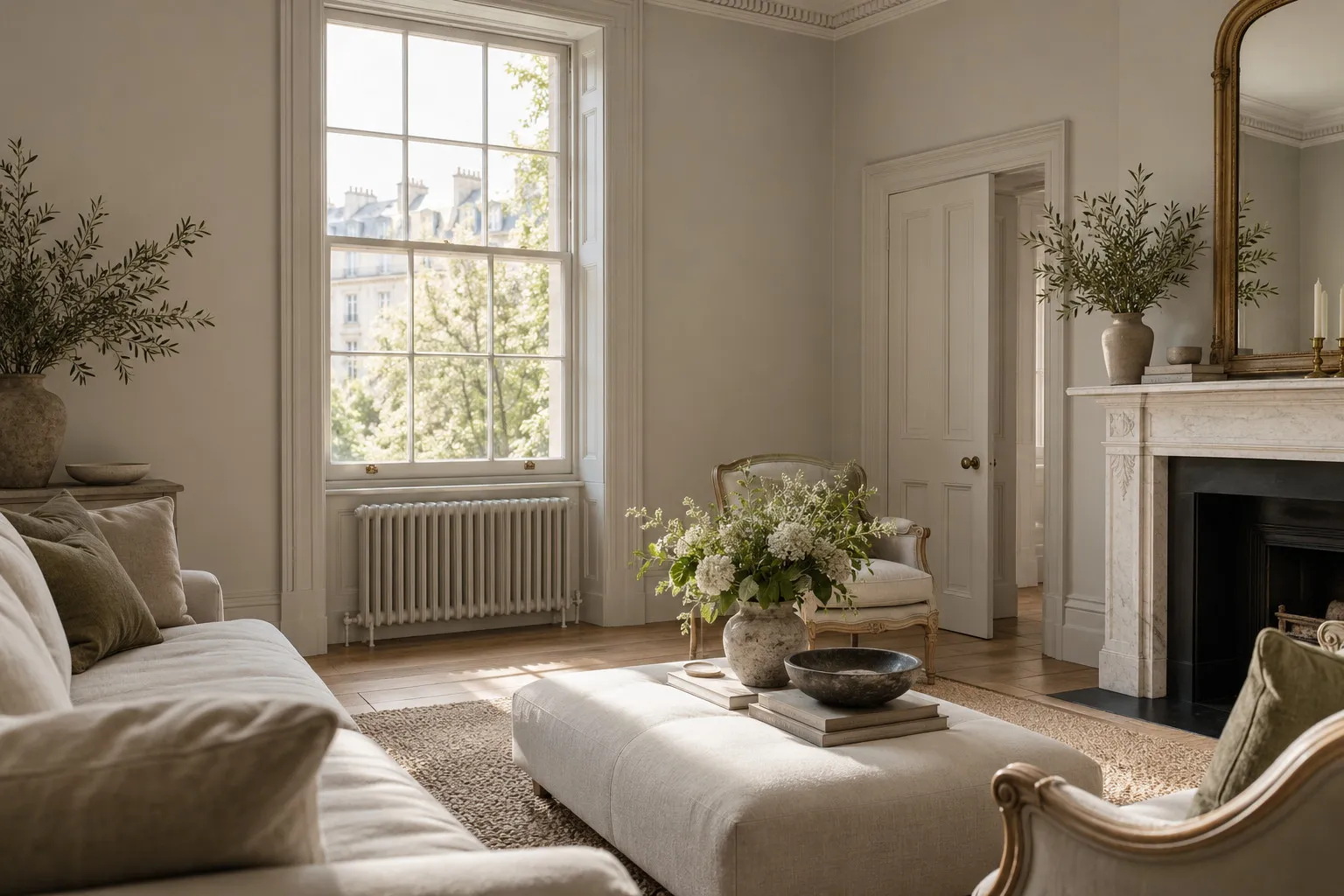
The right radiator paint is a multi-surface finish made for metal, satin most often, or eggshell, gloss or dead matt depending on the look, applied in two thin coats to a cold, degreased and sanded radiator. For the colour, one simple rule: the same as the wall, so the radiator disappears.
A cast-iron or steel radiator, chipped, yellowed or simply a white that no longer matches the wall, spoils a whole room that has otherwise been repainted with care. Radiator paint is the step most decorating projects forget, and it is also one of the easiest to get right once three rules are respected: a cold radiator, a well-prepared surface, a finish made for metal. The rest is a matter of colour, and there one simple idea outranks all the others: make it disappear.
Which radiator paint to choose
A radiator is not a wall. It heats up and cools down every day, takes knocks from chairs and passes of the duster, and an ordinary wall emulsion would not last on it. It needs a multi-surface finish, formulated for wood and metal, whose film dries hard and washes clean. At Mylands, all four multi-surface finishes go onto a radiator, and the choice depends on the effect you want more than on the room.
Multi-Surface Satin is the one we recommend most often as a radiator paint: mid sheen, a durable, washable film, it suits metal as well as wood and copes easily with the regular pass of a duster between the sections. Multi-Surface Eggshell, at around 15 % sheen, gives a softer look, exactly right when the room's skirting and doors are already in eggshell and you want the same glow on the radiator. Multi-Surface Gloss, the hardest of our finishes, is a sensible choice on a kitchen or bathroom radiator that is cleaned a great deal, or on an old cast-iron piece whose relief you want to emphasise.
That leaves Multi-Surface Dead Matt, at barely 5 % sheen, which is the tool for colour drenching: walls, woodwork and radiator in the same shade, with no difference in reflection at all. It is the one to choose if your wall is in Marble Matt Emulsion and you want a radiator that can no longer be told apart from the wall, even in raking light. All of these finishes cover around 12 m² per litre per coat, are touch-dry in 2 to 3 hours and go on in two coats. A litre is more than enough for an average radiator, with some left over for the skirting.
Making the radiator vanish into the wall
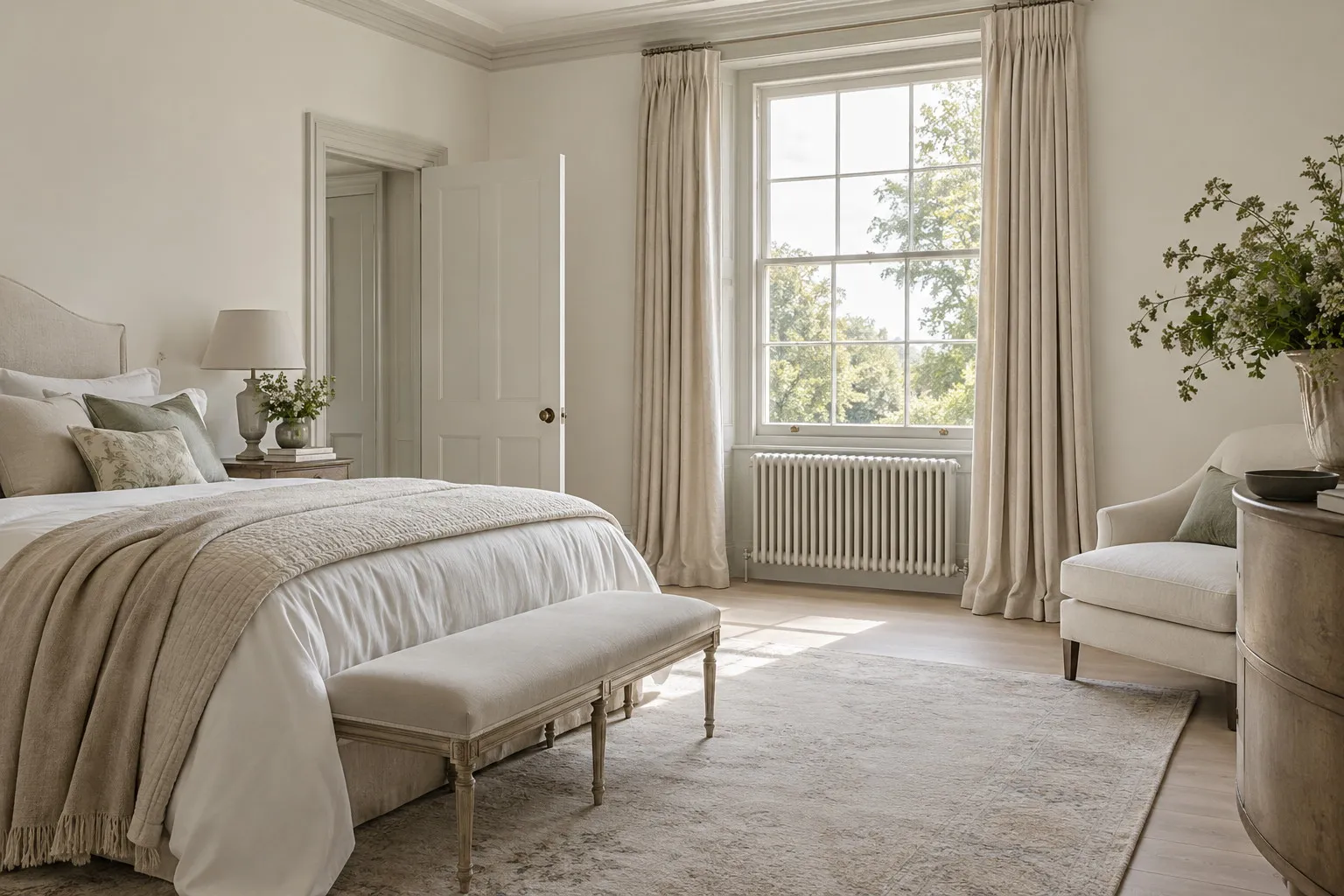
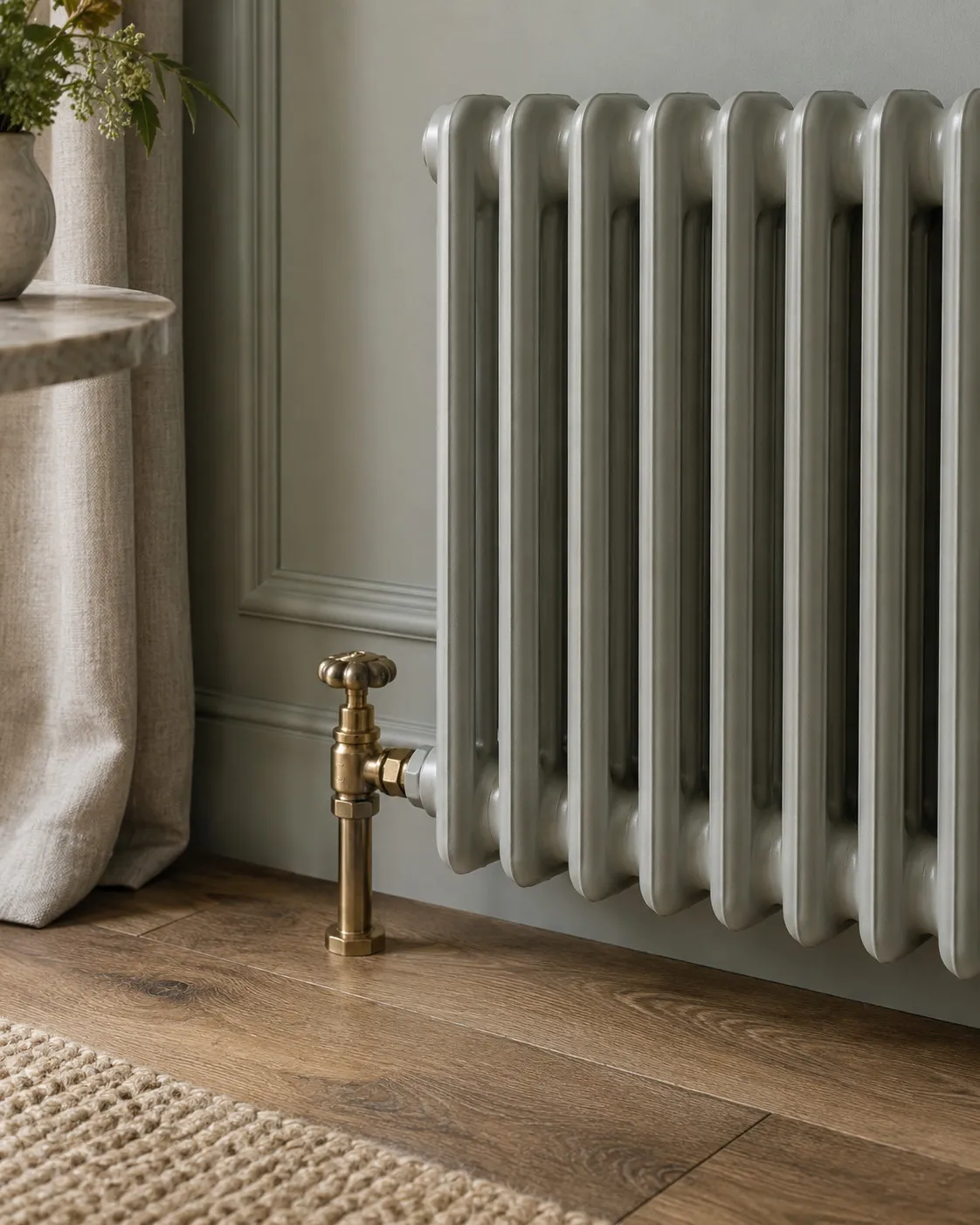
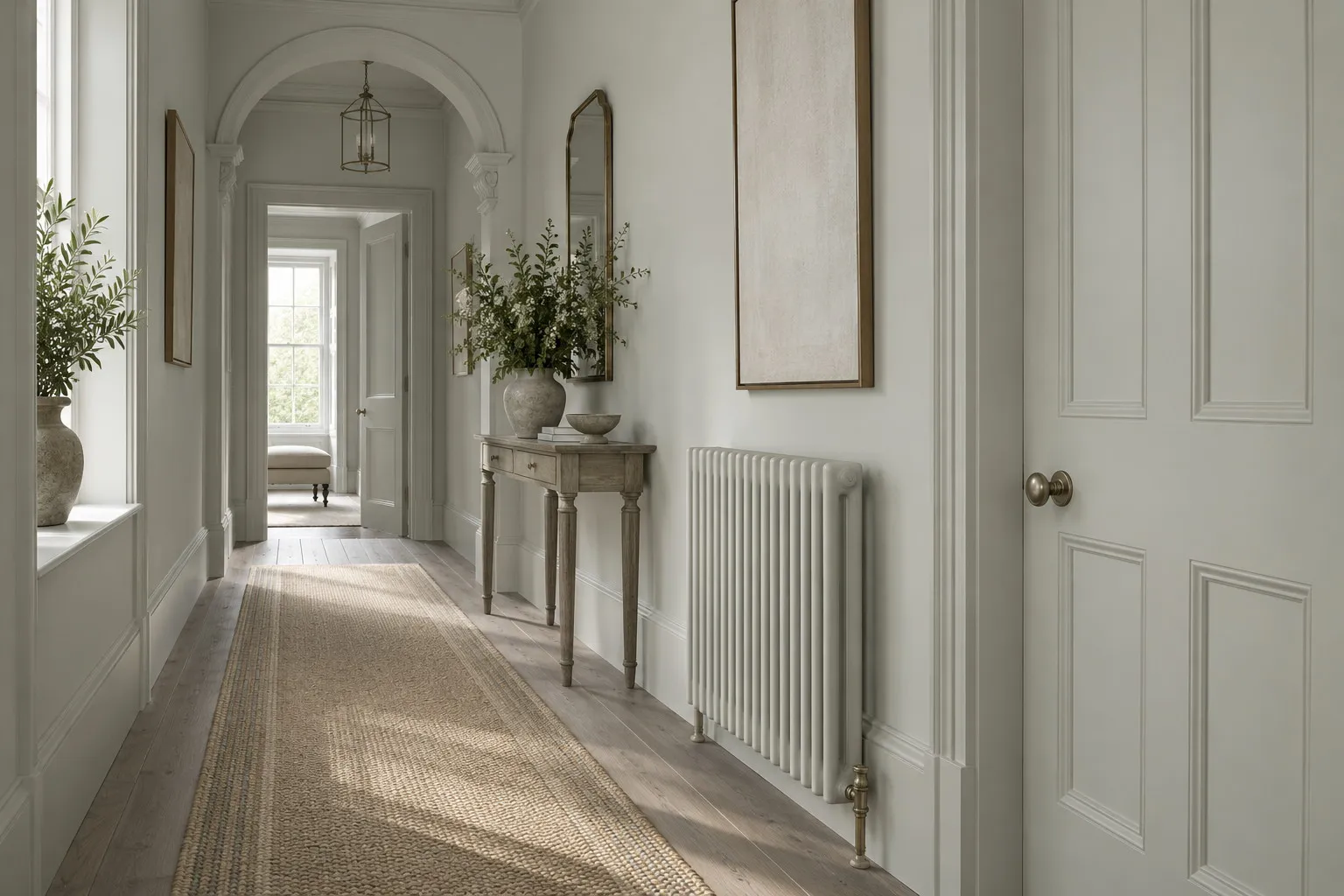
The most elegant strategy is also the simplest: paint the radiator in exactly the colour of the wall. A white radiator on a coloured wall draws the eye like a stain; the same radiator in the wall colour becomes a relief, a shadow, almost a piece of architecture. It works all the better with deep neutrals and mid-tones, which absorb the shape rather than outlining it.
Ionic No.87, a slightly darkened clay grey, is among those best suited to the exercise: matt on the wall and satin on the radiator, it gives a whole room in a single material, warm and mineral. Chalk Farm No.53, a light neutral with yellow undertones, does the same thing in a brighter register, and Stone Castle No.71, a warm grey with brown undertones, suits a bedroom or a corridor where calm is the aim. Among the stronger colours, Museum No.151, the smoky green of Victorian museums, and Uncle Maths BH.05, Beata Heuman's airy grey-blue, swallow a cast-iron radiator with disconcerting ease.
The most beautiful radiator is the one you stop seeing, because it has taken on the colour of the room.
Or, on the contrary, show it off
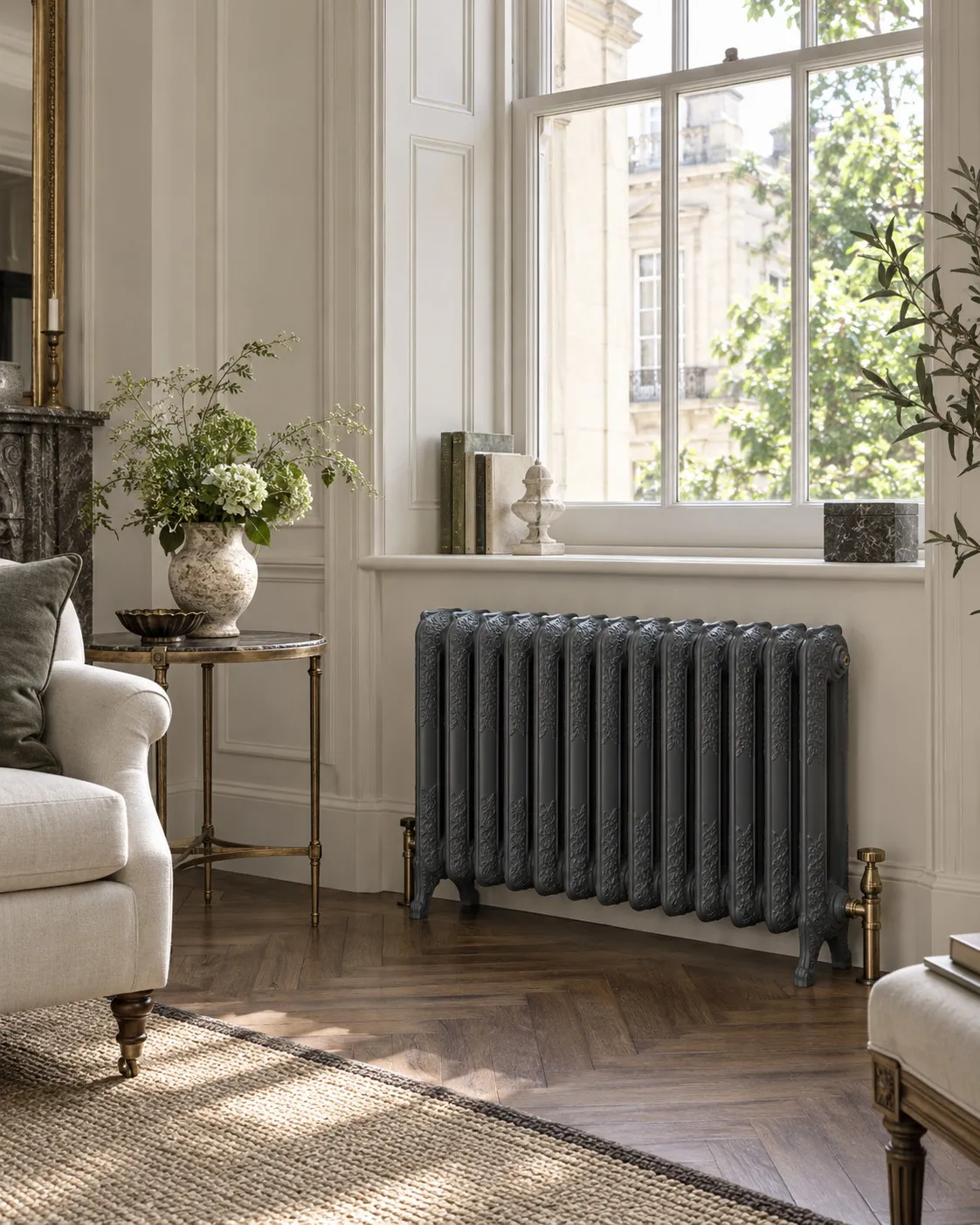
An old cast-iron radiator, with its columns and ornament, sometimes deserves to be treated as a piece of furniture. Beneath a window, in a slate blue such as Bond Street No.219 against a pale wall, it becomes an object; gloss or satin, catching the light on the relief, heightens the effect further. And when the walls are white, painting the radiator in the exact white of the woodwork rather than a factory white, Old Man's Beard BH.03 for instance, is enough to bring it back into tune with the rest of the room.
Preparing a radiator before painting it
Everything begins with a cold radiator, and it must stay cold until the end. Turn off the heating or close the valve the day before, and wait until the metal is at room temperature: paint applied to warm metal dries too fast on the surface and grips poorly. Protect the floor and the wall behind, remove or mask the valves, and dust carefully between the sections, with a vacuum cleaner and then a dry brush.
Next, degrease the whole surface with a mild detergent, rinse and let it dry. Lightly sand the old paint to break the sheen and give a key, then wipe with a damp cloth. If you find spots of rust, sand them back to sound metal and dust off: these patches of bare metal, like a new radiator supplied unfinished, need a primer before the paint. Choose its tone according to the colour to come, light beneath a neutral, dark beneath a Bond Street No.219; each colour's page shows the primer that belongs beneath it, and you should allow around 0.5 L of primer per litre of paint.
Apply, let it dry, switch it back on
A radiator is painted from the inside out: first the back faces and the gaps between the sections, with an angled brush or a slim roller made for radiators, then the edges, and finally the front, ending with the most visible surfaces so that the last brush strokes are the most even. Work in thin coats: on metal with a lot of relief, a thick coat runs into the hollows and takes hours to dry. A well-applied radiator paint is recognised by exactly that, not a single drip set hard at the foot of the columns.
Respect the 2 to 3 hours to touch-dry, let the first coat harden, and apply the second only to a perfectly dry surface. Once the final coat is on, be patient: leave the radiator off at least until the next day, then bring the temperature up gradually rather than all at once. Like all our decorative paints, the multi-surface finishes are water-based, low in VOC and low in odour, and the brushes simply wash out in water: you can repaint the radiators of a whole flat without moving out of the rooms.
Where to start
Our page on radiator paint brings together the suitable finishes and colours chosen for metal. Then order one or two 100 ml sample pots and paint one section of the radiator and a square of the wall beside it, to check that the shade reads the same way in matt and in satin under your light. To know the cost of a whole room, radiator included, the price per square metre page gives the coverage of each finish in two coats.
Frequently asked questions
Can you paint a radiator with an ordinary wall paint?
No. A wall emulsion is not formulated for metal or for the temperature swings of a radiator; it grips poorly and flakes. You need a multi-surface finish designed for wood and metal: Multi-Surface Satin, Eggshell, Gloss or Dead Matt depending on the look you want, applied in two thin coats to a cold, well-prepared radiator.
Do you need a primer to paint a radiator?
On a previously painted radiator that is sound and well sanded, two coats of finish are usually enough, unless the new colour is very different from the old one. A primer becomes essential on bare metal: a new unfinished radiator, or areas sanded back to metal after a spot of rust. Choose the primer tone shown on the colour's page.
How long should you wait before turning a repainted radiator back on?
Multi-surface finishes are touch-dry in 2 to 3 hours, but the film needs longer to harden. Leave the radiator off at least until the day after the final coat, then bring the temperature up gradually over the first few days rather than pushing it to maximum straight away, giving the paint time to reach its full hardness.
How do you paint a cast-iron radiator without removing it?
Cold radiator, floor and wall protected, valves masked. Dust between the sections with a vacuum cleaner and then a dry brush, degrease, sand lightly and wipe down. Then paint from the inside out with an angled brush for the gaps and a small roller for the faces, in thin coats, and finish with the front face for an even result.