The journal
Dark hallway paint: lighten it or embrace the shadow
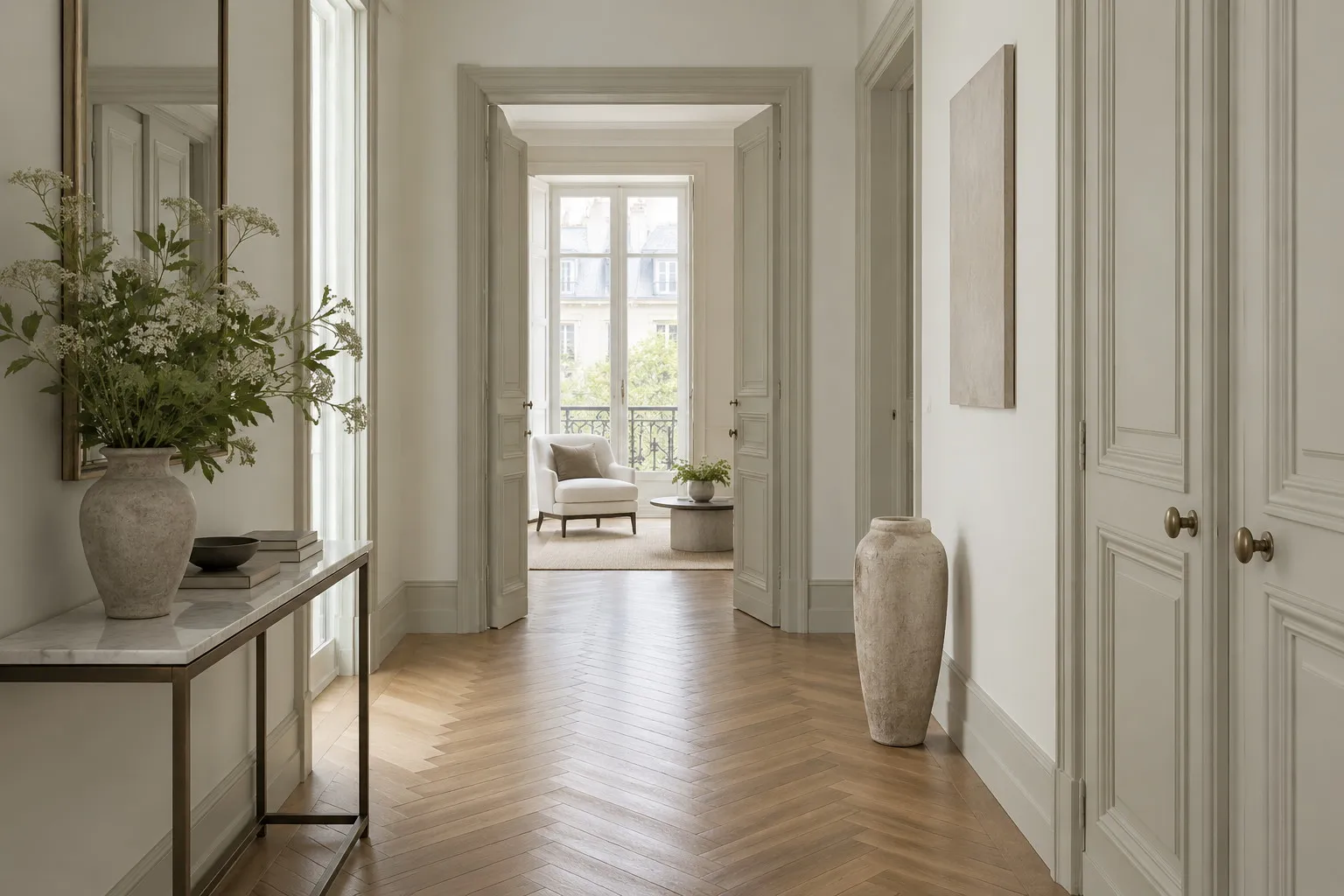
For a dark hallway, two strategies work: a warm white such as Syon Park No.13 that returns the light, or a deep colour such as Oratory No.237 that embraces the shadow and makes the rooms beyond feel brighter. Either way, choose a washable matt finish that stands up to the traffic.
A dark hallway is nearly always a product of architecture: no window, closed doors, a low ceiling and light borrowed from the rooms around it. Choosing a dark hallway paint is therefore less about fighting the gloom than deciding what to do with it. Two routes are open to you. The first tries to catch and return what little light there is with a warm white or a pale neutral. The second embraces the shadow with a deep colour that gives the passage presence and makes the rooms it opens onto feel brighter by contrast. Both work, provided you choose the right shade and a finish that will stand up to daily traffic.
Understand a hallway's light before you choose a colour
In a sitting room, colour receives light head-on, through the window. In a hallway it arrives at an angle, through open doors, or from above, from a ceiling light nobody switches on during the day. That raking light picks out every flaw in the plaster and cools the shades on the wall: a grey that looked soft on the colour card turns chilly, a pure white drifts towards dishwater. It is the first trap of a windowless corridor, and the reason brilliant whites so often disappoint there. Our guide to how light influences colour goes into the detail; the short version is that a dark hallway wants warmer shades than you would pick for a sunlit room.
The second thing to look at is what the hallway serves. A passage opening onto a very bright kitchen does not call for the same answer as an upstairs landing lined with bedrooms. Open the doors, look at the space in the morning and again in the late afternoon, and note where the light is coming from. Those few minutes of observation are worth more than any rule, and they will steer your choice among our hallway paints.
Route one: lighten it with a warm white or a pale neutral
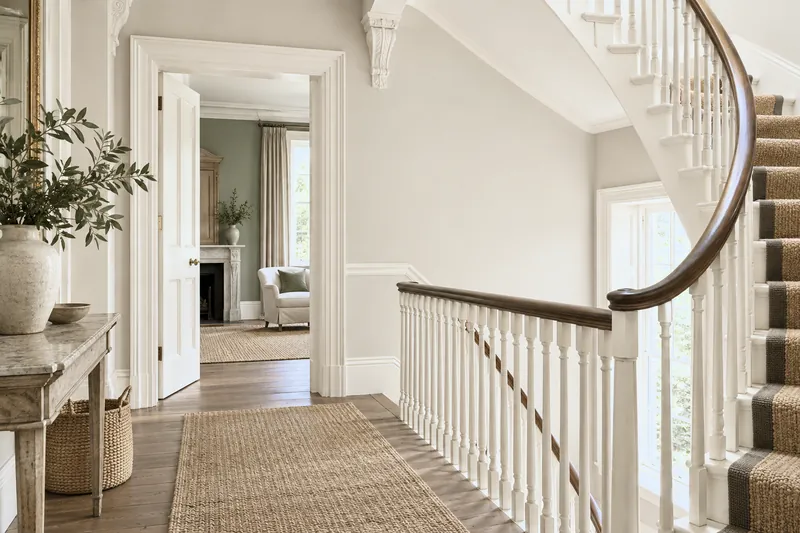
If your aim is to open the space up, steer clear of pure white and look for a white with a little pigment in it. Syon Park No.13 is our first choice for a dark hallway: a fresh white with the faintest tint of green that returns light without ever feeling clinical, and keeps its softness even under raking light. Belgravia No.6 works the same way with a touch of natural umber, which makes it warmer and very forgiving on old walls. For a corridor that runs alongside an already white living room, a slightly stronger neutral such as Lamb's Ear BH.06, a velvety grey-green, creates a calming transition without darkening anything.
These pale shades have a practical virtue: they sit happily with almost any colour in the neighbouring rooms, which matters when every door opens onto a different mood. They do, however, demand properly prepared walls, because the raking light of a hallway does not forgive bumps. Allow two coats, and paint the ceiling in the same white so the eye never snags on a line.
Route two: embrace a dark hallway with a deep colour
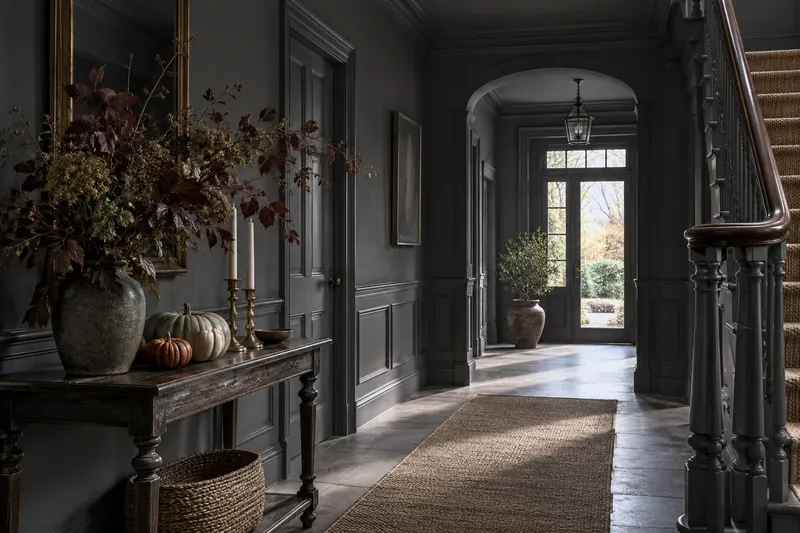
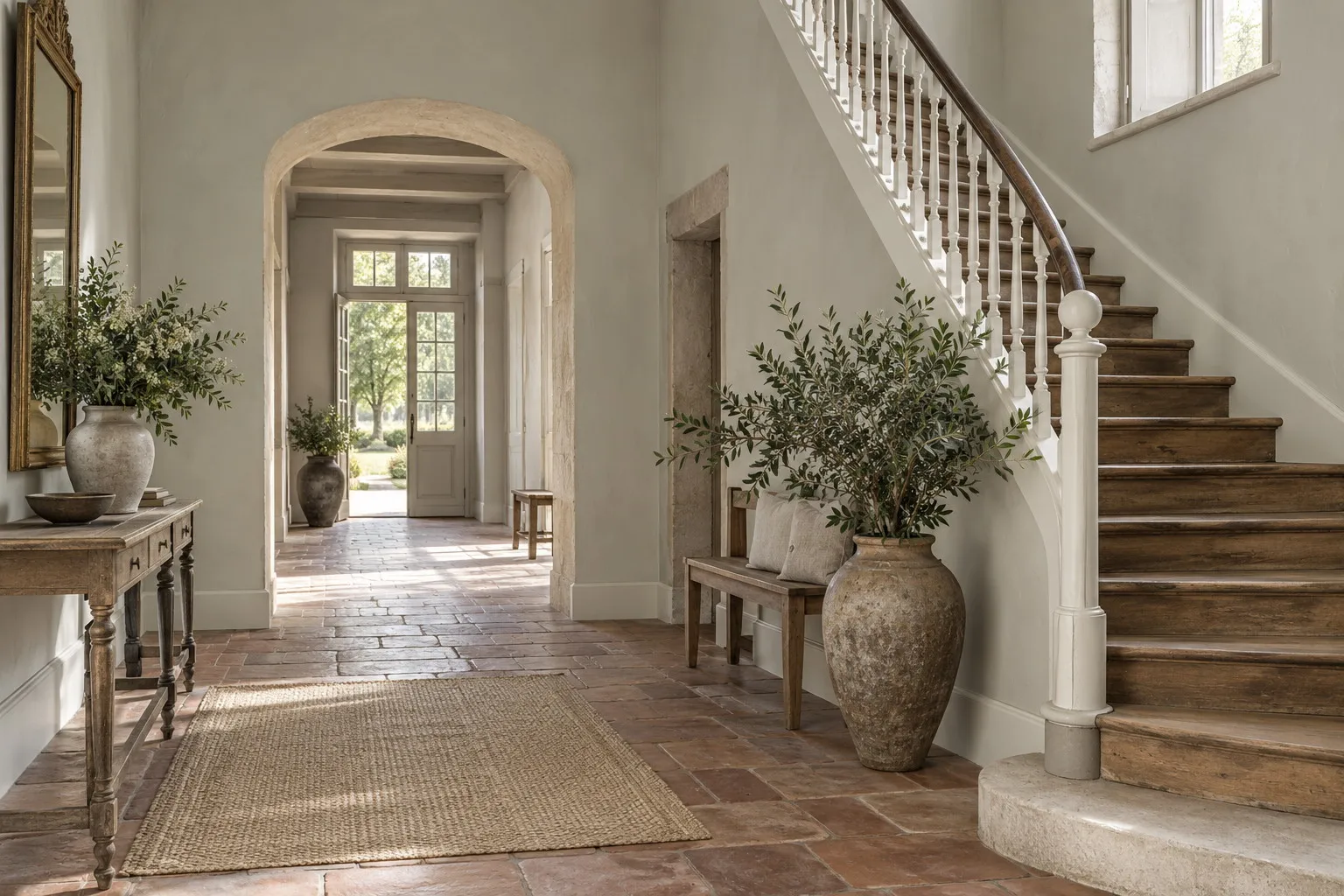
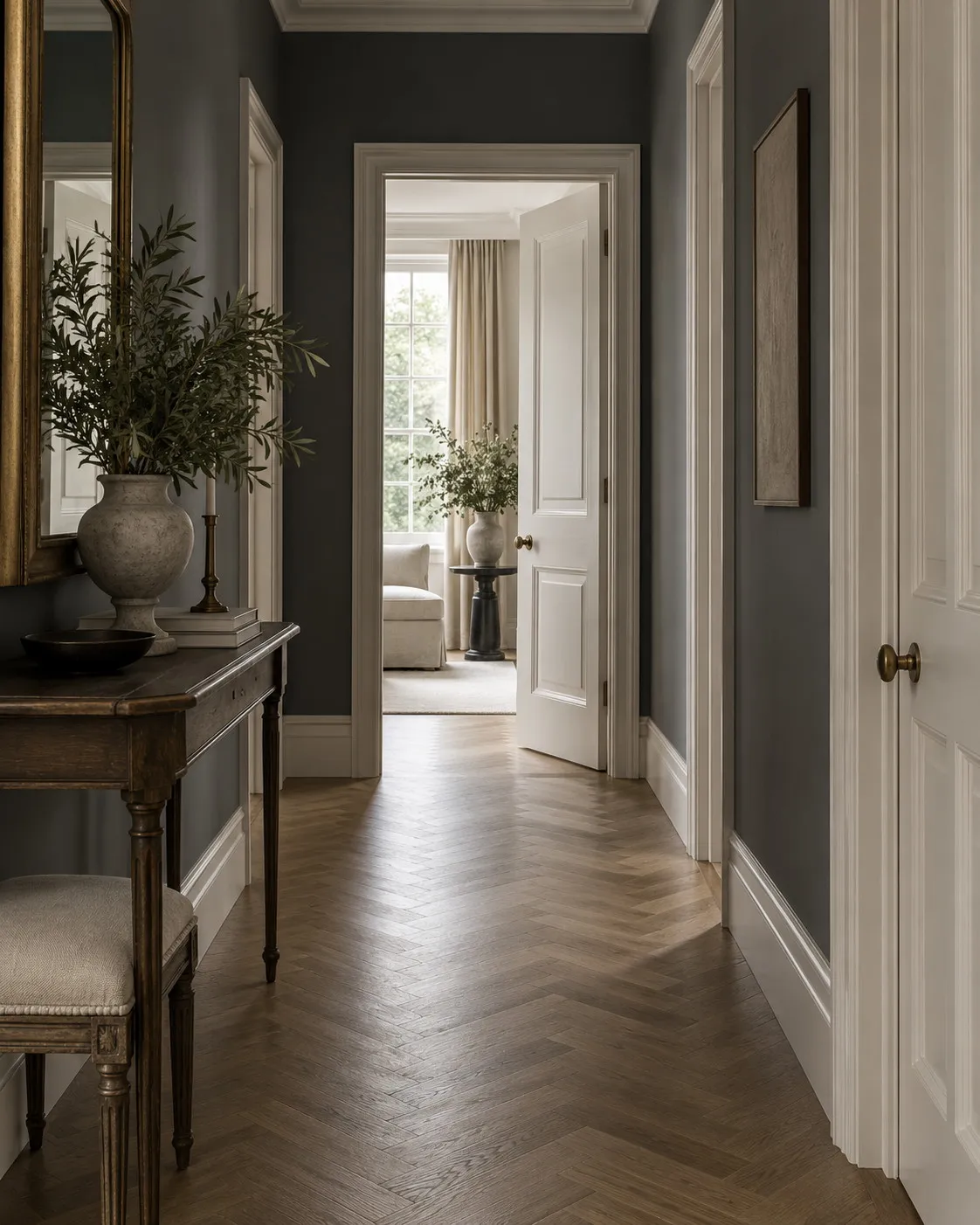
The second approach often surprises, then convinces. A hallway is not a room you settle into; it is a passage. Painted in a deep colour, it becomes a frame that makes every room beyond feel lighter and larger by contrast. The shadow stops being a flaw and becomes an intention. It is also an elegant way to unify a corridor fragmented by many doors: a strong shade absorbs the breaks that white underlines.
A hallway does not need to be light to be welcoming; it needs to be decided.
Three shades lend themselves particularly well to the exercise. Oratory No.237 is a deep grey with blue reflections, inspired by the stone of Brompton Oratory, that keeps a certain reserve and sits as well with white woodwork as with black. Messel No.39, an intense, almost brown olive, warms the space and is wonderful with oak, brass and terracotta. For a more theatrical hallway, , a dark, warm plum, brings a velvety depth that the mineral pigment load of our paints reveals in full as the light changes through the day. In all three cases, the trick is to paint the ceiling in a warm white such as Holland Park No.5, or in the same colour if the height allows, to avoid the boxed-in feeling a pure white ceiling would produce.
Dark hallway paint: which finish stands up to the traffic
A hallway is the hardest-working surface in the house: shoulders, bags, school satchels, wet dogs and bicycle handlebars all leave their mark. The finish therefore matters as much as the colour. For walls, Marble Matt Emulsion is our recommendation: a very deep matt, loaded with crushed Carrara marble, with class 1 wet-scrub resistance under EN 13300. It washes and scrubs without polishing up, which is rare for a matt, and its breathable film suits old walls and lime plaster alike. Reckon on around 15 m² per litre per coat, two coats, and a recoat after three to four hours.
If your hallway is especially narrow or used by young children, Multi-Surface Dead Matt lets you paint walls, doors and skirting in a single washable matt shade, with a sheen of barely 5 %. This colour-drenched approach is ideal for the dark route: Messel No.39 everywhere, floor to ceiling, and the corridor becomes a room in its own right rather than a mere thoroughfare.
Doors, skirting and ceiling: blend or contrast
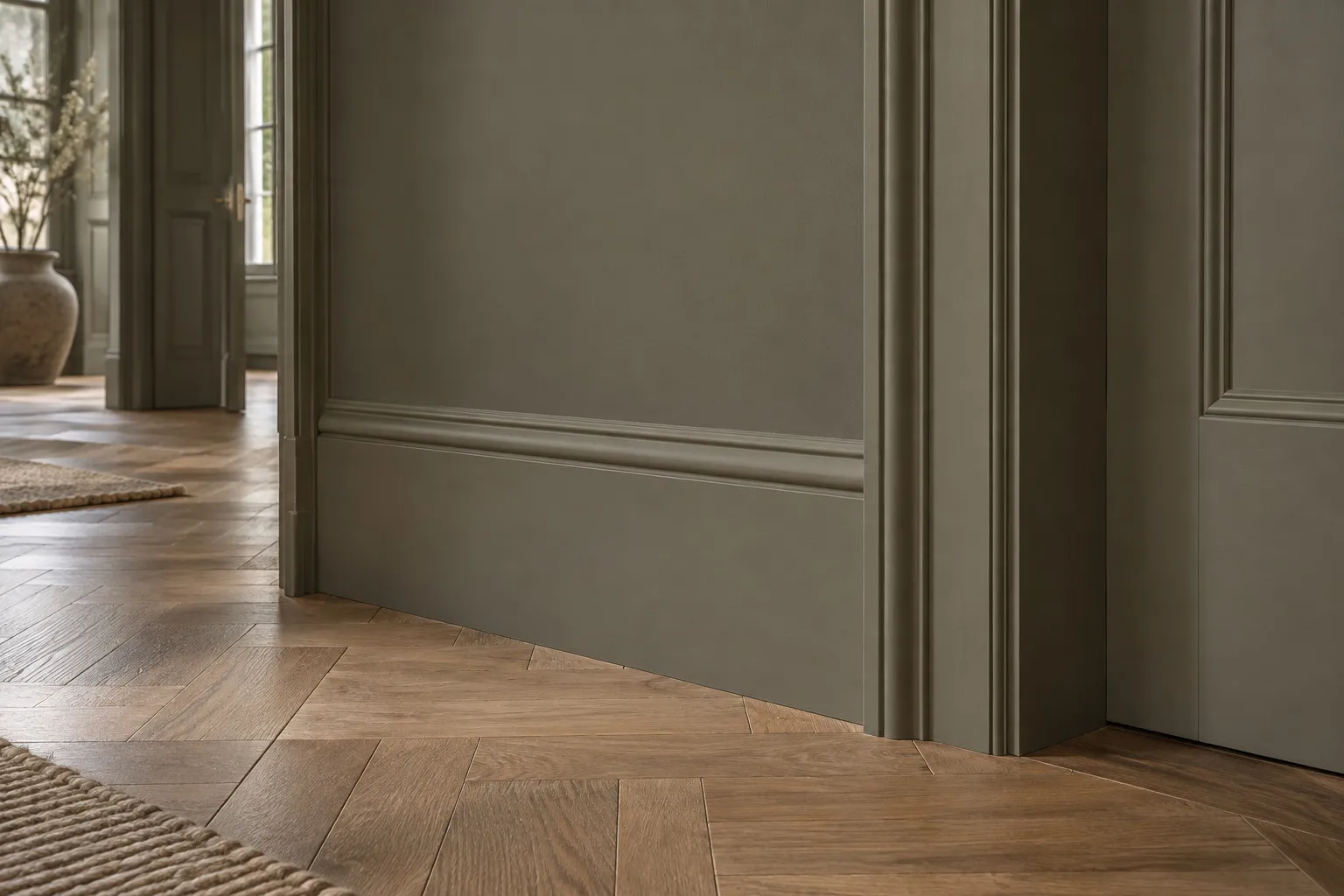
In a hallway, woodwork takes up a considerable surface relative to the walls. Painting it in a shade close to the wall, in Multi-Surface Eggshell, quietens the space and makes the doors disappear; that is the approach in our opening photograph, where doors in Lamb's Ear BH.06 sit against walls in Syon Park No.13. Conversely, dark woodwork, in Pub BH.08 for instance, a softened black, draws a graphic rhythm through a pale hallway and hides fingermarks around the handles. Eggshell, with its 15 % sheen, resists moisture and knocks while staying soft; keep Satin for the doors that take the most punishment.
Where to start
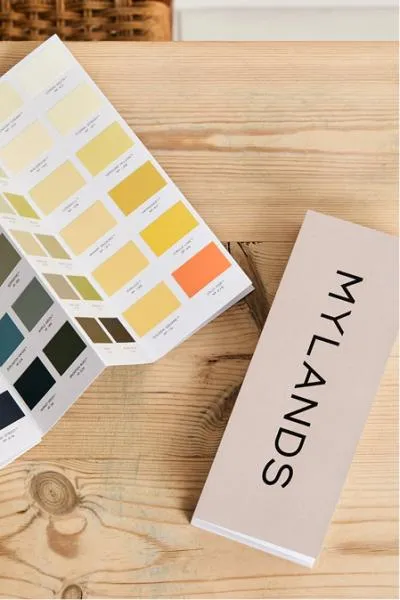
Before you settle on a route, order two or three 100 ml sample pots, each covering around 1.5 m². Paint two squares, one near an open door, the other at the darkest point of the corridor, and look at them in the morning and again in the evening. The physical colour card, sent free of charge, will help you compare a pale and a deep shade side by side. To estimate your budget, the page on price per square metre takes coverage and the number of coats into account. A hallway can be repainted in a day; it may be the quickest and most visible transformation in the whole house.
Frequently asked questions
Which colour should I choose for a windowless hallway?
Either a warm, lightly pigmented white such as Syon Park No.13 or Belgravia No.6, which returns the light borrowed from neighbouring rooms without turning grey; or a deep colour such as Oratory No.237 or Messel No.39, which embraces the gloom and gives the passage character. Avoid pure white and cool greys, which look dreary under raking light.
Does a dark hallway have to be painted white?
No. A hallway is a thoroughfare rather than a room you settle into, and a deep colour works very well there: by contrast, the rooms it opens onto feel lighter and larger. A ceiling in a warm white, or in the same shade if the height allows, avoids any boxed-in feeling.
Which paint finish for a busy hallway?
For walls, a washable matt emulsion with class 1 wet-scrub resistance under EN 13300, such as Marble Matt Emulsion, which scrubs clean without polishing up. For doors and skirting, Multi-Surface Eggshell, which resists moisture and knocks. Let the film dry fully before the first clean, and use a soft sponge with mild soap.
Should hallway doors be painted the same colour as the walls?
It is an excellent option in a dark hallway: doors and skirting in a shade close to the wall calm the space and make the breaks disappear. You can also contrast with dark woodwork such as Pub BH.08, which gives rhythm to a pale hallway and hides fingermarks around the handles.