The journal
Washable matt paint: the end of the matt-or-durable trade-off
A washable matt paint is a deep matt whose film, here reinforced with crushed Carrara marble, stands up to a sponge and mild soap without burnishing or blanching. Rated class 1 under EN 13300, our Marble Matt Emulsion proves it in hallways, on staircases, in children's bedrooms and on kitchen walls.
For decades, choosing a matt paint meant accepting a bad bargain: a beautiful wall, velvety and free of reflection, that you must on no account touch. The first fingerprint stayed, the first sponge left a shiny halo, and in the end you repainted. Washable matt paint is the answer to that old trade-off, and it is no slogan: it is a matter of formulation, of a standard, and of a little patience in the first few weeks. Here is what has changed, how to get the most from it, and the rooms where a washable matt earns its keep.
Why matt used to be fragile
A matt finish scatters light instead of reflecting it, because its surface is microscopically uneven. To achieve that effect, traditional matt paints were loaded with cheap mineral fillers and rather little binder: the film stayed porous and chalky, and every rub lifted a little pigment or polished the surface, hence those shiny patches known as burnishing. Manufacturers had a simple answer: recommend satin wherever people walk, and keep matt for ceilings and guest rooms.
The result, in a great many French homes, is a satin hallway that throws back every flaw in the wall and every light source, when that is precisely the room you would have wanted soft and enveloping. Matt was never a poor aesthetic choice; it was a poor technical one, and for want of a washable matt paint worthy of the name, the two became confused.
What makes a washable matt paint today
Two things have changed. The first is formulation. Our Marble Matt Emulsion brings crushed Carrara marble, recovered from the offcuts of the stone industry, into a water-based binder: the marble particles provide the matt and the mineral touch, while the film that encases them is denser and harder than that of an ordinary matt. The pigments, natural earths and minerals richly dosed, stay locked inside that film rather than sitting on the surface. The result is a very deep matt that you can wash.
The second is the standard. European standard EN 13300 classifies interior wall paints by their wet-scrub resistance, from class 1, the best, to class 5. A paint claiming class 1 must lose very little thickness after a set number of wet-scrub cycles, which in real life corresponds to a wall you can scrub and not merely wipe. Marble Matt Emulsion is class 1. It is that mention, and not the word "washable" printed large on the tin, that you should look for on a datasheet.
The rest is a matter of convenience: around 15 m² per litre per coat, two coats, touch-dry in one to two hours, recoatable after three to four, a breathable film suited to old walls and lime plaster, a faint odour, brushes that wash out in water. A room is repainted in a day and back in use by evening.
Cleaning a matt wall without damaging it
Washable does not mean indestructible, and the method matters as much as the paint. Use a soft sponge or a microfibre cloth, lukewarm water and a mild soap, such as diluted Marseille soap or a very small amount of washing-up liquid. Wet the whole area rather than the single dirty spot, press rather than rub in circles, rinse with clean water and dab dry. Scouring creams, abrasive sponges and solvent-based products are out: they polish the matt or dissolve it.
The most important rule concerns time. A water-based paint dries in a few hours but goes on hardening for two to four weeks; this is what is called curing. A wall cleaned vigorously in the first week will keep a mark, whatever the quality of the paint, because the film has not yet reached its final hardness. During that period, make do with a dry or barely damp cloth, and save the soap for later.
A matt you can wash changes the way you live in a room: you stop protecting the wall and start living against it again.
Where a washable matt paint earns its keep
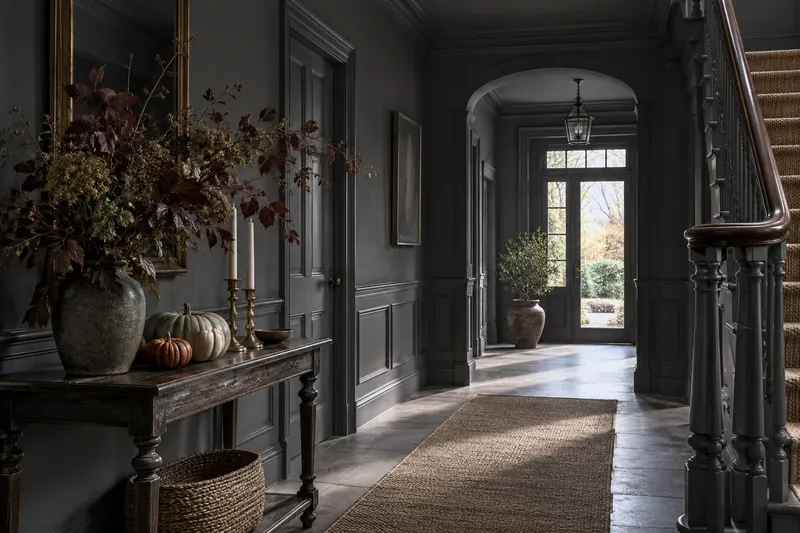
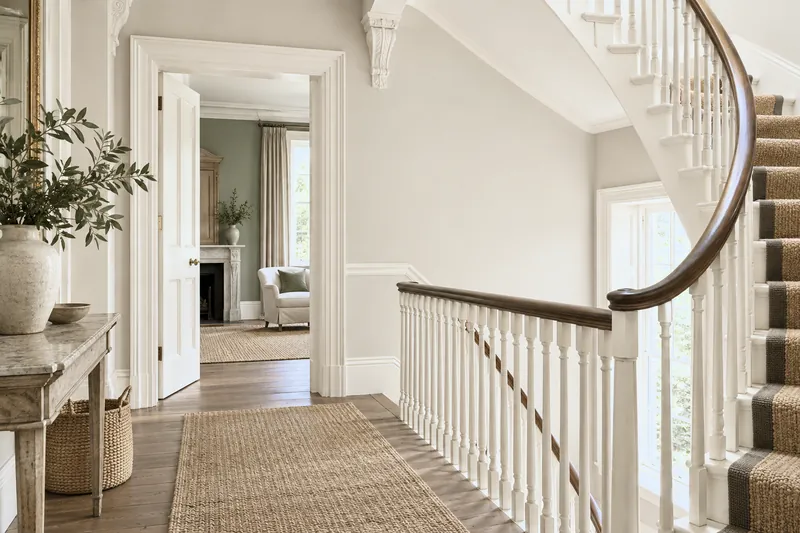
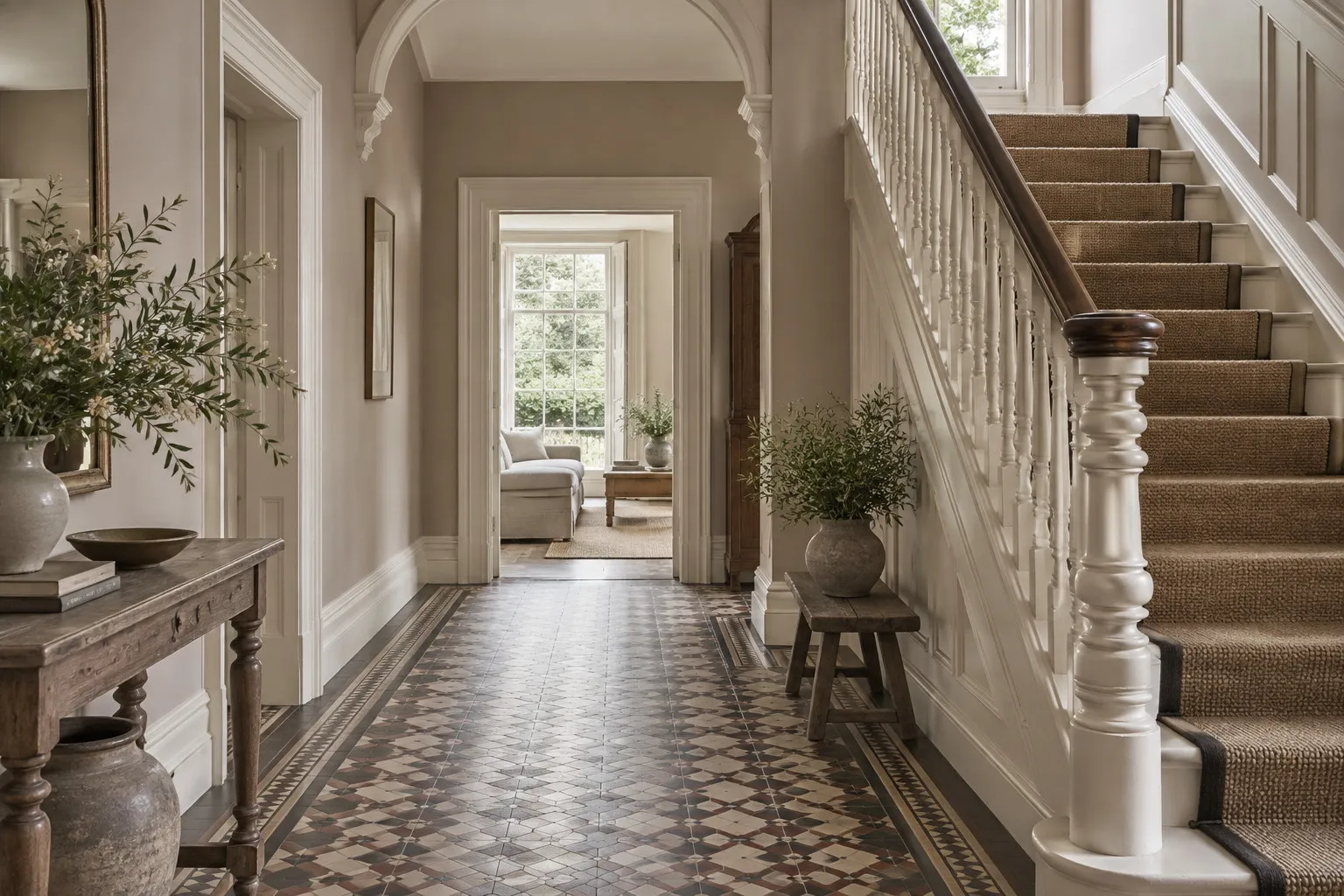
The hallway and the staircase first, because they are the most touched surfaces in the house: hands on the banister, bags against the wall, children's bicycles. A mid-tone helps there as much as the finish, absorbing the small marks that white points out. Stone Castle No.71, a warm grey with brown undertones, and Egyptian Grey No.154, a slightly deeper historic grey, are two safe choices that age well and wash without showing where the sponge has been.
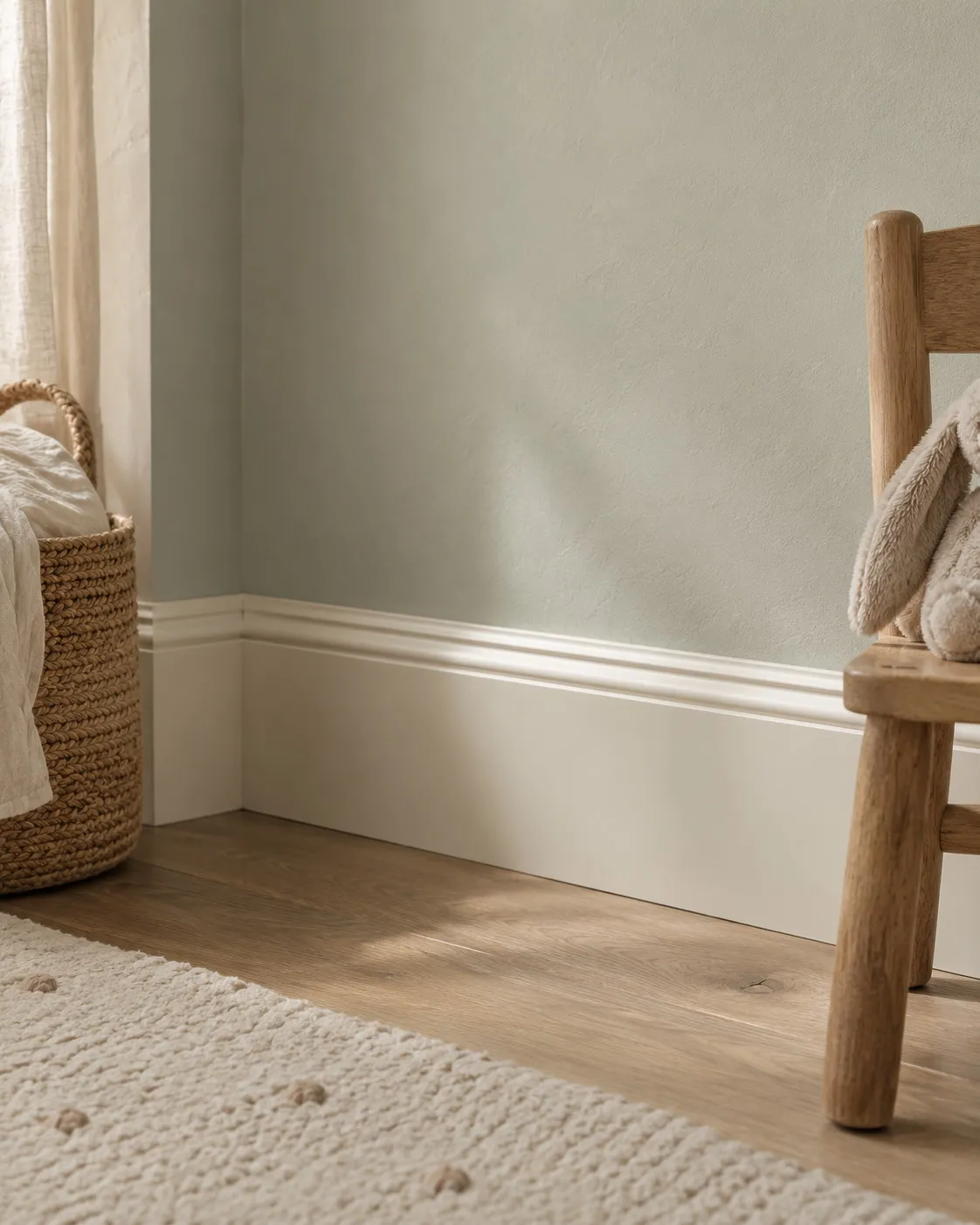
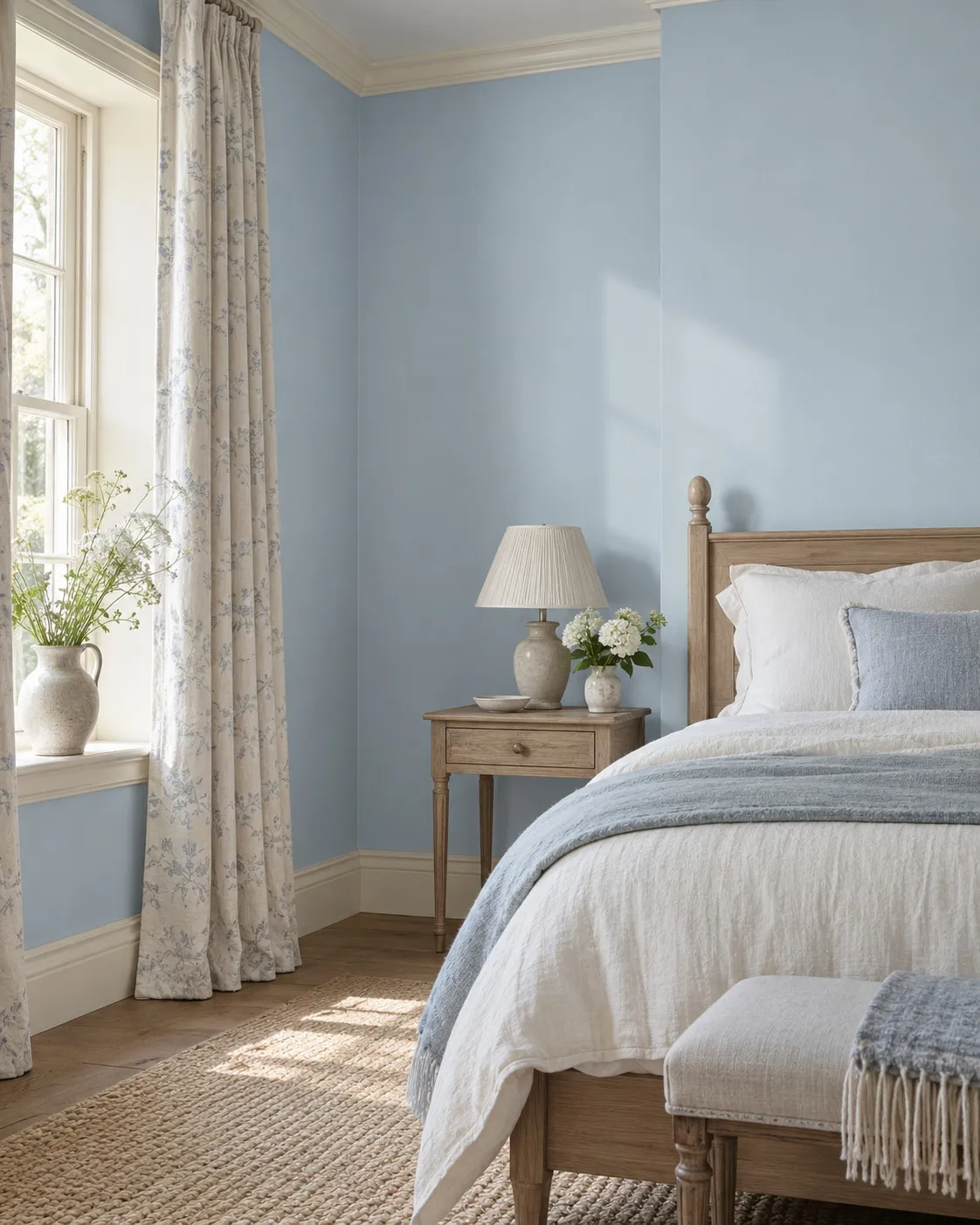
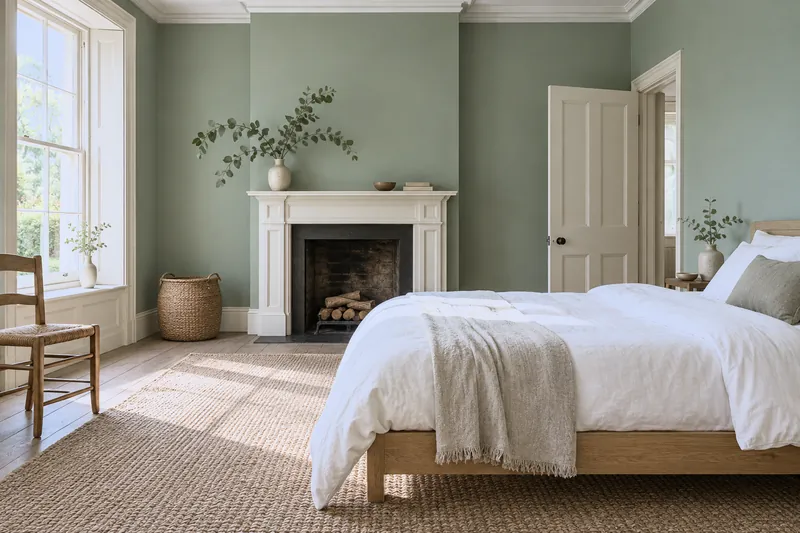
The child's bedroom next, where a washable matt is almost self-evident: the walls take crayons, sticky hands and stickers, and a satin would feel cold. Lamb's Ear BH.06, a soothing grey-green from the Beata Heuman collection, or Morning Blue No.32, a light blue that wakes with the morning light, will see a child through from birth to adolescence. All our decorative paints are water-based, low in VOC and compliant with the EN 71-3 toy-safety standard, which settles the question for furniture as much as for walls.
The kitchen last, or at least its walls: away from the hob, a washable matt paint copes with the steam and splashes of an ordinary meal, and gives the room a softness that tiles and stainless steel never provide. Damp Leaf BH.14, a misty green, or Grouse No.75, a very gentle powdery brown, warm up white or timber units. For the cabinet fronts themselves, choose a multi-surface finish, eggshell or satin, better suited to doors that are opened a hundred times a day.
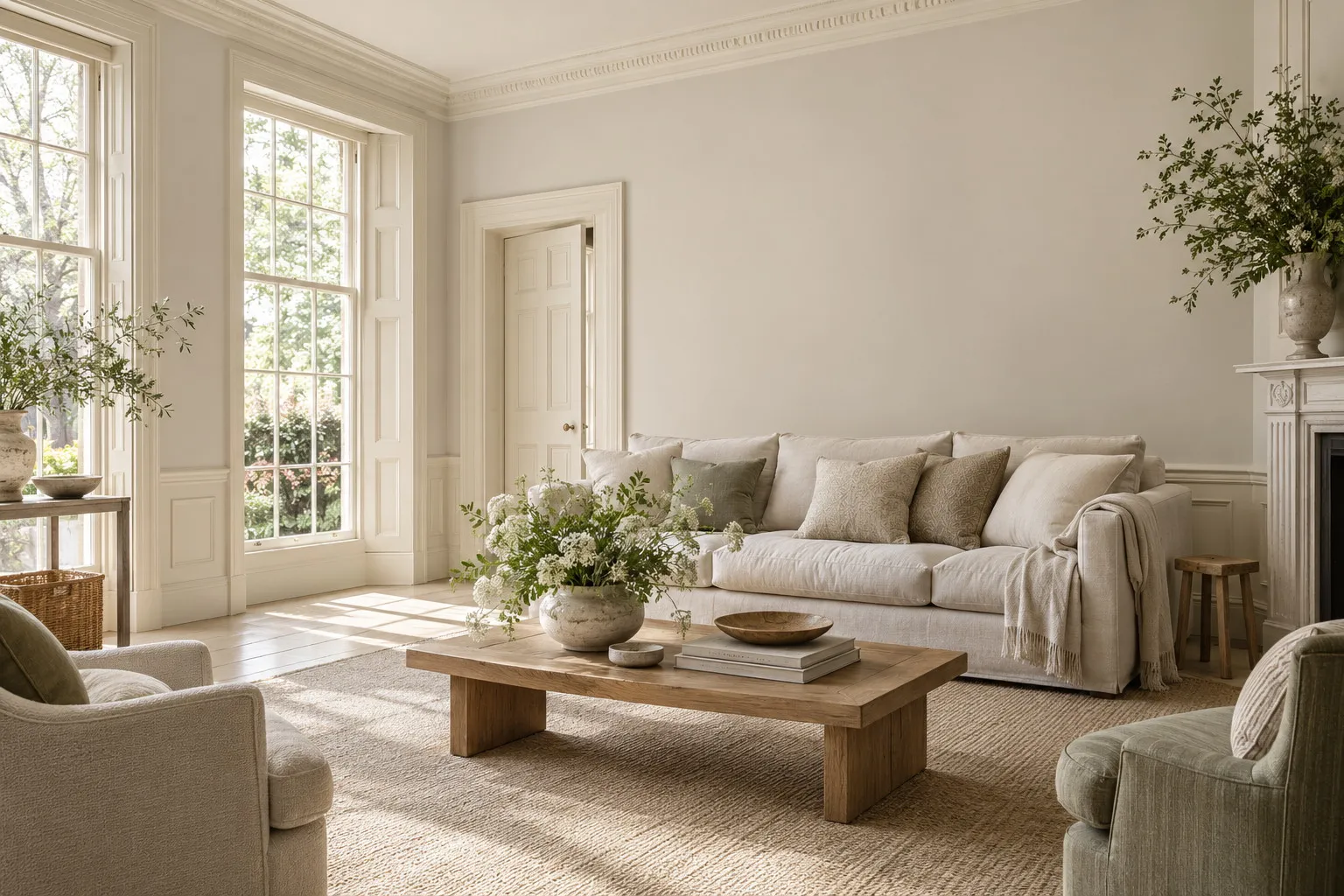
The sitting room needs no reminding: it is the matt room par excellence. Chalk Farm No.53, a light, warm neutral with yellow undertones, is the shade we most often suggest to a family that wants a bright sitting room without cold white, and knows a sofa will be pushed against the wall and a dog will pass through.
Marble Matt or Multi-Surface Dead Matt
We make a second matt, and it is not meant for the same projects. Multi-Surface Dead Matt has a sheen of around 5 %, in other words still very matt to the eye, but it is formulated to hold on walls as well as woodwork, metal and radiators, indoors and out. It is washable, covers around 12 m² per litre per coat, and is touch-dry in two to three hours. You choose it when you want to paint an entire room, walls, ceiling, doors, skirting and radiator, in a single colour and a single material, what is known as colour drenching.
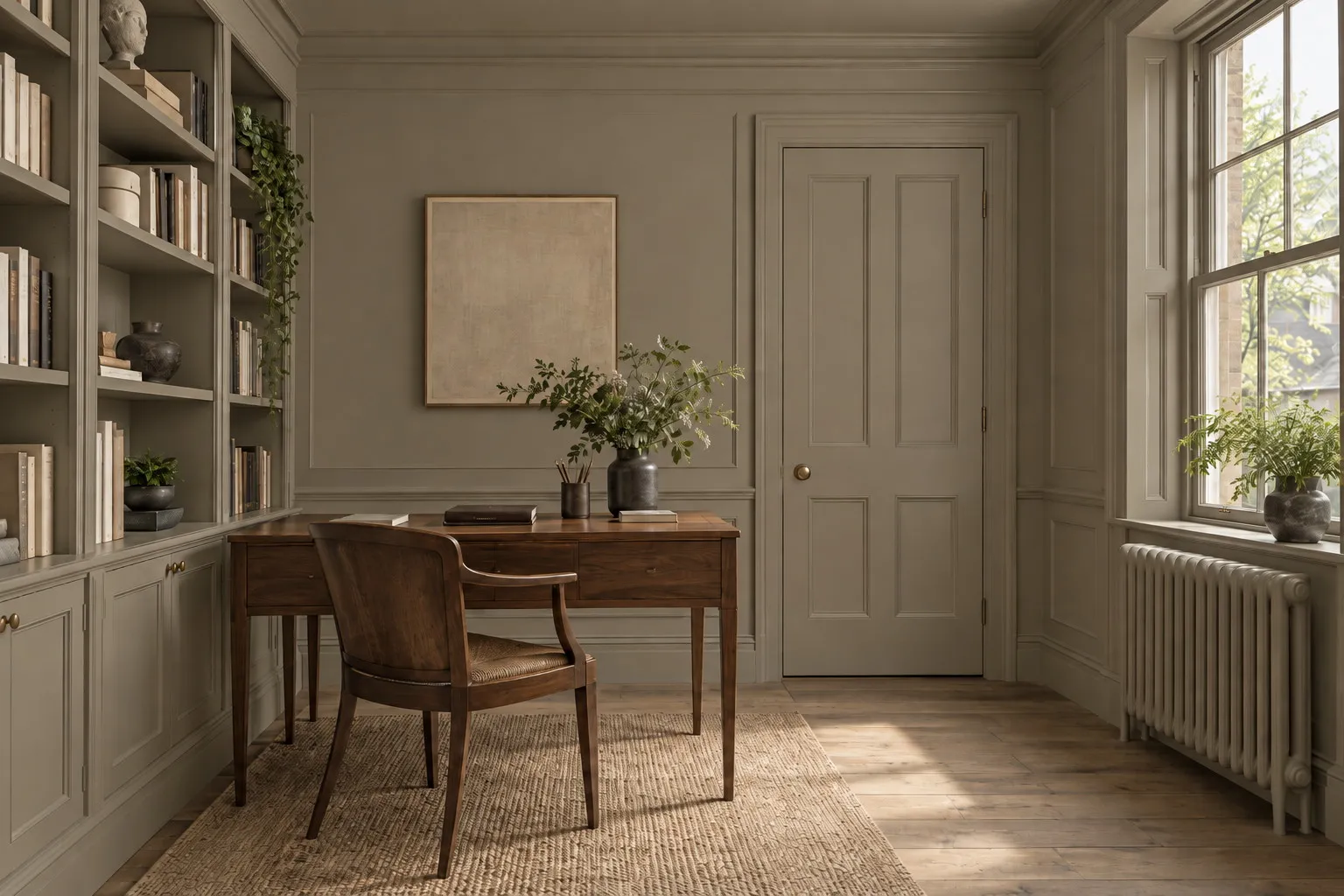
For walls alone, Marble Matt Emulsion remains the better choice: even more matt, better covering, breathable, and designed for plaster. For a room wrapped in a single tone, say a study in Portcullis No.170, a warm dark grey, on every surface in Dead Matt, the switch to the multi-surface finish is the right one. If you are still unsure, our guide to finding your finish goes through every case, from the ceiling to the front door.
Where to start
Paint a proper square before you decide. A 100 ml sample pot covers around 1.5 m²: apply two coats to the most exposed wall, let it harden for two or three weeks, then pass a damp sponge over it and see what is left, which is the only test that counts. The free colour card will let you line up the greys and greens against your own wall, and the price per square metre page will tell you what a hallway or a sitting room represents in two coats of washable matt paint.
Frequently asked questions
Can a matt paint really be washable?
Yes, provided the film is dense enough not to burnish under the sponge. Marble Matt Emulsion, loaded with crushed Carrara marble, carries class 1 wet-scrub resistance under European standard EN 13300, the best class there is. It is that classification, and not the word washable on the label, that guarantees a matt can be cleaned without going shiny.
How do you clean a matt-painted wall without leaving marks?
Wait until the paint has cured, two to four weeks after application. Then use a soft sponge or microfibre cloth, lukewarm water and a mild soap, wetting the whole area rather than the single dirty spot. Press rather than rub, rinse with clean water and dab dry. Avoid scouring creams, abrasive sponges and solvents, which polish or dissolve the matt.
What is the difference between washable and scrubbable?
In everyday language, washable describes a paint that tolerates a damp sponge, and scrubbable one that stands up to a firmer clean with soap. Standard EN 13300 replaces those words with wet-scrub resistance classes from 1 to 5. A class 1 paint such as Marble Matt Emulsion meets both needs, within the bounds of common sense.
Can you use a washable matt paint in a kitchen?
On the walls, yes: Marble Matt Emulsion is intended for kitchens and bathrooms alike, copes with the steam and splashes of an ordinary meal, and cleans with a sponge. For cabinet fronts, doors and surfaces close to the hob, a multi-surface finish, Eggshell or Satin, stands up better to repeated handling.