01
Blue-green and white
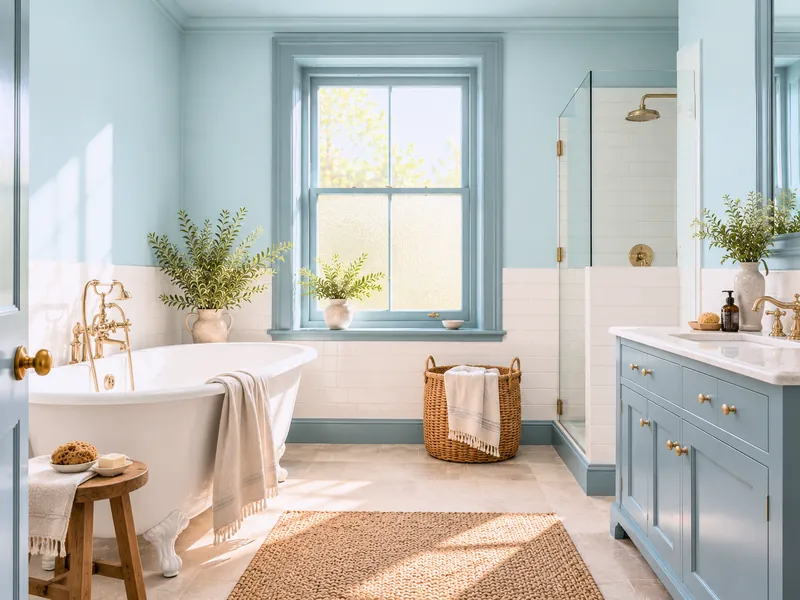
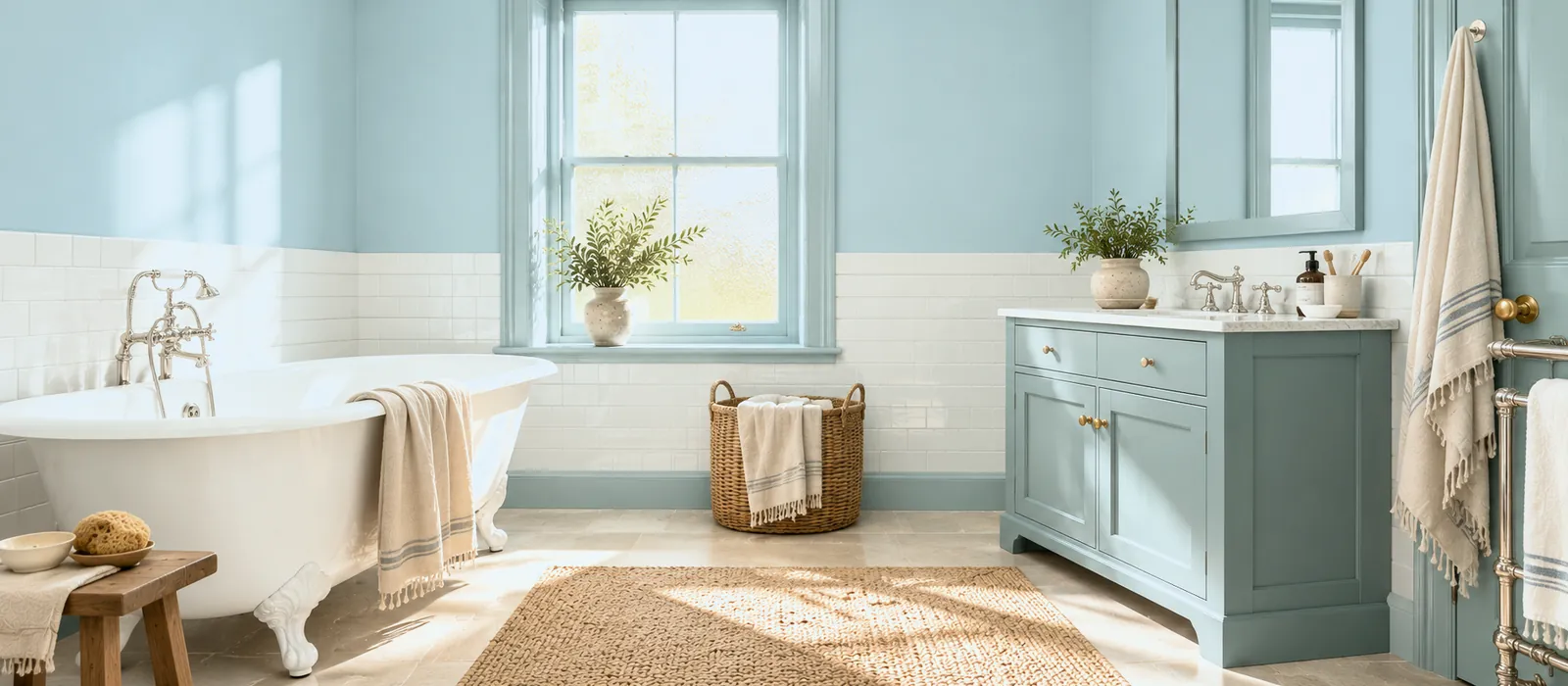
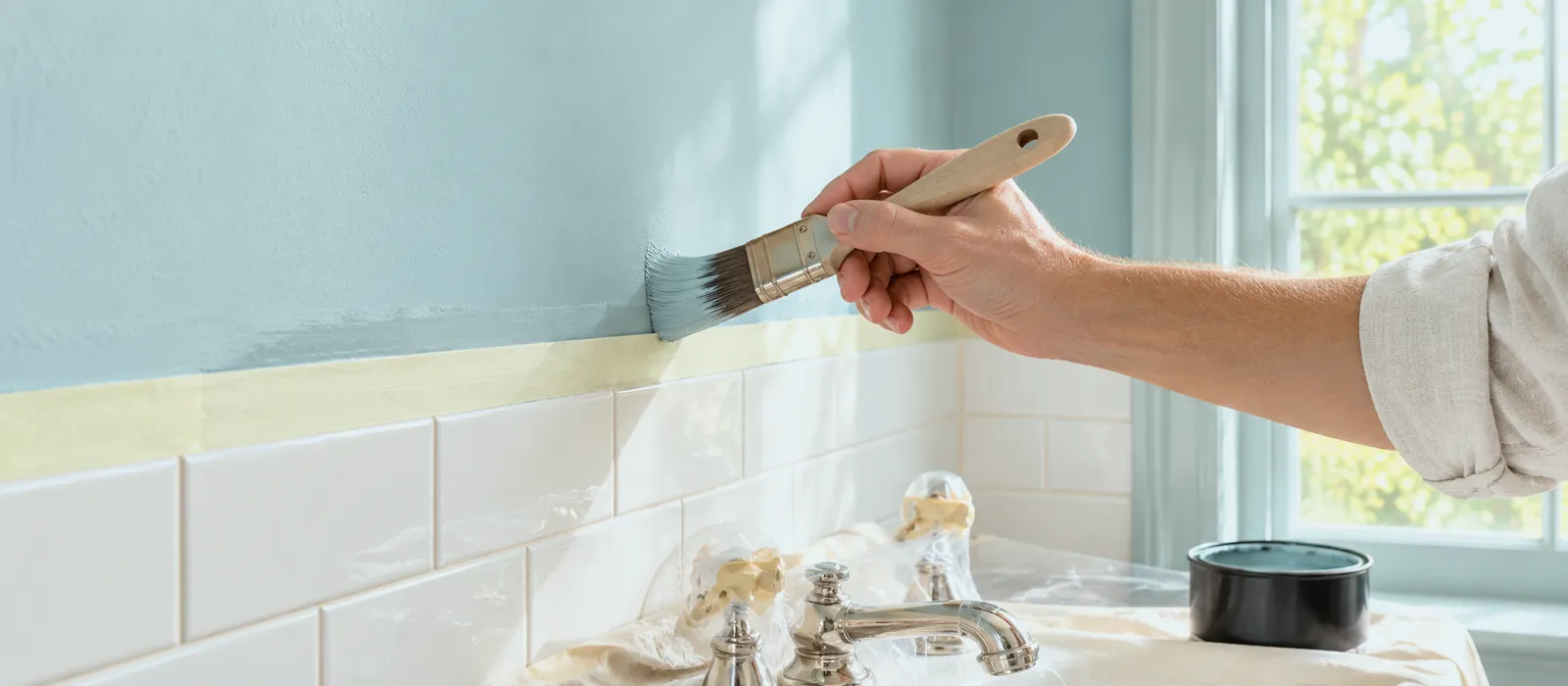
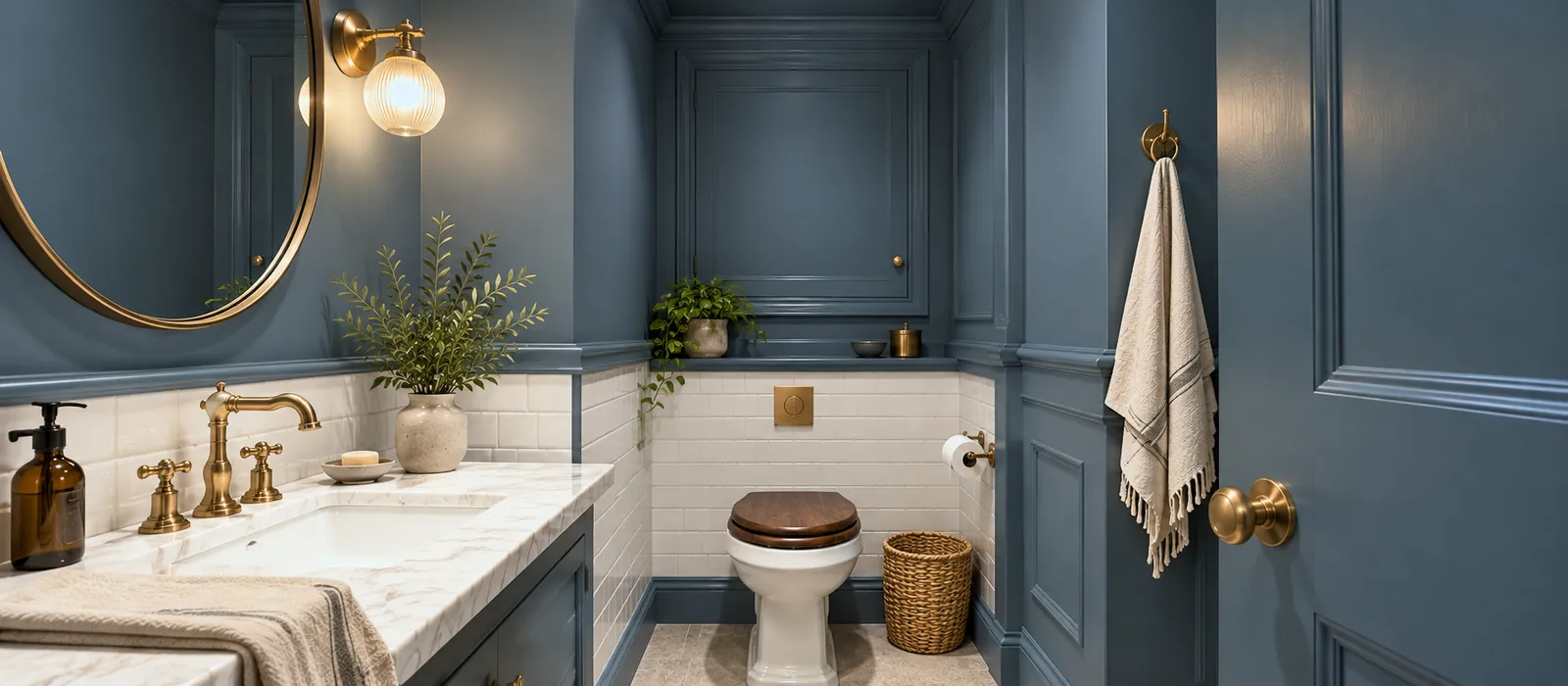
A soft blue-green on walls and ceiling, white tiles to half height, woodwork one step deeper: the clear-water bathroom.
Menu
How To
Design Advice
Customer Service
My account
Help with paint Advice by room
A bathroom is painted like any other room, on three conditions: a dry, mould-free wall before you start, extraction that works, and the right finish in the right place — Marble Matt Emulsion, class 1 washable, on the walls and ceiling away from direct splashes; Multi-Surface Satin on the woodwork, the furniture and the areas that take water, around the bath, the shower and the basin. What cannot be painted: the inside of a shower, tiles in contact with water, a ceiling that drips. What can be painted and changes everything: the ceiling in colour, the woodwork, the vanity unit. A weekend, a litre, and a week without a hot bath.
Page updated September 2026 · by the Mylands France colour team
Understanding
A bathroom is not a wet room: it is a room that is damp intermittently — ten minutes of steam, then hours of drying. A paint holds there if three things are true. The wall is dry: a tide mark, blistering paint, crumbling plaster mean a leak or chronic condensation, to be dealt with before any brush. The room ventilates: a working extractor or a window opened for ten minutes after the shower; without ventilation, no paint resists mould. The finish is washable: Marble Matt Emulsion, class 1 for wet-scrub resistance, washes and stays matt — that is what makes a matt, deep bathroom possible, without the shiny satin of "bathroom" paints. The detail: Which finish for a bathroom.
That leaves the direct splash zone: the surround of the bath, the wall behind the basin, the shower niche. There, tiles or a panel; and if the wall is painted at that point, Multi-Surface Satin, tighter, which rinses. The woodwork, the window, the vanity unit and the radiator: Satin too, or Eggshell away from the water.
The method
Tide marks, blisters, plaster that sounds hollow: find the cause (bath seal, leak, condensation) and fix it. Test the extractor with a sheet of paper against the vent: it should hold. No paint until the wall is dry to the touch and free of any musty smell.
Fungicidal wash on the black spots (corners, joints, behind furniture), left to work as the instructions say, rinsed, dried. Painting over live mould means seeing it come back through the paint within a month.
Sugar soap on all the walls and the ceiling: soap, limescale, hairspray, cosmetics — a bathroom is greasy without looking it. Rinse with clean water, a night's drying, window open.
Filler in holes and cracks, sanded at 180; blackened silicone joints removed and redone after the paint, not before. Repaired plaster takes a coat of Wall Primer.
Tape on the tiles, the taps, the mirrors; remove what unscrews (towel rail, hooks, toilet seat); dust sheet over the bath and floor. A bathroom is small: the smears are seen up close.
Marble Matt Emulsion by roller, two coats, 3 to 4 h between them: matt hides steam marks and joins. In colour, or in the companion white of the walls — never a pure white, which goes grey under a strip light.
Walls in Marble Matt Emulsion, two coats, cut in by brush along the tiles. Around the bath, the basin and the shower if the wall is painted there: Multi-Surface Satin, two coats, in the same shade — the difference in sheen only shows in raking light.
Window, door, skirting, vanity unit in Satin over Multi-Surface Primer; radiator in Eggshell. Then: no hot shower or bath for 48 h, window open after each shower for a week, sponge after two to four weeks. The silicone joints last.
By surface
| Surface | Paint it? | Finish | Worth knowing |
|---|---|---|---|
| Walls away from splashes | Yes | Marble Matt Emulsion | Two coats; class 1 washable; ventilate |
| Ceiling | Yes | Marble Matt Emulsion | In colour or in the walls' white; a dripping ceiling is fixed first |
| Wall behind the basin, bath surround | Yes, if no direct splashing | Multi-Surface Satin | Otherwise tiles or a panel; never the inside of a shower |
| Woodwork, door, window, skirting | Yes | Satin or Eggshell | Over Multi-Surface Primer if bare wood; the window in Satin, it takes the condensation |
| Wooden or melamine vanity unit | Yes | Multi-Surface Satin | Degrease, fine sanding, Multi-Surface Primer; see Refreshing wooden furniture |
| Radiator, towel rail | Yes, cold | Multi-Surface Eggshell | See How to paint a radiator; not the chrome parts |
| Wall tiles away from water | Possible | Satin over Multi-Surface Primer | Degrease, sand, prime, two coats; not in direct contact with water |
| Inside of the shower, tiled bath panel, floor | No | — | Permanent water; tiles, resin or a panel |
A coloured ceiling — a blue-grey, a water green, a pink — is the most rewarding move in a tiled bathroom: it gives the room its colour without touching the walls. See The cloud ceiling.
The colours
A bathroom is lived in at two hours: the morning, by daylight or strip light, and the evening, by lamp. Water greens, blue-greens, warm whites and pinks are beautiful at both; cold greys and pure white are clinical. The detail: Colours for a bathroom and Greens for a bathroom.
01
A soft blue-green on walls and ceiling, white tiles to half height, woodwork one step deeper: the clear-water bathroom.
02
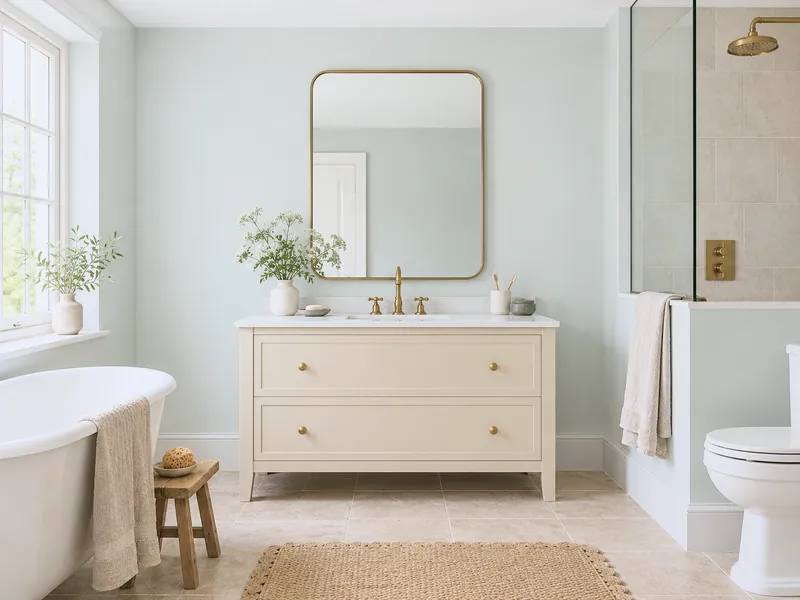
A very pale water green on the walls, a warm stone on the vanity unit: soft, bright, with oak and brass.
03
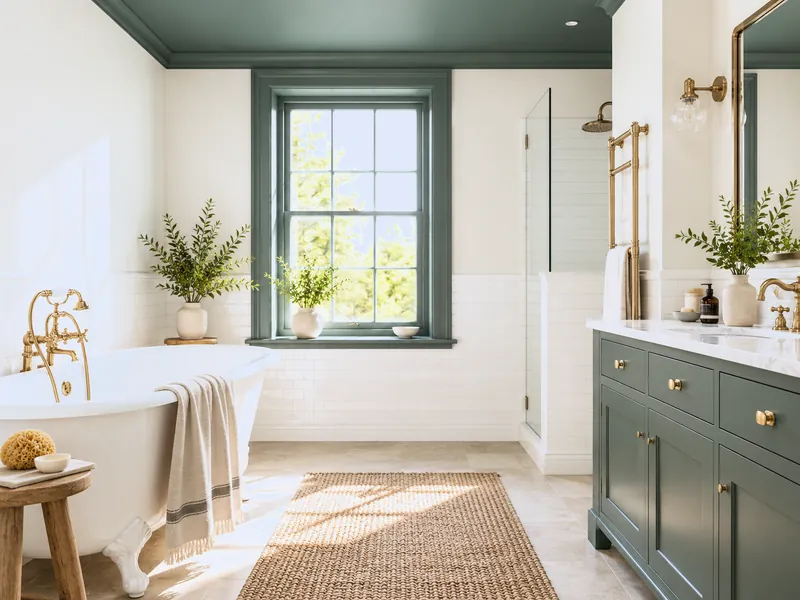
Warm white walls, a bottle-green ceiling and vanity unit: the tiled bathroom that gains depth from the top.
04
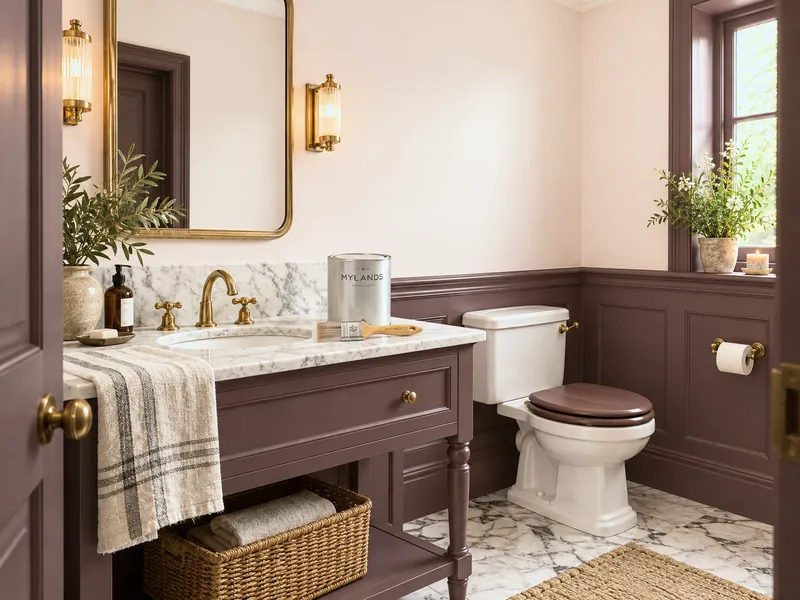
A powder pink on the walls, a deep brown-pink on the woodwork: the evening bathroom, with marble and brass.
05
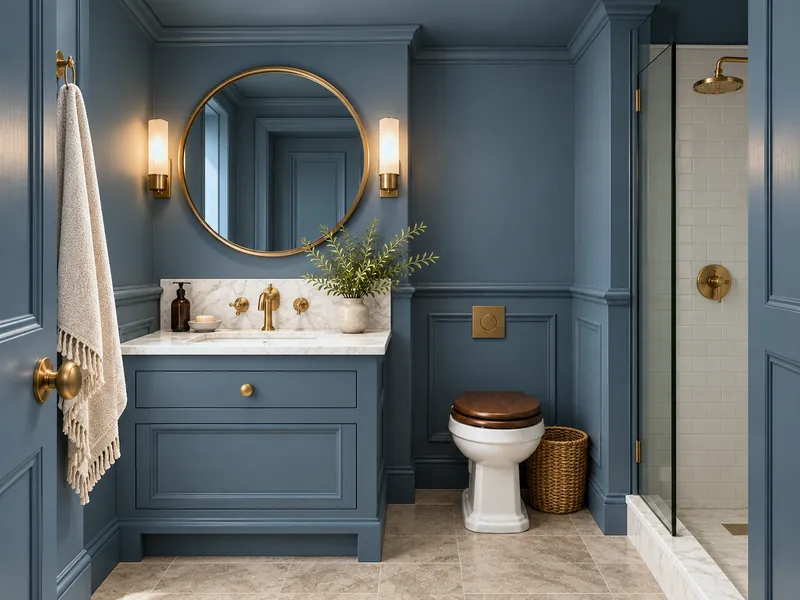
Walls, ceiling and woodwork in a deep blue, white tiles and a mirror: the small windowless bathroom that owns the half-light.
06
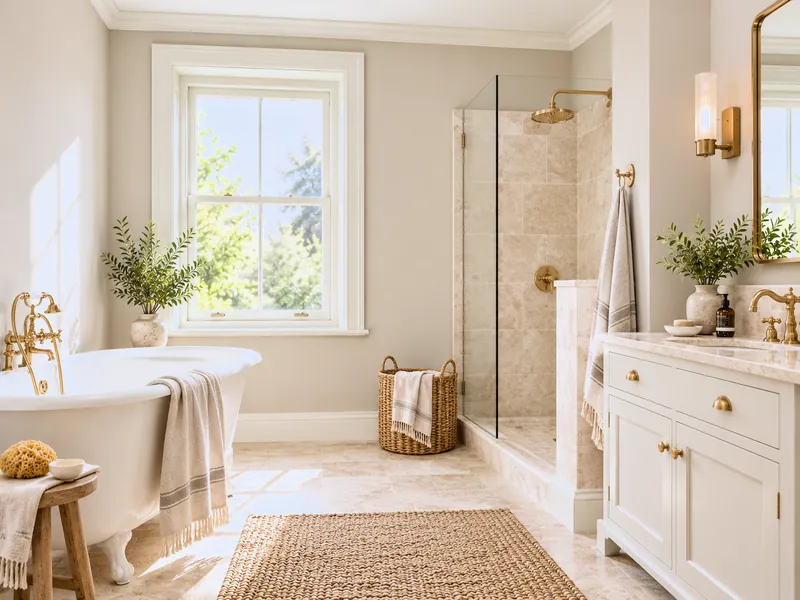
A warm grey-beige on the walls, an off-white on the ceiling and woodwork: the calm bathroom, with travertine and linen.
To avoid
Frequently asked questions
No: you need a washable paint and a ventilated room. Marble Matt Emulsion is class 1 for wet-scrub resistance, which is what satin "bathroom" paints promise, with shine thrown in. Keep Satin for the splash zones and the woodwork.
Wall tiles away from direct contact with water, yes: degrease, fine sanding, Multi-Surface Primer, two coats of Satin. Not in the shower, not around the bath, not on the floor — permanent water and footfall get the better of any paint.
48 h without a hot shower or bath; a week of the window open after each shower; the sponge after two to four weeks of full cure. A short, lukewarm shower with the window open is possible from the next day.
Either a warm white and a coloured ceiling, with warm 2,700 K lighting; or a deep colour drenched, which owns the half-light and makes the room intimate. Never a pure white under a strip light.
It has its own page: Cloakroom and downstairs toilet ideas — the room where you dare anything, drenched, with no fear of damp.
See also
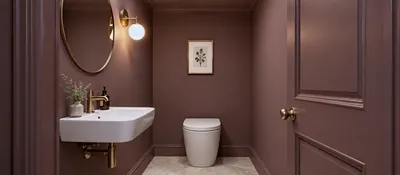 Two square metres, three minutes: the room where you dare a deep colour, drenched. Six ideas, from burgundy to...
 A month before the arrival, water-based, low VOC, toy standard, a week's airing. The soft colours, the ceiling...
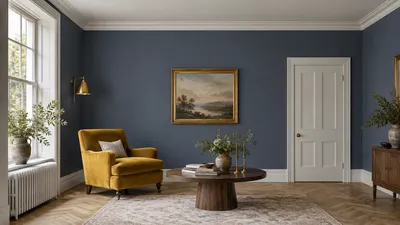 Cloud capping: a soft, warm white ceiling chosen from the wall colour's own related whites rather than a stark...
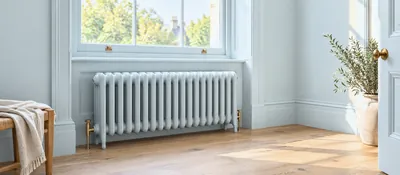 Blend it into the wall or make it an object: the method, the finish that takes the heat, and the colours.
“A bathroom is painted dry, lived in ventilated, and washed after a month.”
Thanks for signing up to our newsletter!
Sign in to save items to your wishlist. Sign in to save your basket, so you can continue shopping later.
Don't have an account? Create one
Share this link and friends can buy items from your list. Anything bought disappears from it automatically. Anyone with this link can see your selection.
Moving in, redecorating, or dropping hints? A free account turns this selection into a gift list — add or remove colours whenever you like, and we'll email you when someone buys something from your shared list.
Free · Delivered to your door
Get a free colour card posted to you, showing our complete Colours of London range, with swatches made from the real paint for a true representation of our award-winning colours.