01
Khaki-grey: it disappears
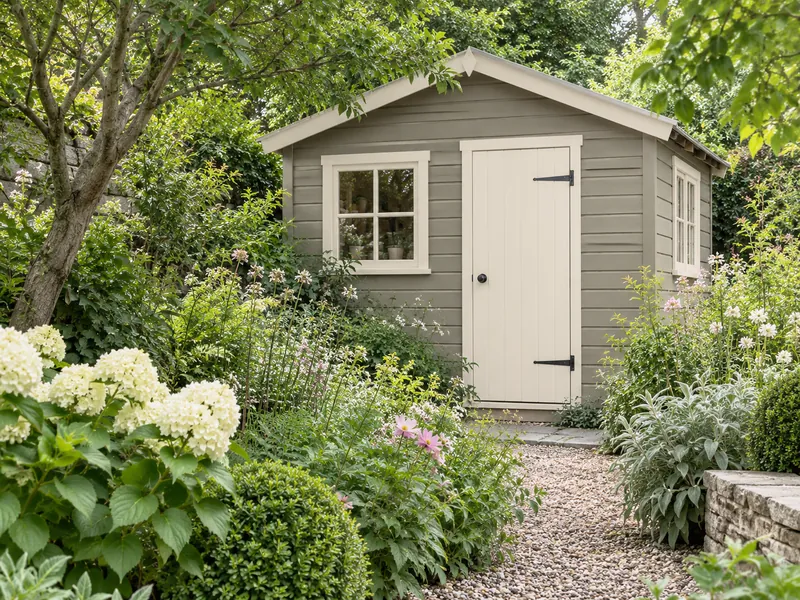
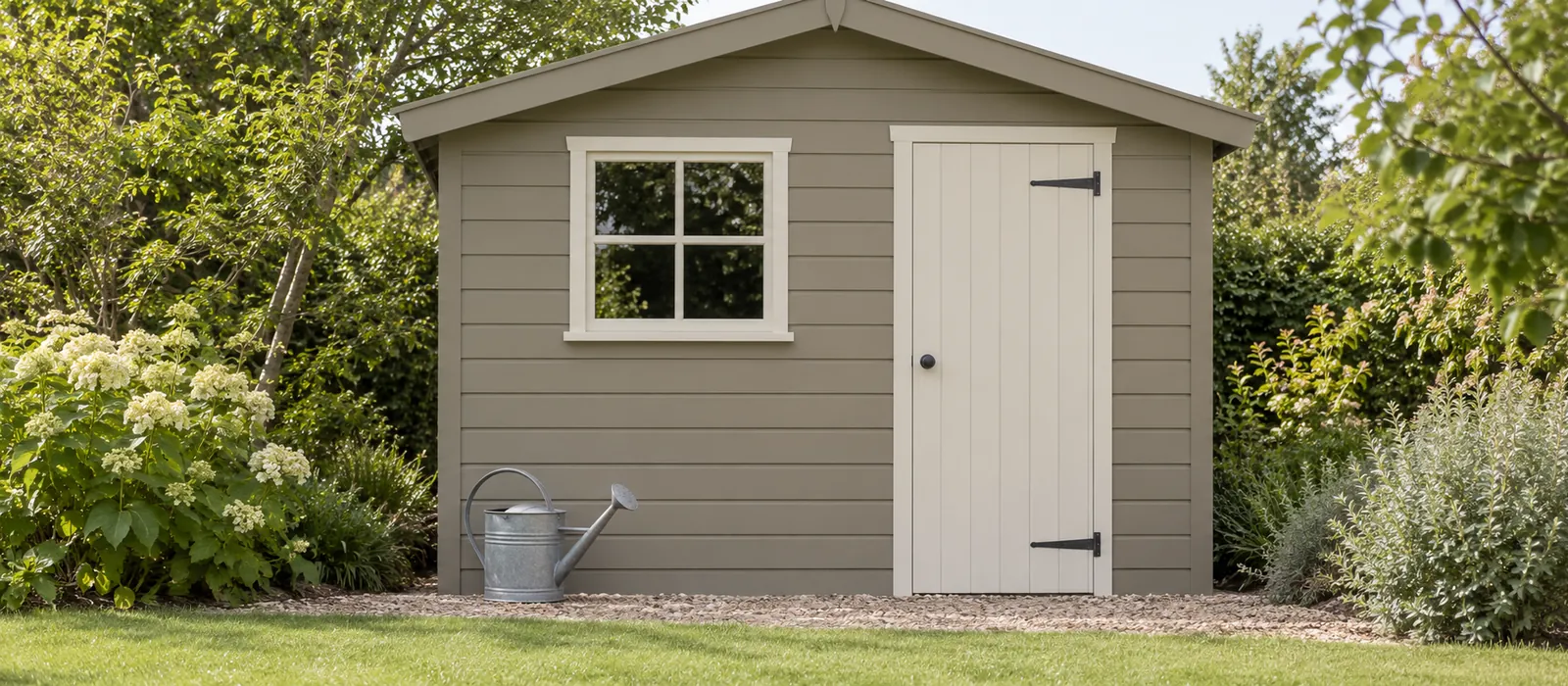
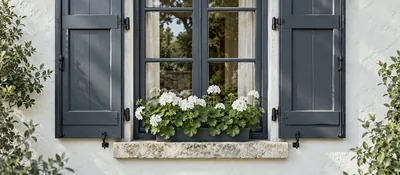
The colour of foliage in shade: the shed steps back behind the plants. Stone-white frames to draw it just faintly.
Menu
How To
Design Advice
Customer Service
My account
Help with paint Painting outdoors
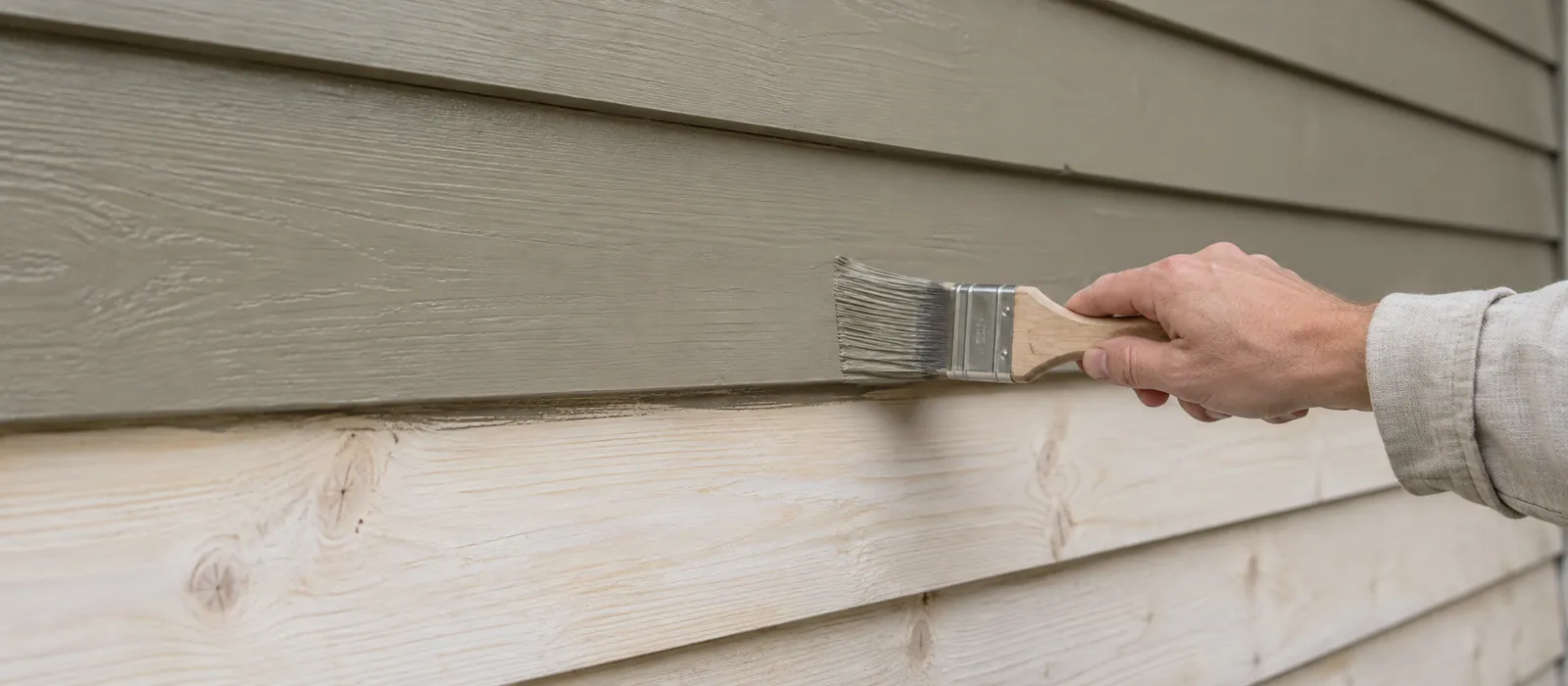
A wooden garden shed is painted over two to three dry days: dry wood (a new shed in treated timber waits a few weeks), washed, sanded, primed on the bare wood, then two coats of Multi-Surface Eggshell, three on the face that takes the rain and sun — the roof, in felt or sheet metal, is not painted. You paint face by face, in the shade, starting with the cladding boards and then the corners, the frames and the door. The choice that counts is the colour: a grey-green or a deep brown makes the shed vanish into the garden; a blue or a stone white makes it a little house. Two to three litres for a 6 m² shed.
Page updated September 2026 · by the Mylands France colour team
Understanding
A garden shed is thin spruce or pine cladding, exposed on four sides, standing close to the ground: the most vulnerable object in the garden. Paint is its best protection, on three conditions. Dry wood: a new shed in pressure-treated timber (greenish) is delivered wet; it waits four to six weeks outdoors before being painted — painted too soon, it throws the paint off in blisters at the first warm spell. New untreated wood waits two weeks of dry weather. Clean wood: moss, dust, sap, anything that stops adhesion. Primed wood: bare wood, and above all the end grain of the boards, drinks; Multi-Surface Primer saturates it.
What you paint: the cladding, the corners, the frames, the door, the shutters, the barge boards. What you do not paint: the bitumen-felt or sheet-metal roof (it has its own covering), the interior floor (it lives with the ground), and the parts buried or in contact with earth, beyond reach. The finish: Multi-Surface Eggshell, low-sheen and flexible, formulated for exterior use, over primer and undercoat — two coats, three on south- and west-facing sides.
The method
New pressure-treated shed: four to six weeks outdoors, until the wood has lost its damp greenish tint and water no longer beads on it. Old shed: two days of dry weather after the last rain. The test: a drop of water should soak in, not sit as a bead.
Take out what is against the inside walls if you are painting inside; clear 80 cm around the shed, cut back plants touching the wood. Dust sheet on the ground, tape on the glass, the hinges and the junction with the roof.
Fungicidal wash on green north faces, left to work, brushed, rinsed. Then sugar soap with a scrubbing brush on every face, rinsed with clean water — no pressure washer on thin cladding. Two days' drying.
Scraper on any old paint or stain that is flaking; 120 over the whole to key it; exterior wood filler in splits, flexible sealant at the corner and frame junctions. Dust off.
Multi-Surface Primer on all bare wood; two coats on end grain (ends of boards, bottoms of uprights, barge boards). On sound old painted cladding, primer is not needed. A night's drying.
One coat of tinted Primer & Undercoat over the whole: it unifies new wood and old areas and saves a coat of finish on a deep colour. 3 to 4 h drying.
Start with the face in shade. On horizontal cladding: the underside of each board with the cutting-in brush, then the face with the flat brush or roller, along the length, one whole board at a time. Then the corners, the frames, the door and the shutters. Thin coat.
The next morning. Same order. A third coat on the south or west face and on the barge boards. Remove the tape as soon as it is touch-dry; leave the door ajar for a night.
Deciding
| Option | Look | Lifespan | For whom |
|---|---|---|---|
| Paint (Eggshell over primer) | Opaque colour, low-sheen, every shade on the card | Up to ten years with a maintenance coat roughly every three years | A shed you want to match to the house, hide, or show off |
| Wood stain | The wood shows through, tinted | Two to four years | New wood you like, a shed in hardwood |
| Saturating oil | Nourished wood, matt, greys over time | One to two years | Decking, floors, wood you don't want to keep going over |
| Nothing | The wood greys in a year, splits in five | — | A larch or Douglas fir shed you accept grey |
You can paint over an old stain (sanding and primer throughout), not over a recent oil or saturator.
The colours
The colour decides the shed's role. Grey-greens, browns and deep greys lose it at the bottom of the garden; blues, stone whites and pinks make it a little house you look at. Outdoors, choose one shade deeper than on the chip.
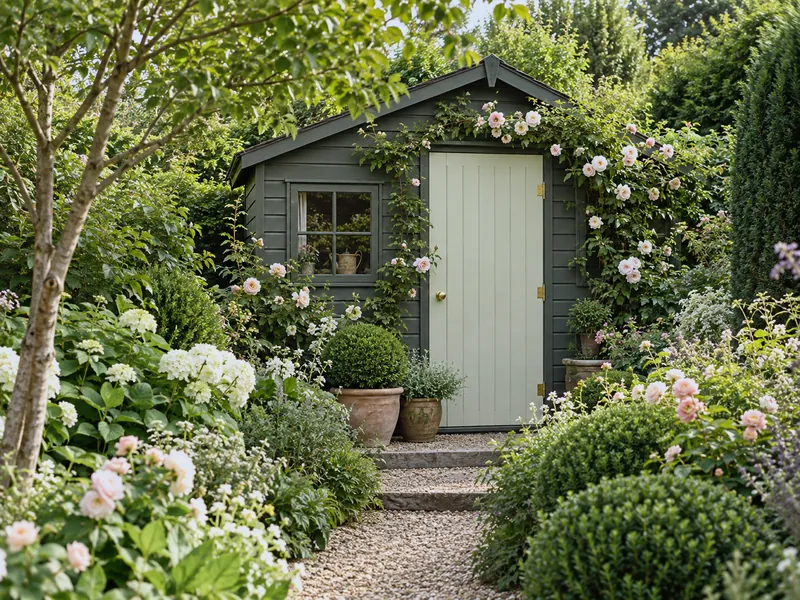
01
The colour of foliage in shade: the shed steps back behind the plants. Stone-white frames to draw it just faintly.
02
The green of hedges and yews; at the bottom of the garden, with roses in front, you no longer see it.
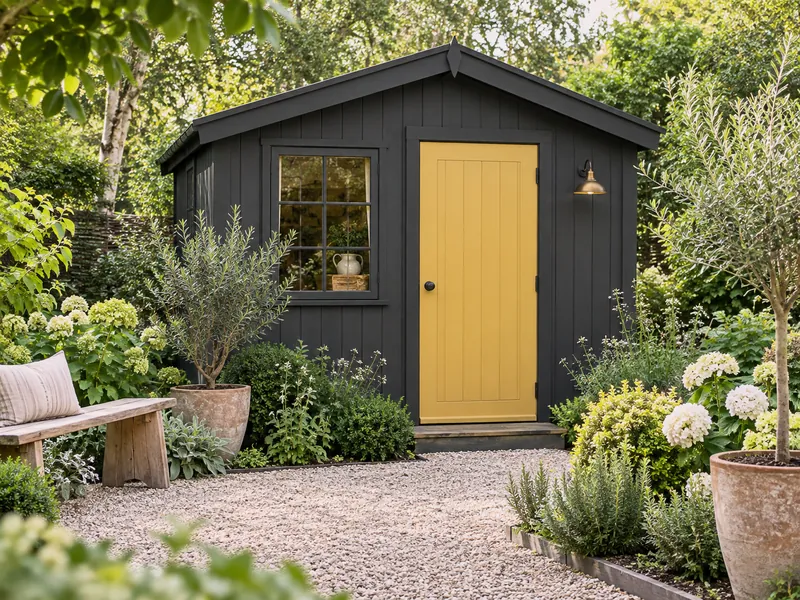
03
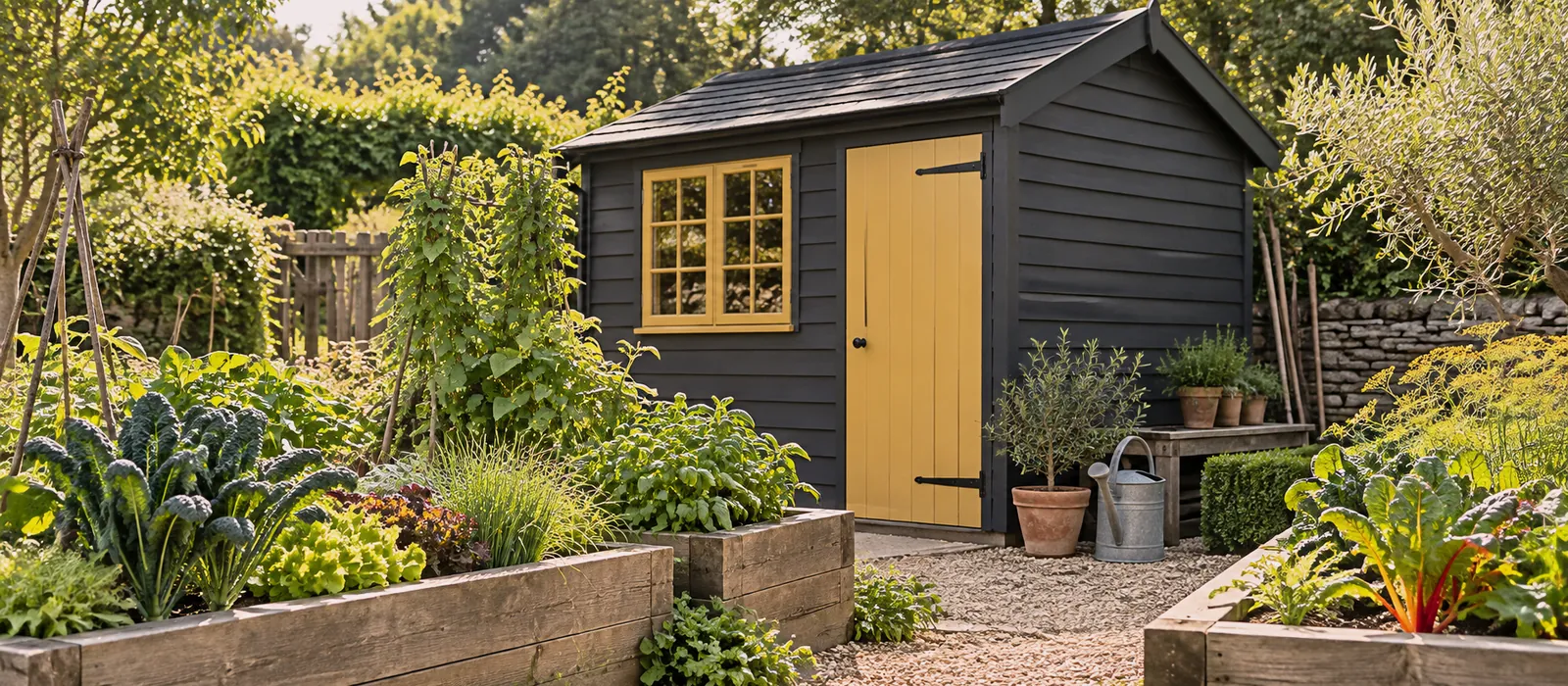
The black of Scandinavian cabins and workshops: the shed becomes a crisp object that makes the green sing. Contrasting door.
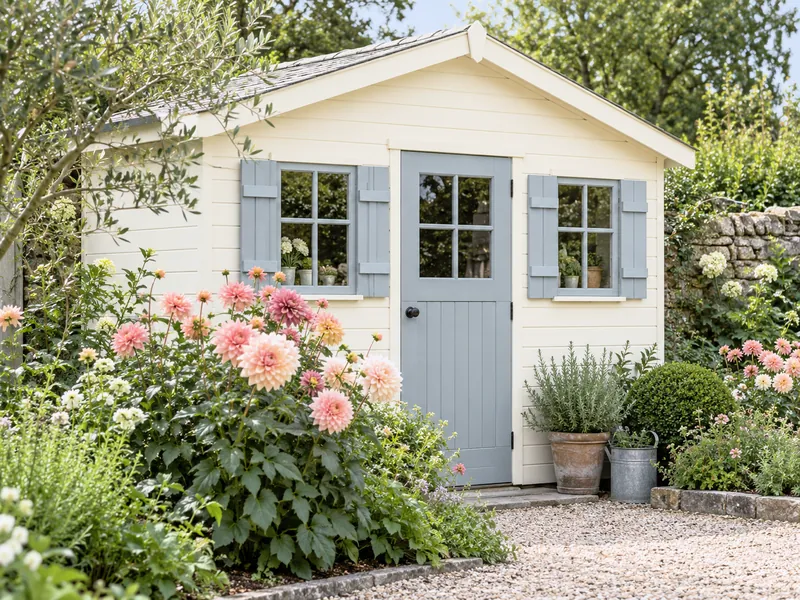
04
A warm off-white shed, coloured shutters and door: the kitchen-garden cottage, with dahlias in front.
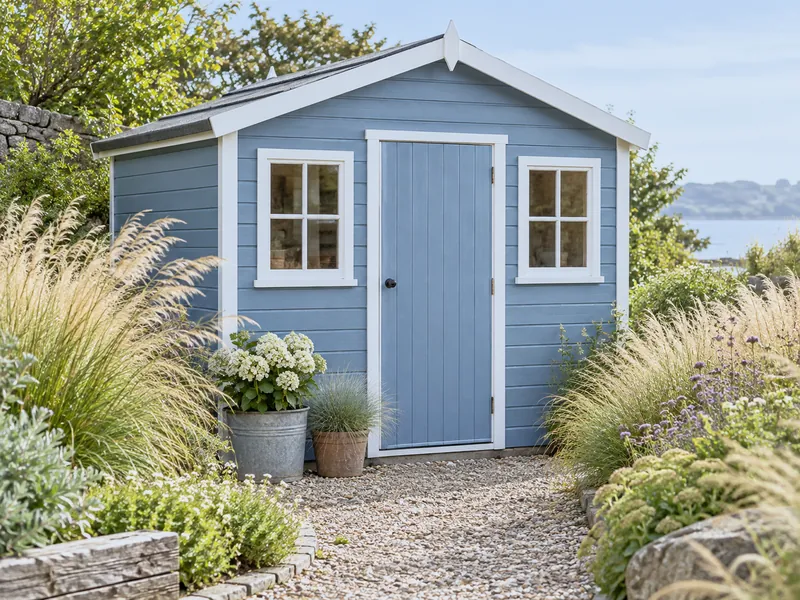
05
A mid blue on the cladding, white frames: the beach hut, at the bottom of a garden of grasses.
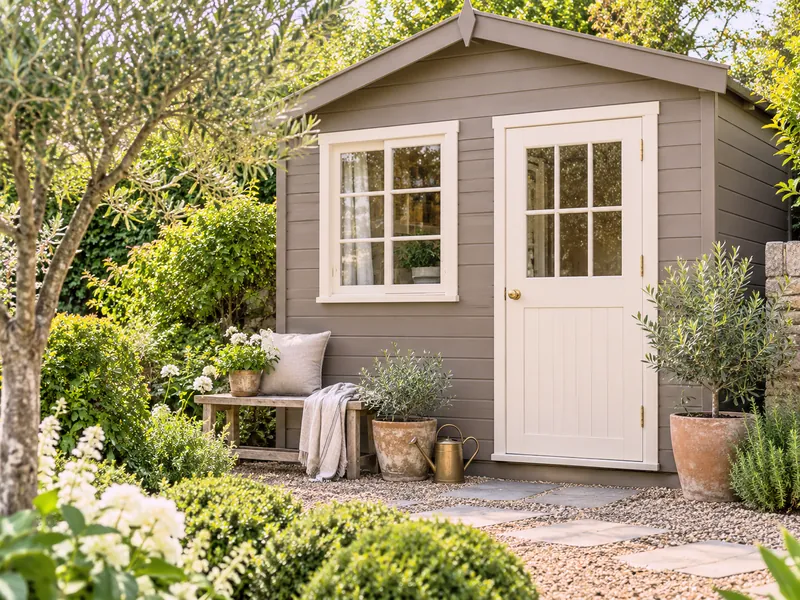
06
A brown-grey that keeps the spirit of the wood without the dirty grey: the shed you don't notice but find handsome.
To avoid
Frequently asked questions
Take the area of the four faces (perimeter × average height) without deducting the openings, and a coverage of 10 m²/L on rough cladding — it drinks more than a smooth surface. A 3 × 2 m shed under 2.2 m is about 22 m²: 2.5 L for two coats, plus a 1 L tin for the third coat on the exposed face. The calculator helps.
It is not needed for protection, but an interior in matt off-white makes a workshop bright and clean — Marble Matt Emulsion if the shed is dry and closed, Eggshell if it is damp. The floor is treated with oil or a saturator, not paint.
Metal: yes, after degreasing, sanding and Multi-Surface Primer, two coats of Eggshell or Satin. Resin or PVC: possible in a light or mid shade, over primer, after a test on a hidden area; less durable.
May–June and September: between 10 and 25 °C, no rain for 48 h, no full sun on the face you are painting. Follow the shade round the shed through the day.
A sponge wash each spring, a touch-up on worn spots, and a coat on the exposed face roughly every three years. The paint protects for up to ten years if you keep it up; it is the end grain and the bottoms of the boards you watch.
See also
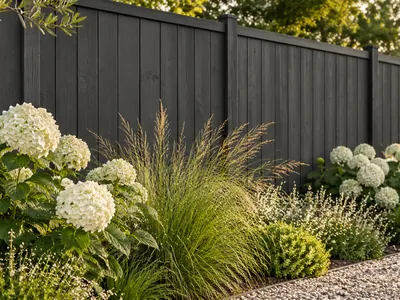 Dry wood, brushing, primer on the end grain, two coats by brush on both sides. Why a dark fence makes the gard...
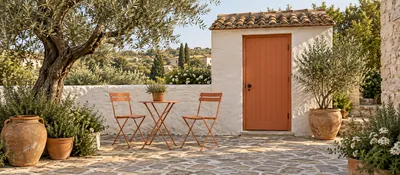
 Probe, strip what is coming away, sand, prime, two coats — three facing south. Windows, shutters, gates, eaves...
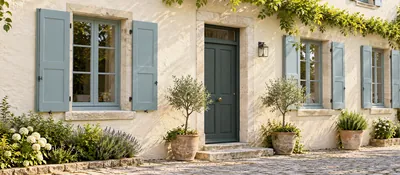
 What to paint outdoors and what not to, a three-colour palette tied to the house, one accent. Six weekend proj...
 Outdoors, a colour looks twice as light: one shade deeper, composed with the stone and the roof. Six palettes...
“A shed is painted to disappear or to be seen; the brush does both, the colour decides.”
Thanks for signing up to our newsletter!
Sign in to save items to your wishlist. Sign in to save your basket, so you can continue shopping later.
Don't have an account? Create one
Share this link and friends can buy items from your list. Anything bought disappears from it automatically. Anyone with this link can see your selection.
Moving in, redecorating, or dropping hints? A free account turns this selection into a gift list — add or remove colours whenever you like, and we'll email you when someone buys something from your shared list.
Free · Delivered to your door
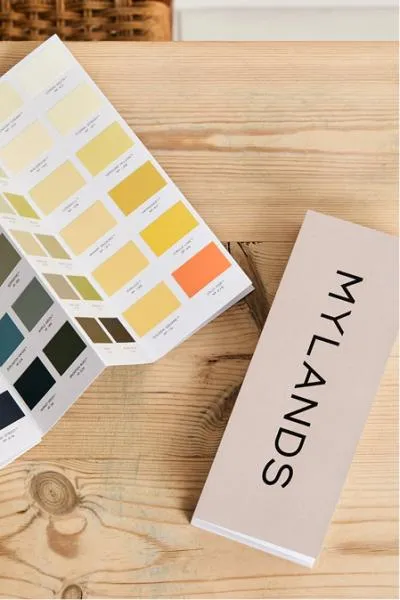
Get a free colour card posted to you, showing our complete Colours of London range, with swatches made from the real paint for a true representation of our award-winning colours.