01
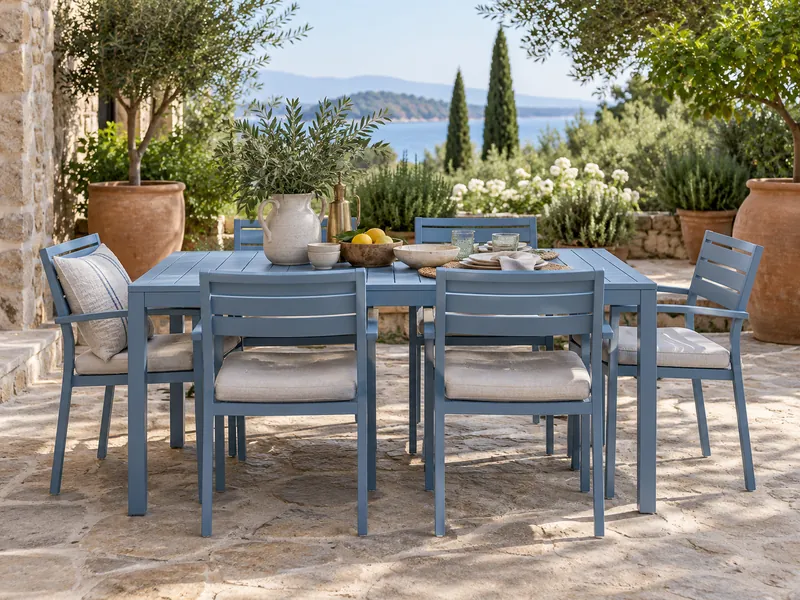
Boat blue
The mid blue of boats and seaside shutters: with stone, terracotta and the green of leaves, it never dates.
Menu
How To
Design Advice
Customer Service
My account
Help with paint Painting outdoors
A wooden or metal garden piece is repainted over a dry weekend: washed, sanded — or de-rusted — primed with Multi-Surface Primer, then two thin coats of Multi-Surface Eggshell or Satin, in the shade, between 10 and 25 °C. The weak point of garden furniture is not the paint but standing water: on a table top or a flat seat, it gets through in the end. Hence three rules: dry the wood first, paint the undersides and the ends, and bring the furniture in or tilt it for winter. Done well, the work lasts several seasons before a maintenance coat.
Page updated September 2026 · by the Mylands France colour team
Understanding
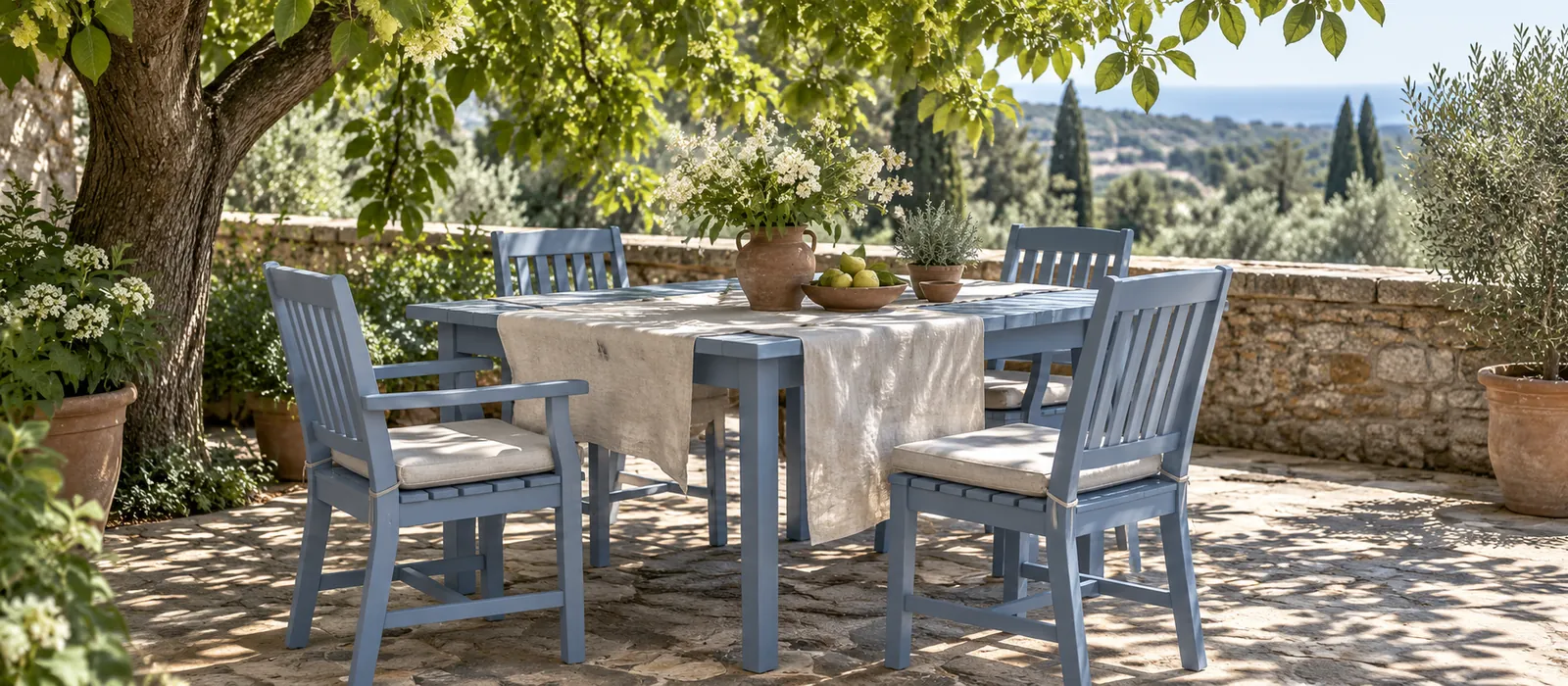
Garden furniture is the worst-treated furniture in the house: sun, rain, dew, frost, and a horizontal top where water stays. What paint can do is protect it and give it back a colour; what it cannot do is hold on waterlogged wood or on rust still working underneath. The preparation counts more than the coat.
Wood (pine, spruce, acacia, greyed teak) is painted after sanding and priming; an oiled hardwood must first lose its oil — a season outdoors, or a degrease and a deep sanding. Iron and steel are de-rusted, degreased and primed; paint holds on them very well. Aluminium is degreased, sanded very fine and primed; adhesion is good over a primer. Plastic (resin, PVC) is the borderline case: Multi-Surface Primer grips it after fine sanding, but the result is less durable and is tested on a hidden area. The finishes: Eggshell for a soft look, Satin for seats and tops that get washed — both are formulated for exterior use, over primer.
The method
Cushions, a screwed-on top, hardware: into a bag. A folding chair is painted open, then closed for the hidden areas. Probe the wood at the feet and joints with the tip of a screwdriver: what gives gets replaced.
Wood: sugar soap with a sponge, rinse, two days' drying under cover — garden timber is often damper than it looks. Metal: degreaser or alcohol, especially on a piece that has had sun cream and hands on it.
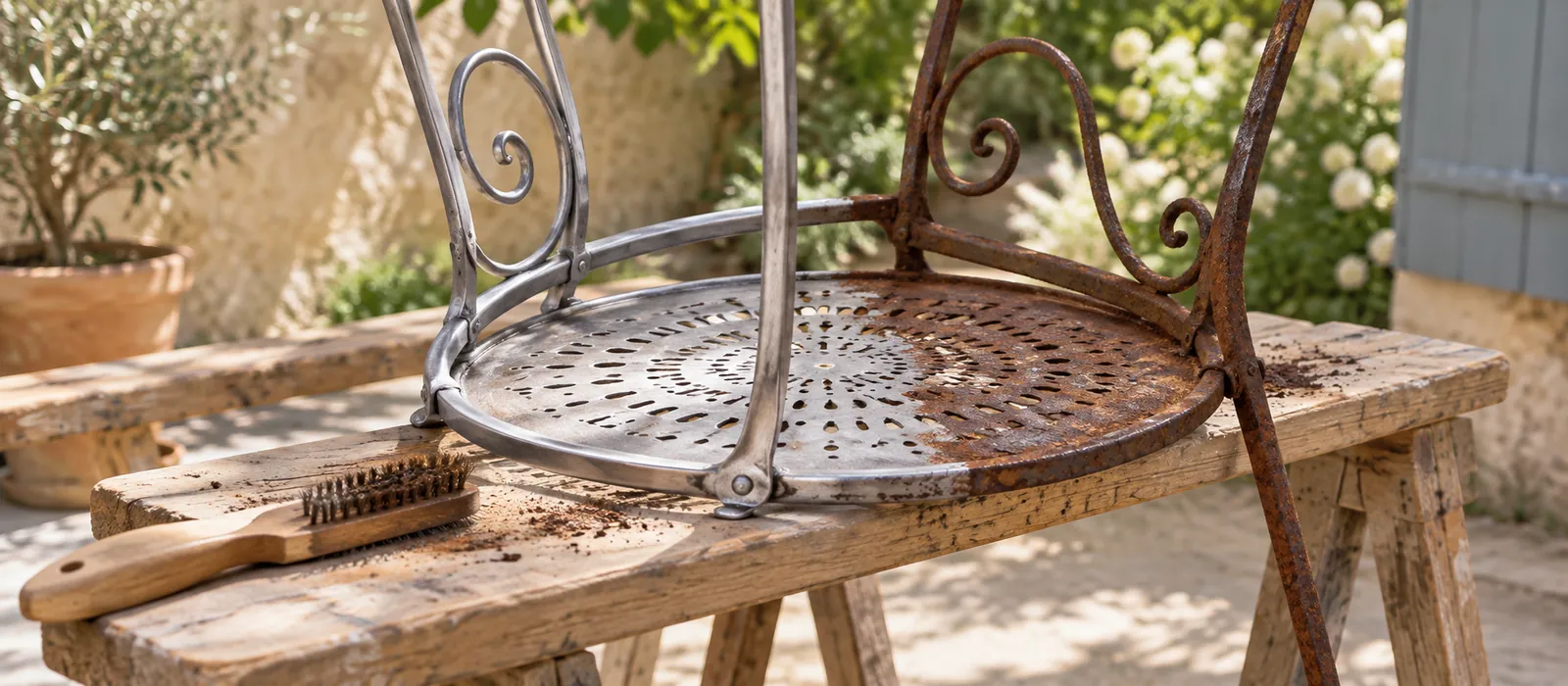
Wood: 120 everywhere, 180 to finish, along the grain; greyed wood is sanded back to pale wood. Iron: wire brush then 120 on all rust, back to bright metal; a rust converter on pitting you cannot reach. Aluminium and plastic: 240, barely.
Exterior wood filler in splits and holes; sanded at 180. On metal, an epoxy filler for losses. Dust off with a damp cloth.
Multi-Surface Primer by brush, over the whole piece — two coats on end grain (feet, ends of slats) and on de-rusted metal. A night's drying. On metal, the primer must cover every millimetre: wherever it is missing, the rust will come back.
Piece upside down first: underside of the top, underside of the seat, inside of the legs. Then the right way up: round brush for spindles, flat brush for slats along the grain, foam roller laid off with a brush for a top. Thin coat; a run on a spindle always shows.
Recoatable after 3 to 4 h in dry weather; the next morning is safer outdoors. A light rub-down at 180 between the two on a top. A third coat on a table top and on seats, which wear.
Touch-dry in 2 to 3 h, handleable after 24 h, hard in two to four weeks: no wet cushions or pots stood on it the first week. Then a sponge wash each season, and a maintenance coat when the top dulls.
By piece
| The piece | Weak point | Finish | The advice |
|---|---|---|---|
| Wooden table | The top, where water stands | Satin, 3 coats on the top | Paint the underside too; in winter, turn it over or cover it; do not leave a pot on it |
| Wooden chairs | Ends of the legs, joints | Eggshell | Two coats of primer on the leg ends; felt or rubber pads to lift them off the ground |
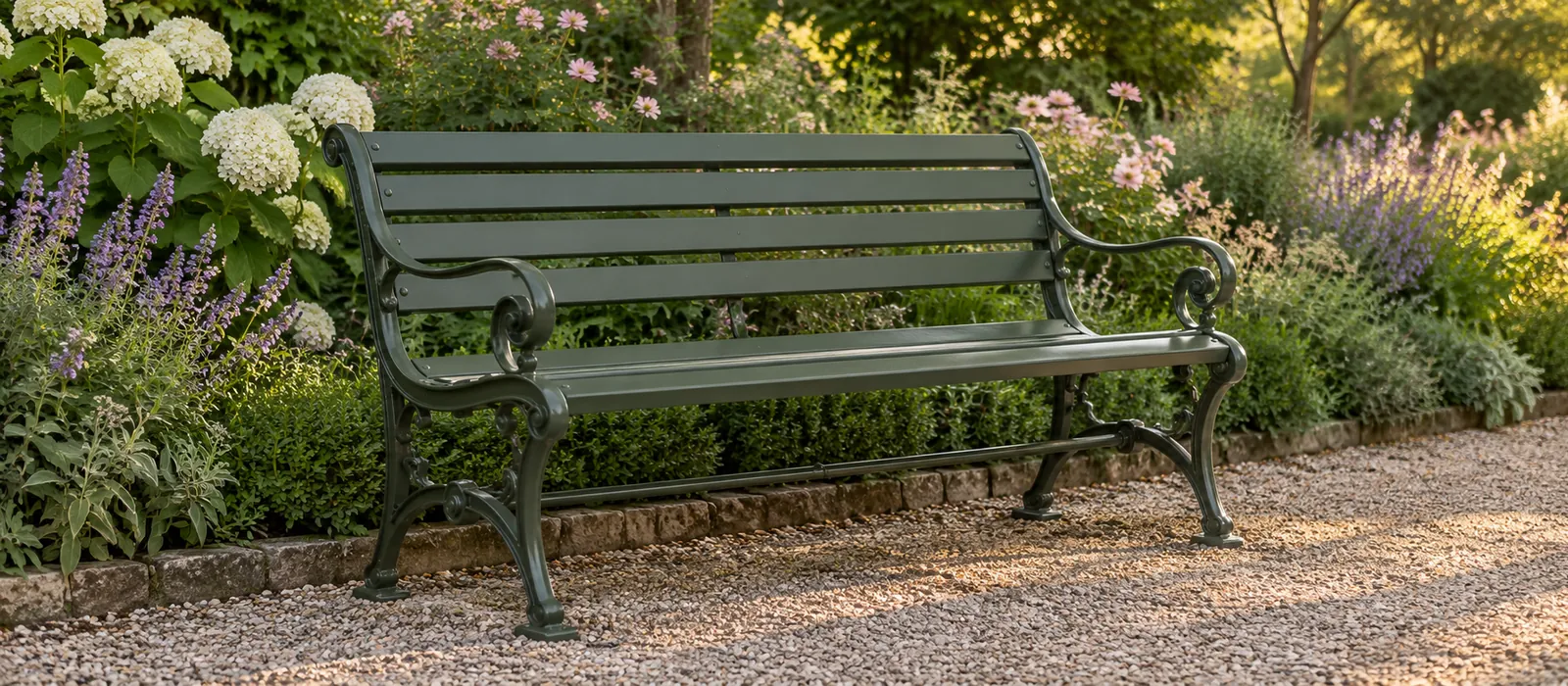
| Bench | Slatted seat and back, end grain | Eggshell or Satin | Paint between the slats with a round brush before the faces |
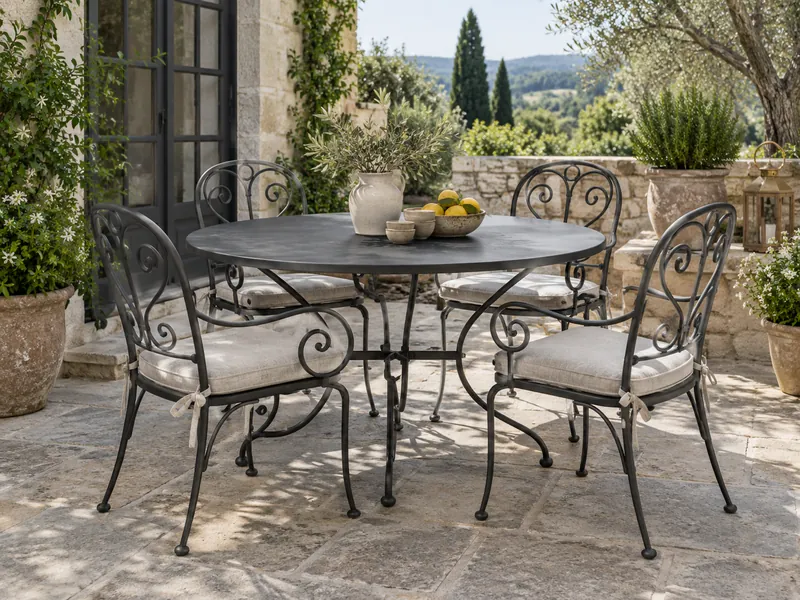
| Wrought-iron furniture | Rust in the scrolls and welds | Satin or Gloss | Fine wire brush, primer brushed into every hollow; two thin coats rather than one thick one |
| Lounger, deckchair | End grain, joints | Eggshell | Paint open and closed; do not paint the rubbing surfaces of the joints |
| Resin or PVC furniture | Adhesion | Eggshell, light or mid shade | Test on a hidden area a week beforehand; dark shades heat up and distort |
New teak or acacia, factory-oiled, refuses paint: let it grey for a season, then sand and prime — or keep it oiled, which is a handsome option too.
The colours
Outdoors, a colour looks lighter and brighter: these shades are chosen one step deeper than the effect intended. The furniture is the garden's accent — one colour for the set, or two that answer each other.
01
The mid blue of boats and seaside shutters: with stone, terracotta and the green of leaves, it never dates.
02
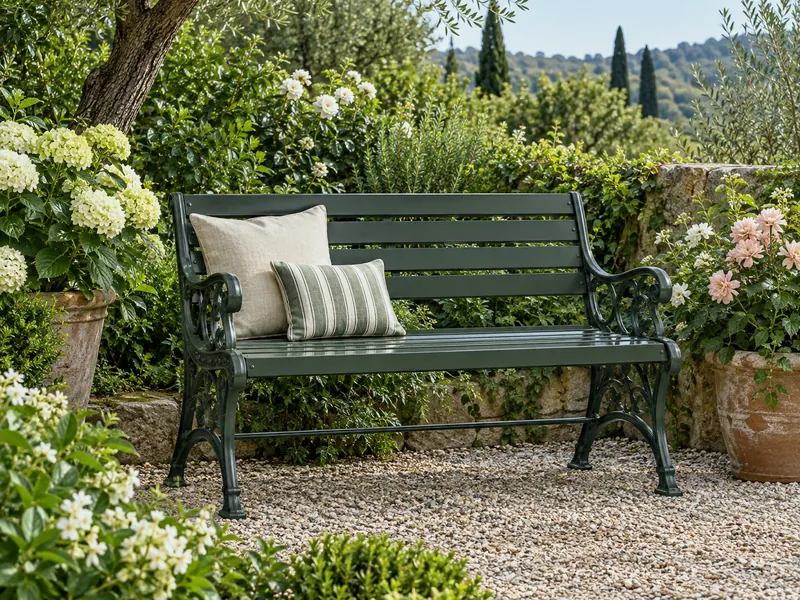
The green of park benches: it disappears into the foliage and brings out the flowers. On wrought iron, in Satin.
03
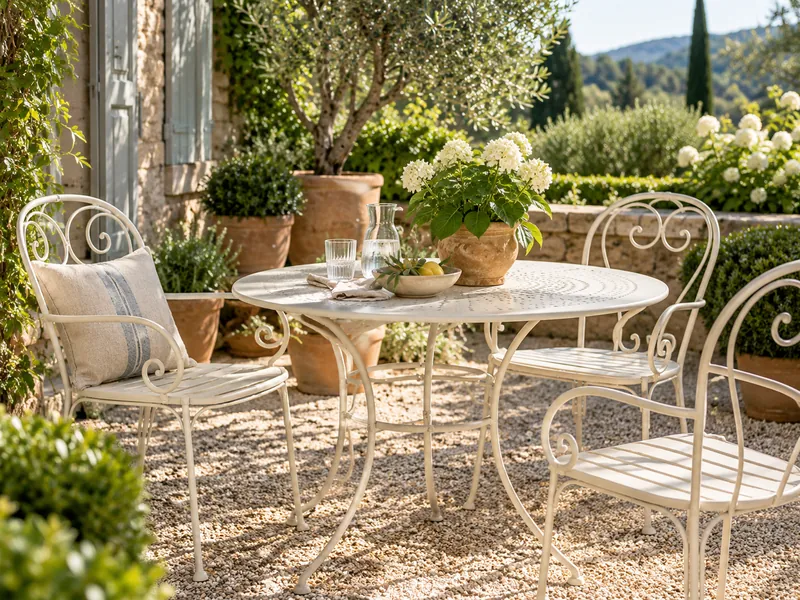
The white of classic garden furniture — a warm off-white, never a pure white, which dazzles in sun. On a gravel or flagged terrace.
04
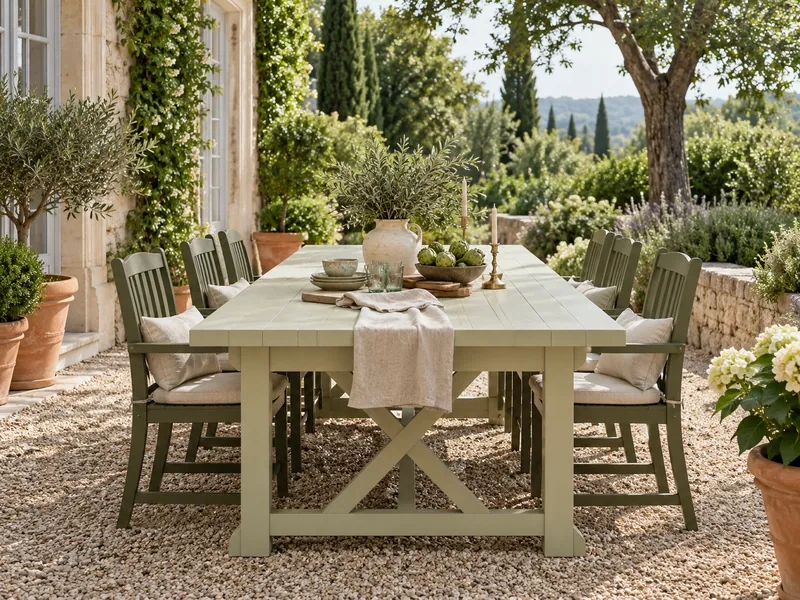
The soft green that goes with every garden and every façade; the easiest to live with on a big table.
05
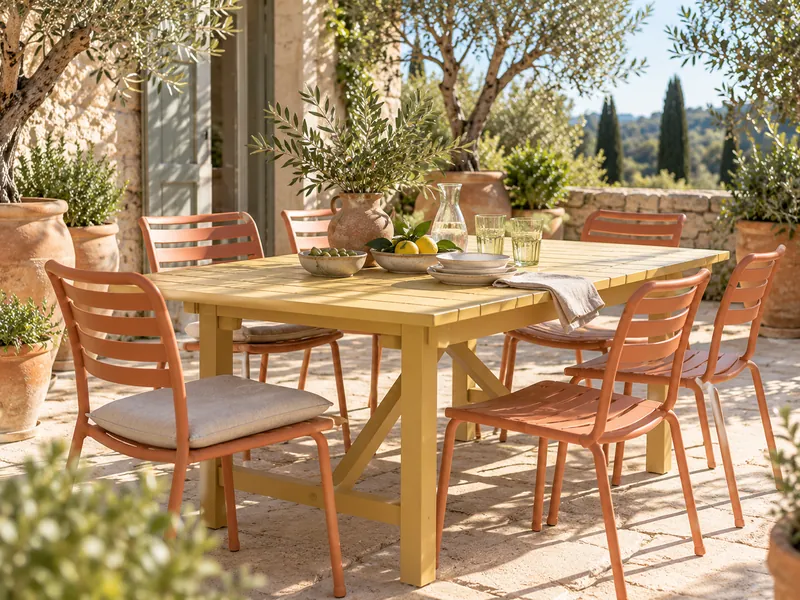
For a southern terrace: an ochre table and coral chairs, on pale flags, with olive trees in pots.
06
The black-grey of contemporary furniture and old wrought iron: it draws the silhouette and goes with any façade.
To avoid
Frequently asked questions
Multi-Surface Eggshell or Satin over Multi-Surface Primer: both hold outdoors. Eggshell for a soft, low-sheen look, Satin for tops and seats that get washed often. Gloss on classic wrought iron.
Several seasons on a well-prepared piece brought in or covered for winter; a maintenance coat when the top dulls. A piece left out all year, flat in the rain, needs going over every spring — it is the standing water, not the paint.
Yes, in Satin, three coats, top and underside; but a horizontal top holds water, and no paint withstands a three-month puddle. An oilcloth, a parasol, and the table turned over in winter.
It is possible but not very durable: the weave moves and the paint ends up cracking. On a smooth resin, Multi-Surface Primer grips after fine sanding, in a light or mid shade; test for a week on a hidden area before committing.
A fine idea: furniture in the colour of the shutters or the door ties the terrace to the house. See Using exterior paint colours and How to update outdoor spaces.
See also
 What to paint outdoors and what not to, a three-colour palette tied to the house, one accent. Six weekend proj...
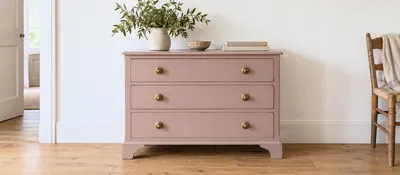 Paint, wax, oil or stain? The method for giving a chest of drawers, a sideboard or a chair a second life.
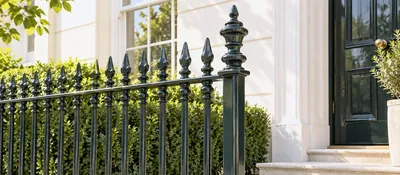 From the radiator to the gate: the finish that holds on steel and cast iron, the preparation, and the colours.
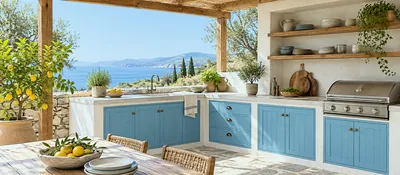 Back wall in Masonry Paint, fronts in Satin, metal in Gloss, worktop unpainted, and the distance from the fire...
“Garden furniture is painted upside down: what you don't see is what makes it last.”
Thanks for signing up to our newsletter!
Sign in to save items to your wishlist. Sign in to save your basket, so you can continue shopping later.
Don't have an account? Create one
Share this link and friends can buy items from your list. Anything bought disappears from it automatically. Anyone with this link can see your selection.
Moving in, redecorating, or dropping hints? A free account turns this selection into a gift list — add or remove colours whenever you like, and we'll email you when someone buys something from your shared list.
Free · Delivered to your door
Get a free colour card posted to you, showing our complete Colours of London range, with swatches made from the real paint for a true representation of our award-winning colours.