01
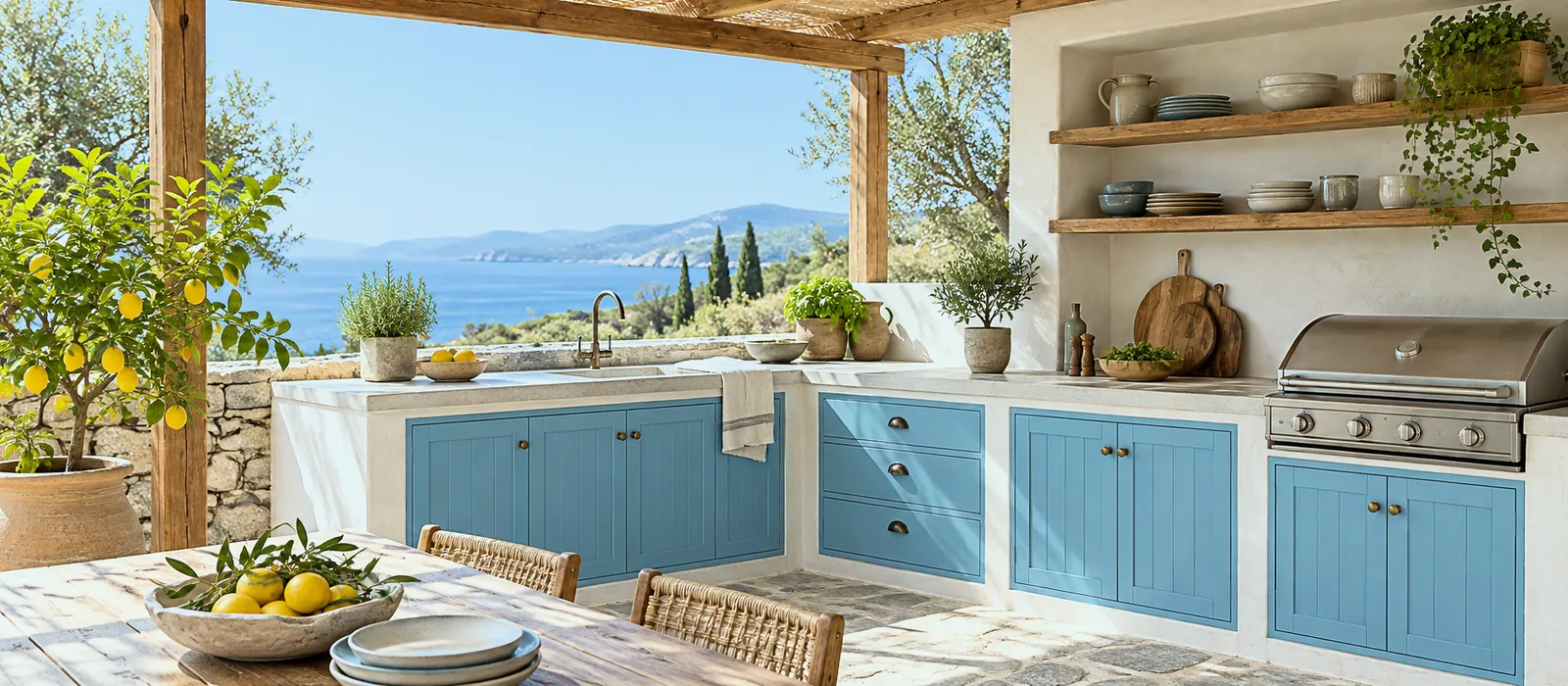
Enamel blue and stone white
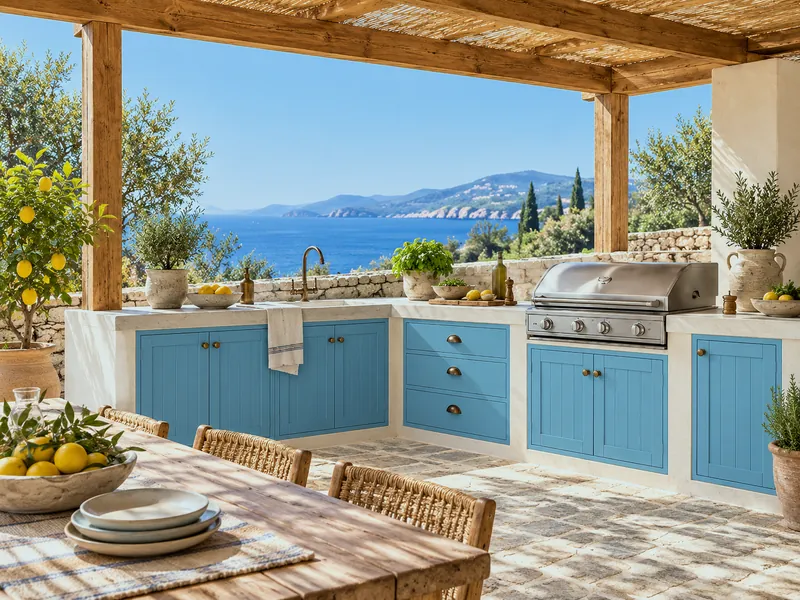
The fronts in a true blue, the masonry in stone white: the kitchen of beach huts and islands, with a stainless plancha.
Menu
How To
Design Advice
Customer Service
My account
Help with paint Painting outdoors
An outdoor kitchen is composed of three painted surfaces and one you do not paint: the back wall or the masonry base in Masonry Paint, the wooden fronts and shelves in Multi-Surface Satin, the metal frame and legs in Gloss — and a worktop in stone, tiles, polished concrete or stainless steel, never painted. The paint keeps its distance from the fire: nothing painted within 30 cm of the barbecue or pizza oven firebox, where the heat blisters any finish. The rest is a matter of colours — a palette of shade and sun — and of a shelter that keeps the whole thing out of the rain.
Page updated September 2026 · by the Mylands France colour team
Understanding
An outdoor kitchen brings together everything that tests a paint: rain, sun, grease, hands, the heat of a fire, and sometimes salt. So it is composed by material. Masonry — back wall, rendered blockwork base, built-in bench — takes Masonry Paint, matt and breathable, on a sound render; it is the big surface, the one that sets the overall colour. Wood — cupboard fronts, doors, shelves, canopy — takes Multi-Surface Satin over primer: washable, it stands up to the sponge and grease splashes. Metal — frame, legs, larder, pergola — takes Gloss over primer, after de-rusting: the hardest and most washable.
What does not get painted: the worktop, which gets cut on, stood on, washed down — stone, tiles, polished concrete, stainless steel, oiled solid wood; the floor, flags or exterior tiles; and anything within 30 cm of the firebox of a barbecue, a plancha or a pizza oven — radiant heat blisters any finish there. There, brick, stone or stainless steel. The insides of the cupboards, closed and sheltered, are painted like kitchen units: How to paint kitchen cabinets.
By surface
| Surface | Finish | Primer | Worth knowing |
|---|---|---|---|
| Back wall, rendered base | Masonry Paint | Stabilising primer if the surface chalks | Two coats; a coping on top of a low wall; not on a lime render |
| Built-in bench, planter | Masonry Paint | Same | The top, where you sit, takes a wooden or stone slab rather than paint |
| Cupboard fronts, wooden doors | Multi-Surface Satin | Multi-Surface Primer on bare wood | Tinted undercoat then two coats; three on a face in sun; take off and paint flat |
| Shelves, wooden boards | Multi-Surface Satin | Multi-Surface Primer | Top and underside; edges twice; under shelter only |
| Frame, legs, metal larder | Multi-Surface Gloss | Multi-Surface Primer after de-rusting | Two thin coats; every unprimed millimetre will rust |
| Canopy, wooden pergola | Multi-Surface Eggshell | Multi-Surface Primer, two coats on end grain | See Painting outdoor woodwork |
| Worktop | Not painted | — | Stone, tiles, polished concrete, stainless steel, oiled solid wood |
| Around the firebox (30 cm) | Not painted | — | Brick, stone, stainless steel; heat blisters any finish |
The quantity: the back wall in Masonry Paint as the data sheet says; a litre of Satin for six cupboard fronts; a litre of Gloss for a 3 m metal frame.
The method
A canopy, a covered pergola or a return wall: without shelter, the paint on the timber and shelves needs redoing every spring. Place the fire — barbecue, plancha, oven — and mark out the 30 cm around it in bare materials: brick, stone, stainless steel.
Three colours: the masonry in a light neutral (stone white, sand, warm grey), the fronts in a colour — the house's shutter colour, or a blue, a green, an ochre —, the metal in grey-black or in the fronts' colour. Test on boards, against the wall, at noon and in the evening.
Wall and base clean, dry, repaired; stabilising primer if the surface chalks; two coats of Masonry Paint by roller, in the shade. A coping on low walls. See Painting an exterior wall.
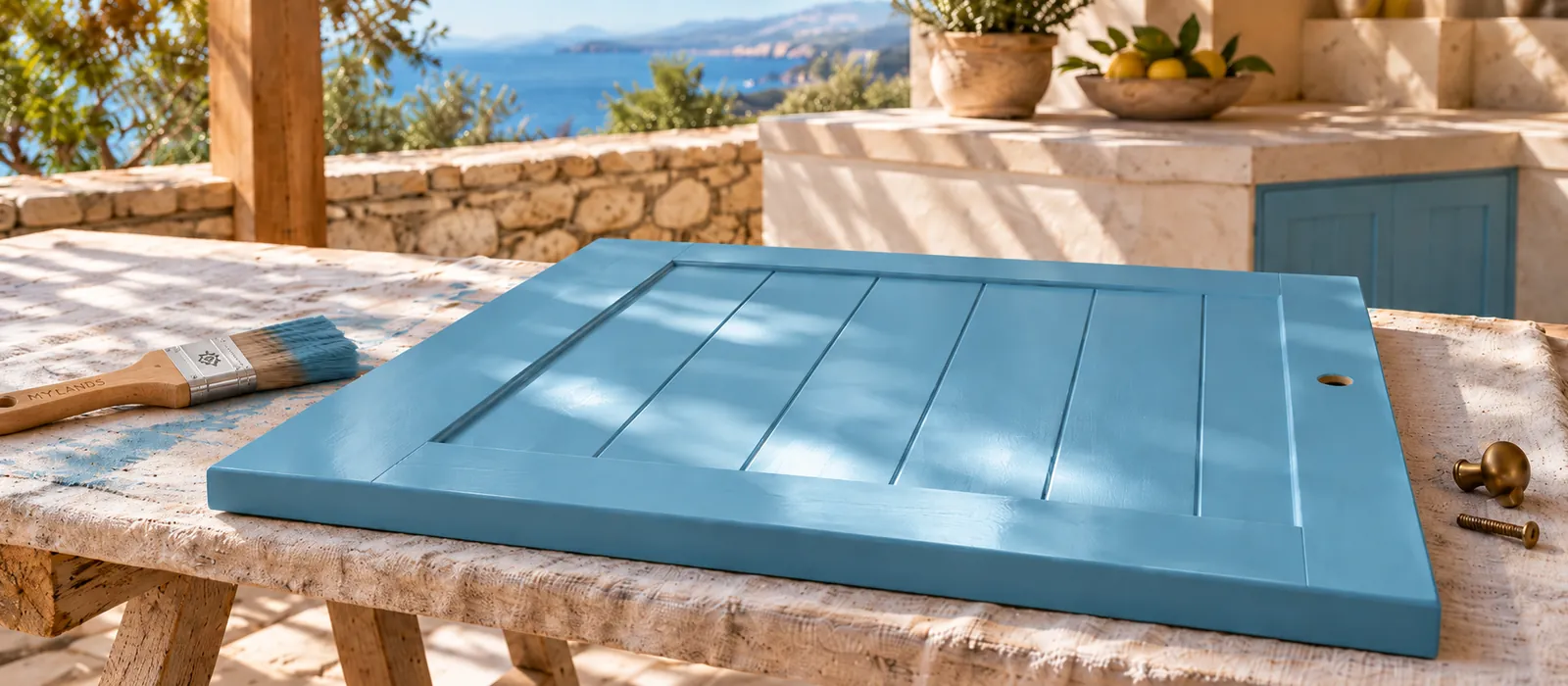
Fronts and doors off their hinges, hardware removed, laid on trestles under the shelter: washing, 120 grit sanding, Multi-Surface Primer on bare wood, tinted undercoat, two coats of Satin, three on a face in sun. Shelves top and underside, edges twice.
Frame and legs de-rusted with a wire brush, degreased, primed throughout, two thin coats of Gloss by brush. See Best paint for metal surfaces.
The worktop goes on once the fronts are back on; two to four weeks' curing before the first big table — and a soft sponge, never a harsh degreaser, on the painted fronts.
The colours
The outdoor kitchen is the room of sun and shade: its colours are chosen at the hour you live in it — the evening, under the canopy, in warm light. Outdoors, a colour looks lighter: one shade deeper than on the chip.
01
The fronts in a true blue, the masonry in stone white: the kitchen of beach huts and islands, with a stainless plancha.
02
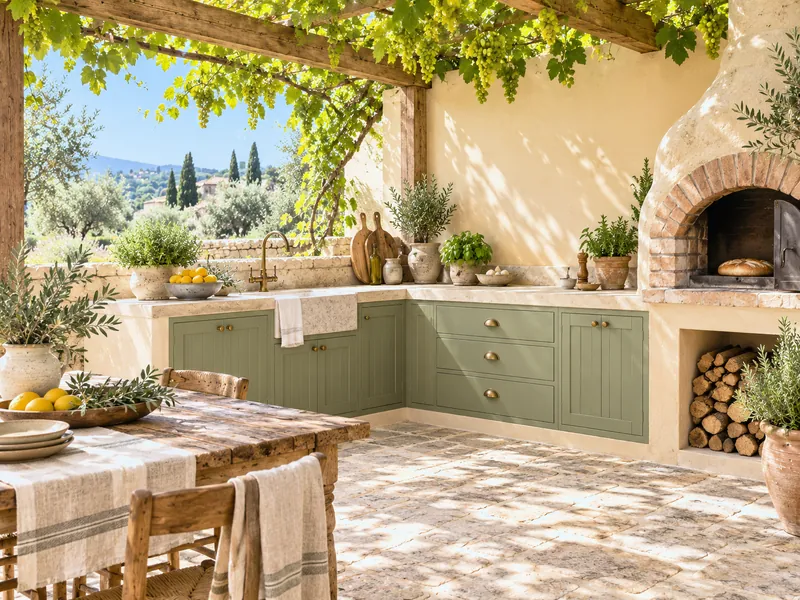
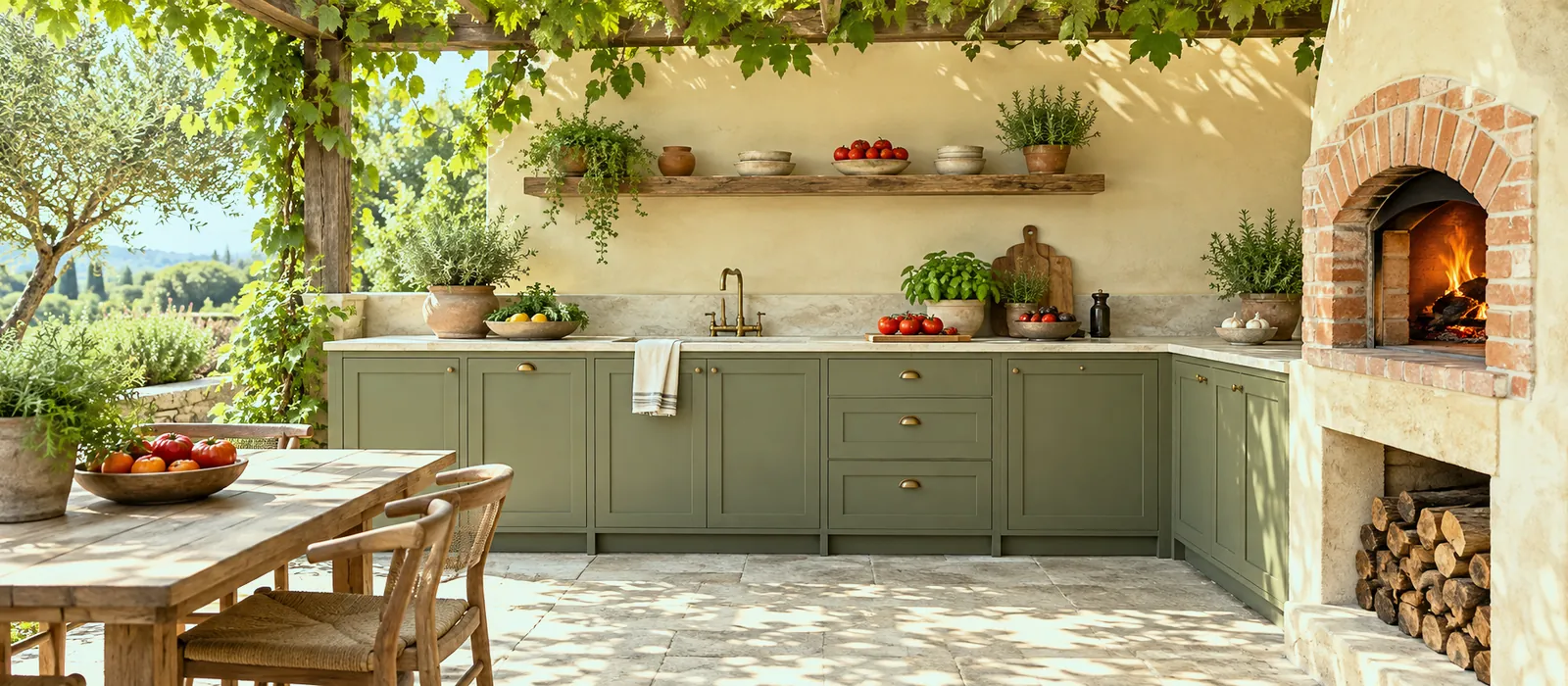
An olive green on the fronts, a warm sand on the wall: the mas kitchen, under the vine, with a brick bread oven.
03
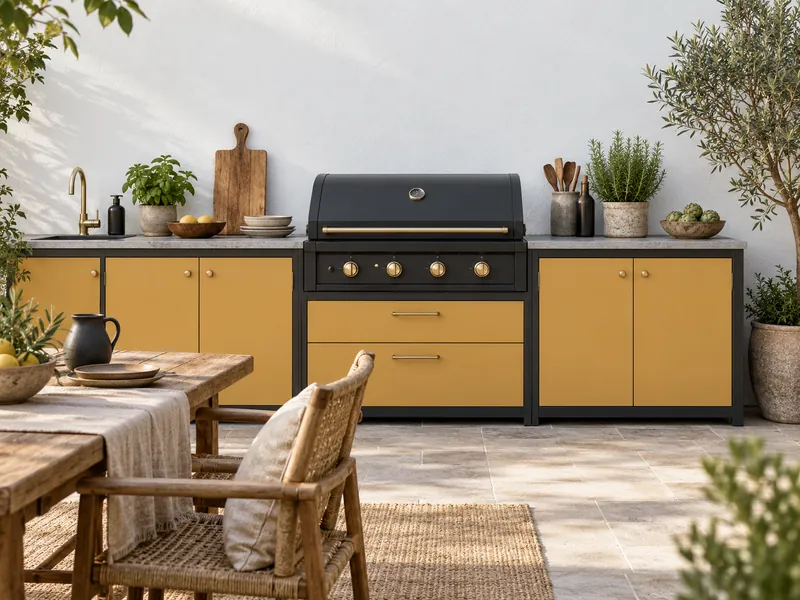
Golden ochre fronts, a grey-black metal frame: the warmth of the fire and the iron of the barbecue, on a white wall.
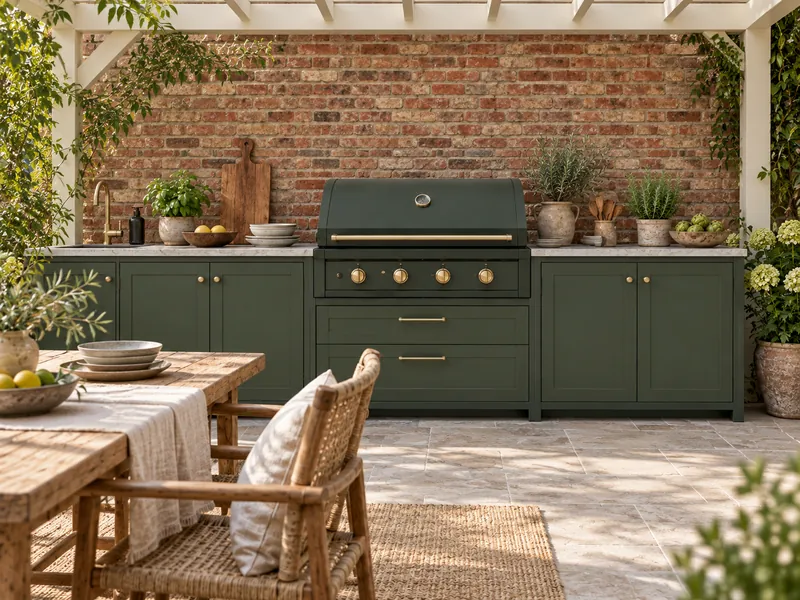
04
Bottle-green fronts against a bare brick wall and a stone worktop: the English garden kitchen.
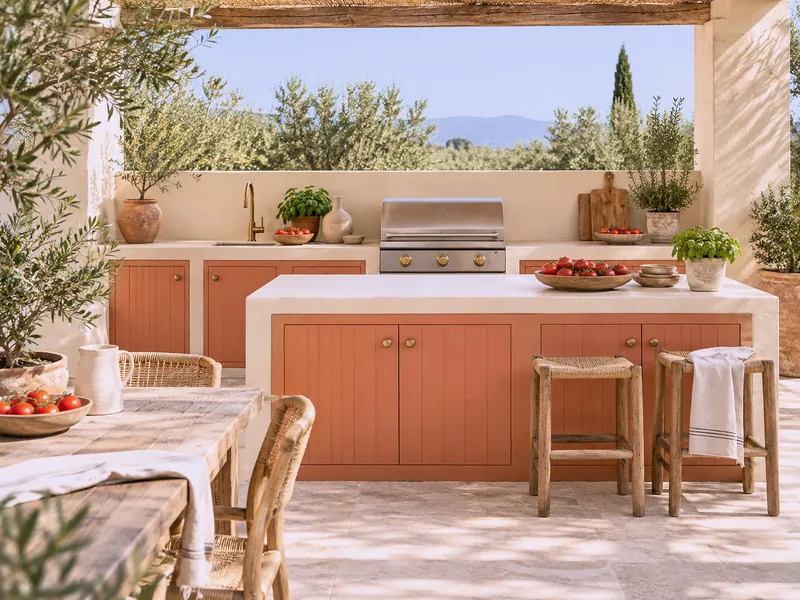
05
An earthy coral on the fronts, a cream on the masonry: the south-western summer kitchen, with pots and tomatoes.
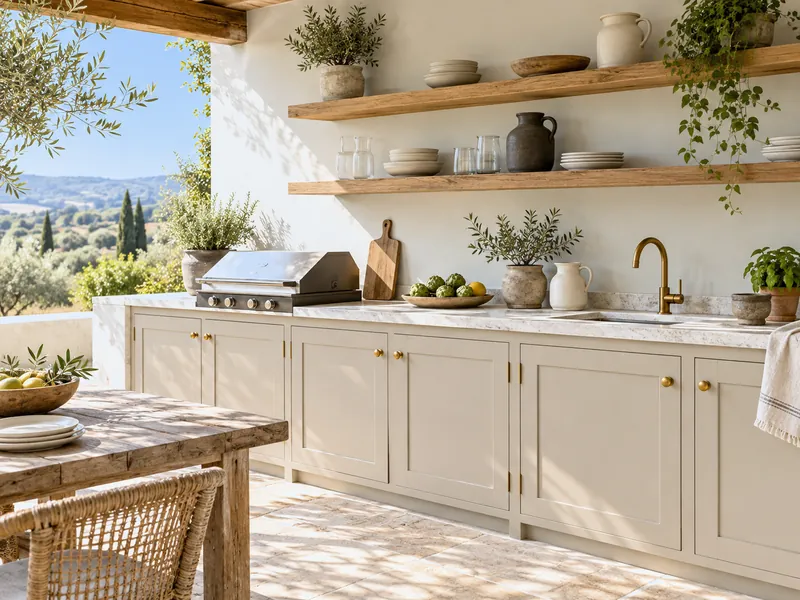
06
Warm grey fronts, an off-white wall, oiled wooden shelves: the discreet outdoor kitchen that lets the view speak.
To avoid
Frequently asked questions
Not within 30 cm of the firebox: radiant heat blisters and browns any finish, and heated paint gives off fumes. Brick, stone or stainless steel around the fire; the paint picks up beyond it, on the wall and the cupboards.
Multi-Surface Satin over Multi-Surface Primer: washable, it stands up to the sponge and grease, and holds outdoors under shelter. Eggshell for a flatter look if the kitchen is well covered; Gloss on the metal.
No: it gets cut on, stood on, washed down. Solid wood is oiled; a laminate or tiled top is kept as it is. The paint goes on the fronts and shelves, not on the top.
A soft sponge and soapy water after each meal, never a harsh degreaser or a scouring pad; a maintenance coat when the satin dulls, every three to five years under shelter. Interior kitchen units follow the same rule: How to paint kitchen cabinets.
Frame, fronts and shelves in steel or aluminium: degrease, de-rust, Multi-Surface Primer on every millimetre, two coats of Gloss or Satin. Stainless steel is not painted and does not need to be.
See also
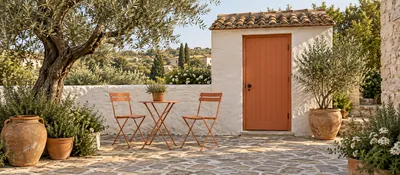 What to paint outdoors and what not to, a three-colour palette tied to the house, one accent. Six weekend proj...
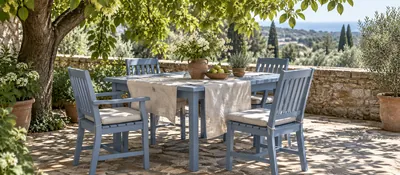 Sand, de-rust, prime, two coats of Eggshell or Satin: wood, iron, aluminium, and the tops where water stands....
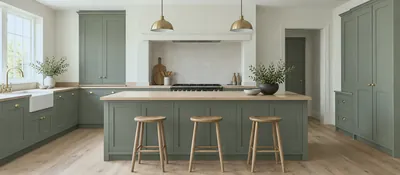 A new kitchen for the price of two tins: the method door by door, the finish that washes, and six colours.
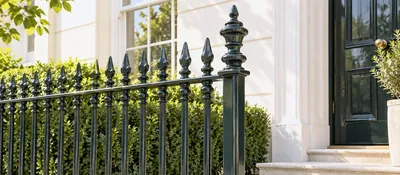 From the radiator to the gate: the finish that holds on steel and cast iron, the preparation, and the colours.
“An outdoor kitchen is painted where you don't cut and where the fire doesn't reach: everything else is colour.”
Thanks for signing up to our newsletter!
Sign in to save items to your wishlist. Sign in to save your basket, so you can continue shopping later.
Don't have an account? Create one
Share this link and friends can buy items from your list. Anything bought disappears from it automatically. Anyone with this link can see your selection.
Moving in, redecorating, or dropping hints? A free account turns this selection into a gift list — add or remove colours whenever you like, and we'll email you when someone buys something from your shared list.
Free · Delivered to your door
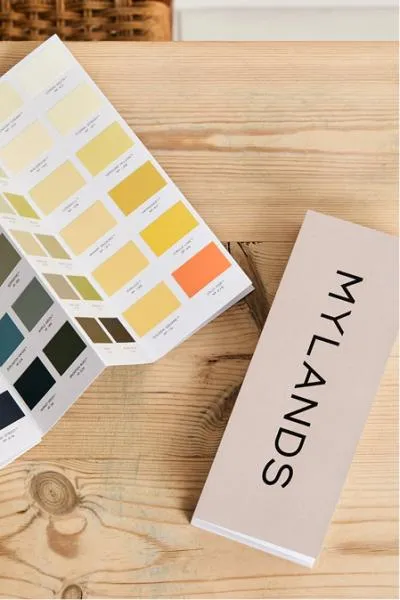
Get a free colour card posted to you, showing our complete Colours of London range, with swatches made from the real paint for a true representation of our award-winning colours.