The journal
The best paint for old houses: breathable, matt, faithful
The best paint for old houses is a breathable matt that lets lime walls and old plaster release their moisture, careful preparation of old distemper and oil-painted woodwork, and period colours, Egyptian Grey No.154, Cadogan Stone No.59 or St James No.40, that look as if they had always been there.
The walls of an old house have a life of their own, which is what makes the question of the best paint for old houses more serious than a simple choice of colour. A lime render, dressed stone, a coarse plaster laid a hundred and fifty years ago, panelling that has taken ten coats of oil paint: all of it moves, breathes, absorbs the damp of winter and gives it back in spring. A paint that ignores this ends up blistering, chalking or flaking within a few seasons. A paint that understands it, on the other hand, ages with the house instead of fighting it, and that is the paint we want to talk about, for a longère, a stone village house or a Haussmann apartment.
The best paint for old houses: let the walls breathe first
The first criterion is neither colour nor finish but permeability to water vapour. Old walls, in stone, brick or rammed earth, have no modern damp-proof course; they live with a share of moisture that they must be able to release inwards. Seal such a wall under a watertight film and the water builds up behind the paint, and sooner or later you get blisters, stains and a cellar smell that gets wrongly blamed on the house.
That is why our Marble Matt Emulsion is the finish we recommend for the walls of an old house: its film stays breathable and lets old walls, plaster and lime render release their moisture. It is water-based, low in VOC, and goes onto a sound render as readily as onto a repaired old plaster. One condition applies, and it holds for any paint: a wall with active rising damp must be treated at source, drainage, ventilation or render, before it is repainted. Paint accompanies a healthy wall; it does not cure a sick one.
The matt that forgives uneven walls
The second criterion is raking light. In an old house the walls are never perfectly flat: the render undulates, the corners are not square, the repairs can be made out. A satin or gloss finish underlines every flaw the moment a window lights it from the side; a deep matt, by contrast, absorbs the light and lets the relief of the wall become a quality rather than a fault. It is one of the reasons English decorators have always preferred chalky matts in period houses.
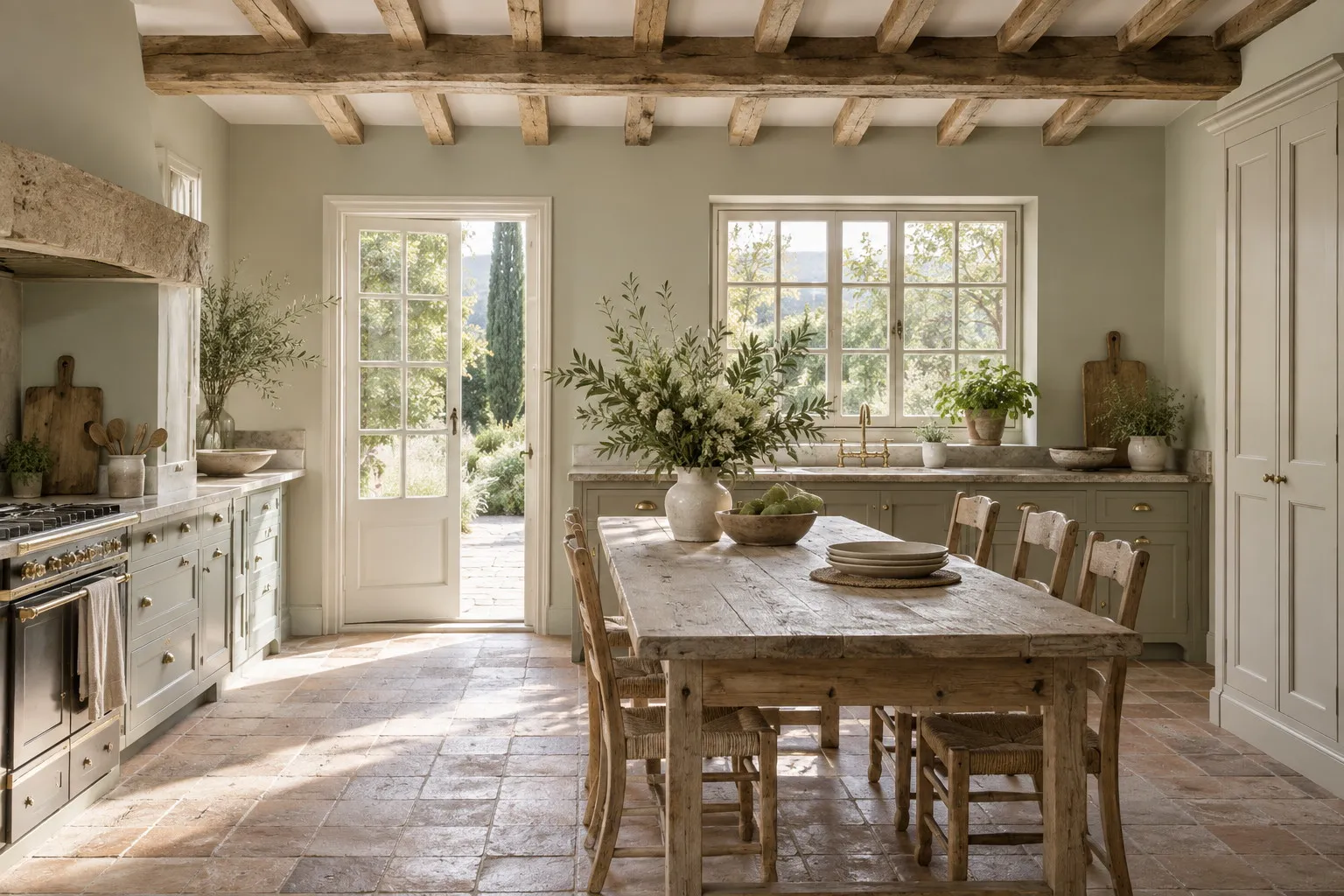
Marble Matt Emulsion takes that advantage a little further. The crushed Carrara marble it contains gives the film a density and a mineral touch very close to a render, which lets a modern paint sit in harmony with an old wall instead of looking laid on top of it. Its natural earth and mineral pigments, richly loaded, move with the daylight. Finally, it carries class 1 wet-scrub resistance under EN 13300: a breathable matt that can be washed, which is far from a given in a farmhouse corridor or a townhouse hall. Reckon on around 15 m² per litre per coat, two coats. That, in a word, is our answer on the best paint for old houses: a mineral matt that breathes.
Preparing surfaces that have lived
Paint for an old house succeeds largely before the tin is opened. Start by identifying what already covers the wall. Old distemper, the glue-bound wash that powders under the finger and leaves a white mark, cannot be painted over as it is: wash it down, rinse until the sponge comes away clean, let it dry for several days. Fill the cracks, but do not chase a surface as smooth as plasterboard, that is not the spirit of the house.
On a new, porous or repaired surface, or one darker than the colour to come, a primer matched to the finish colour ensures opacity in two coats and evens out absorption; allow roughly 0.5 L of primer per litre of paint, and refer to each colour's page, which tells you which primer belongs beneath it. On a lime render, wait until it is fully carbonated and dry before painting, and always test adhesion on a small square.
The case of old woodwork
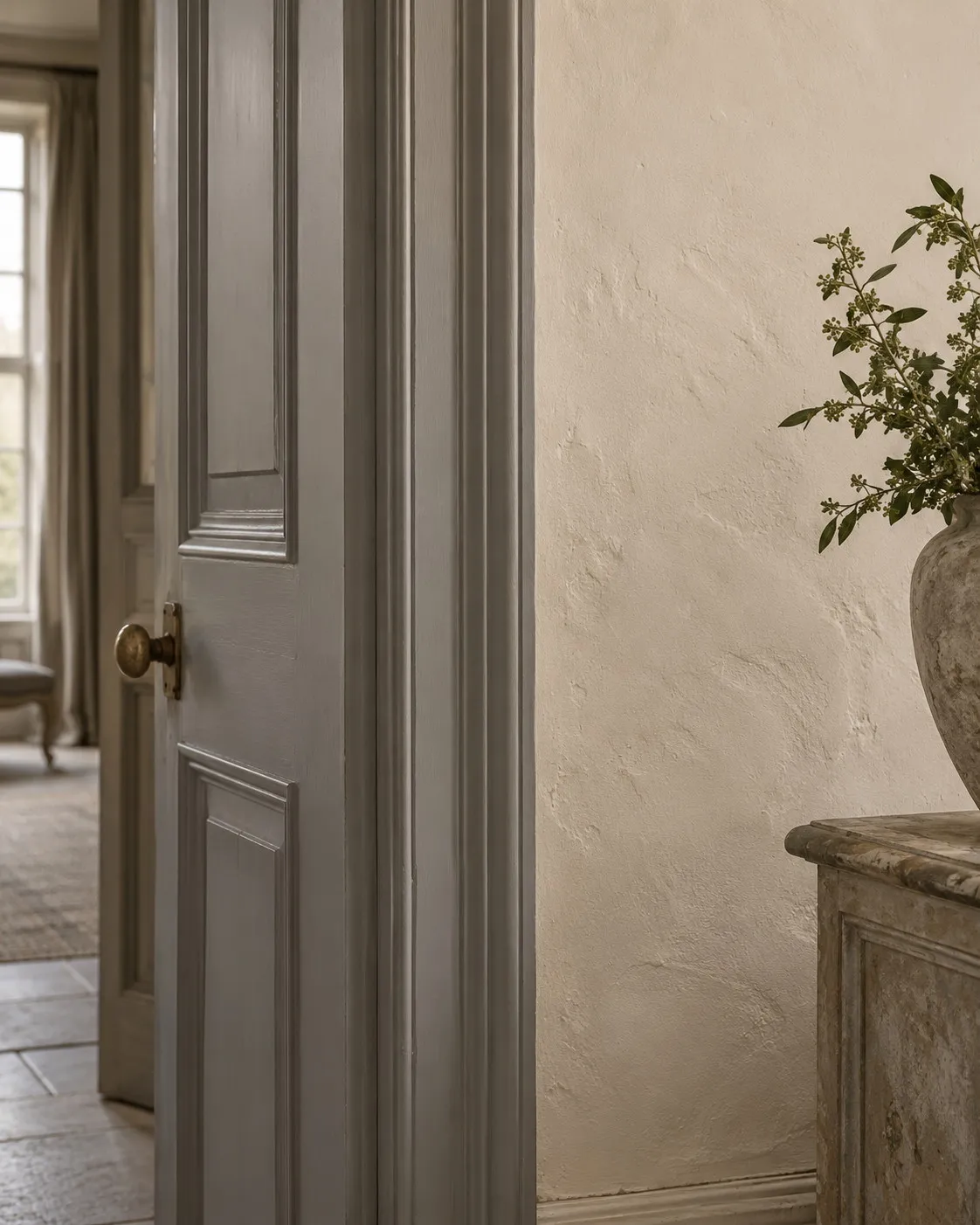
Moulded doors, internal shutters, tall skirting boards and dado panelling have often received oil paints that have yellowed and hardened. They are not stripped as a matter of course: a careful degrease, a sanding that opens the surface without baring it, filling of chips and a primer are enough in most cases, provided the old paint still adheres. Our guide to preparing woodwork sets out each step. Then comes Multi-Surface Eggshell, at around 15 % sheen: the traditional finish for period joinery, supple enough to follow timber that moves, tough enough for a door that has been slammed for a century.
Colours that have already lived in old houses
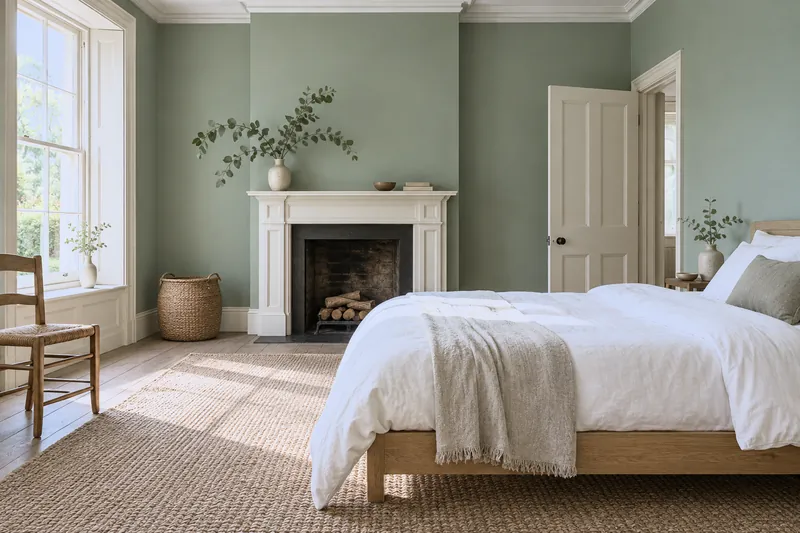
An old house asks for colours with a past. Our Colours of London collection was assembled from wallpaper fragments, historic colour cards and orders kept in our records, and that is what makes it so right in a period room: these shades were worked out for walls like yours. St James No.40 reproduces a colour of 1835 found on a wallpaper in the St James's area; Chester Square No.199, a grey-green leaning towards olive, was matched to a fragment of around 1840; Archway House No.106, a warm grey, comes from a wallpaper of around 1800 found near Clapham Old Town.
In an old house, the right colour is the one you believe has always been there.
Stone houses and longères
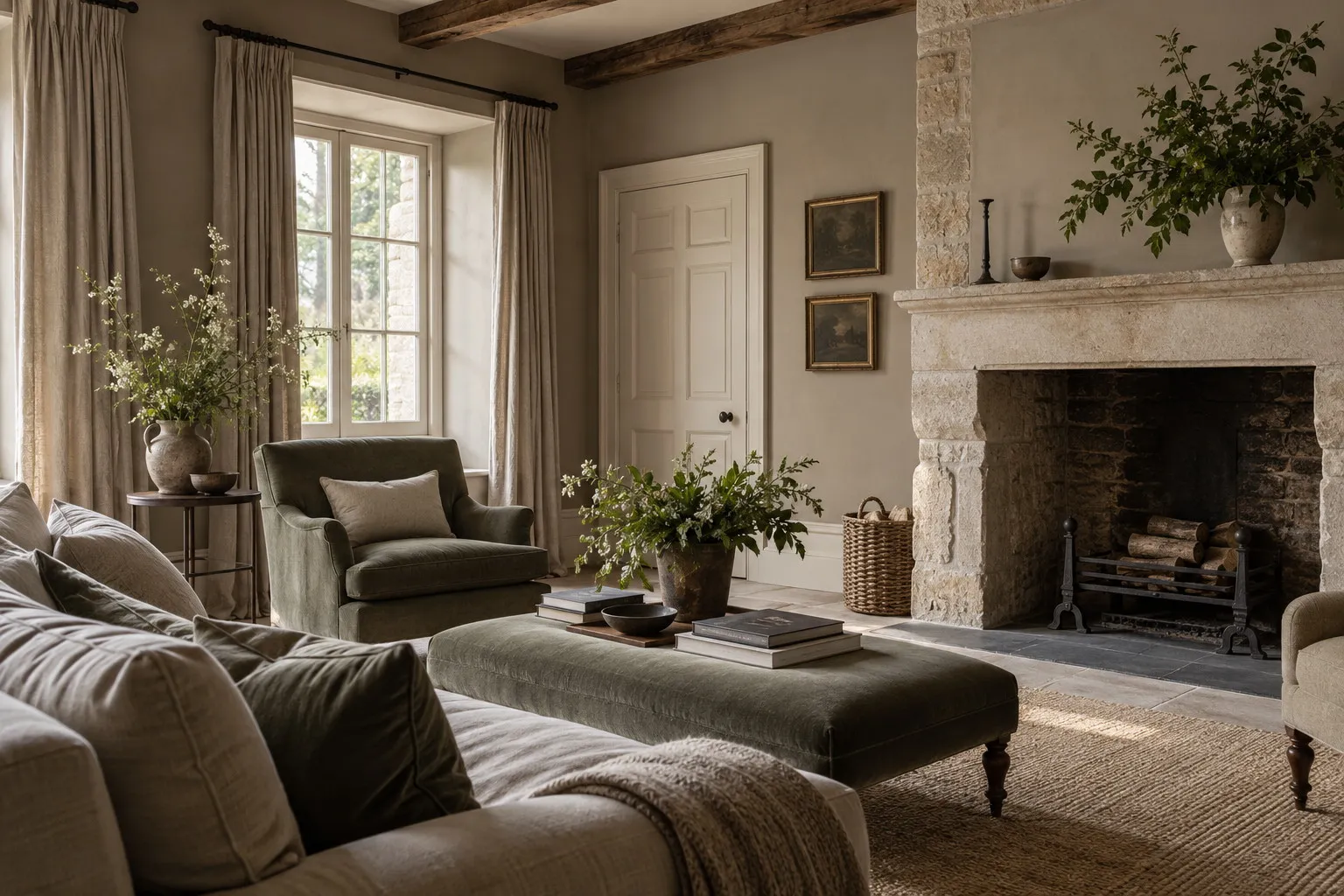
In a stone house or a longère, thick walls and small windows call for warm neutrals that carry on the tone of the stone. Egyptian Grey No.154, a historic grey with sandy undertones, is our first choice for a sitting room with exposed beams: it warms the stone without competing with it. Cadogan Stone No.59, a warm, crisp stone colour inspired by a shade discovered in Cadogan Square, and Honest John No.58, a traditional off-white that carries our founder's nickname, brighten a kitchen or an attic bedroom without the chill of pure white. For a greener daytime room, Beauvais No.195, a soft green influenced by French tapestry colours and printed in the 1930s Book of Colours, is made for a longère kitchen.
Haussmann apartments and maisons de maître
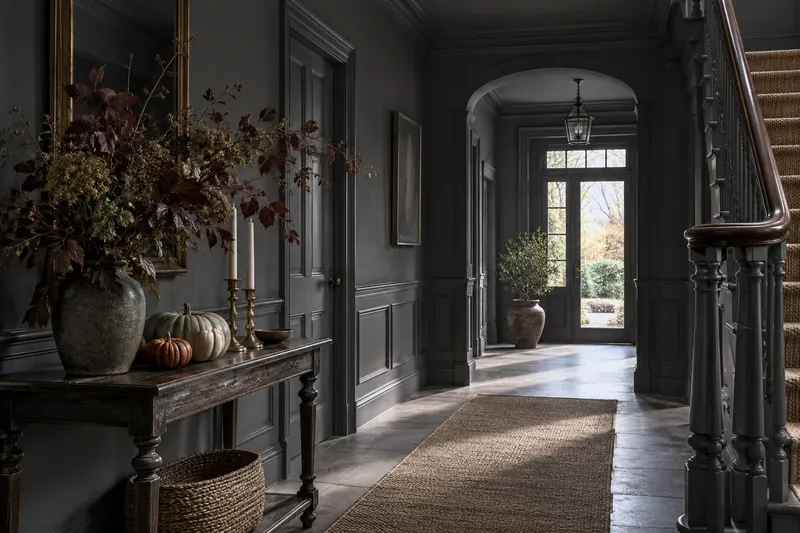
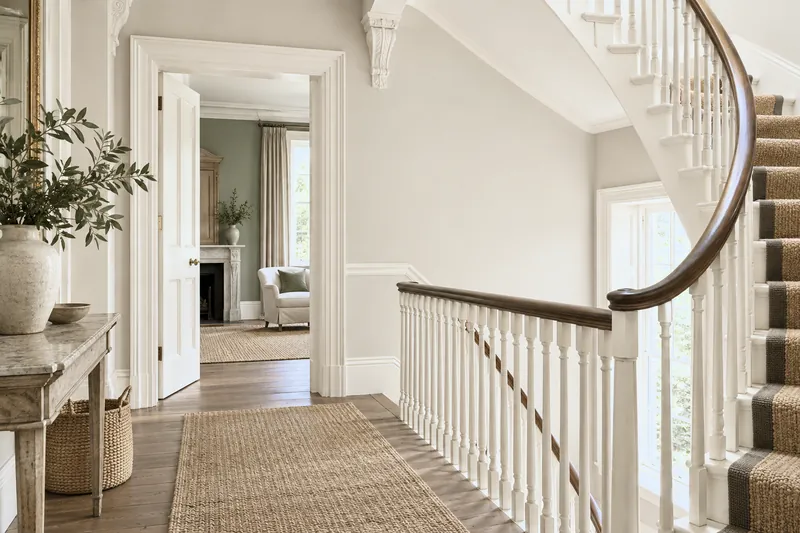
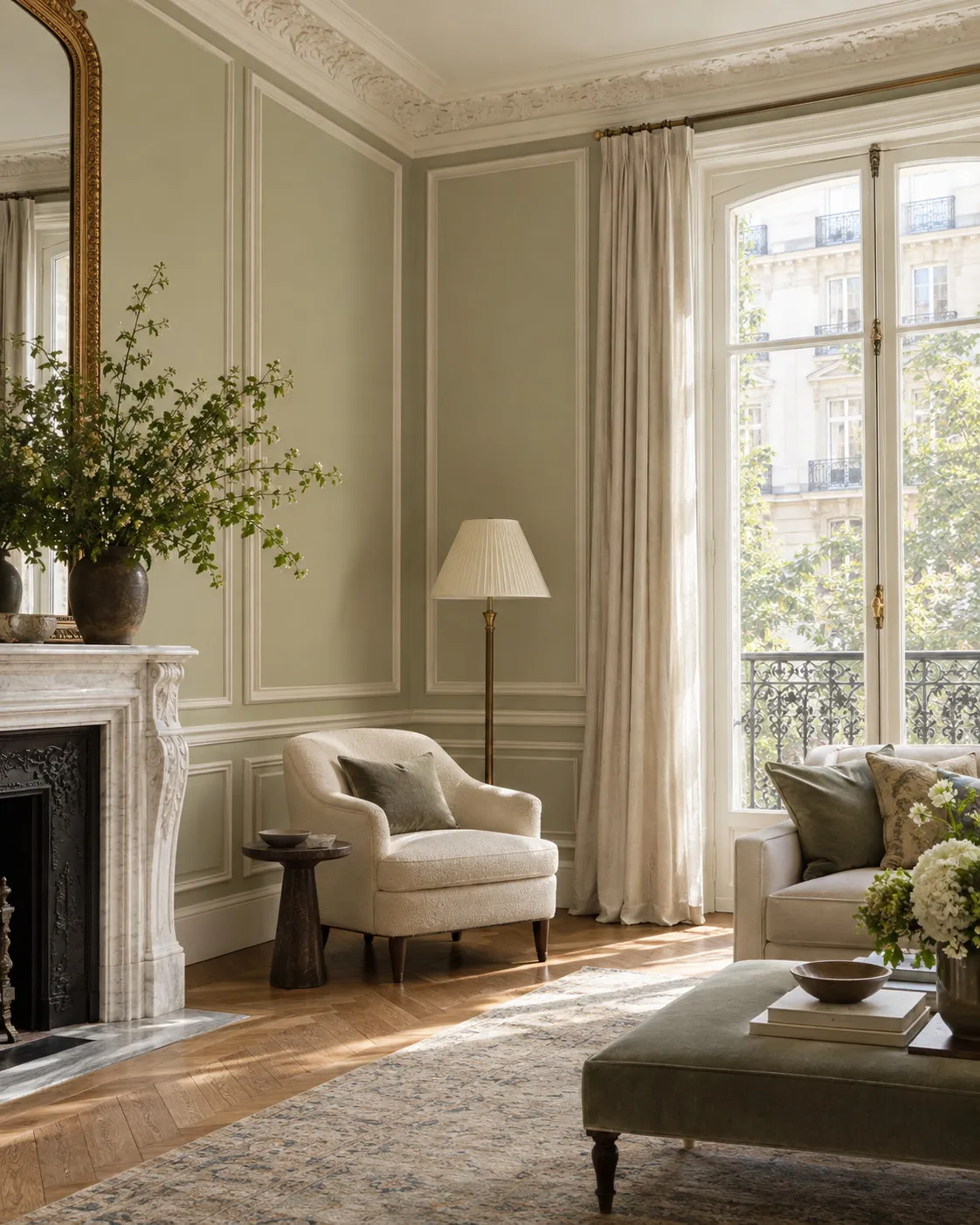
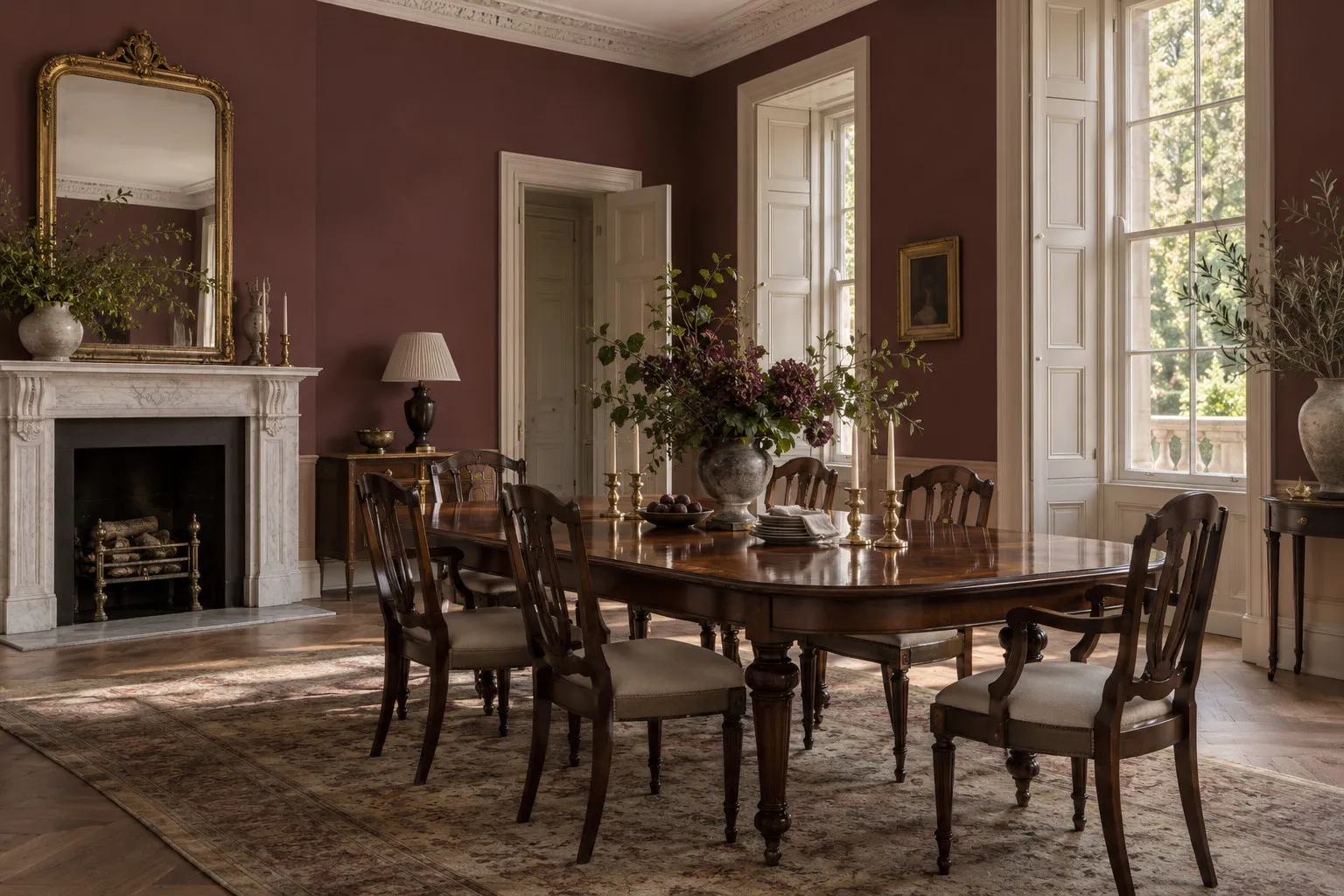
High ceilings, mouldings and marble chimneypieces will take bolder decisions. St James No.40 on the walls and cornices of a salon gives that slightly powdery unity of well-kept Parisian apartments, and Chester Square No.199 on the walls, with the mouldings in the same off-white, draws the room without cutting it up. In the dining room, an evening room, Huguenot No.49, a crimson from our archives, is a reminder that nineteenth-century interiors were not afraid of deep colour.
The tradition of painted woodwork
An old house is also defined by the place of its timber. In France, doors and shutters were long varnished or waxed; the English tradition paints them, in a deeper tone than the wall to draw the architecture, or in the same warm white to calm it. In a stone house, doors in Archway House No.106 beneath Egyptian Grey No.154 walls tell of age without staging it; in an apartment, woodwork in Honest John No.58 beneath St James No.40 walls ties an enfilade together.
All our decorative paints are water-based, low in VOC, low in odour and compliant with EN 71-3, which means a child's bedroom under the roof can be repainted without leaving the house. Brushes wash out in water, and every tin is made and tinted in our single factory in West Norwood, London, where paint has been made for old houses since 1884.
Where to start
In an old house more than anywhere, the sample is essential, because a lime wall and an old plaster do not give back the same colour. Order two or three 100 ml sample pots, each covers around 1.5 m², and paint squares on the most uneven wall and beside a deep window. The physical colour card, sent free of charge, can be held against stone and timber to compare the neutrals. And to cost rooms with high ceilings, the price per square metre page brings each finish back to the area actually covered in two coats.
Frequently asked questions
Can you paint a lime wall with a water-based paint?
Yes, provided the paint lets water vapour through and the render is dry and carbonated. Marble Matt Emulsion has a breathable film suited to lime renders and old plasters. Test adhesion on a small square, apply a primer if the surface is porous, then two coats of finish.
How do you repaint a wall covered in old distemper?
Distemper, the glue-bound wash that powders under the finger, cannot be painted over directly: new paint would not adhere. Wash it down with a sponge and warm water, rinse until the water runs clear, let it dry for several days, then apply a suitable primer before two coats of finish.
Which finish for uneven walls in an old house?
A deep matt. Satin and gloss finishes reflect raking light and pick out every undulation in the render, whereas a matt absorbs it and turns the relief into character. Marble Matt Emulsion is very matt, breathable and washable, which makes it suitable for the corridors and kitchens of old houses.
Do old woodwork and doors need stripping before repainting?
Not necessarily. If the old paint still adheres, a degrease, a sanding that opens the surface, filling of chips and a primer are enough before two coats of Multi-Surface Eggshell. Full stripping is only needed if the paint is flaking in sheets or the accumulated layers are blurring the mouldings.