The journal
Stair paint: which finish, what preparation, which colours
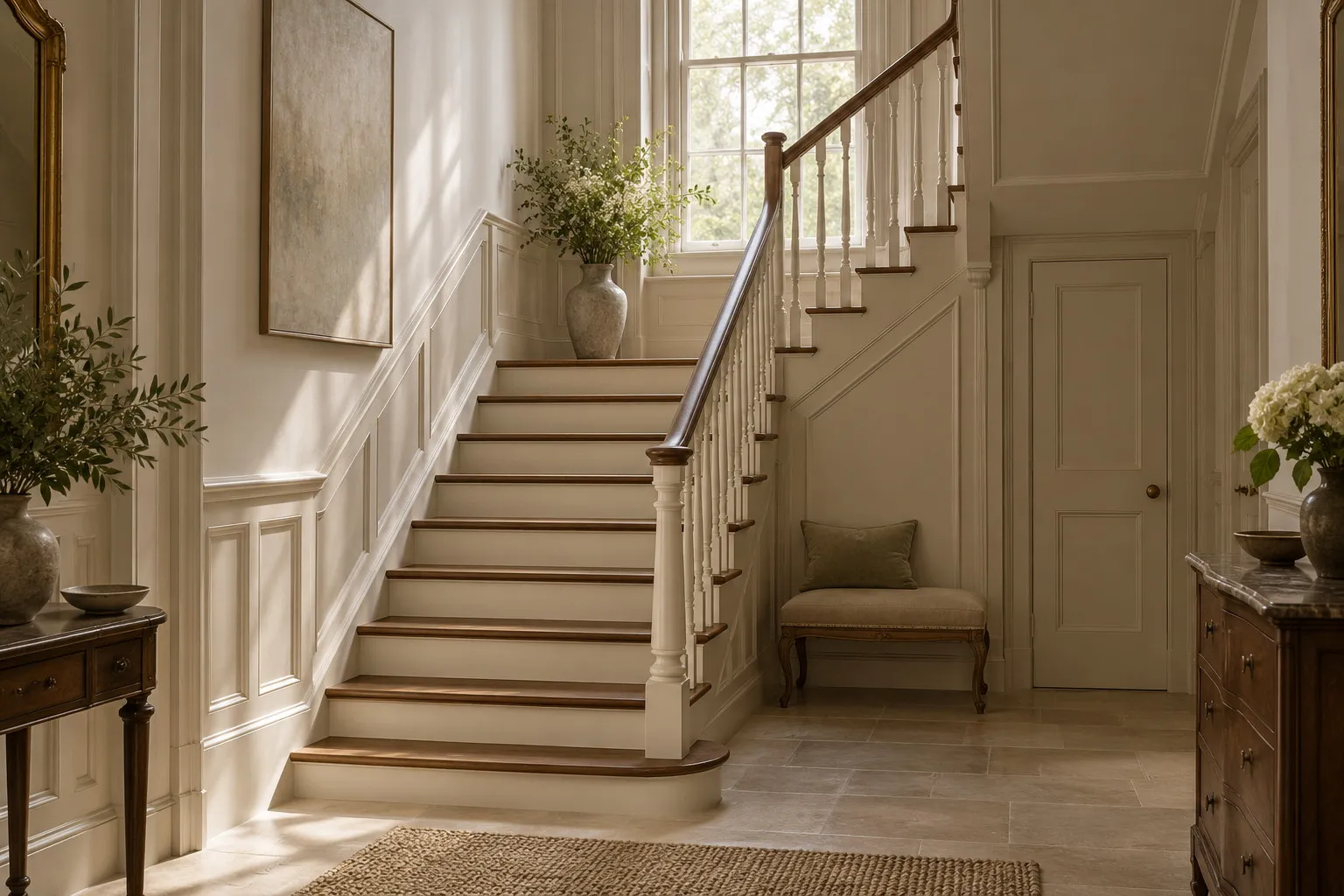
For a stair paint that lasts, use Decorative Floor Satin on treads and risers, Multi-Surface Eggshell or Satin on the handrail and spindles, and prepare the wood with care. Two coats, a few days of patience, and dark treads over pale risers to hide the wear.
Repainting a staircase is one of the most rewarding jobs in the house, and one of the most demanding for the paint. Every tread absorbs thousands of footsteps, heels, suitcases and dogs' paws; the handrail is touched all day long. A stair paint therefore has to be chosen first for its toughness, then for its colour, and applied with a method that respects drying times. Done well, the job turns a tired wooden stairwell into the centrepiece of the entrance hall, for a weekend of work and a few days of patience.
Treads and risers: a finish made to be walked on
Treads and risers are not treated like a door or a skirting board. For these horizontal surfaces subjected to abrasion, we formulated Decorative Floor Satin, a water-based paint designed for wooden floors and stairs. Its satin sheen returns the light gently without turning the treads into a mirror, and its low-VOC formulation means you can paint without leaving the house, with brushes that wash out in water. Two coats are essential; it is the second that gives the film its density and evenness.
One point deserves to be said plainly: no paint, however good, holds on a badly prepared staircase. The wood must be clean, keyed and dry before the first coat. On varnished pine treads, waxed oak or previously painted softwood, the secret of a durable paint for stairs lies ninety per cent in the preparation and ten per cent in the brushwork.
Handrail, spindles and string: Eggshell or Satin
The handrail, spindles and string are not walked on, but they are touched, knocked and rubbed constantly. They belong to the multi-surface finishes for woodwork. Multi-Surface Eggshell, with its sheen of around 15 %, is the reference finish: it resists the moisture of hands and everyday knocks while keeping a softness that flatters the mouldings of an old handrail. For a hard-worked banister, in a family house for instance, Multi-Surface Satin offers a slightly higher sheen and a surface that is even easier to wipe. Both cover around 12 m² per litre per coat and are touch-dry in two to three hours.
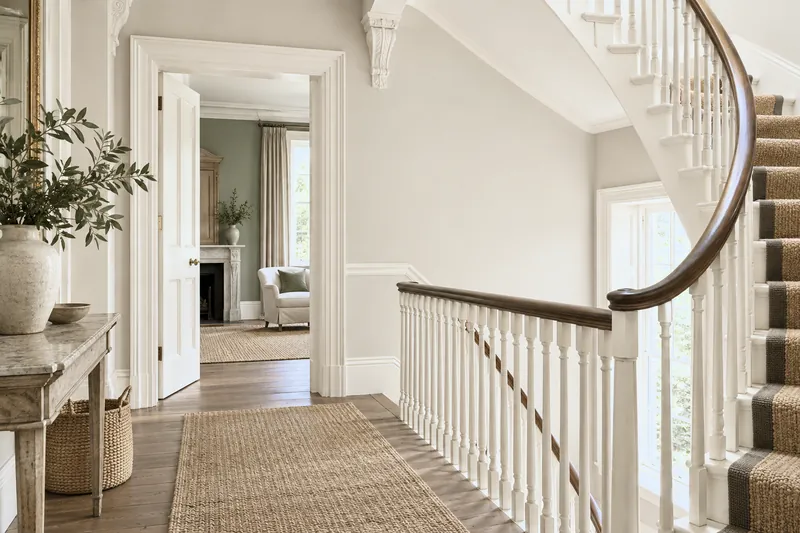
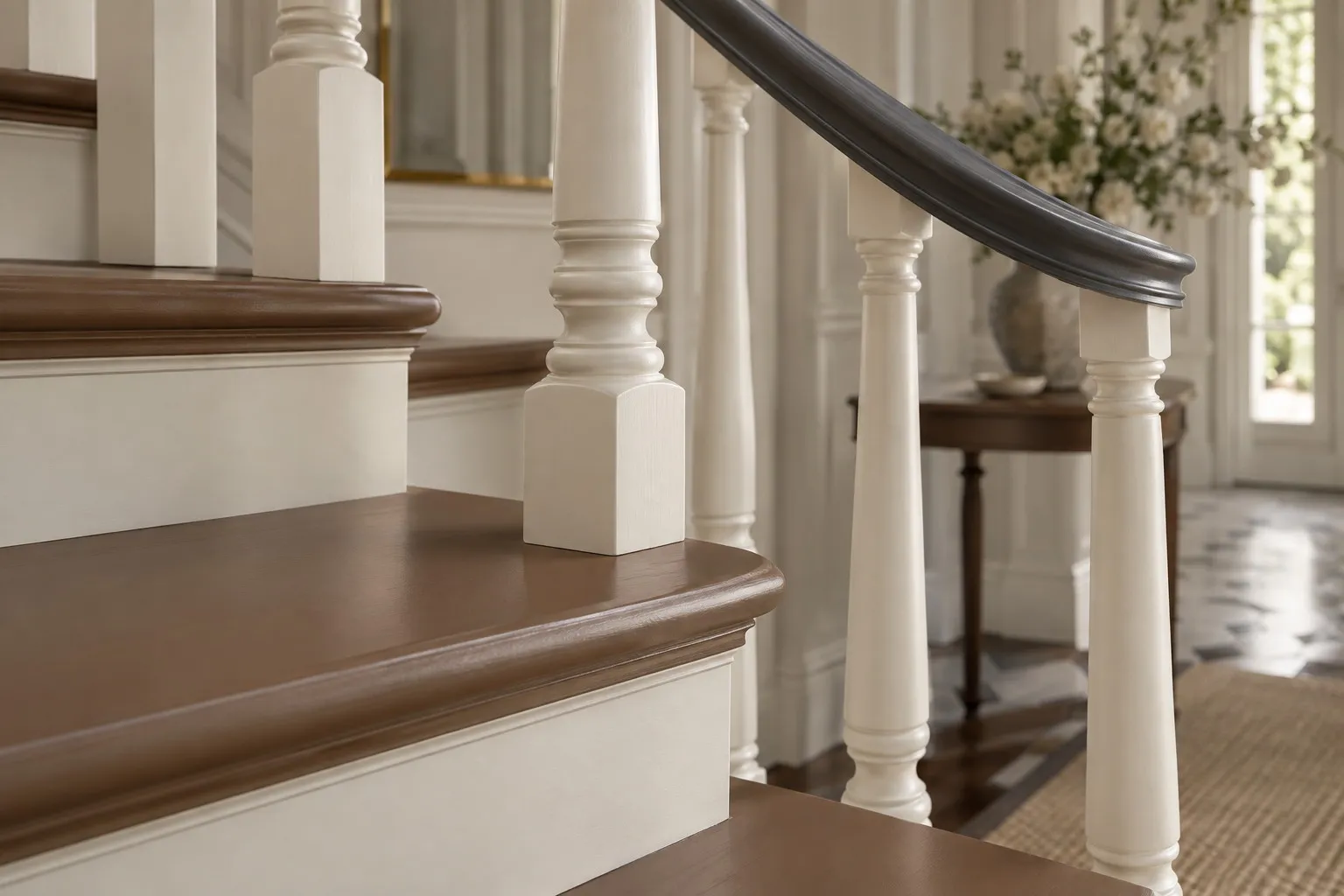
The colour of the spindles changes the whole character of the staircase. Spindles in a soft white such as Old Man's Beard BH.03, a slightly greyed white conceived for joinery, lighten a narrow stairwell. A handrail in Blackout No.41, a deep black with a grey cast, draws a graphic line that leads the eye upstairs and hides fingermarks.
Preparing the staircase before you paint
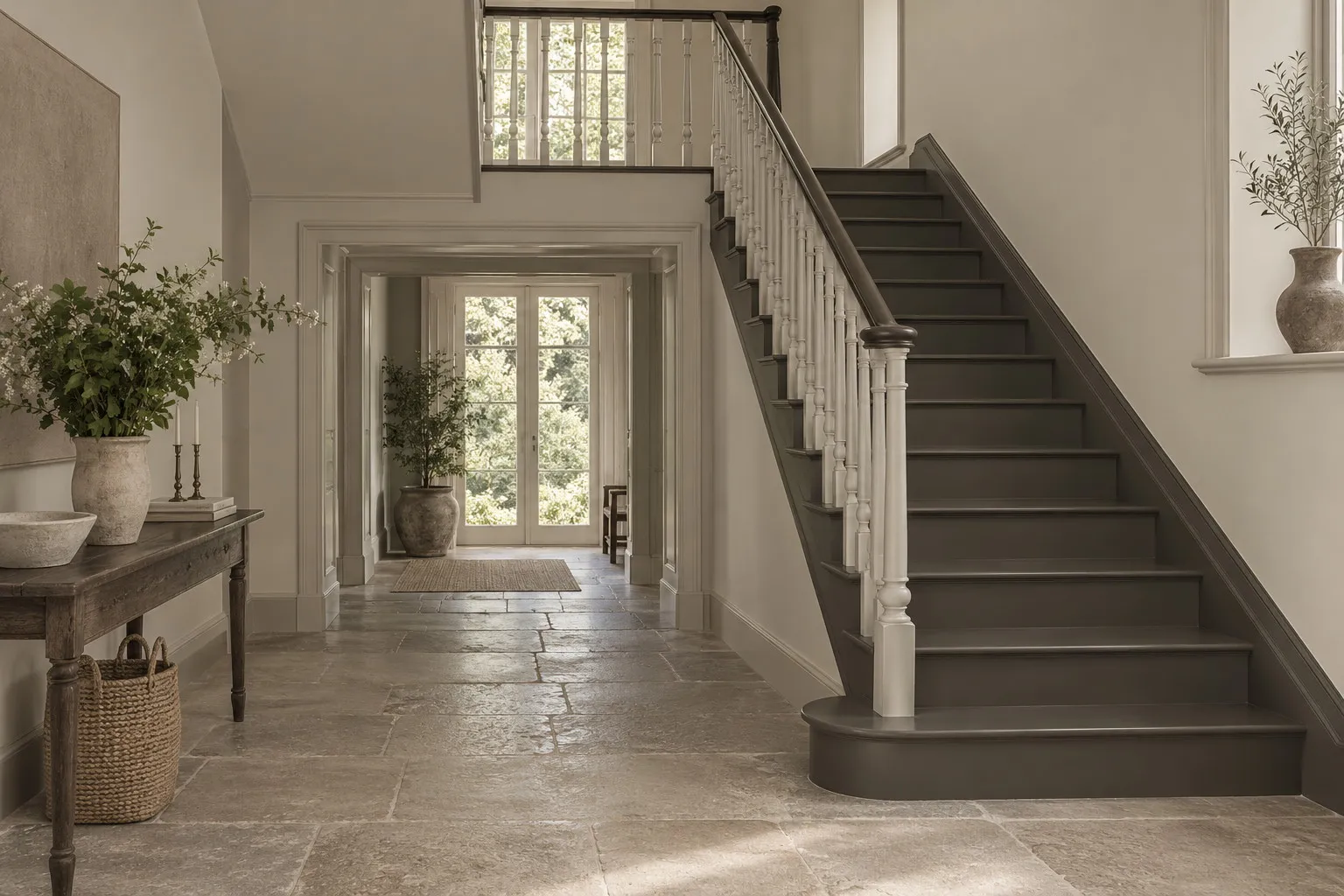
Start by degreasing every surface with a mild detergent, then rinse and let it dry. Sand the treads, risers and handrail to break the shine of an old varnish or existing paint: a medium grit is enough, since the aim is not to strip the wood bare but to create a key. Dust off thoroughly, fill splits and nail holes with wood filler, sand those repairs again and dust once more. Our guide to preparing woodwork walks through each step according to the state of the wood.
On bare wood, sanded back to the grain or very absorbent, a primer is needed; it seals the surface and lets the colour cover in two coats. Our primers come in several tones, from white to dark grey, and each colour's page says which one to use. Reckon on about 0.5 L of primer for every 1 L of paint on this kind of surface. On the day, work in dry weather with the room ventilated, and keep the hall closed to comings and goings.
Drying and getting back on the stairs
This is where success is decided. A freshly painted staircase feels dry to the touch within a few hours, but the film goes on hardening long after. You can step on it carefully after twenty-four hours, ideally in socks, and should allow a few days before returning to normal use with shoes, boxes and suitcases. A decorator's trick keeps the upstairs accessible: paint every other tread, let it dry, then paint the rest the next day. The stairs stay usable, provided everyone remembers which ones to avoid.
A painted staircase is not judged on the day of the last coat, but a year later, under the feet of the whole family.
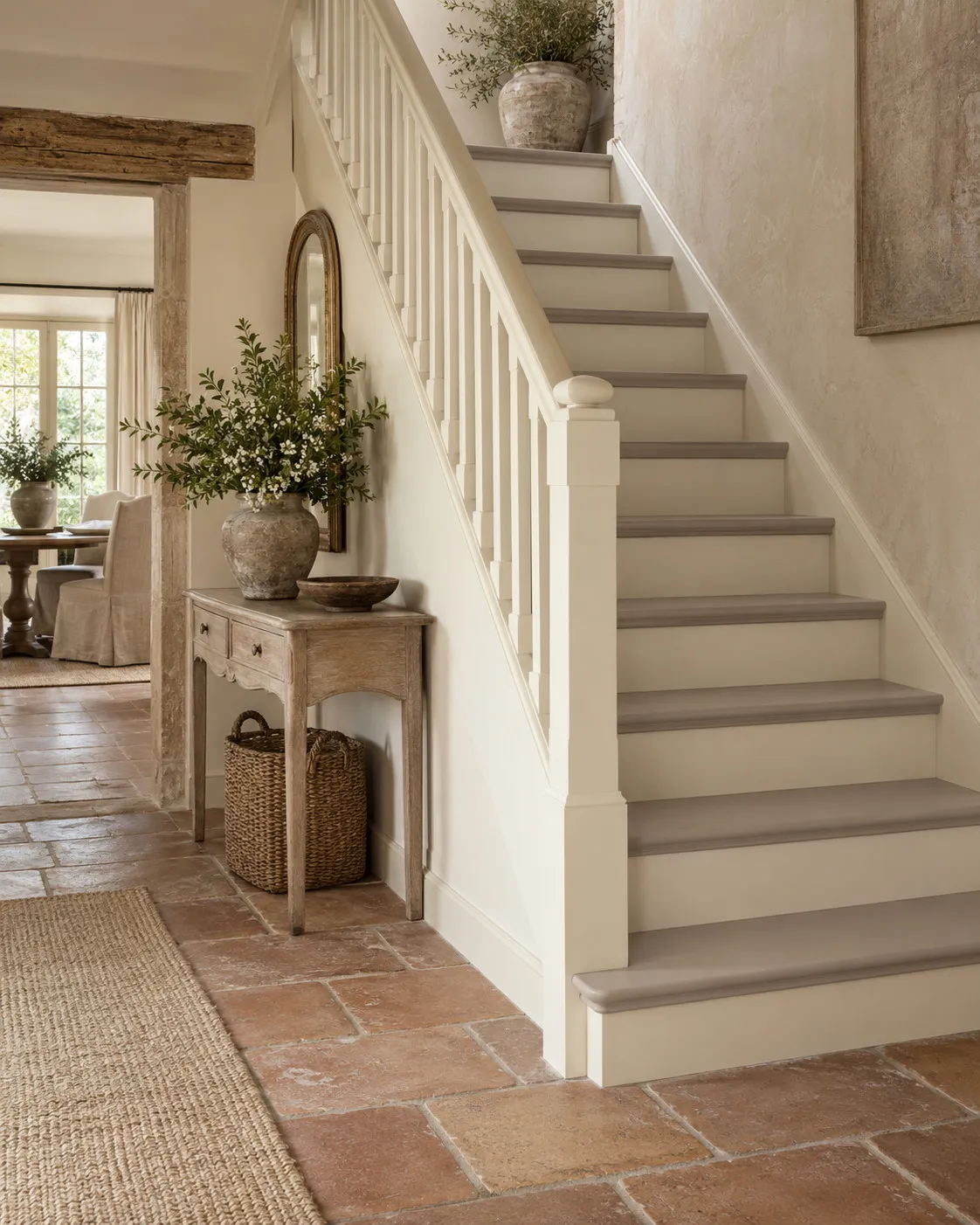
Stair paint: three colour ideas that last
The first idea, and the most timeless, is to darken the treads and lighten the risers. Treads in Cigar BH.20, a deep caramel brown, against risers in Bone BH.04, a creamy white, draw each step with a clarity that makes the staircase safer and easier to read, while concealing wear where it appears first. For a quieter version, swap the brown for Pub BH.08, a softened black that hides a multitude of sins, or for a warm grey such as Stone Castle No.71, whose brown undertones sit well with terracotta tiles and oak.
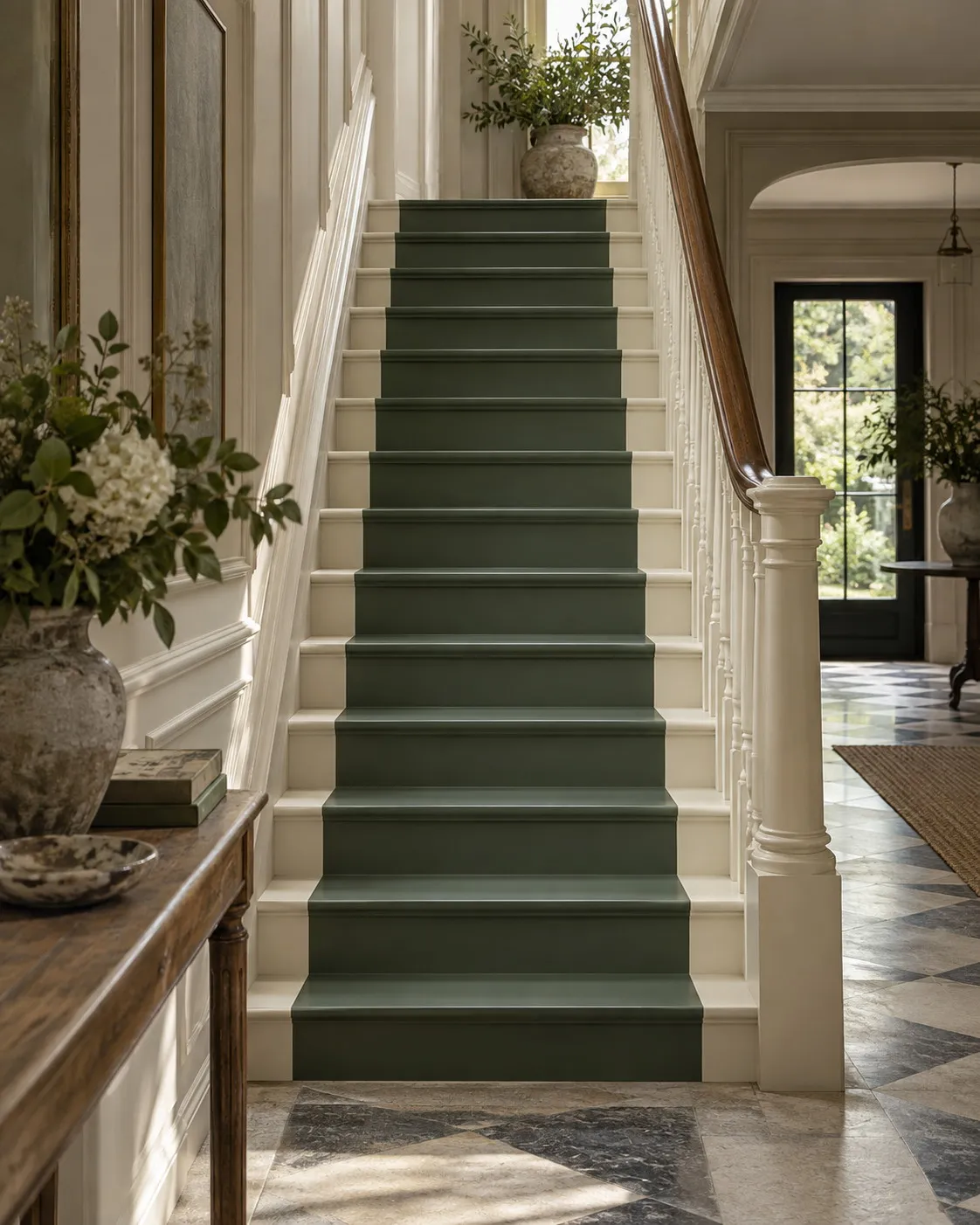
The second idea, the painted-runner effect, means painting a central band in a strong colour and leaving the edges in a pale tone. A band of Forest BH.16, a deep fir green, framed by Bone BH.04, gives the illusion of a stair runner without the drawbacks of textile. Mark the lines with masking tape, paint the pale tone across the whole tread first, let it dry, then tape up and apply the dark band in two coats.
The third idea plays on unity. Paint treads, risers, string and spindles in a single mid-tone and the stairwell wall in a neutral just a shade lighter, such as Chalk Farm No.53, a warm white with yellow undertones. The staircase melts into the architecture instead of cutting it up, which visually enlarges a cramped entrance. In all three cases, the natural mineral pigment load of our colours makes the shade shift through the day, which matters particularly in a stairwell lit from above.
Where to start
Before you order, test your two or three colours with 100 ml sample pots, each covering around 1.5 m². Paint one square on a high tread and another on a low riser, because the light is never the same at the top and bottom of a staircase, and look at them in the morning and again in the evening. To estimate the paint and primer you need, measure the surface of one tread and multiply by their number; the page on price per square metre will help you set a budget based on coverage and the two coats required. A well-prepared, well-painted staircase will serve you for years.
Frequently asked questions
Which paint should I use on the treads of a wooden staircase?
A paint formulated for floors, such as Decorative Floor Satin, designed for wooden floors and stairs. Its satin sheen stands up to foot traffic and cleans easily. Apply two coats on wood that has been degreased, sanded and dusted, with a primer if the wood is bare or very absorbent.
How long should I wait before walking on a painted staircase?
The paint is dry to the touch within a few hours, but the film keeps hardening. Wait twenty-four hours before stepping on it carefully, ideally in socks, then allow a few days before normal use with shoes and heavy loads. Painting every other tread keeps the staircase usable in the meantime.
Do I need to sand a varnished staircase before painting it?
Yes. A smooth varnish gives paint nothing to grip. Degrease first, then sand with a medium grit to dull the whole surface without trying to remove all the varnish. Dust off, fill any splits, sand those repairs again and apply a primer to any areas sanded back to bare wood before the two finishing coats.
Which colour should I choose to paint a staircase?
The most timeless pairing sets dark treads, in Cigar BH.20 or Pub BH.08, against pale risers in Bone BH.04: each step reads clearly and wear shows less. A painted-runner effect in Forest BH.16, or a staircase entirely in one mid-tone, are two other options that hold up well over time.