Help with woodcare Wood outdoors

Protecting wood outdoors, left natural

Three products in the range, and three only, protect wood left natural outdoors: Danish Oil for garden furniture and everyday timbers, Durax Teak Oil for teak, iroko and hardwoods, Hard Wax Oil for garden furniture, sheds, gates and barns. Everything else — waxes, varnishes, lacquers, shellacs, the other oils — stays indoors. Sun greys wood, rain swells it, shade turns it green: horizontal surfaces, south- and west-facing sides and end grain are fed more often than the rest, and a coat goes back on each spring or as soon as water stops beading. When the wood is too exposed or too far gone, paint protects better.

Page updated September 2026 · by the Mylands France woodcare specialists

What weather does

Sun, rain, shade

Outdoors, wood faces three attacks. The sun — its ultraviolet — breaks down the surface and greys it: that is the silver patina of teak, larch and oak left bare. Rain swells the fibres, dry weather shrinks them, and that to-and-fro splits the end grain, lifts the surface and opens the joints. Damp shade — the foot of a north wall, the underside of a table — holds water and lets green and black settle in.

An oil removes none of this; it slows it down. It feeds the fibre, sheds water as long as it beads, and renews without sanding: when it wears, you put on another coat, where a flaking film means starting again. In exchange, it asks you to come back every year. The wood must be dry — below 18% moisture — and the day mild: oils do not dry in the cold.

Three products in the range go outdoors, and three only: Danish Oil, Durax Teak Oil and Hard Wax Oil, which is UV resistant and spill proof. Nothing else: no wax, no varnish, no shellac, none of the other oils.


Six situations

Six pieces of wood outdoors, and what suits each

01

1. The garden bench in Danish Oil

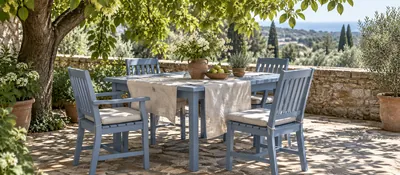
A hardwood bench under a tree, open to rain and sun. Danish Oil, made for outdoors: dry wood, sanded to 180 at most, a generous coat, wiped at 5–10 minutes, everything off at 20 minutes, three coats 12 to 18 hours apart. One coat each spring.

02

2. The oak gate in Hard Wax Oil

A solid oak gate onto the street, facing due west. Hard Wax Oil Natural, UV resistant: two thin coats along the grain 24 hours apart, excess removed at once, end grain and edges included. Touch-dry in 6 to 8 hours, cured in 7 to 10 days; a refresh coat when it dulls.

04

4. The larch cladding left to silver

Larch cladding, vertical and ventilated, that greys evenly to silver. No product: vertical wood dries fast, and the range has no finish made for cladding. Leaving it to silver is a choice, and often the right one; upkeep comes down to a brush and a watch on the end grain.

05

5. The shed door in Hard Wax Oil Burnt Earth

A pine garden-shed door facing south, its boards weathered to uneven shades. Hard Wax Oil Burnt Earth evens the aged wood in a deep brown: two thin coats 24 hours apart, a third on the most exposed face. The detail: Shed, gate, barn.

06

6. The painted fence

A low pine fence, in contact with the grass and the sprinkler: too exposed to stay natural. Here paint protects better than an oil, and the bare wood first takes White Knotting on its live knots. That is the other hub: How to paint a fence.

The table

Which item, which exposure, which product, which rhythm

A horizontal surface holds water, a south or west face takes the sun, end grain drinks through the fibre: these set the rhythm, not the rest.

The itemThe exposureThe productThe rhythm
Bench, chairs, furniture in everyday timber Horizontal, sun and rain Danish Oil Three coats 12 to 18 hours apart; one coat each spring or as soon as water stops beading
Table, garden set in teak or iroko Horizontal, top very exposed Durax Teak Oil Two to three coats 12 to 18 hours apart; one coat each spring
Gate, garden door in oak Vertical, often due south or west Hard Wax Oil Natural Two thin coats 24 hours apart; a refresh as soon as the wood dulls
Shed, barn, weathered boards Vertical, unevenly exposed faces Tinted Hard Wax Oil: Burnt Earth, Castanea, Wenge Two coats 24 hours apart, one more on exposed faces; a yearly refresh
Cladding, boarding left natural Vertical, ventilated None A brush; let it silver
Fence, exterior woodwork, furniture in colour Any Paint: exterior woodwork, shed, fence As the paint requires

Wood dry below 18% moisture, a mild dry day, never in full sun: the three products share these conditions.

The wood's year

The rhythm of the seasons in five moves

  1. 01

    In spring, the drop test

    A drop of water on the top, on the south face, on an end. It beads: nothing to do. It spreads and darkens the wood: time for the maintenance coat.

  2. 02

    Brush, let it dry

    A stiff brush and clean water along the grain, no pressure washer. Then a day or two drying under cover: below 18% moisture, or the oil stays on the surface.

  3. 03

    The thin coat, wiped

    Danish Oil or Durax Teak Oil: a generous coat, 5 to 10 minutes, wiped along the grain, nothing wet at 20 minutes. Hard Wax Oil: a thin coat along the grain, excess removed at once. Rags into water.

  4. 04

    In summer, the faces that suffer

    Tops, south and west faces, end grain and edges: wherever water stops beading before autumn, one more coat, without waiting for next spring.

  5. 05

    In winter, shelter and wait

    Cover or bring in what can be, lift feet off wet ground, and oil nothing: oils do not dry in the cold. Start again in spring.

To avoid

What ages wood faster

  • An interior product outdoors. Waxes, varnishes, lacquers, shellacs, Wood Finishing Oil or Pure Tung Oil: none of it is made for rain. Danish Oil, Durax Teak Oil, Hard Wax Oil, and nothing else.
  • Oiling damp wood or in cold weather. The oil does not penetrate, does not dry, turns tacky and holds dust.
  • Forgetting the end grain. End grain drinks far more and splits first; it gets one more coat, every time.
  • The pressure washer. It opens the fibres, tears the surface and drives water deeper than rain does.
  • The bundled oily rag. It can ignite on its own: bucket of water, or flat drying outdoors. See working safely.

Frequently asked

Your questions, our answers

Which products in the range can go outdoors?

Three: Danish Oil, for interior and exterior use, garden furniture included; Durax Teak Oil, for teak, iroko and garden hardwoods; Hard Wax Oil, for garden furniture, sheds and barns. Everything else in the range — waxes, varnishes, lacquers, shellacs, other oils, stains — is an interior product.

How often should I re-oil?

When water stops beading: that is the only true signal. In practice, one coat each spring on furniture, and one more in summer on tops, south and west faces and end grain, which wear before the rest. A gate or shed in Hard Wax Oil gets a thin refresh coat as soon as it dulls.

Is greyed wood damaged?

No. The grey is the surface broken down by ultraviolet; the wood beneath is sound. You can leave it — larch, oak and teak grey very well on their own — or brush it, sand lightly with 180 and re-oil to bring the colour back. What really does damage is standing water: end grain on the ground, tops without a fall, damp shade.

When is paint the better choice?

When the wood is a soft resinous timber in contact with the ground or the sprinkler, when it is too far gone for an oil to be enough, or when you want colour. Paint forms a film that protects better but has to be redone as a whole; an oil renews without sanding. The paint guides: exterior woodwork, garden furniture, shed, fence.

“Outdoors, an oil does not promise for ever: it promises that you can come back, each spring, without stripping anything.”
Sign up to our newsletter

Sign up to our newsletter

Thanks for signing up to our newsletter!