Dividing colour between walls, mouldings and ceiling
The classic scheme
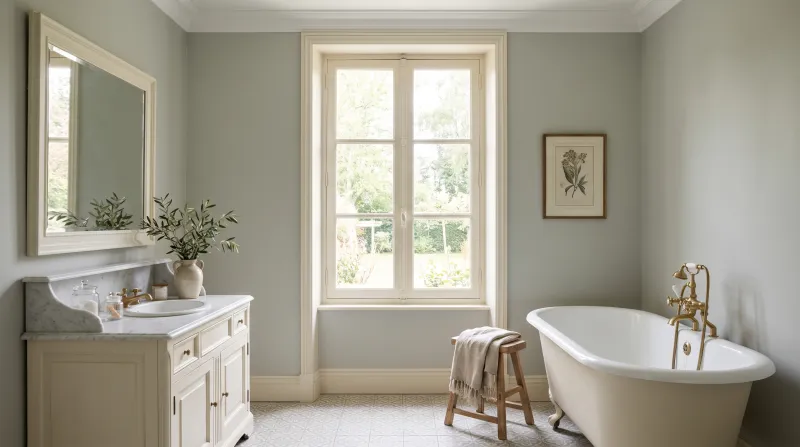
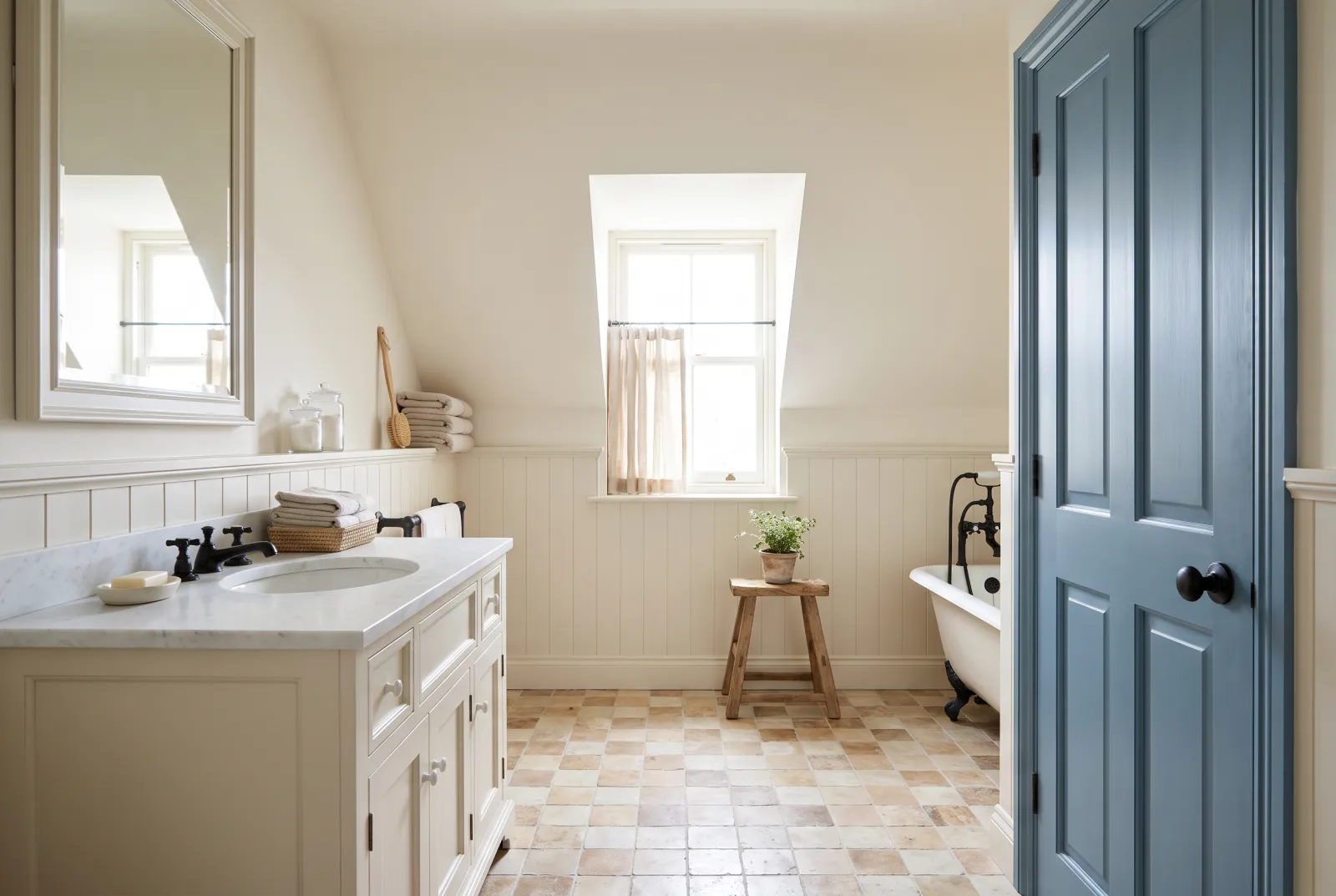
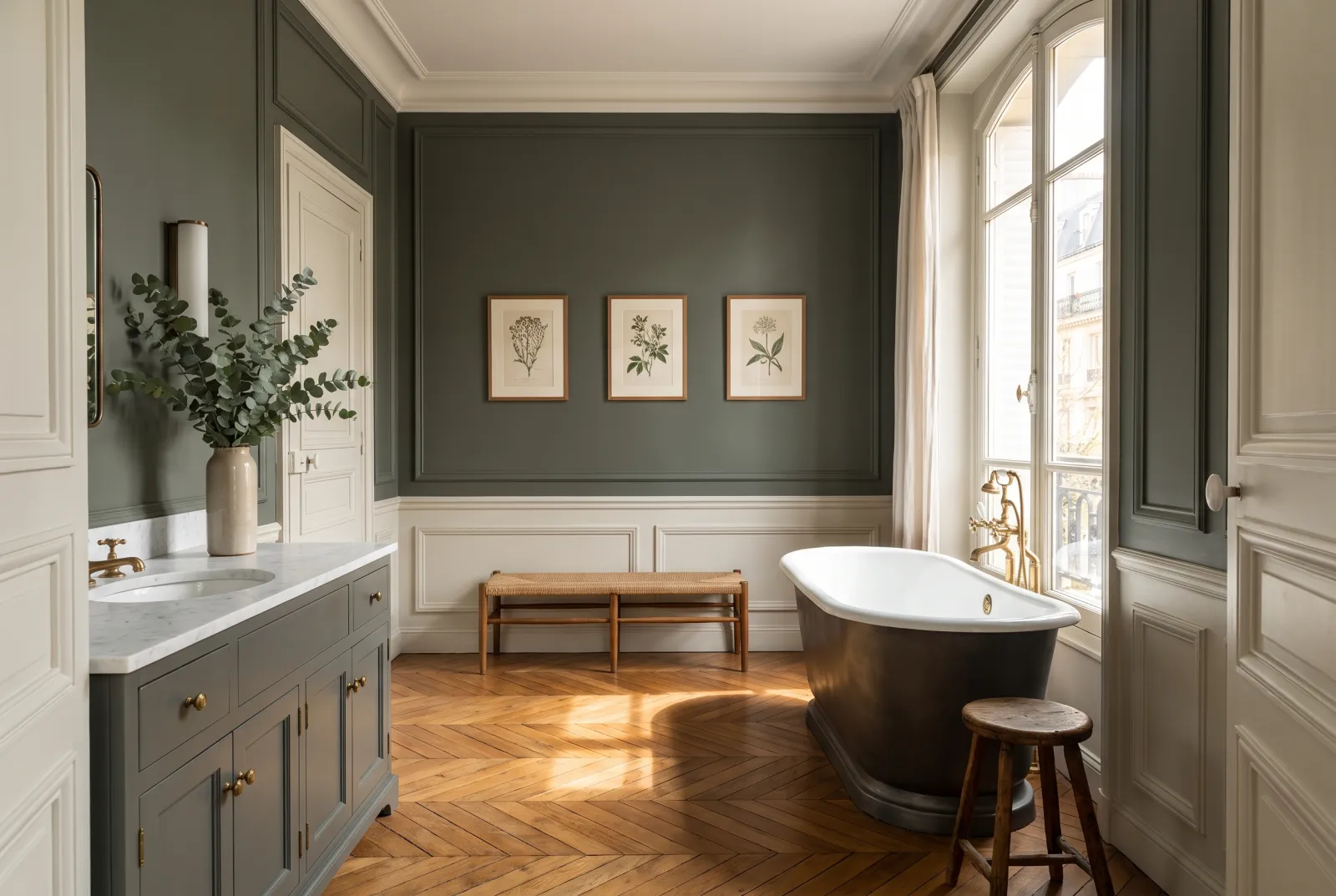
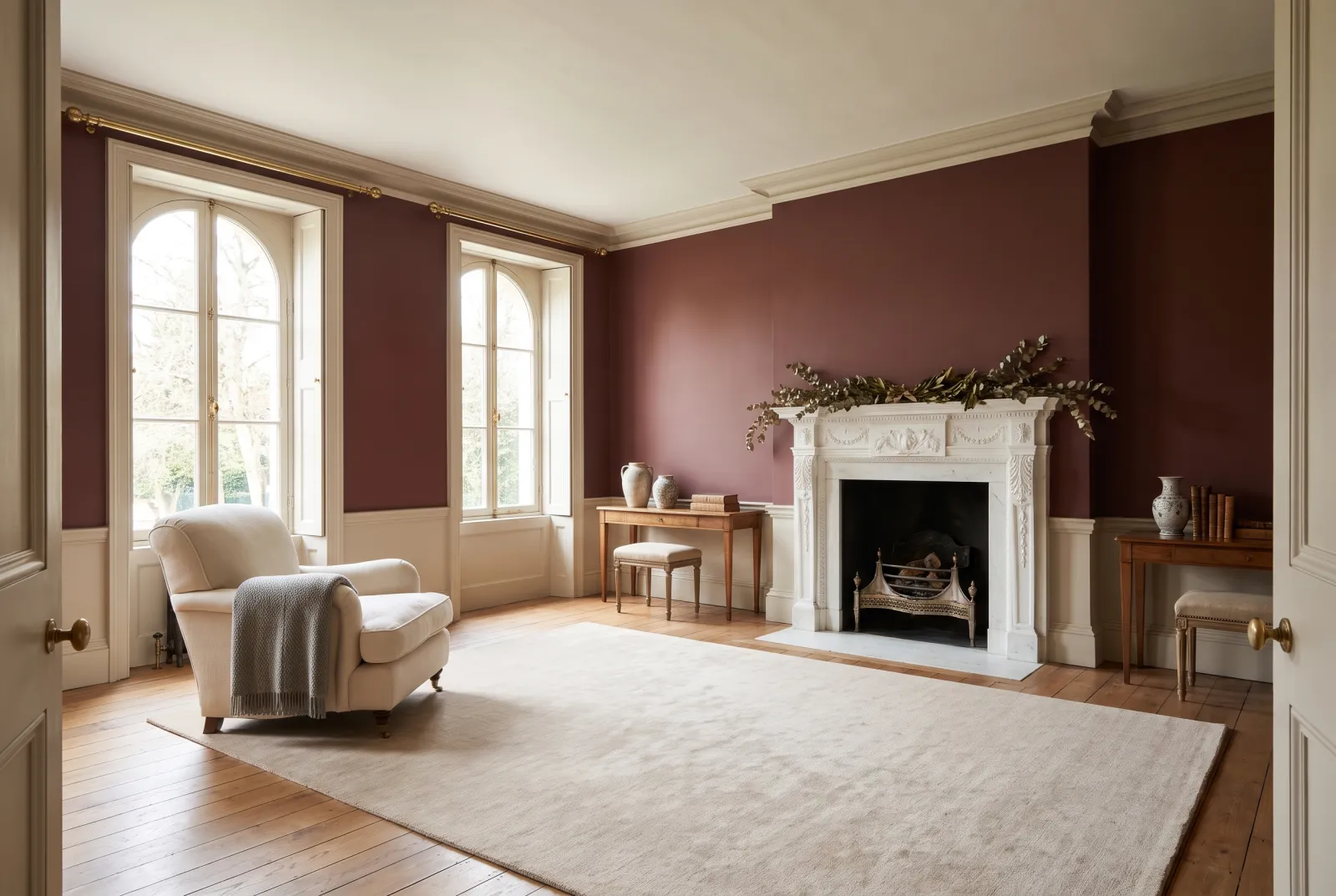
Coloured or neutral walls; cornices, rose and ceiling in the same warm white; woodwork in that white in Eggshell. It is the most legible reading of the relief and the one that shows fine plasterwork best. The only possible mistake is pure white, which looks blue against parquet and marble: take Holland Park No.5 or Charterhouse No.4 — which white for a ceiling covers the cases.
Tone on tone
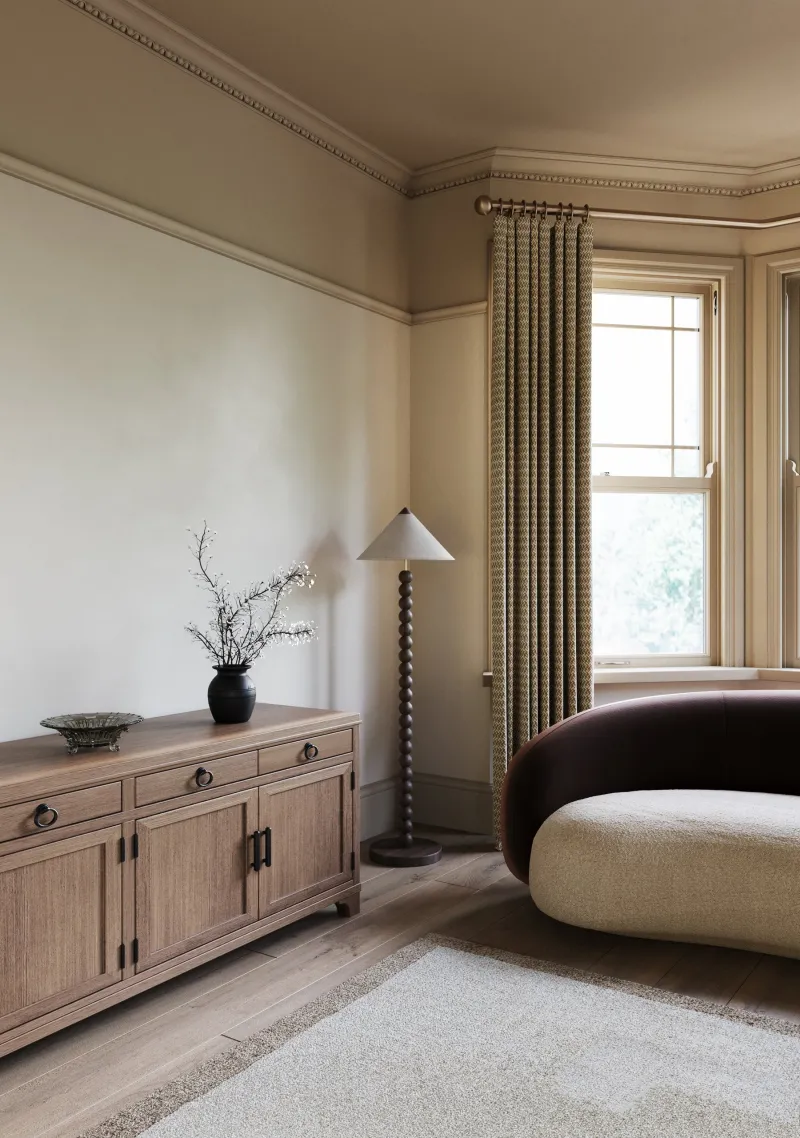
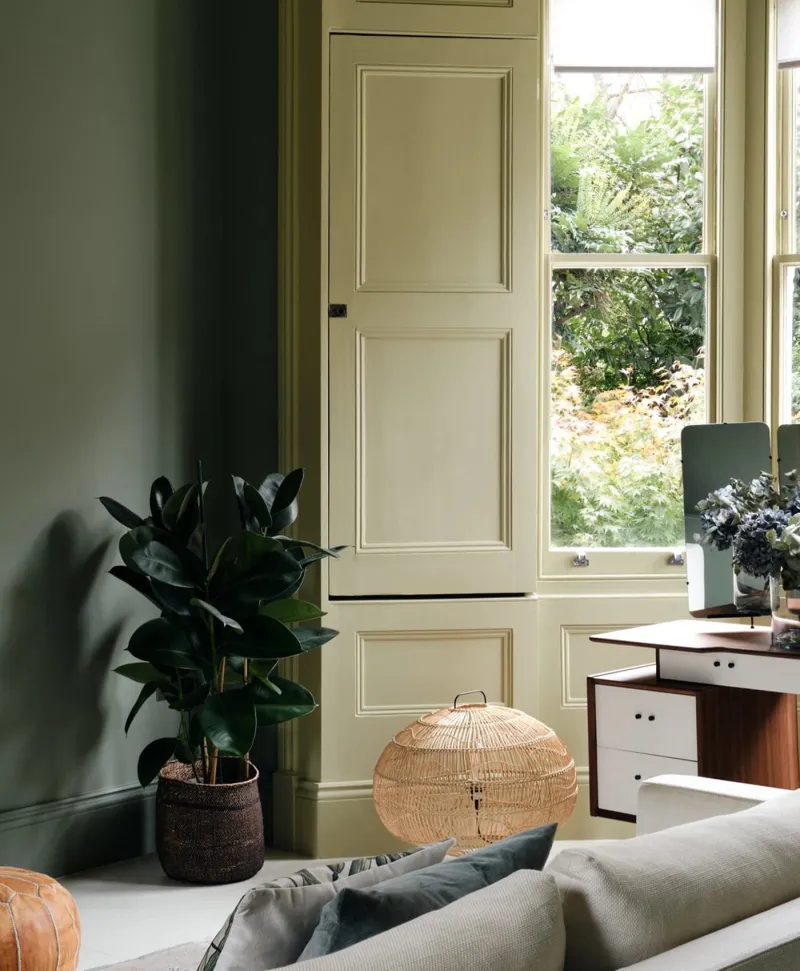
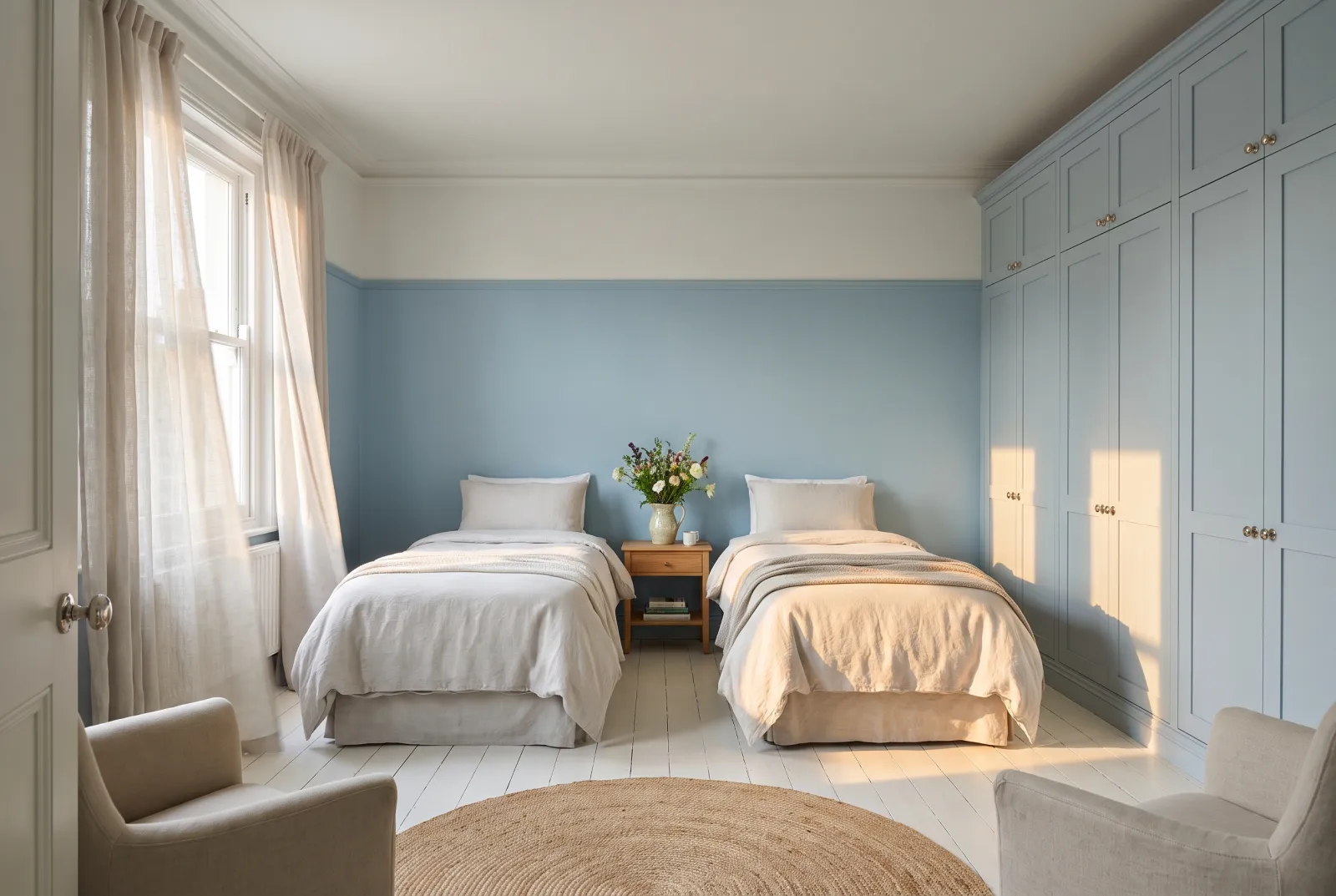
Mouldings and ceiling in a lighter version of the wall colour, or a darker dado below the picture rail. Softer, more contemporary, and very effective in a room whose mouldings are modest or damaged.
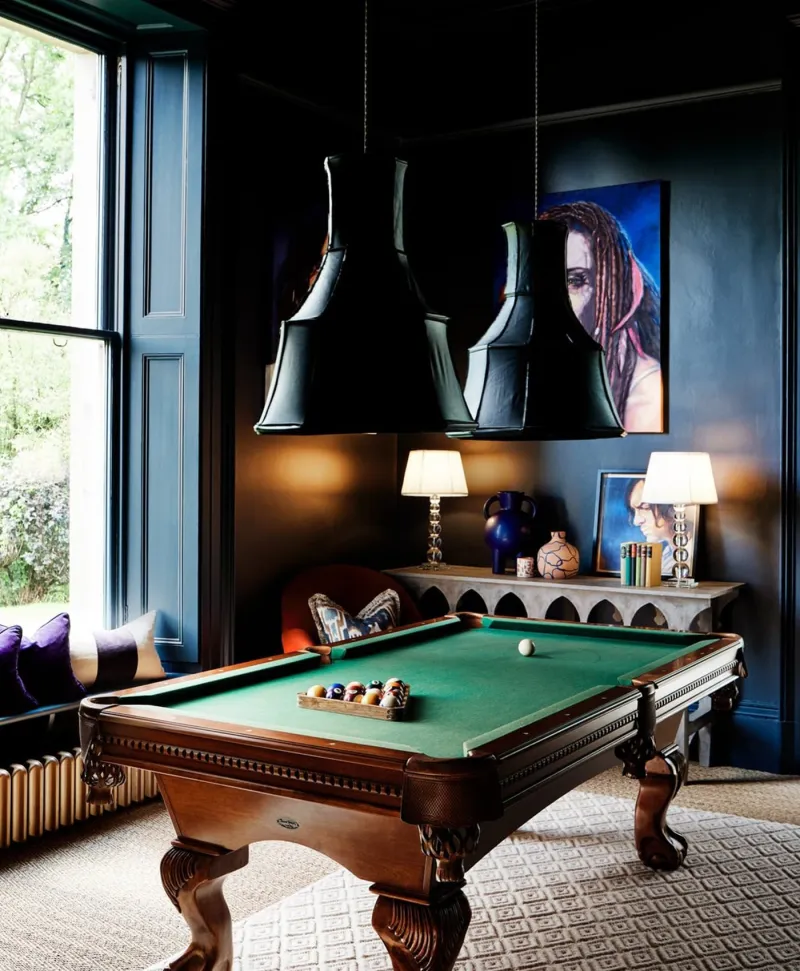
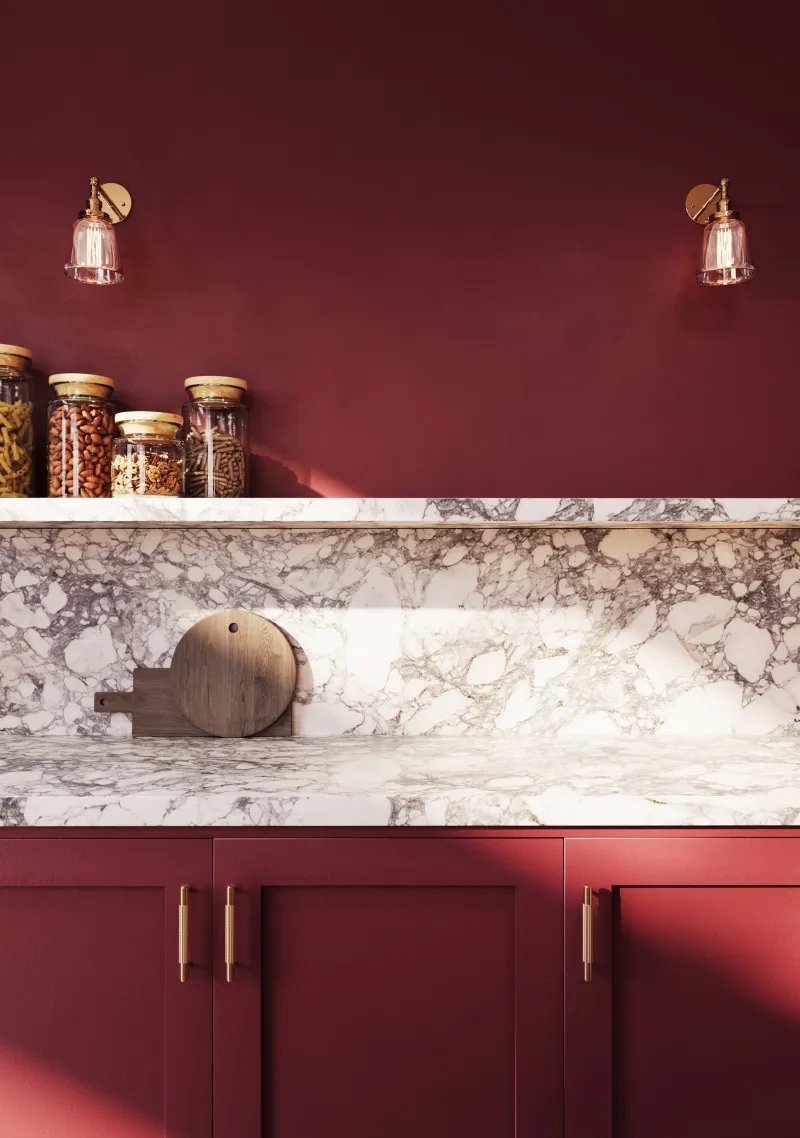
Colour drenching
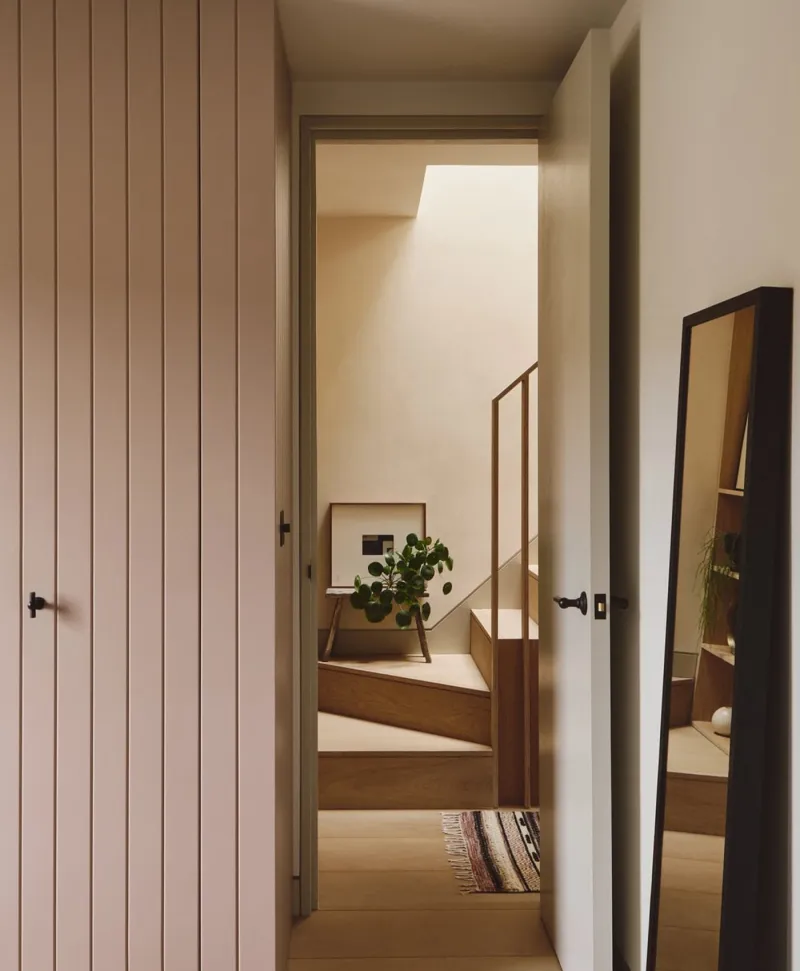
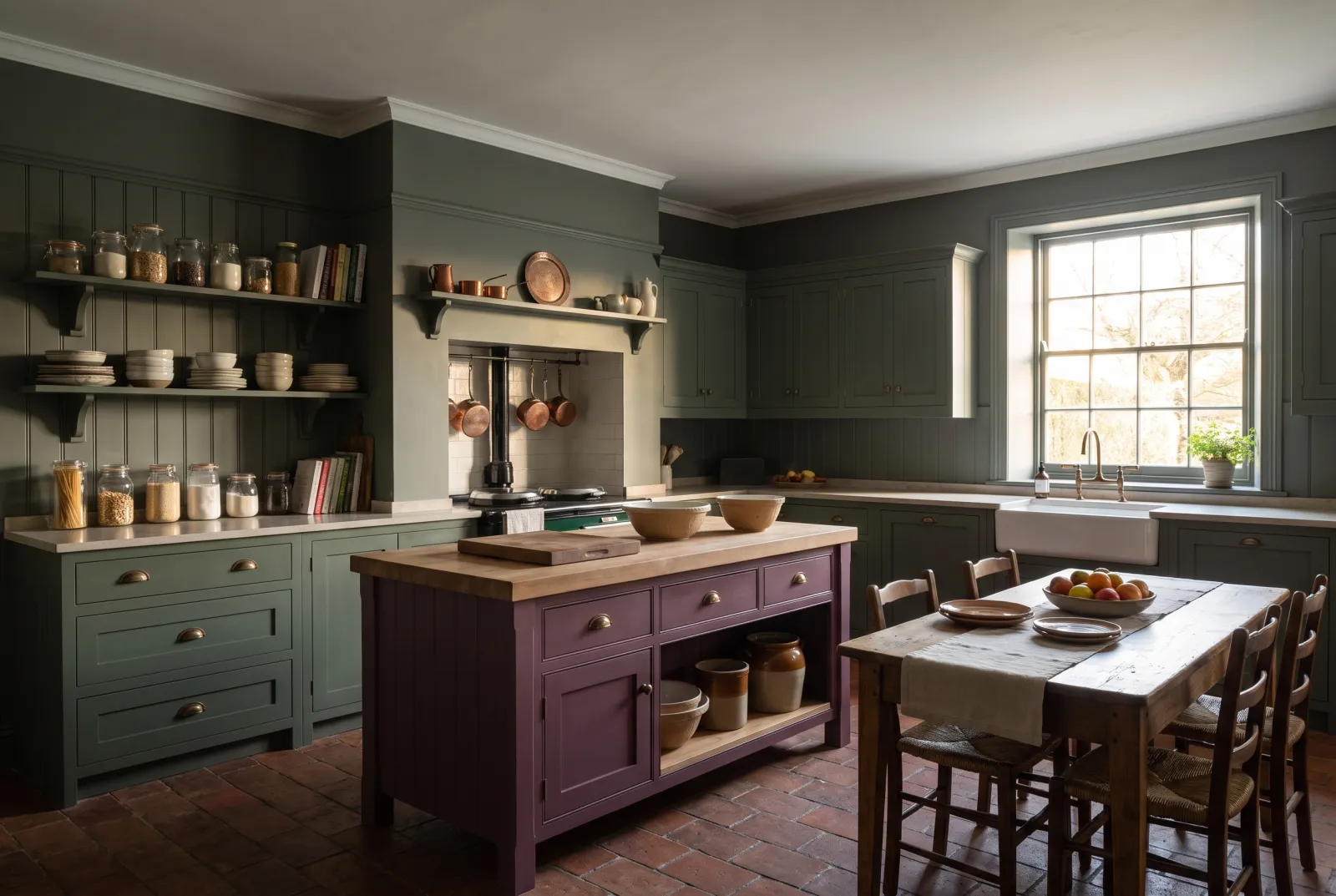
Walls, mouldings, doors, ceiling, all in one deep shade, in Multi-Surface Dead Matt to go from plaster to wood without changing tin. At three metres, a hall or dining room treated this way becomes a jewel-box room; the mouldings do not disappear, they become shadows. Our Colour Drenching page details the method, and our eight colours to paint everything the shades.
Street side, courtyard side
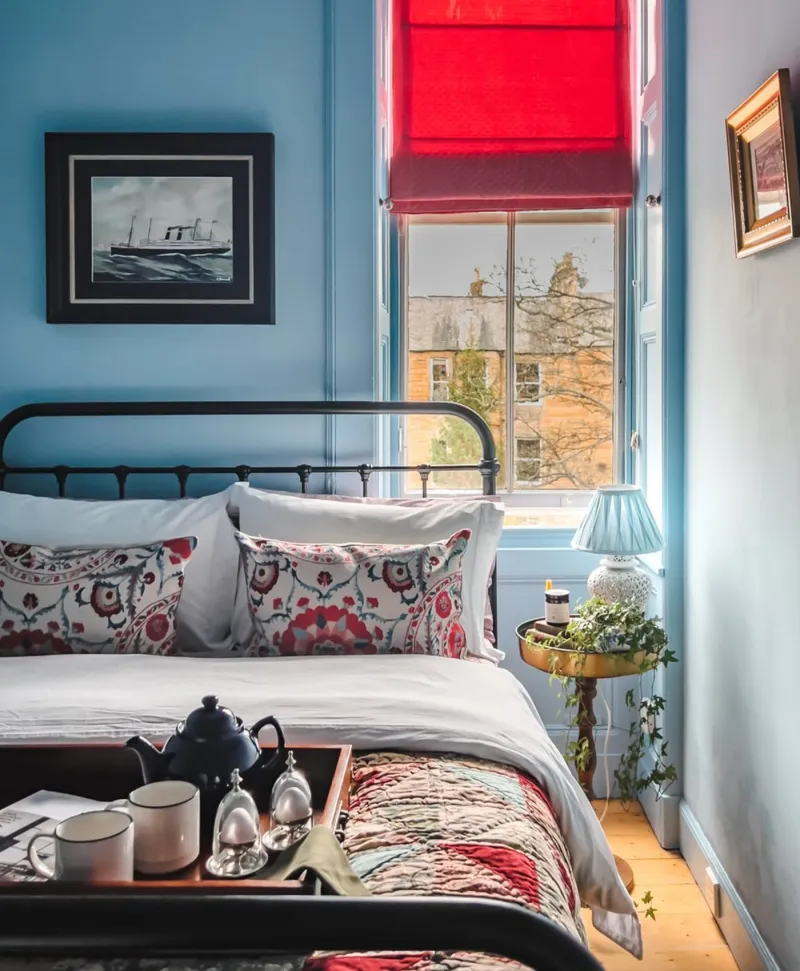
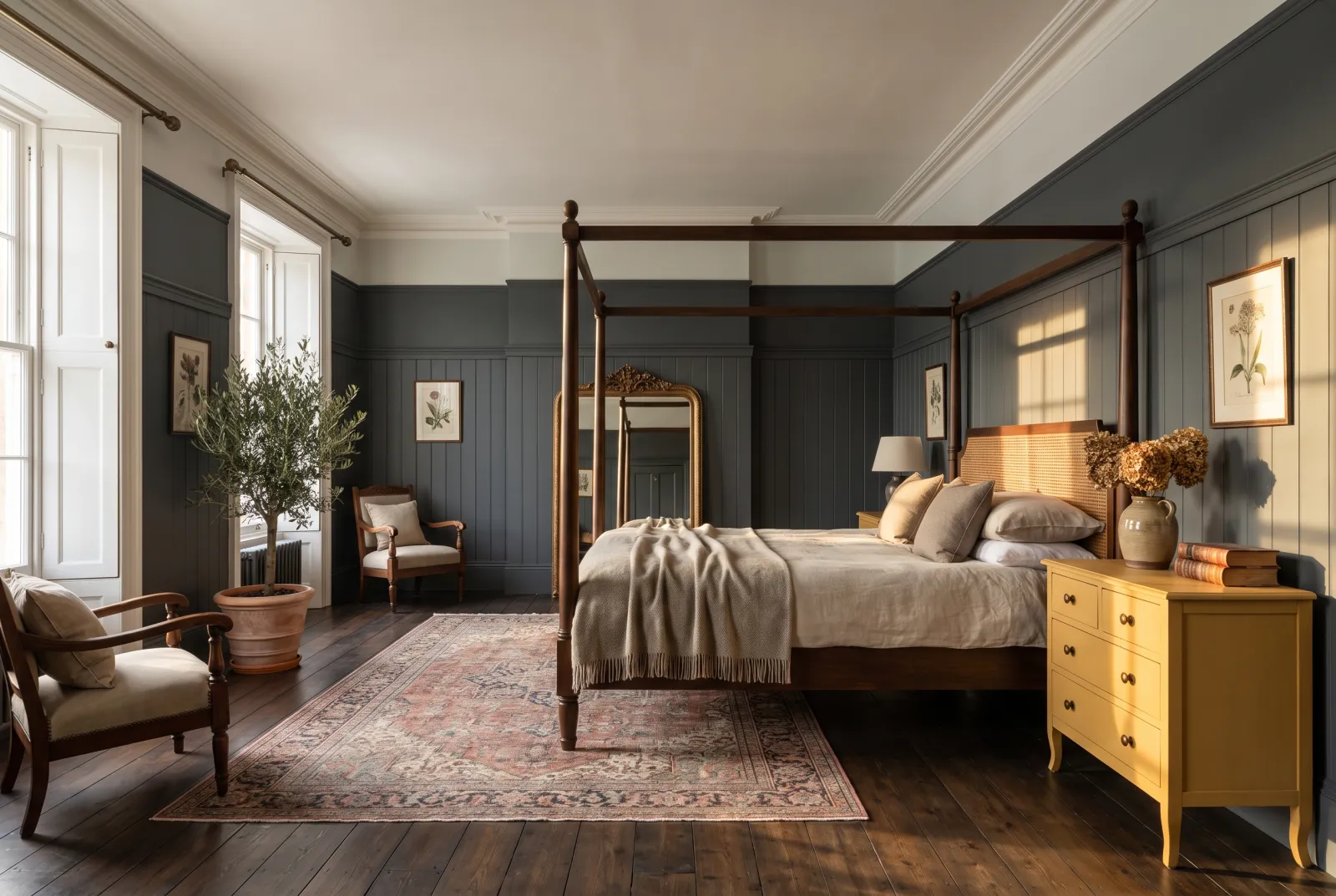
Street-facing rooms, often south or west, accept greys and cool whites. Courtyard rooms, facing north, want warm whites, pinks and stones — or the opposite, embraced: a deep colour that makes shade a quality. Our colours for a north-facing bedroom and for a dark hallway go further.
Which finish in a Haussmann apartment?
Marble Matt Emulsion on walls, ceilings, cornices and roses: the mineral matt absorbs light, gives colours their depth and forgives the repairs of old plaster — and it breathes, which the walls of an 1880 building appreciate. Multi-Surface Eggshell on the woodwork: double doors, tall skirtings, picture rails, windows. Multi-Surface Dead Matt for colour drenching. On a three-metre ceiling two thin coats beat one thick one, and primer is essential on any plaster repair — the method is in How to paint a wall without marks.